I’m sure I wasn’t the only one looking for a distraction this week. I was lucky to have the chance to help with some prescribed burning at the Niobrara Valley Preserve. The combination of that site and that activity provided a great way for me to escape my own brain. I still didn’t sleep very well, but I got through the days…
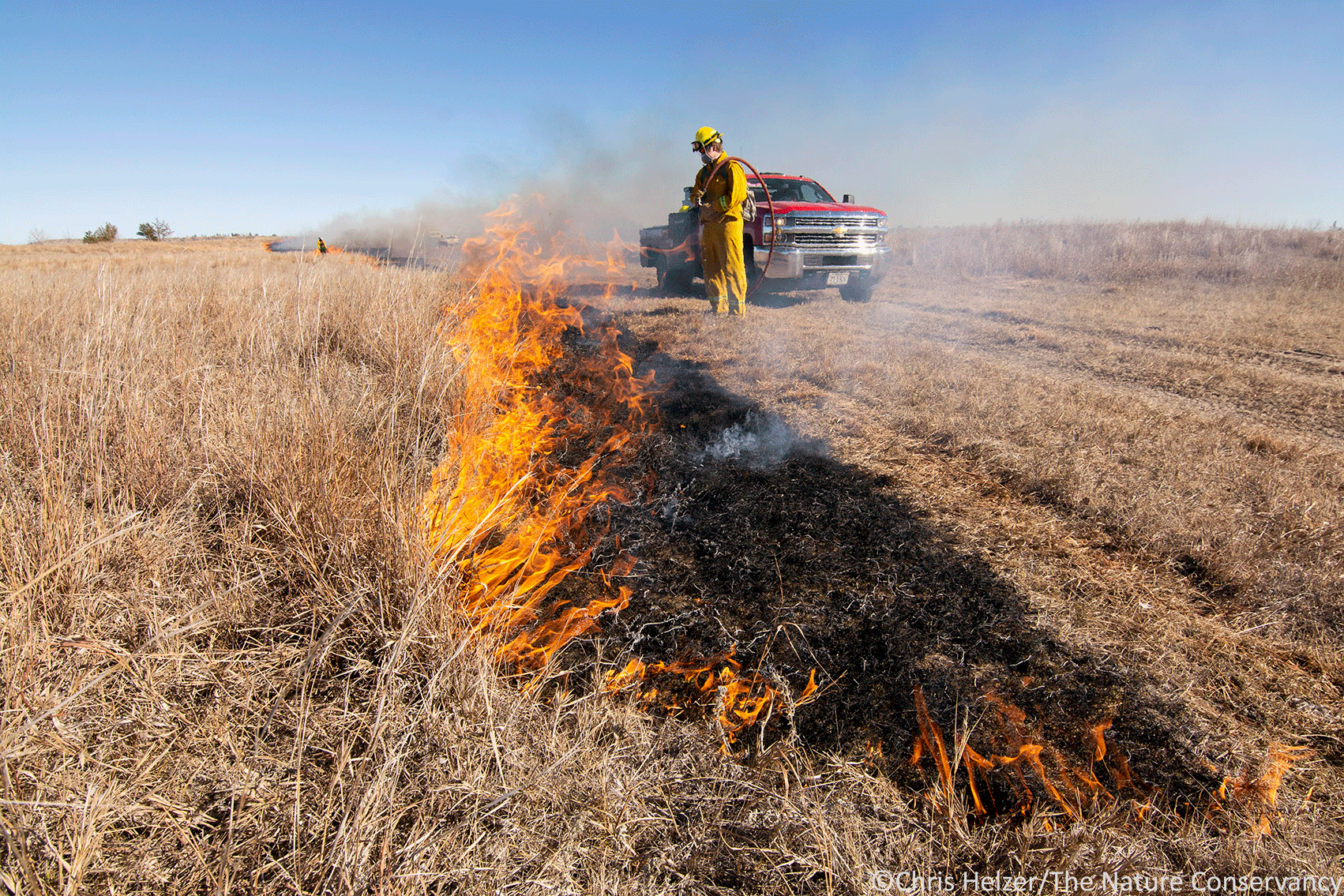
A volunteer firefighter got some experience while working on a backing fire early on day one.
Chad Bladow, The Nature Conservancy’s Fire Manager organized and led two prescribed burns that totaled over 1000 acres and three miles of grassland/woodland along the south side of the Niobrara River. Over several years, staff and contractors have been cutting and piling eastern red cedar trees that survived the 2012 wildfire. One of the objectives of this fire was to clean up the piles and downed wood from that work. We also wanted to kill additional trees that had shown up since cutting operations or that were missed because of size or location (on steep slopes, etc.). In addition, opening up the understory habitat of the wooded areas will have multiple benefits for wildlife habitat and the vigor/diversity of the plants growing beneath the trees.
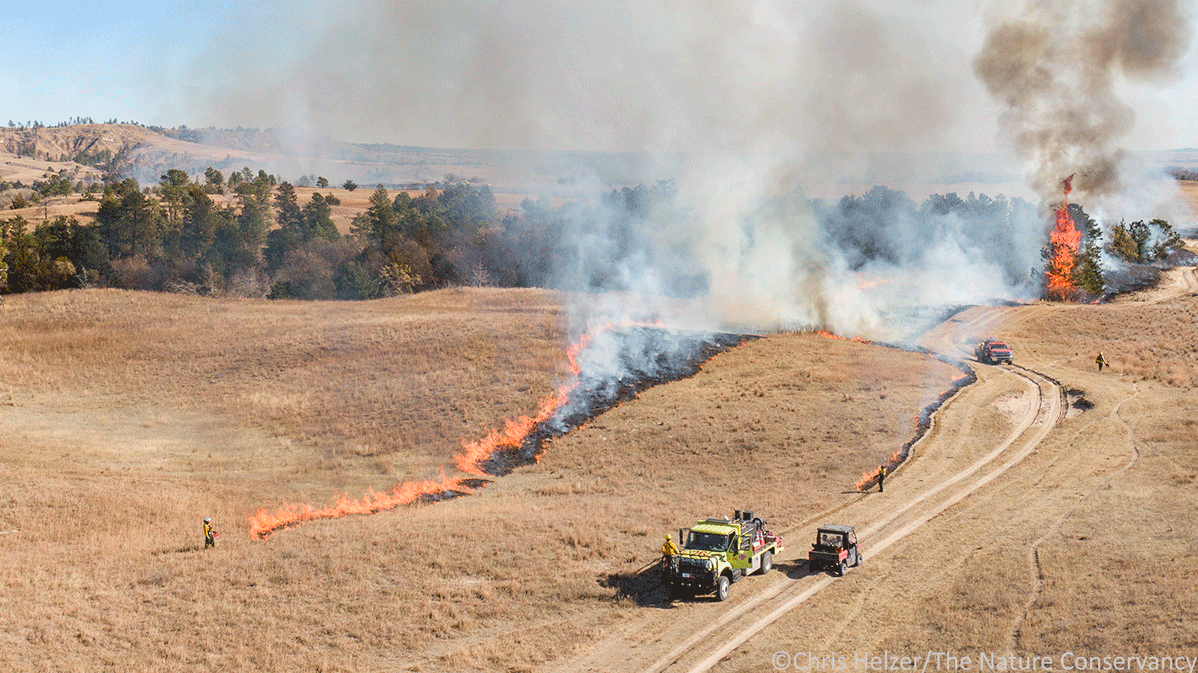
Two igniters were lighting the flanking fires (working into the wind) on the first day’s burn, accompanied by several vehicles – including a giant tanker from the local fire department.
On day one, we burned out a two mile unit that had Sandhills prairie on the south edge and the river on the north. It took the majority of the day, but burned very well with low humidity, warm temperatures, and light winds. Ignition was completed before sundown, but the fire burned (at a much lower intensity) through the night within the center of the unit. The next morning, we did some quick checks of the perimeter to make sure there was no risk of the remaining smoldering trees causing a fire outside the boundaries. Then we started burning the second unit.
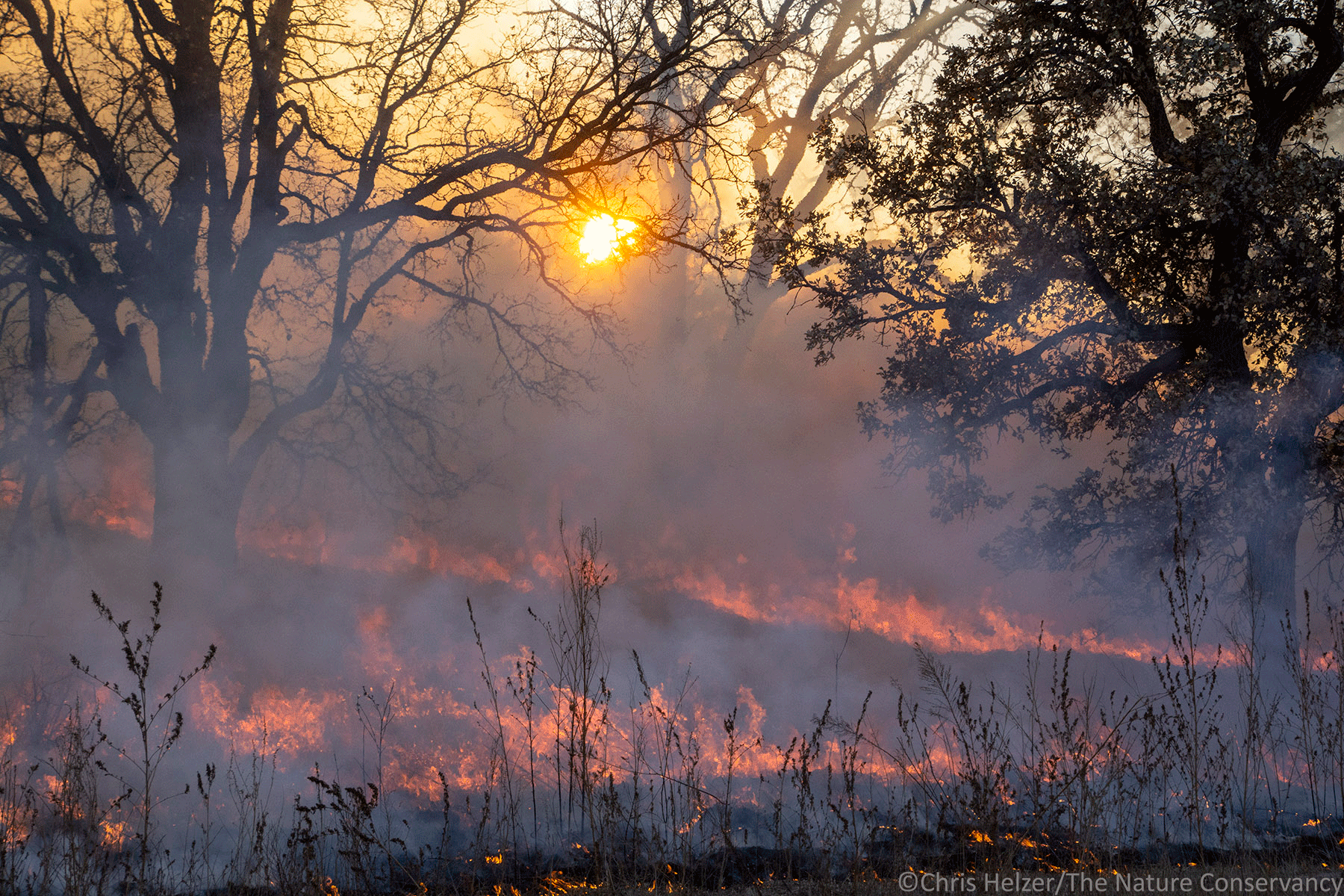
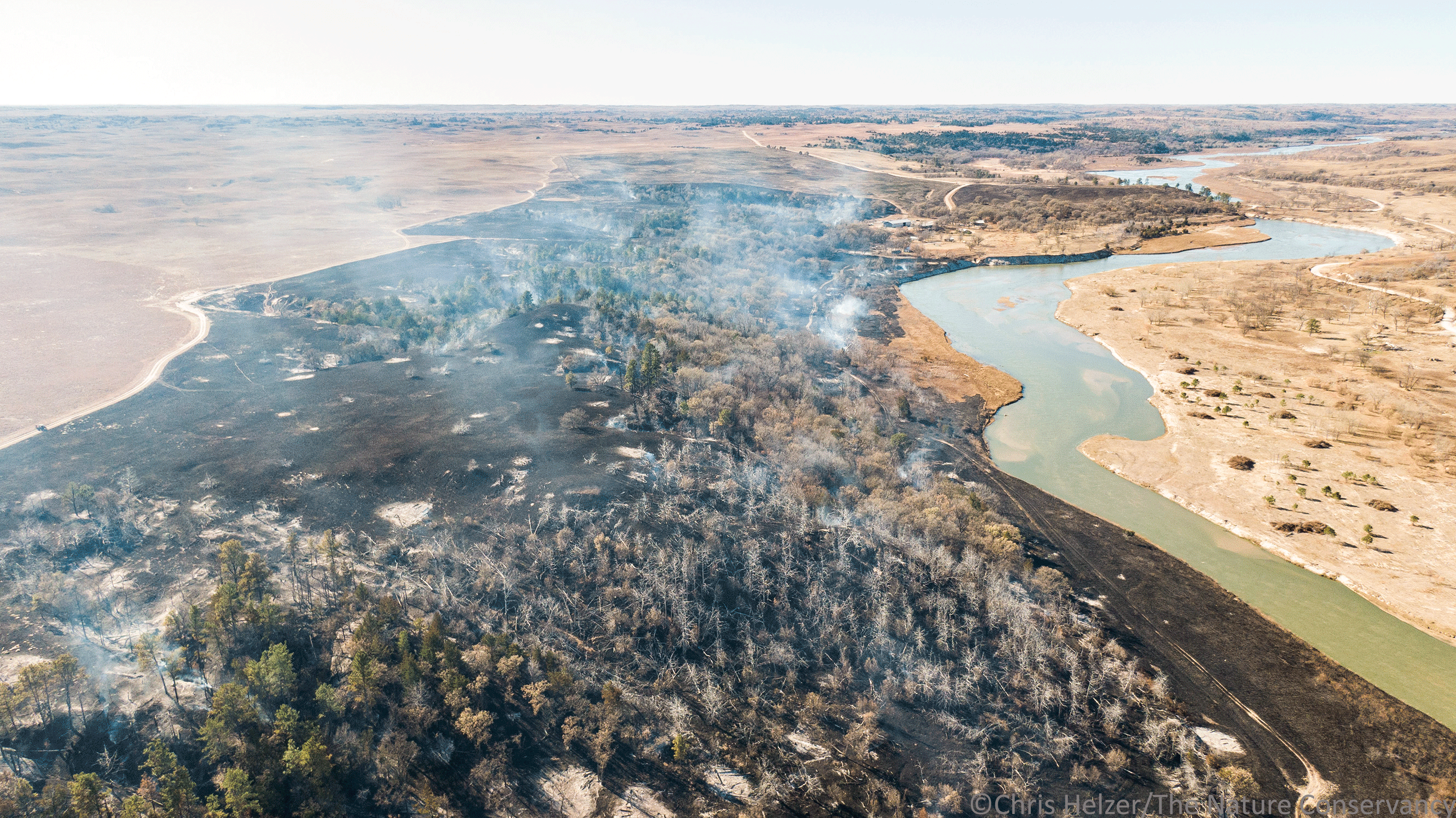
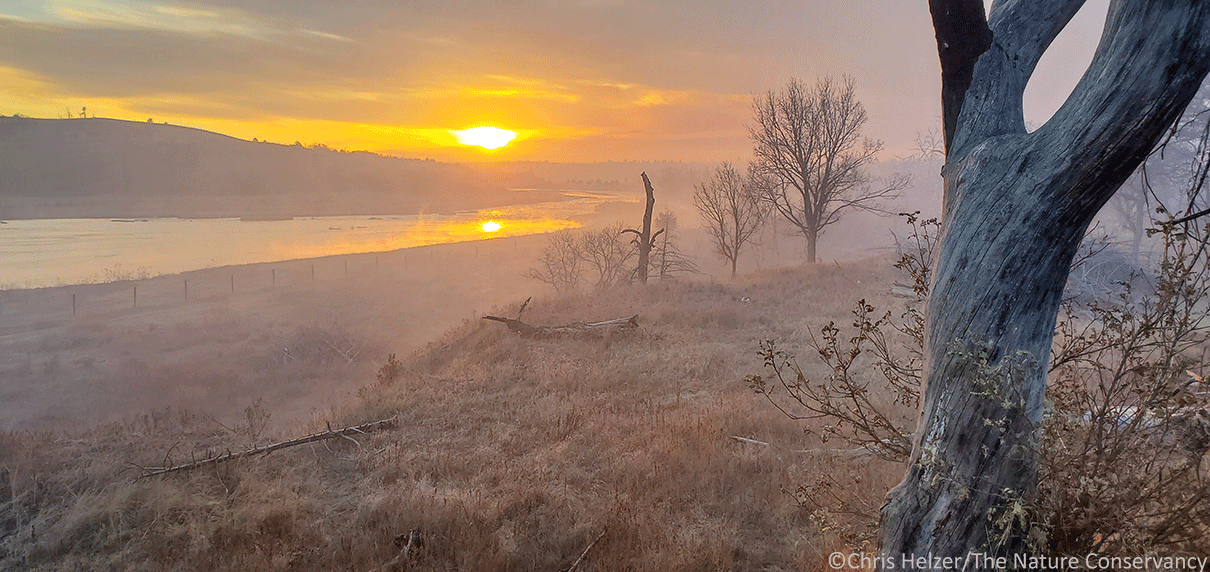
As the sun went down, fire was still winding its way through the wooded slopes.Grassy knobs in the woodland burned fairly cleanly, but the fire effects were more spotty on steeper north-facing slopes.An aerial view (drone) showing the Preserve headquarters and the first day’s burn unit. You can see an igniter moving right to left at the bottom right corner of the image.Here is the first day’s burn unit a day later. There was some lingering smoke, but by and large, most of the unit had burned itself out overnight. The Preserve headquarters can barely be seen near the top of the photo.This is a cell phone photo I took on the morning of the second day while doing some early morning mop up of smoking trees near the edge of the first day’s fire.
Not only did we achieve our ecological objectives for the fire, it was also a great partnership-building experience, with crew members representing several organizations, including state and federal agencies, private conservation groups, a local prescribed fire group, and the local fire department. Coordinating all those people, while following strict COVID-19 safety protocols, was no mean feat, but it all came together beautifully – as did the fires themselves.
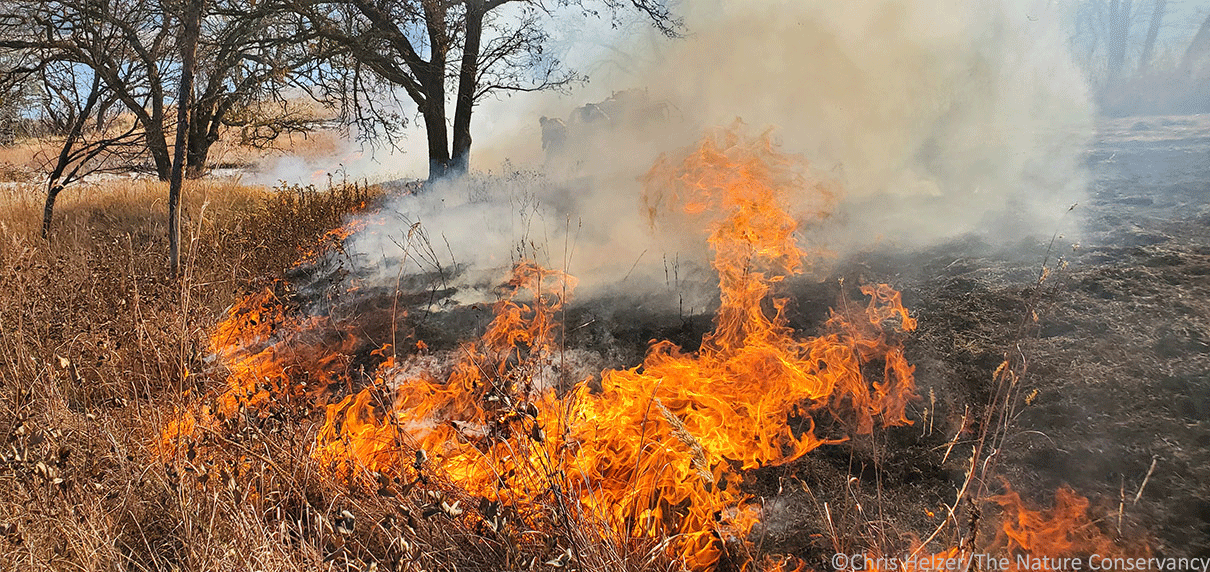
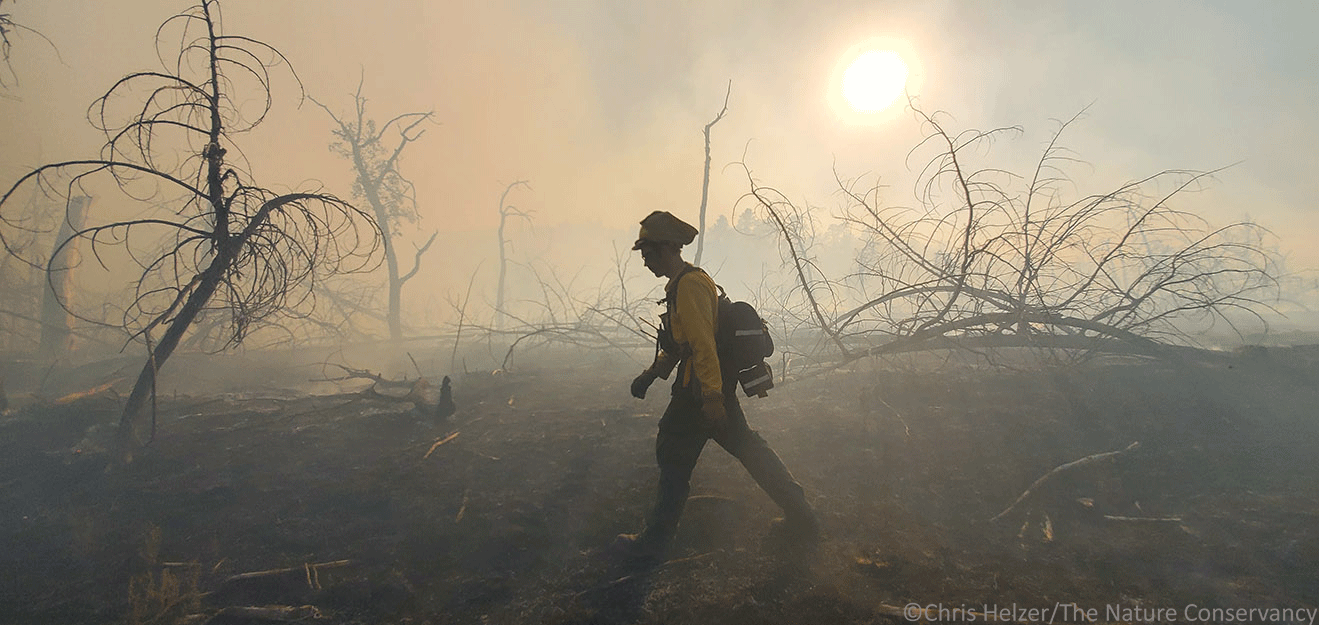
Fire backing through grass and trees.We don’t think fire will have much long-term impact on the abundant smooth sumac (Rhus glabra) on the property, even though it definitely put some heat on those plants.Many of the eastern red cedar trees (Juniperus virginiana) in the area had been cut and piled, but some of the remaining trees went up during this fire. (The cedar skeletons nearby are from the 2012 wildfire.)Nelson Winkel walking through the smoke on day 2.As the fire in the upland grasslands of the second day’s burn unit came together, it made an impressive smoke plume.At the end of the second day of fire, the crew gathered to discuss, learn, and celebrate.
Prescribed fire is a lot of work, but it’s also very rewarding when it’s over. Normally, when I’m leading burns, I feel a lot of stress between the time the fire is ignited and when it’s extinguished. However, when I’m just a part of the crew – as I was this week – I can pull back a little and enjoy the experience more. That was really helpful this time around since adding more stress to my life was not what I was looking for.
Hey – no matter whether your favored candidate(s) win or lose, please be kind to yourselves and each other. Regardless of the result, it’s clear we have a lot of major divisions to heal. Please do what you can to help with that, but don’t forget to step away when you need to sink into whatever distractions allow you to maintain your own mental health. Be well, friends.
This post is designed for people who might be considering cattle grazing as a management tool for a prairie but don’t have any/much experience with grazing management. I’ll give examples of the kind of objectives you might set for a potential grazing program and then some initial basic information on how to actually get started. A forthcoming second post will delve more deeply into the details of designing grazing strategies to achieve particular objectives. Ranchers or others with considerable grazing expertise might find more value in this ‘Ranch Management for Wildlife’ guide.
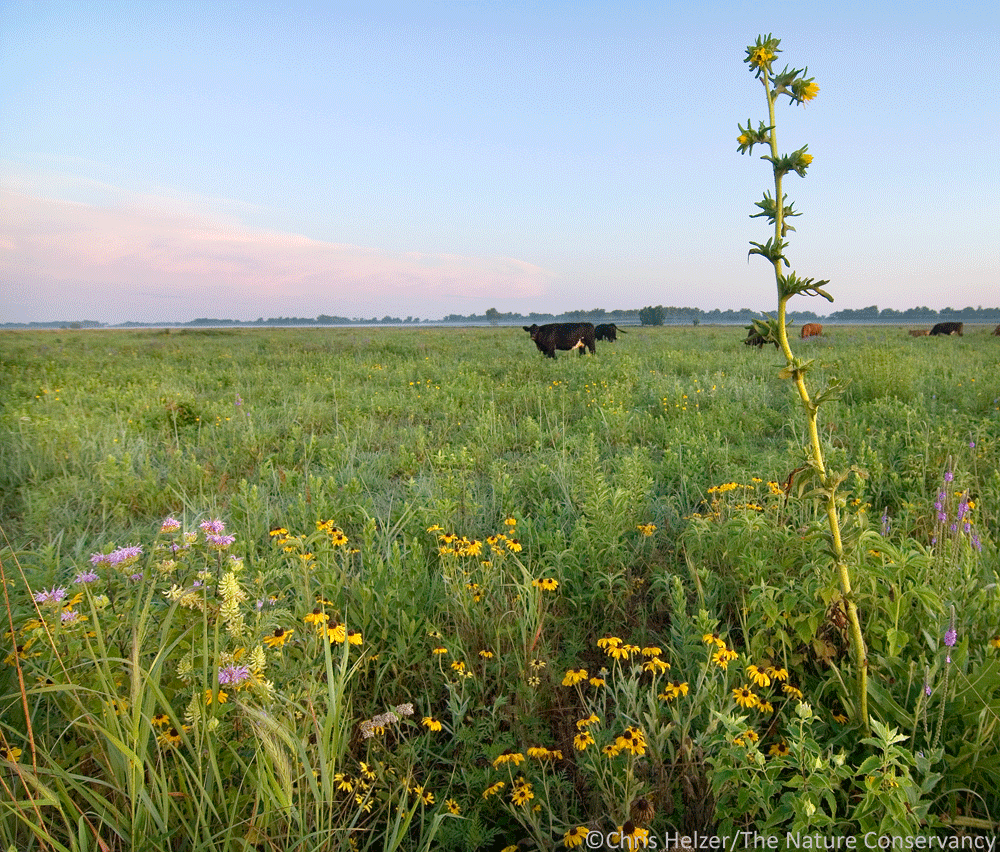
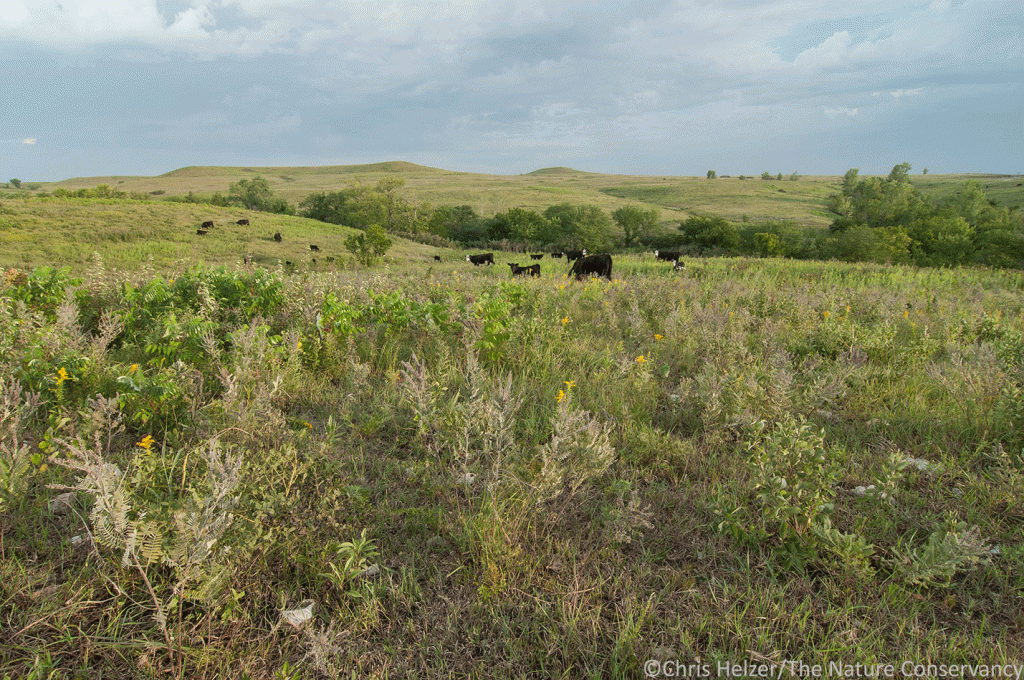
Cattle graze in a high-diversity prairie restoration in The Nature Conservancy’s Platte River Prairies, Nebraska.
Objectives
The very first step is to figure out whether or how grazing might be beneficial to your prairie. There are plenty of prairies where grazing might be more trouble than it’s worth or even counter to your objectives. Examples might include especially small sites (5-10 acres or less) or those where all habitat or species management objectives can be met with fire, haying, or other options.
Before you decide whether grazing would be helpful or not, decide what do you want to see in your prairie. Are you managing for plant diversity? Pollinators? Wildlife habitat? Do you have rare plant or animal populations that need special consideration? Making a list of all the potential objectives you have for your prairie will help you decide what you need for management – whether or not that includes grazing.
Here are a few examples of how grazing might contribute to your prairie management objectives.
Diversifying habitat structure. Every grassland animal species, including invertebrates, has its own individual preferences for habitat structure. Some species thrive best in short/sparse vegetation and others like tall/dense habitat. Others prefer something in the middle – either medium height and density, or habitat structure with intermixed patches of short and tall habitat. Some wide ranging species seek out multiple habitat types for either daily or seasonal needs. If there are particular animals that are a priority for you, find what kinds of habitat structure they need. Even better, creating habitat heterogeneity can help support a wide diversity of animals, which also helps build ecological resilience. Prairies managed only with fire, haying, or mowing, tend to have fairly homogenous habitat structure across the site, which may limit biological diversity.
Reducing grass dominance. In some prairies, grasses can become so dominant that they start outcompeting wildflowers and other plants, eventually reducing overall plant diversity. Because cattle graze primarily on grasses, they can help reduce the vigor of grasses and, at least temporarily, release other plants from that competition. To be effective, this approach requires intensive grazing – enough that cattle graze targeted grass plants very short (and then let them recover over time). That intensive grazing might be for a few days or weeks or for an entire growing season, depending upon specific objectives.
Suppressing invasive plants. Some invasive plants are highly palatable to grazers, which means grazing might help keep them in check. In almost all cases, grazing won’t eliminate those species, but it can be one of multiple options that prevent them from dominating a prairie’s plant community. One common approach is to use short intensive grazing bouts during the peak growth period of an invasive plant (or other times when the plant is vulnerable to defoliation and also attractive to grazers). It’s important not to graze too frequently, however, to avoid reducing or eliminating desirable plants with similar growth periods and attractiveness to grazers.
Providing income. This might seem like a minor or crass objective, but the need to get enough income from a prairie to cover taxes and other expenses is a reality for most prairie owners. The trick is to be sure income influences actual grazing plans as little as possible. It might play into whether you graze, but should hopefully not control how you graze.
Because cattle selectively feed on grasses, they can create varied habitat structure and help other plants (such as the lead plant and other wildflowers shown here) flourish during temporary breaks from grass competition. Konza Prairie Biological Station in Kansas.
Basic Decisions and Needs
Livestock animal choices
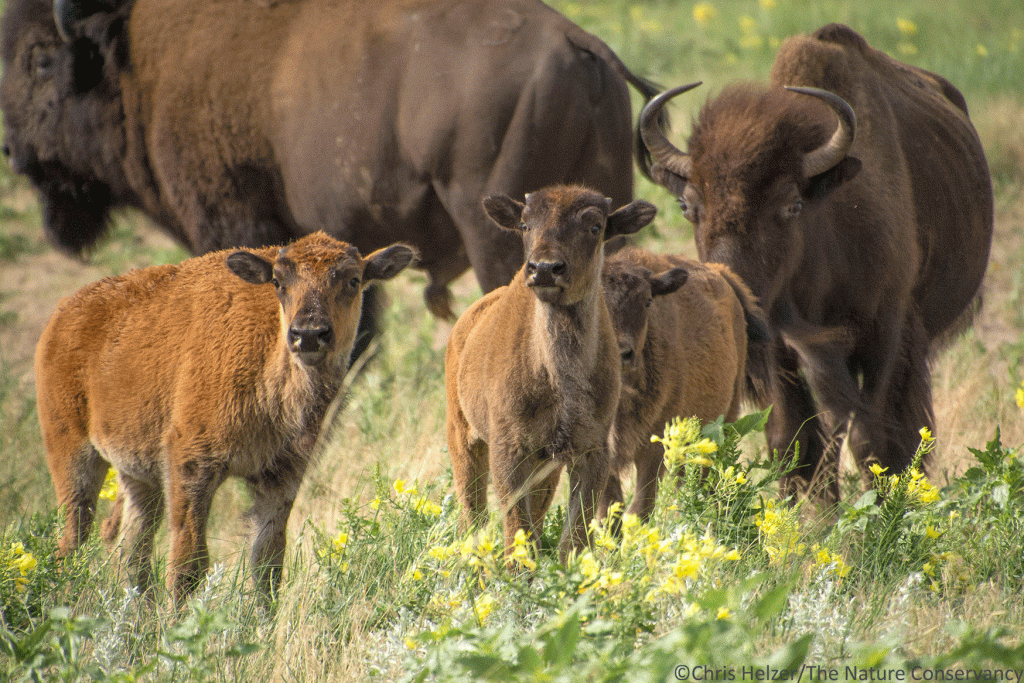
In most cases, cattle will be the most logical livestock animal for meeting prairie grazing objectives. Cattle, like bison, feed primarily on grasses, which can be helpful when you’re trying to maintain high plant diversity (most of which consists of non-grasses). Bison typically need more infrastructure and pasture size than is feasible for most prairie owners/managers, but they can certainly be a possibility to explore, especially if you have more than a few hundred acres (see more here for cattle/bison differences). Horses also have similar diet preferences to cattle and bison, and could be a possibility if they’re available.
Bison look great in a prairie, but they need a lot of space, infrastructure, and time to manage well. The Nature Conservancy’s Niobrara Valley Preserve.
Goats and sheep may be useful if you’re trying to set back a particular invasive plant, but they both favor broadleaf plants over grasses. The diet preference can make it more difficult to maintain plant diversity or pollinator/wildlife habitat when the livestock animals are selectively feeding on the plants you’re trying hardest to encourage. For most prairie management objectives, goats or sheep are probably best considered for specific jobs, rather than long-term grazers.
In addition to having a helpful selectivity toward grasses, cattle are often the easiest livestock animal to find, depending upon where you’re located. There are many cattle owners looking for places to put cows during the growing season – and willing to pay you to host their animals. You can set up a lease with them in which you control how many animals they bring in, how long they stay, and lots of other factors. See below for more information on lease arrangements.
If you do choose to graze with cattle, it will be important to think about how to mitigate some potential damaging behaviors they have, especially in smaller prairies. Mainly, cattle like to hang around shade and water, especially on hot sunny days. This can lead to overuse of vegetation, erosion, water quality issues, and lots of manure buildup in those places. Most of that can be reduced, if not completely avoided, through management.
Sensitive water bodies such as ponds, wetlands, or streams, can be fenced out, if desired. Alternately, you might find that periodic grazing (and pooping and stomping) is acceptable, as long as it’s for limited times and there are sufficient rest periods in between. We have wetlands and streams where we feel grazing is beneficial, but we manage the timing and duration carefully. Getting local advice on this topic is a good idea.
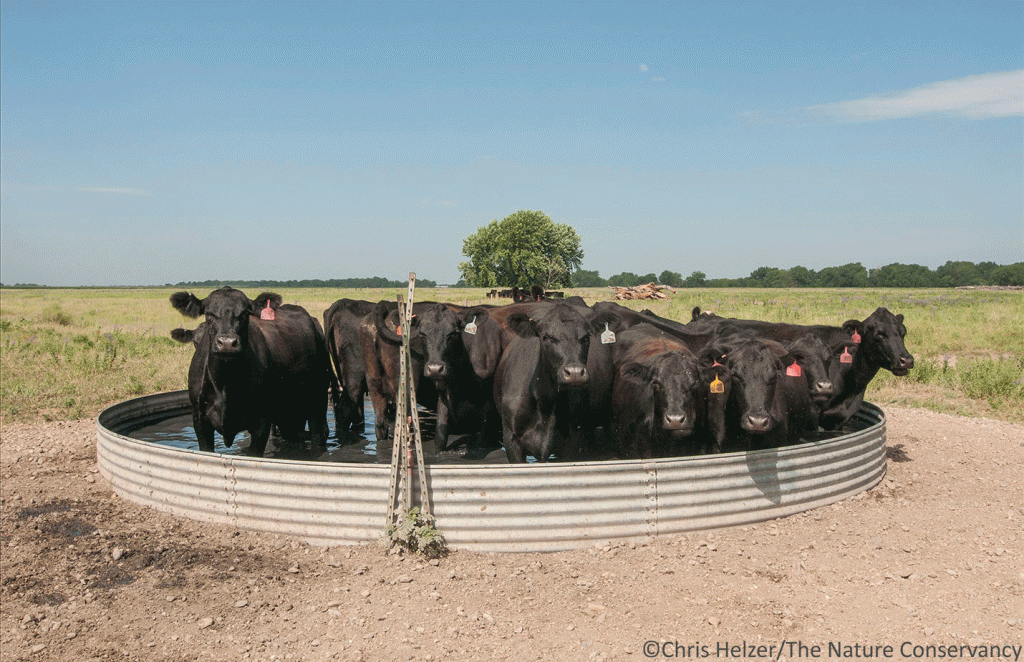
Cattle seek out shade on hot days and also like to stand in water to escape flies that attack their legs. These habits can cause problems unless they’re given careful thought and planning.
Concentration of cattle activity around drinking water facilities, trees, and other favored spots can also cause those areas to be heavily trampled and/or grazed. In a large prairie, having some areas of frequent, or even constant, disturbance can actually provide helpful habitat heterogeneity, as long as it’s limited in scope. Similarly, the nutrient cycling from manure and urine deposits creates constant variation in growth conditions for plants across the prairie. In small prairies, though, or where those kind of disturbances are causing significant problems, they should be mitigated through management.
The locations cattle most frequently graze or hang out can be controlled by excluding those areas (sometimes or always) with fences. Another option is to periodically make other areas more attractive. Burning portions of prairies (thus making them more desirable to cattle) far away from favored hangouts can alter cattle behavior patterns. Moving mineral feeders/salt licks around can similarly alter daily movement patterns and draw animals to or away from certain places. Similarly, if you have multiple drinking water sources available for livestock, alternating which is available can help avoid overuse of areas around each of them.
However, cattle (as well as bison, horses, sheep, and goats) are big animals that stomp around and poop a lot. Sensitive areas can be protected from that disturbance, but if you feel queasy about stomping and pooping on the majority of your prairie, you may want to find other management options other than grazing.
Infrastructure needs
Before bringing in livestock, you need two major kinds of infrastructure. You’ll need a fence to keep animals contained and some kind of water facility for them to drink out of. If you’re just experimenting with grazing and aren’t sure if it will be a long-term strategy, you might want to start with temporary electric fence rather than investing immediately in permanent fencing. Temporary fence is relatively quick to install and remove, so there’s no long-term commitment. You might even be able to work the installation and removal into a lease arrangement so the cattle owner is responsible for it. The biggest downside of temporary fence, though, is that it tends to be less dependable for keeping livestock contained, so a permanent fence around the perimeter is the best long-term option.
Water facilities can come in many forms. A pond or stream can provide water, either by allowing access directly to it (see above for potential problems) or by pumping or otherwise pulling that water into nearby tanks for the cattle to drink from. Wells and pumps can also be used to draw water into tanks. Solar pumps, windmills, and even diesel generators are all fairly expensive. However, using wells or pumps can keep livestock away from sensitive ponds and streams so you can graze those areas only when you want to, rather than having to depend upon them for water access.
Again, if you’re just experimenting with grazing, spending thousands of dollars on a well and pump might not make sense right away. Depending upon your situation, you might temporarily be able to get away with something as simple as a long garden hose from an existing hydrant or even hauling water via truck. Lease arrangements sometimes include the cattle owner providing water, but it’s a real hassle if they have to do that for any length of time, so it’s not reasonable in most situations.
In addition to being charming companions in a prairie, cattle can also provide a variety of benefits, depending upon your particular site and management objectives.
Lease arrangements
Unless you own your own livestock, you’ll need to arrange with someone else to bring their animals to you. Very often, there is a strong demand for access to grassland for grazing animals, but that varies by geography. You can find potential lessees by asking around locally or by advertising in local online or print media.
Once you find someone who is interested in working with you, there are really few rules for how a lease arrangement should look. The most important thing is to make your objectives clear to the livestock owner and explain how many animals you want and when. Then you can talk about how to match your needs with theirs. Some lessees will be used to being able to make their own decisions about how and when to graze a site, but you have the right to control all of that on your own land if you want to.
You’ll also need to decide who is going to build and/or maintain fence and water facilities. Usually, the landowner provides the basic fence/water infrastructure and the lessee maintains it, but that’s negotiable. The more work or supplies a lessee has to provide, the less they’ll expect to pay for the lease. You can find out what standard lease rates are by checking with your local university extension service – either online or in person. They can also provide lease templates you can adapt to your own needs.
Coming Soon – Part 2: Setting up a specific grazing strategy to meet your objectives. This next installment will talk about how to decide how many animals you want, when and where you want them, and for long. It will provide examples of grazing approaches to meet varying objectives and suggestions for how to create your own individual strategy – and then adapt it over time.