I was going to start this post with the phrase, “If I’m a broken record on any topic, it’s the topic of prairie complexity.” Then I wondered – do most people still know what a broken record is or why that phrase is used when someone repeats themselves over and over? Do you suppose there are people who think it means someone has said something more than ever before (thus ‘breaking a record’ for saying it)?
Maybe, I thought, I should pick a different opening – one that is more accessible to everyone. “Fiddlesticks!” I responded to myself (because I’m apparently 150 years old), I’m going to write the way I want to write. While I’m at it, I’m going to continue overusing and misusing that hyphen that’s not really called a hyphen – it’s a great way to add an additional thought to an existing sentence. Speaking of thoughts, where was I? Oh, right…
If I’m a broken record on any topic, it’s the topic of prairie complexity. I’ll continue to bang my drum on this topic because the complex interacting networks of species in prairies make them resilient. Numerous disturbances like fire, grazing, disease outbreaks, insect outbreaks, invasive species, and droughts frequently occur in prairies. A strong diversity of species means that no matter what happens, there are always species that will thrive as others are struggling. If one plant species fails to bloom, there will be others that flower prolifically, ensuring that pollinators still have available food. If some insect species have a down year, others will be in a boom cycle to make up for it. As a result, birds and other insectivores don’t have to rely upon a single kind of insect for their diet – they can eat whatever species happens to be the most abundant and easy to catch at the time. (Is it called an em dash? Sorry – keep reading.)
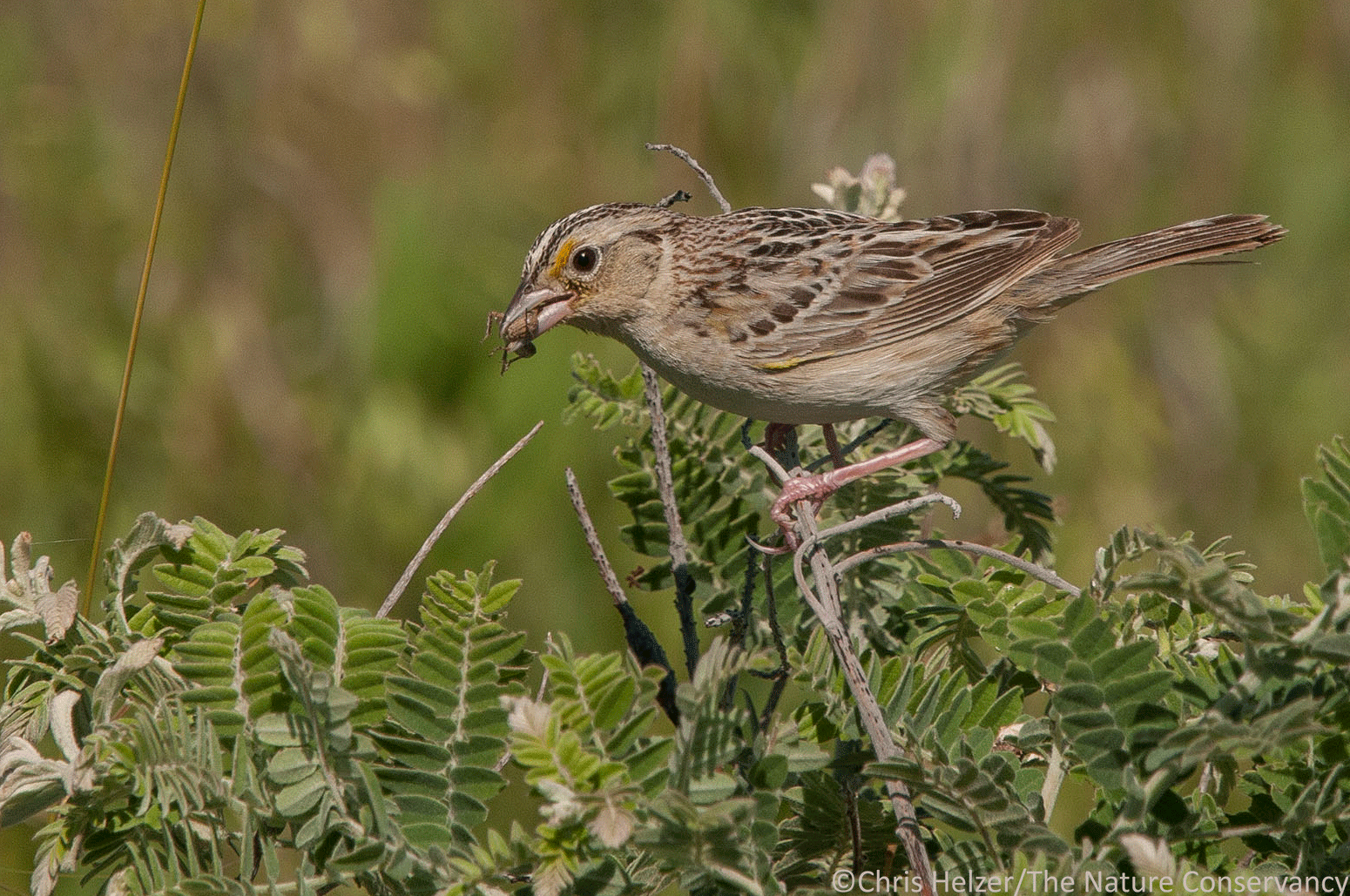
All that diversity and redundancy makes prairies extremely adaptable. They can maintain productivity and function through stressful times. That’s a good thing because prairies are nearly always reacting to stress. If it’s not a drought or flood, it’s fire and/or grazing, and sometimes all of those happen in the same year. In addition, a species of leaf beetle might be having a big year – deflowering (in a literal sense) an entire species of wildflowers. And those dang trees are always trying to push in from the edges… Throughout it all, prairies adapt and keep chugging along.
Blah blah blah. You’ve heard all this before. However, while I talk a lot about prairie complexity, here’s what I don’t talk about enough:
Prairie communities are not collaborative teams working together for the common good of all. Or at least they’re not doing so on purpose. Each organism of every species is worried about itself. Those individuals’ primary motivation is to reproduce and replace themselves before they die. If the actions taken to accomplish that goal happen to benefit others, that’s fine, but that’s not the same thing as collaboration.
It’s easy to romanticize nature and the way in which the various components of an ecosystem work together. And to be fair, there are some examples of species apparently helping each other (plants sending out warnings to others as they are attacked by an insect, trees sharing nutrients with each other, etc.). But those exceptions, if they are exceptions, don’t disprove the rule.
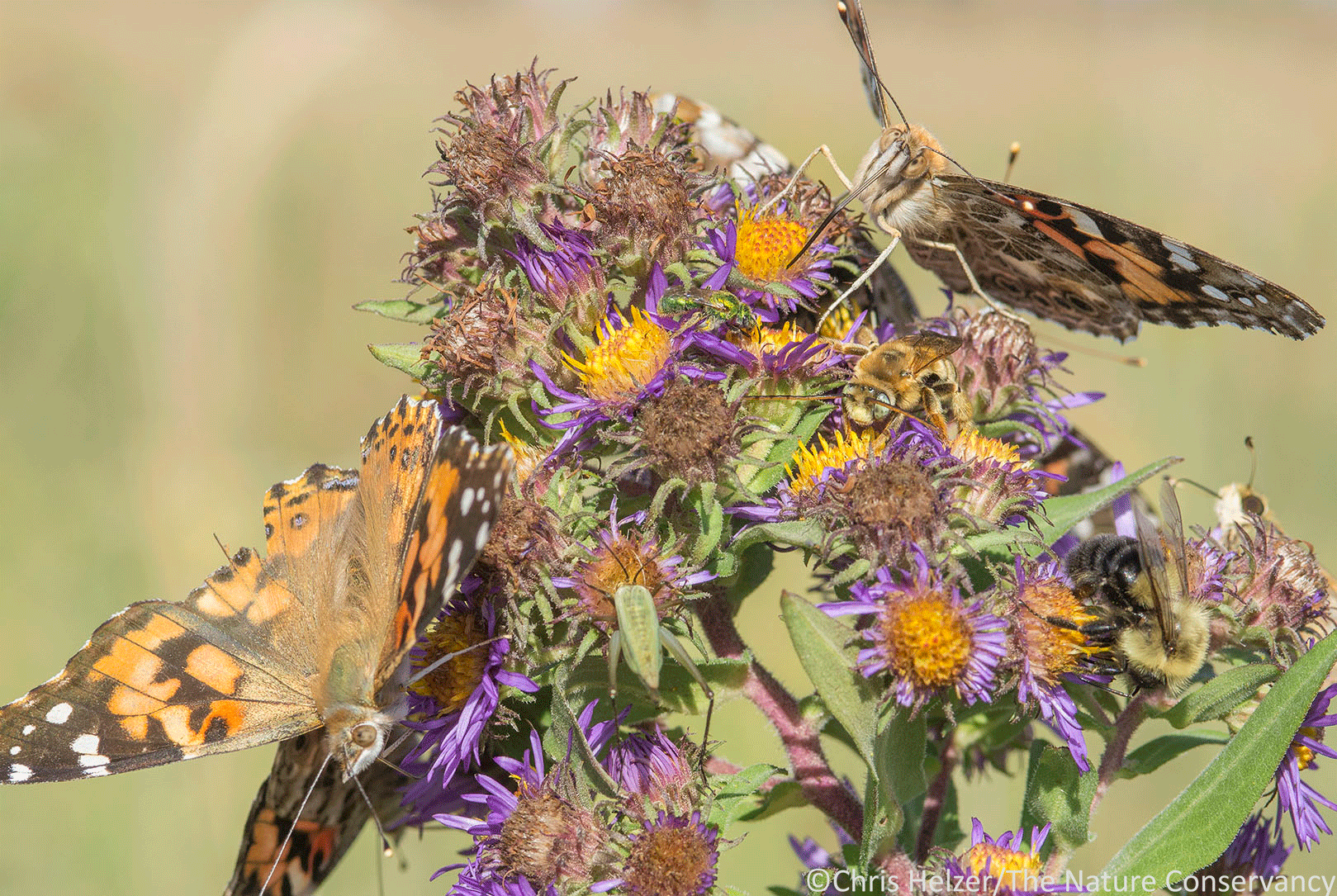
Bees don’t purposefully leave behind pollen or nectar on a flower so the next insect to visit can have some. If they leave resources behind it’s because they can get more by going to a different flower or because it’s not safe to stay in one place for too long. For that matter, plants don’t create nectar and pollen to feed bees. They invest in product manufacturing to lure bees into providing pollination services. The plants are looking out for themselves.
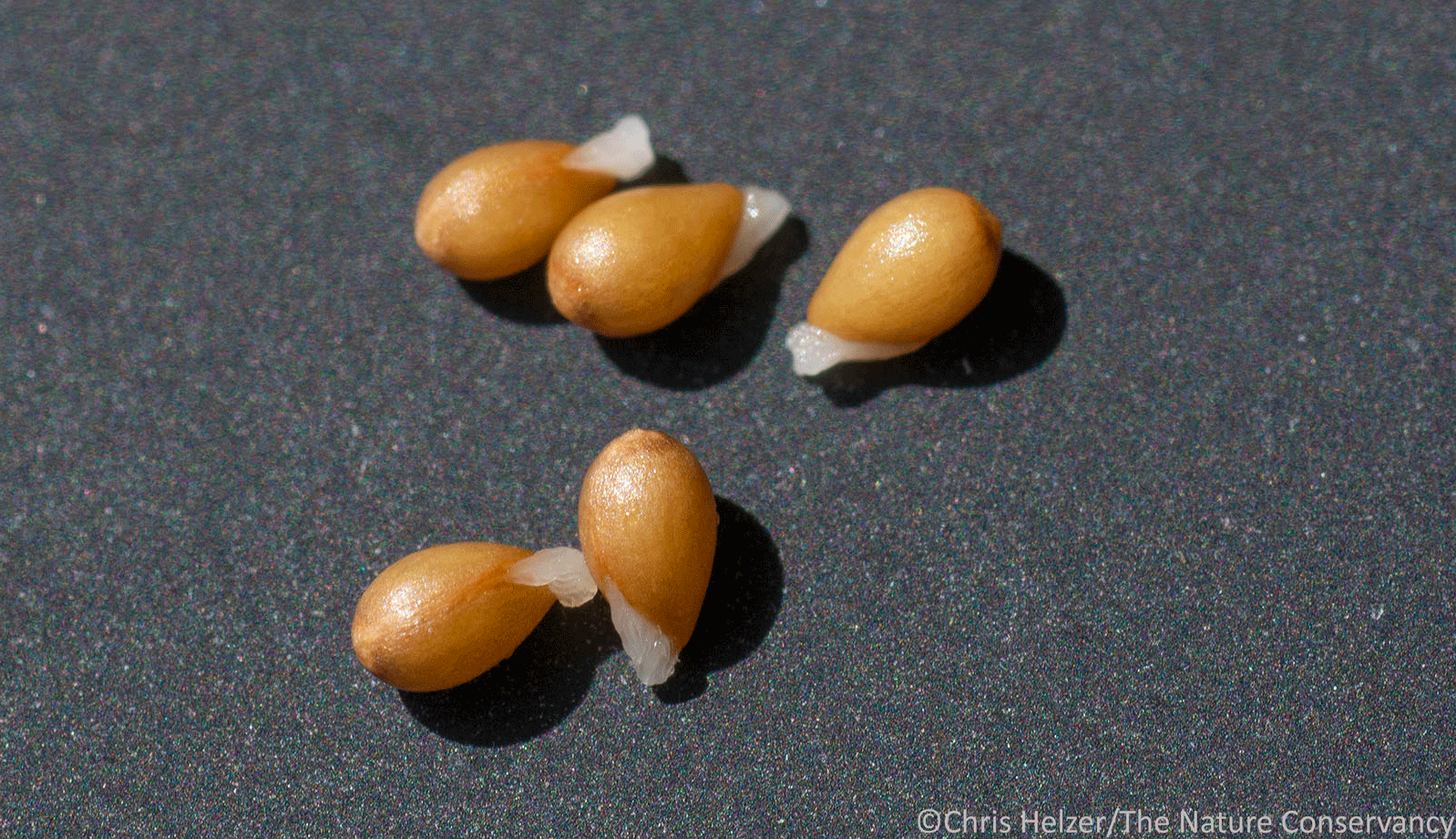
Violets produce little appendages on their seeds called an elaiosome. Those elaiosomes make great meals for baby ants, so adult ants carry the seeds into their nests and feed those little nutrient packets to their young. They then discard the remaining (still intact) seeds in their ‘compost pile’ where they have terrific conditions for germination. The ants are not helping the violets, they’re just feeding their kids the nutritious elaiosomes and dumping the useless-to-them seeds where they put their dead bodies and the rest of their trash. Similarly, the violets don’t care about the ants – they’ve just evolved a great way to trick ants into helping disperse their seeds.
Predators aren’t thinking about population control – they’re just hungry. Arbuscular mycorrhizal fungi on plant roots don’t capture and transfer nutrients to their host plants out of altruism – they’re farming the plants for their sugar. Plants don’t create fruit to make sure animals have something to eat – they just want the animals’ help with seed dispersal and/or stratification (digestive juices can help break the seed coat to start germination).
(So many em dashes!)
For me, thinking about a prairie in this way makes it even more amazing. I sometimes just sit in a prairie and gaze in fascination at all the individuals and species engaged with each other in an epic battle for survival. It’s violent, yet beautiful. A prairie is a productive and resilient system built upon the selfish actions of individuals. How crazy is that? Also, does it remind you of anything? I’m not here to promote or defend capitalism as an economic system but there are sure an awful lot of countries that have built stable societies upon it.
And yet, most ardent supporters of capitalism will admit it isn’t perfect. It’s sometimes helpful to have guardians making sure no one party (or more) is gaining too much power or that no segment of society is being constantly suppressed. After all, diversity is strength, remember? The more voices, perspectives and skills a society includes, the more productive and sustainable it will be. Persistently alienating or eliminating part of society is a dumb way to do business (and also morally indefensible, but I digress).
Backing quickly away from politics, prairies need guardians too. There are some natural checks and balances built into prairies and other ecosystems, but those aren’t sufficiently reliable if left alone. I’ve written before that North American prairies have never been separate from human management and about the consequences of erroneously assuming prairies can manage themselves. In a system built on selfishness, it’s inevitable that some individuals or groups will find ways to gain a major advantage over others. Once that happens, the growing disparity can start to degrade the diversity that keeps the overall system strong.
For example, trees and shrubs are constantly invading prairies, held back primarily by prescribed fires and other human-implemented land management strategies. Prairies are threatened by numerous invasive plant species, many of which can form large monocultures. Even many native plant species, under the right conditions, can become so dominant that other species are pushed out of the community. Managing that competitive arena is, and has been, our job.
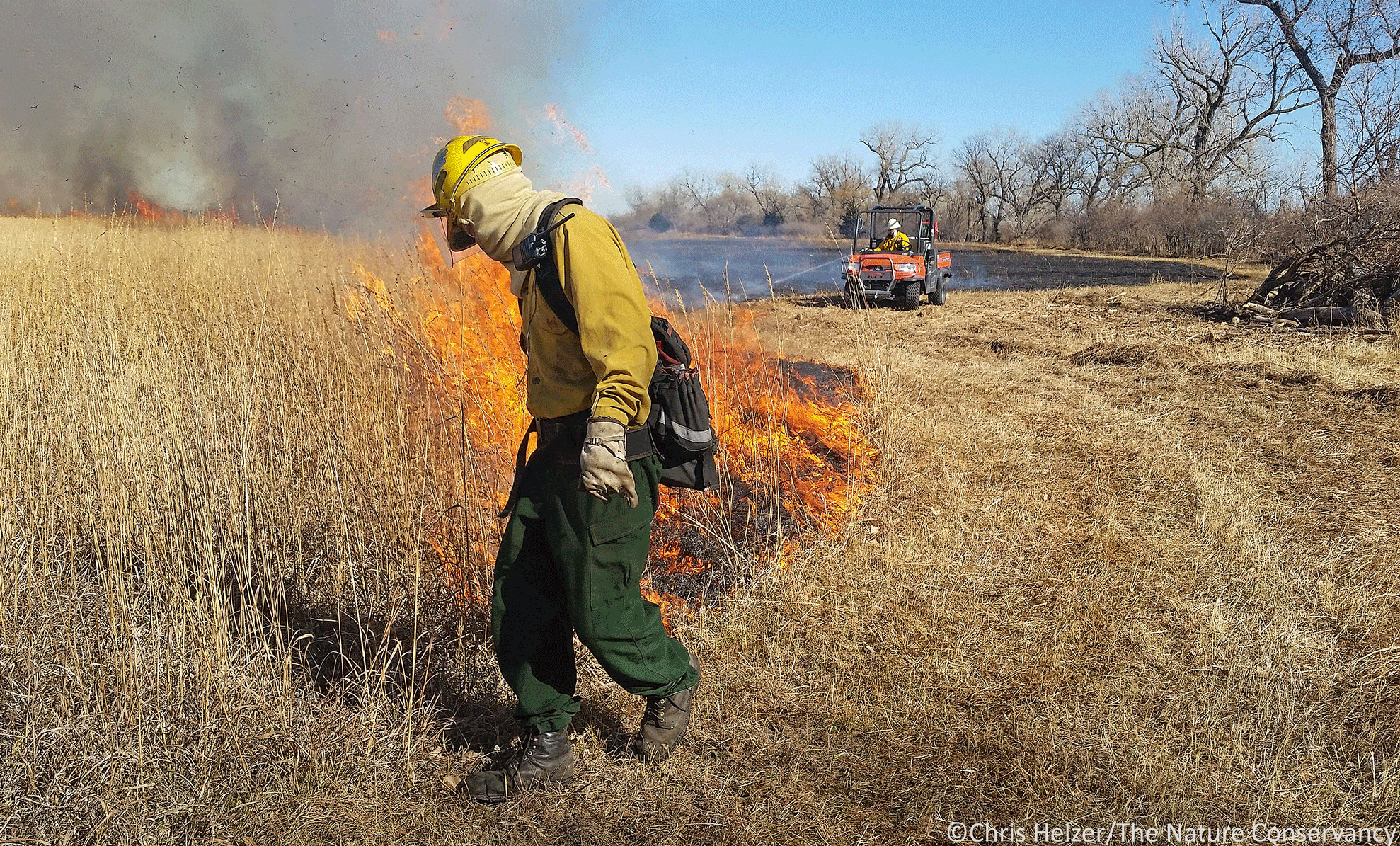
Good prairie managers maintain the diversity of prairie communities by allowing all species to thrive and preventing any from gaining too much dominance. Ecosystems are complex, intricate, and beautiful, but they’re not infallible. We should absolutely admire prairies and celebrate their diversity and resilience. We should also be vigorous stewards of that diversity and resilience, remembering that any system built on the selfish interests of individuals can become unbalanced.
Hopefully, the fact that prairies and other ecosystems are battlegrounds between hordes of individuals fighting for dominance doesn’t make them seem less appealing. Those struggles foster innovation – natural selection doesn’t happen because everyone is getting along, after all. I am full of wonder and admiration at the way species compete, adapt, survive, and reproduce – and the way all that strife creates resilient and enduring prairie communities
(I had to end with one last em dash.)
Oh, hey – if you’d like hear more on the topic of prairie management, sign up for a webinar that will feature some of the land management team from The Nature Conservancy in Nebraska (including me) in a panel discussion about stewardship. We’ll address some pre-planned topics and then take questions from the audience. Find out more at this link.