I’ve written before about how much pleasure I get from our backyard prairie garden. It has a nice diversity of prairie flowers and attracts an astonishing number of insects. The garden also provides me with an opportunity to watch competition between prairie species in a small contained setting.
This year has been a good one for the five-year old garden. The plants have largely filled in the spaces and now stand shoulder to shoulder, providing abundant color and great habitat for a number of tiny animals. Here are a few June photos from the prairie garden this year.
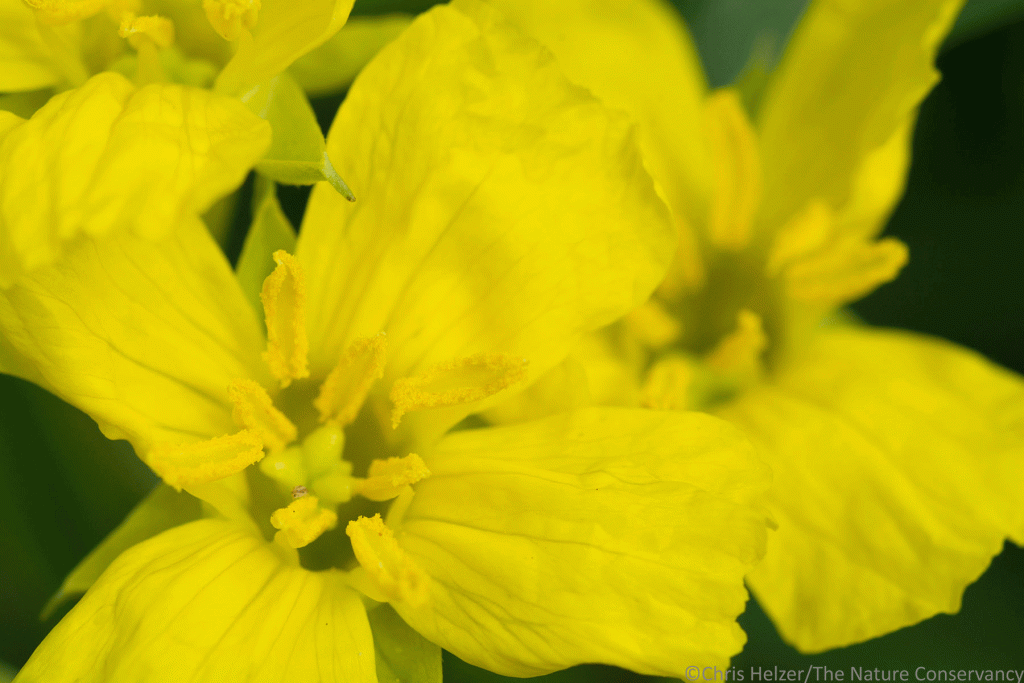
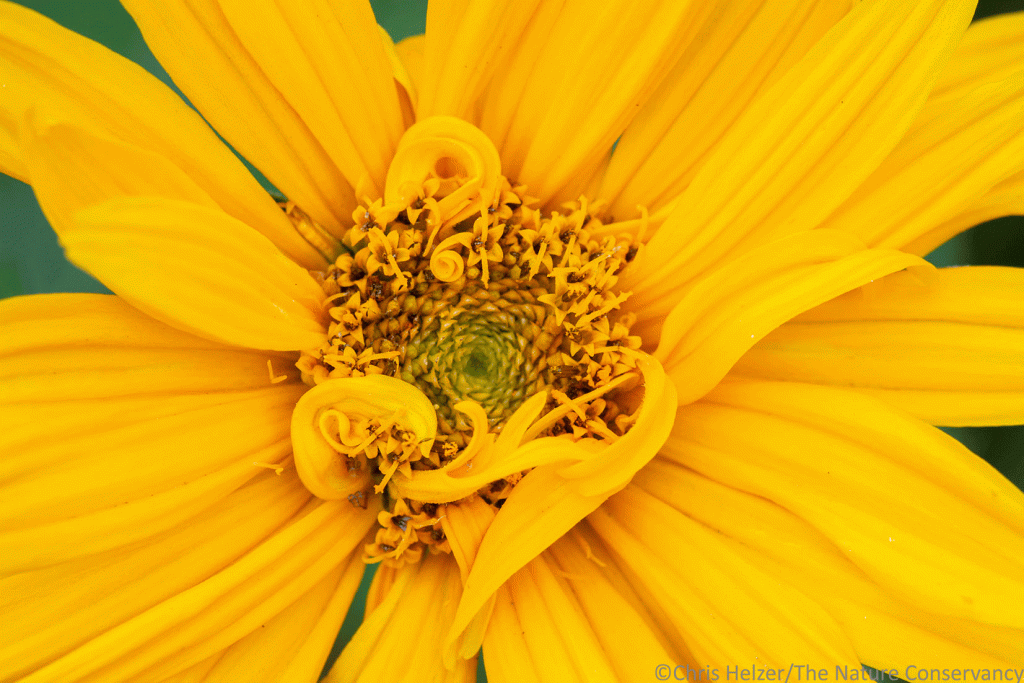
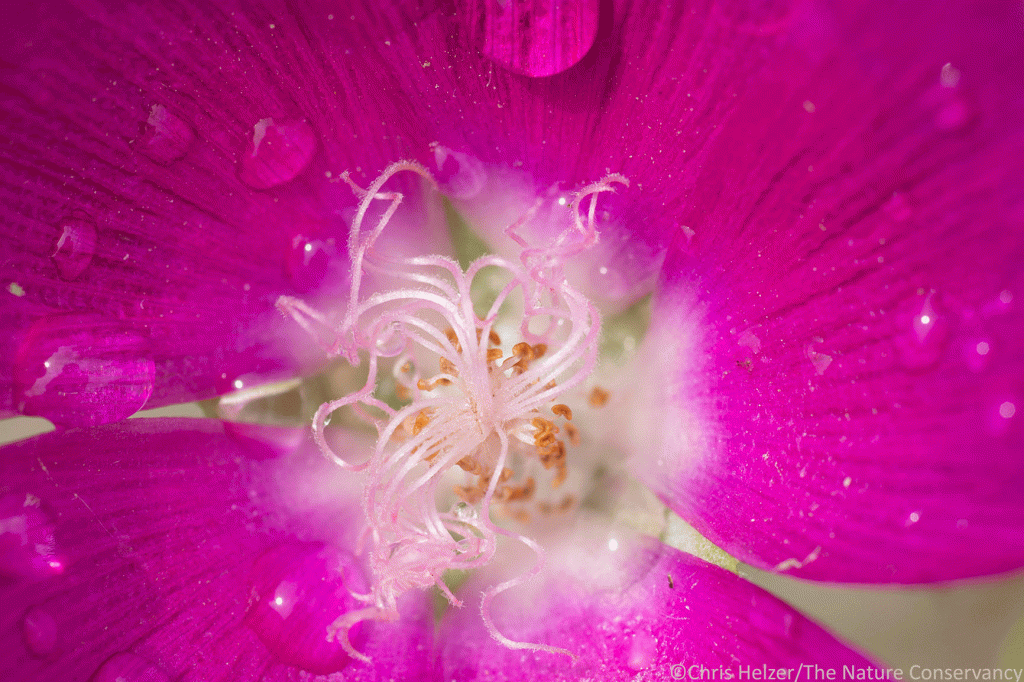
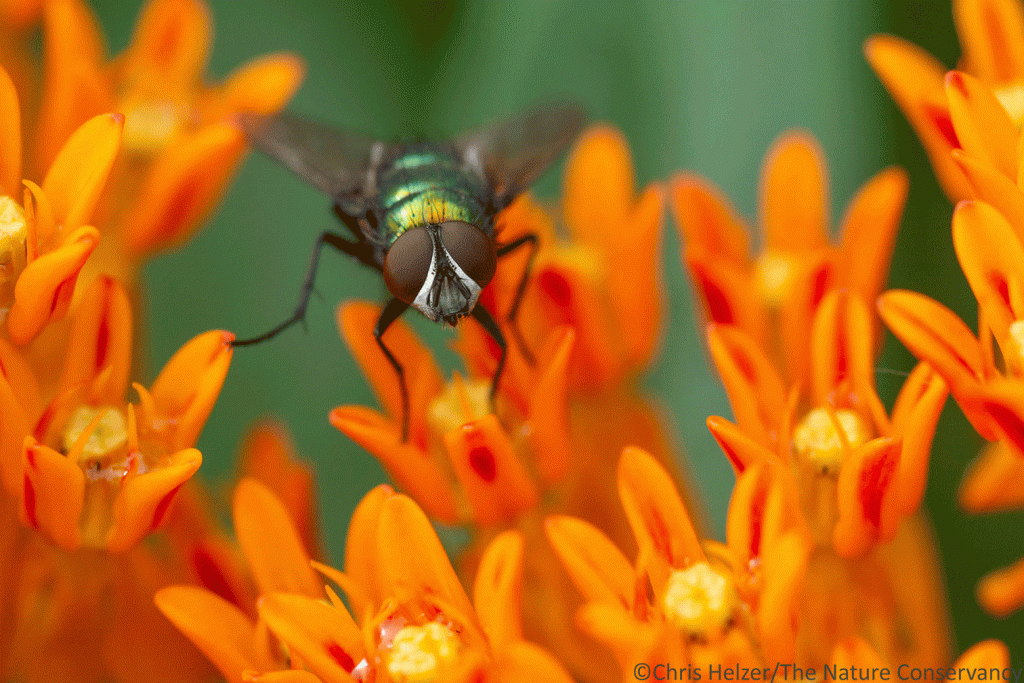
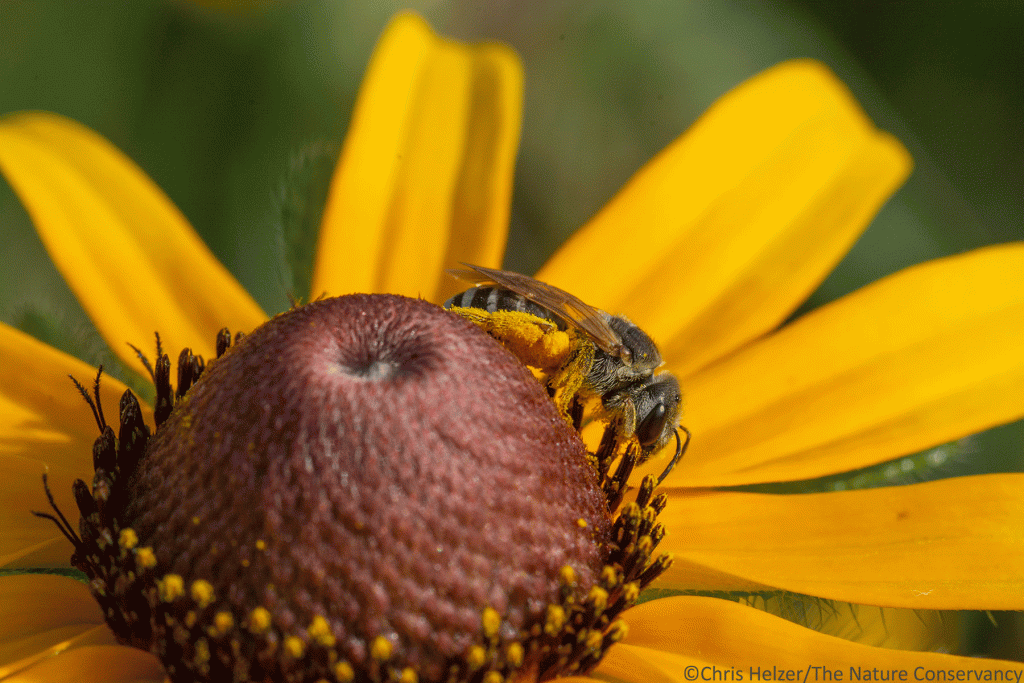
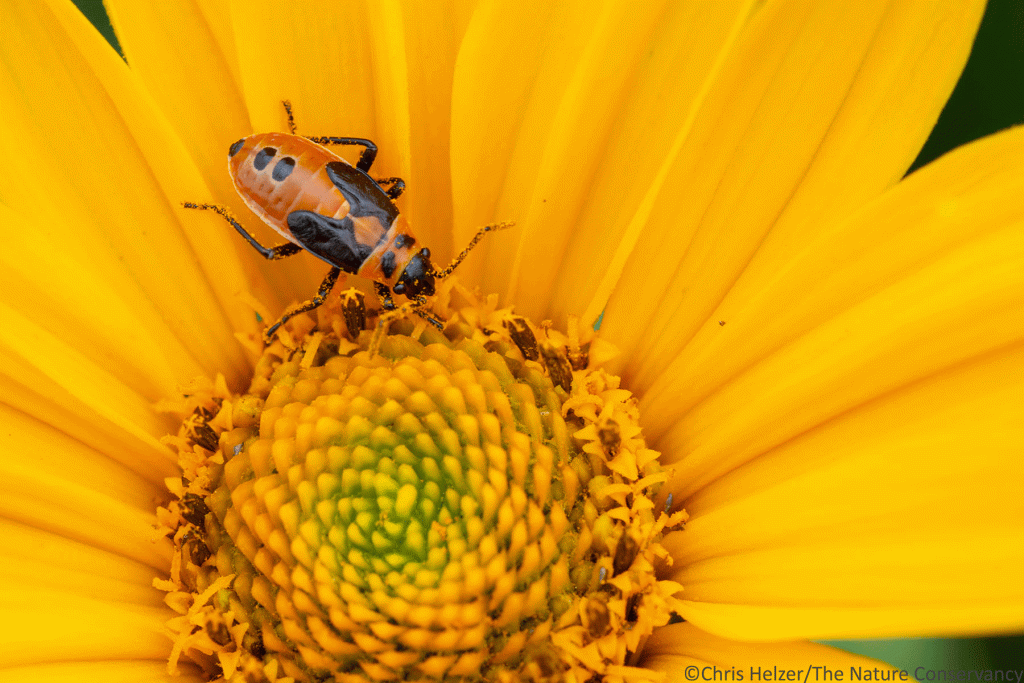
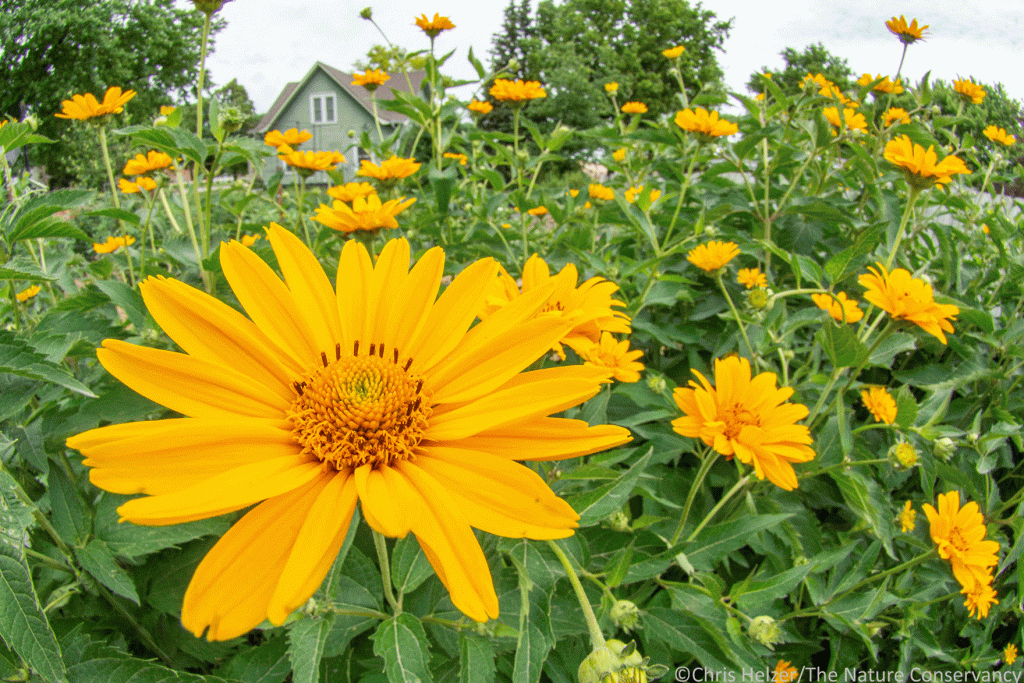
Prairie wild rose (Rosa arkansana). Nikon 105mm macro lens. ISO 320, 1/320 sec, f/13.Butterfly milkweed (Asclepias tuberosa). Nikon 105mm lens. ISO 200, 1/50 sec, f/20.Serrate-leaf primrose (Calylophus serrulatus). Nikon 105mm macro lens. ISO 320, 1/320 sec, f/13.False sunflower (Heliopsis helianthoides) with a few florets that grew unusually. Nikon 105mm lens. ISO 200, 1/100 sec, f/13.Purple poppy mallow (Callirhoe involucrata). Nikon 105mm macro lens. ISO 200, 1/200 sec, f/11.Fly and butterfly milkweed. Nikon 105mm macro lens. ISO 200, 1/250 sec, f/10.I’m not sure what kind of bee this is. I was concentrating on photographing it too much to look at the rest of the body. It flew off just a moment after this photo was taken. Nikon 105mm macro lens. ISO 200, 1/250 sec, f/10.Hollow stems of ironweed (Vernonia baldwinii), left tall from last year’s growth, are hosting several small native bee nests (Ceratina sp) this summer. Nikon 10.5mm fish eye lens. ISO 200, 1/60 sec, f/13.False sunflower close-up. ISO 320, 1/160 sec, f/22.Small bee (Halictus ligatus?) on black-eyed Susan (Rudbeckia hirta). Nikon 105mm macro lens. ISO 320, 1/160 sec, f/22.False milkweed bug nymph on false sunflower. Two ‘imposters’, neither of which deserve their given names. Nikon 105mm lens. ISO 200, 1/80 sec, f/16.False sunflower. Nikon 10.5mm fish eye lens. ISO 400, 1/100 sec, f/18.
Over the last couple weeks, I’ve been trying to figure out how to describe the joy, contentment, and pride I feel when I walk around our family prairie. The old saying about photographs being worth 1000 words applies in a way, I guess, so I’m including lots of photos (taken within the last two weeks) in this post – but they’re insufficient too.
Long-time readers may remember the history of my family prairie, which was largely farmed before being re-seeded to grass in 1962 by my grandpa. There were small and scattered unplowed prairie fragments on the steep and/or low-lying portions of the site, but the vast majority of today’s 100 acre prairie was once crop land. During the last 10-15 years, we’ve been working to increase the plant diversity of the site through overseeding and grazing regimes that include intensive grazing periods followed by long periods of rest. Over time, that grazing system has evolved into what I now refer to as open-gate rotational grazing.
Here’s a photo taken a week ago within one of the four main management units of our prairie. Over the last two years this area has been grazed intensively. In 2018, it was grazed for the last half of the season and in 2019, it was grazed all season long. This year (and most of next) it is excluded from grazing and is full of life and vigor. All the photos in today’s post were taken from this recovering patch of prairie.Here’s the same part of our prairie shown in the first photo, but this photo was taken in October of last year (2019). The cattle were just about to come out of the prairie, but you can see that they’d eaten just about everything there – and they’d been there all season. This kind of intensive grazing can make people nervous, and what’s shown in this photo might not look much like a prairie, but it provides important habitat structure for many animal species and also creates conditions that help sustain plant diversity at our site. Again, all the other photos in this post were taken from this same prairie patch – less than a year after this photo was taken.
I’m really at a loss for words to describe what I’ve felt watching the prairie become more diverse and beautiful over time. I know many of you have worked on similar long-term projects and are nodding your head right now. There are some parallels with watching a garden grow and produce through time, restoring an old house to its former glory, and even (kind of) watching kids grow up and become independent and capable adults. As I walk around the prairie now, I revel in the changes I’ve helped create, but also in the extraordinary complexity of interactions I now get to observe across every square foot of the land. The prairie has a life of its own, far beyond what was created by Grandpa’s grass planting and the wildflower seeds we’ve tossed out since then.
A crab spider sits in ambush on Carolina horsenettle (Solanum carolinense).A small bee (Halictus ligatus?) feeds on a black-eyed Susan flower.
I’m reminded of Wayne Copp’s three components of a healthy prairie, which I wrote about back in 2014: Color, Movement, and Noise. Those three attributes are ostentatiously displayed across the site right these days. The color comes from wildflowers – both long-lived and short, as well as from monarchs, regal fritillaries, and a bounty of other butterflies, bees, and invertebrates. Noises are produced by birds like upland sandpipers, grasshopper sparrows, northern bobwhite, and many more, along with the more musical invertebrates, such as katydids, grasshoppers, and crickets.
Movement comes in many forms. The slightest wind causes the flowers and grasses to dance. Birds and insects fly, hop, and crawl over and through those plants. Pocket gophers, ground squirrels, and countless invertebrates and move through the soil, with scant but present evidence of that movement. Badgers are more obvious in their excavation, and leave new mounds of soil for me to find each time I visit – and create habitat for other animals and plants to colonize.
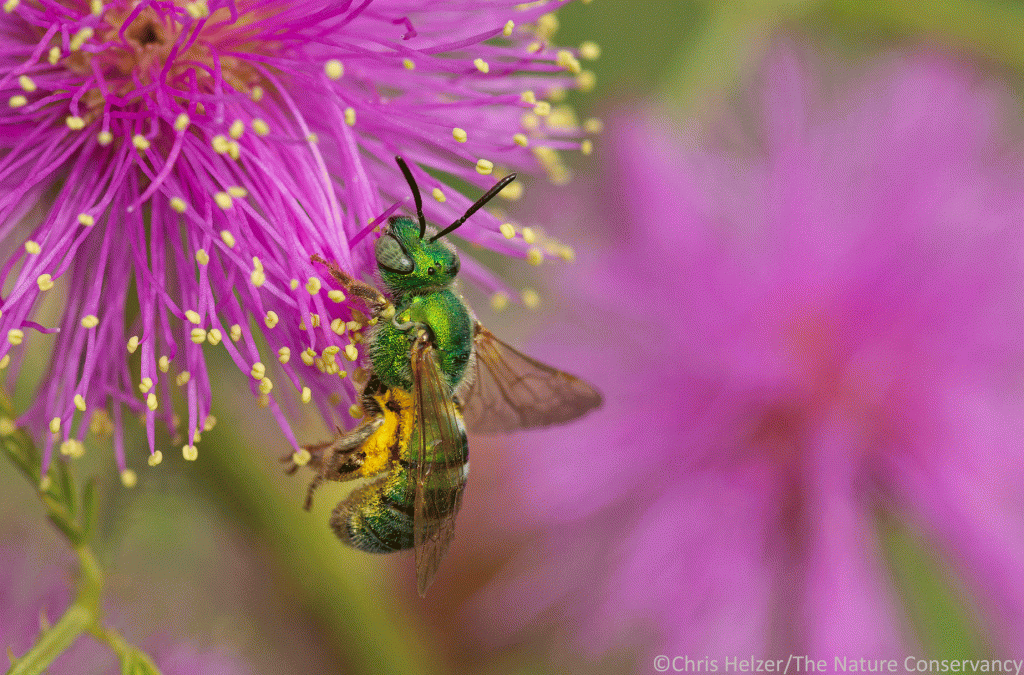
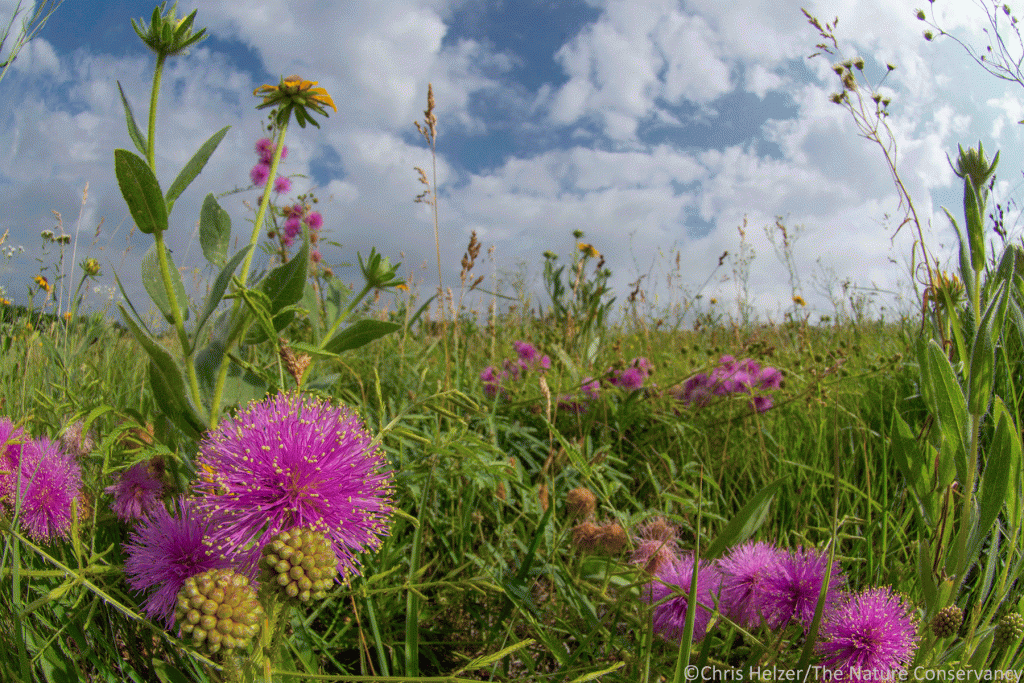
Here’s a wider shot of the portion of our prairie currently recovering from a year and a half of grazing. As you can see, the big bluestem, Indiangrass, and other big grasses are short (especially for late June) and there are lots of opportunistic plants taking advantage of those suppressed grasses. Daisy fleabane, black-eyed Susan, and yarrow are the most obvious at the moment, but there are many others. Longer-lived perennials are also thriving, including purple prairie clover, lead plant, sensitive briar, stiff sunflower, rosinweed, and more.A green metallic sweat bee on sensitive briar (Mimosa quadrivalvus).
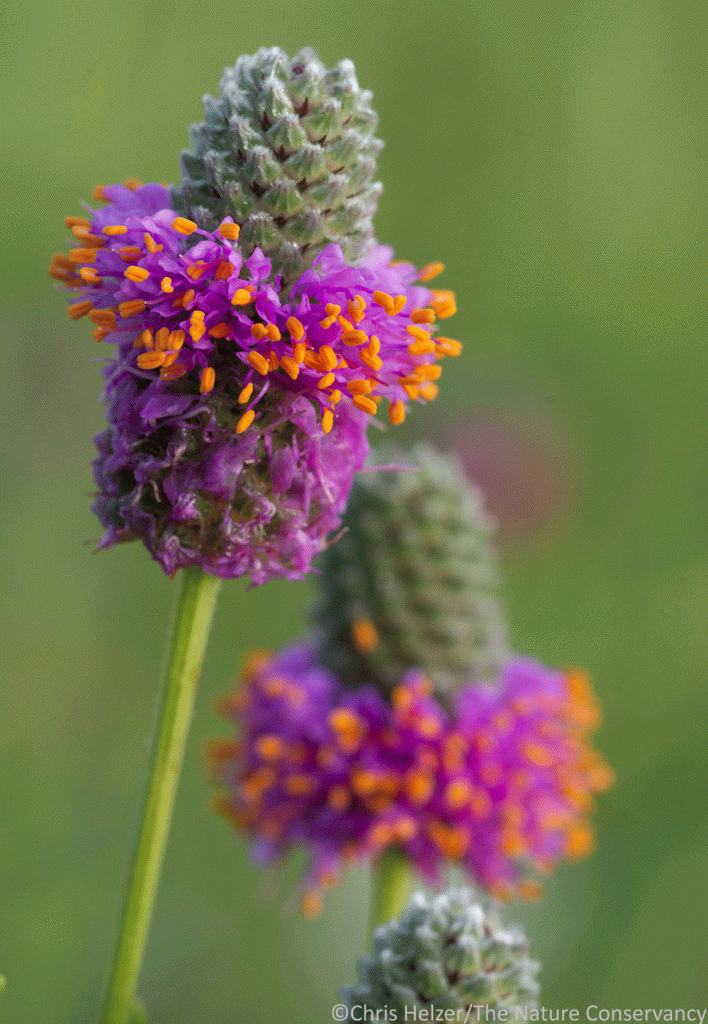
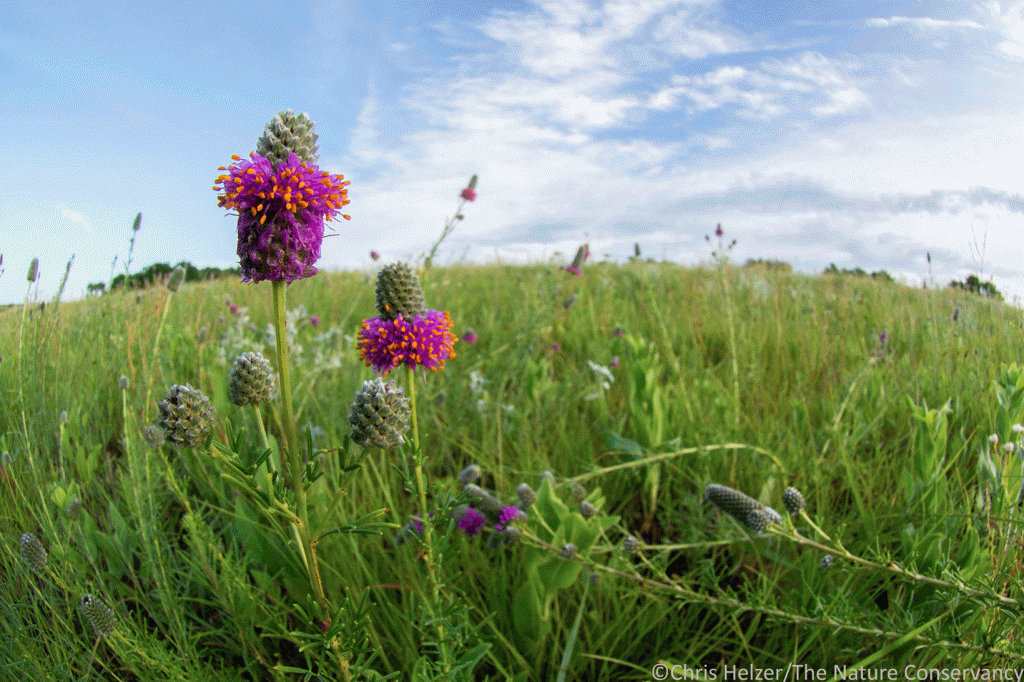
One of my favorite examples of movement has been the continuing colonization taking place by various plant species. Some are spreading outward from the small and formerly isolated fragments of remnant, unplowed prairie. Those include lead plant (Amorpha canescens), blue-eyed grass (Sisyrinchium campestre), pussytoes (Antennaria neglecta), ground plum (Astragalus crassicarpus), prairie violet (Viola pedatifida), and purple prairie clover (Dalea purpurea), among others. Each year, I find new individuals and patches of those plants further afield from where they’d been confined to tiny islands surrounded by crop land.
Purple prairie clover.This is one of many purple prairie clover patches that continues to expand in size over time. It covers an area about the size of a two car garage – much bigger than it used to be.
In addition, we’ve done a lot of seed harvest from other prairies and have tossed those seeds around our prairie – usually in places where cattle have recently grazed most intensively. Not everything we’ve harvested has so far established, but there’s a long list of species that have, and many of those are now spreading on their own from those initial colonizations. Species that have done particularly well include stiff sunflower (Helianthus pauciflorus), rosinweed (Silphium integrifolium), yarrow (Achillea millefolium), Canada milkvetch (Astragalus canadensis), false sunflower (Heliopsis helianthoides), black-eyed Susan (Rudbeckia hirta), wild bergamot (Monarda fistulosa), shell-leaf penstemon (Penstemon grandiflorus), and pitcher sage (Salvia azurea).
Some of today’s wildflower diversity probably arrived on its own, either as hitchhikers with the grass seed back in 1962, or through the wind or other means since then. Those include perennials like dotted gayfeather (Liatris punctata), stiff goldenrod (Solidago rigida), common, green, antelope horn, and whorled milkweeds (Asclepias sp), and cudweed sagewort (Artemisia ludoviciana), but also many shorter-lived ‘weedy’ species like daisy fleabane (Erigeron strigosus), curly-cup gumweed (Grindelia squarrosa), dandelions (Taraxacum officinale), and others.
Goatsbeard (Tragopogon dubius) is a species that has made its own way into our prairie. While it’s not native, I’m glad of its membership in the prairie community.
All of the above plant species have contributed positively toward the prairie community. There are, of course, some species that are less welcome. I’m not a fan of the sweet clover (Melilotus sp) that can be abundant on the flatter portions of the site, and am glad that cattle seem to preferentially munch on it, helping to at least keep it shorter and less profuse than it could otherwise be. Smooth brome (Bromus inermis) and Kentucky bluegrass (Poa pratensis) are ubiquitous invaders, but, again, cattle grazing has helped keep them from becoming dominant enough to suppress the increasing abundance and diversity of other species. Eastern red cedar and honey locust are constantly popping up around the prairie, traveling in from nearby woodlots and riparian areas. The cedars are pretty easy to stay on top of, but the locusts take more work, requiring herbicide treatment of the stumps after cutting them.
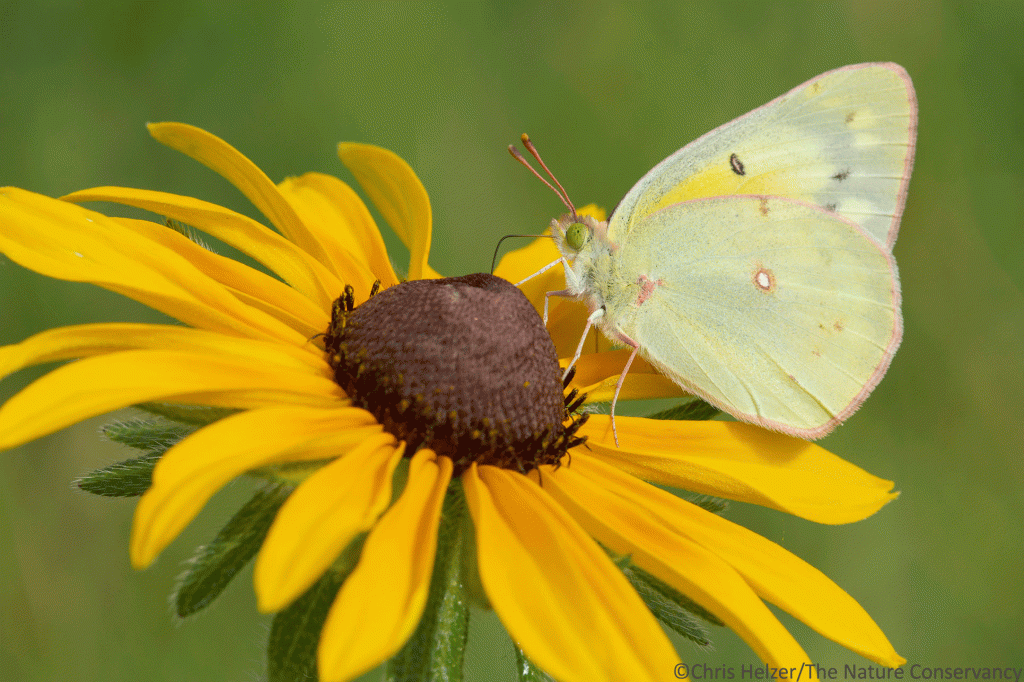
A jumble of sensitive briar branches sprawls across the prairie. I’ve been happily surprised by how many sensitive briar plants I’ve found blooming in our prairie this year – more than any other year I can remember. Two tiny moths rest on a black-eyed Susan flower. Black-eyed Susans are extra abundant this year in the patch recovering from recent grazing. They’re showy flowers and sought out by many pollinators and other insects looking for a nutritious meal.
It’s a lot harder to catalog and track the influx of animals. Birds are the easiest of those. Some, like western meadowlarks, grasshopper sparrows, and dickcissels are to be expected, given the size and management of our prairie. We also provide good cover for ring-necked pheasants and northern bobwhite. I’m even more pleased about the consistency with which we see upland sandpipers raising their families on our land since they are trickier to provide for. I even spotted a greater prairie chicken in June a couple years ago, giving me hope that we might have had a nest as well, though our prairie is much too small to regularly attract that species.
I also enjoy seeing evidence of badgers, coyotes, snakes, frogs, and many other small and large animals around the site. Prior to the conversion of the crop land to grass, I doubt most of those species were around much. It’s hard to know how much our efforts to diversify the prairie since then have affected those animals, but I assume there have been some positives.
In terms of invertebrates, I’m constantly amazed by the diversity of pollinators I see on our 100 acre island in the middle of a sea of crops. We harbor the appropriate host plants for monarchs and regal fritillaries, along with other insects, but it’s still gratifying to see those species actually appear each year. I’ve focused hard on making sure our management provides consistent and abundant blooms for pollinators across each season, and I hope that’s helping to maintain those populations. I see plenty of other invertebrates too, but, for the most part, I don’t know what they need to survive or how their populations are doing. I’m just grateful they’re around and part of the community we’re building.
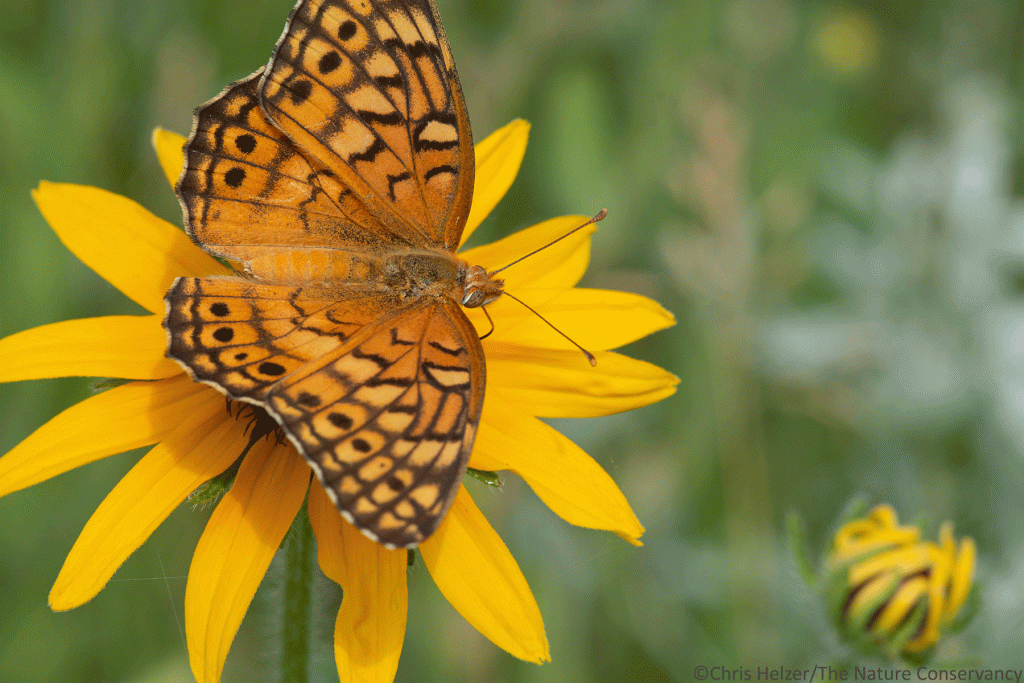
A pair of mating yellow-faced bees (Hylaeus?) on black-eyed Susan.This variegated fritillary is one of many pollinators visiting black-eyed Susan flowers right now.Orange sulphurs are common migrants that manage to find our little prairie every year.
That community, I think, is the main source of the pride and gratification I feel as I walk around our prairie. Because most of what I’m walking across was at one time crop land, and then was planted only to a mixture of grasses, any evidence of increasing diversity makes me happy. There’s a big difference between a grass planting and a prairie. I can’t tell you exactly how to distinguish between them, but species diversity and the complexity of interactions that come with that diversity are critical components. Although I’m biased, I’m very comfortable saying that we now own 100 acres of prairie, rather than about 80 acres of planted grasses surrounding 20 acres of tiny prairie remnants.
Don’t get me wrong, our prairie still has plenty of room for improvement. Plant diversity is still not what I’d like to see across most of the site. We’ll continue overseeding those areas to speed up colonization. That work should help us better sustain populations of the pollinators and other invertebrates that form the foundation for much of the essential functioning of a prairie. Eventually, I hope to take the last 49 acres of cropland that still remains on the high flat portions of our quarter section and convert it to prairie as well. The finances and logistics of that still need to be worked out, but I’m committed to doing that before I hand over the land deed to my kids someday.
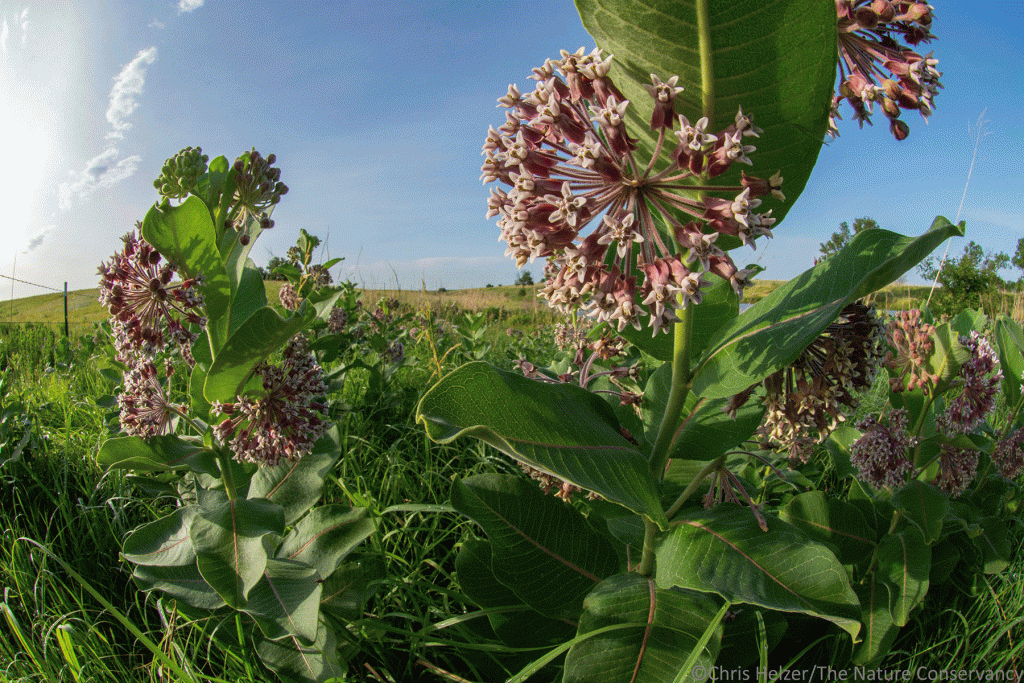
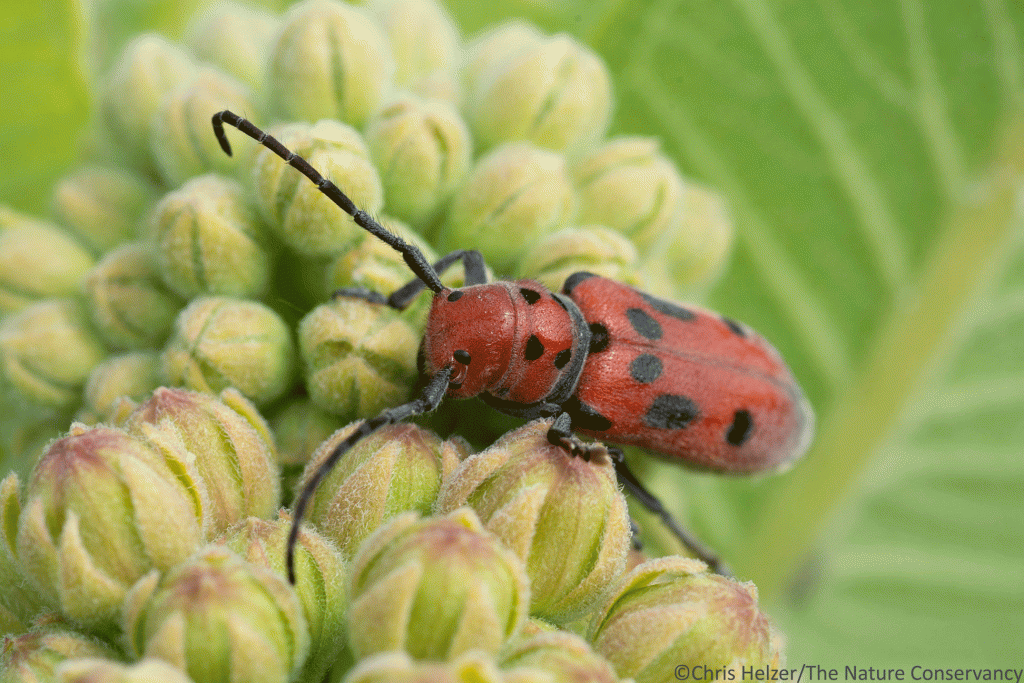
Common milkweed is found across the whole prairie, but reaches particularly high abundances around the pond and in a few other small pockets of prairie grazed less frequently and intensively than elsewhere.Long-horned milkweed beetles are just one of many milkweed specialist insects (along with monarch caterpillars and others) that find and feed on milkweed plants each year.
I won’t bore you with all the other issues we still need to address. The point of today’s post is to try to convey the emotions I feel as I celebrate the prairie community our family has helped to create. Those of you who have spent many years working on a piece of land will know the kinds of emotions I’m talking about. I wish I could better explain them to the rest of you.
Here’s my best attempt to summarize: I’m incredibly proud of the diverse plant and animal community that has formed – and continues to form – on our small parcel of land. Walking through the prairie now, surrounding by color, movement, and noise, fills me with contentment and happiness. At the same time, I feel a deep responsibility for all those species and populations that we’ve created habitat for. Because every management strategy helps some species and hurts others, it’s up to us to create shifting management regimes that sustain each of those species through time. That responsibility means my pride, contentment and happiness are tinged with a little anxiety as I survey the results of our most recent management decisions. Perhaps most of all, I feel exceedingly fortunate to have the opportunity to experience all these emotions and to contribute in a small way toward the future of prairies and the species that rely upon them.
Black-eyed Susand and silver-leaf scurfpea in prairie recovering from a bout of intensive grazing.