The activity levels in prairies around here start ramping up exponentially in mid-April. More wildflowers begin blooming, but most are still scattered and hard to see until you get within a few yards of them. Bees and other insects are flying around and even more are scooting about on the ground. Many of us aren’t able to get out to our favorite prairies right now, so here are some photos of the kinds of species that are active – at least in my part of Nebraska – at this time of year.
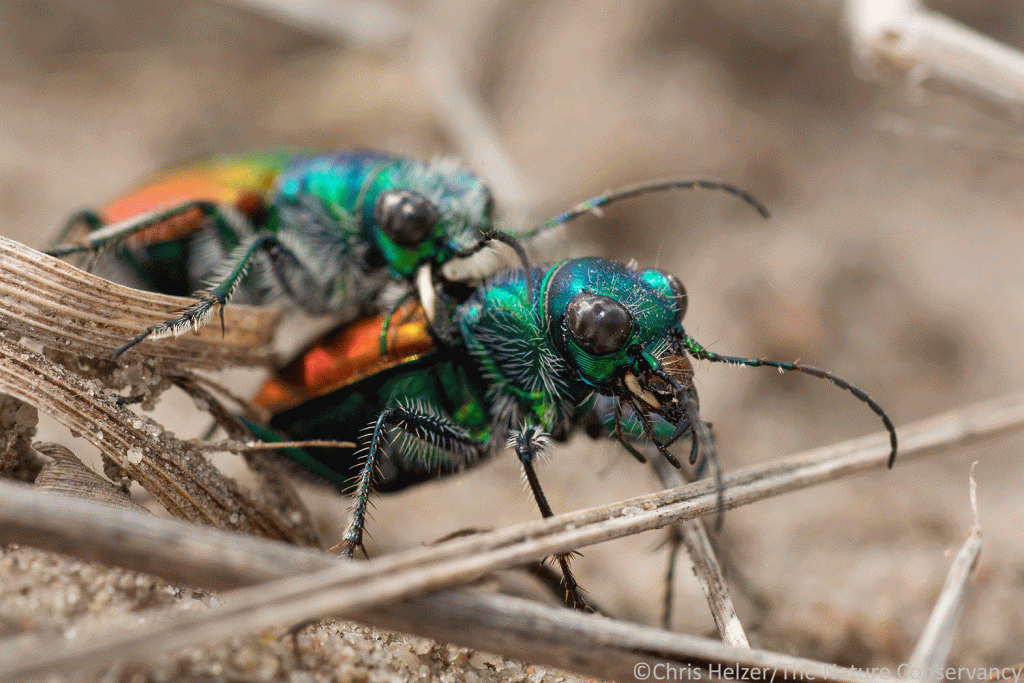
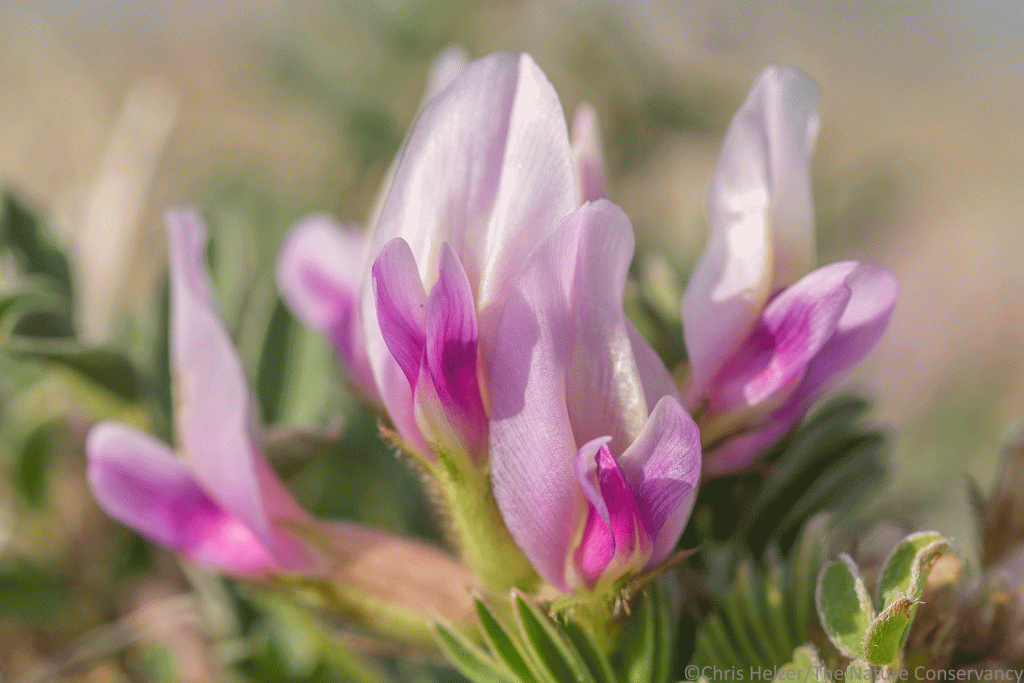
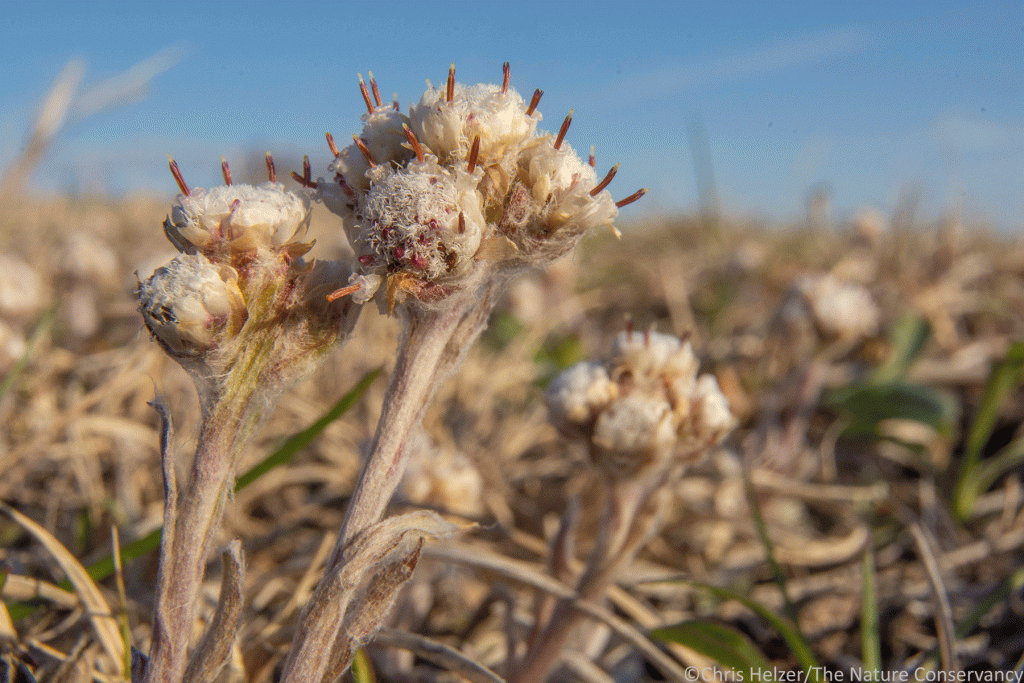
Prairie dandelion (Nothocalais cuspidata) begin blooming in loess soil prairies in our part of the state.More and more insects are becoming active as well, including these festive tiger beetles (Cicindela scutellaris).This bee is already hard at work gathering food to provision the eggs in her nest burrow.This diminutive little annual is western rockjasmine (Androsace occidentalis). It is very common in our area, growing in crop fields as well as prairies, but is considered rare or even extirpated from parts of the eastern edge of the tallgrass prairie.Ground plum, aka buffalo pea (Astragalus crassicarpus) is an early blooming legume in both loess and sand prairies here. This photo was taken with my 105mm macro lens, providing a nice portrait of the blossoms.This photo of the same species was taken with a wide angle lens mounted on a 12mm extension tube. That combination allowed me to get the close up view of the flowers but also show more of the plant and surrounding habitat. These pussytoes (Antennaria neglecta) flowers were photographed with the same wide angle/extension tube combo. I feel like this photo took maximum advantage of the wide angle/extension tube perspective.
Back by popular demand! (By which I mean my son John told me I should keep doing these quizzes.)
Spring is resurgent here in Nebraska, with forecast temperatures at or above 70 degrees F most of this week. Kim has put lots of plants into the garden and is hardening off seedlings for quite a few more. I’m starting to see lots more bees flying around, as well as a few butterflies and moths, taking advantage of the rapidly increasing number of blooming flowers.
Hang in there, everyone. Stay safe and be kind to each other. Also, enjoy this week’s quiz…
.
1) Which of the following prairie plants are orchids? (You can click on this or any other photo to see a larger, clearer version.)
A. All of them
B. 2 and 3
C. 3
D. 1 and 2
E. 1 and 4
F. THERE’S A SPIDER ON #3!!
G. Yeah, it’s a cute little one, isn’t it?
.
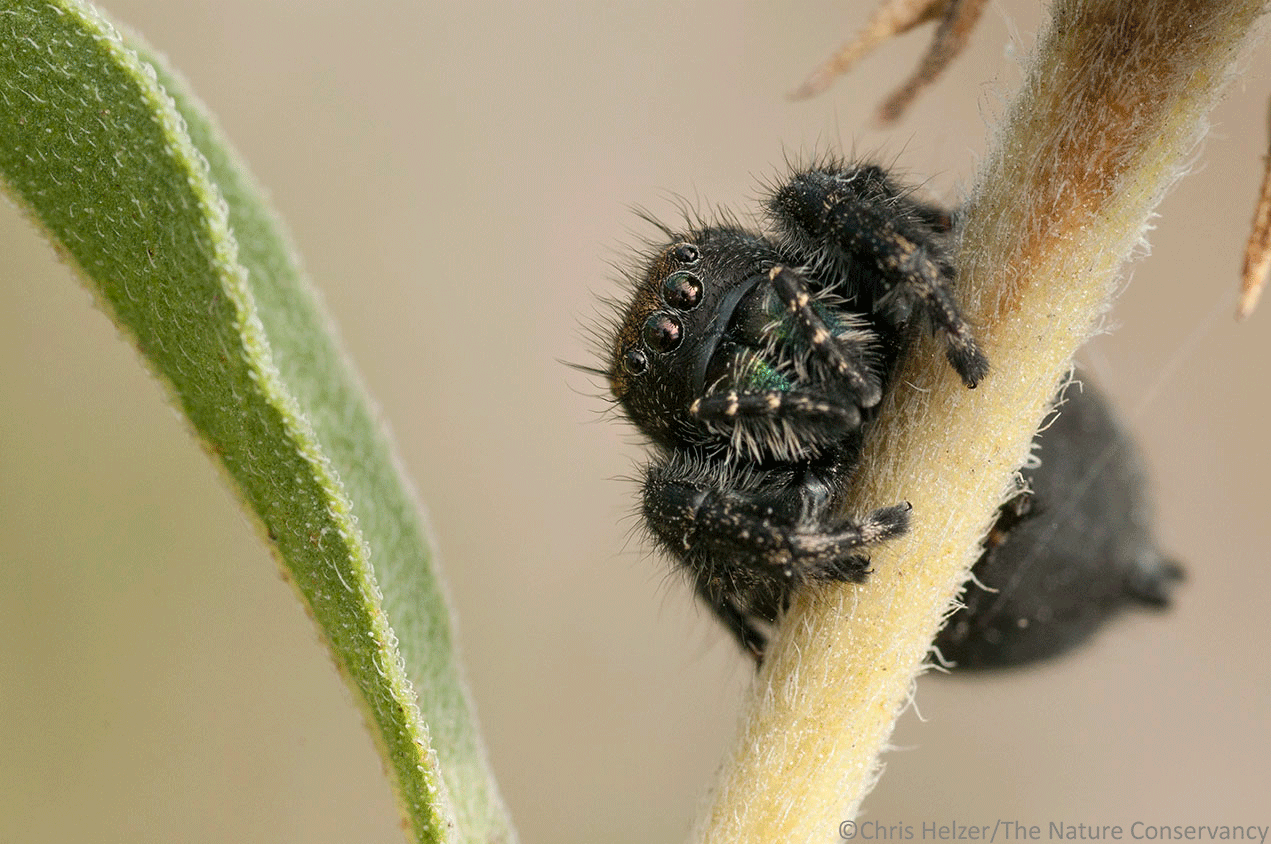
2) What kind of adorable spider is this?
A. Crab spider
B. Wolf spider
C. Funnel web spider
D. Jumping spider
E. Gosh, it’s adorable!
.
3) Which of these are official common names for native Nebraska plants?
A. Spikenard
B. Cowshed
C. Sugarbowls
D. Noseburn
.
4) Which of these are plant names I invented, only to find out they’re actually real plant names?
A. Wagon wheel
B. Devil’s fork
C. Goat’s ear
D. Candlewick
E. All of the above.
.
5) What grassland bird species is this?
A. Eastern Meadowlark
B. Western Meadowlark
C. One of the meadowlarks, it’s not possible to tell without hearing the song
D. Dickcissel
E. You just made up the name ‘dickcissel’, didn’t you?
F. I’m not telling
.
6) What is this ornately decorated object?
A. The chrysalis for some kind of gossamer-wing butterfly
B. The seed pod for some kind of vetch
C. A gall caused by some kind of fly
D. An egg case of some kind of wasp
E. A flower of some kind of primrose
.
7) Which of these are official common names for moth species?
A. Marsh marauder
B. Three-striped dwarf
C. Romantic owl
D. Fire elemental
E. Frosted grass-elf
.
8) Which of these are sunflowers (Helianthus sp)?
A. All of them
B. 1, 2, and 3
C. 1, 2, and 4
D. 2, 3, and 4
E. 1 and 4
F. It’s not fair if we can’t see their faces…
.
9) What is the common name of this grass?
A. Blue grama
B. Sideoats grama
C. Hairy grama
D. Hairy grampa
E. Sweet ol’ grama
F. You know you’re really weird, right?
.
.
.
.
Answers:
1) C, F, and G are all correct. Only #3 is an orchid. It’s a ladies tresses orchid (Spiranthes sp). #1 is American germander (Teucrium canadense), #2 is plains larkspur (Delphinium carolinianum), and #4 is Illinois tickclover (Desmodium illinoense).
2) D and E are correct. Jumping spiders are the fuzzy teddy bears of the spiders (though not all jumping spiders are fuzzy, they’re all adorable). When they jump, they attach a silken safety line first so if they miss and fall, they don’t fall far and they can just climb back up the safety line to their previous location.
3) B. I made up cowshed (I mean, I didn’t make it up – it’s an actual thing, it’s just not the name of a native plant species in Nebraska). But it might as well be, as crazy as those other names are…
4) E.
5) D. This is a dickcissel, a beautiful grassland bird about the size of a large sparrow. It has similar markings to a meadowlark but is smaller and has more of a red-brown back. Its call varies pretty significantly from place to place, even when those places aren’t far apart.
6) B. It’s the seed pod for painted vetch (Astragalus ceramicus). Painted vetch is found in the Nebraska Sandhills where other vegetation is relatively sparse. It’s also found elsewhere in the western Great Plains and intermountain west. You can read a pretty useless (but maybe funny?) post I did on this plant here.
7) None of them. Not one of them are actual moth names. But you thought at least some of them were, didn’t you!! Because moth names are insanely wild! But these are all made up! HEE HEE HEE!
8) C. 1, 2, and 4 are sunflowers. #3 is entire-leaved rosinweed (Silphium integrifolium). The other three are – in order – Plains sunflower (Helianthus petiolaris), Maximilian sunflower (Helianthus maximiliani), and stiff sunflower (Helianthus pauciflorus).
9) C. (and F) Hairy grama is my nomination for best prairie plant name ever. Feel free to nominate others but I don’t think you’re going to beat me.









 The Prairie Ecologist