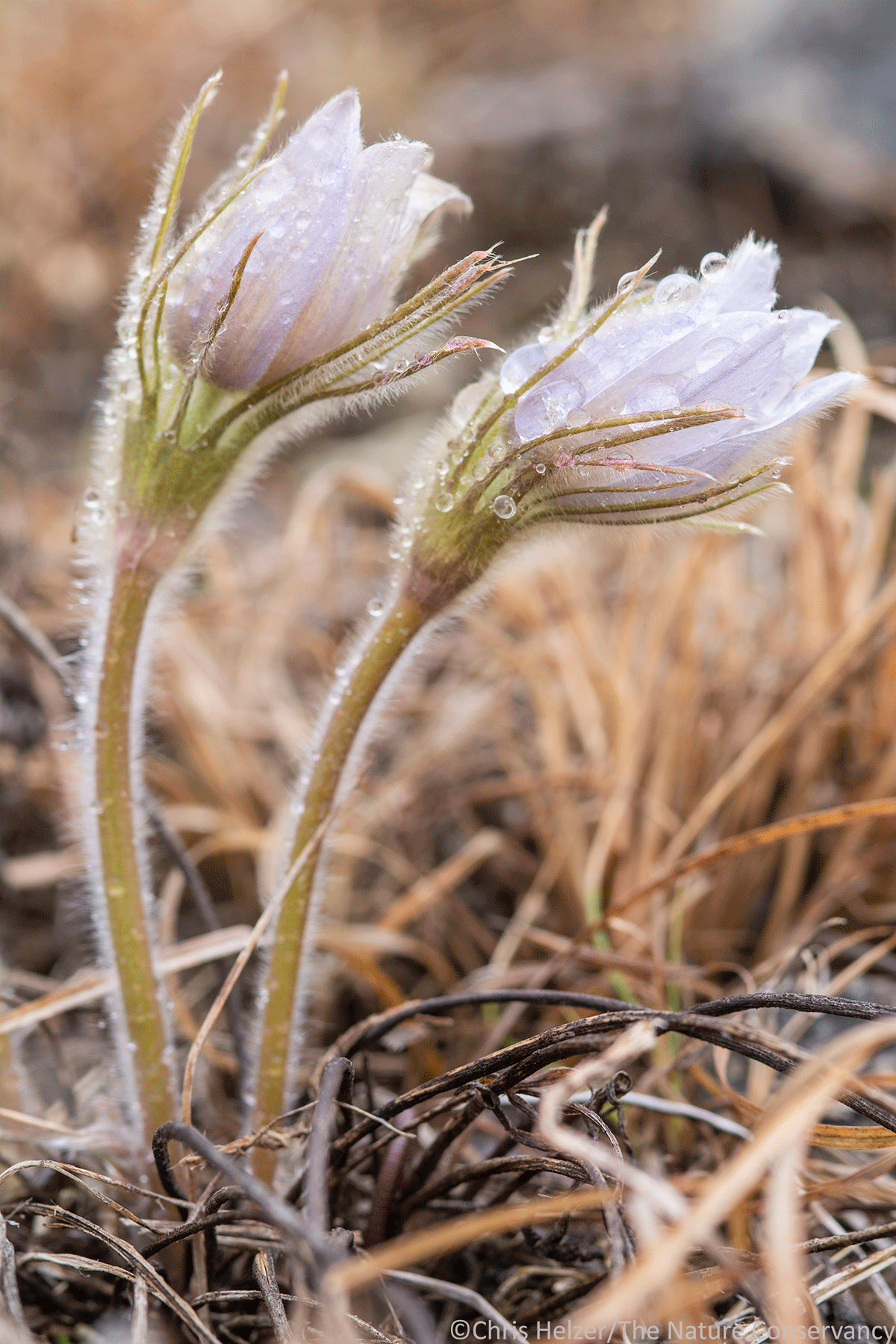
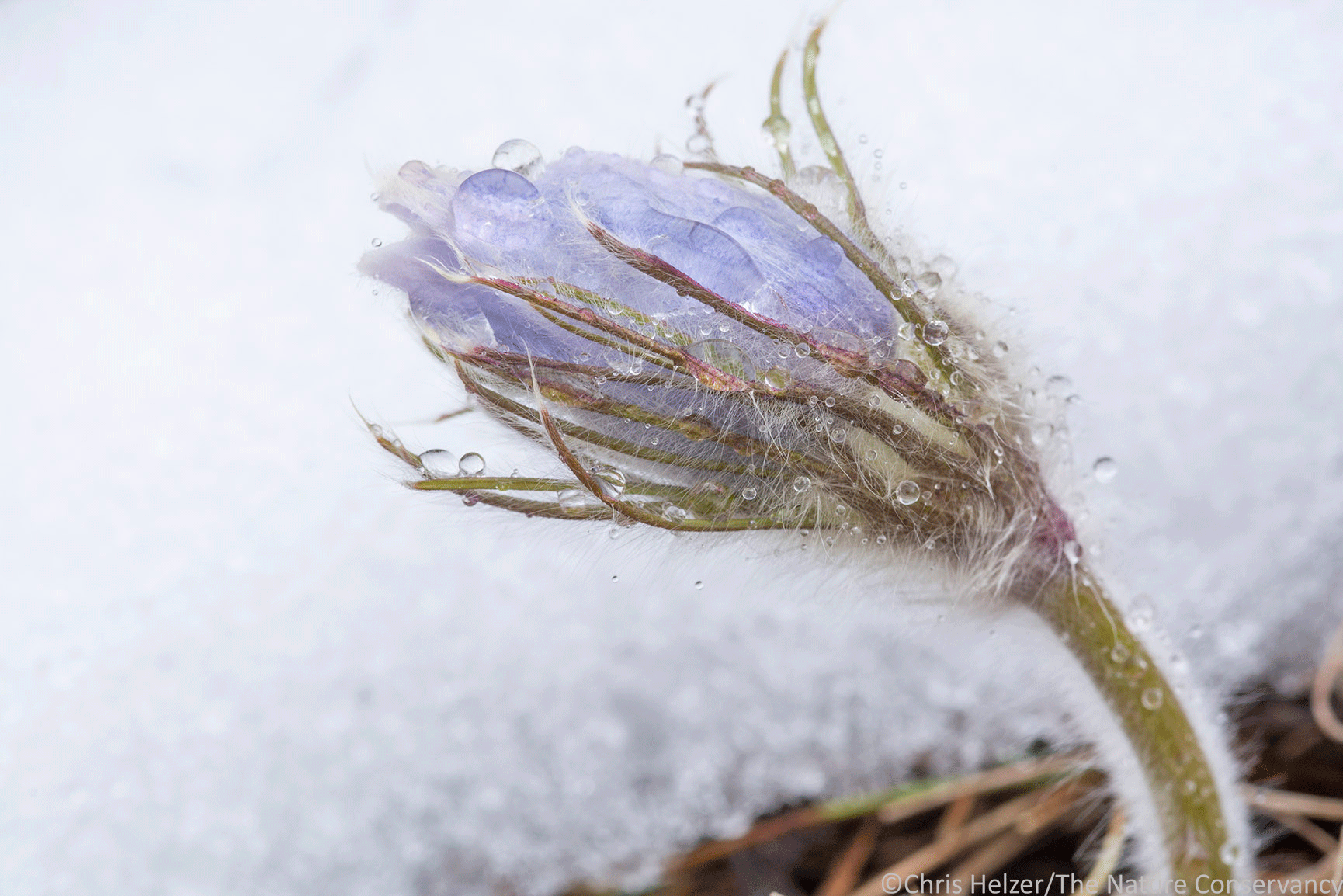
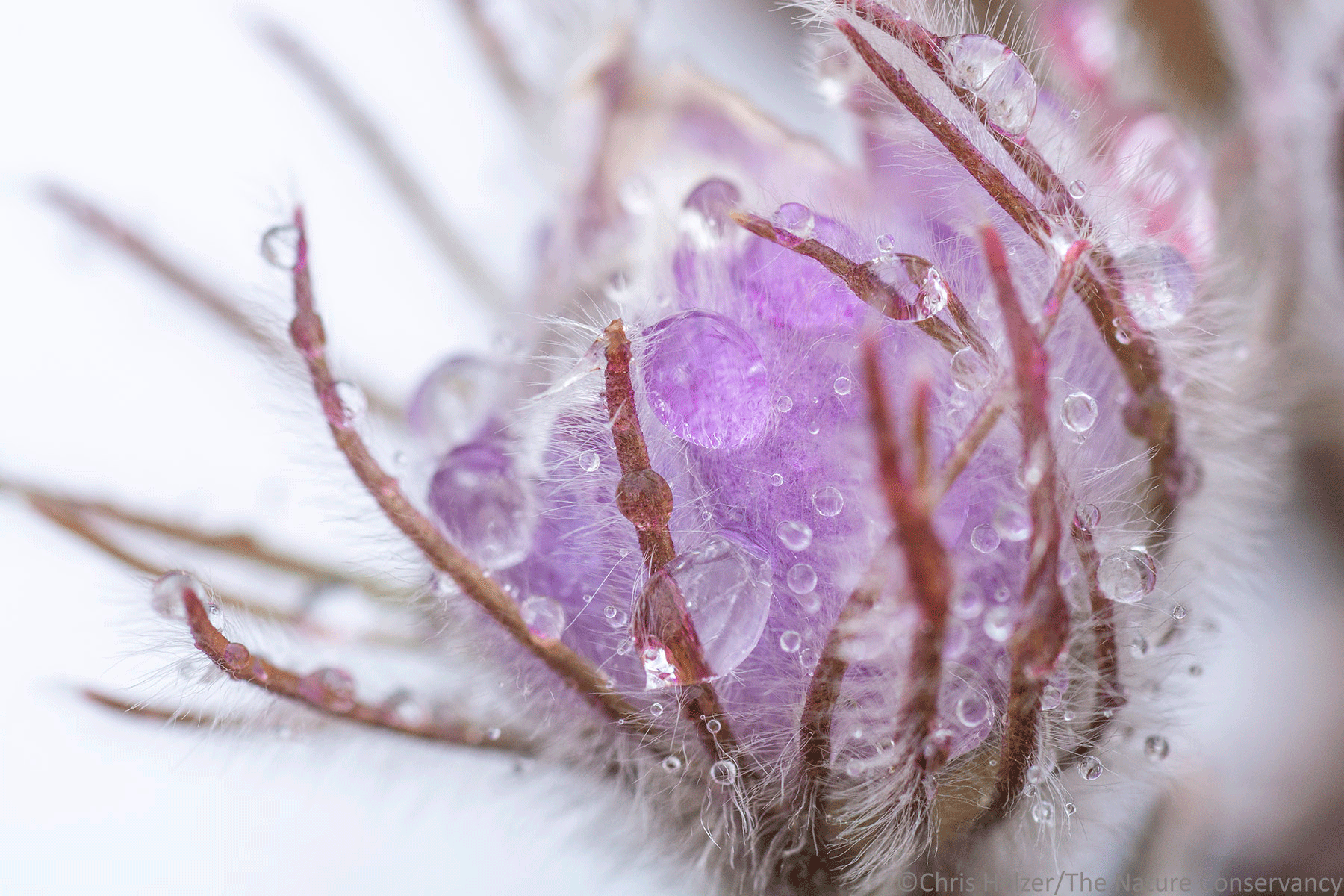
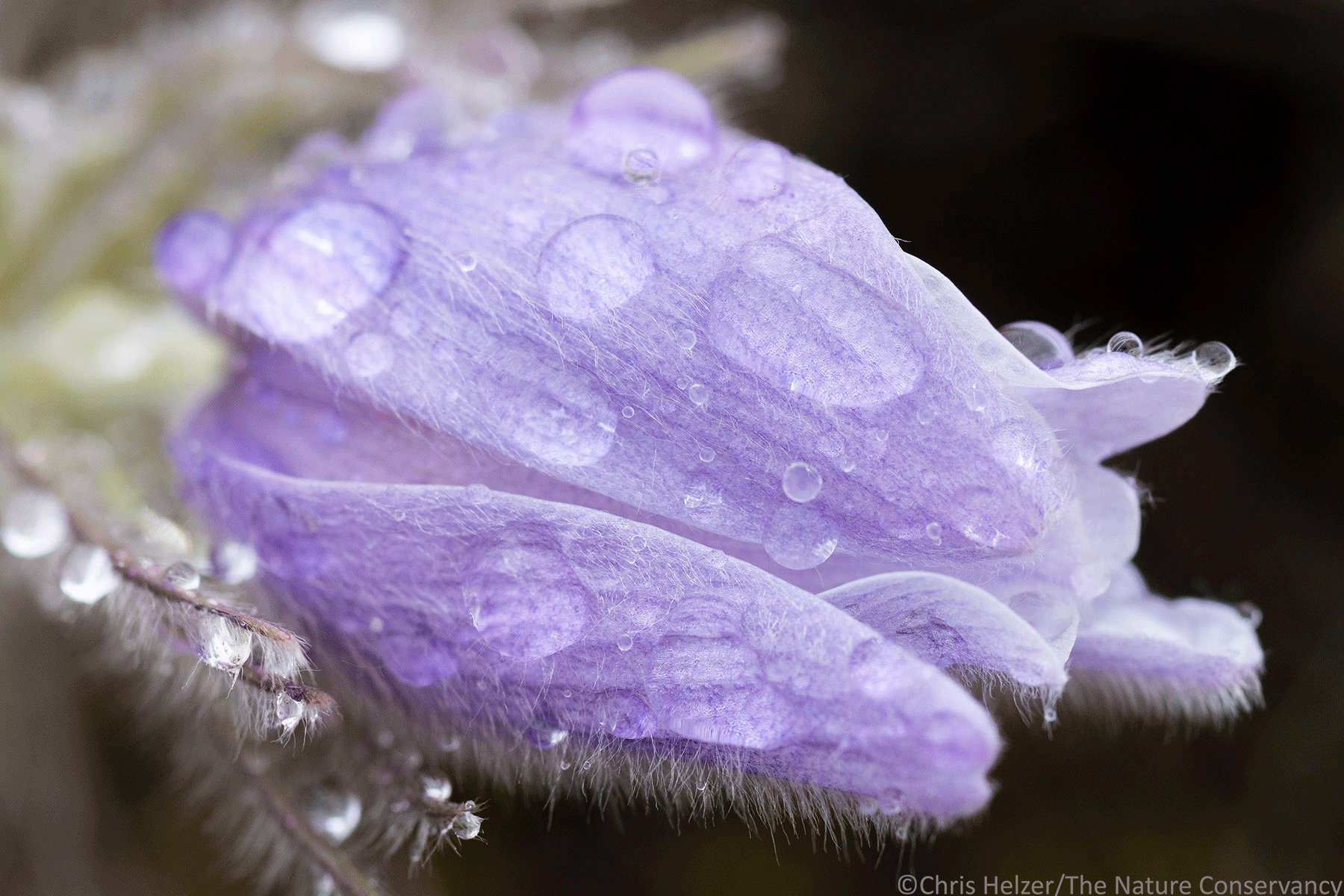
Pasqueflower (Pulsatilla patens) is one of the most popular of the early spring prairie wildflowers, and for good reason. It’s a gorgeous plant, with an unusually large and showy blossom for a plant that blooms so early in the season. To continue my accidental rhyming paragraph, I’ll also mention that the plant has interesting adaptations to help it survive freezin’.
Blooming in April around here means a strong risk of freezing weather, frost, and even snow. One strategy that might be important to the success of pasqueflower is that it sends its flowering stalks up before putting any leaves out. I don’t know this, but I assume that means pasqueflower can limit its energy investment and risk. The plant isn’t relying on photosynthesis from leaves for its early season activity, something that’s probably helps is survive heavy snows or hard freezes. Its growth close to the ground and very dense (insulating) hairs also help it adapt to early prairie growth. Pasqueflower can also be found growing in the tundra, which probably makes spring in the prairie seem like not such a big deal.
My first live experience with pasqueflower came during a college spring break trip to northwestern Nebraska, where a friend and I found pasqueflower blossoms poking through the snow on high rocky ridges. Since then, I’ve been entranced by those flowers and their fuzzy heads that poke out of the ground to herald the coming of spring.
I wish there were native populations closer to my home in Aurora, but the species isn’t found in the southeast quarter of the state – they’re primarily a species of rocky prairies to the north. A couple years ago, I posted a bunch of early May photos showing pasqueflowers in full bloom at our Niobrara Valley Preserve. Today, I’m sharing some more photos that are more representative of what they look like in colder weather (with flowers more tightly closed).
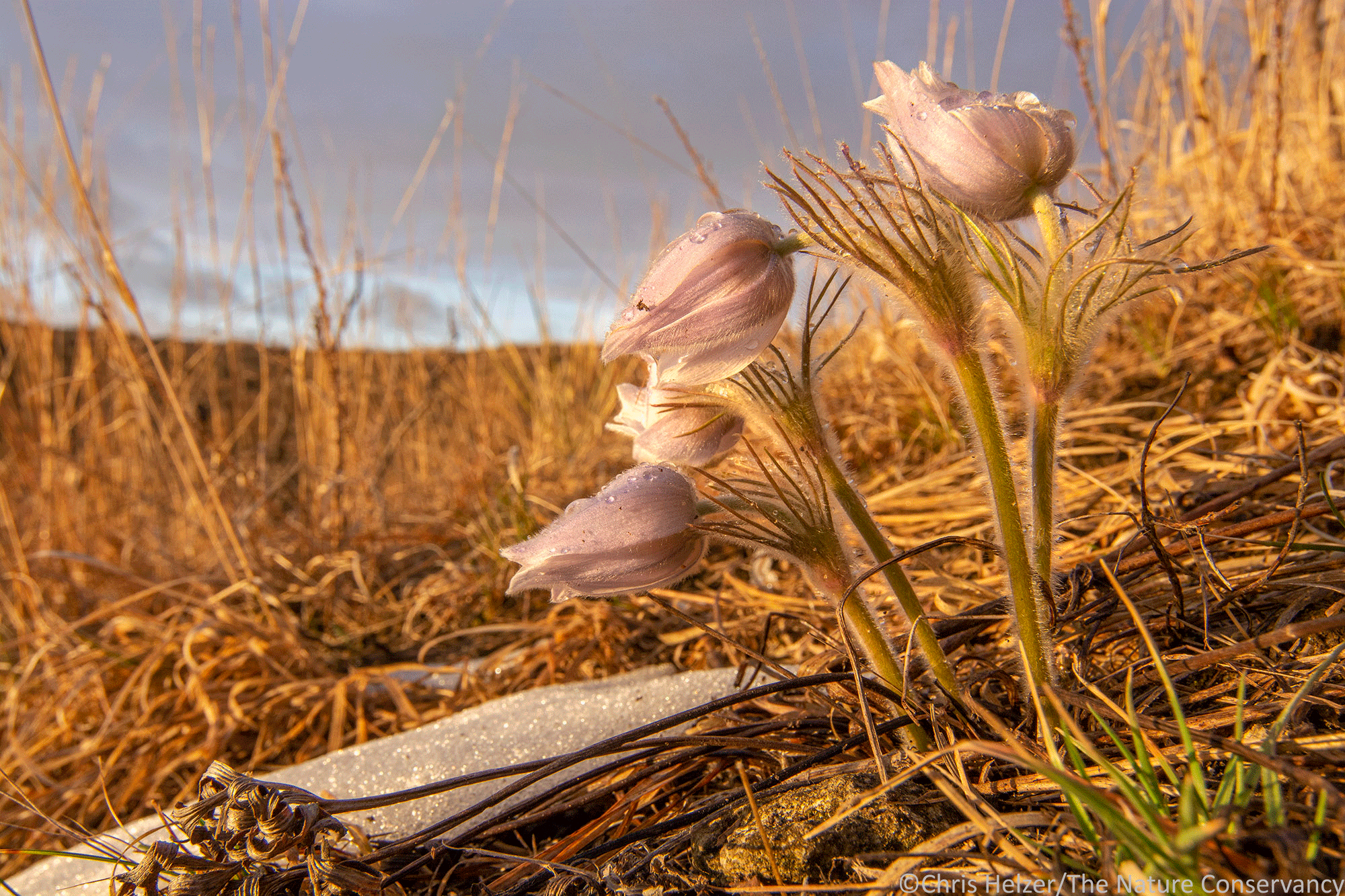
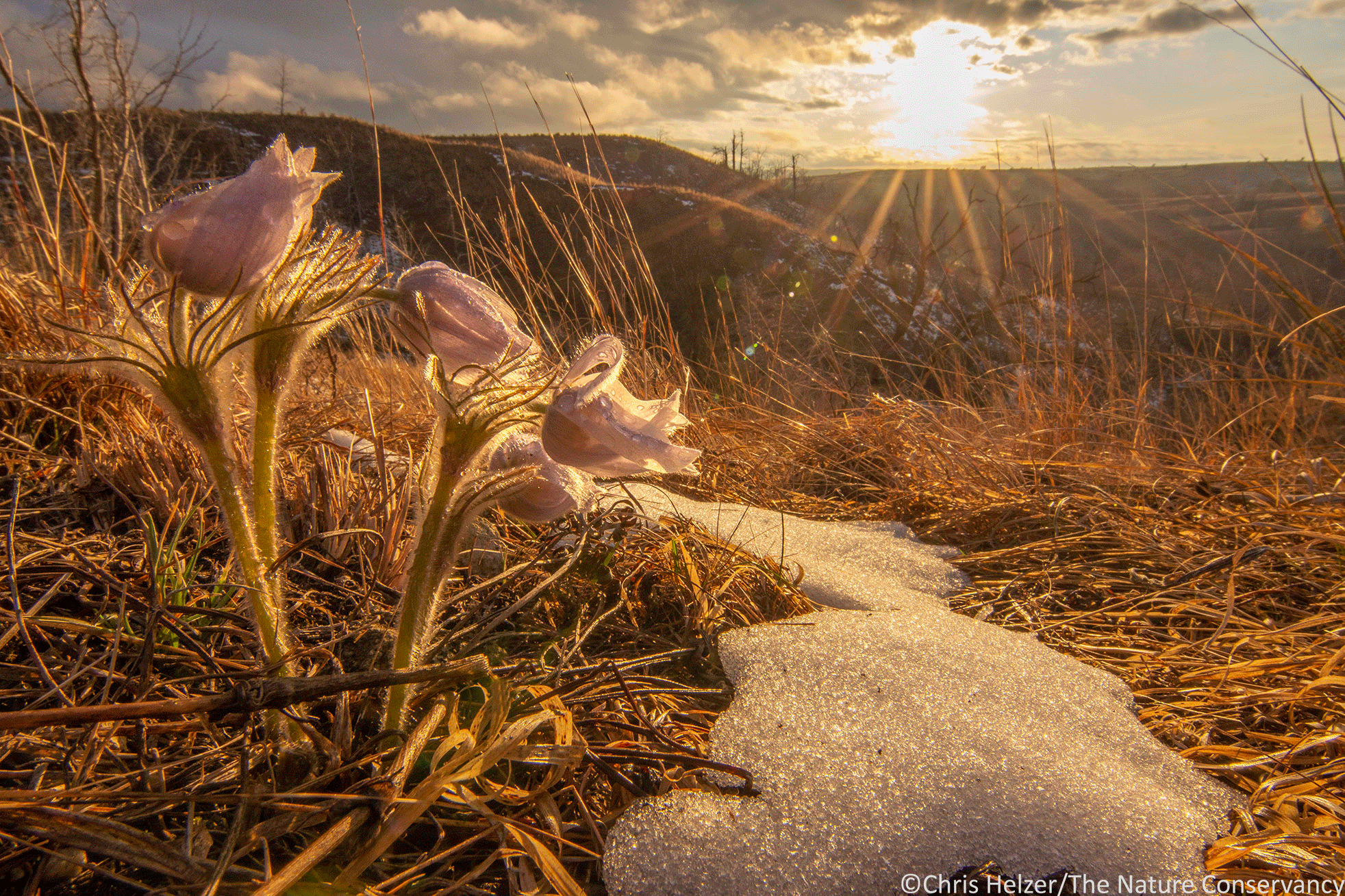
A backlit flower shows off the insulating dense hairs that help pasqueflower thrive in cold weather.This evening photo was taken just as the sun slid into a gap between otherwise dense clouds a few minutes before sunset.This photo was taken about a minute after the previous one, but in the opposite direction, showing the same flowers from the other side.
Hello again. The pandemic continues and so does the quiz.
These quizzes include a lot of natural history information and I hope many of you find them educational. However, they are mostly just goofiness to take all our minds off the world around us for a few minutes. Some of these questions require some biological expertise, others will require mostly just guesswork. Please don’t focus on whether you get questions right or wrong – just enjoy the distraction!
Also, stay safe, friends.
1) Which of the following are grasses? (you can click on any image in this quiz to get a closer look at it)
A. All of them
B. 1, 2, and 3
C. 1 and 4
D. Only 4
E. #2 looks like two Muppets
F. 2 and 4
.
2) What kind of insect is this?
A. Beetle (Coleoptera)
B. Bug (Hemiptera)
C. Fly (Diptera)
D. Wasp (Hymenoptera)
E. Tree Cricket (Orthoptera)
F. If you’d switched E and D around, the answers would have been alphabetical.
G. Not that I care.
.
3) Which of the following are grasshoppers and which are katydids?
A. 1, 3, and 4 are katydids.
B. 2, 3, and 4 are grasshoppers
C. 1 and 4 are katydids
D. Only 3 is a katydid
E. Only 4 is a katydid
F. There is no way to know because you can’t see their ears in these photos
5) Where does this bird species spend its winters?
A. Central America
B. Northern South America
C. Southern North America
E. Southern South America
F. Miami Beach
G. Gulf Coast
H. You skipped D
.
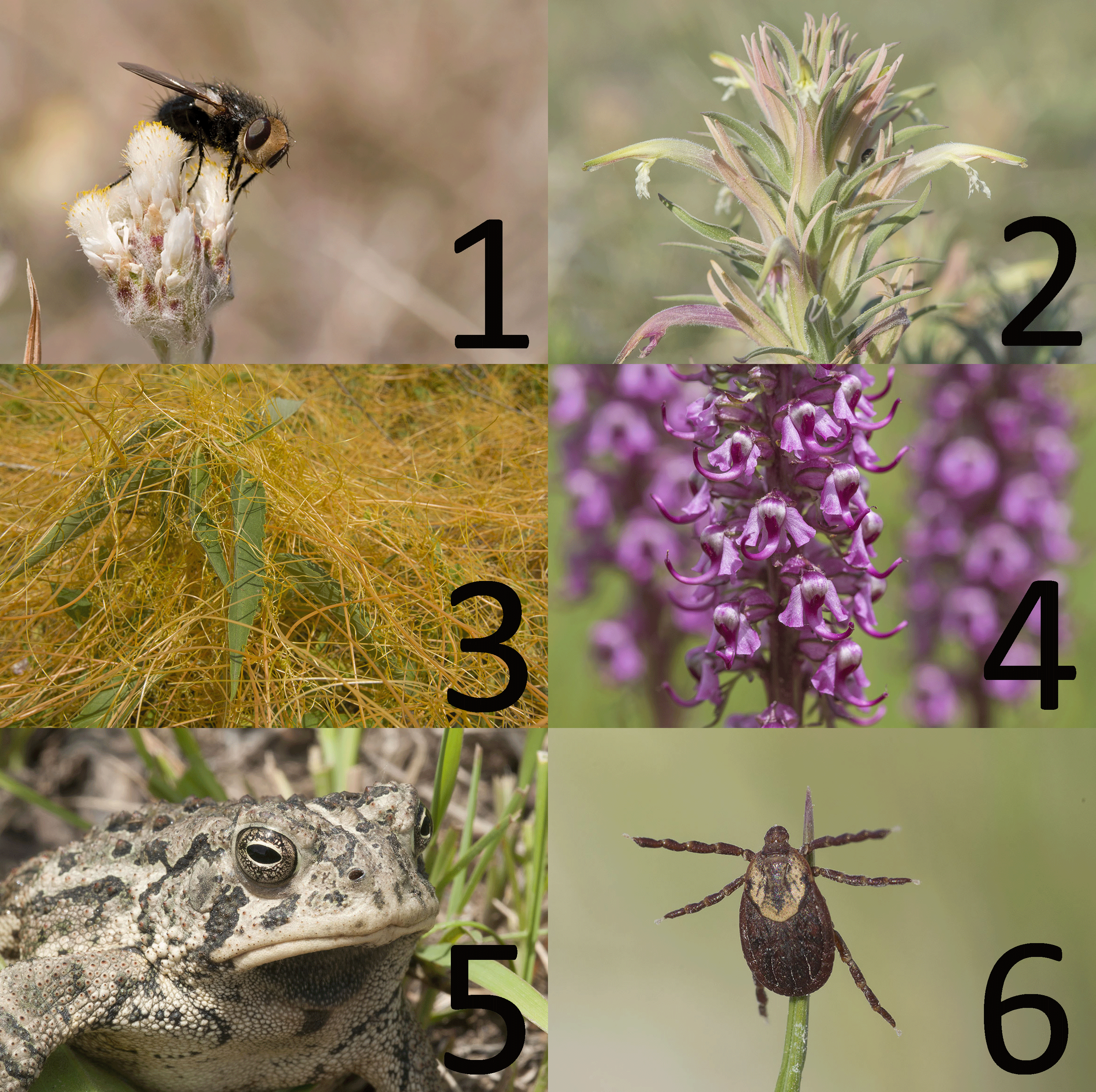
6) Which of these organisms obtains nutrition via parasitism?
A. All of them
B. 6
C. 1 and 6
D. 3 and 6
E. All but 5
F. 1, 3, and 6
.
7) Which of these is not the official name of a North American mushroom?
A. Satan’s Thumb
B. Destroying Angel
C. Earth Tongue
D. Devil’s Urn
.
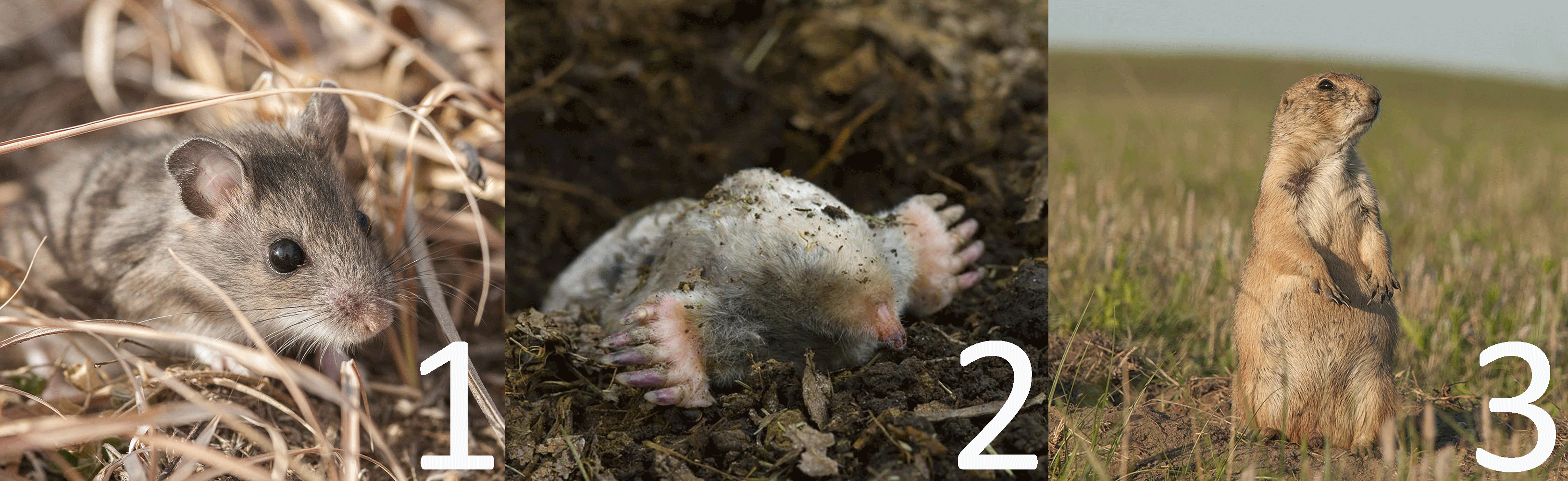
8) Which of these creatures has a name that rhymes with ‘Hole’?
A. 1 and 2
B. 2
C. 1 and 3
D. 2 and 3
E. 3
F. How are we supposed to know what their names are?? Oh, you mean the name of the species…
.
9) True or False: (watch the video)
A. True
B. False
.
.
.
.
.
Answers:
1) The answer is C. Both 1 and 4 are grasses (sideoats grama and little bluestem, respectively). Number 2 is sun sedge (Carex heliophila) and number 3 is scouring rush, aka smooth horsetail (Equisetum laevigatum). Scouring rush isn’t a rush. In fact, it’s not even closely related to grasses, sedges, or rushes.
2) The answer is A. This is a longhorned beetle (Cerambycidae) feeding on the pollen of upright prairie coneflower (Ratibida columnifera). You can read more about these amazing creatures here.
3) The answer is C. The easiest way to tell katydids from grasshoppers is by the length of their antennae. If the antennae are as long as their body or longer, it’s a katydid. Grasshoppers have short antennae by comparison.
If you answered F, you can give yourself partial credit. Katydids have their ears on the ‘elbow’ of their front legs and grasshoppers’ ears are on their ‘belly’. Usually, trying to find the ear on an insect is much more difficult than just looking at their antennae. Far be it from me, though, to tell you how to go about identifying grasshoppers and katydids.
4) The answer is B. I think Spotted Bounder is a cool name for a moth, but I probably only think that because I invented it. Inventing moth names is pretty easy, actually, since the real ones all seem randomly assigned anyway. (The slow poke?? What kind of biologist names a creature ‘the slow poke’??) A moth biologist, apparently.
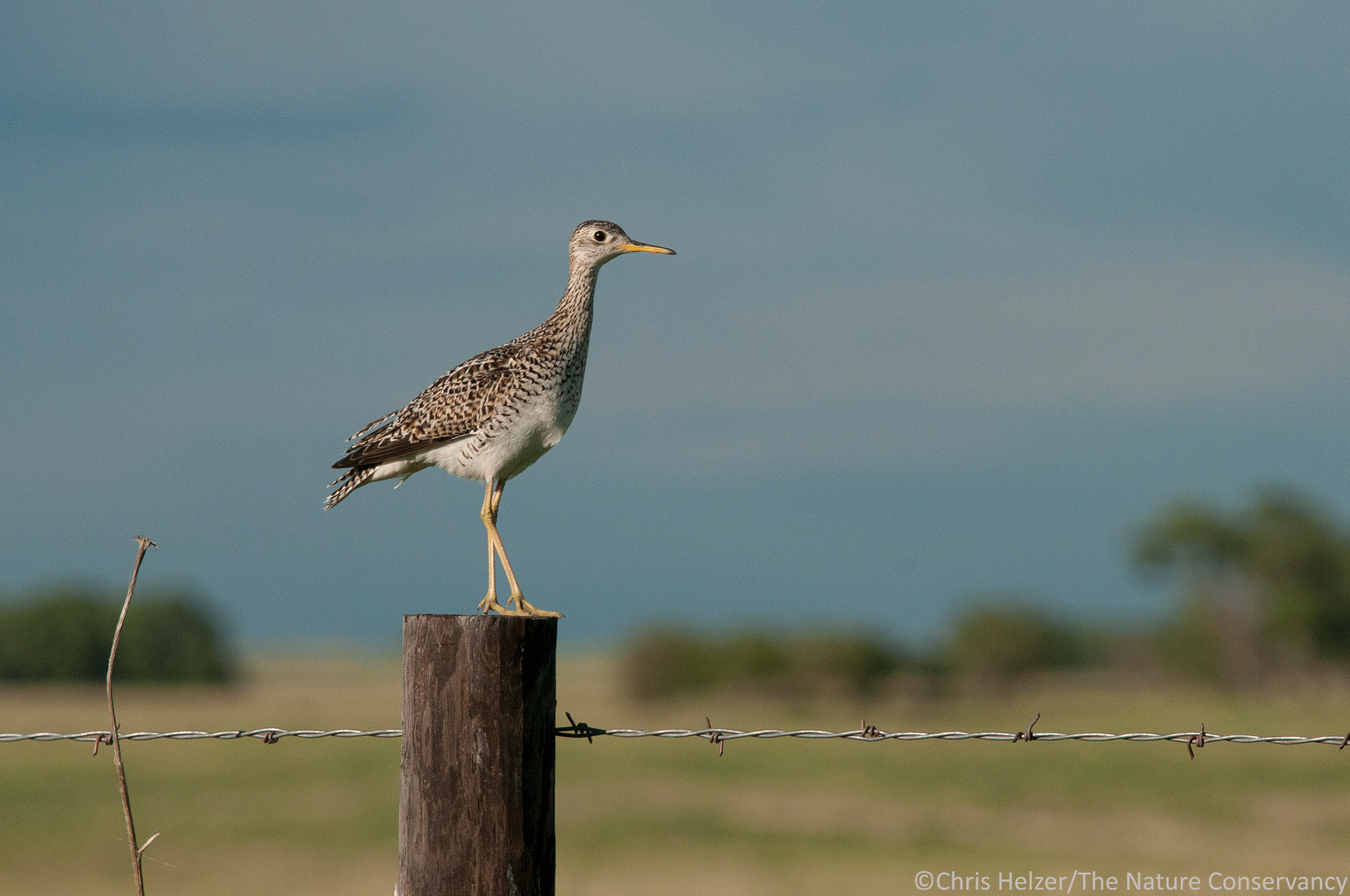
5. This answer is E. Most upland sandpipers nest in large grasslands in the Great Plains of the U.S.A (but also are found in a few other locations throughout the continent). Once they’re finished breeding, though, they take a very long trip south to the bottom half of the continent of South America where they hang out in pampas and llanos (grasslands).
6. The answer is E. As far as I know, the Woodhouse’s toad is not parasitic during any part of its life. Having said that, I’ll probably get a bunch of responses from herpetologists telling me that their tadpoles attach themselves to turtles – or something equally cool and crazy. Regardless, all of the other creatures shown are parasites. Ticks, of course are easy to categorize since they are external parasites on us. The tachninid fly (#1) has parasitic larvae that burrow into caterpillars or other animals.
The three plants are Great Plains Indian paintbrush (Castilleja sessiliflora), dodder (Cuscuta sp), and – I think – Elephant’s head (Pedicularis groenlandica), which I photographed in Idaho last year. The paintbrush and Elephant’s head both hook up to the roots of other plants and siphon nutrients from them but are considered hemiparasitic because they don’t rely fully on those other plants for food. Dodder wraps itself around other plants and steals their nutrients so efficiently that it doesn’t even need to photosynthesize.
7. Satan’s thumb is a mushroom name I invented so A is the correct answer. But wouldn’t you like to see what a Satan’s thumb mushroom would look like??
8. The answer is B. The Eastern mole (Scalopus aquaticus) pictured here was dead when I found it, put it in my pocket, and took it home to photograph. It was still dead when I took the picture you see here. It’s a decent photo, though, isn’t it? I bet you were impressed that I was able to get such a great shot of a mole, huh? Don’t be.
The other two species are a deer mouse and a prairie dog, neither of which rhymes with ‘hole’ unless they happened to be named ‘Joel’, in which case I guess you could make an argument. If I had a good picture of a vole I would have included it.
9. True. Crazy, but true. The same apparently works for ants. If you have a sustainably stocked prairie of bison (or cattle, for that matter), they have about the same biomass per acre as ants or grasshoppers. That’s a lot of bugs – I mean insects.