
Look! Another quiz!
Thanks to all of you who have let me know you’re enjoying these quizzes and apologies to those of you who are too polite to complain… Whether or not you’re a fan, I sincerely hope you’re staying safe, sane, and productive during the pandemic. It’s going to go on for a while, but we’ll get through it together. I hope these quizzes give you a moment of helpful distraction.
If you want a longer distraction, here’s a game for you: use the search function on this blog and see if I’ve written about whatever prairie-related topic you’re interested in. Hopefully, I’ve addressed it at least once in the last 9 1/2 years. If I haven’t, please let me know! (This is a sneaky way to generate more ideas for blog posts.)
Be safe, friends. Here’s this week’s quiz:
1) Which of the following (if any) are insects?
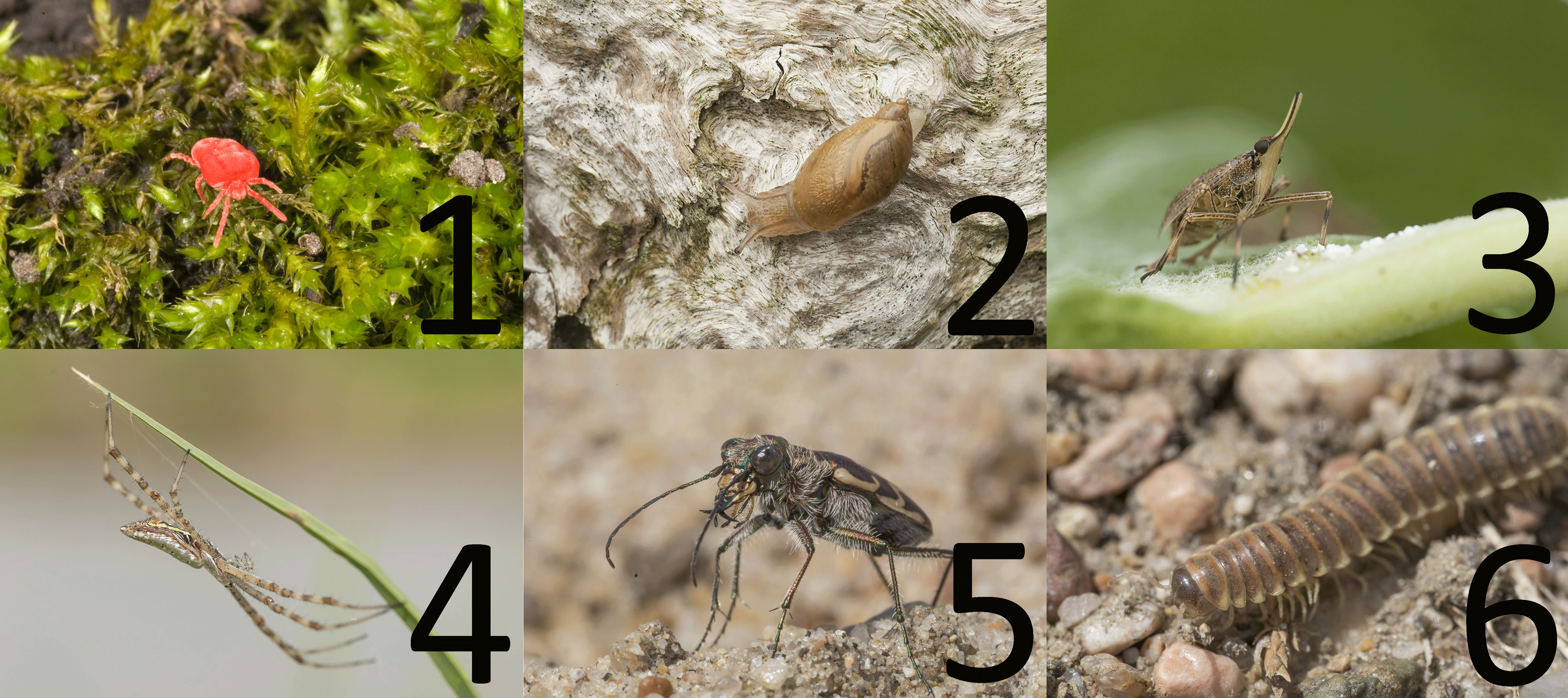
A. All six
B. 1,3,5,6
C. 3,5,6
D. 3 and 5
E. All but 4
F. Hey, where’s the dragonfly?
.
2) One of the following is the official name of a seashell, one is a moth, and one is a mushroom. Which are which?
A. Green Pug
B. Coffee Bean Trivia
C. Black Knot
.
3) Which statements about oil beetles (pictured below) are true?
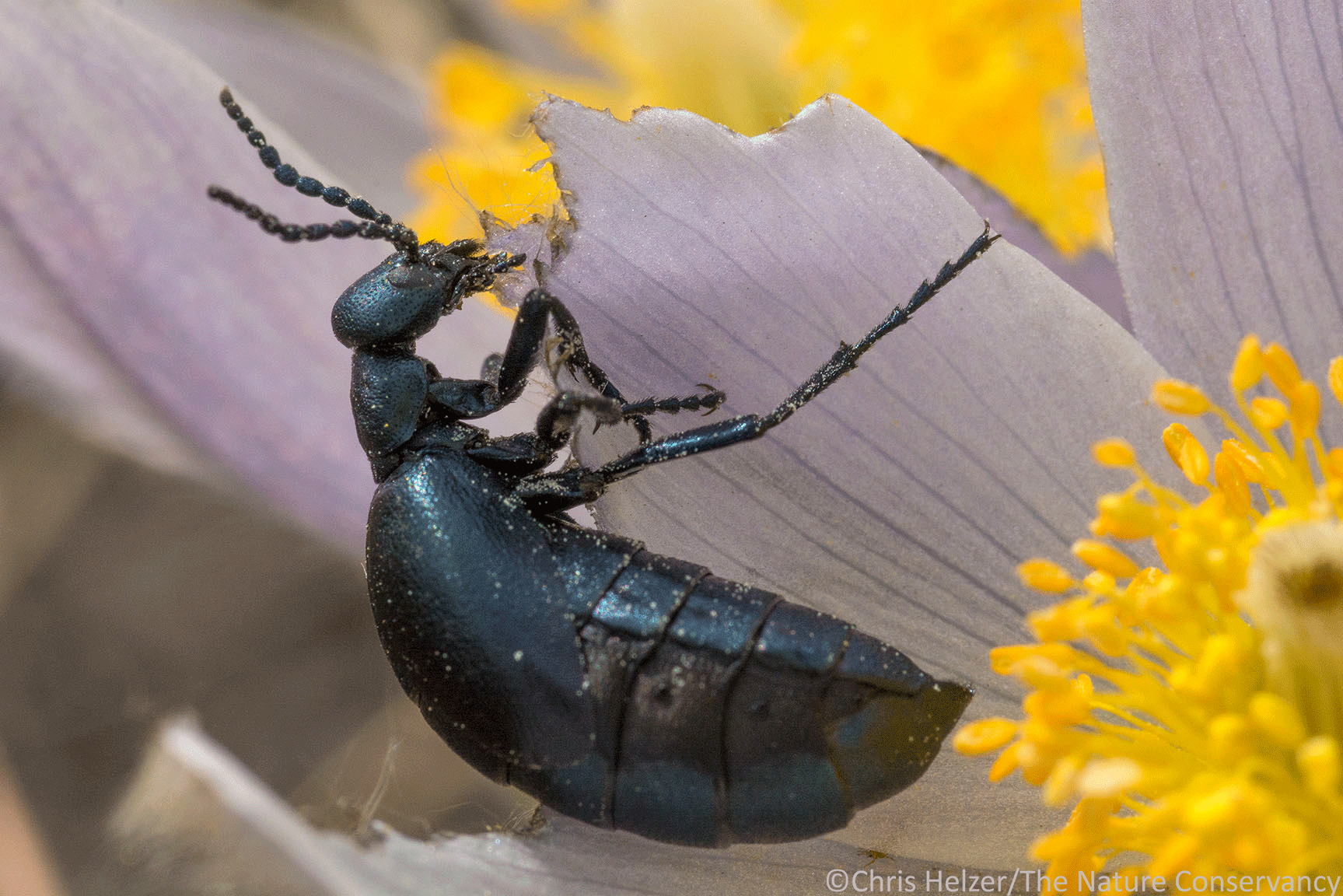
A. Oil beetles secrete a toxic yellow substance that causes blisters if it contacts the skin of other animals.
B. Oil beetles contain a toxin in their bodies that can be fatal when ingested, though some birds may eat limited numbers of oil beetles (and/or similar species) because the toxin can help reduce parasite loads.
C. Oil beetle larvae cluster together and produce a chemical that mimics the smell of female bees. They climb up on any male bee attracted to the scent. Later, they jump from the male to a female bee, ride the female back to her nest, jump off and consume her eggs and larvae.
D. Oil beetles chew up pieces of flower petals and then later regurgitate the partially digested mass, shape it into a shelter, move in, and lay eggs. When the eggs hatch, the oil beetles construct an addition to the shelter (out of the same raw material) for the larvae to roam around in. Eventually, the ungrateful little snits eat their parents, pupate, and become adults themselves.
E. Oil beetles are adorable little creatures that would never harm anyone or anything. You should be ashamed of these slanderous statements. Go find an oil beetle, pick it up, and give it a hug.
.
4) Which of the following is NOT an actual name of a moth species?
A. The Thinker
B. Tiny Prancer
C. The Nutmeg
D. Small Magpie
.
5) Which of the following are flies (in the order Diptera)?
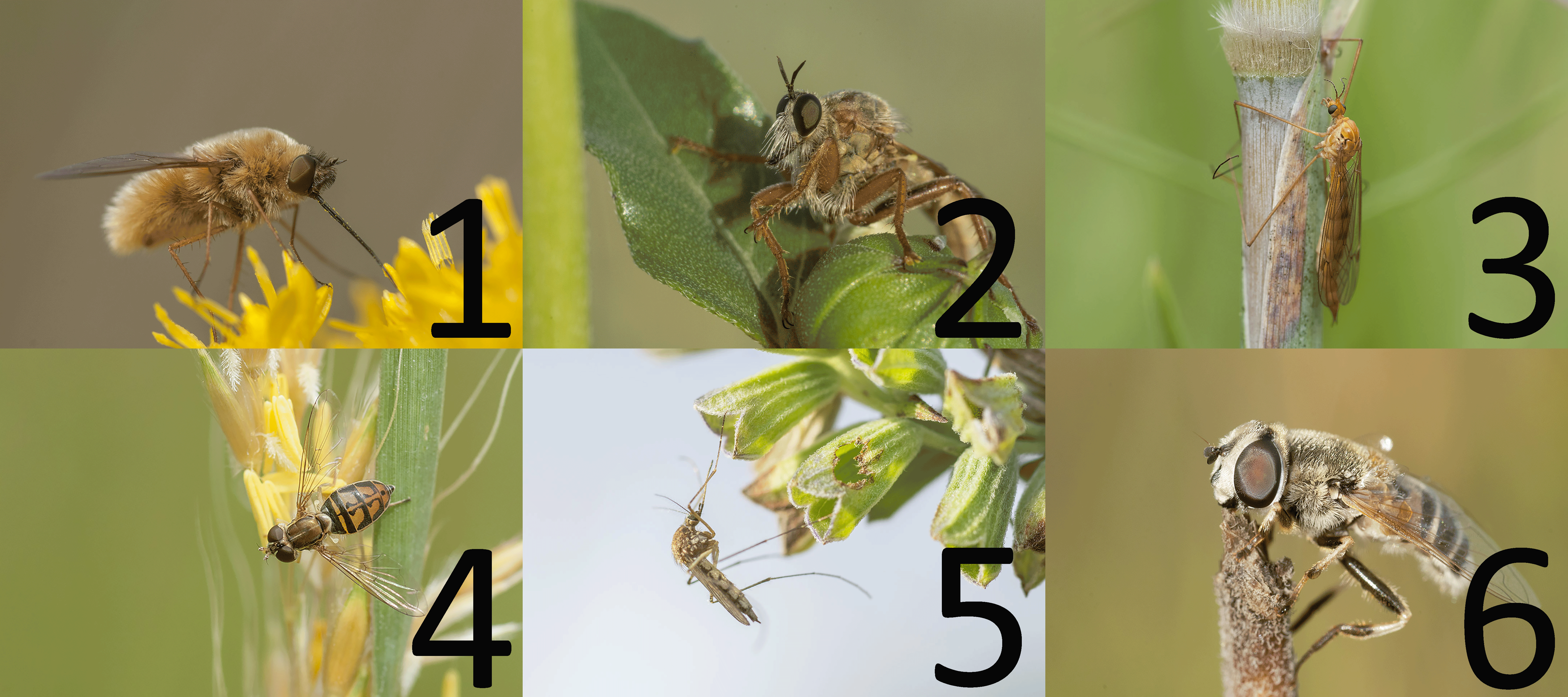
A. All of them.
B. 4 and 6
C. 2, 4, 6
D. You can’t fool me – #5 is a mosquito!
E. All but 5
F. 1,2,4 and 6
G. Whatever. Where’s the dragonfly??
.
6) What will this inchworm eventually turn into?
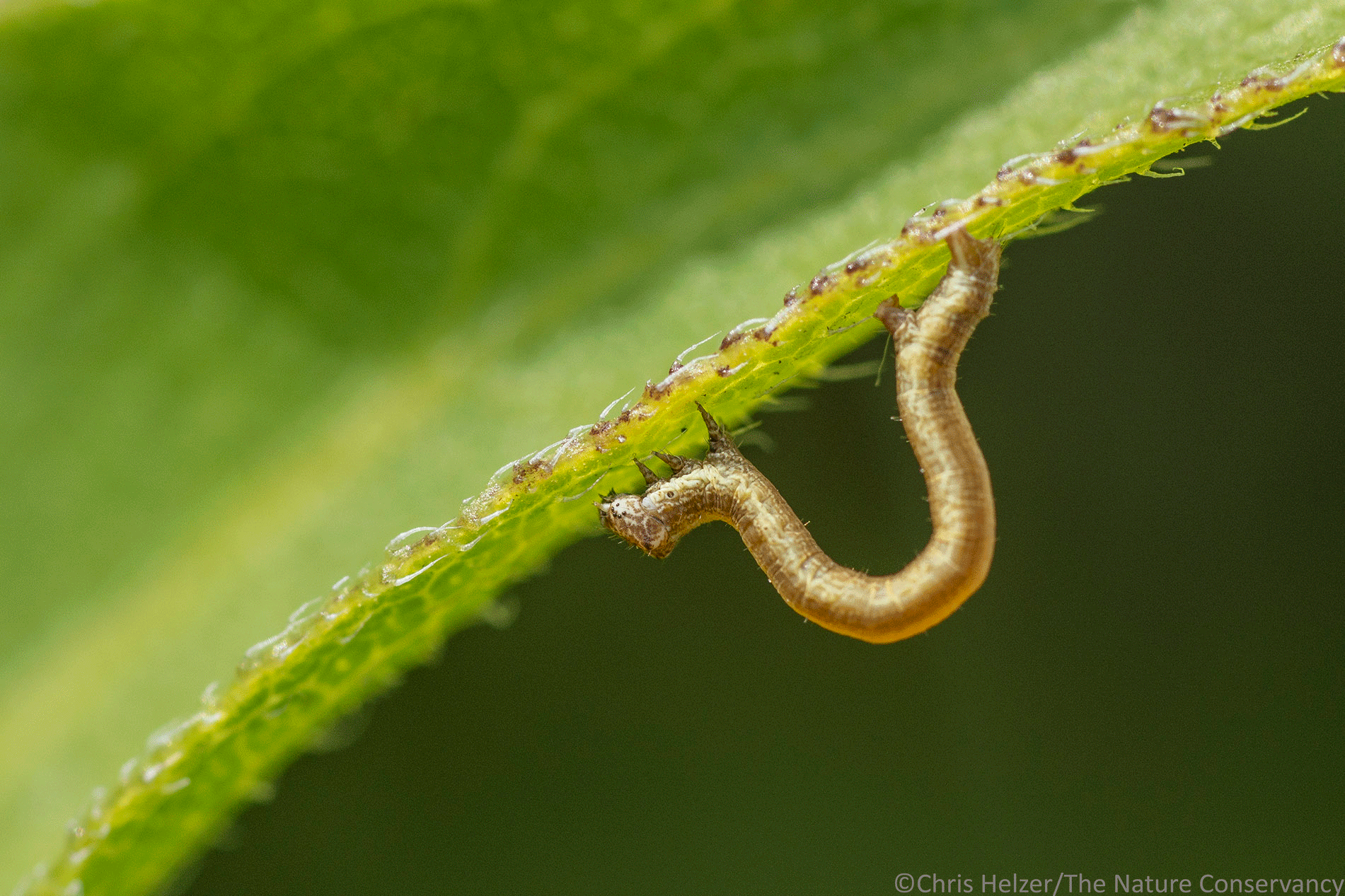
A. Butterfly
B. Moth
C. Either a butterfly or moth, depending upon the species of inchworm
D. Either a butterfly or moth, depending upon the acidity of its diet
E. A bigger inchworm
F. Turtle
G. Not a dragonfly, apparently?
.
7) What’s my favorite color?
A. Red
B. Green
C. Blue. No! Yellow!
D. Color doesn’t really exist as a constant entity, it depends upon the quality, intensity, and angle of light reflecting off of objects. Blah blah blah.
E. I don’t really have a favorite color. Any color can be beautiful and joy-giving in the right setting.
F. What color is the dragonfly?
.
.
.
Answers:
1) D. Only numbers 3 and 5 are insects. In order, they are: 1 velvet mite, 2 snail, 3 planthopper, 4 spider, 5 tiger beetle, 6. millipede. Velvet mites and spiders each have 8 legs, which disqualifies them. Millipedes have way more than 6 legs too, of course, and snails just have the one foot.
2) Green Pug is a moth, Coffee Bean Trivia is a seashell, and Black Knot is a mushroom.
3) A, B, and C are all true. D is not, as far as I know. E would be a bad idea (the hugging part), but they are adorable. You can learn more about these amazing creatures here and here.
4) B. I made up the name Tiny Prancer. The others are all real moth names. Crazy, right?
5) A. Every one of them is a fly. They are 1 bee fly, robber fly, crane fly, hoverfly, mosquito, and another kind of hover fly. Yes, mosquitoes are flies – look it up.
6) B. Inchworms turn into Geometer moths. E is technically correct too, though. They grow bigger before metamorphosis.
7) E. But C is an excellent answer too. Good on you for knowing the reference.
.
.
.
Oh, I almost forgot! Here’s the dragonfly.


