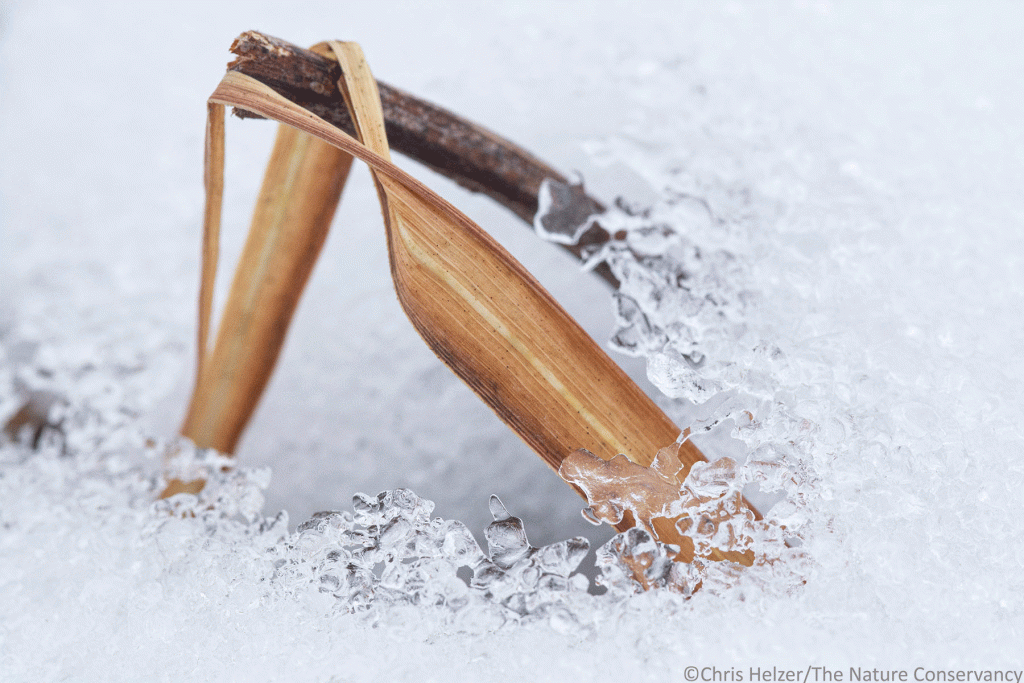
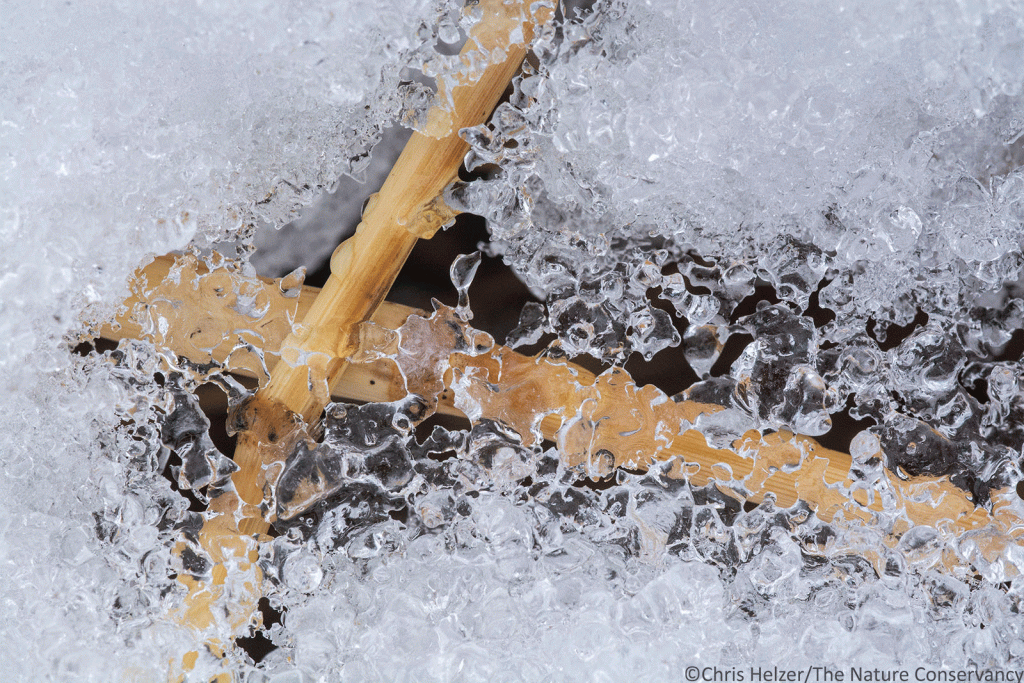
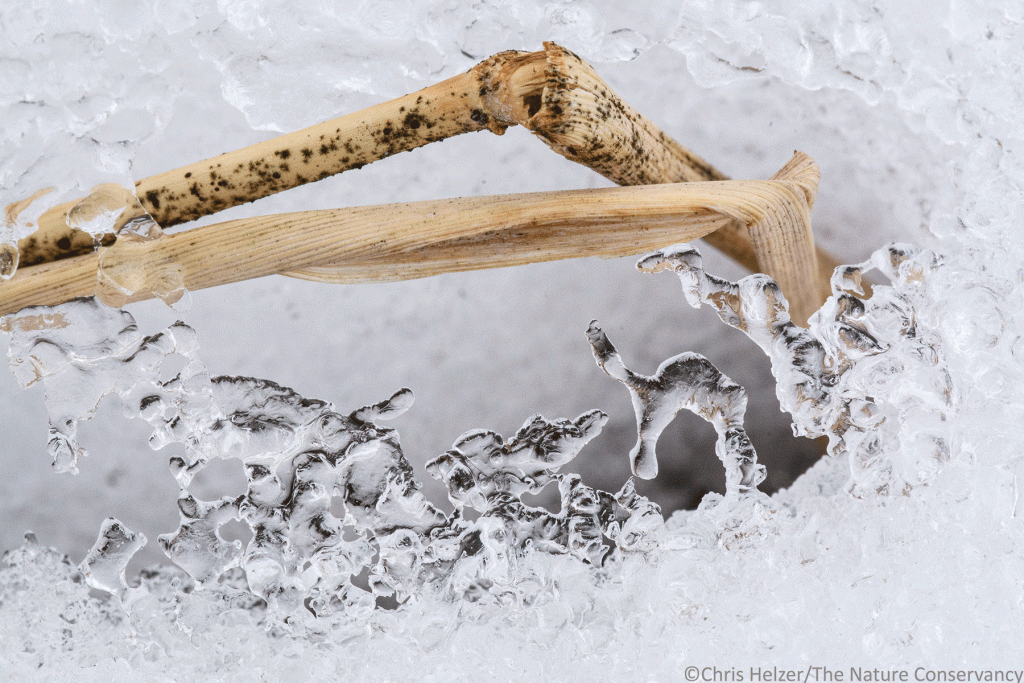
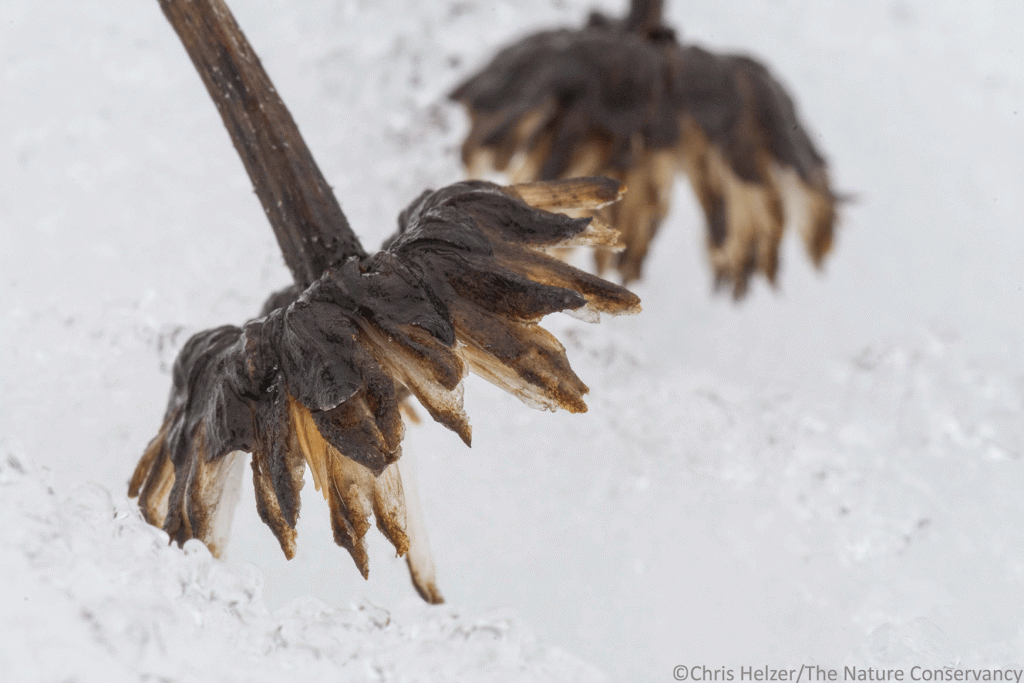
Last weekend brought several inches of snow. Despite the overcast skies, I felt the need to get out and do some photography before the melting snow disappeared altogether. Sunday afternoon, I looked out the window and convinced myself that the sky had brightened slightly, and decided that was a good enough reason to go. I slipped across town with my camera and spent an hour or so by myself at Lincoln Creek Prairie, getting my knees wet and appreciating the shapes of melting snow crystals.
Snow really helps to dampen sound, so even within a stone’s throw of houses and streets, the small prairie was pleasantly quiet. The peace was much needed, and in spite of the dreary light (I don’t think the sky was really brighter at all) I felt tremendously better about the world by the time I left the prairie. I’m grateful that this pandemic is hitting us at the beginning of spring so we’ll be able to escape to prairies that are coming to life over the next month or two. I know that watching that infusion of life is going to be immensely therapeutic for me – I hope everyone reading this will find the same kind of therapy near them – or an equivalent. Stay safe (and sane), friends.
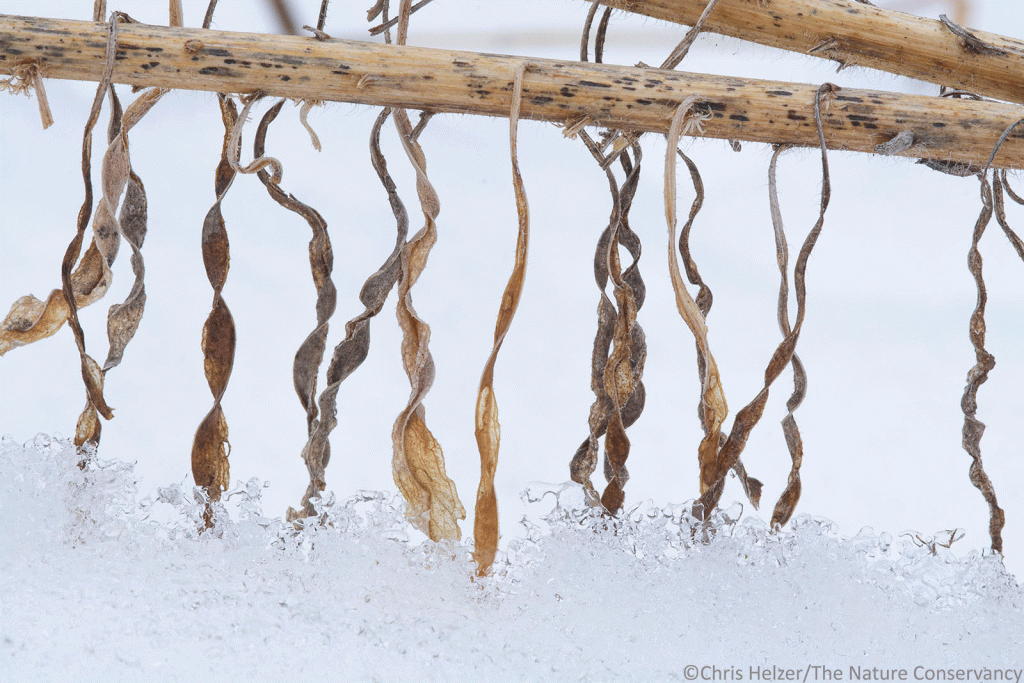
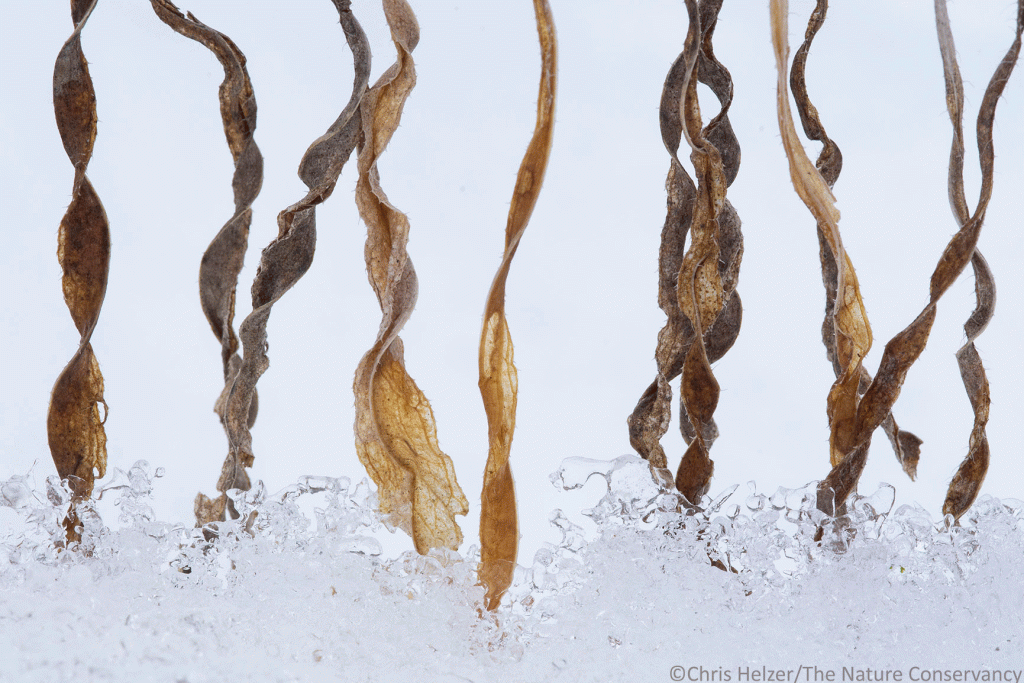
This marestail (Conyza canadensis) plant was laying horizontally above the snow – its twisted, wrinkled leaves dangling down into the snow.I really liked those leaves…Roundheaded bushclover (Lespedeza capitata)More roundheaded bushclover
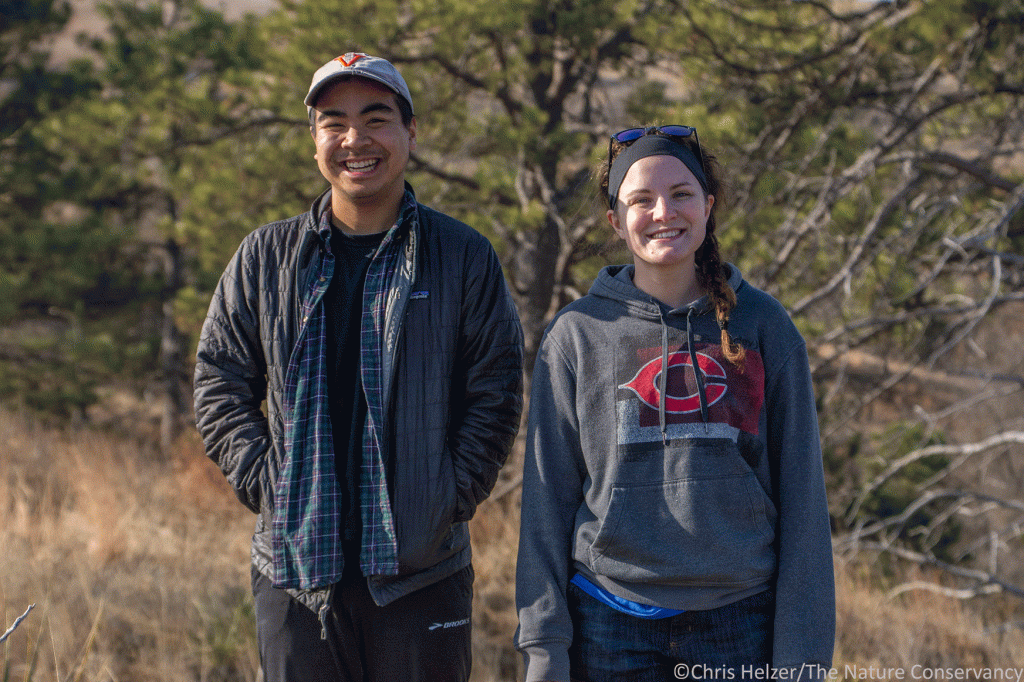
This post introduces our 2020 Hubbard Fellows, Ashley Oblander (from Iowa) and Dat Ha (from Virginia). I asked both of them to write a short piece describing how they ended up here, so those are presented below.
Supervising the Fellowship has been one of the highlights of my career. Each year, I have the opportunity to meet, mentor, and learn from two young energetic people who inspire me with their talent and challenge me with their questions. Working with them forces me to constantly reexamine our work (in a good way) and to see conservation through different eyes. I hope the opportunities you get to hear from them through this blog provide you with at least some of that same energy and inspiration. – Chris
Our 2020 Fellows Dat Ha (rhymes with ‘cat paw’) and Ashley Oblander (rhymes with, um, ‘smashly strobe lander’??) at the Niobrara Valley Preserve. Dat is smiling extra hard here because he is standing uphill of Ashley and looks taller…
Ashley Oblander
Once at a conference, a keynote speaker told everyone to turn to our neighbors and tell them about the moment that we fell in love with the outdoors. I was surprised that I couldn’t find a good answer-maybe because I’ve always been drawn to nature. Growing up, I spent most days outside in my large wooded backyard or playing in the creek across town, collecting things I thought were neat or enjoying the scenery. I didn’t fully realize my passion until my undergraduate degree at Central College. When presented with the opportunity to do research on bats, I jumped at the chance. The catch was that I would also have to help on a prairie restoration project. I begrudgingly agreed to work with plants, which at the time I thought were boring, in order to work with such a cool mammal. Little did I know during that first summer I would discover the beauty and magic of the prairie ecosystem.
I worked with the Prairies for Agriculture Project for two years, and during that time learned a great deal about prairie restoration and research. The most important thing I learned, however, was that I needed a job that would enable me to spend a lot of time outside doing work that I felt was impactful. I didn’t know exactly what that meant at the time, so after doing an undergraduate thesis on small mammals in the prairie, I decided to further pursue my interest in mammals and research by getting a Master’s degree at the University of Nebraska in Omaha. There I conducted a study on the different color morphs of the eastern fox squirrel (Sciurus niger) and their physiology. While at UNO, my critical thinking, research, and communication skills were expanded, and after graduating, I was ready to get back outdoors full time.
After a summer of working at Omaha’s Henry Doorly Zoo & Aquarium in the elephant barn, I started an AmeriCorps Stewardship Assistant position with the Iowa chapter of The Nature Conservancy (TNC). That position gave me the opportunity to explore and work in both the Loess Hills and floodplain of the Cedar River while learning many practical skills and management techniques and meeting amazing conservation professionals. After my AmeriCorps term was up, I was fortunate to be able to stay on as a Stewardship Assistant for a few months and learn even more.
Working for TNC was a great experience that, if given the chance, I wanted to continue. Working with people that are passionate about what they do in an organization with whose mission I agree strongly became a top priority. I had heard great things about the Hubbard Fellowship, and it seemed like a great next step for my career. I’m excited to experience conservation in a new state and learn from different experts. I’m also looking forward to boots on the ground, stewardship work as well as partaking in research and other aspects of conservation. I mentioned earlier that I want my work to make an impact, and I believe being part of the science and restoration done by the Nebraska chapter, and TNC as a whole, will help me reach that goal.
Although I didn’t have a concrete answer to the question “What moment made you fall in love with the outdoors?” I have many stories that answer the prompt “Tell me about a moment in nature when you were inspired.” I can’t wait to get to work in Nebraska and add to that list of inspiring moments.
.
Dat Ha
If my dad hadn’t asked our neighbors if I was able to join the boy scouts, I’m not sure if I’d be where I am today. An effort that was meant to detach me from the computer seat ultimately led me to try to find any and every opportunity to be outside. I immediately fell in love with sleeping in the cool night breeze under the stars, sweating my way up mountain summits, and going on endless adventures. These early experiences would go on to influence every decision I made from then on – from every weekend escapade, to summer jobs, and my college major.
I grew up in Richmond, Virginia (804!) and attended the University of Virginia (Go HOOS) just an hour west. I entered college originally wanting to become a doctor, as many first-generation Asian American college students aspire to be. It wasn’t until my third year that through a combination of soul searching and sub-par grades, I realized this wasn’t the path I wanted to embark on. Talking to my supportive friends and family, I accepted two truths about myself 1) I wanted to help anyone or anything and 2) I LOVED being outside. Through these conversations I eventually discovered my calling and the moment I realized – I quickly looked up what ecology and conservation courses were offered. I ultimately majored in biology with a specialization in conservation.
After this life-altering revelation, I was fortunate to have a few people in the environmental science department take a chance on me. I first helped Kate Lecroy opening bee hotels and dissecting native solitary bee cocoons to research the decline in blue orchard bee populations (Save Native Bees!). I then spent the two summers in northern Wisconsin assisting Cal Buelo and Mike Pace to study early warning indicators to detect an impending algal bloom. There’s something truly magical about being surrounded by water in the inspiring 50-70 degree weather of Wisconsin. These opportunities presented fascinating topics I never even knew of growing up – there was so much more to learn.
After college, I was all in for conservation, but in what form? Conservation comes in many shapes and sizes – research, stewardship, education/outreach, fundraising – the list goes on. This fellowship was perfect for me – it spelled out a once-in-a-lifetime adventure to work in a novel ecosystem while providing a unique opportunity to learn about the different facets of conservation. Grasslands are one of the most endangered ecosystems and almost nonexistent on the east coast – the writing was on the wall for the next chapter in my life.
A part of me still can’t fully believe that I’m here – just a few months ago I couldn’t point to Nebraska on a map. I’ve been in absolute awe with my experience here so far – I’ve never seen so many birds and corn before in my life, everyone has welcomed me with warm smiles, and the wind never ceases to blow me away. This is the dream I never thought was possible or even existed, and I’m eternally grateful for everyone who’s helped me get here. I’m looking forward to learning as much as I can about grasslands, conservation, and Nebraska in the next year!