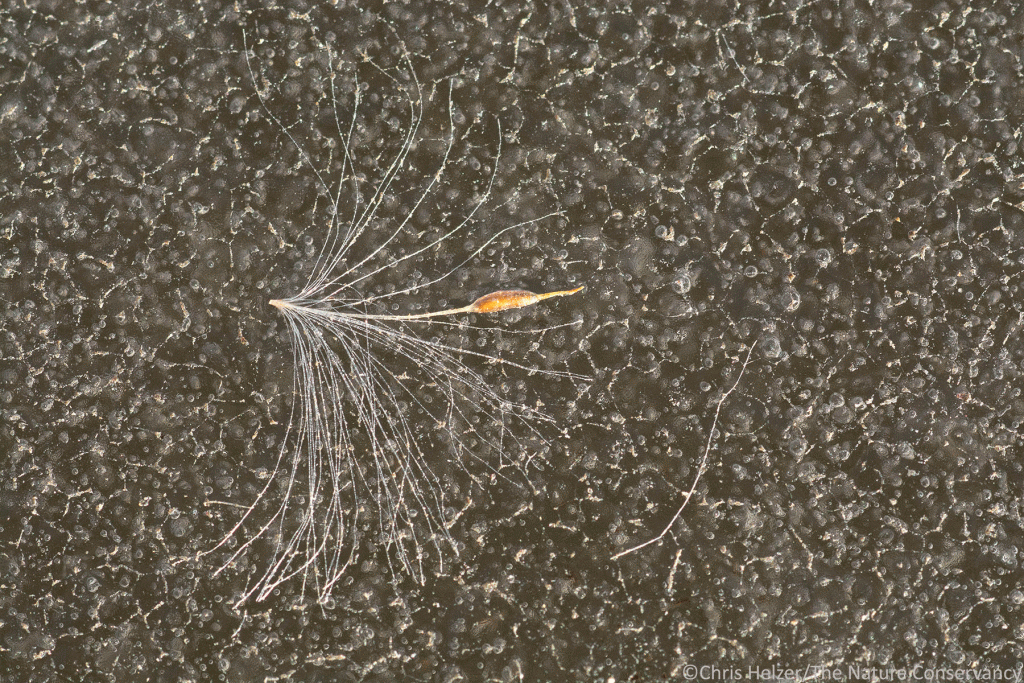
I ventured out to Springer Basin Wildlife Management Area yesterday. Springer is a rainwater basin wetland – one of many shallow playa wetlands in our area. Like all of those wetlands, Springer Basin is threatened by invasive plants, including reed canarygrass and narrowleaf cattails. Despite my frustration with how quickly those plants swarm across basins, the first photo I took upon stepping carefully onto this frozen wetland was a cattail seed. I couldn’t help myself – it was exquisite.
A narrowleaf cattail seed on the ice at Springer Basin.
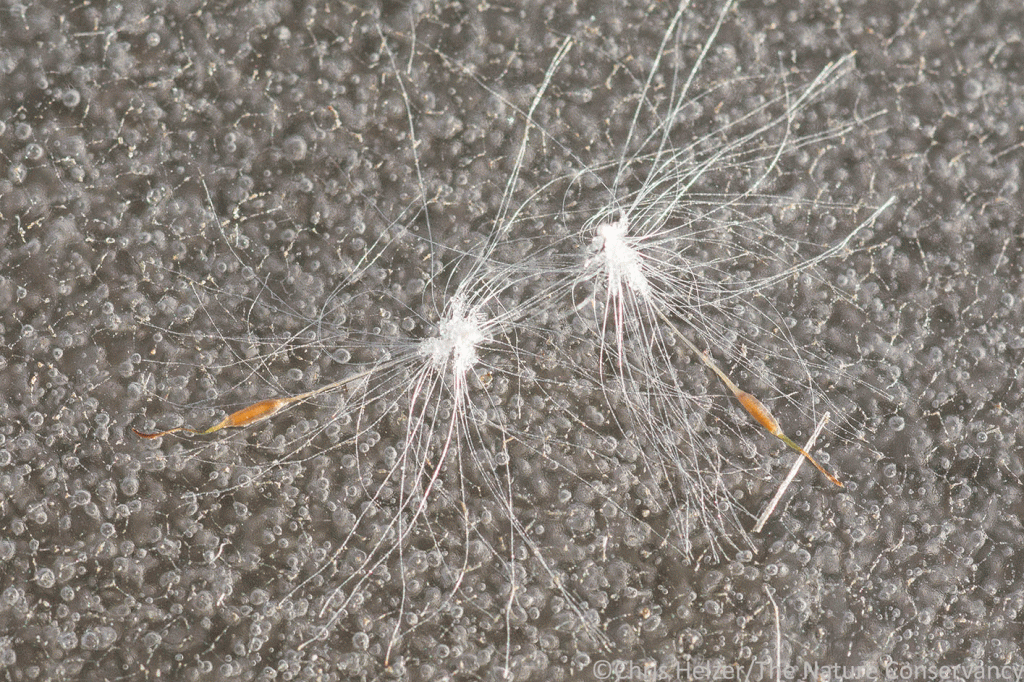
Once I was already on my hands and knees on the ice, it was easy to keep finding and photographing more cattail seeds. Each one had its own unique beauty and arrangement on the ice.
After a little while, my brain began seeing something else in those seeds. I don’t know if you’ll see it too, but I thought they looked like artistic depictions of cranes. Once I started down that mental road, I couldn’t stop seeing cranes. Rather than fight it, I leaned in and tried to find as many examples as I could. It wasn’t hard, and it took quite a while for me to get bored and move on to other subjects. That will be obvious by the number of photos below…
Photographing ‘seed cranes’ wasn’t all I did during my short exploration of the wetland. I also had some really interesting interactions with leopard frogs, but I’m going to wait until next week to share those. I hope the anticipation won’t keep you from sleeping over the weekend…
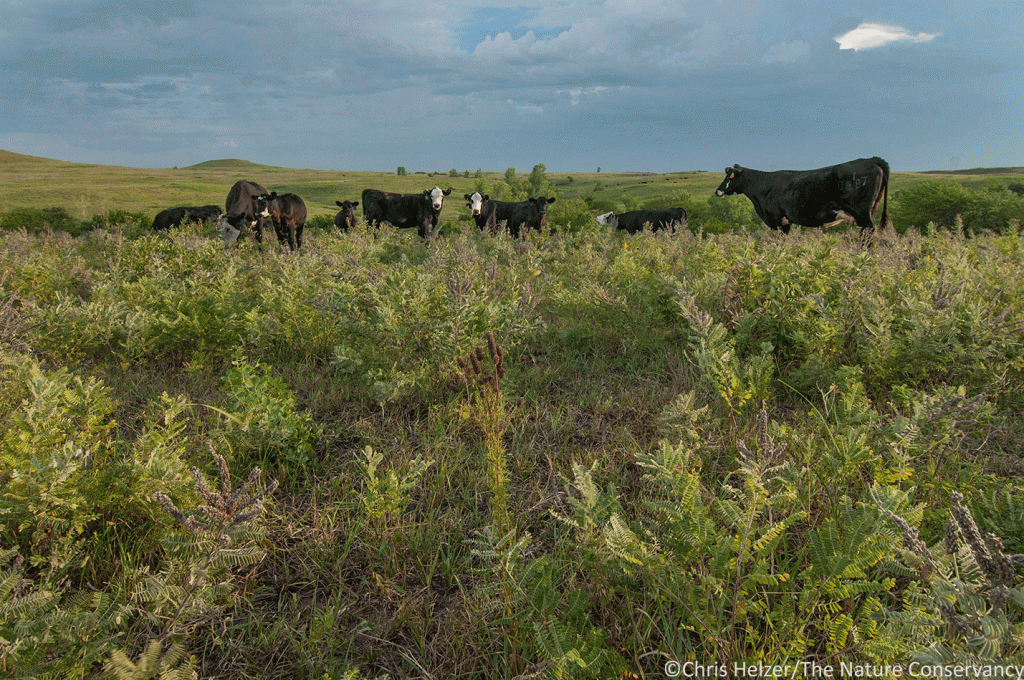
I’ve had several recent conversations with people who were surprised to learn that rangelands (native grasslands grazed by livestock) are prairies. I guess they just assumed that only grasslands that sit idle count as natural areas. In reality, of course, the vast majority of North American prairies are grazed by livestock. It’s the biggest reason those prairies still exist – they produce enough income to justify their existence.
Konza Prairie, in the Flint Hills of Kansas, where livestock grazing is helping to create patchy wildlife habitat while sustaining plant diversity. In this photo, ungrazed leadplant and purple prairie clover are surrounded by short-cropped grasses.
While some are overgrazed, most rangelands support a strong diversity of plants and wildlife. As a group, ranchers tend to be conservative in their grazing of prairies – after all, their livelihood depend upon healthy grasslands. Most ranchers also have families they hope to pass the ranch on to. Above all, the ranchers I know take their responsibilities as stewards of the land very seriously. To most, it is a kind of calling.
In my experience, however, while ranchers care deeply about providing habitat on their ranches, many have an incomplete knowledge of what that really means. That’s hardly surprising, since the advice they get on the subject is often varied, conflicting, and continually evolving. (“Plant trees! Wait, no…Kill Trees!”)
Briefly, just to clear up the plant/kill tree topic… In almost all cases, wildlife that lives on ranches is not being limited by a lack of trees. Patches of shrubs can be helpful in places, but don’t usually need to be planted – just allowed to exist. Most wildlife on ranches depend most upon large expanses of open grassland. Trees in prairies tend to cause more problems than they solve (increased predation rates, avoidance by ground nesting birds, and a place where invasive plants get a foothold, etc.) But I digress…
On the subject of wildlife habitat, the most common perspective I hear from ranchers goes something like this: “I moved the cows out of that pasture a little early to leave some habitat out there.” Leaving extra grass out there certainly does create good habitat for some wildlife species, but sustaining a diverse community of animals means providing a wide variety of habitat types. Maintaining plant diversity, which builds resilience and productivity, also requires thoughtful management treatments.
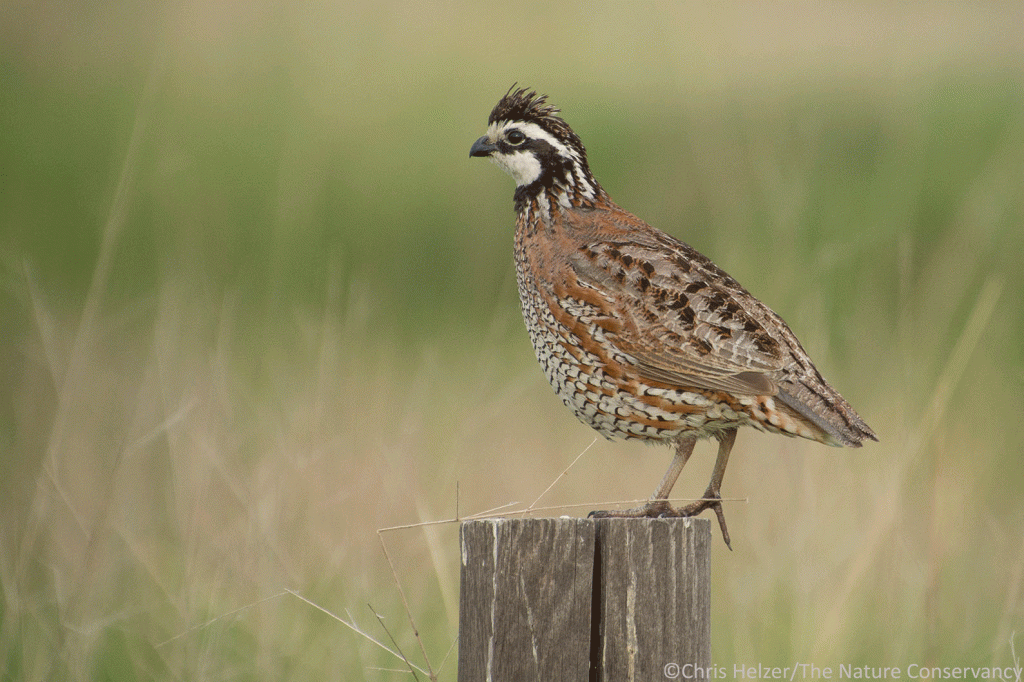
Northern bobwhite, along with ring-necked pheasants and various grouse species, are examples of wildlife that need multiple habitat types, including short vegetation, tall vegetation, and a mixture of short grass and tall forbs (broadleaf plants). Many ranches tend to provide a limited range of those habitat patch types.
There is no particular grazing strategy or approach that best balances habitat and livestock productivity on all ranches. Every ranch has its own unique mixture of soils, topography, rainfall, infrastructure, labor availability, and other factors. Ranchers tend to do a great job of shaping a ranch management plan that meets their individual situation. Because of that, what I think ecologists like me can do to be useful is to simply help build ranchers’ understanding of what habitat can look like. Then those ranchers can figure out ways to tweak what they’re doing to improve habitat – in ways that fit their unique situation.
Accordingly, I’ve put together some guidance I hope will be helpful to ranchers (and other land managers). It is in two forms, a downloadable PDF and a web page attached to this blog (tab at the top of the page). I tried to keep the information pretty general and applicable to most ranches across the Great Plains of North America, but the principles should really work just about anywhere. I also included lots of photos to help illustrate all the varied types of wildlife habitat found in prairies.
The selectivity of cattle as they graze gives ranchers and land managers tremendous flexibility in how they can create habitat structure by varying stocking rate, timing, and duration of grazing .
I’d very much welcome feedback from ranchers, as well as from other ecologists and anyone else, on how to improve this information and make it as useful as possible.