June 29: Bioblitz? Science Day? Please come – and help us think of a better name.

We’re one month away from the inaugural edition of whatever-we’re-goiing-to-call-this-event. It’s kind of like a bioblitz, but we’re going to focus on butterflies and flowering plants – though we may expand that focus in future years. We’ll be collecting data, but also learning and exploring. There is no expertise required – we’ll show you what you need to know when you come.

Let me explain:

This new event grew out of a survey by former Hubbard Fellow Alex Brechbill, who was helping us think about how to better engage the public at our Platte River Prairies. The survey results showed that people had a considerable interest in a bioblitz event, or something similar. I wanted to be sure that we weren’t just making lists of species for fun, and that we had a clear purpose for whatever data was collected. As a result, we came up with this event, which we haven’t yet named.

A regal fritillary butterfly feeds on hoary verbena at our Platte River Prairies. Regals are one of the two butterfly species (along with monarchs) that we will be focusing on during the event.

We’ll be doing a combination of things on June 29, 2019. During each of three session periods, we’ll let people break themselves into three groups. One group will walk transects (with a leader) and count butterflies seen along those transects, focusing particularly upon monarchs and regal fritillaries. A second group (with a leader) will walk those same transects and count the plant species that are currently blooming. The third group will go on an exploratory hike (of a different part of our Platte River Prairies each session) with an ecologist, and learn about prairie ecology, restoration, and management.
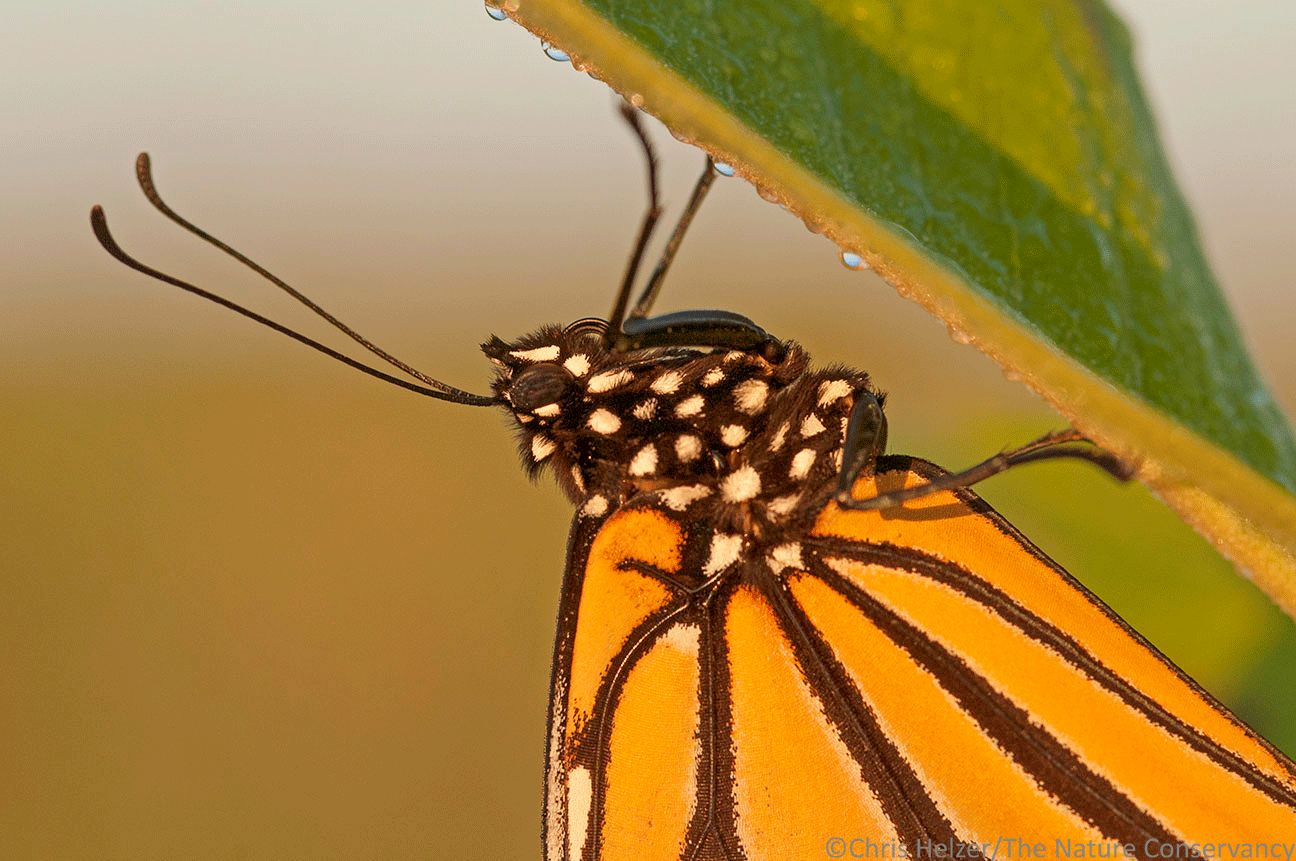
Monarch butterflies are pretty common in our prairies, but it’s been difficult to get enough data on their locations to see if we can tie our management work to their success.

I hope the butterfly and nectar plant data will help us better understand both the ecology of monarch and regal fritillary butterflies and the ways in which our restoration and management work affects them. Most people are familiar with monarch butterflies and their current population issues. Regal fritillaries are also large colorful butterflies, but they are specialists – they are found only in prairies and their larvae feed exclusively on violets. They are an at-risk species, and while they’ve traditionally done well along the Platte River, our annual surveys have shown lower numbers in recent years.

Those annual surveys showed that regal fritillary populations crashed after the 2012 drought, and haven’t really come back very well since. Previous to that drought, we collected enough data to feel comfortable that our fire and grazing management was positively supporting regal populations, so we don’t think the current low numbers are tied to management. However, we’re not sure why the numbers haven’t climbed back up since the drought. Our current survey work only covers a few transects a year, so this event gives us a chance to greatly expand that scope and, hopefully, build a better understanding of what’s going on. If we repeat this event, as we plan to, over many years, we should build a really valuable dataset.

We’re not sure why we’re seeing fewer regal fritillaries in recent years. Our management hasn’t really changed, and they were doing well before the 2012 drought. Help us figure out what’s going on!

I hope you can come join us at this first event. I’m sure we’ll learn a lot, both about butterflies/plants and about how to make this event as useful as possible – both to participants and science. Also, if I haven’t mentioned it yet, we hope to have your help coming up with a better name for the event itself…

You don’t need to have any expertise in butterflies, plant identification or anything else. We will have people to lead each group and train others on the methods we’re using. It should be a great opportunity to learn and have fun. And if you don’t want to collect data, just come and go on the prairie hikes to enjoy what should be a very pretty time of year in the prairies.

If you intend to come, please RSVP to Mardell Jasnowski at mjasnowski@tnc.org or 402-694-4191. If you do happen to have particular expertise in butterflies or plant identification, please let her know if you’d be willing to play a leadership role, if needed. Bring drinking water, sunscreen, a lunch, and whatever else you need for a day in the prairie. We will provide refills for your drinks, as well as some light snacks.

Here is the schedule for the day:

June 29, 2019

9:30 am – introduction to the day

10 am – first session

11:30 am – lunch (bring your own – we’ll provide refills of water/other drinks and snacks)

12:15 pm – second session

1:45 pm – break

2 pm – third session

3:30 pm – done

The event will take place at The Nature Conservancy’s Platte River Prairies and our Derr House. Click here for a map, or just take the Wood River exit from Interstate 80 (exit #300), go two miles south, and then turn right immediately after the sharp curve in the highway to continue south. You’ll immediately see our sign and a driveway up to the brick house on a small hill.
Underwater Prairie

Our changing climate is already bringing us some pretty intense weather variability. The current iteration of that variability has been flooding across much of Nebraska this spring. I’ve escaped serious damage to property so far, both at work and at home, but I know of many others that have not been so lucky.

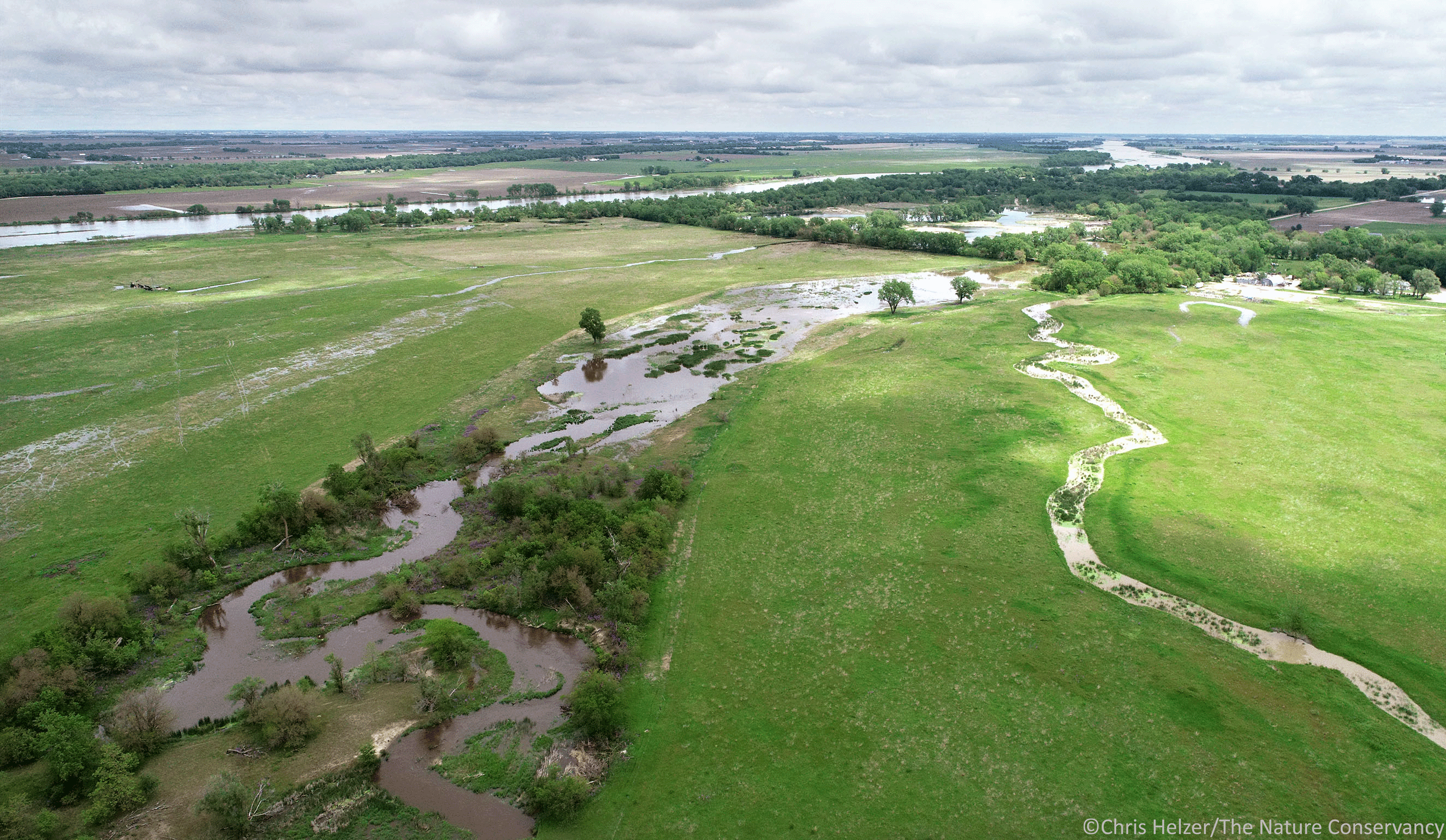
On Sunday night, we received about 3 inches of hard rain on top of already saturated soil at our Platte River Prairies. We didn’t have any damage to infrastructure but much of the lower elevation prairie was underwater Monday morning.

This is an aerial drone photo of part of our Platte River Prairies. The photos shown below were all taken in the area to the left of the flooded stream in this photo.

I spent a few hours Monday morning trying to catch up on some data collection before taking the rest of the day off. Identifying plants within a plot frame became a little more challenging than I’d expected since many of my sampling locations were covered by up by a few inches of gently flowing (but fortunately clear) water. I was still able to collect the data I needed, but it was a little slower, and a lot more splashy than I’d expected.

I was glad the water was clear enough to see through – I still managed to collect the data I needed.
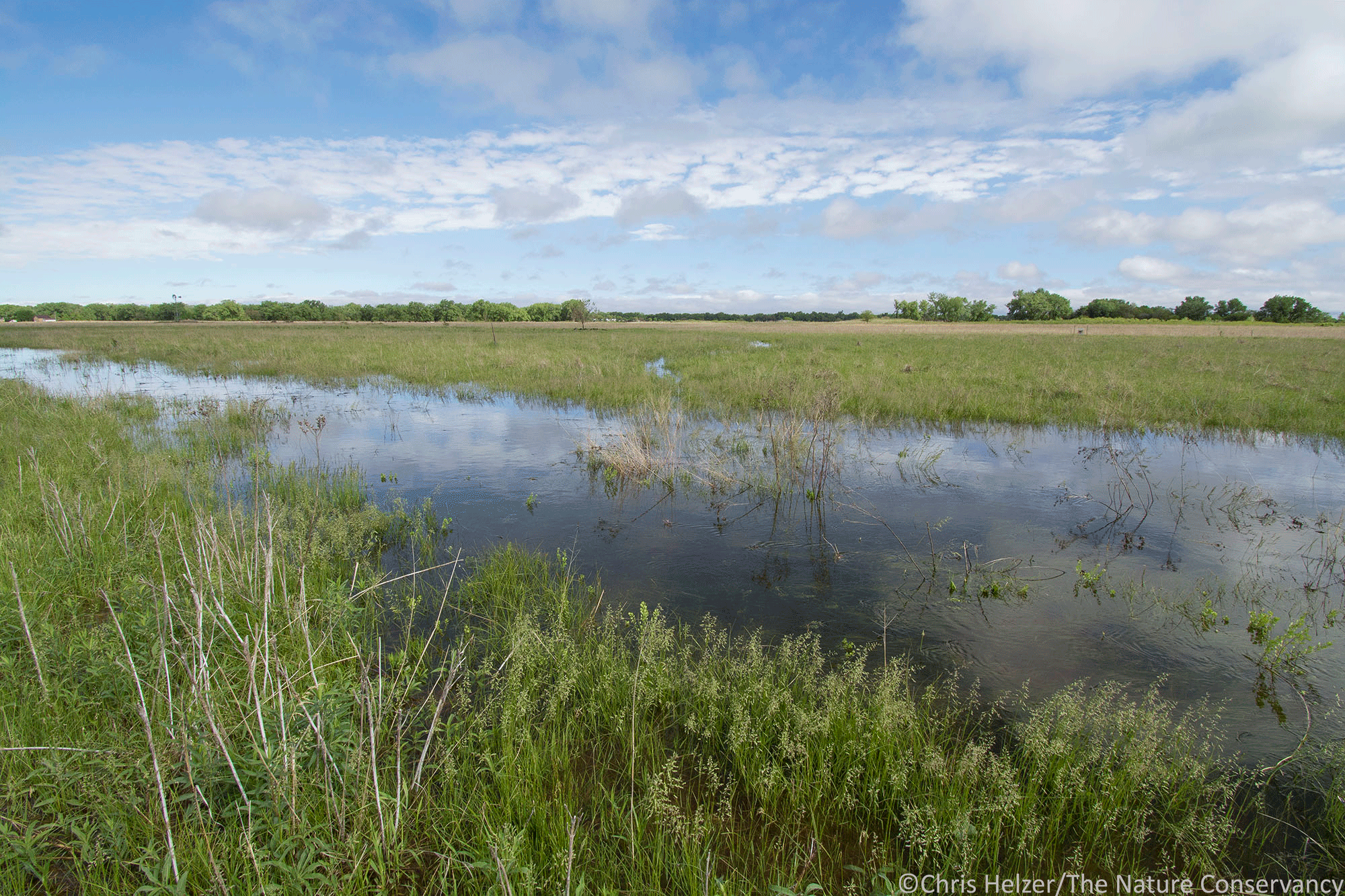
This swale (carved by water when the site was an active river channel many years ago) had a foot or more of flowing water in it. It had been nearly dry before the rain.
Even many of the flatter areas of the prairie, including this restored prairie (converted from crop land in 1995) had shallow water flowing slowly across it.

As I walked and worked across the prairie Monday morning, I couldn’t help noticing all the invertebrates that had been displaced by the water. Ants, spiders, beetles, pill bugs, and many others were climbing and clinging to plants above the water that was flowing gently across the prairie. I spotted a few carcasses, but for the most part, it looked like everything was surviving pretty well.

This pill bug, which normally lives in the detritus on the surface of the prairie, had climbed up to a dry perch.
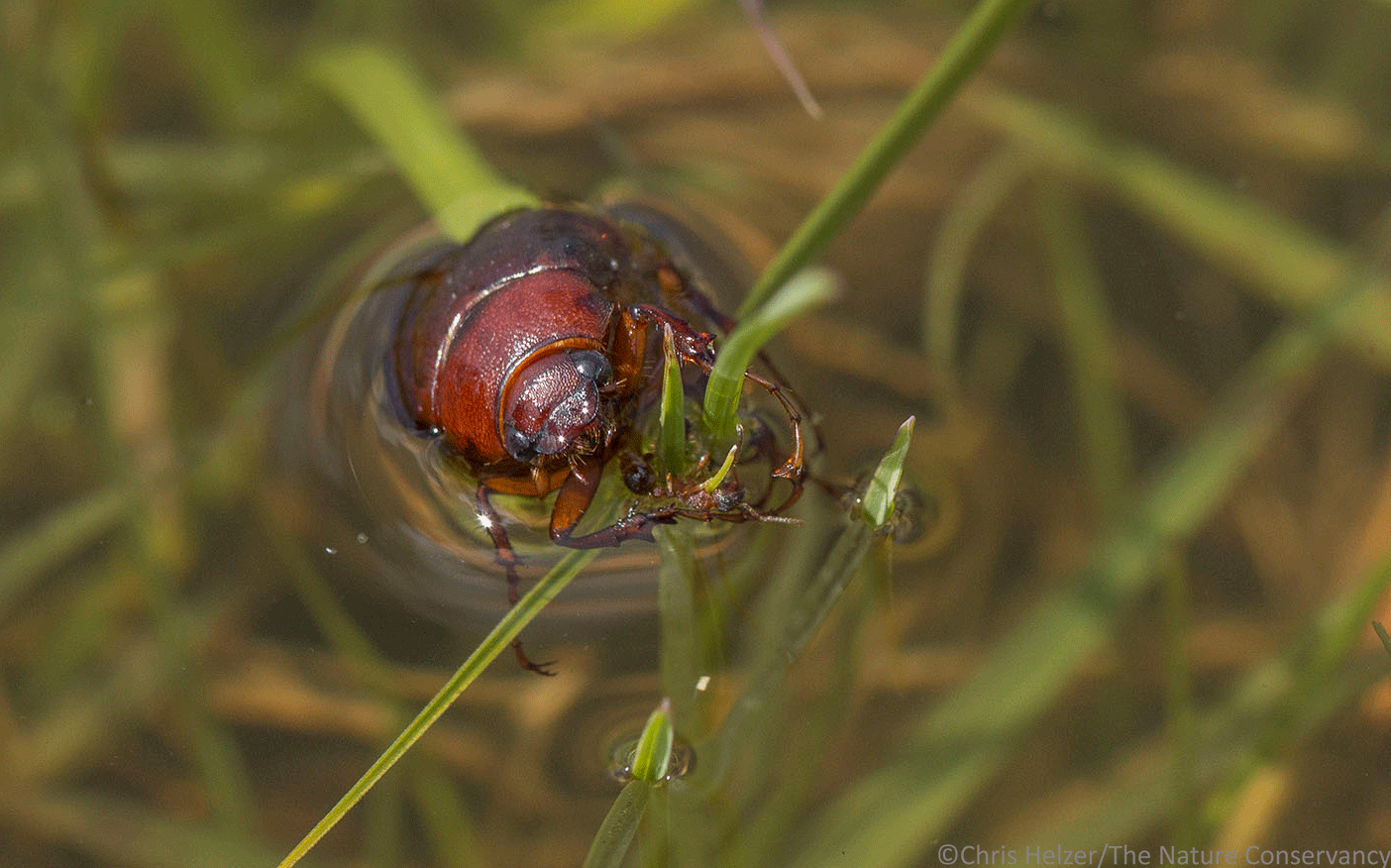
There were lots of these big brown beetles trying to escape the flood waters by clinging to vegetation.
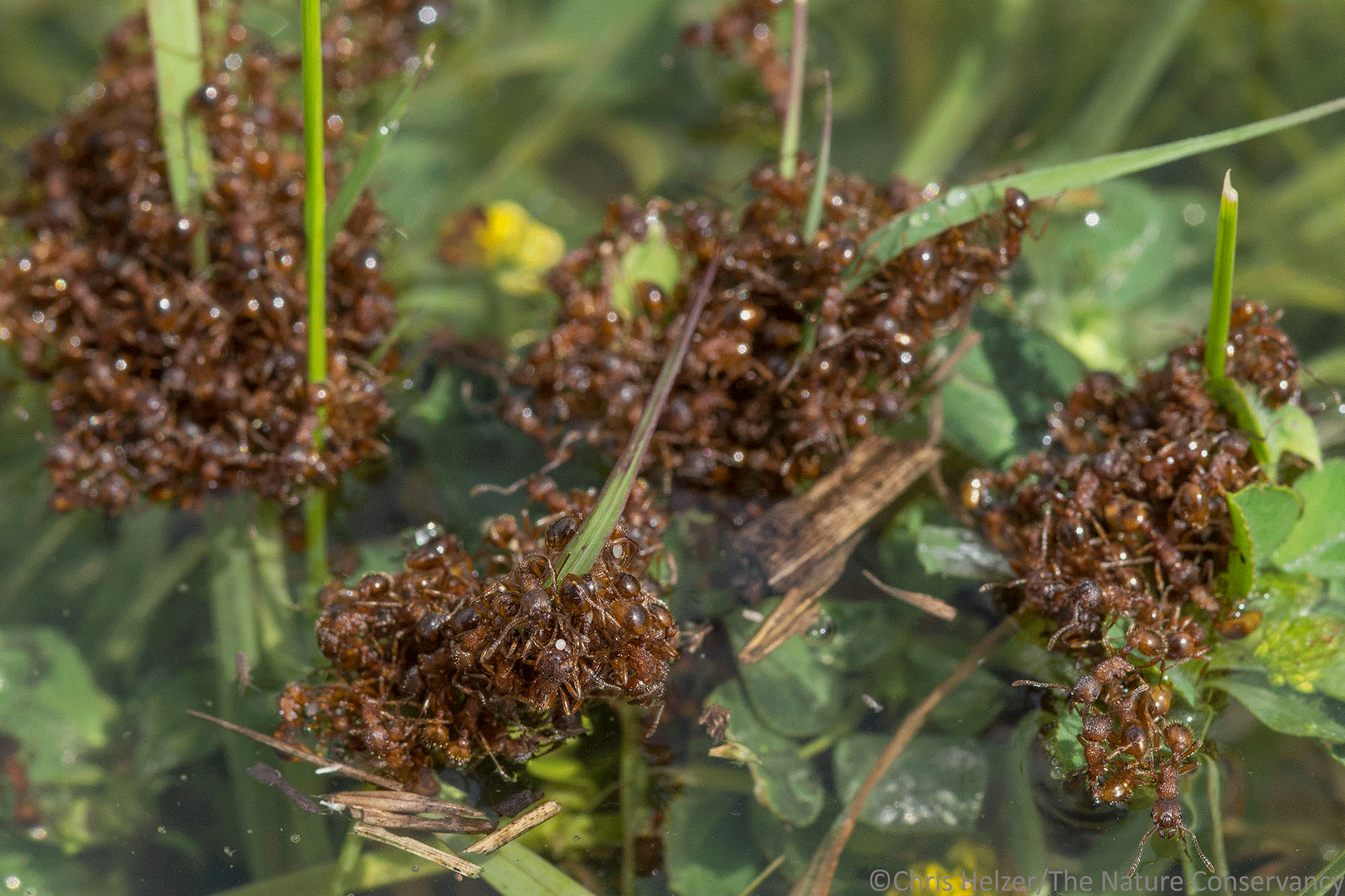
These ants were all clumped together on a tiny piece of vegetation above the water.

When we talk about the ecological resilience of prairies around here, especially related to climate change, we tend to focus on droughts. Planning for more frequent, intense and prolonged droughts has become a necessity for all of us living on the Great Plains. However, drought isn’t the only severe weather a changing climate will bring. We are already experiencing more intense storm events, some of which trigger flooding.

From a pure ecological standpoint, most prairies are pretty adapted to periodic flooding. The exception is the kind of massive flooding that dumps huge loads of sediment on top of prairies, washes them away completely, or inundates them for long enough to kill all the vegetation. Those kinds of floods certainly happen – they’ve occurred a few times in the last decade along the Missouri River, for example, and some grassland areas (mainly restored grasslands) have disappeared as a result.

In the case of our Platte River Prairies and the kind of temporary flooding we’re currently experiencing, however, I’m not too worried. I’ve seen these prairies flooded for many days at a time, and by just a few weeks after drying up, they look like nothing ever happened (except for some big logs and other detritus left behind by the water). Prairie plants are pretty tough, and most don’t seem to have trouble hanging in there until the water subsides. Our biggest worry during events like these is related to invasive species – flood waters can bring in seeds and rhizomes of some nasty plants, so we will have to be vigilant about patrolling flooded areas over the next few years.

There were numerous examples of these ant masses across the prairie.

Of course, plants aren’t the only species that have to deal with prairie flooding. Birds and other flying creatures can find high ground pretty easily, though ground-level nests might not fare so well. Other mobile animals have a good chance of getting to high ground, either by walking ahead of the water or swimming through it.

Animals living beneath the ground can have special challenges. I don’t know about all burrowing animals, but I know ant colonies can survive flooding because of the air pockets trapped in their underground nests. In fact, back in 2011, I posted photos of the ant activity after flood waters receded and all the colonies started repairing their nests at the same time. I assume a lot of other burrowing animals besides ants can take advantage of the same kind of trapped air, at least for a while. If not, I guess they either drown or pop up to the water’s surface and swim for a while!

It rained another inch on Monday night, further adding to the flow of water across most of our sites. I assume the rain will stop at some point (and we might be really wishing for rain by mid-summer) but in the meantime, I’ll rely on the resilience of prairies and their resident species to get through this. I just hope all those insects can hold on to their stems for a few more days!