I was at a workshop most of this week. It was a great workshop, but it was entirely indoors, covered some heavy topics, and was book ended by four hour drives. When I woke up this morning, back in my own house, I knew I needed some serious prairie time. I drove out to our Platte River Prairies as a foggy overcast sky started to break apart. When I arrived, I wandered out into some hilly sand prairie, still wet from last night’s rain. While the shell leaf penstemon wasn’t yet blooming (I was hoping…) the hairy puccoon, bobolinks, and fresh air did the trick, and I quickly felt right with the world again. Here are a few photos from my therapeutic prairie hike.
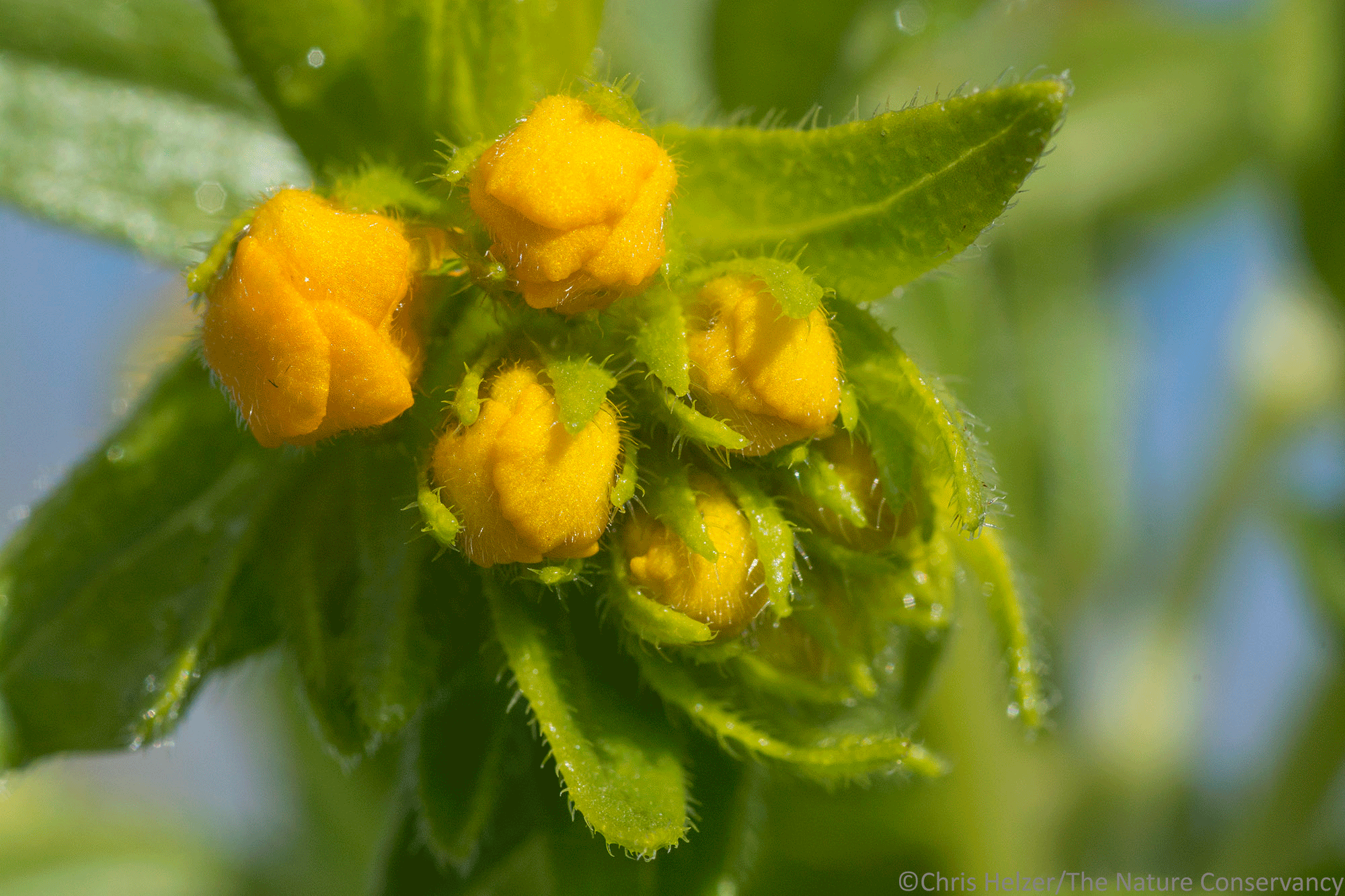
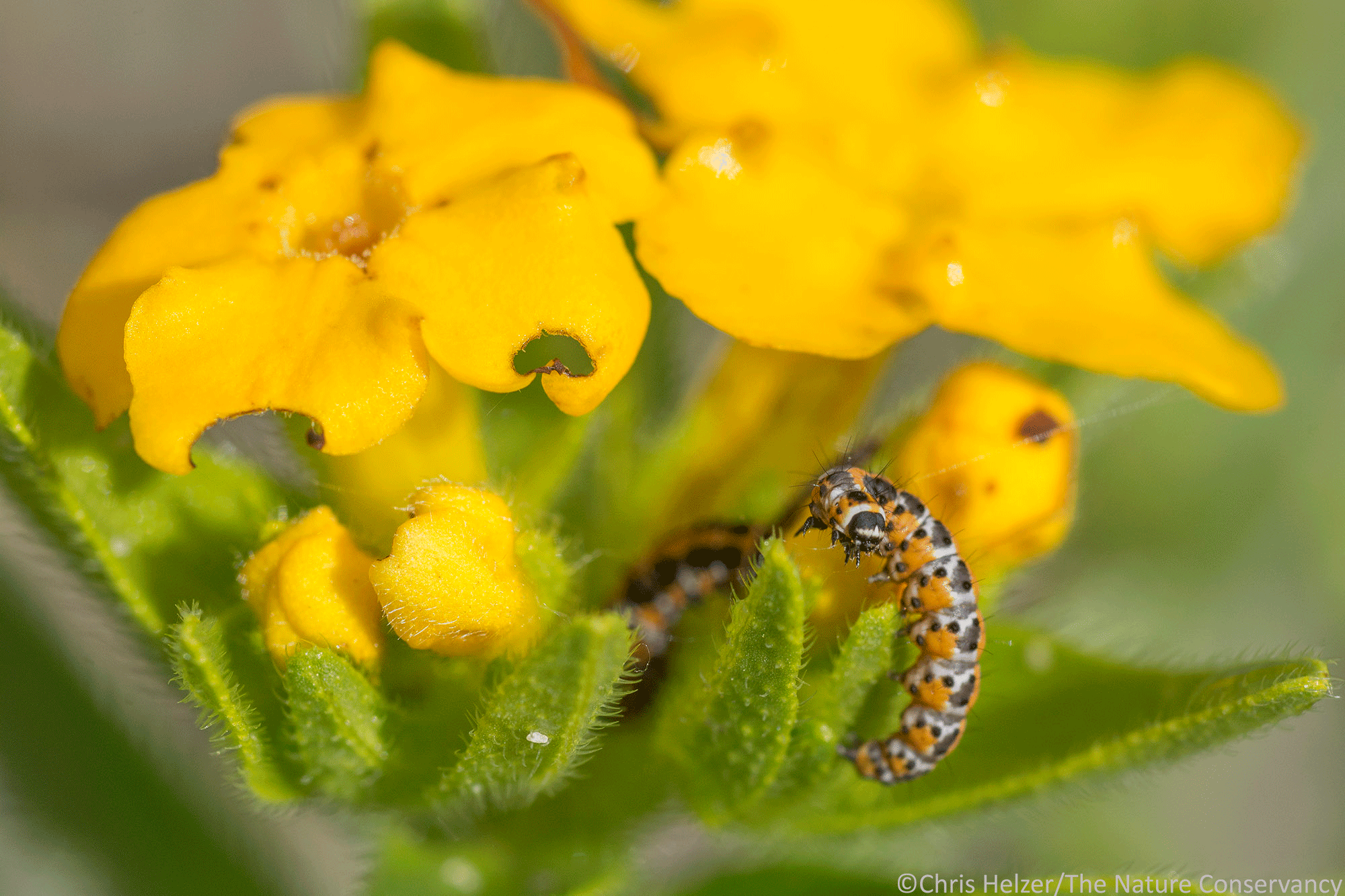
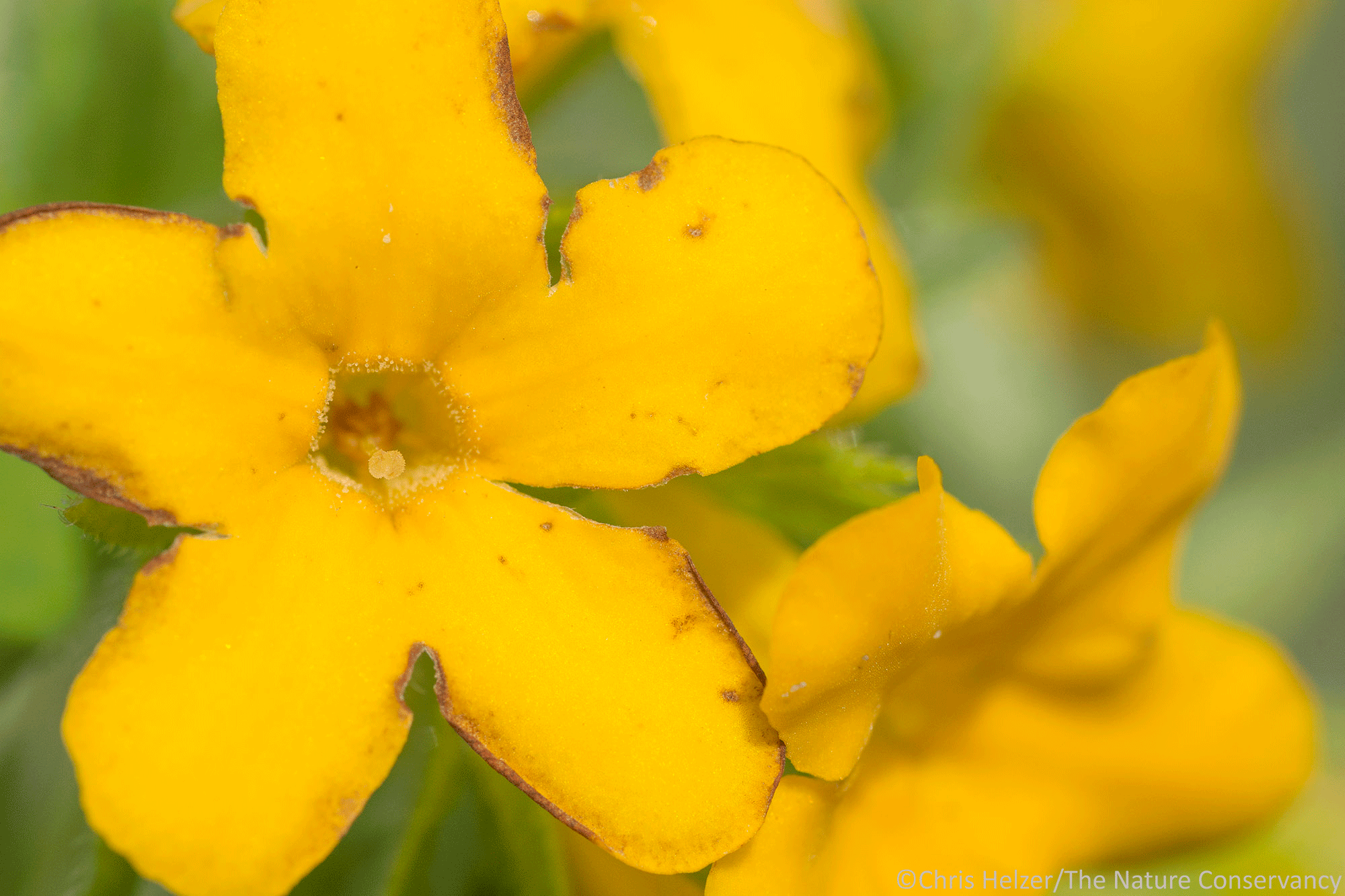
Flowers-in-waiting on a hairy puccoon plant (Lithospermum carolinianum).These little caterpillars were hanging out on quite a few puccoon plants. I never caught them eating the flowers or leaves, but I’m assuming that’s what they were there for…Buffalograss (Bouteloua dactyloides) is a short mat-forming grass that shows up most in frequently disturbed portions of our prairies. This patch was right inside a gate.More buffalograss. I often talk about being grateful that people can’t see me as I lie prostrate on the ground with my camera. That didn’t apply with this photo, which I took just a few yards off the highway – with vehicles passing by and drivers doing double takes. No one stopped, thank goodness. That would have been counterproductive for my prairie therapy.Hairy puccoon is sure a gorgeous plant, and even as the blossoms start to dry out, they just get pretty reddish-brown highlights.
When I first started learning about prairies, I developed an immense respect for the “wise old people of the prairie” who seemed to be infinite fountains of knowledge. There have been several of those folks in my life, not all of them particularly old, who both inspired me and helped me gain a deeper understanding of grasslands. I loved to tag along with them on prairie walks. I would pepper them with questions about everything we saw, savoring each answer like an exquisite pastry. I was and am eternally grateful to them, and I’ve long aspired to become one of them.
Now that I’ve spent more than 25 years studying, restoring, and managing prairies, I feel like I’m starting to approach “wise old person of the prairie” status, at least among some audiences. In particular, I love introducing new classes of our Hubbard Fellows to our Nebraska prairies and helping them unwrap some of the same fascination I found during my own introductory period. The only people more gratifying to work with are my own kids. They all know that Kim is a better source of information on just about any other science topic (or math or English or…) but – while it’s close – I think I’m still the household expert on prairies. Having our own prairie gives our family particularly nice opportunities to spend time together in my favorite habitat.
Atticus stands in the middle of a “fairy ring”, a colloquial name for a pattern of extra green grass caused by a fungus. The outwardly spreading fungus breaks down organic matter in the soil, making increased nitrogen available for plant growth.
I feel like all my kids have a good foundational knowledge of grasslands, and for the most part, they’ve even appreciated getting it. My older three appear to be headed down non-ecology career paths, and that’s fine. As long as they keep their conservation ethic, I’m perfectly happy and proud to have them pursue whatever careers make them happy. My step-son Atticus, however, has been in a biology/ecology mode for long enough that he just might stick there, which would also be wonderful. Last weekend, Atticus and I spent a few hours at our family prairie, and I got to play “wise old person” with him. I think we both enjoyed it – I know I did.
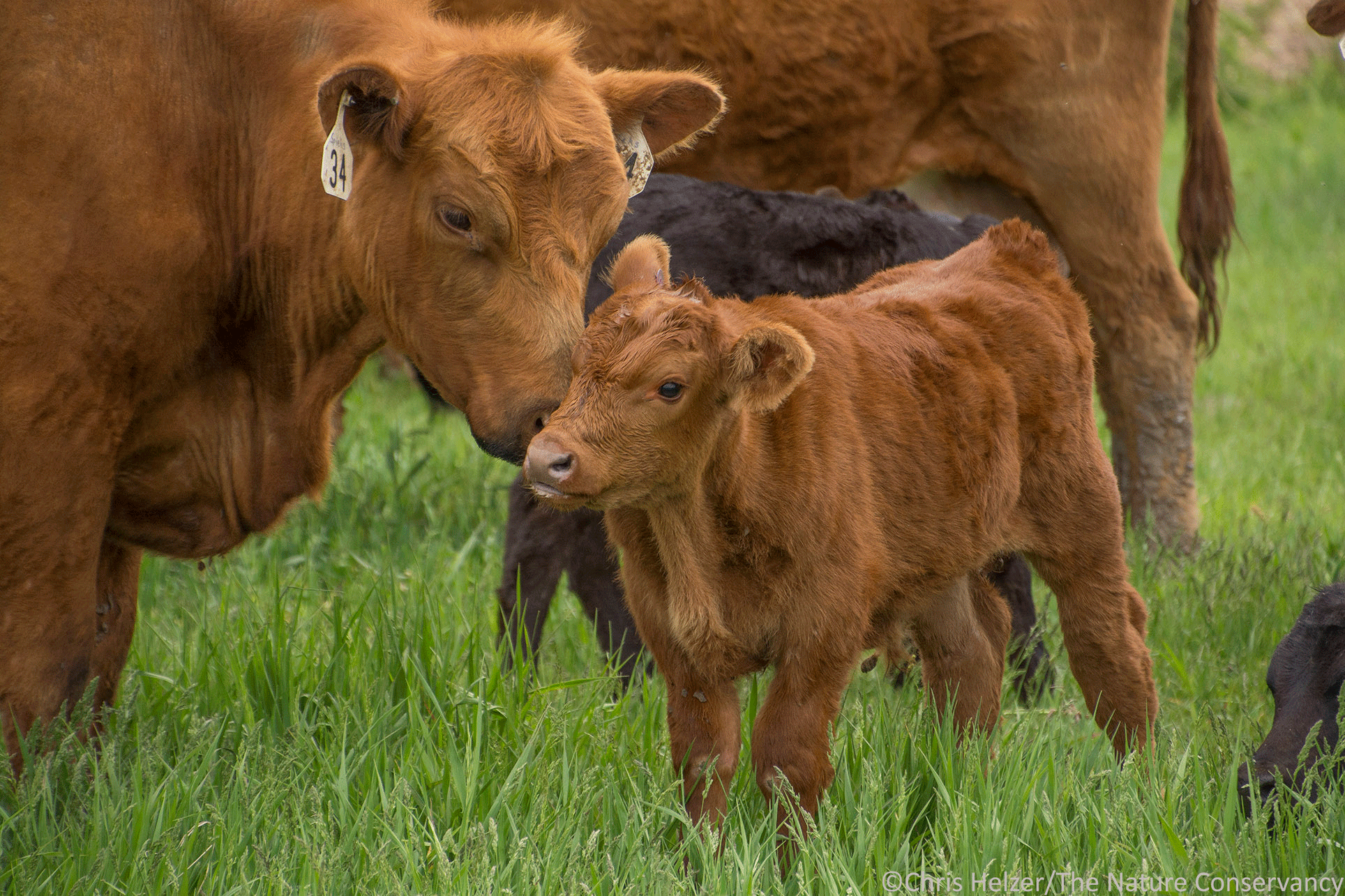
Cattle were grazing down the smooth brome and Kentucky bluegrass at the prairie. They also looked quite charming.
Until I started becoming one, I didn’t realize how personally gratifying it was to be a wise old person of the prairie. It’s not because it’s fun to show off my knowledge. Instead, it’s because I get to rediscover the most basic aspects of prairies each time I help someone else see them. Watching Atticus stalk brown thrashers and eastern kingbirds, and kneel down to admire a katydid nymph feeding on pollen keeps those common species from losing their sparkle for me.
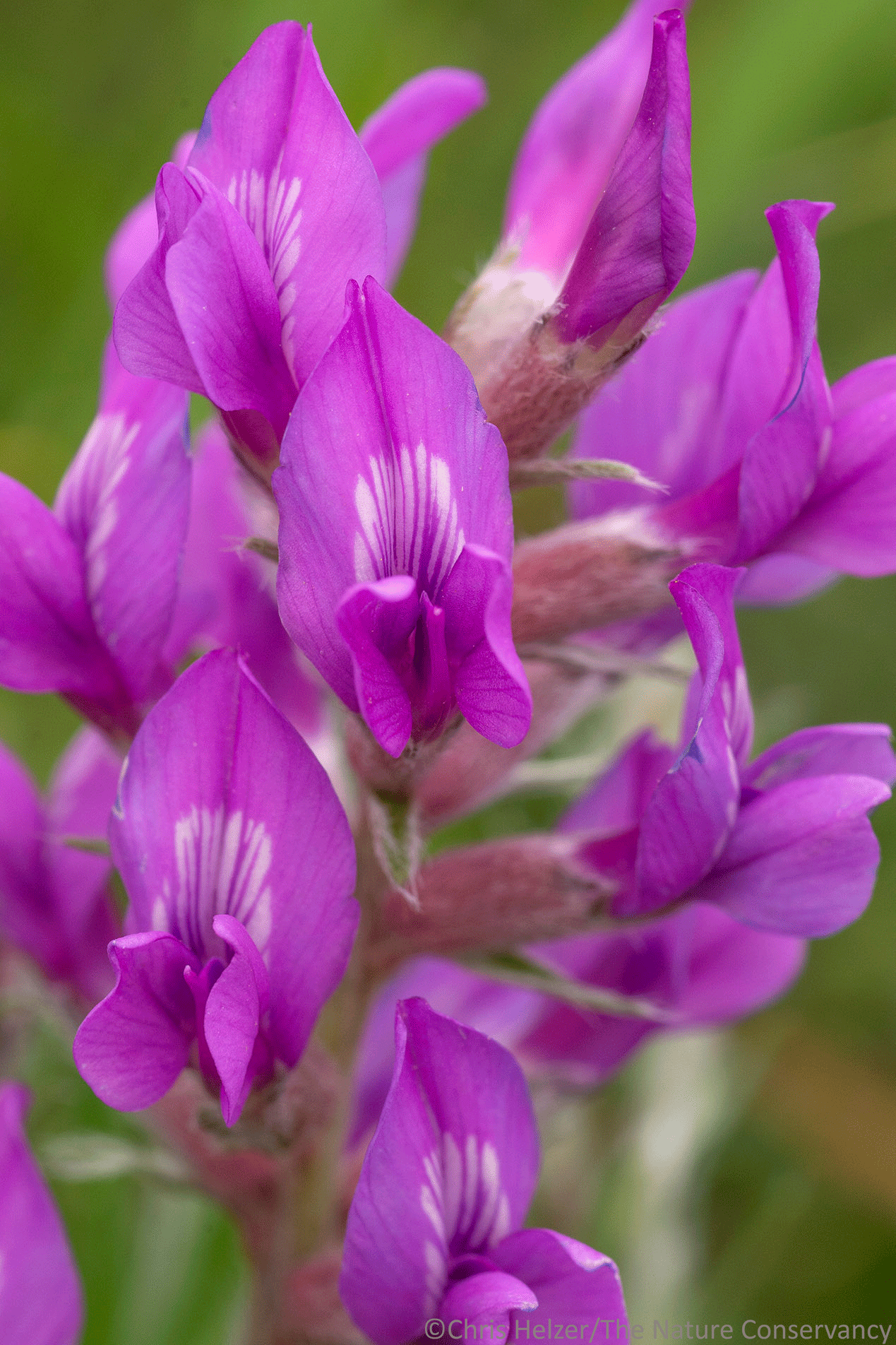
Atticus spotted a colony of American vetch (Vicia americana) growing near the top of a small ridge, so we stopped to examine it. He was entranced by the way its tendrils grasped the nearby vegetation.Atticus enjoyed looking at several bird species, especially a brown thrasher, eastern kingbirds, grasshopper sparrows, and a red-tailed hawk circling above its nest tree. There is only one patch of woolly locoweed (Oxytropis lambertii) in our prairie, in the middle of a fairly large flat dominated by pussytoes (Antennaria neglecta). We watched a queen bumblebee make a quick visit before hurrying off to find more food for its new nest.
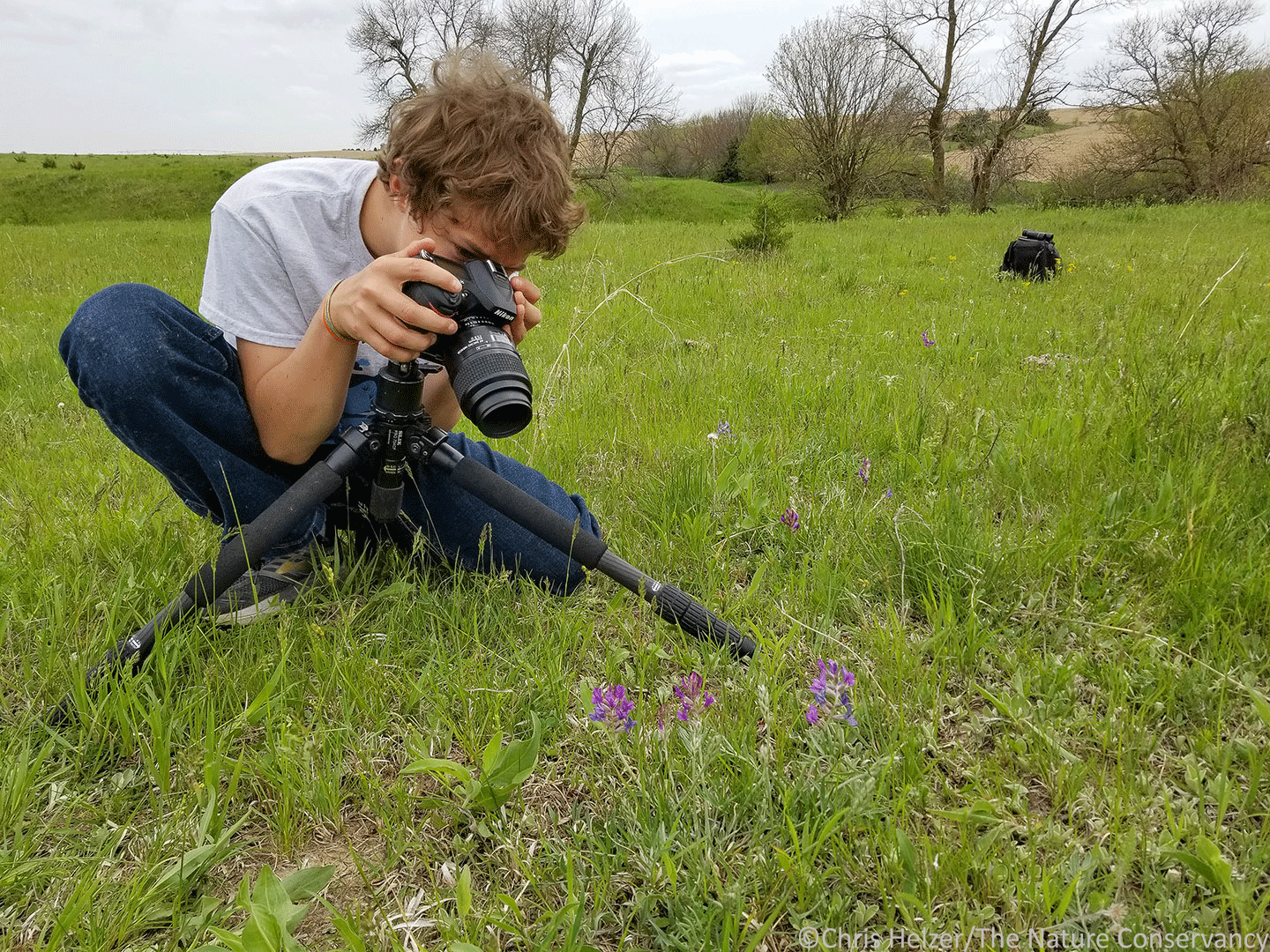
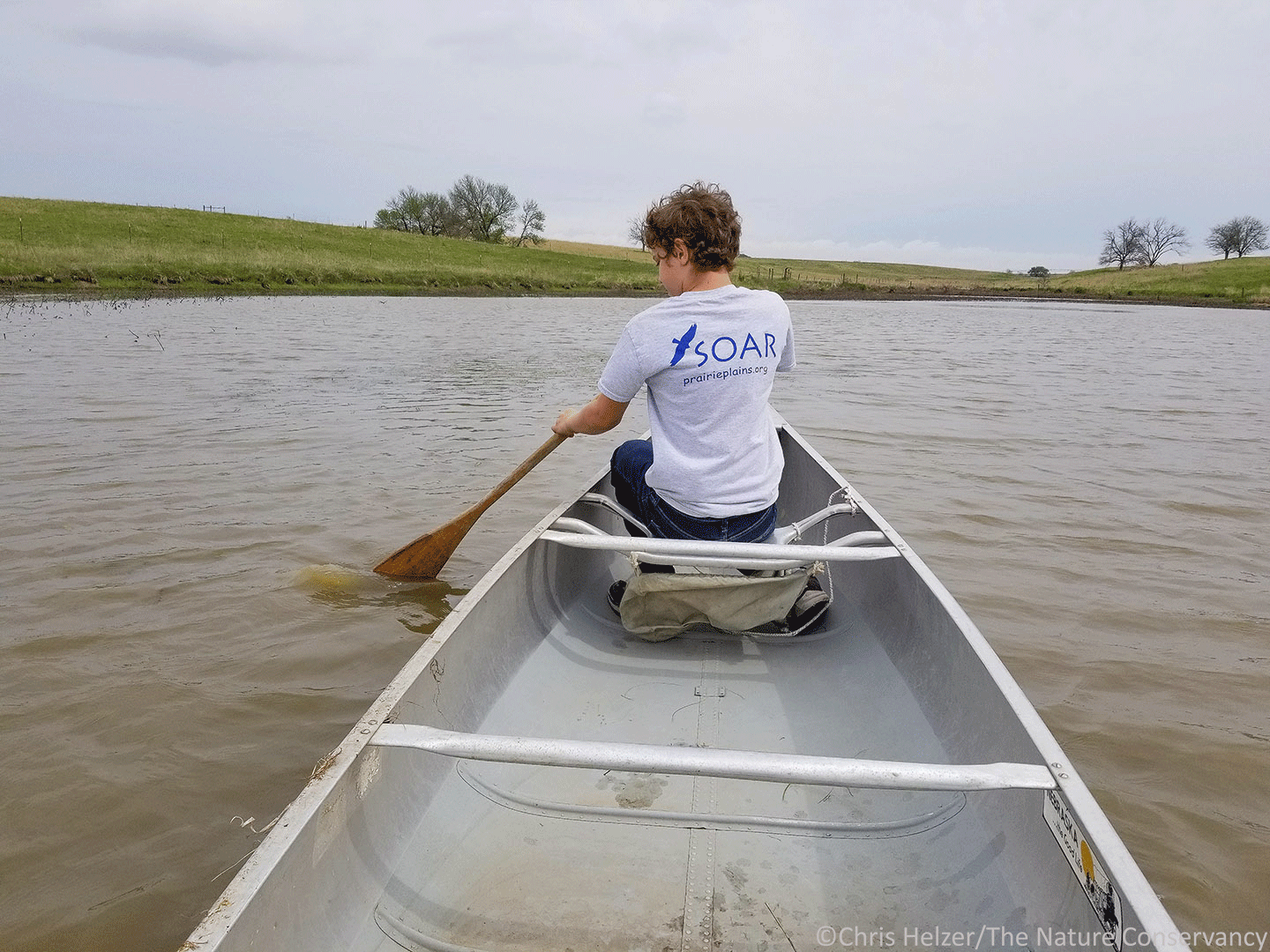
I’m always happy to spend time with anyone in a prairie, and I never have trouble generating excitement about whatever we find, especially if it’s the first time my companions have seen or heard of that species or phenomenon. That said, there’s definitely a higher level of satisfaction and pleasure when my companions are family members. Atticus and I wandered around the prairie for about three hours, but the time flew by. We watched birds, found and discussed a badger den and fungal fairy ring, admired the new calves, checked on the blooming progress of multiple plant species, and canoed in tight circles around our tiny pond – among other activities. During the whole trip, I enjoyed watching Atticus file away new discoveries and call up old ones. He even grabbed my camera and asked to take a turn with it, which I think is the first time one of my kids has done that.
Atticus wasn’t content to simply watch me take flower photos and decided to get in on the act. (You can see the red-tailed hawk nest above his head.) Here, he’s photographing locoweed.Here are the three photos Atticus took. Not bad, huh?We keep a canoe stationed at the edge of our muddy farm pond so we can take it out on the water whenever we feel like it. The pond’s diminutive size makes for a lot of circular canoeing, but it’s still fun.This katydid nymph was one of several insects we spotted on prairie ragwort (Senecio plattensis). One of the others was a green sweat bee, which Atticus wanted to photograph but that didn’t play nicely.This crab spider was on the ragwort flower right next to the one with the tree cricket nymph.
I recognize that I have been very fortunate in my life. After all, I get paid to keep learning and sharing about my favorite habitat type. However, becoming a wise old person of the prairie is something I would have pursued regardless of my profession. It’s more of an apprenticeship than a job, I think. If you haven’t already, I hope you can find your own mentor(s) to follow through prairies. Don’t ever feel badly about asking them too many questions – if they’re anything like me, they’ll relish every opportunity to help you learn. Eventually, maybe you can reach wise old person status yourself. I highly recommend it.
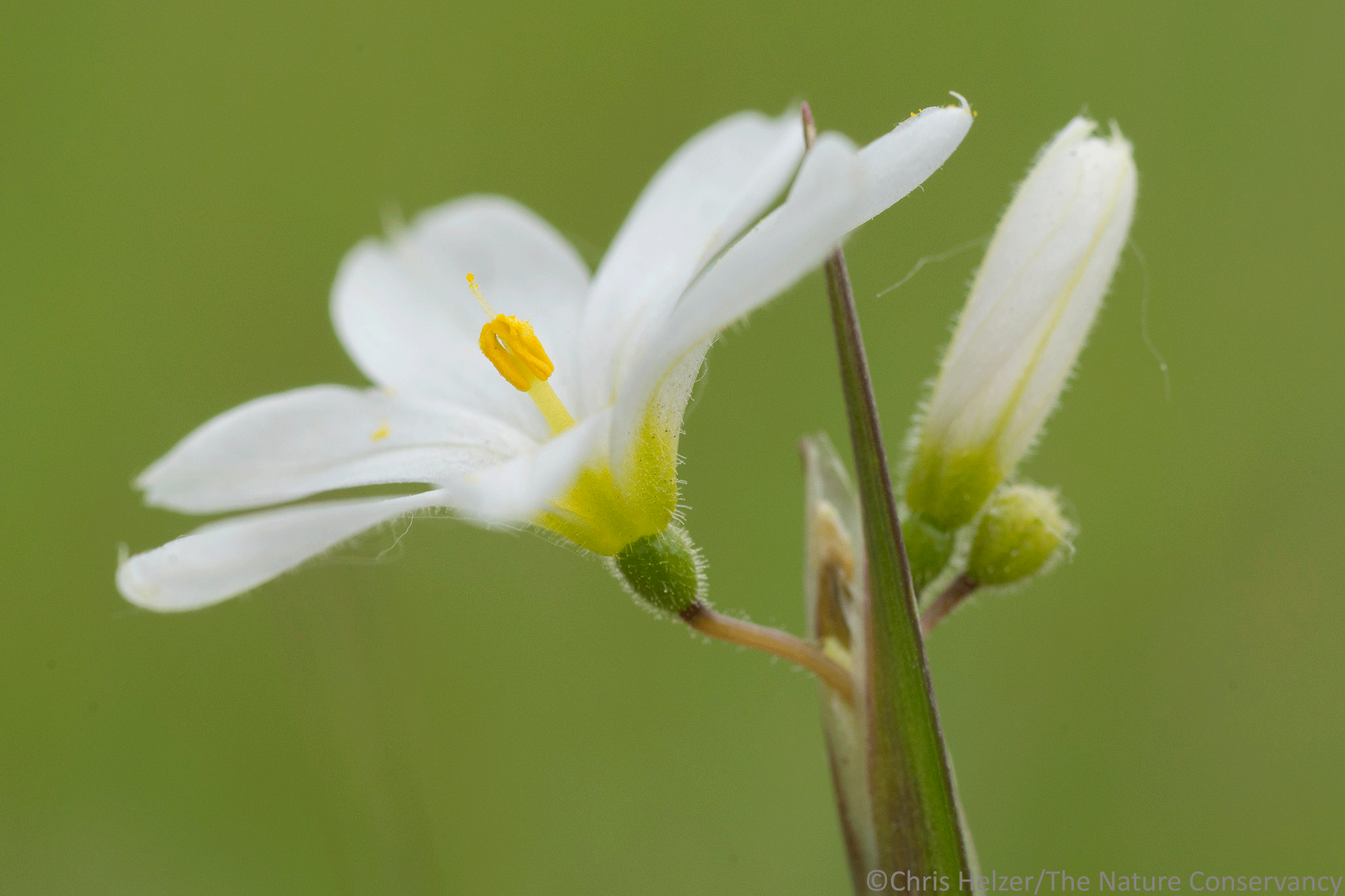
Most of the pussytoes plants (Antennaria neglecta) we saw had already lost their seed, but a few still had some hanging on.White-eyed grass (Sisyrhinchium campestre) was scattered around the prairie, but was nearly invisible until we were almost on top of it.








 The Prairie Ecologist