Even More Photos and Stories From My Square Meter of Prairie – Late July/Early August Edition

You probably aren’t surprised to see yet another post about my square meter photography project. It’s been nearly a month since my last post on the project, which covered some of what I saw at the plot during the first two weeks of July. Since then, I missed a week because of our Colorado vacation but have otherwise tried to keep up with everything happening in my favorite little grassland spot.

I may or may not have have even visited the plot before unpacking the car after our Colorado trip. I’m not obsessed – who are you calling obsessed?

Big bluestem leaf and hairs on a dewy morning.
A backlit common milkweed leaf.

Butterfly milkweed and lead plant are both done blooming for the year and are working on producing fruits/seeds. Maximilian sunflower is getting close to blooming, as is the pitcher sage (Salvia azurea) plant that has a couple stems leaning into the plot. (Yes, I count anything that leans into the plot. I also count anything rooted inside the plot that leans outside the plot. My project, my rules.) When those sunflower and pitcher sage flowers open up, I anticipate a big rush of pollinators and other flower-feeding insects. In the meantime, there’s still been plenty of action going on, despite the absence of big showy flowers.

Here’s the plot on a foggy morning in late July – in between the flowering times of showy wildflowers in and around the square meter. It’s hard to see the blue flags marking the corners of the plot, but you can see the matted down vegetation all around it where I’ve been kneeling and lying down much of the summer. (The big milkweed plant on the right is not inside the plot but there’s another one on the far side that is.)
Lead plant is producing fruits, which is good, since I worried that Japanese beetles might have eaten enough flowers to prevent that from happening.

Quick Aside:

In 2018, this time of year was marked by (one plant of) stiff sunflower (Helianthus pauciflorus) blooming, though the story quickly became about the little leaf beetles that quickly consumed most of the blossoms. This spring, I was surprised and disappointed that I didn’t see any stiff sunflower plants in the plot. The species is still doing well elsewhere in the prairie, including just across the trail. In and around my plot, though, it’s mostly gone.

As a perennial plant, stiff sunflower is an odd duck. Like many perennials, it makes rhizomes (underground stems), which allows it to move laterally through the ground. Buds on those rhizomes can produce an aboveground shoot several feet from where the last shoot was. Unlike most rhizomatous perennials, though, the ‘parent’ shoot from which the rhizome originated doesn’t survive the winter and the rhizome disintegrates, leaving the new shoot on its own.

Because of this weird strategy, stiff sunflower is sometimes called a ‘pseudo-annual’ because each individual shoot only survives for a single year, even while the overall clone (the individual genetically identical patch) can survive for many years by making new shoots each year. Often, stiff sunflower does this trick and just pops up in different places each year within the same area – where it’s happy with soil and sun conditions. In the case of my square meter plot, it either died out or (I hope) migrated away to a new location. In six years, the plant could have moved quite a distance. I miss it in my plot, but it’s also fun to look at nearby clones and wonder if they’re ‘my’ stiff sunflower.

Ok, back to the story:

So anyway, there are four plant species in bloom right now, three of which are grasses. Switchgrass and big bluestem are the most prominent of the grasses, along with a single small annual I think is witchgrass (Panicum capillare) but I’m not 100% sure yet. It’s really short for witchgrass (five inches tall), but still managed to bloom in the dense shade within the plot. In addition, there are several eastern black nightshade plants (Solanum ptychanthum) in flower. I haven’t managed a good photo of the witchgrass yet (it’s hiding in the shade), but have nice shots of the others.

Switchgrass flowers.
Big bluestem flowers at sunrise.
Big bluestem anthers caught in the hairs below the flower.

I’ve not seen any insects visiting the nightshade, switchgrass, or witchgrass flowers, but the big bluestem has attracted lots of little hover flies. Most of them are the very common ‘margined calligrapher’ hover fly (Toxomerus marginatus), which seems to enjoy the pollen of big bluestem very much. There are lots of other flies around, though, including hover flies feeding on grass pollen as well as other species of fly doing other things.

I think this is a male margined calligrapher fly on big bluestem.
I think this is a female of the hover fly species.
And here’s another male margined calligrapher.
This is a different hover fly species (Toxomerus politus), according to bugguide.net, which is known to favor the pollen of grasses. (The fly likes the pollen, I mean, though bugguide.net probably isn’t anti grass pollen.)
This poor hover fly was dead when I found it, but still clinging to a plant within the plot. According to bugguide, it is a bird hover fly (Eupeodes volucris).

Flies are definitely the most abundant group of insects I’m seeing right now. Most of them are species I’ve already photographed, or at least I think that’s the case. To be safe, I still photograph quite a few of them – especially the really little ones – because I’ve learned that I’m not very good at fly identification.

There are way too many fly species that look similar for me to have much confidence. I’m hoping I’ll find someone who can later help me identify them, or at least help me decide how many different species I might have. If you’re good at fly identification and suffering from boredom, let me know! I could use the same kind of help with leafhoppers (good grief – leafhoppers…)

Bugguide experts say this is a blow fly in the genus Lucilia.
I think this is one of the many flesh flies I’ve seen in the plot. How many species of flesh fly have I photographed? Great question. I don’t know yet.

One of the more common groups of flies I’ve been watching are the longlegged flies (Dolichopodidae). Many of them are an iridescent green color and they’re tiny predators. I’m guessing/hoping I’ve got photos of at least a couple different species. Since there are something like 1,300 longlegged fly species in the country, I have a good chance of being right, but as I’ve tried to make clear, I’m not good at fly identification, so I’m not making assumptions just yet.

A longlegged fly on common milkweed.
Another longlegged fly on milkweed, but this one was seen on a different day and is feeding on a very small insect.

There is a lot of Maximilian sunflower growing in the plot. Many of the stems have some kind of insect burrowing inside them. The holes look like woodpecker nests in trees, except they’re in sunflower stems, are much smaller, and have lots of insect frass (poop) coming out of them. I didn’t want to tear apart any of the stems in my plot, but I did sacrifice one on a plant nearby, just to see if I could find the inhabitant.

A burrow entrance in a Maximilian sunflower stem with dark colored frass spilling out of it.

As a result, the photo below is the only one in this post that wasn’t taken from within my plot, but I’m hoping it might represent a very similar-looking larva inside the stems I did photograph inside the plot. If I had to guess (which is all I can do at the moment) I’d guess it’s a fly larva. I say that partly because it kind of looks like a fly larva and mostly because of statistical probability, given the abundance of flies hanging around.

A larva burrowed into a Maximilian sunflower stem just outside my plot. I peeled the stem apart for science and curiosity. Ok, mostly curiosity.
Here’s a more recent photo of one of the burrow entrances in Maximilian sunflower. Now it looks like there’s some shredded plant material being pushed out of the hole.

As the only wildflower blooming in the plot at the moment, eastern black nightshade has attracted a lot of my attention. It’s an annual that probably germinated because of this spring’s prescribed fire. Like other species in the nightshade family (including tomatoes) this is a ‘buzz pollinated’ species that releases pollen when a bee vibrates its wing muscles at the right frequency. It’s a tough process to photograph, but I’ve not even had a chance to try yet because I’ve not seen any bees visiting the plants in my plot.

Flowers of eastern black nightshade.
Same plant, different camera lens.

While I haven’t seen any pollinators on the nightshade plants yet, the plant did have a bunch of insect visitors back on August 3. If the plants could vote, I’m betting they would have preferred pollinators to the gaggle of blister beetles that showed up and – within a single day – completely defoliated the couple of plants inside the plot. The beetles left behind the flowers, fruits, and stems, but every scrap of leaf was consumed within just a few hours. I’m guessing on the duration of the visit since I wasn’t there when they arrived or left. However, based on how quickly things were happening when I was there, I think it’s a good estimate.

A blister beetle (Epicauta sp. – probably E. immaculata?)

I’m pretty sure the beetles were Epicauta immaculata, aka ‘the immaculate meloid’. Bugguide experts were comfortable saying the beetle was in the genus Epicauta, and based on some reading I did on the diet of various Epicauta species, I think E. immaculata is likely the right identification. However, just as with flies, my standard caveat applies – I’m not an expert, so I could very easily be wrong.

Either way, there were at least nine of the blister beetles hanging out that day, and maybe more than that. They were large, with most measuring longer about an inch or so in length. They also appeared to be very hungry. By the time I showed up and found them, they’d already eaten about half of the plants’ leaves and they made very noticeable progress during the hour or so I was there watching them.

Blister beetles going to town on nightshade leaves.
Focused and hungry.
“Leave me alone – I’m eating.”
Making room for more leaf matter to be ingested…
The beetles didn’t appear to want the flowers or fruits. You can see the partially eaten leaf here, but there was no damage to the blossoms.
Uneaten fruits.

I came back the following day, curious to see what was left of the plants. The fruits and flowers were still intact, but the rest of the plants were stripped down to the skeleton (stems). I’ll be curious to see if the remaining flowers and fruits can mature without leaves to photosynthesize and create food from sunlight. So far, the fruits look like they’re continuing to ripen.

The stripped stem of an eastern black nightshade plant

There’s more to say, but this post is already way too long, so I’ll just end with a few more photos of plot visitors:

A tiny hairless caterpillar.
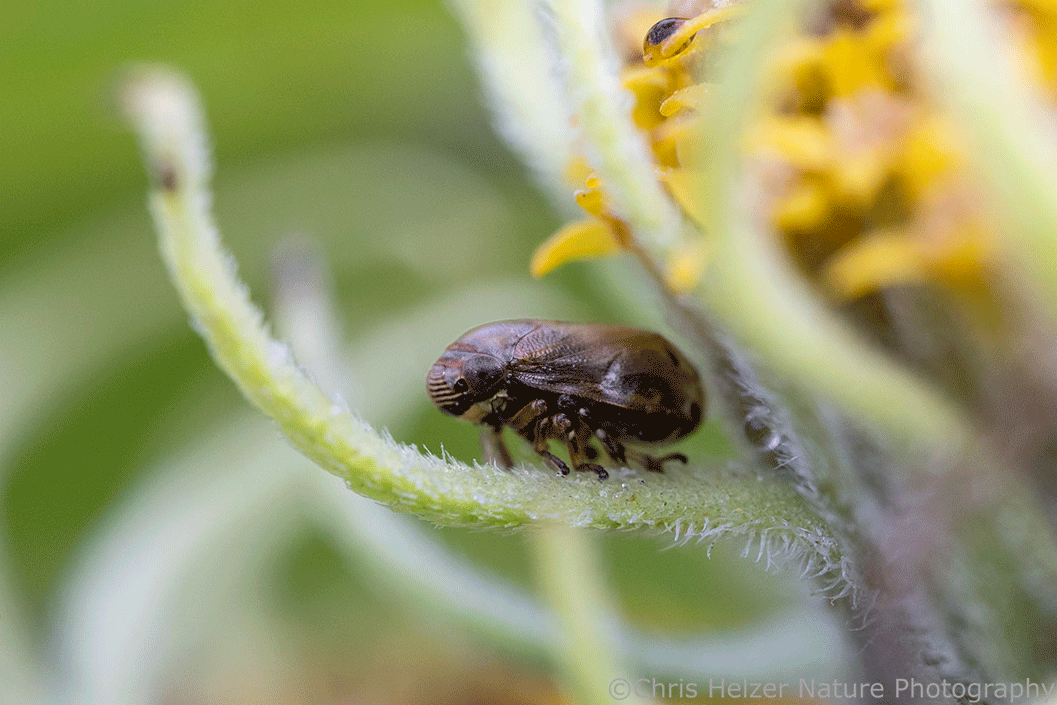
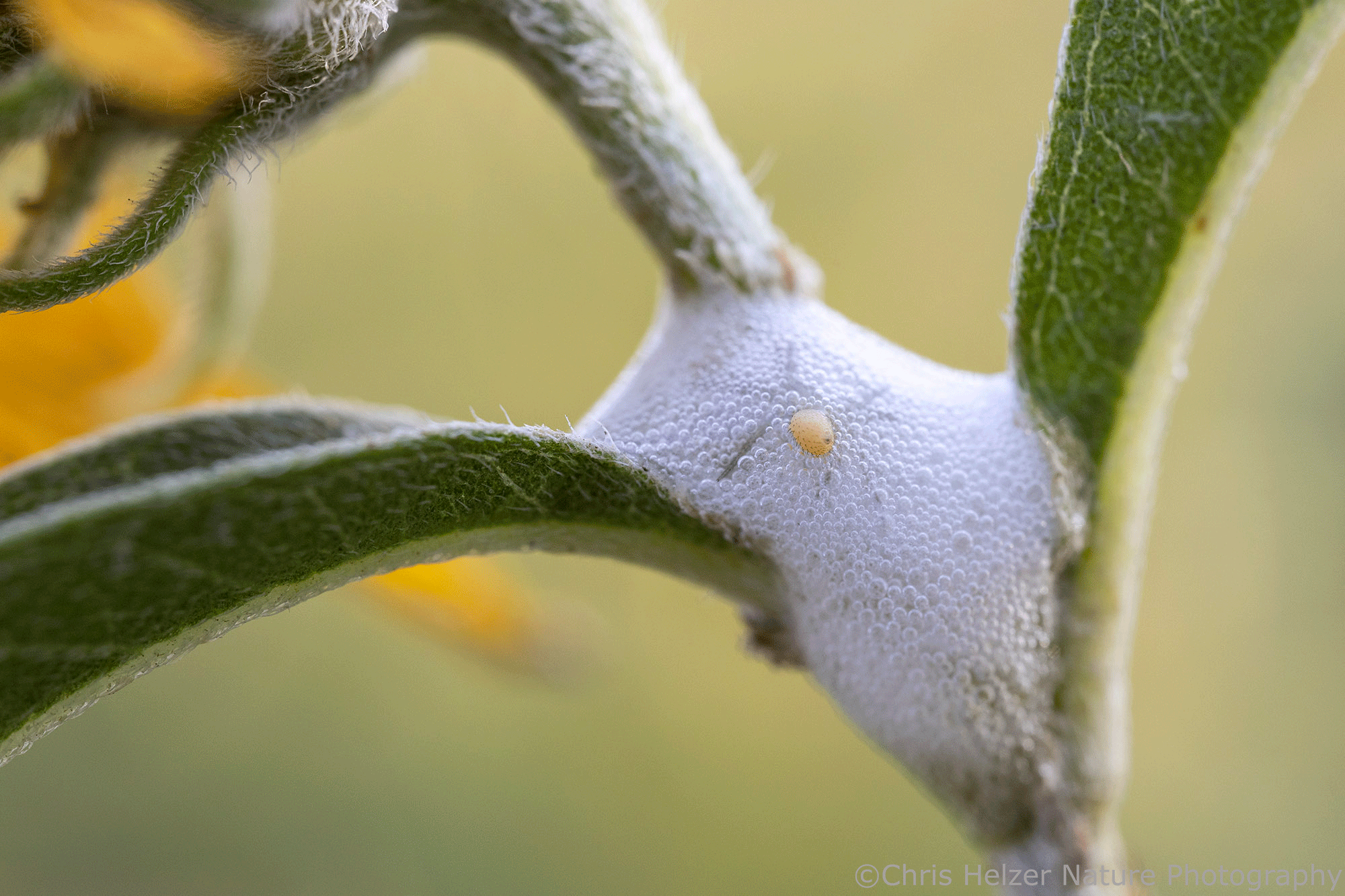
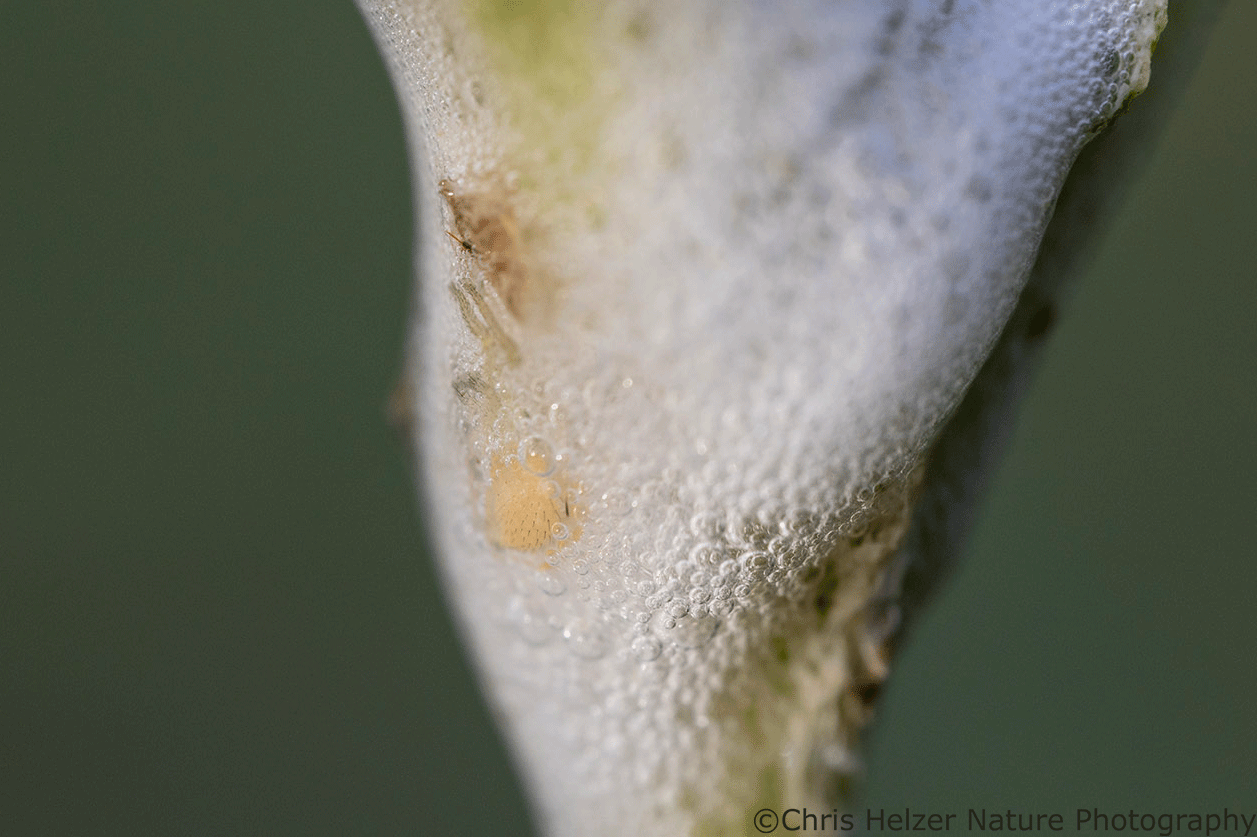
The larva of a two-lined planthopper (I’m pretty sure).
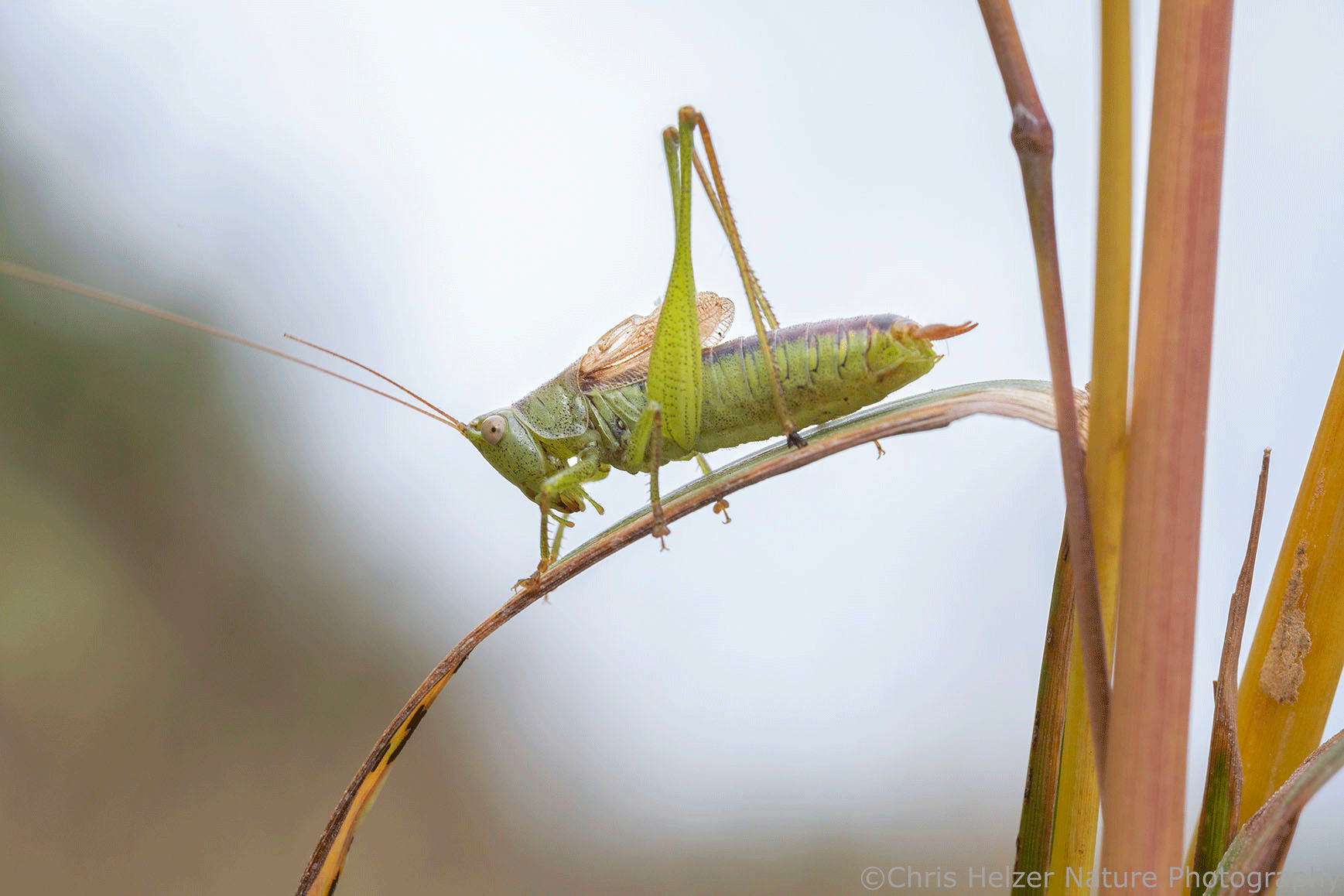
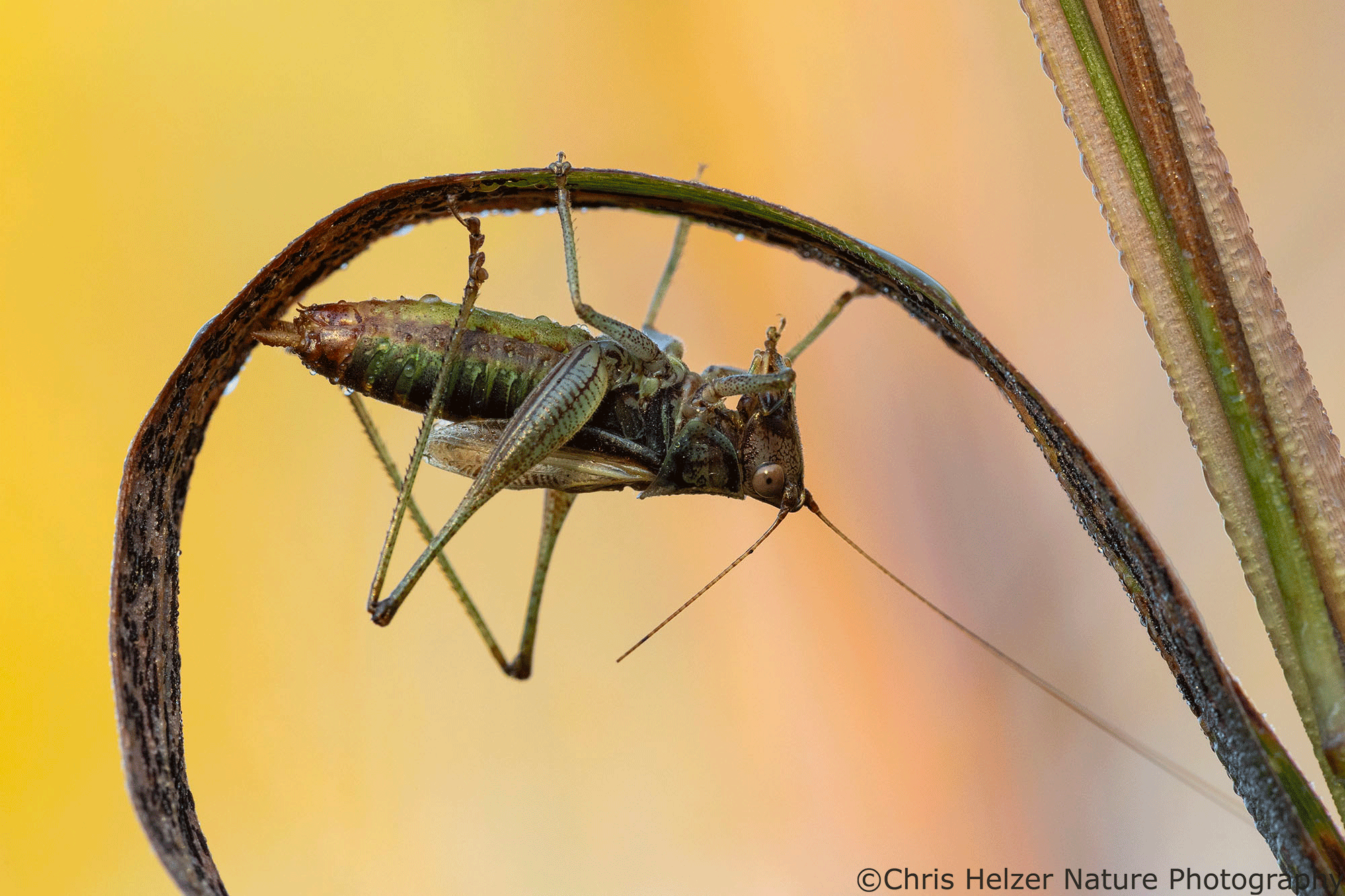
Grasshopper nymph and morning dew.
The first adult grasshopper of the year. I think it’s likely a red-legged grasshopper, but identification of that species is tricky.
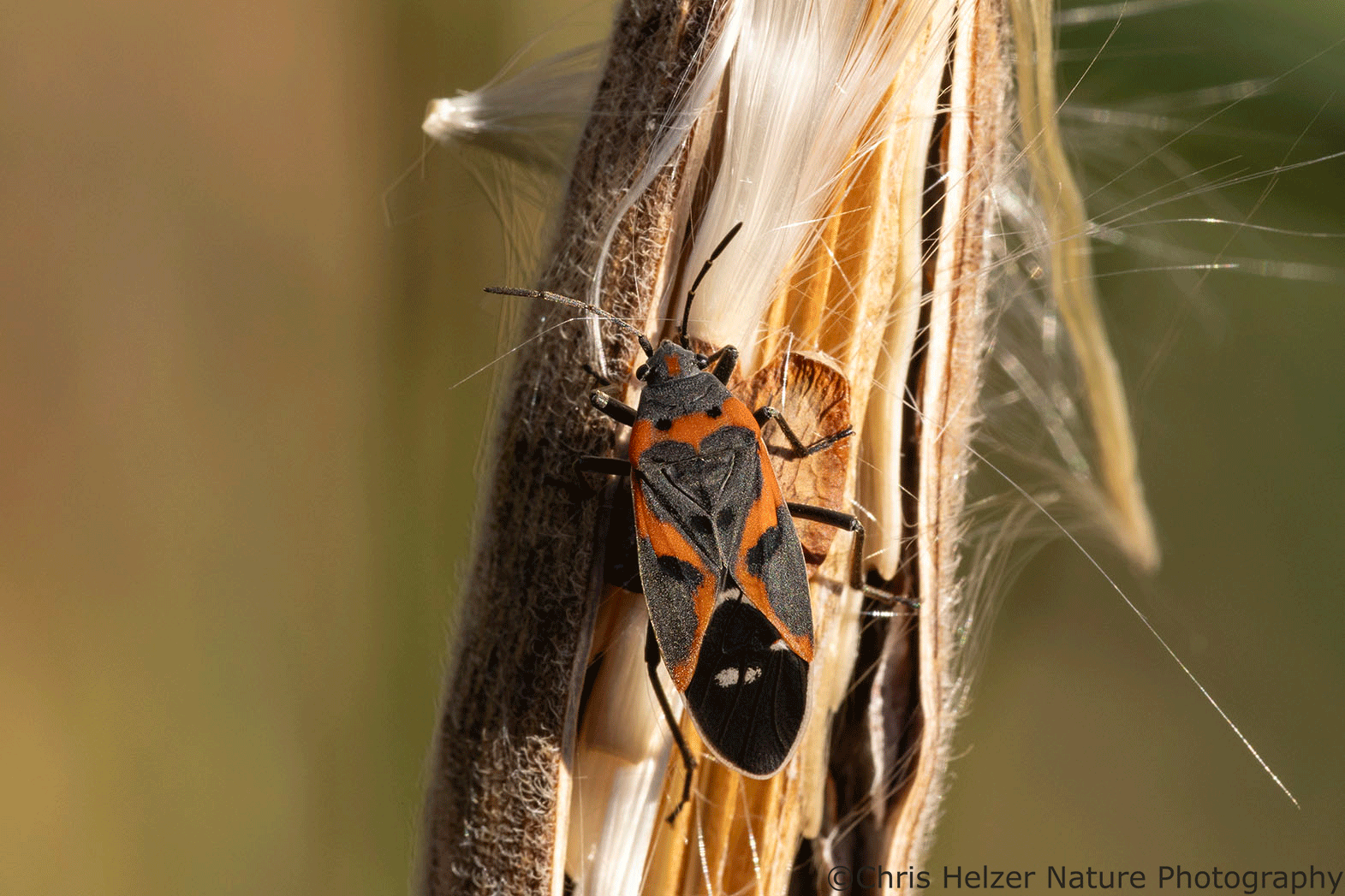
Stink bug.
The second daddy longlegs (harvestman) I’ve seen in the plot. This looks like a different species than the first but that’s not yet been confirmed. It was there before the sun popped up one morning and as soon as the light got better it disappeared.
I was surprised to see this little ambush bug since most of the others in the surrounding prairie are hanging out/hunting on stiff sunflower blossoms. I’m guessing it was just traveling through, but I was glad to see it!

It’s almost Maximilian sunflower and pitcher sage season! I check frequently to see if any of the flower buds have opened, but nothing yet. Be prepared for a lot of yellow in my next update – there are a LOT of sunflower plants in the plot this year. Meanwhile, the project rolls on, regardless of what’s blooming or not. There’s a different story every time I visit!

Thanks for hanging in there with me. If you’ve read all the way to the end of this post, I’m both impressed and grateful. I hope you have the opportunity to find your own little patch of nature to visit!

It Seemed Like Such A Great Plan

Last year, I spent several very pleasant days exploring the Flat Tops Wilderness.  I backpacked up onto the big plateau and found myself a nice campsite, nestled in a small valley near a couple little lakes.  To my delight, the little lakes were full of salamanders, which, along with the marmots, pika, wildflowers, grassland communities, and topography, gave me plenty to explore and photograph.  Oh, there were lots of mosquitoes, too, but not in a way that ruined the experience.

This year, I talked Kim into accompanying me back to the same site.  “It’ll be great,” I told her, “you can go run trails during the day and I’ll wander around with my camera!”  (Kim runs ultramarathons and is always looking for something other than the mostly-flat trails around us here in central Nebraska to use for training.)  I showed her a map of where I’d camped last year, along with photos.  I think the chance to see the salamanders probably closed the deal.

Paintbrush flowers (Castilleja sp.) in the Flat Tops Wilderness last week.

We made a plan.  It was a good plan. 

I had a packing list and made some tough decisions about what camera gear I could carry in my backpack.  Kim picked out some tasty-sounding meals.  Looking at the trails map, we talked through a variety of trails she could run on and places we might explore together.  We even accounted for issues related to the high elevation – we took a few days to acclimate and also tried a prescription medication that alleviates symptoms of altitude sickness.  And, just in case the mosquitoes were bad enough to warrant it, we packed some head nets.

On the way west, we spent a day and a half in eastern Colorado.  We volunteered to run an aid station for the Summit 200, a 200 mile ultramarathon in the mountains of Summit County.  It was a nice way to spend some time getting acclimated to higher elevation (we were at about 9,000 feet) and soak in the supportive culture of ultramarathon runners and race organizers.  There were no mosquitoes at the aid station.

After a day of feeding and cheering on runners, we headed further west and camped at 10,000 feet at Stillwater Reservoir, right by the trail head into the Flat Tops Wilderness.  It was a terrific little campground I’d stayed at last year, right next to a waterfall and little lake.  The weather was pleasantly cool, though not so cool that it didn’t have mosquitoes.  “Gee,” said Kim, “there are a lot of mosquitoes here!”

I guess so.  It depends on what you consider “a lot.”

After a night of mediocre sleep, we got up and get ready to hit the trail.  The overnight temperatures left a light frost on the ground, and when I rolled of my tent, there were no mosquitoes about.  By the time we were ready to hike, though, the mosquitoes were up and moving again.  “You’ll hardly notice them after a while,” I said, as I brushed a small horde of them off Kim’s shirt. 

More paintbrush flowers (and others) on the ridge above our Flat Tops campsite.

Kim is in better shape than I am.  She runs ultramarathons, after all.  I play soccer once a week (most weeks) and wander around in prairies.  I’m not in bad shape, but Kim was nice enough not to comment on how many times I stopped to “admire the flowers” on the way up the trail.  Once we hit the top, though, I took the lead because I knew the location of my secret campsite and how to get there. 

“Um, where’s the trail?” Kim asked. 

“Oh, we’re not going to follow the trail from here,” I said, “the campsite is off the beaten path.”

“What?” Kim shouted, “I can’t hear you over the sound of all these mosquitoes!”

This is where I made a big mistake.  I remembered that we had to follow a ridge to the west to find my little lakeside campsite. Unfortunately, I picked the wrong ridge to follow.  In my defense, there are two ridges running parallel to each other, and they both lead to basically the same place.  On the other hand, the path I chose went through a lot of dense willows and little creek and the other one wouldn’t have. 

We saw a lot of small mammals running around, including this golden-mantled ground squirrel.
This cute little least chipmunk was eating flowers or seeds or something.

As we walked, Kim asked me again why we weren’t following a trail.  “We don’t need a trail,” I said, “that’s the advantage of camping in a wilderness area – you can find your own path!”

“Hmph,” Kim replied, as she cleared a path through the mosquitoes and shrubs and squished along in her soggy trail-running shoes

Eventually, we found the little lake and set up camp on the little hill just above it.  There were only slightly more mosquitoes at the campsite than there’d been on the trail.  Periodically, a breeze would clear enough of them away that we could actually see the lake.

Here’s our campsite. It was a beautiful spot.
Barred salamander in the lake near our campsite.
More salamanders.

“So,” Kim asked, “how far is it from here to the trails I’m going to run?”

And that, my friends, was where things fell apart.  After all our planning, we’d both failed to fully realize how far from the trails our campsite really was.  Actually, it wasn’t the distance, so much as the steep topography in-between that was the biggest issue.  In retrospect, I think we’d partitioned our planning too much.  I was focused on the camp site and photography opportunities and Kim was scoping out the trails and where they led.  Neither of us spent time thinking about the connection between those two parts of the scheme.

Wildflowers (Pedicularis sp.)
More Pedicularis, with a smoky sunset in the background.
Columbine growing along the edge of the salamander lake.
Most of my photos were photobombed by mosquitoes. This is just one example. I had to take a dozen or more photos of each composition in the hope that at least one wouldn’t have an obvious mosquito in the frame.
This video will give you an idea of what the mosquitoes were like around our campsite. (If you don’t see a clickable link, open this post online by clicking on the title at the top)

After some discussion, we ended up bailing on the whole project the following morning and backpacking down the same trail we’d climbed the day before. Poor access to trails was one factor, but there were others – including, to be honest, an impressive number of mosquitoes. I’m pretty sure one particularly discreditable swarm of them tried to steal my boots overnight.

As confirmation of our bad planning, it took us about an hour and half just to get to the nearest trail, including some pretty arduous uphill climbing.  Between that and the previous days’ trek, my legs were exhausted by the time we reached the rim of the plateau and prepared to hike the four miles down to the trailhead. 

Kim, however, decided she didn’t want to leave the Flat Tops without doing at least a little trail running at 11,500 feet elevation.  As a result, I ended up resting and doing a little photography while Kim knocked out a “quick seven mile run” over to the Devil’s Causeway (a popular feature of the Flat Tops) and back.  A charming legion of mosquitoes hung out with me while I waited, though a brief hailstorm subdued them for a little while.  After Kim returned, we heaved our packs back on and trudged downhill to our vehicle.

While Kim was running, I took this photo of buttercups growing in meltwater coming from the snow in the background.

During the next few ways, we tested a few different ideas that might lead to a mutually-enjoyable vacation.  We found a nice campground at nearby Stagecoach State Park, where Kim had access to some nearby trails and I had enough photography opportunities to keep me happy.  There was also a great pizza place in nearby Oak Creek that provided a nice break from trail mix, beef jerky, and freeze-dried meals.  We had a great time.

Lupines at Stagecoach State Park.
Lupine flowers.
Wildflowers (Bidens sp?) and the setting sun at Statecoach State Park
Lupines and sunset.
Lupines and the rainbow that popped out just as the sun was going down.
Rainbow.
Even more lupines and rainbow.
A grasshopper resting on a lupine plant after sunset.
Sunflowers after sunset at Stagecoach State Park.
Wildflowers in the sagebrush shrubland community in Stagecoach State Park.
A caterpillar that was pretty well camouflaged on a buckwheat (Eriogonum sp) flower.
This was Kim’s favorite run of the week – the Silver Creek Trail in the Sarvis Creek Wilderness Area.
A skipper butterfly in the Sarvis Creek Wilderness
An ant looking for extrafloral nectar on a sunflower.
Wildflowers and aspen in the Sarvis Creek Wilderness.
A caterpillar feeding on a Delphinium (I think?)
A bee on a wild geranium.

After much productive discussion, I think we’ve got some workable options for next year’s vacation figured out.  We’re not ruling out backpacking but have established some better ground rules for how it would need to work.  What we really want is a quiet campsite close to good running trails and photographic opportunities.  Kim wants hills and at least some trees (for some shade).  I want open country (for light) and good plant diversity.  Relatively high elevation is nice because of the cool temperatures, but we don’t need to be at elevations that take a week to acclimate to.  There should be lots of options, right? 

(Suggestions are welcome!)