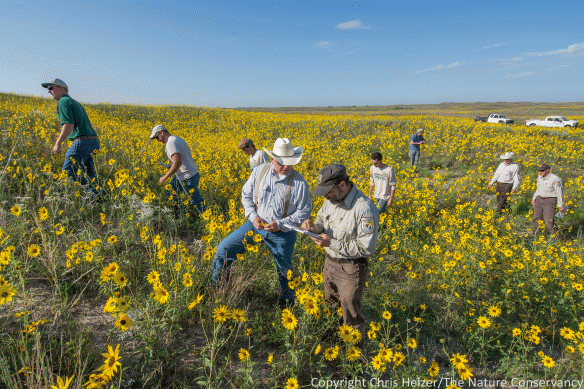
I’m not a wildlife photographer. Wildlife photographers put in countless hours tracking, observing, and either stalking subjects or sitting in a blind. I admire wildlife photographers but I don’t have the patience to be one. Instead, I get my wildlife photos the easy way – by always (ALWAYS) carrying my camera when I’m in the field so that when I have a random close encounter with an animal, I’ve got a chance to take its picture. This month, I’ve had three successful (and accidental) photographic encounters with mammalian wildlife species, and am sharing the results here.

Mule deer (in the rain) at The Nature Conservancy’s Niobrara Valley Preserve.
Back in mid-August, I was up at the Niobrara Valley Preserve collecting data on flowering plants across various management treatments. I’d gotten up early that morning and driven the 4+ hours up to Niobrara because the forecast said the rain would be ending in the early morning and it looked like a good day to be in the field. Instead, it rained all day. While I was driving my truck between sampling locations (in the rain) two mule deer flushed out of some brushy vegetation in front of me and turned to look at my truck. The buck turned away again and took off over the hill, but the doe stayed behind to see what I was up to. I rolled down the passenger side window of the truck, grabbed my camera from behind the seat, and took this photo. I didn’t even get wet – did I mention it was raining?
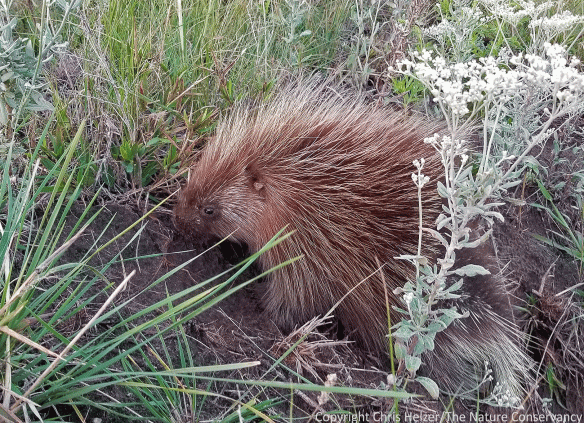
A young porcupine at dusk – The Nature Conservancy’s Niobrara Valley Preserve.
Later the same day, it finally stopped raining, the sun came out, and both the landscape and I dried out a little before evening. I wandered around with my camera until the photography light disappeared, and then hopped in my truck and headed back to headquarters. As I was coming down the lane between the mailbox and the crew quarters, where I was staying, a young porcupine crossed the road in front of me and climbed up the embankment. Other people had been seeing the same porcupine this summer, but though I’d seen its mom, this was the first time I’d seen the young one. It was moving quickly enough that I didn’t have time to grab my camera out the back seat of my truck, and instead just grabbed my cell phone out of my pocket as I climbed up the embankment to get a closer look. The porcupine didn’t even pause or turn its head to look at me as it made its way to the top and then waddled off across the prairie toward a small patch of trees. I squeezed off three shots with my phone camera and got one that was decent.
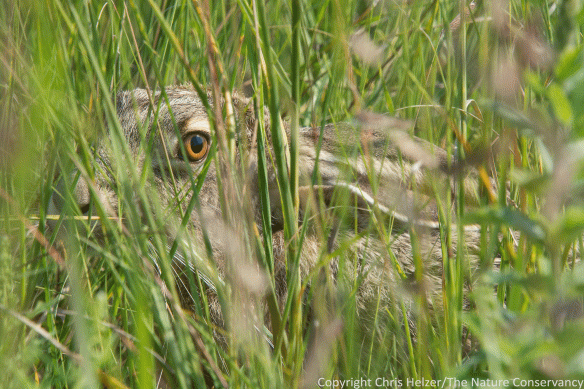
Black-tailed jackrabbit in the Platte River Prairies.
The final photo (and my favorite) comes from yesterday, when I was riding my ATV through our Platte River Prairies. I was cruising along pretty slowly and flushed a jack rabbit. That’s not unusual, but in this case, instead of popping up out of the grass and bounding off with its ears held high, the rabbit took two quick hops and then hunkered back down in the vegetation. I stopped the ATV in surprise, and when I realized the rabbit had invested in its hiding strategy, I grabbed my camera from my bag and took a couple pictures of it through the grass. Then I slid slowly off the seat of the 4-wheeler and took a few steps to get a better angle for the photo (above) I ended up liking the best. After that, we just sat there, keeping an eye on each other, until I decided I had work to do and wished the rabbit a pleasant day. As I started up the ATV motor, the rabbit finally decided to scamper off.
Maybe someday I’ll gain the patience and perseverance it takes to be a real wildlife photographer. In the meantime, I’ll just keep my camera handy for those times when the wildlife decides to pose for me.