The numerous wildfires in the western U.S. and Canada have been sending smoke out our way, especially earlier this week. I got up early Monday morning to catch the sunrise, hoping a smoky haze would soften the light well into the morning and give me a good long opportunity for photography. My plan only sort of worked… The smoky haze was so thick, the sun was up for about 20 minutes before it finally got high and bright enough that I could even see it through the haze.

The sun finally showed up through the smoky haze about 20 minutes after sunrise.
Once I could see the sun, I still had to wait another hour or two before there was enough light to do much photography. Not that it was painful to have to wander around our Platte River Prairies for a few hours, of course, but it was hard to see all kinds of interesting things and not have enough light to photograph them! Now and then, the haze would clear enough that I could barely see my shadow – and I’d quickly grab my camera out of the bag and look for something to photograph before it darkened up again.

A grasshopper staring at me from its perch on stiff goldenrod (Solidago rigida).
The grasshopper above and the bumblebee below were both photographed during those brief periods of brighter light. Apart from those brief periods, the smoky haze kept things pretty dim until about 9:30 or 10am, when the light got really nice (still diffused, but by thinner haze, which created beautiful even light).
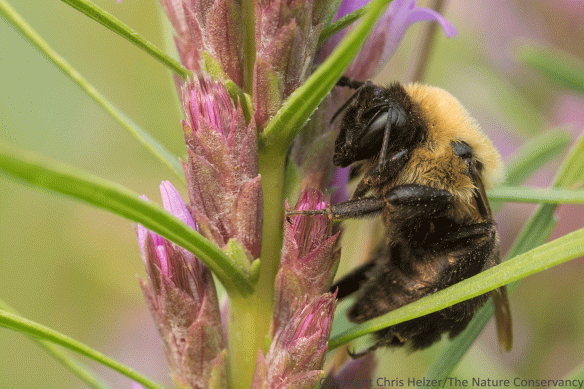
This bumblebee apparently spent the night on this dotted gayfeather flower (Liatris punctata).
When that gorgeous photography light finally arrived, I was walking around some restored wetlands and prairies we’d seeded in 2013. There were quite a few flowers in the wetland sloughs we’d excavated and seeded in former cropland, and I enjoyed searching for some particularly photogenic examples.
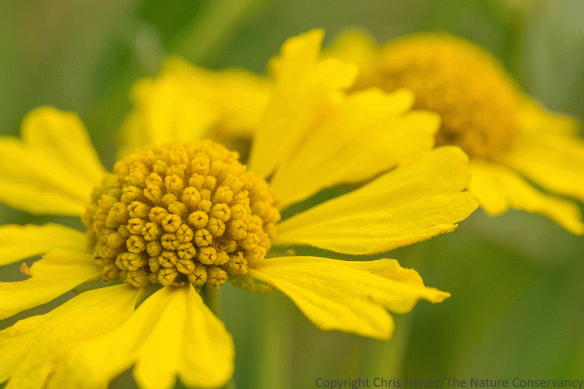
Sneezeweed (Helenium autumnale) in restored wetland.

Blue lobelia (Lobelia siphilitica) in the same restored wetland slough.

Cardinal flower (Lobelia cardinalis) was even more abundant than its blue cousin.
Alongside the restored wetlands, Maximilian sunflower was very abundant, and popular with pollinators – especially a horde of painted lady butterflies.

This was just one of hundreds (thousands?) of painted lady butterflies in the prairie.
I finally peeled myself away from the prairie and headed home, but the smoky light would have allowed me to keep photographing for most of the day (though the breeze was challenging). By Tuesday, the wind had shifted directions, and we’ve had bright sunny days since, which limits photography to early mornings and late evenings.
This is the time of year when I start to feel an urgency to photograph as many flowers and insects as I can because I know they’re not going to be around much longer. We had temperatures in the low 40’s (F) last night, and parts of Nebraska were forecast to have frost. Hopefully, we’ll get at least a few more weeks of flowers before the first big freeze knocks most of them out for the year.


