This time of week, I am often putting the finishing touches on a new blog post that describes a prairie species or ecological interaction, discusses prairie management, or at least showcases some recent photos. Today, I’m a little distracted because I’m going through the data from the blog survey many of you participated in. AND I LOVE DATA!! So I’m not doing much writing.
I really want to thank everyone who took the survey over the last two weeks. Guess how many responses I got? Guess!
Hint: There are approximately 2900 people who have subscribed to the blog, mostly via email. There are also quite a few people who read the blog by just checking in now and then or because they get posts forwarded to them by friends. What would be an optimistic percentage of readers who would take the time to fill out a survey? Five percent? Ten percent?
Ok, I’ll just tell you. There were 912 people who filled out the survey. 912!!
That’s fantastic. That’s amazing! That’s humbling. I’m very grateful – and not just because it gives me lots of data to play with.
Below are some quick and dirty results from some of the survey questions. I’ll be sifting through responses for quite a while, and will share more detailed results later, but here’s a sneak peek. (If you don’t care about any of the results, you can just skip down to the bottom – I included a cool photo from this weekend.)
Let’s start with geography. Not surprisingly, the largest number of respondents (176) were from Nebraska – the state I live and work in. But I got survey results from people in 47 states and a total of 8 countries, not counting one person who just responded (“outside the U.S.”). Only Connecticut, Alabama, and Delaware were not represented among U.S. States. After Nebraska, the highest number of respondents came from Illinois (93), Minnesota (91), Texas (56), Missouri (52), Iowa (47), Wisconsin (40), and Kansas (38). No surprises there, since those are states with either a lot of prairie or a lot of people who care about prairies. Oh, and there were ten of you who chose not to share your location. Perfectly fine. I wish you well in your continued effort to stay hidden.
Canada led the way among countries outside the United States with 28 respondents, followed by Australia with 8. Other countries represented included Brazil, Finland, France, Samoa, and the United Kingdom.
Interestingly, a little more than half of the respondents have been following the blog for between one and three years. Just less than a third of you have been around longer than that. I should just start copying and pasting posts from 2011 and 2012 and see if anyone notices…
Most of you found out about the blog either from friends/colleagues (41%) or while doing an internet search for something (29%). Please keep sharing blog posts with others!
One really gratifying result was that, in contrast to most of my family members, a large majority of you (76%) read all or most of the posts I write. That’s really wonderful to know, although I harbor no hard feelings toward those of you who aren’t reading this paragraph right now because you mostly look at photos and/or just skim to find posts/information you’re interested in. No problem at all. I hope you enjoy what you find.
Finally, it’s really great to see a broad spectrum of people reading the blog. There is an amazingly even spread of ages among readers, mainly between the ages of 25 and 75, and a majority of you identified yourselves as a nature enthusiast and/or a supporter of nature (or both). That’s not surprising. About 40% of you are landowners, and exactly 2/3 of respondents were either a landowner, land manager, or conservation professional (or some combination of those). There were also a lot of educators (23%) and photographers (25%) among the respondents. Most of you knew at least something about prairies before you started, but you also indicated you’ve learned more and have become more interested in/supportive of prairies through the blog.
I can’t stress enough how grateful I am for all of you who took the time to fill out the survey. I promise to read every comment, and I’ll do my best to use all your feedback to make this blog better. Thank you.
Now, for those of you who really just like to skim posts and look at photos, here’s something for you…
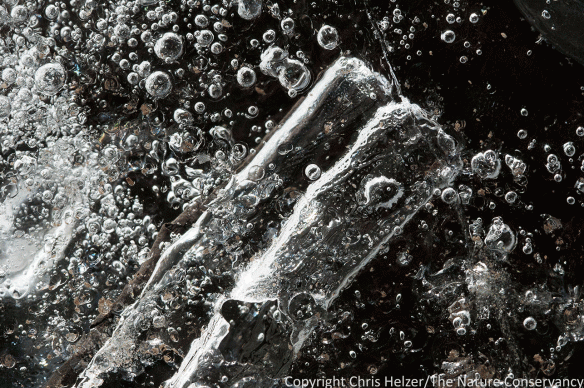
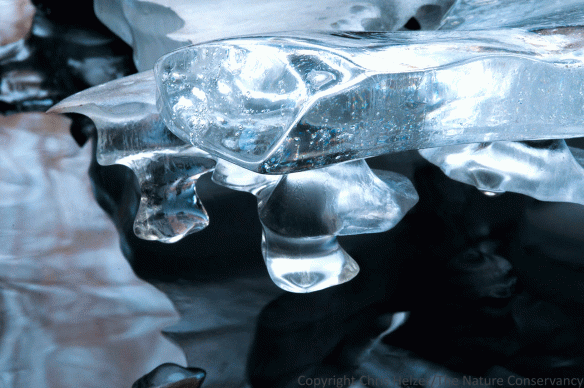
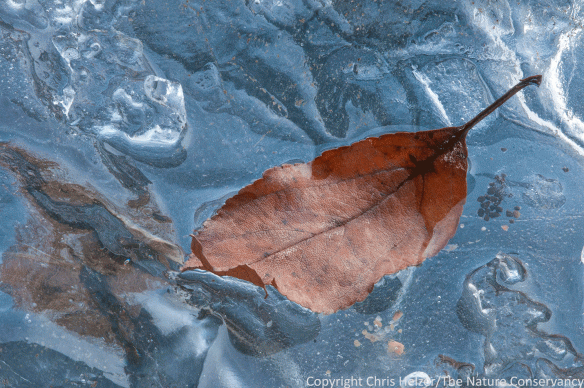
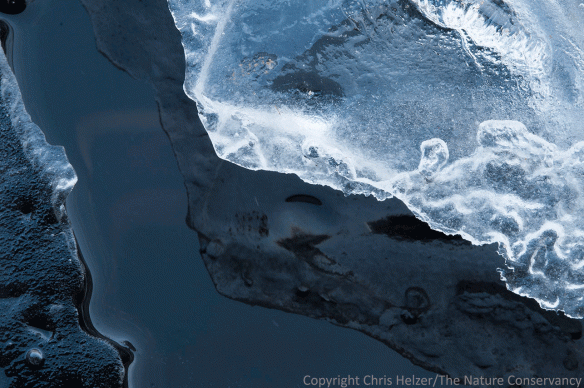
This weekend, my wife and I were walking a local trail through town and noticed some neat ice patterns on the thawing stream. I returned to the spot with my camera later and got some fun close-up photos. Here’s one. I’ll probably share some more later this week.
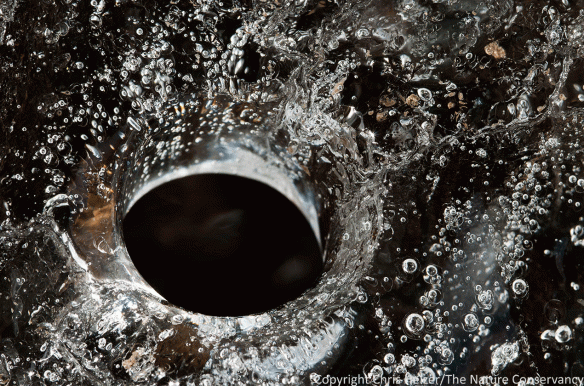
A black hole? Well, yes, but instead of the cosmos, it’s just a hole in some thawing ice, with flowing water beneath and lots of frozen bubbles around it. Lincoln Creek, Aurora, Nebraska.