Next Field Day – August 27, 2014

We put together a draft agenda for our next Platte River Prairies Field Day, which will take place on Wednesday August 27 at our site south of Wood River, Nebraska.  The agenda is a draft only because we may add additional sessions and topics between now and then.  I hope to see you there!

You can download a PDF of this agenda here.

DRAFT AGENDA

9am – 9:15am

Introduction of the day’s sessions and orientation to the site.


 9:15am – 10:30 Sessions

Seed harvesting techniques – Bill Whitney

Tree killing techniques – Nelson Winkel and Dillon Blankenship

Small mammal ecology – Jasmine Cutter

Reading the prairie – Chris Helzer


10:45am-Noon

Invertebrate predators and other little critters – Julie Peterson

Seed harvesting techniques – Bill Whitney

Plants for pollinators – Jennifer Hopwood and/or Pete Berthelsen


12pm – 12:45pm – Lunch (bring your own)


12:45-2pm

Tree killing techniques – Nelson Winkel and Dillon Blankenship

Plants for Pollinators – Jennifer Hopwood and/or Pete Berthelsen

Reading the prairie – Chris Helzer


2:15-3:30

Seed storage and cleaning – Nelson Winkel

Reading the prairie – Chris Helzer

Invertebrate predators and other little critters – Julie Peterson


Session Descriptions

Seed harvesting techniques.  Bill Whitney, co-founder and director of Prairie Plains Resource Institute will provide demonstrations of how to harvest seed for prairie restoration, including how to identify when seed is ripe enough to harvest, how to hand-harvest efficiently, and other tips from his more than 30 years of prairie restoration experience.

Tree killing techniques.  Nelson Winkel and Dillon Blankenship of The Nature Conservancy will share tips on and do live demonstrations of three methods of deciduous tree control: basal bark treatment, cut stump treatment, and hack-and-squirt.

Small mammal ecology.  Jasmine Cutter of The Nature Conservancy is live trapping small mammals in the area and will talk about her results (and hopefully have live mammals to look at).

Reading the prairie.  Chris Helzer of The Nature Conservancy will talk about how to evaluate the management needs of a prairie.  Questions addressed will include: What plants are most important to pay attention to?  What do they tell you?  What are the important types of habitat structure to look for and how much do you need of each?  Which invasive species are important and how do you know when/how to attack them?  How do you know whether an area could benefit from fire and/or grazing?  This hike/session will be in a different prairie each time, so can attend multiple sessions if you like.

Invertebrate predators and other little critters.  Julie Peterson, UNL Assistant Professor of Entomology and Extension Specialist will lead a hike to find, identify, and discuss the ecology of invertebrates of all kinds, but with a particular focus on predators.

Seed storage and cleaning.  Nelson Winkel of The Nature Conservancy will lead a tour of TNC’s seed barn and talk about/demonstrate how to dry and process seed after harvest and how to store it until it’s time to plant.

Plants for pollinators.  Jennifer Hopwood of the Xerces Society (tentative) and Pete Berthelsen of Pheasants Forever will talk about which plant species are most important to pollinators.


OTHER INFORMATION

The Derr House is located 2 miles south of the Wood River exit off of Interstate 80 (Exit 300).  Turn south immediately after the highway curves to the east and you’ll be there.

For more directions to the site, go to: http://www.nature.org/ourinitiatives/regions/northamerica/unitedstates/nebraska/placesweprotect/eastern-nebraska-platte-river-native-prairie-nature-trail.xml

Some snacks and cold drinks will be provided, but please bring your own lunch, sunscreen, bug spray, drinking water, and whatever else you need for a day in the field.

You are welcome to come for part or all of the day as your schedule allows.
In Celebration of Black-Eyed Susans

Before I begin this post, let me say thank you to all of you who voted on the photo choices offered up in last Friday’s post.  This time, there was no difficulty in determining the winners.  About 90% of the voters chose A over B and C over D, and about 75% chose E over F.  I appreciate both the votes and the very thoughtful explanations many of you included along with your choices.  Thank you.

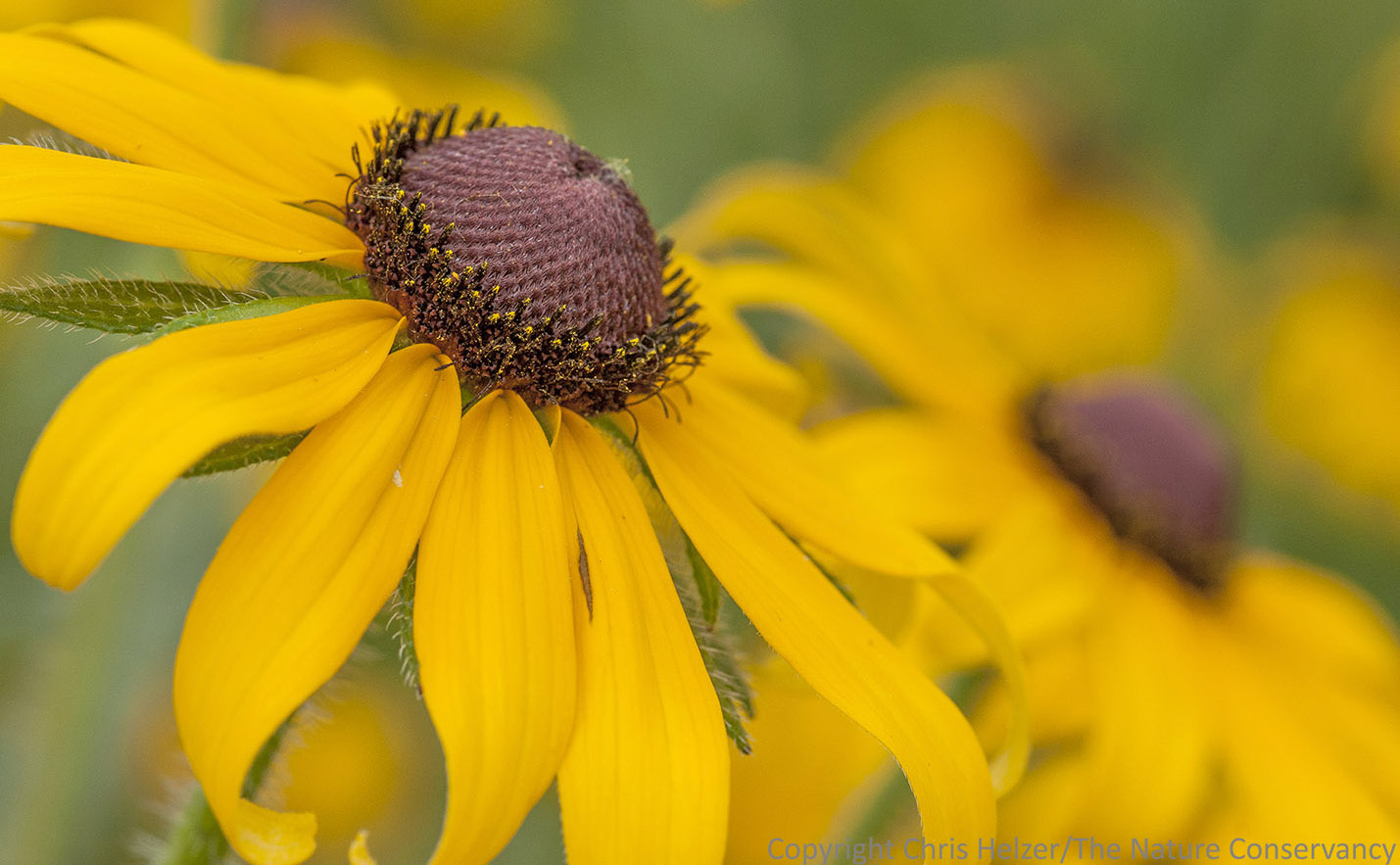
The black-eyed Susan may be the quintessential wildflower species.  If you asked a young student to draw a picture of a wildflower, chances are the result would look something like a black-eyed Susan – a ring of petals around a dark circular center.  As a photographer, I certainly appreciate the flower’s aesthetic appeal, and find myself drawn to photograph it frequently.  This July was no different, and I ended up with quite a few black-eyed Susan photos, some of which are included below.

What is more wildflowery than the black-eyed Susan (Rudbeckia hirta)?

What is more wildflowery than the black-eyed Susan (Rudbeckia hirta)?  The Nature Conservancy’s Platte River Prairies, Nebraska.

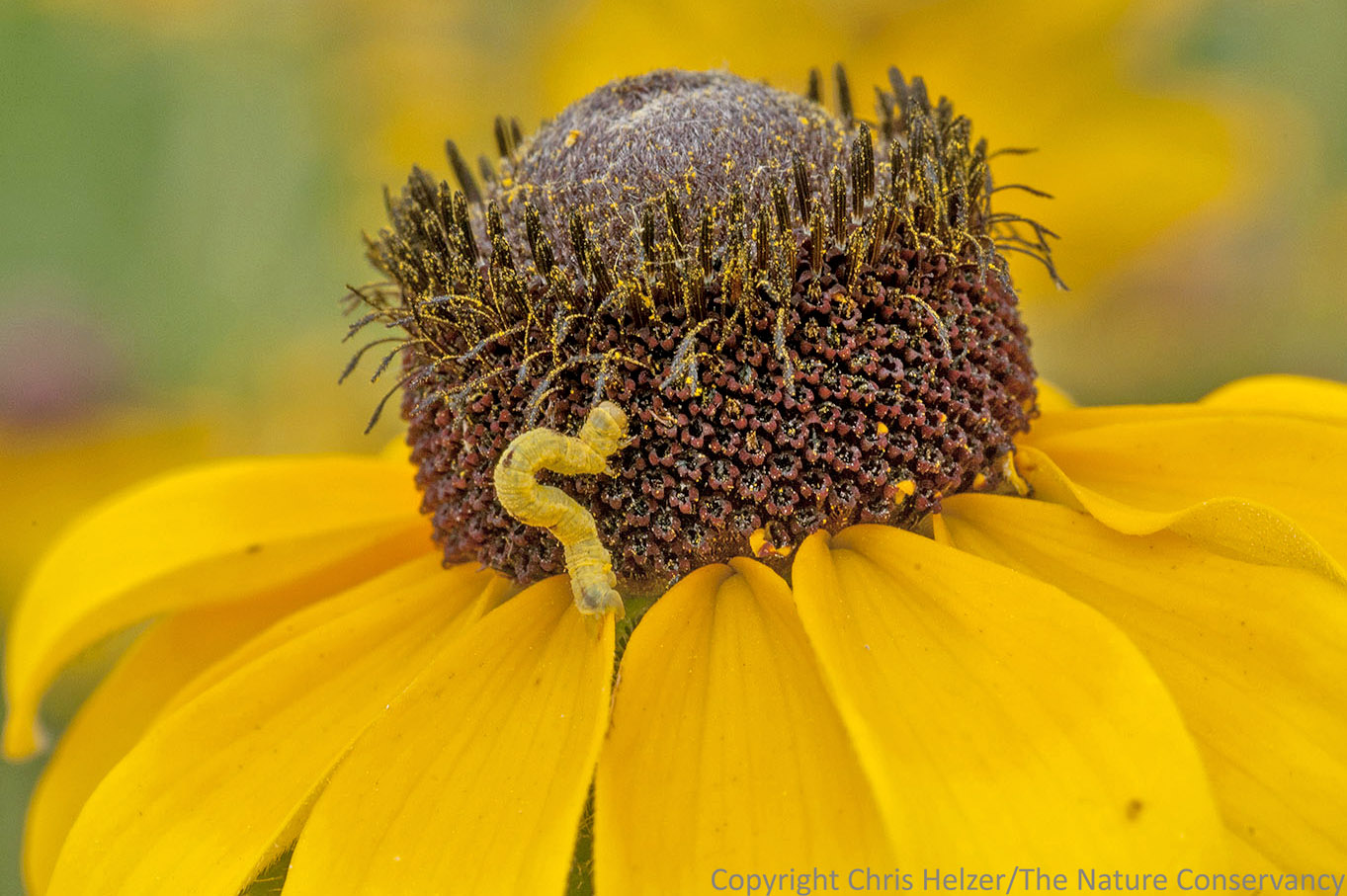
This inchworm is apparently attracted more by the forage value than the aesthetic value of this flower.

This inchworm is apparently attracted more by the forage value than the aesthetic value of this flower.

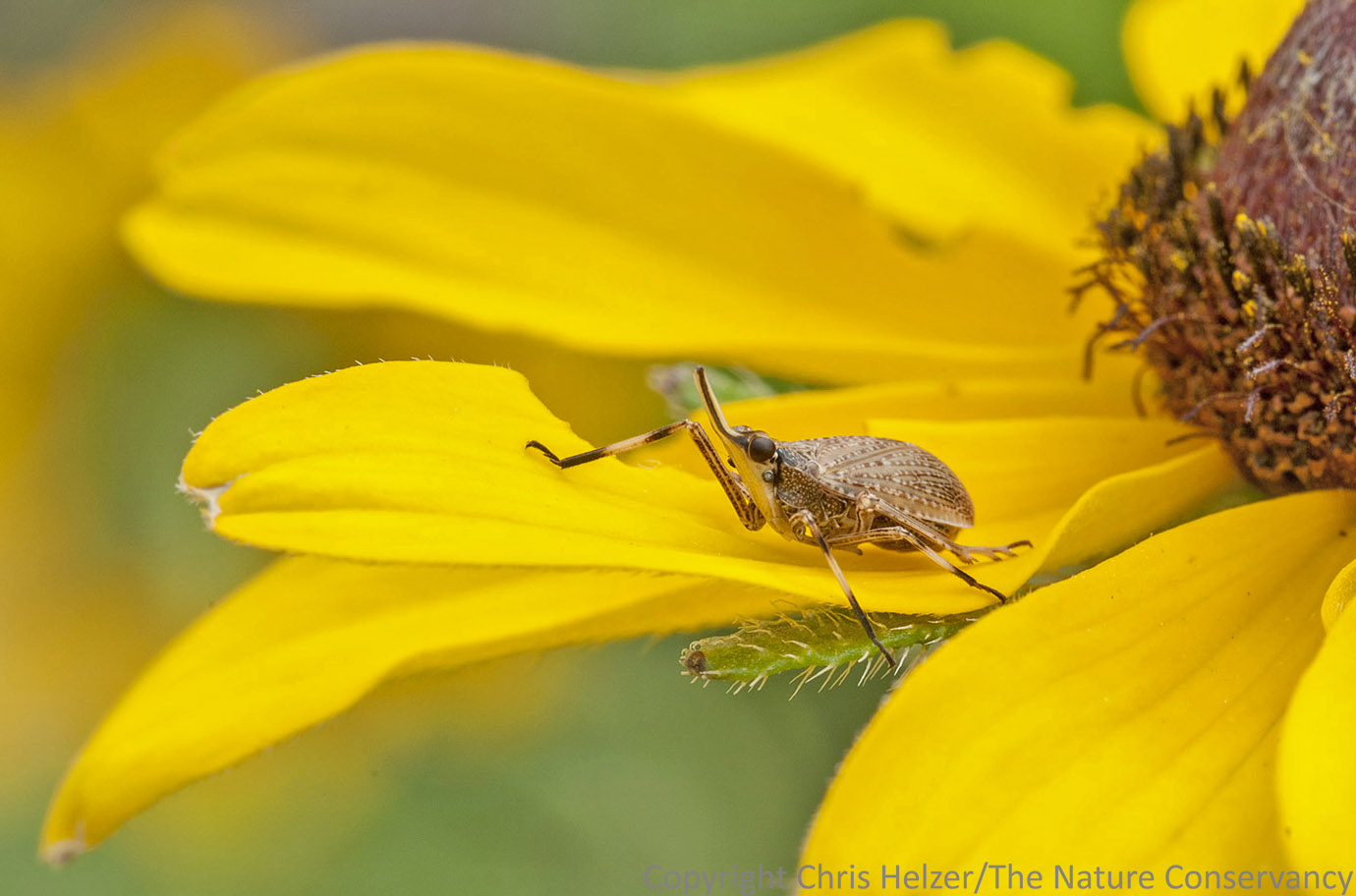
I don't think this plant hopper was feeding on black-eyed Susans - it flew in and landed while I was admiring the flower, so i photographed it.

I don’t think this plant hopper was feeding on black-eyed Susans – it flew in and landed while I was admiring the flower, so I photographed it.

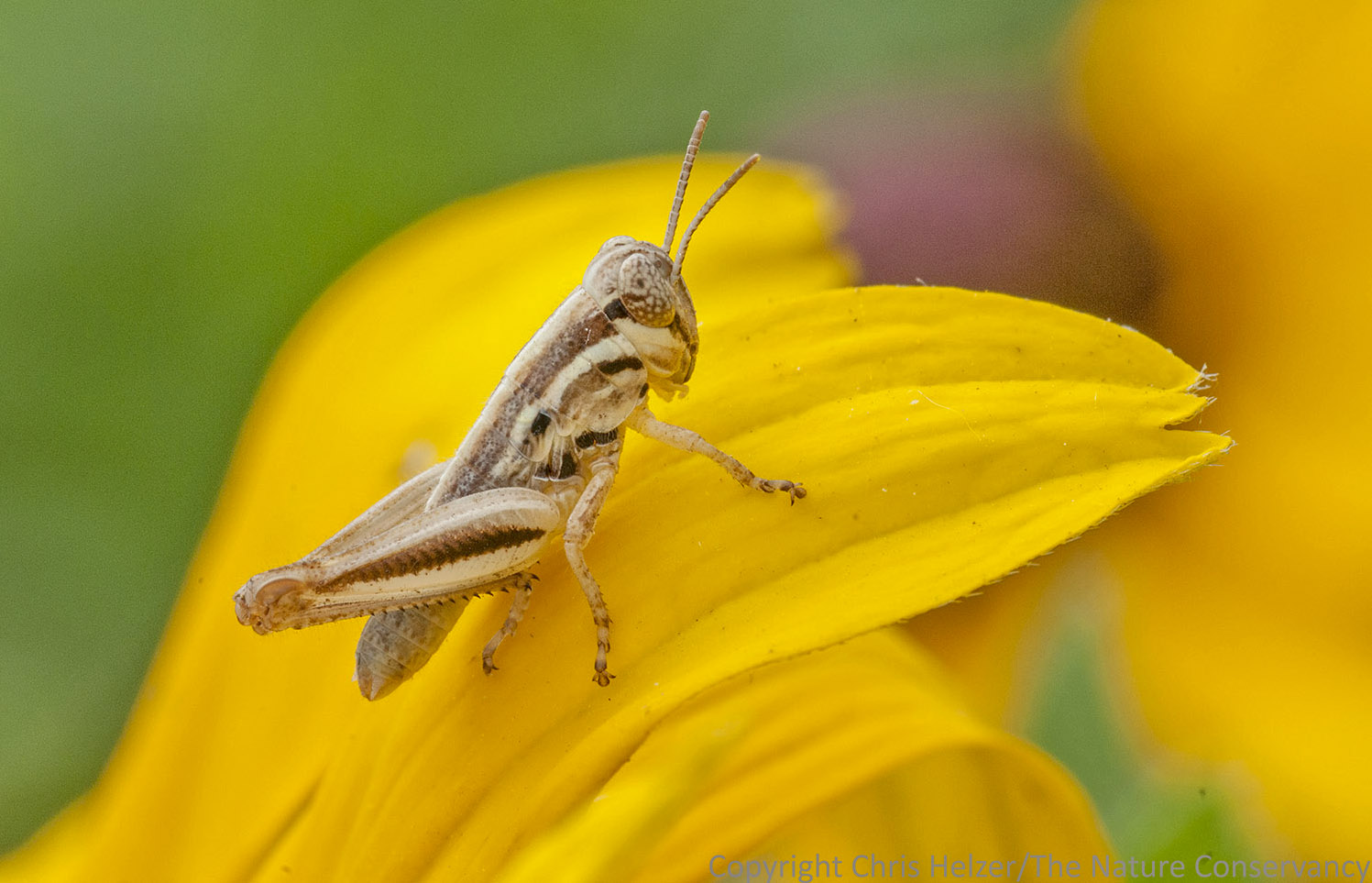
As with the plant hopper, I think this grasshopper nymph simply used the flower as a landing pad when I flushed it as I walked up.

I think this grasshopper nymph simply used the flower as a landing pad after I flushed it as I walked up; I don’t think it was feeding on it.

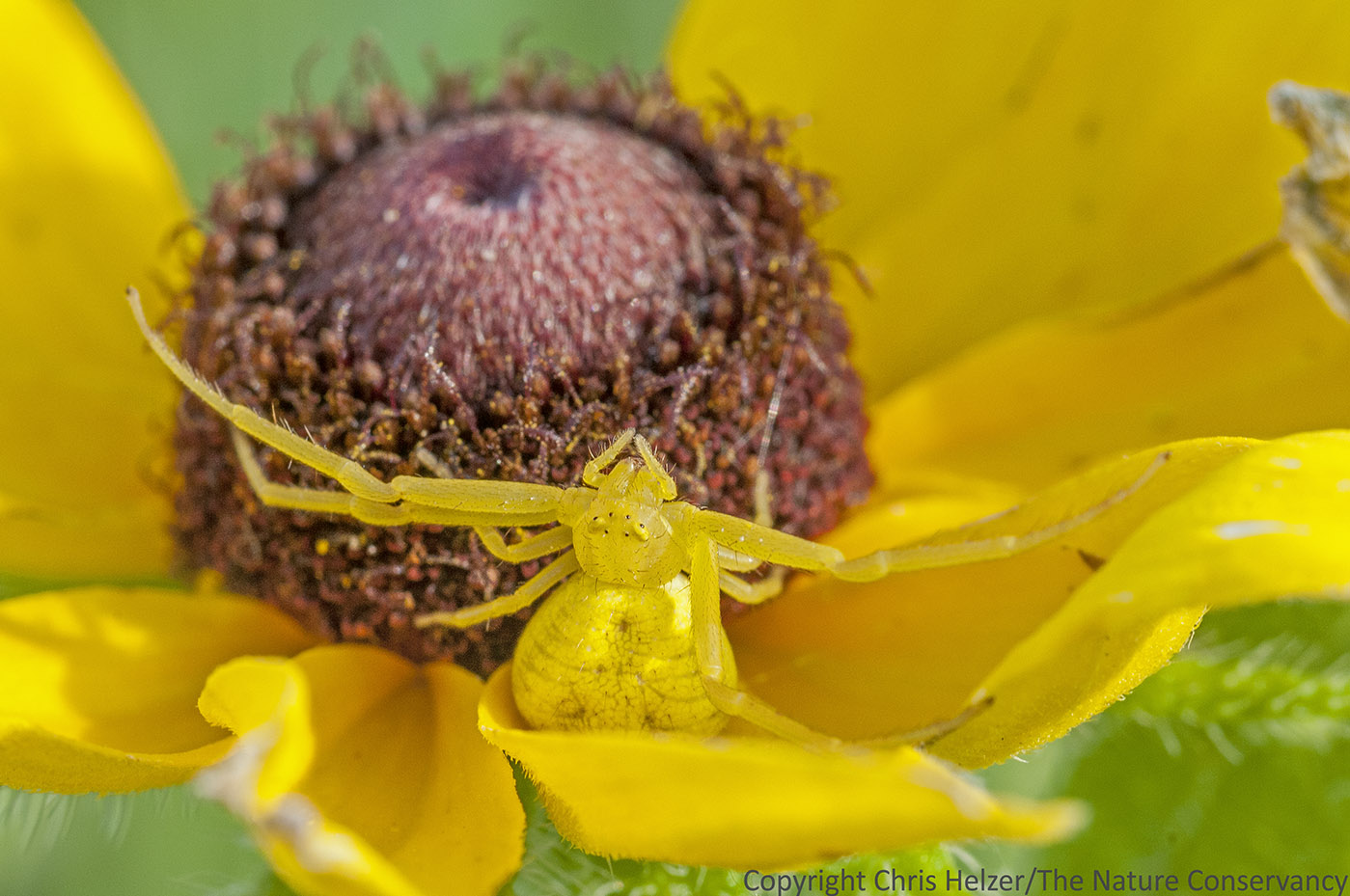
This crab spider would be glad to have a meal while on the flower, but it's hoping for more protein than the flower can provide.  Flower visitors beware!

This crab spider was definitely looking for a meal on this flower, but it was hoping for more protein than the flower can provide.  I believe this is one of the crab spider species that can change color (white to yellow and vice versa) to match flower color.  Watch out pollinators!

Even before they bloom, black-eyed Susans are attractive.  (They're also very attractive when they're done blooming - especially in the early fall when their brown dried petals are still hanging on.

Black-eyed Susans are attractive even before they bloom.  (They’re also very attractive when they’re done blooming – especially in the early fall when their brown dried petals are still hanging on.)

As with many of our showiest wildflowers, black-eyed Susans are most abundant a year or two after an event that weakens competition from dominant grasses.  Drought and grazing are both good candidates for that kind of event, and many of the black-eyed Susans we’re seeing this summer benefited from the 2012 drought and the grazing we used as a management tool that year.  As short-lived perennials, they can germinate and bloom quickly when provided with a little open space, light, and moisture.  They are also an easy flower to grow in my yard, and they generally produce enough seed and new plants that I don’t ever have to replant them.

Most of the black-eyed susan flowers in our prairies will be done blooming within the next couple of weeks, though some stragglers will probably continue on through the end of the month.  When they’re done, we’ll venture out to harvest seed from them (wearing gloves to protect the thinner-skinned sides of our fingers from the sharp hairs on the stems) and spread them in some of our degraded prairies where we’ve weakened grasses with this year’s grazing.  Many species we overseed in that manner take a few years to bloom, but black-eyed Susans usually don’t make us wait very long.  I look forward to seeing an abundance of them next year!