The Value of (Some) Non-Native (GASP) Wildflowers in Our Yard

This might be an awkward week to laud the value of having a non-native wildflower in my yard. I’m an invited speaker at the Indiana Native Plant Society’s annual conference this coming weekend. It’s probably (?) too late for them to cancel my appearance.

I’m mostly kidding. Today’s post is not intended to diminish the importance of native plants, either in ecological restoration or in suburban landscapes. I’m (obviously, I hope) a huge advocate for including native plants in those situations for many reasons. I’ve written about that before (here) and don’t need to cover that ground again here. However, in that same post, I also explained why Kim and I have a mix of native and non-native (and even some cultivars of native plants) in our yard. If that makes you feel agitated, I beg you to read both that post and this one before you start stomping your feet and plotting my destruction.

Monarch butterfly on a zinnia flower this week.

We moved across town last winter, abandoning garden spaces Kim and I (mostly Kim) had invested 10 years in. Our new place is mostly Kentucky bluegrass with some minimal and mostly not-our-style flower gardens along the edge of the house. While we’re both antsy to start making it ours, Kim very rationally decided that we need to wait a year before jumping into a new landscape plan. That’ll give us (her) time to scope out the sunny and shady spots, learn about what’s already here, and think about what we really want this new yard to look like.

As a result, we (she) planted a small vegetable garden in the same footprint used by the previous owner, but otherwise – with one exception – left the rest of the yard as is. That exception was that she planted a bunch of zinnias around our back deck and in a stretch of space on the west side of the house. I’m grateful for a couple reasons. First, zinnias are beautiful and I like looking at them. Second, and (finally) getting to the point of this post, they attract and feed a lot of insects, including lots of migrants. In particular, this week, they fed a couple butterflies that weren’t really supposed to be here, but showed up anyway.

Our dog, Fitz, posing with some of our zinnias.

We’ve been enjoying a bounty of pollinators and other insects on our zinnias all season. During the last few weeks, though, the activity has been even more appreciated because most of the native plants in nearby prairies and other natural areas have pretty much shut down for the season. There’s very little available pollen and nectar out there right now. In our yard, though, the zinnias are still cruising along.

While most monarchs have scooted south, the few that are still hanging around and/or passing through have really concentrated their activity on our zinnias. They’re joined by migratory painted lady and American lady butterflies, as well as other butterflies, moths, bees, flies, etc. – some migratory, some not.

Last weekend, I spotted a butterfly on our zinnias that I’d seen in books, but never in real life – a gulf fritillary. I took a couple quick photos with my phone and checked the terrific Nebraska Lepidoptera website to see what I could learn.

According to the website, the species hadn’t yet been reported in our county and it was also outside the seasonal window when it had been reported in the state. That’s pretty cool. I emailed Neil Dankert, who runs the site, to let him know what I’d seen. Apparently, a few other people in the state were reporting the butterflies in their yards, too, along with a few other species that are normally found to our south. We’d had some strong southerly winds (blowing out of the south) a day or two before I saw the gulf fritillary, so maybe a bunch of butterflies just got blown north by that weather system.

Gulf fritillary.
Gulf fritillary.

The next morning, I took my camera out behind the house and took the photos shown in this post. I saw at least two different gulf fritillaries, which I know only because one of them had a wing that was a little beat up. Well, I also saw two at once, which was another good clue, I guess. There could easily have been more than two, though – there was so much activity on the flowers, it was hard to keep track. Here are photos of some of the other insect visitors on the zinnias that morning.

American lady butterfly.
Painted lady butterfly.
Pearl crescent butterfly.
Skipper butterfly.
Soybean looper moth?
Yellow-shouldered drone fly.
European honey bee.

I’m excited to start putting in a bunch of native plants next spring, and building those gardens out over the next several years. We’ll be sure to include wildflowers that bloom at different times of year so that we can provide nectaring options consistently through the growing season for both resident and migratory pollinators. It’ll also be fun to watch myriad insects feed on the leaves, burrow into the stems, and otherwise utilize the plant species they are familiar with and adapted to.

At the same time, though, I’m sure we’ll add species like crocus, daffodil, tulip, hyacinth, and others, just because we think they’re pretty. Zinnias, too, will continue to be a staple of our backyard color. We’ll plant a cherry tree for pies and maybe some raspberries and strawberries for eating and canning. In addition, we’ll leave one fairly big swath of mowed bluegrass so we can play frisbee with the dogs and so there’s a place for kids to play soccer or whatever they want. In short, we’ll create a yard that fits us.

Gulf fritillary and monarch butterfly sharing the same flower (momentarily).

I fully support people who want to turn their whole yard into native prairie plantings, or to landscape with only native plants. If that makes them happy, it makes me happy. I’m a little bothered, though, by the more militant among them who try to shame anyone who doesn’t want to go whole hog with them.

There are lots of ways to contribute to the world with your yard. You can be conservative in your water use, for example, both by planting species that require minimal watering and by not watering more than needed. Leaving piles of sticks and leaves around, as well as patches of bare ground, provide helpful habitat for many species. You can also be judicious about spraying chemicals for weed or “pest” control. The overuse of herbicides and pesticides is a huge problem and has big ripple effects outside of someone’s yard.

And, of course, incorporating native plants in your landscaping has innumerable benefits, both directly to insects and other wildlife and indirectly as a way of normalizing those plant species to neighbors and passers-by. Please add native species to your yard if you can!

However, don’t feel bad about throwing in a few daffodils, petunias, or zinnias as well. I sure don’t, and neither – apparently – do the butterflies.
Perspectives of the Prairie: Neil Dankert

Hi everyone.  The following blog post is written by 2024 Hubbard Fellow Claire Morrical.  Claire put together a fantastic series of interviews with people working in conservation here in Nebraska and we thought you’d enjoy reading and listening to their stories. 

This post also contains audio clips. You can find the text from this blog post with audio transcripts HERE. If you’re reading this post in your email and the audio clips don’t work, click on the title of the post to open it online.


Every year, Hubbard Fellows are tasked with completing a project to advance TNC’s mission and conservation in Nebraska. That’s it. That’s the rubric. This is a rare opportunity to explore whatever method, medium, or idea you want. Past projects included research projects, plans for a trail kiosk, and even a comic book about the Platte River.

My project originated with a lifelong friend, an oral historian who interviews people to preserve their experiences and perspectives of the histories they’ve lived through. Hearing how valuable those stories were to understanding the past made me want to create my own collection of interviews. I originally planned to follow more traditional oral history practices, creating an archive of two-hour unedited interviews intended to capture 30 years of experience of people I’d never met. When I presented this approach to Chris, he asked me, “Who’s your audience?” Which was a very kind way of saying, “Who the heck is going to listen to that?” – I had some refining to do.

The great thing about working on one project for a full year is that it gets to develop organically. As I molded the project to fit a public audience, I eventually created “Perspectives of the Prairie” – interviews with people of different ages and experiences, enriched with photos and maps to ground the stories in place.

Spending the year with this project was such a joy. I enjoyed experimenting with ways to deliver context and information. Most of all, I loved talking to people, getting to know them better, and trying to see the landscape through their eyes. The more people I met, the more I thought, “Man! I really want to interview them!” It was so fun to chat with so many people, and I hope you’ll enjoy chatting with them too!

You can explore the full Story Map through this LINK.

On top of that, each interview will be published on The Prairie Ecologist as its own blog post (Psst, the first one is just below)!


Neil Dankert has been surveying butterflies since 1984, just 4 years after TNC bought Niobrara Valley Preserve. Neil and I spoke during the 2024 butterfly survey about how much can be missed by timing and chance, Neil’s reflections on the 2012 wildfire at the preserve, and the importance of sharing knowledge to Neil’s journey.

Interview: July 2nd, 2024

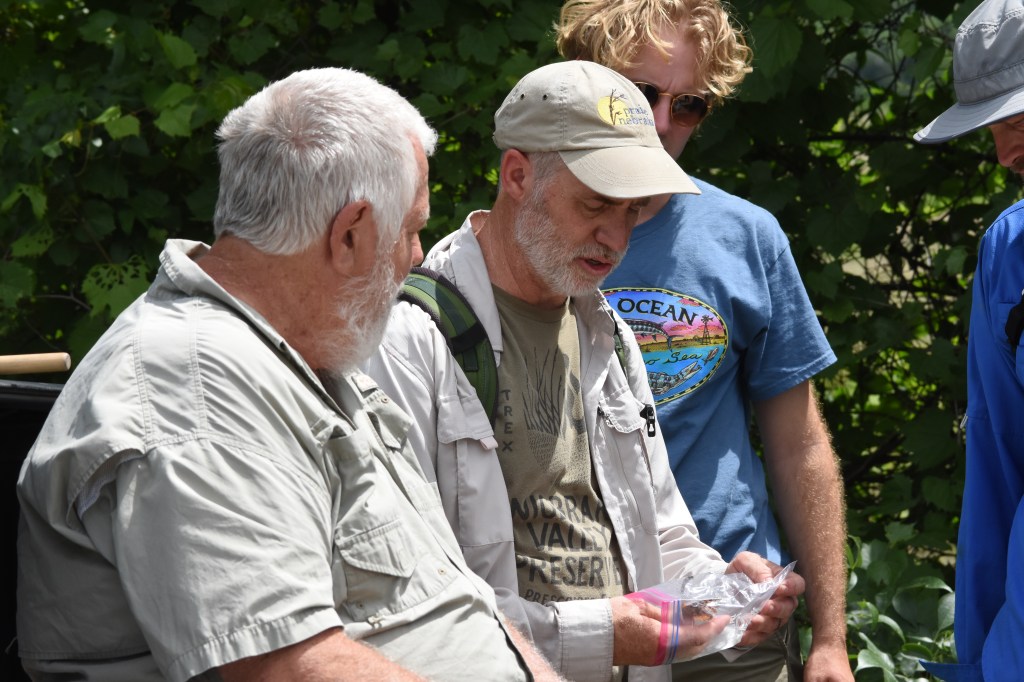
Neil Dankert (left) identifies a butterfly in a plastic bag.

Part 1: Meet Neil

Location: Middle Creek at Niobrara Valley Preserve

Butterflies mentioned: Two-spotted Skipper (Euphyes bimacula), Dion skipper (Euphyes vestris)

These are soundbites from the annual butterfly surveys at Niobrara Valley Preserve. Every year, Lepidopterist Neil Dankert is joined by his partner, Jen, and assisted by Johnathon Nikkila and his son in his search for butterflies and moths that fill the records of the Lepidopterists Society and Niobrara Valley Preserve.

Lepidoptera: a group of insects that includes butterflies and moths

Butterflies mentioned: Silvery Checkerspot (Chlosyne nycteis), Gorgone Checkerspot (Chlosyne gorgone)

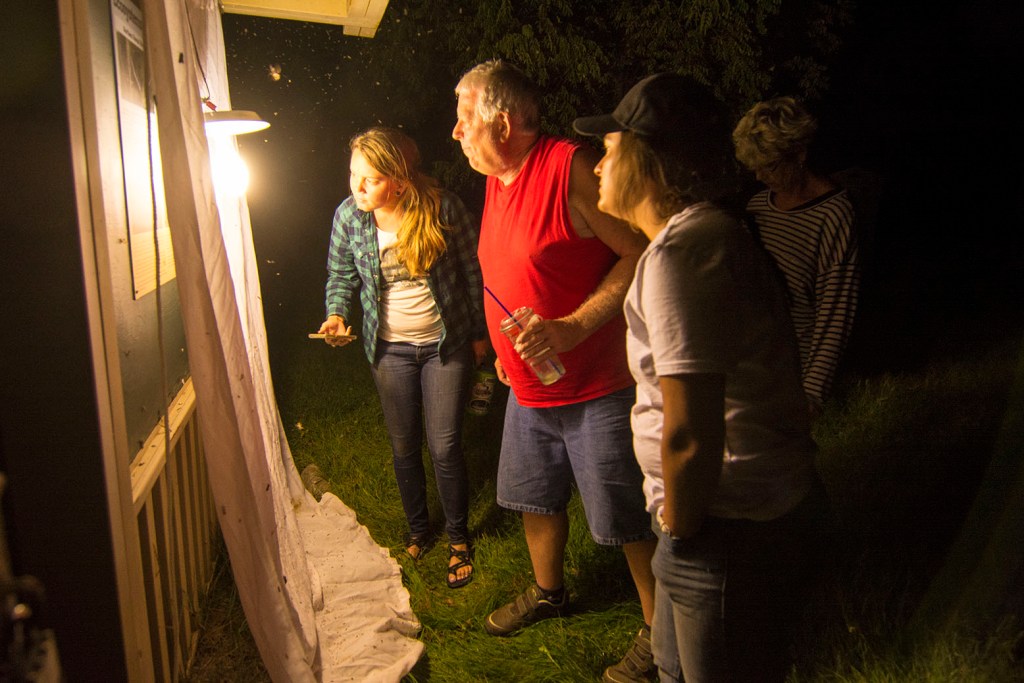
Those of us who hadn’t participated in surveys in the past first met Neil the night before. It was an informal gathering around a mercury vapor light, set up against a sheet to attract moths. We were pointing out moths and insects as they swarmed the sheet (and our faces) when Neil joined us, answering questions and identifying moths. The target of the night was the abbreviated underwing (Catocala abbreviatella), a species identifiable by the showy orange on its bottom two wings. It was a sight to behold; hundreds of moths and flies and insects that flit through the night.

Hubbard Fellows, and Neil Dankert (red shirt) looking at insects at a bug light (photo: Chris Helzer)

The next morning, we passed around some of Neil’s finds, temporarily housed in orange pill jars, until Neil interjected to set the day’s course, leading with the announcement that this would be his 40 th  year of surveying butterflies at Niobrara Valley Preserve.

We first hiked through woodlands swatting at more mosquitos than butterflies. But we caught sight of the occasional Wood Satyr (Megisto cymela) and Wood Nymph (Cercyonis pegala). Our second site was at a prairie on rolling hills where we chased our main targets for the day: skippers. Skippers are small brown butterflies that Neil’s partner, Jen, describes as looking like paper airplanes. To an untrained eye, skippers often look nondescript and indistinguishable from each other. So, we brought them to Neil, like offerings in Ziploc bags, and waited patiently for him to confirm or deny our guesses and acknowledge that this was an exciting find, or just another name and tally for the list.

Butterflies mentioned: Least skipper (Ancyloxypha numitor)

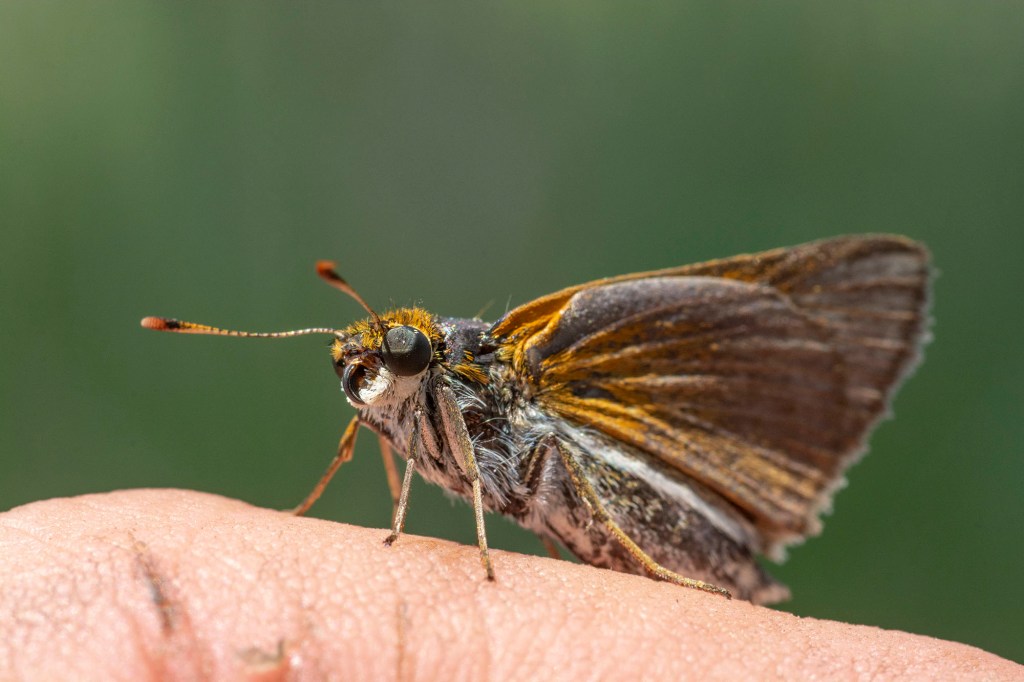
Two-spotted Skipper (Euphyes bimacula) (photo: Chris Helzer)

Our third site was Middle Creek, which runs to the Niobrara River from the north. Here, Neil and I let the others do the hard work of chasing butterflies, while Neil invited me to “pull up a tailgate” as we discussed his 40 years surveying butterflies and moths at Niobrara Valley Preserve. Neil needed no prompting to launch into his story while I scurried to record –

Notes For Context:

  • Dr. Hal Nagel: A biologist at University of Nebraska Kearney
  • Dr. Paul Opler: studied Lepidoptera for over 50 years. He wrote a number of field guides including the Peterson Field Guides to Butterflies of Eastern and Western North America
  • The Lepidoptera Society: A collective of Lepidoptera lovers, scientist and non-scientist, dedicated to the study, recordkeeping, and preservation of butterflies and moths
  • County Record: the first time a species is recorded in a particular county

You can find a link to the 1988 butterfly survey HERE. The survey covered seven sites across Niobrara Valley Preserve. It recorded 24 Brown County records and 42 Keya Paha County records, as well as 16 species at the edge of their geographic range.


Part 2: What Neil Doesn’t See

Location: One of the sites where Weidermeyer butterflies were recorded at Niobrara Valley Preserve

Neil’s interview was peppered with visits by surveyors, consulting Neil and sharing what they’d found with others

Butterflies mentioned: Little Glassy Wing (Vernia verna), Northern Broken Dash (Polites egeremet), Silvery Checkerspot (Chlosyne nycteis)

Here’s one of the surveyors –

Butterflies mentioned: Orange Sulphur (Colias eurytheme)

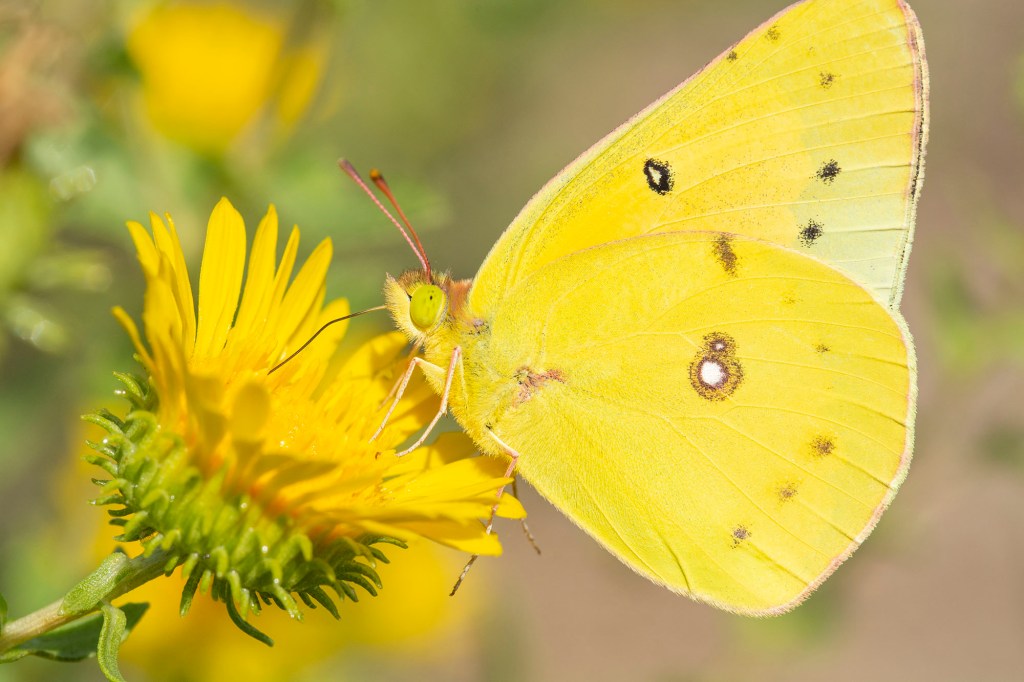
Sulphur butterfly on curly cup gumweed (Grindelia squarrosa) (photo: Chris Helzer)

Back on topic now.

Neil’s career began with Niobrara Valley. And with guidance from other scientists and lepidopterists that shepherded Neil into the field, Neil holds a special perspective of the Niobrara Valley that spans decades. He’s watched species come and go. Some he relies on seeing every visit, others surprise him with their presence or their absence. He’s wondered at what he’s missed in the decades before his arrival that make his 40 years seem like a blink of an eye.

Notes for Context:

Read Neil’s blog post about these hybrids HERE.

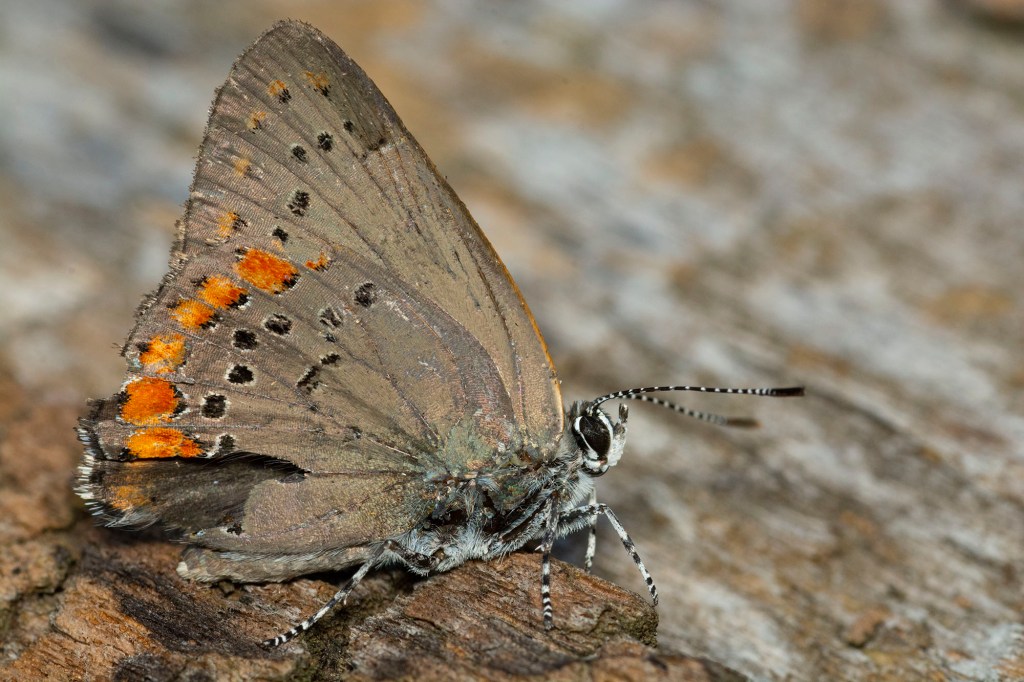
Coral hairstreak (Satyrium titus) (photo: Chris Helzer)

Neil’s comment raises a question. What species do we miss when we choose only one day out of the year to survey and how do we account for them?

Maybe this presents an opportunity for deeper research. But in the meantime, the data that we do collect is no less meaningful.

Neil reflects on how his experience and the preserve has changed in the years since he began.

40 years of data can tell a long story. Neil watches changes on the landscape and how it impacts his butterflies. He mentions seeing the habitat change as the number of shrubs on prairies increases, an issue that concerns many grassland conservationists. Annual surveys can help us to understand how this impacts butterflies, by impacting things like access to host plants. But NVP is 56,000 acres with butterflies active for a third of the year. And speaking with Neil makes me so curious to know how much information exists beyond our 1-day survey. Who was flying in the far west corner of the preserve 2 weeks before we arrived?


Part 3: Fire on the Ridgetop

Location: The northern ridgetop, where ponderosa pines and eastern redcedars burned in the 2012 wildfire

Our closing ceremony of the survey is a count of all of the species we’ve seen, listed off in pieces scattered between surveyors and sites, and dutifully recorded by Neil. We’ve made our contribution to the list of 2000+ individual lepidopterans recorded in Nebraska.

Later, Neil and I continue our discussion.

Butterflies Mentioned: Two-tailed swallowtail (Pterourus multicaudata), Dusky wing (Erynnis sp.), Yucca Giant-Skipper (Megathymus yuccae)

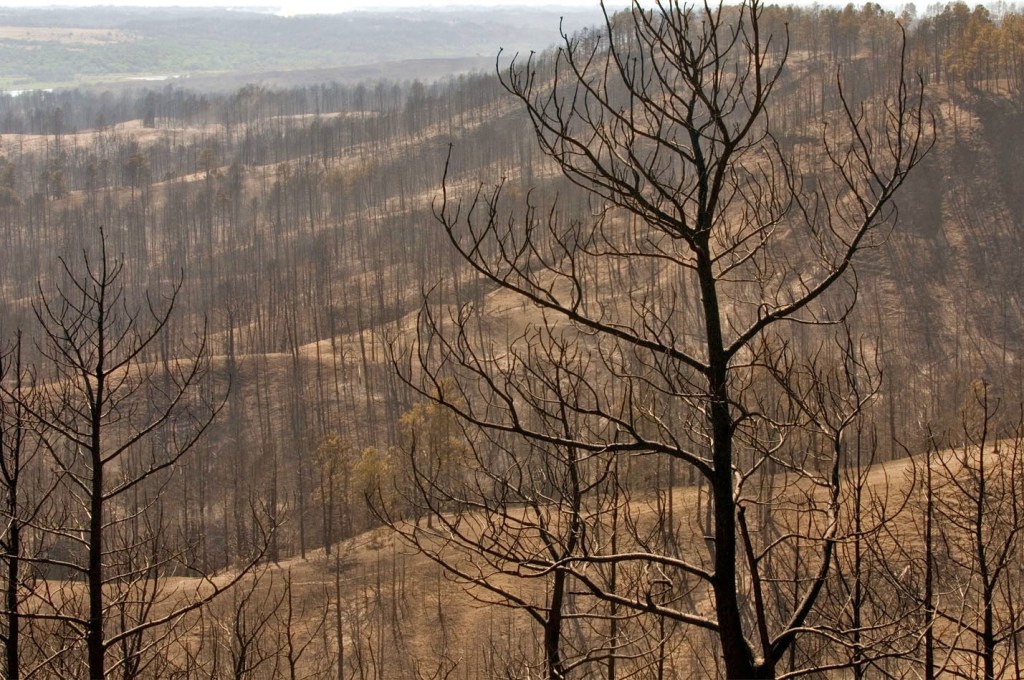
The Nature Conservancy’s Niobrara Valley Preserve after the July 2012 wildfire (photo: Chris Helzer)

2012 was a drought year in Nebraska, resulting in several significant wildfires across the state. In July 2012, a lightning storm set off one such wildfire in Niobrara Valley Preserve. The fire burned 74,000 acres, including 30,000 acres of the Preserve. There were painful losses in the way of homes and facilities, but there’s an argument to be made for positive ecological impacts that the fire had on the preserve. For example, the fire burned through many eastern red cedars crowding out grasses and wildflowers on the northern ridge-side. That doesn’t mean there weren’t worries after the fire.

Hear Amanda Hefner talk about the fire in “Amanda Hefner 2: In the aftermath of the wildfires“.           

Neil shares the story from his perspective.


Part 4: A Butterfly Network

Location: Another site from the original survey at Niobrara Valley Preserve

Neil highlights it here, but throughout our discussion, his mention of names, advisors, and mentors shines a light on something I have loved experiencing in conservation: the interconnectivity of conservation and the importance of shared knowledge. It’s not so important to remember the names here as it is to understand how many people relied on and learned from to be where he is today. 

Butterflies mentioned: Great Spangled Fritillary (Argynnis cybele), Monarch (Danaus plexippus), Yucca Giant-Skipper (Megathymus yuccae), Silvery Checkerspot (Chlosyne nycteis)

This sense of community extends to Neil’s experience at Niobrara Valley Preserve.

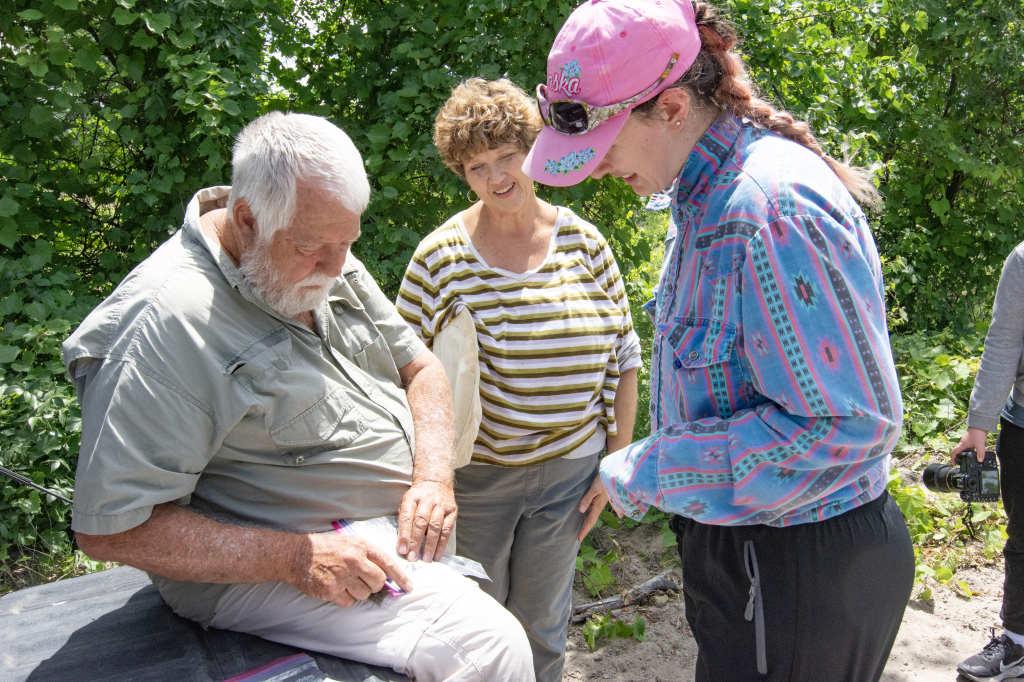
Chris Helzer (center) shows a butterfly to Neil and the rest of the surveyors

Neil was joined by his wife Jen, who shared her perspective of the survey and the community.

With a moment of reflection, Neil shares his closing remarks.