Photo of the Week – July 28, 2016

Those of you who have followed this blog for a while know about the big wildfire that swept across The Nature Conservancy’s Niobrara Valley Preserve back in 2012.  One of the results of that fire was the death of almost all of the Preserve’s ponderosa pines on the bluffs north of the river.  I’ve posted several times about the recovery of that portion of the site, which we are watching closely and learning from.  We haven’t seen any new pines coming in yet, but grasses, sedges, wildflowers, and deciduous shrubs are all flourishing.
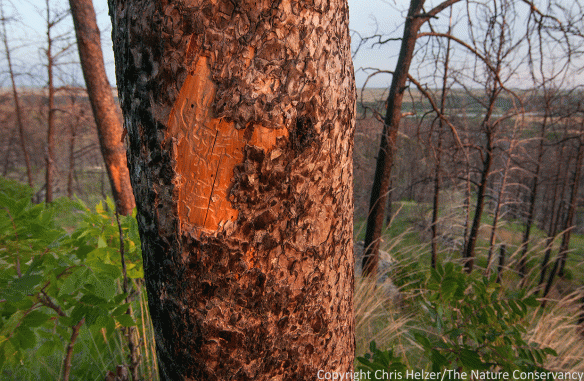
Bark beetle galleries beneath the bark of a pine killed in the 2012 wildfire. The Nature Conservancy's Niobrara Valley Preserve.

Bark beetle galleries beneath the bark of a pine killed in the 2012 wildfire. The Nature Conservancy’s Niobrara Valley Preserve.

As new plants colonize the site, the old skeletons of pines and eastern red cedars are starting to break down.  Some of those dead trees are tipping over completely, while others are breaking off further up the trunk.  The result is a landscape that is a little more difficult to walk through (and dangerous on windy days), but one that is still very pretty.  The gradual degradation of the tree skeletons is a necessary part of the recovery and transition of this area to a different ecological community.  We think that pines will eventually recolonize the site, but it’s going to be many years before that happens to any great extent.  In the meantime, there is a great abundance of wildlife, insects, and wildflowers living between the falling trees.

While up at the Niobrara Valley Preserve earlier this summer, I spent a little time wandering in, ruminating about, and photographing the area where the old trees are breaking down.  Here is some of what I saw.

More and more pines are breaking off at the base and falling.

More and more pines are breaking off at the base and falling.

Some trees are falling, but many others are just losing their tops, creating a more ragged look to ridge tops.
Some trees are falling, but many others are just losing their tops, creating a more ragged look to ridge tops.

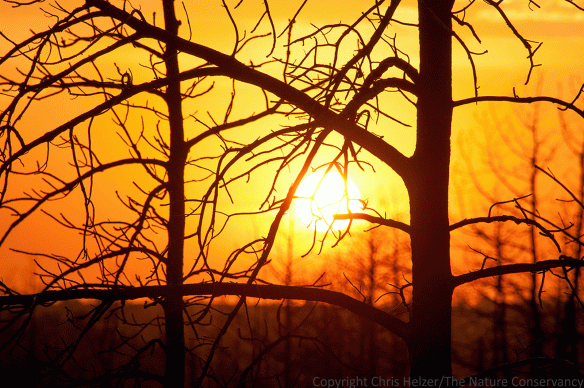
Despite the fact that the trees are dead, I still find them aesthetically pleasing, including as foreground for sunset light.

Despite the fact that the trees are dead, I still find them aesthetically pleasing, including as foreground for sunset light.

I’ve always enjoyed looking at the patterns I find in ponderosa pine park.  It’s hard to resist photographing them.  This last trip, I was seeing specific images in some of the patterns, so I photographed a few and present them here for your consideration.  They are a kind of Rorschach test, I suppose.  What images do you see?

Bark Pattern A - what do YOU see in it?

Bark Pattern A – what do YOU see in it?
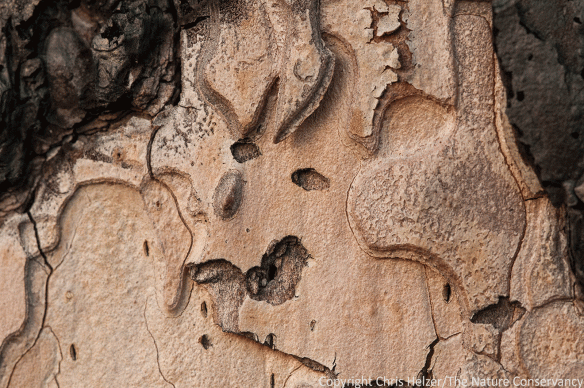
Bark Pattern B. Lots to see in this one...

Bark Pattern B. Lots to see in this one…

Photo of the Week – May 19, 2016

Gjerloff Prairie, formerly known as Griffith Prairie, is a beautiful site on steep loess hills adjacent to the Platte River.  It’s owned and managed by Prairie Plains Resource Institute, and was burned earlier this spring.  I walked around the prairie for an hour or so this week to see how things were progressing since the fire.  From a distance it didn’t look like there was much to see – just a lot of short green grass.  Up close, however, there was a lot going on, and I didn’t have any trouble finding photography subjects..

The topography of Gjerloff Prairie is always interesting - if challenging to hike - but especially so after a fire.

The topography of Gjerloff Prairie is always interesting – if challenging to hike – but especially so after a fire.

Many plants, including this leadplant (Amorpha canescens), were growing strongly after the fire and a month of good rains.

Many plants, including abundant leadplant (Amorpha canescens), were growing strongly after the fire and a month of good rains.

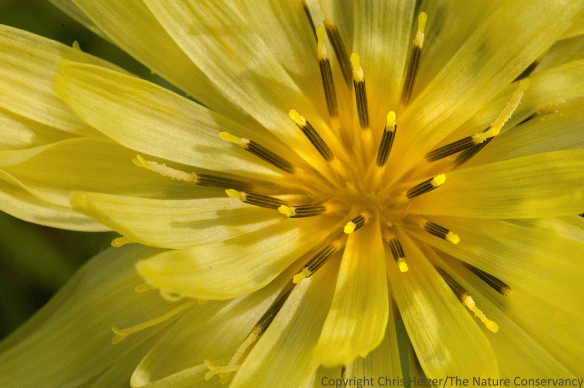
It was nice to visit the only population of tuberous false dandelion (Pyrrhopappus grandiflorus) in Nebraska. The southern Plains wildflower was discovered at Gjerloff prairie in 2004.

It was nice to revisit the only population of tuberous false dandelion (Pyrrhopappus grandiflorus) in Nebraska. Normally found only in Kansas and southward, this wildflower was discovered at Gjerloff prairie in 2004.

Smooth sumac (Rhus aromatica) can be overly abundant in some prairies in our area, but hangs out mainly on a few waslopes at Gjerloff prairie. It resprouts easily after fires, and looked vibrant and healthy this week.

Smooth sumac (Rhus glabra) can be overly abundant in some prairies in our area, but hangs out mainly on a few steep slopes at Gjerloff prairie. It resprouts easily after fires, and looked vibrant and healthy this week.

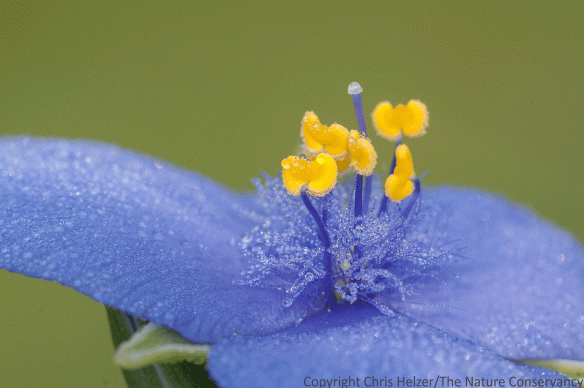
Spiderwort (Tradescantia occidentalis) was just starting to bloom on the warmer south-facing slopes of the prairie.

Spiderwort (Tradescantia occidentalis) was just starting to bloom on the warmer south-facing slopes of the prairie.

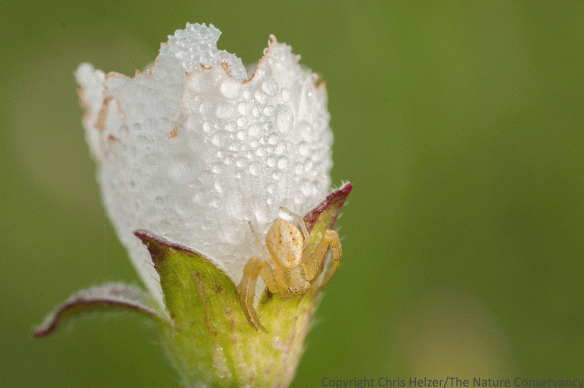
And, of course, I found a crab spider to photograph. Although they are particularly small this time of year, they are all over the place on flowers, and weren't difficult to find once I started looking.

And, of course, I found a crab spider to photograph (on pale poppy mallow – Callirhoe alcaeoides). Although they are particularly small this time of year, crab spiders are all over the place on flowers.