
Photo of the Week – July 9, 2015

Upright yellow coneflower (Ratibida columnifera), aka Mexican hat, is blooming all over the Platte River Prairies right now.  As with most showy flowers, the coneflowers are crawling with insects of many kinds.  I spent a fun half hour (31 minutes, to be exact) last week, trying to photograph as many of those insects as I could before I had to pop into our field headquarters for a meeting.
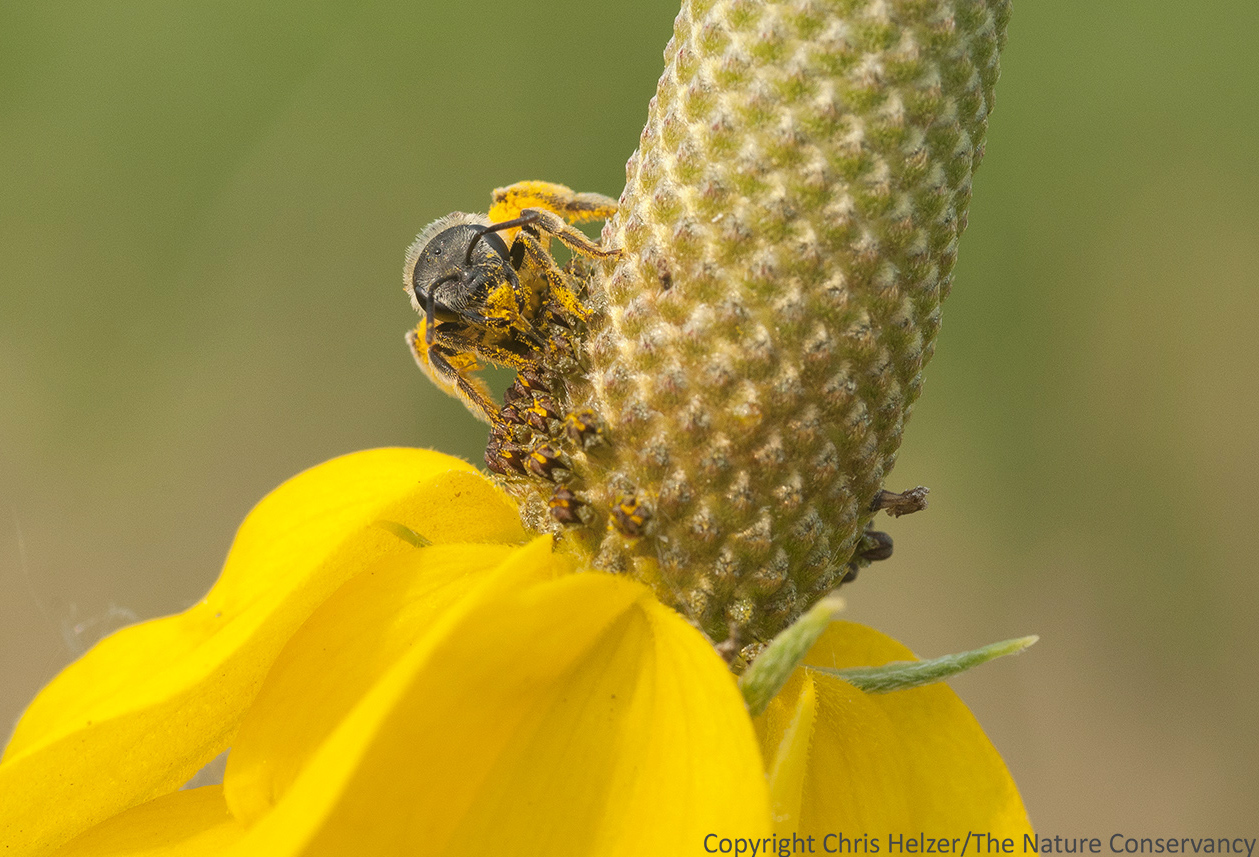
Bee on upright prairie coneflower.  The Nature Conservancy's Platte River Prairies, Nebraska.

Sweat bee (Halictus ligatus, I think) on upright prairie coneflower. The Nature Conservancy’s Platte River Prairies, Nebraska.

Bee and beetle on upright prairie coneflower.  The Nature Conservancy's Platte River Prairies, Nebraska.

The same sweat bee species on a different flower, this time joined by a small brown beetle.
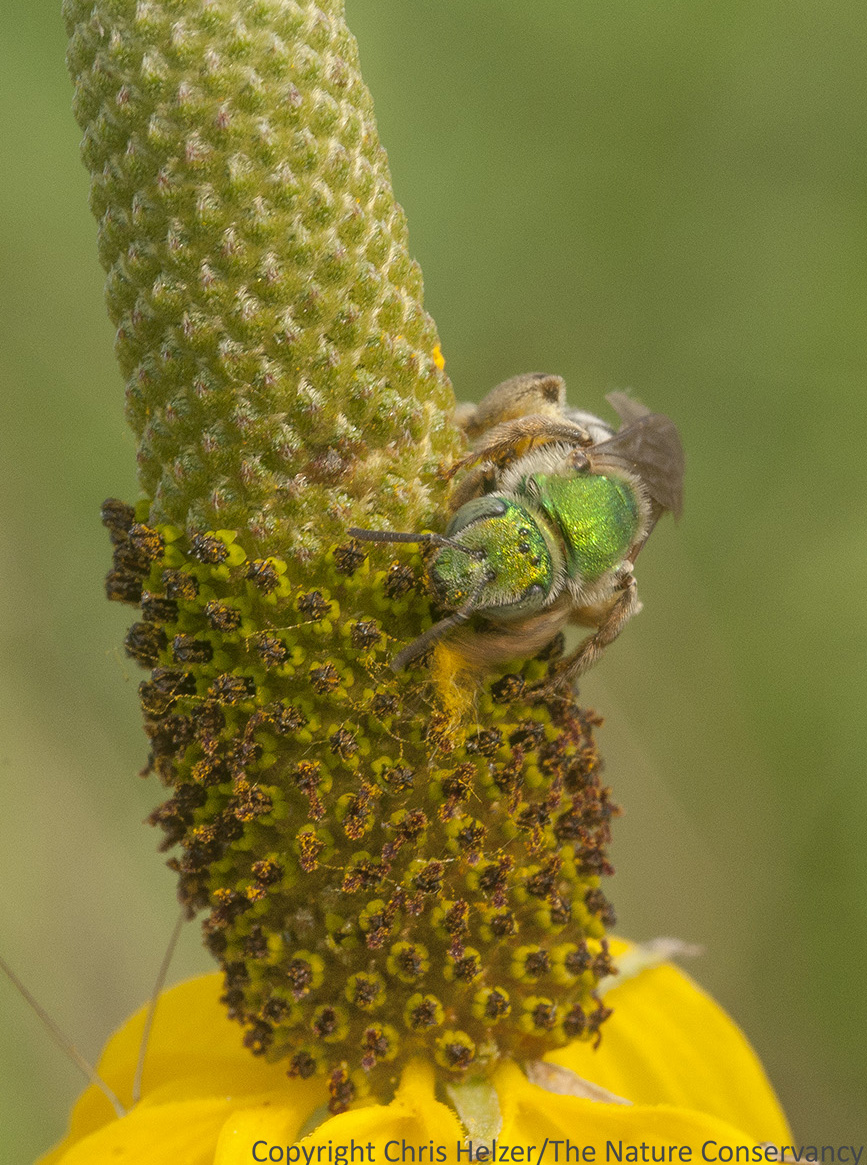
Bee on upright prairie coneflower.  The Nature Conservancy's Platte River Prairies, Nebraska.

A different bee with the antennae of another insect beneath it.

Hover fly (Syrphid) on upright prairie coneflower.  The Nature Conservancy's Platte River Prairies, Nebraska.

It took me a while to finally capture an image of one of these syrphid flies (hover flies).  They were a lot more skittish than the bees.
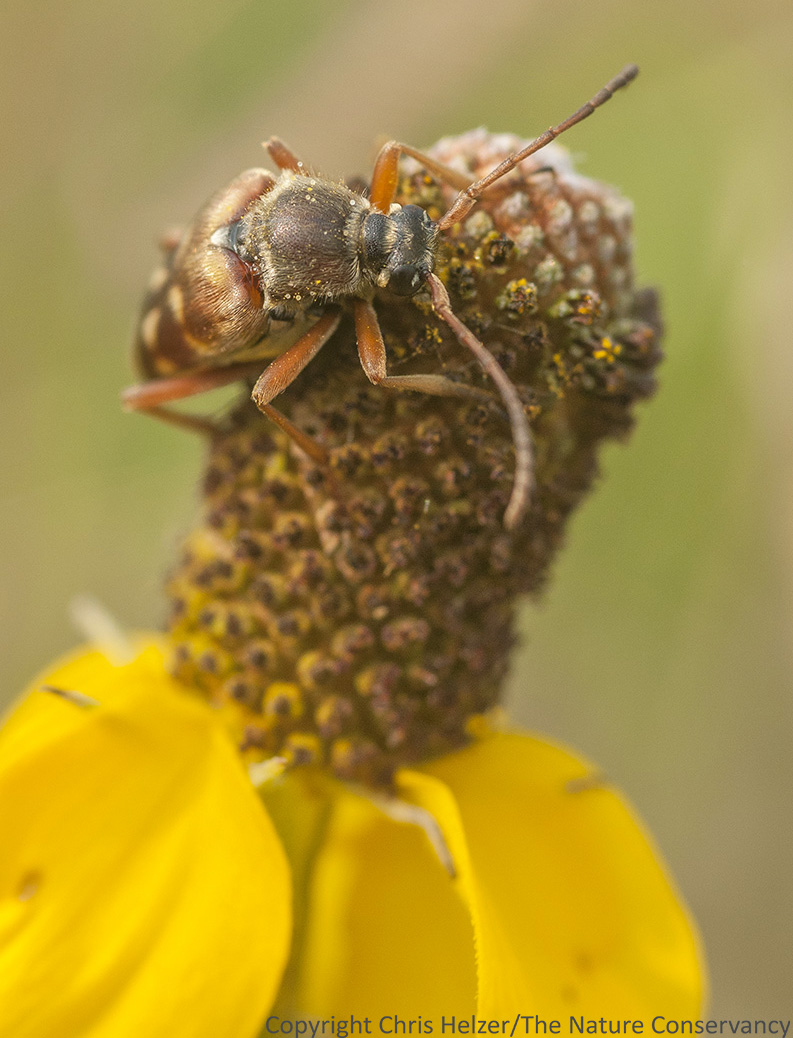
Long-horned beetle on upright prairie coneflower (Ratibida columnifera).  The Nature Conservancy's Platte River Prairies, Nebraska.

Long-horned beetle feeding on pollen.

I wrote about long-horned beetles last summer after photographing them on the same flower species.  I think this one is Typocerus confluens, but I’m just guessing based on photos from last year.  You might remember from last year that adult long-horned beetles feed on flowers, but larvae are wood borers or subterranean root feeders.
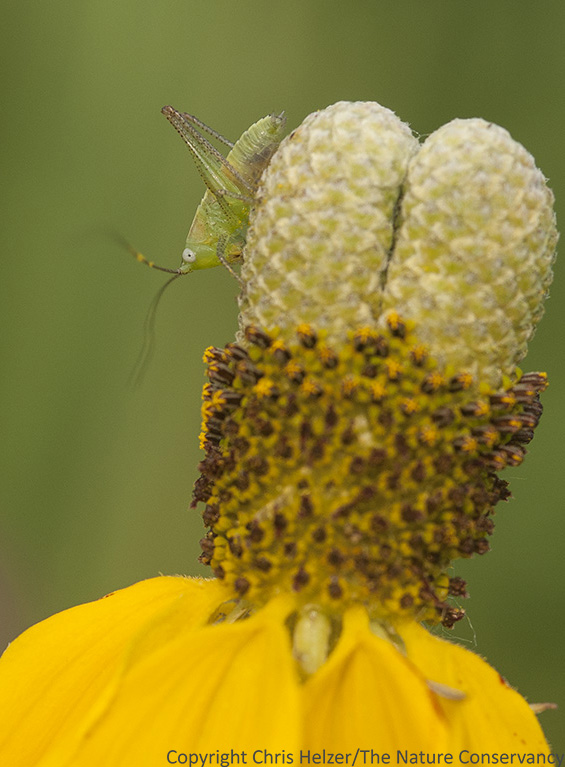
Katydid nymph on upright prairie coneflower.  The Nature Conservancy's Platte River Prairies, Nebraska.

A tiny katydid nymph.

Tree cricket nymph on upright prairie coneflower.  The Nature Conservancy's Platte River Prairies, Nebraska.

A tree cricket nymph.

As is always the case in prairies (and nature in general), the closer you look, the more you see.  The number of insect species feeding on this one flower (and, in some cases, pollinating it) is a great example of the complexity of life found in prairies.  Complexity leads to resilience because there are multiple species that can play fill similar roles.  If one species has a bad year, others will fill in for it.  That redundancy helps keep all systems functioning all the time.

Hurray for complexity!
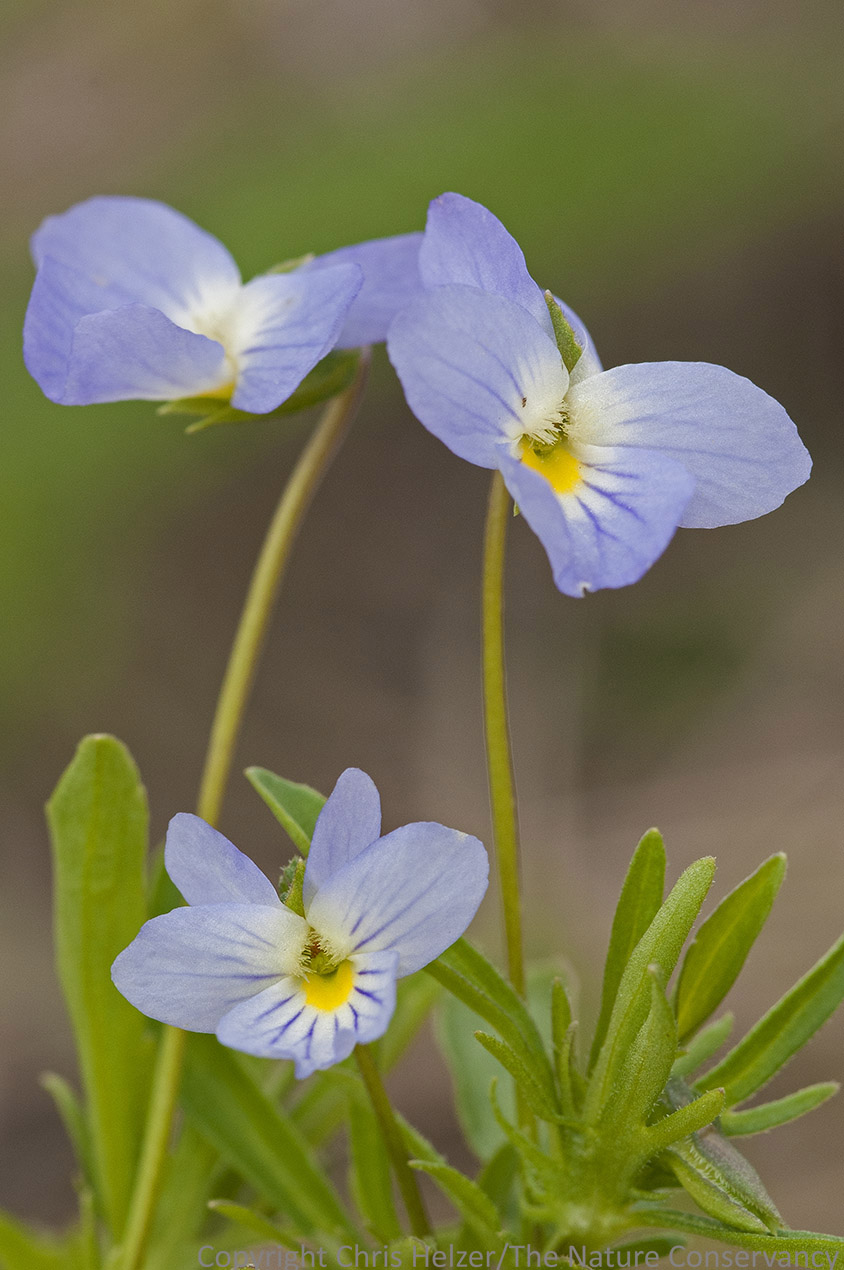
Photo of the Week – April 24, 2015

The aesthetic values of prairie are more subtle than those in many other ecosystems.  There is much beauty to be found, but you sometimes have to look for it – it doesn’t often rise up and slap you in the face.  That’s especially true in the early spring as the first wildflowers are just starting to bloom.

If you had driven past the Platte River Prairies this week, you would have likely dismissed them as a lot of brown grass with a little green grass here and there.  Blah.  But if you’d gotten out of the car and taken a walk – and if you had been especially observant – you might (MIGHT) have spotted one of my favorite wildflowers.

Viola rafinesquii, a tiny and easy to miss wildflower.  The Nature Conservancy's Platte River Prairies, Nebraska.

Viola rafinesquii is a tiny, beautiful, and easy to miss wildflower. The Nature Conservancy’s Platte River Prairies, Nebraska.

Known variously as field pansy, Johnny Jump-up, and other names, Viola rafinesquii is an annual violet species that makes its appearance in the early spring, just before most better recognized flowers begin to bloom.  One a short hike yesterday, the Fellows and I spotted several hundred of these plants, but if we hadn’t been specifically looking for them, we probably would have missed them altogether.  The plants stand only a few inches tall, and the diameter of the flowers is about that of a dime.

It’s a gorgeous little plant, but you’ve got to get on your hands and knees to really appreciate it.  In that way, it’s a pretty good metaphor for prairies in general – if you don’t look closely, you’ll probably miss the beauty altogether.

…and that would be a shame.