Hubbard Fellowship Blog – Photos by Eliza

Guest Post by Eliza Perry, one of our 2013-14 Hubbard Fellows (all photos are by Eliza Perry).

The past month has been wild. Instead of writing up a succinct summary, I decided to share a few of my favorite photos I’ve managed to capture in the field (our work is rarely camera-friendly).
DSCN0070

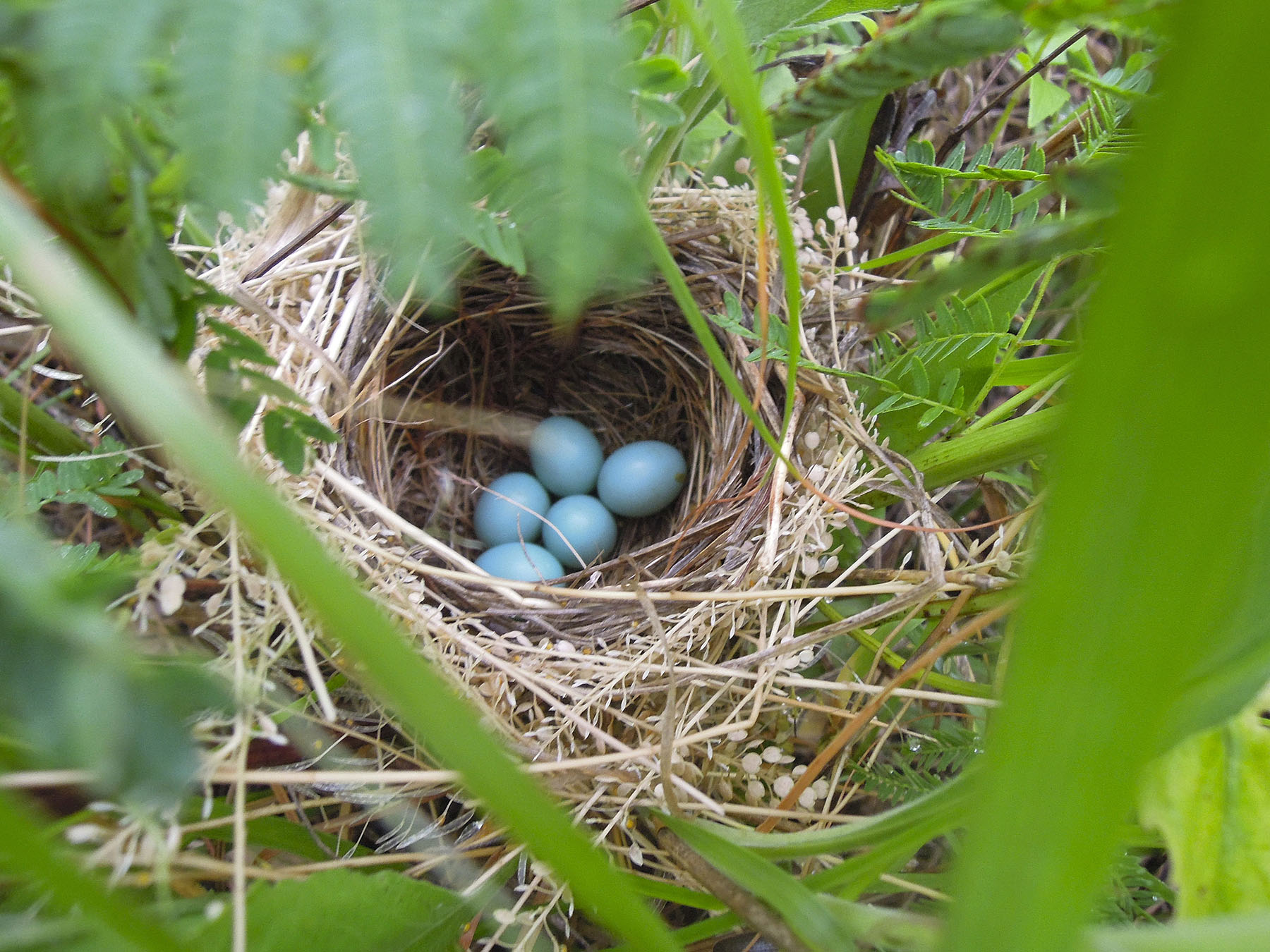
From afar, prairie is a striking landscape with dramatic skies and a vast, quaking floor; up close, however, is a far more interesting view. I had never seen a bird’s nest intentionally woven into grass before working in prairie. This particular nest held five dickcissel eggs. Usually these eggs are accompanied by one or two brown-speckled eggs from a crafty cow bird, who transfer their parental burden onto an unknowing other.

.
DSCN9657

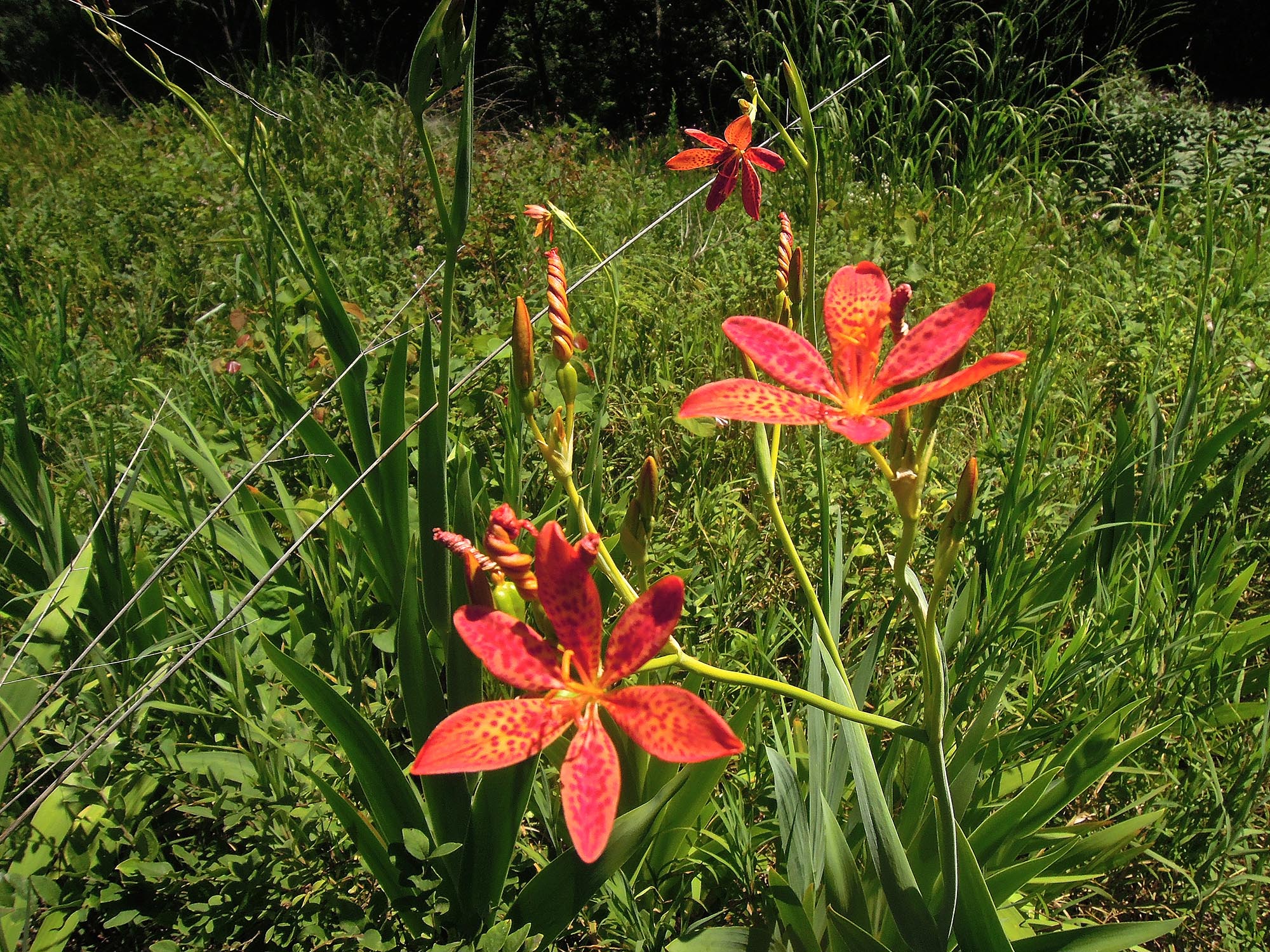
Invasive species control will always bring up concerns about inadvertent damage. I don’t know the name of this beautiful flower, but I noticed it while spot spraying sericea lespedeza at our property in Rulo. We recently purchased a new backpack sprayer that provides dense, targeted coverage over a plant, but even so, my worry is always in how many neighboring plants unintentionally receive a harmful or fatal dose of herbicide. We could see patches of dead vegetation from last year’s sericea treatment.

During my first few days of spot spraying this season, soaking invasives seemed like a bulletproof plan in light of the natural tendency toward “more is better.” Since then, I’ve learned that this method is not only harmful to the surrounding plant community, but more importantly, it is often counter-productive because it can “burn” the plant past its ability to absorb the chemical. The result is a damaged plant with an intact root system and ability to regrow and flower. This is an ongoing challenge, but I have learned to mitigate some of my impact through application technique. For example, one key is maintaining high pressure in the backpack sprayer pump to avoid drippage between sprays.

.

DSCN0073

This photo was taken several weeks ago when most of our sensitive briar (Mimosa quadrivalvus) was at an early stage in blooming. The young flowers caught my attention immediately because to me they look like fireworks. I invent names for most of the forbs I don’t recognize until I can get a handle on their proper common names, and I called these “firework flowers” until relatively recently when I finally accepted them as sensitive briar.

.
DSCN9876

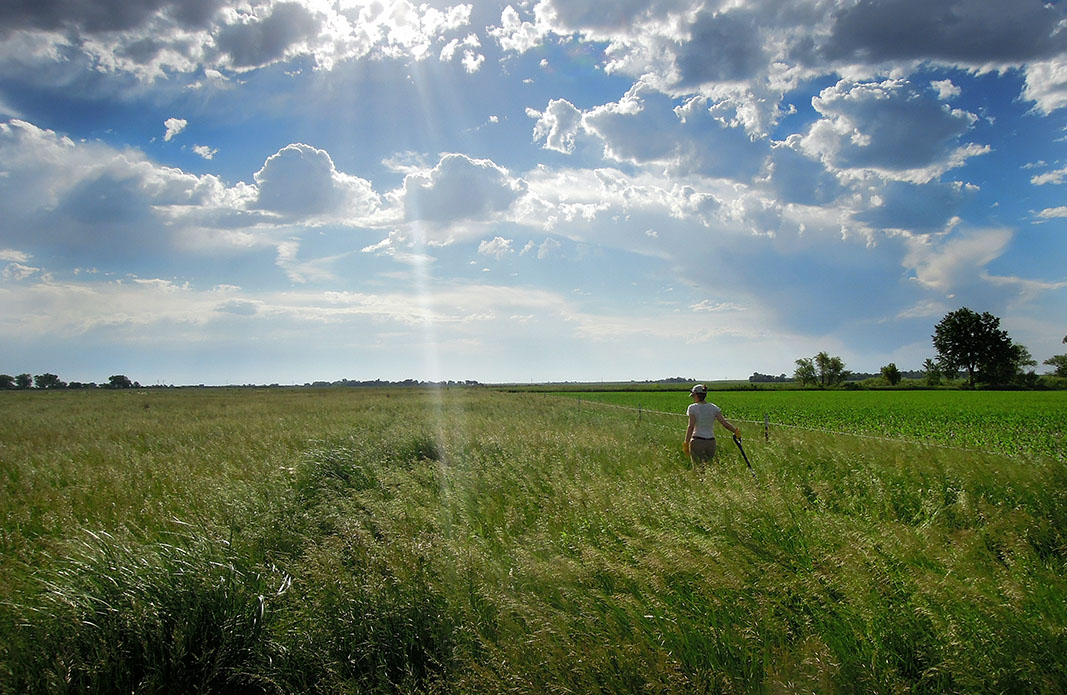
This photo does not adequately capture the plant or structural diversity present in this area. I took it very early on before I understood the significance of either, but as I reviewed the photos I had snapped in the past two months, this one stood out in a different way than it was originally intended to: as an almost comical juxtaposition of cropland and prairie. Of course, agricultural monocultures serve their purpose, but the measures of success and functionality for the two “ecosystems” are so contrary that it makes for an interesting picture to see the two side-by-side. For one, the presence of a “weed” is considered to be the enemy of crop productivity, while prairies are essentially a collection of tenacious (native) weeds. Moreover, monocultures entail the least amount of variety in land management practices by design, while prairies thrive on highly variable land management and substantial disturbance.

.
DSCN9938

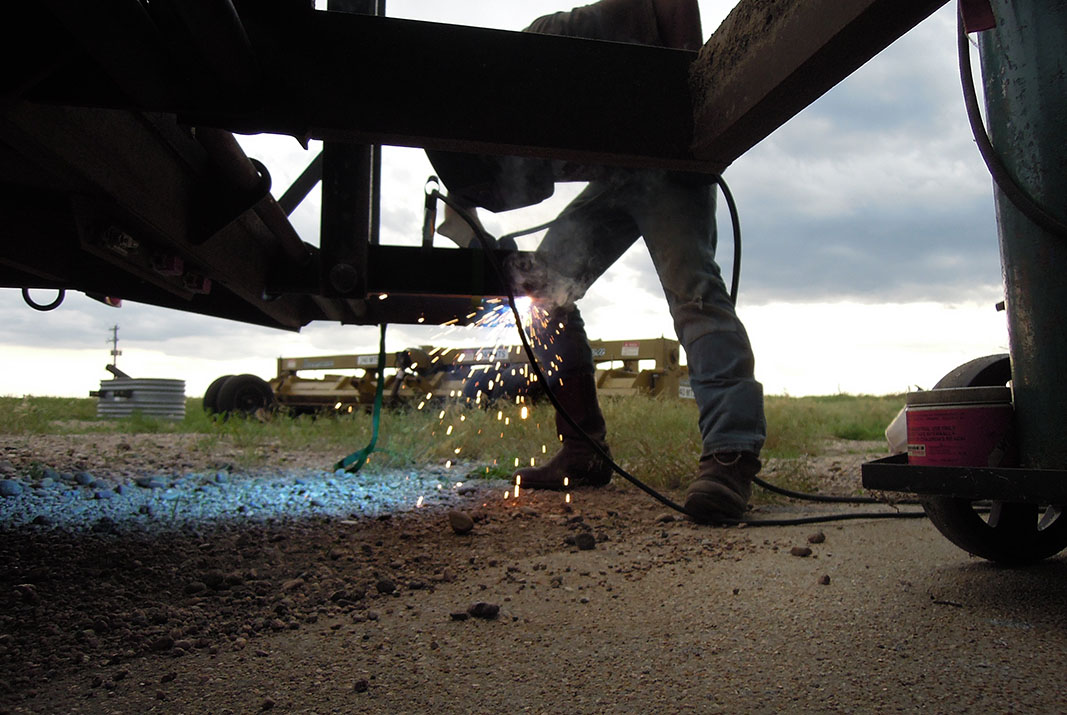
Prairie management involves a lot of equipment and we need to know how to maintain it. Our trailers are particularly important because they allow us to transport heavier equipment like ATVs and skidloaders to properties further away. A few weeks ago, one of our trailers had a small part knocked off. This photo shows Nelson, our land manager, teaching me how to weld it back on. Anne and I are in the process of learning to use all of the exciting hand and power tools in our shop so that we can more effectively help with maintenance and construction projects. Someday I hope we will complete our own.

.
DSCN0176

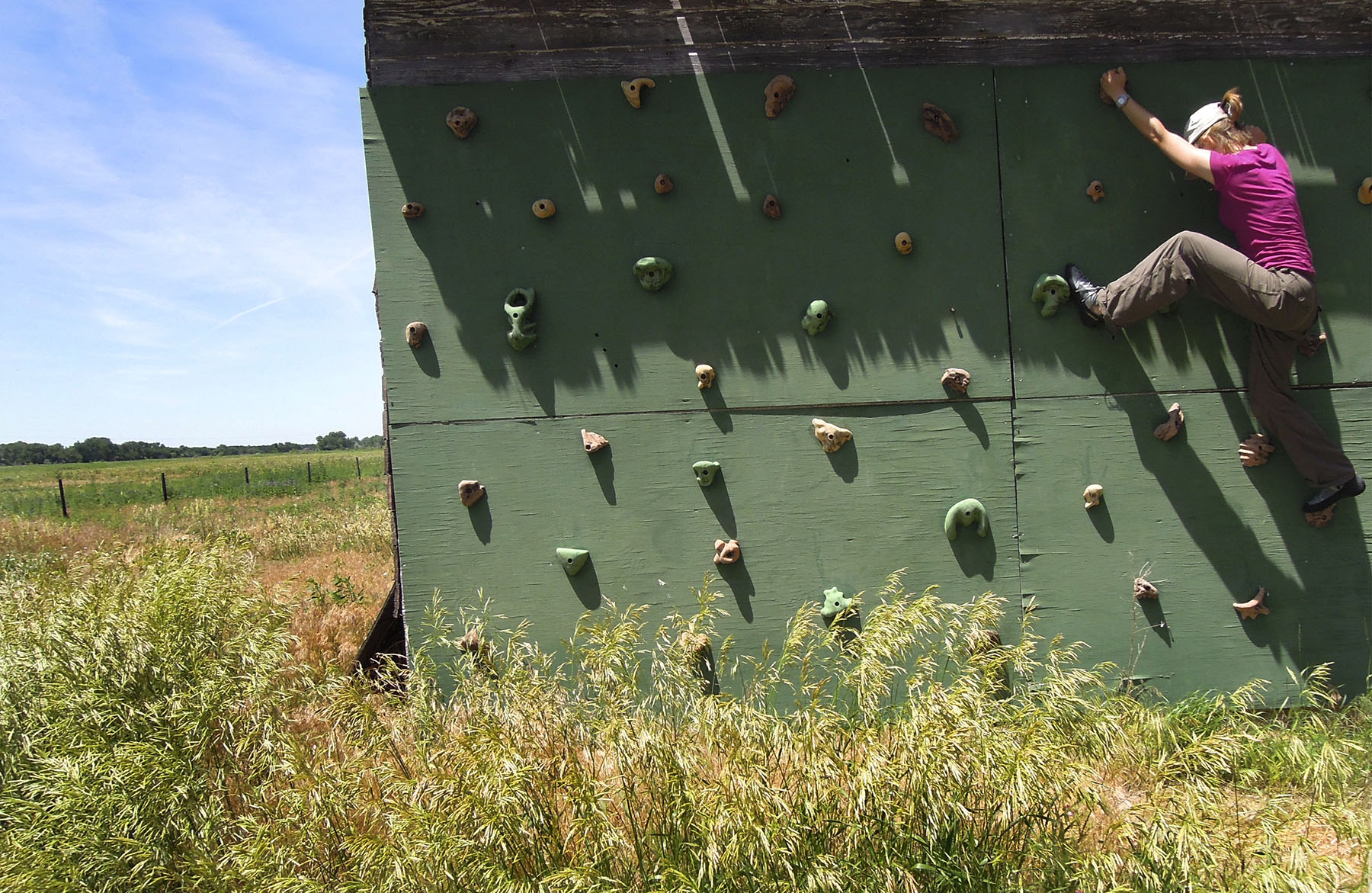
Leave it to Anne to find a climbing wall in the middle of a prairie!

.
DSCN9409

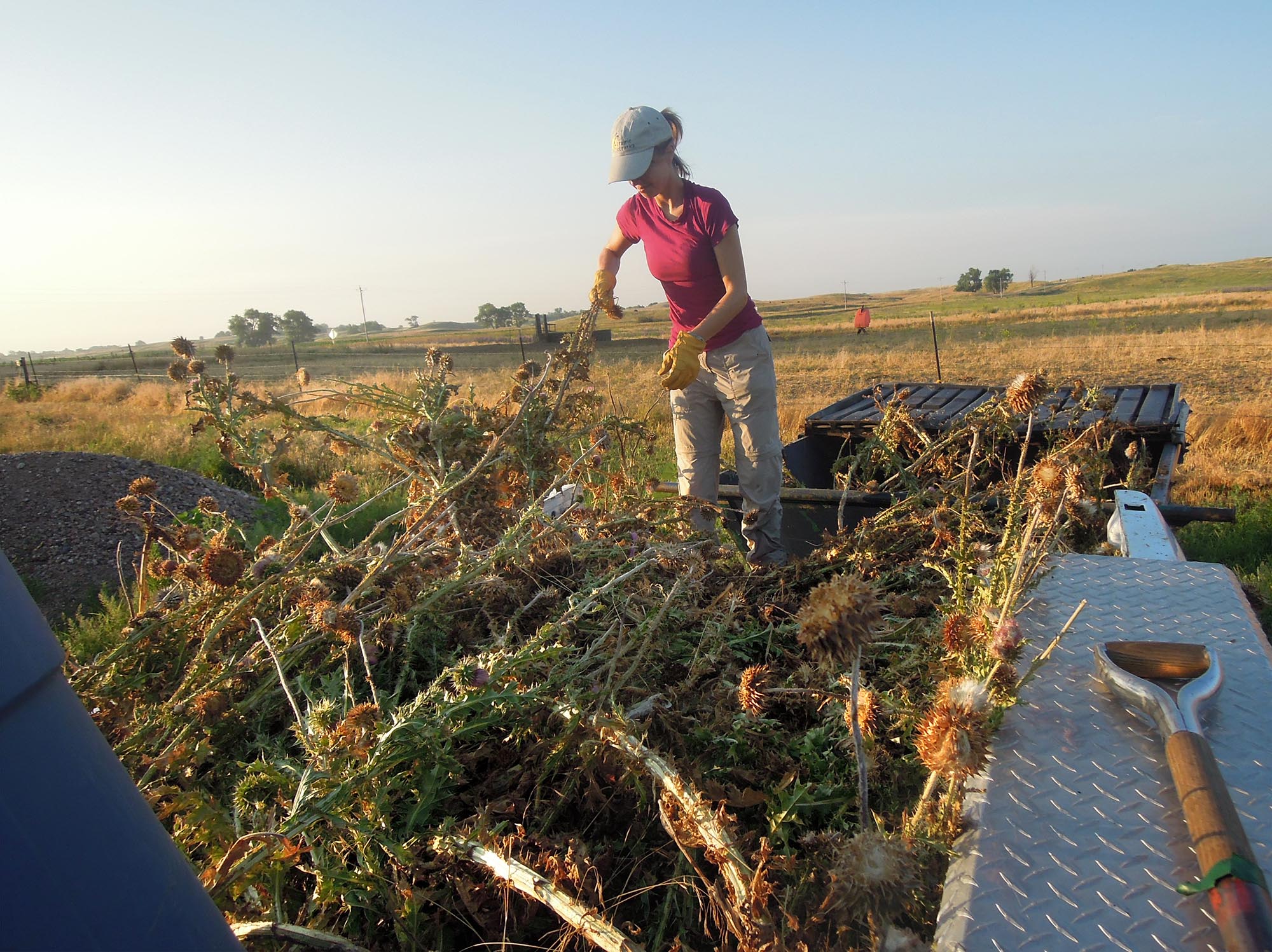
This photo does not do justice to the number of invasive thistles packed into that truck bed. We found a sizeable forest of musk thistles seeding out at the tail end of our thistle season and decided to remove them from the scene entirely because pulling off all of the flowers would have taken a full day. A dumpster brimming with these villains was a satisfying sight after weeks of focusing most of our efforts on eradicating them.

.

DSCN0375

I have moments every single day in this job when I have to stop what I’m doing to relish the fact that scenes like this are my equivalent to an office. I captured one of these moments one afternoon while scouting our Kelly Tract for Canada thistles. Controlling invasives is a daunting task with some species, and I have found myself feeling defeated to the point of forgetting its importance to our conservation objectives, which has been a good lesson for me. As Chris recently described in a blog post, our goal is to strengthen the overall ecological resilience of our properties, which cannot occur without a resilient plant community.

.
DSCN0214

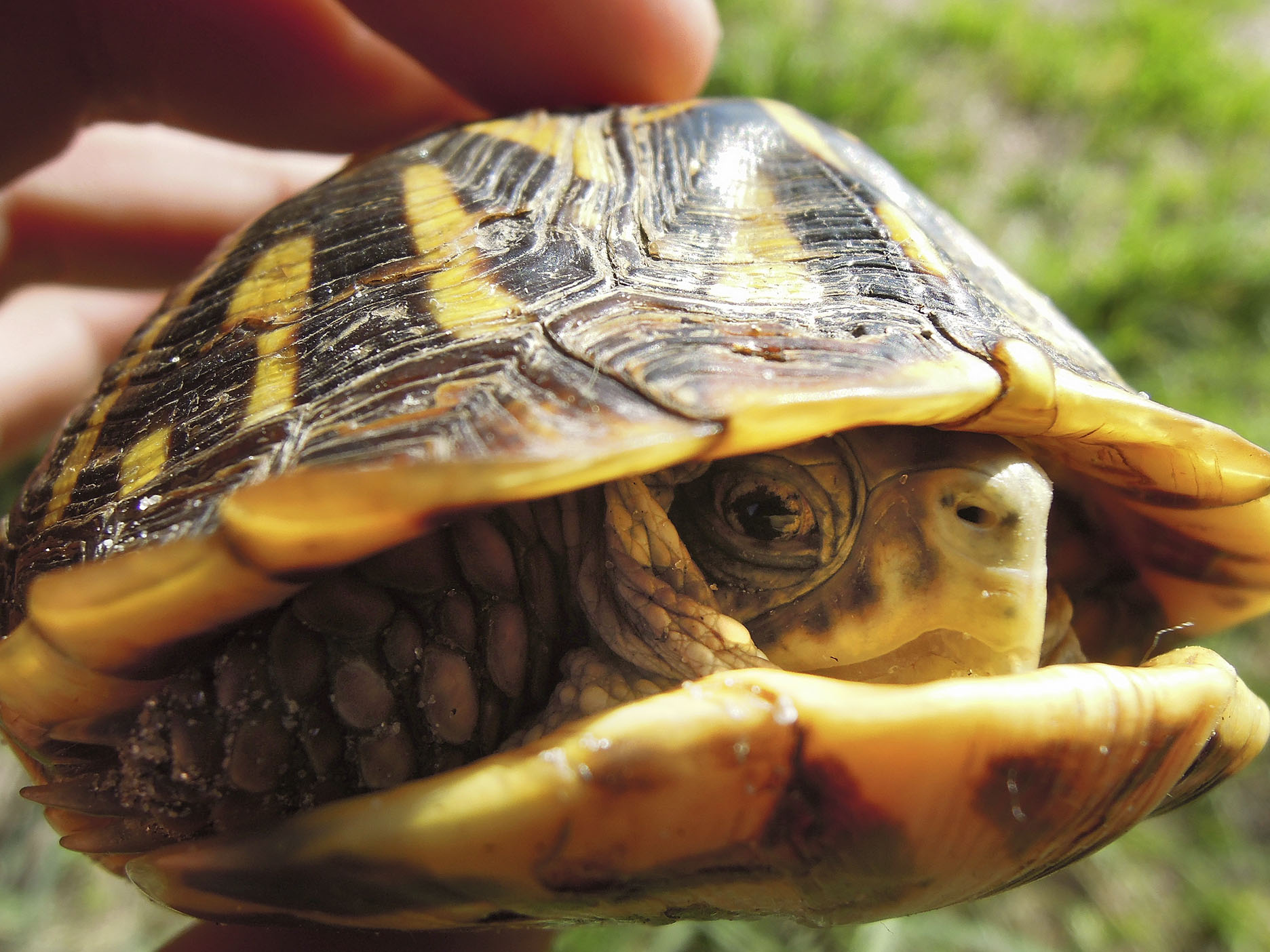
We rescued this little lady from the middle of a highway on our way to Niobrara Valley Preserve. There was a stretch of ten or so miles in which we saw a high number of box turtles crossing the road, and virtually none before or after. While she certainly looked on at us indifferently, I thought I could detect a hint of sass in her expression and did my best to capture it here.

.
DSCN0127

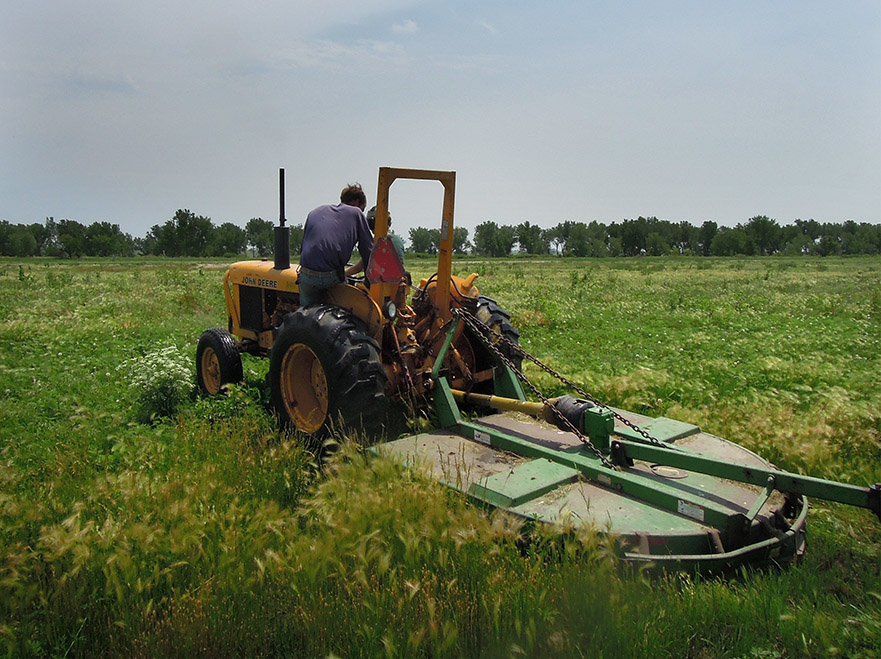
Once Anne had learned how to safely operate this tractor, she proceeded to mow our most recent restoration site for several hours. The key to our success in becoming comfortable using all these new vehicles and tools is, unsurprisingly, practice. Luckily there is no shortage of pastures that need to be mowed, trees that need to be felled, or fences that need to be relocated. Mowing is one of several land management strategies for knocking back invasives by thwarting their growth to prevent or buy time before they seed out. Mowing “burn breaks” is also an essential component of safe prescribed fire burns.

Changing Our Focus

Last Friday night, I had the honor to be part of an event called the Conservation Jam, hosted by The Center for Great Plains Studies and The Nature Conservancy, and attended by about 300 people.  I was one of 15 conservationists asked to present a “big idea” to help conserve the Great Plains.  There was just one catch – each of us had to give our presentation in three minutes.

Three minutes is not very long.

I thought I’d share my presentation with you.  Partly because I spent a lot of time putting it together and only got to spend three minutes presenting it.  (But mostly because I’m too lazy to come up with another idea for a blog post this week.)  The topic of my presentation was not a new idea; if you’ve followed this blog, you’ve seen more extensive posts on similar subjects twice before, in January 2011 and February 2012.  The change of focus I advocate for isn’t, by itself, going to save the Great Plains, but I do think it’s a very important part of our approach going forward.

For what it’s worth, here’s my three minute presentation:

In grasslands, the vast majority of species are plants and invertebrates.  Birds and other vertebrates make up a very small proportion of those species.

In grasslands, the vast majority of species are plants and invertebrates. Birds and other vertebrates make up a very small proportion of those species.

.

Between them, plants and invertebrates drive the ecological function of prairies (including pollination and soil productivity, and they are the food sources for most creatures).   In other words, they’re what make grasslands tick.

Between them, plants and invertebrates drive the ecological function of prairies (including pollination and soil productivity; and they are the food sources for most creatures). In other words, they’re what make grasslands tick.

.

The diversity of plants influences the diversity of invertebrates, and vice versa.  That complexity is the foundation of the resilience and overall stability of the ecosystem.  It’s critically important to maintain plant and invertebrate diversity because without it, the ecosystem breaks down.

The diversity of plants influences the diversity of invertebrates, and vice versa. That complexity is the foundation of the resilience and overall stability of the ecosystem. It’s critically important to maintain plant and invertebrate diversity because without it, the ecosystem breaks down.

.

So clearly, as grassland managers and advocates for prairie conservation, we spend the vast majority of our time studying and managing for plants and invertebrates.  ...Right?

So clearly, as grassland managers and advocates for prairie conservation, we spend the vast majority of our time focusing on plants and invertebrates. …Right?

.

Wrong.  We actually  focus mostly on birds.  Birds we shoot and birds we watch.  I really like birds, but they’re not good indicators of how plant and invertebrate communities are doing, so they don’t tell us much about prairie function.  Birds are an important part of conservation, but they’re only a small piece – we need to be sure our focus on them doesn’t distract us from the broader ecosystems they live in.

Wrong. We actually focus mostly on birds. Birds we shoot and birds we watch. I really like birds, but they’re not good indicators of how plant and invertebrate communities are doing, so they don’t tell us much about prairie function. Birds are an important part of conservation, but they’re only a small piece – we need to be sure our focus on them doesn’t distract us from the broader ecosystems they live in.

.

A couple years ago, we brought these Illinois botanists to Nebraska to help us with a research project.  We had to, because there aren’t many people in Nebraska who can identify the majority of plants in a prairie.  That’s embarrassing.  More importantly, how can we manage prairies or evaluate our conservation progress if we can’t identify the species we’re trying to conserve??

A couple years ago, we brought these Illinois botanists to Nebraska to help us with a research project. We had to, because there aren’t many people in Nebraska who can identify the majority of plants in a prairie. That’s embarrassing. More importantly, how can we manage prairies or evaluate our conservation progress if we can’t identify the species we’re trying to conserve??

.

We know even less about insects and other invertebrates.  Of the few entomologists we have in Nebraska, most focus on crop pests.  As a result, we really don’t know what species of pollinators or other insects we have, let alone how they’re doing.  This is Mike Arduser, who came up from Missouri last year to help us learn about bees on the Platte River.

We know even less about insects and other invertebrates. Of the few entomologists we have in Nebraska, most focus on crop pests. As a result, we really don’t know what species of pollinators or other insects we have, let alone how they’re doing. This is Mike Arduser, who came up from Missouri last year to help us learn about bees on the Platte River.

.

Look, we have GOT to make some changes.  We desperately need naturalists with broad bases of experience who can help us study and assess plants and invertebrates.  We need to know what we have so we can see if we’re winning.  It’s up to all of us to broaden our own focus, but also to encourage others to do the same.

Look, we have GOT to make some changes. We desperately need naturalists with broad bases of experience who can help us study and assess plants and invertebrates. We need to know what we have so we can see if we’re winning. It’s up to all of us to broaden our own focus, but also to encourage others to do the same.

.

9.Birds are beautiful, they’re worthy of conservation, and they’re great at attracting people to nature...

Birds are beautiful, they’re worthy of conservation, and they’re great at attracting people to nature…

.

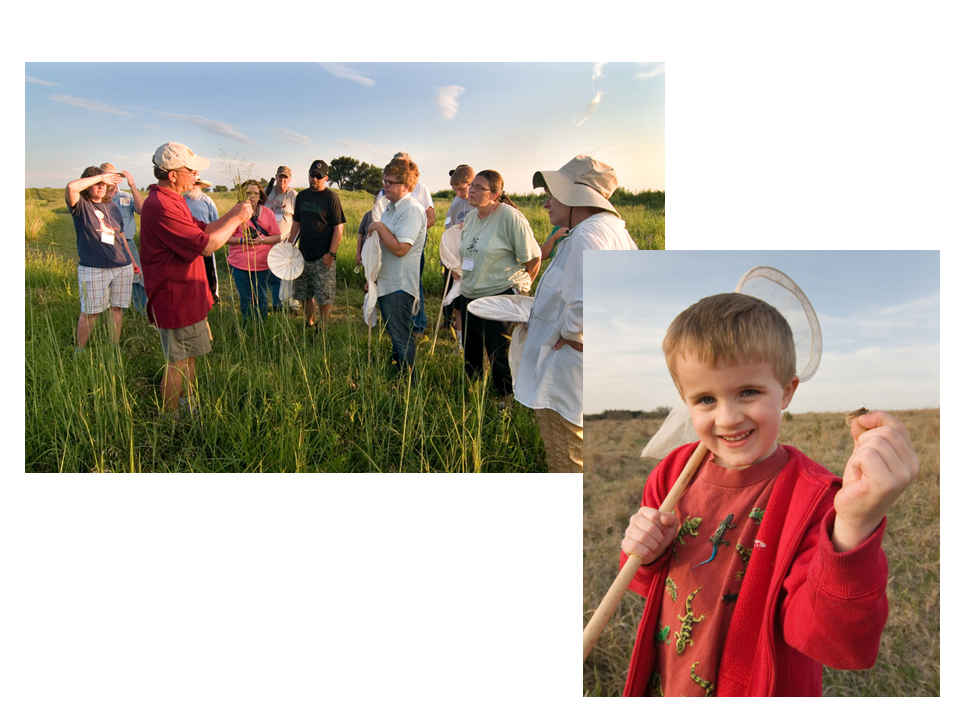
...but THIS is the face of conservation.

…but THIS is the face of conservation.

.

We need to create more opportunities to learn both insects and plants.  More importantly, we need to convince people that plants and invertebrates are interesting enough to care about. There are resources like bugguide that can help amateurs like us identify insects, but they only work if we use them.

We need to create more opportunities to learn both insects and plants. More importantly, we need to convince people that plants and invertebrates are interesting enough to care about. There are resources like bugguide that can help amateurs like us identify insects, but they only work if we use them.

.