
Are Prairies Less Natural Because They Need Us?

What if I told you tallgrass prairie is a human construct?

Would you think it’s less important?  Less natural?  Less real?
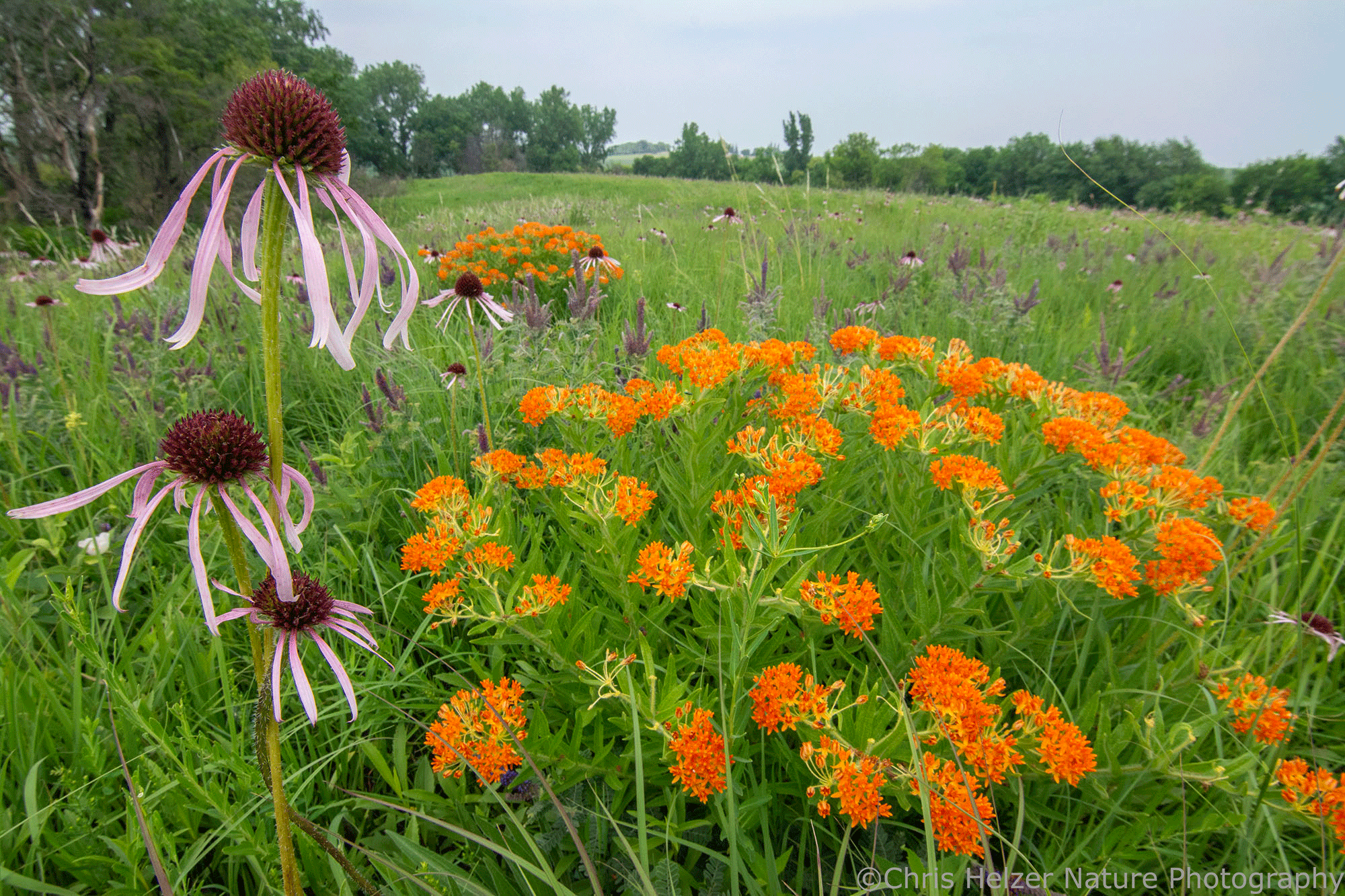
I don’t know if “human construct” is a totally fair description, but it’s certainly true that tallgrass prairie in the central United States exists because of people.  In many places, it formed because of people, and throughout its range, it relies on human stewardship for its continued persistence.

Let’s step back in time a little. 

While the actual timing of human arrival in North America is still being debated, there is consensus that people were here well before the ice sheets receded from the center of the continent (between 8,000 and 12,000 years ago).  Those humans played pivotal roles in the ecosystems they lived in. They hunted, cultivated and transported plants, and, perhaps most influentially, actively used fire in many different ways. 

As the continent warmed and bloomed after the ice age, human stewardship shaped plant and animal communities. In particular, people burned the landscape around them enough to create grasslands in what otherwise would surely have been wooded landscapes.  That was particularly important in the eastern portions of the tallgrass prairie.  Lightning fires were part of that story, too, but they were much less significant than the frequent, intentional use of fire by people.

In other words, if it hadn’t been for people and their stewardship of the land, tallgrass prairies would not have existed across much of what is now the Midwestern United States.  Throughout subsequent millennia, people have continued their stewardship, allowing prairies to persist in places where trees would otherwise have moved in.
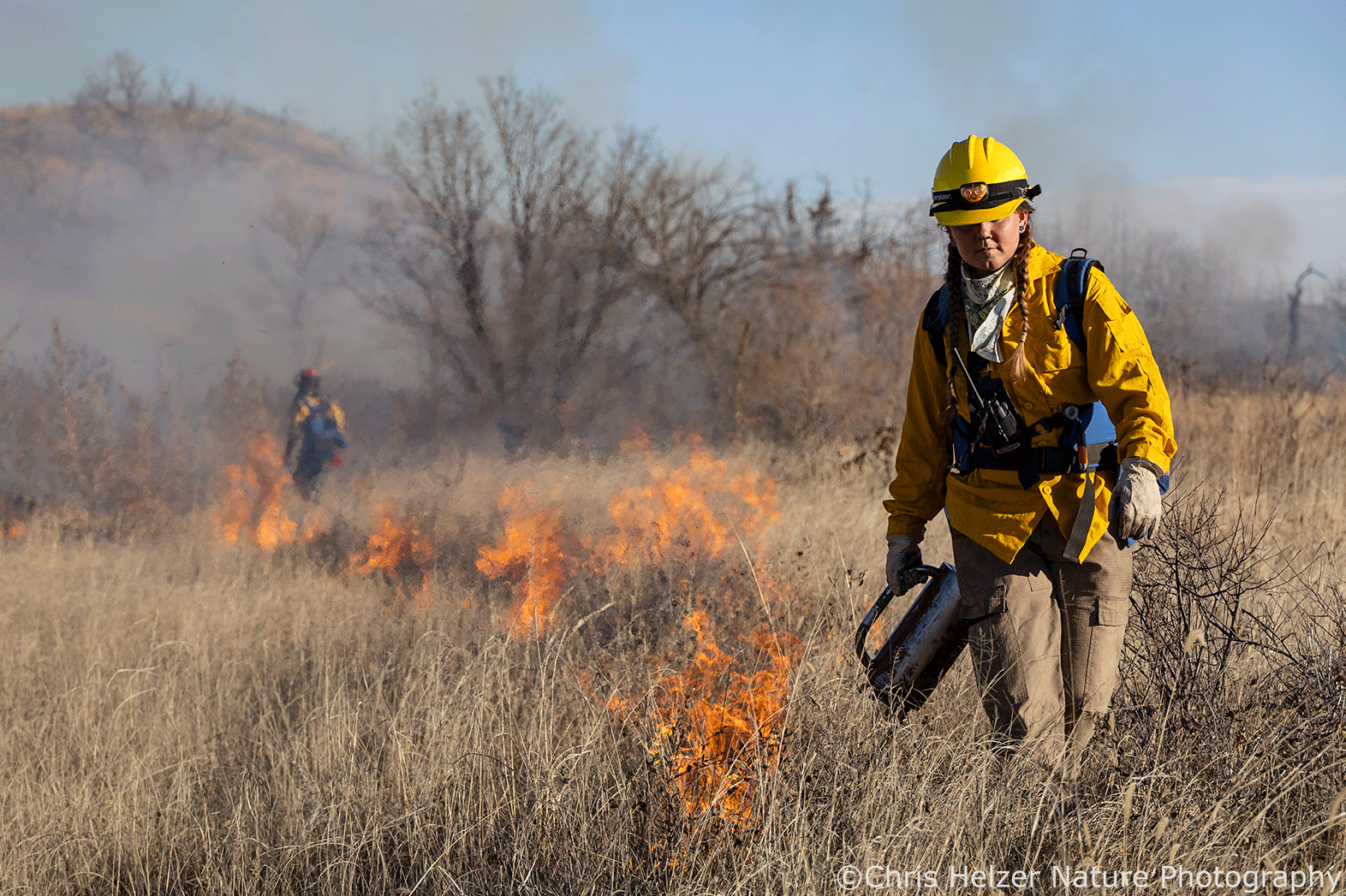
Chelsea Forehead ignites a prairie that will help keep woody plants from taking over this prairie landscape.

Today, the majority of tallgrass prairie has been lost, of course – mostly through conversion to row crops.  The prairie that remains still relies on continuous, thoughtful stewardship by people.  Without active management with prescribed fire, haying, grazing, and/or targeted invasive species suppression, tallgrass prairie transitions to something else – shrubland, woodland, or a low-diversity herbaceous community that no longer qualifies as “prairie”.

Does that reliance on people make tallgrass prairies unnatural?  Does it mean we should “let nature take its course” and allow tallgrass prairie to become what it’s supposed to become? 

You’re welcome to form your own opinion, of course, but I feel strongly that the answer to both questions is no.  Most ecosystems on earth are strongly tied to human stewardship and have been for tens of thousands of years.  It’s not that those ecosystems or the species that depend upon them would all be destroyed in the absence of people, but they’d change dramatically – and many species would suffer as a result. We humans have certainly not always done the best job at land management but that doesn’t mean we can or should abdicate our responsibility as stewards.

Speaking more locally, prairie is amazing, beautiful, and complex.  The incredible, diverse ecological communities that live in tallgrass prairie rely upon our continued attention and stewardship. Losing those would be an immense tragedy.
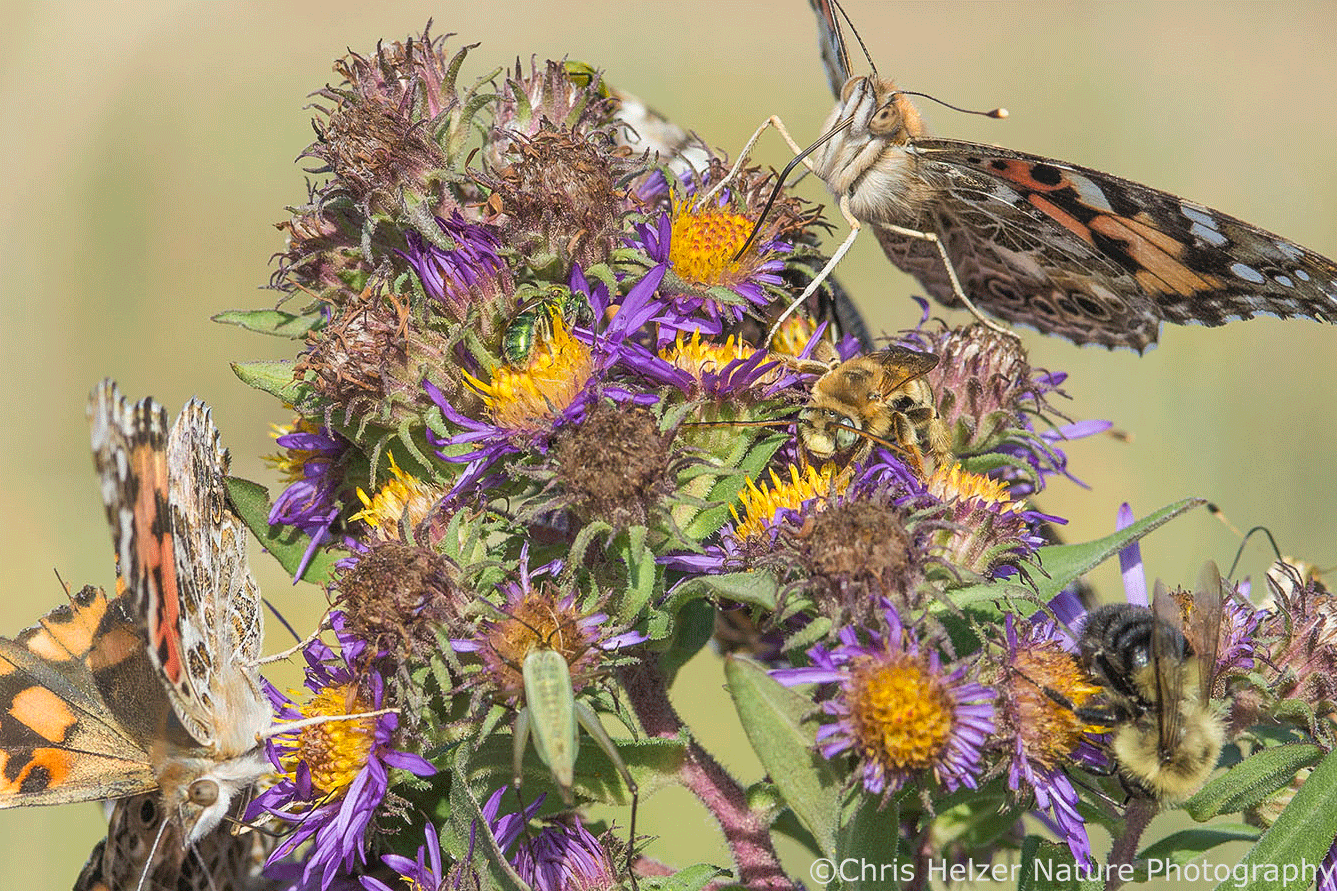
This photo captures the essence of prairie. The more you look, the more you see.

Tallgrass prairie isn’t less important, natural, or real because it relies upon humans.  Instead, our long-standing, interconnected, and interdependent relationship with the prairie should increase its relevance and value to us. 

Just as with any other worthwhile relationship, though, we can’t just ignore the prairie and hope for the best.  Only thoughtful, adaptable care will ensure we can keep this good thing going for a very long time.

Additional Reading. If you want to learn more about the long relationship between humans and nature (prairies and otherwise), here are a few recent journal articles you might enjoy. They’ll get you started and provide many other references you can dig into if you want to keep going:

Impacts of indigenous burning in the Great Plains

Presence of people after the North American ice sheets receded

The shaping of global ecosystems by people for more than 12,000 years
Hubbard Fellowship Blog – The Nature of Human Intervention

This post is written by Eric Chien, one of our Hubbard Fellows.  Eric has a solid background in land management and apparently thinks quite a bit while he’s doing stewardship work.  Here are some of his latest thoughts – I think you’ll find them thought-provoking.

What if I told you our most resilient prairies will likely experience burning, mowing, cutting, shredding, chemical spraying, and fencing for decades to come? Among splendidly diverse native wildflowers and grasses, and a rich assemblage of insects, birds, herps, and mammals, there will be the consistent imprints of boot tread in the soil. The sounds of wind-blown grass, and meadowlarks will be occasionally interrupted by the clamor of metal and engines. We will know resilience not only by the existence of a vibrant prairie pulsing with life, but also by the presence of a sturdy 4-strand barb wire fence, and a two-track road worn to mineral soil.

Managers know that maintaining the function and diversity of prairies is highly involved work. I think the image of that monumental work is viewed somewhat quizzically by much of the public that has not had an opportunity or guide to understand prairies. The notion of conservation as the process of removing human presence and intervention is still widely circulated. Once removed from the yoke of human imposition, the natural world is supposed to largely perpetuate itself; growing more abundant, diverse, and resilient in its respite. That is the idea at least. My experience on prairies tells me that conservation landscapes characterized by little human presence is a mold not applicable to prairies. It probably has not been for 150 years. Considering the long history of Native American land management, it may never have been. What’s more, the intensive management in prairie conservation is representative of what many of the world’s ecosystems will require to maintain their functions into the future. Decades of prairie management suggest that we consider ourselves and our presence not as obstacles or crutches to the diversity of life, but as integral drivers of the processes and forces that maintain integrity and functioning of ecosystems.

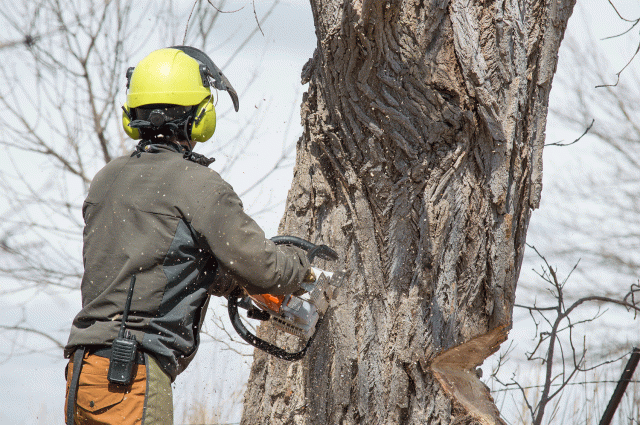
The author cuts down a cottonwood tree on the edge of one of our Platte River Prairies. Photo by Katharine Hogan.

On the prairie, we light the fires, control the grazers, and suppress the invasive plants. In doing so we drive species composition and distribution, habitat heterogeneity, and the presence or absence of ecosystem functions; the most fundamental ecological attributes. Our involvement is not out of hubris, nor does it make prairies an artifice. Science and experience tells us that without our involvement prairies nearly always slip into measurably degraded states, or entirely disappear. Chris has written thoroughly on the science and implications around the myth of the self-sustaining prairie and the reasons why management is necessary. Seeing our new role with clear eyes has important implications for our approach to conservation.

Rather than thinking of ourselves as prairie doctors, we should see ourselves as prairie organs. Organs are not optional, and cannot be removed from the whole when the budget it tight. When we set up prairie conservation complexes we need to consider humans with the same gravity we consider plant diversity. Whether it is land management professionals, volunteer cohorts, or farming and ranching families, thoughtful and capable human managers are as important as the native grass community.

People have been lighting North American prairies on fire since the last glaciers retreated and grasslands emerged as the dominant ecosystem in the Great Plains.

What does recognition of that human importance look like at The Nature Conservancy? Since 1994, standard operating procedure in TNC has mandated setting aside an endowment for every new land acquisition with the principal set at minimum 20% of the fair market value of the land. It is a small but key step in maintaining essential human capacity in our conservation lands. We also strive to recognize human importance by making our conservation work relevant to ranching families. The ecological and management knowledge we seek out strives to reconcile economic and conservation needs. The gold standard in our work are solutions that allow people and nature to thrive. This is not just because supporting human communities is important, but because prairies with deep human presence are healthy, resilient prairies.

If at this point you’re thinking- “This sounds like an overly involved prairie person issue.” I say this- Prairies are likely a vanguard for where many of our natural systems are headed. Our ability to find success as drivers of ecosystem integrity and resilience through active management have implications for the future integrity of countless ecosystem types. Resilience processes in forests, reefs, tundra, and countless other systems are being broken down by ongoing fragmentation, and novel disturbances. There is already a need for us to step in and play a key role in the ecology that reinforces the biodiversity, functions, and services those systems provide. That need is only growing. North American Prairies are a proving ground for our ability to do that effectively.

I hope you consider sharing your thoughts.