
Celebrating Sticky Seeds

Early autumn is a season of surprise and wonder.  Colors are changing and animals are scurrying all around, trying to check off all their pre-winter tasks.  For nature enthusiasts like us, it’s also a great time to appreciate the complex and sophisticated ways plants move their seeds around the world.

For example, there’s the unexpected prick of joy when you accidentally sandwich a heretofore unseen sandbur between calf and hamstring as you kneel down to re-tie your boot laces. 

(I think that’s the first time I’ve ever used the word “heretofore”.  I hope I used it correctly.  I would have used “previously”, but when I typed it out, the spelling looked wrong for some reason.  Brains are funny.)
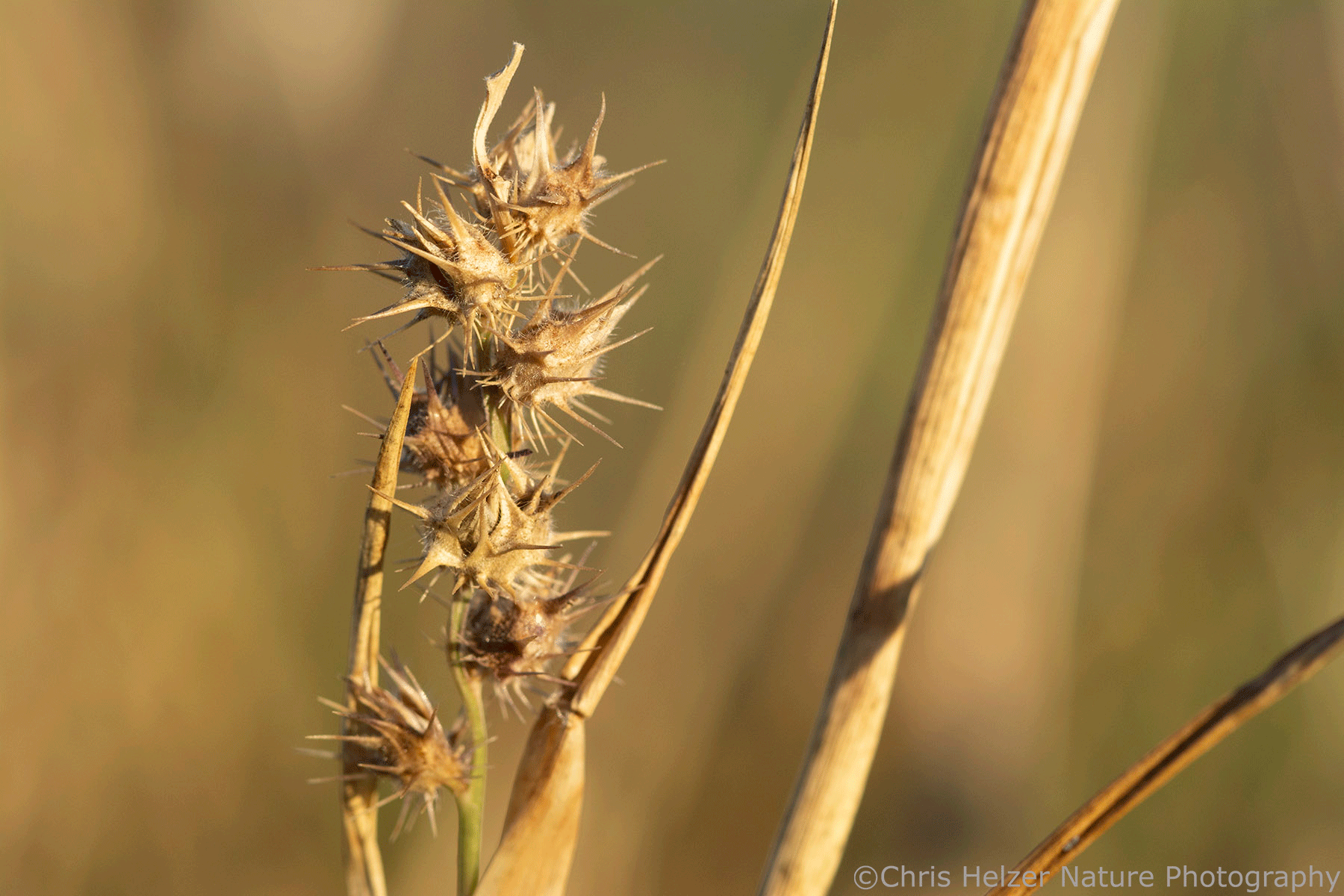
Sandbur (Cenchrus longispinus).

Anyway, upon discovering the sandbur, you immediately stand back up, lick your fingers, and remove it (and its friends) from your pantleg.  As you have so many times, you ask yourself why licking your fingers helps it hurt less when you grab sandburs.  Surely, the surface tension of saliva can’t provide that much protection?  Regardless, seeing and feeling the sandburs is a terrific way to celebrate their particular seed dispersal strategy. Hurray for nature!

After you identify a winding path that will allow you to avoid more nearby sandburs, you step forward – only then remembering that you’d stopped to tie your boots.  That’s when you glance down and realize that your boot laces must have pulled loose when you walked through a patch of cockleburs a little way back.  Now, a cheerful cluster of cocklebur seed pods is tangled happily in your laces like spiny little meatballs in a plate of spaghetti. 

Cocklebur (Xanthium strumarium) along a wetland edge.

As you start to carefully extract the pods from your laces, you can’t help but marvel at the similar, but different architecture of cockleburs and sandburs.  Sandburs, of course have long, straight, sharp spines protruding in every direction from their mostly-spherical core.  Those spines have an impressive ability to penetrate nearly any material.

Cockleburs, on the other hand, have what look like dozens of tiny fish hooks sticking out of their football-shaped bodies.  Those hooks can poke through clothing (and boot laces), but they’re more likely to snag than poke, with the little hooks acting like a bunch of tiny grasping claws.  Of course, if they do manage to penetrate clothing or laces, the hooks also make it much harder to extract them.  It’s a really remarkable design.

The strategies of both cockleburs and sandburs are sure effective, you think, as you continue de-tangling your laces.  Also, it’s fun that both of them have “bur” in their names.  That, of course, brings back memories of learning the difference between burs, stickers, thorns, and spines at some point.  You obviously don’t remember what those differences are now – it’s been at least three or four years since you last looked that up and no one can be expected to retain information that long.  It’s fun to know there are differences, though.

Also, it’s weird that the word bur can be spelled with either one “r” or two.  You know that bur oak is definitely spelled with one, though people do insist on adding that second one, don’t they? 

Apart from the name of that tree, which definitely, always has only one “r”, you recall doing a little research a while back and learning that both bur and burr are considered correct spellings in certain situations.  There are burs that are seed pods and burs that are rough edges on metal and it seems to you that people argue whether those two should be spelled the same or differently.  Ah well, someone will probably figure that out and then people won’t have to argue anymore.

Close up, you can see the tiny hooks on the cocklebur spines (thorns? prickles? poky things?).

Anywell, you finish removing the last cocklebur (surely not cockleburr?) from your laces and leave the pods on the ground – having done them the favor of carrying them to a new potential home.  Isn’t it nice to play a helpful role in the dispersal of seeds?  You’re an actual conservation hero.

Well, hero, as you proceed through the prairie (by the way, you’re walking in a prairie), you take a detour around a big patch of tick clover plants.  You’re no fool, after all.  Tick clovers are beautiful, important wildflowers, but their seeds are like little Velcro packets that are good reminders of where the name “tick” clover comes from.  Taking on the role of a seed disperser is all fine and good, but you’re in charge of fixing supper tonight and won’t have time to both do that and scrape a load of tick clover seeds off your long-sleeved shirt.  A wandering deer will surely do the tick clover dispersal without you needing to become involved this time.

Side-stepping the tick clover takes you along the boundary between the prairie and a small adjacent woodland.  As you walk along that edge, a tentacle appears to lash out from beneath the trees and grabs onto your pants.  Startled, you pull away, but the “tentacle” leaves behind a linear string of small sticky pods.  You stumble slightly over a gopher mound, and as you catch your balance again, your leg is caught by two more of those tentacles, which turn out to be branches of the amazing stickseed plant.
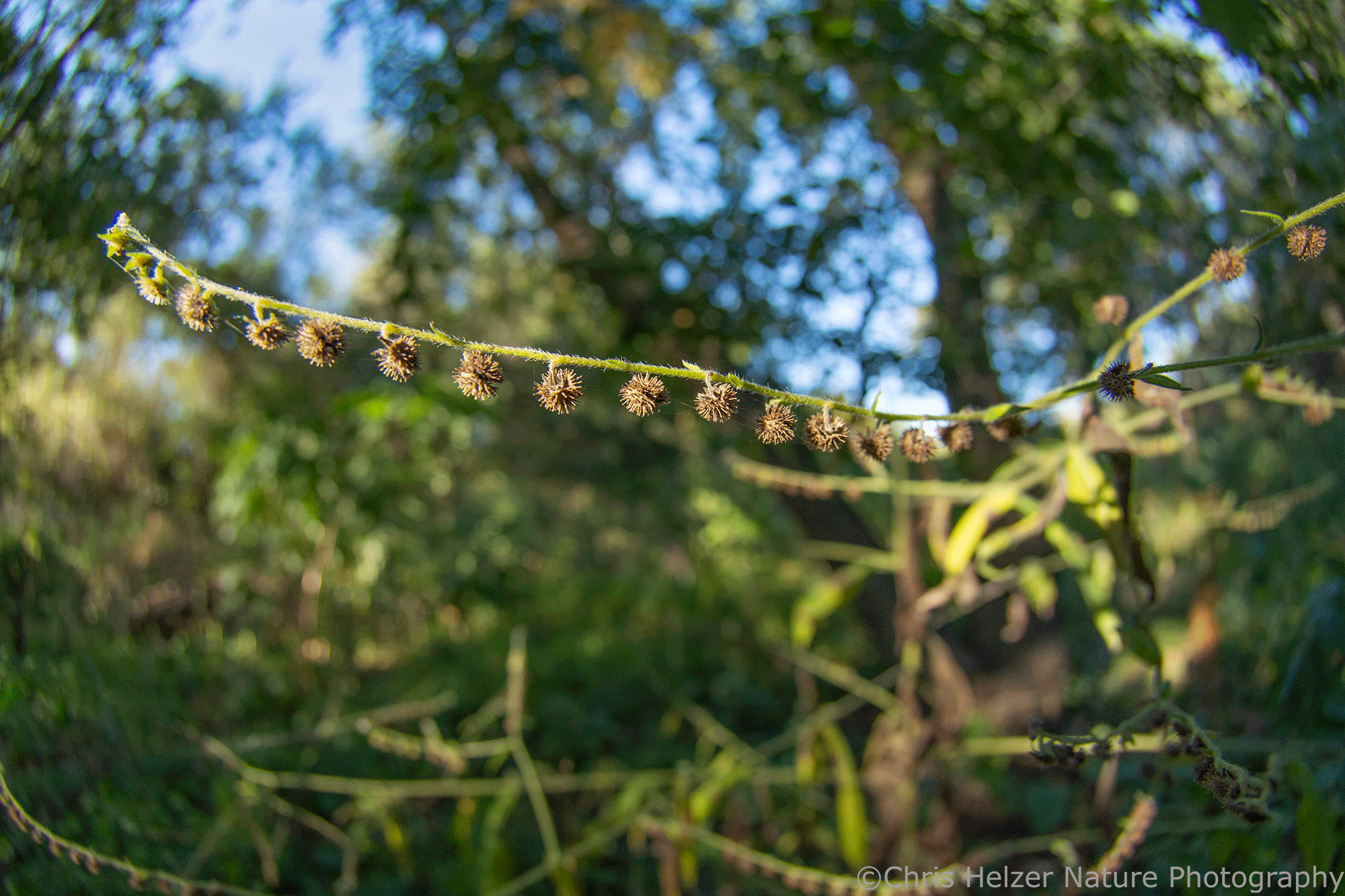
Stickseed (Hackelia virginiana) hangs out mostly in woodlands, at least around here.

Stickseed has an even more descriptive name than tick clover.  The sticky “pods” carried by the stickseed branches are, as you oddly recall, actually clusters of four little “nutlets”, each containing little barbed prickles.  I dated a girl named Barb Prickle in high school, I think. 

I’m joking, of course.  Barb wouldn’t have given me the time of day.

Returning to the present, stickseed and its prickly nutlets are magnificent examples of nature’s innovation.  You know from experience that trying to rub the little nutlets off your pants will just cause them to roll along the fabric, never loosening their grip at all.  It really is a spectacular evolutionary achievement.  Well, you’ve owned these pants for almost four months now, so it was probably time to replace them anyway.  It’s a small (well, medium) price to pay for a front row seat to this lovely demonstration of seed dispersal mastery.

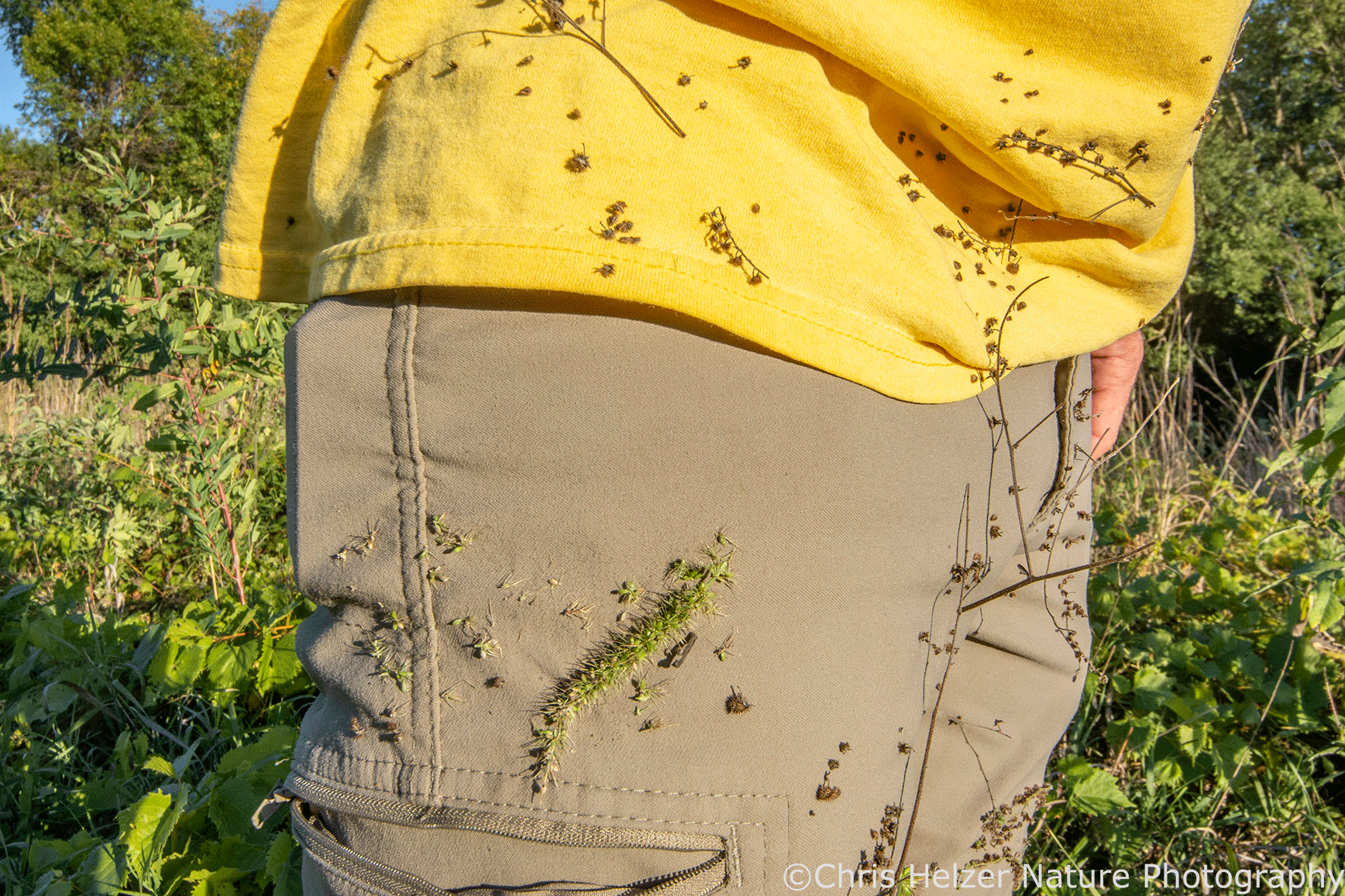
A close up of the nutlets with their tiny barbed prickles.
Stickseed seeds (and a little foxtail) on my hiking clothing.

You manage to pull one of the little nutlets loose to inspect it with the hand lens you always carry on a string around your neck.  Under magnification, the little prickles sure don’t look like they’d be as sticky as they obviously are.  As you’re pondering that, you turn to continue your hike and walk straight into a chest-high patch of tick clover. 

Well, look at that, will you?  The pattern of tick clover seed pods across the front of your shirt is really visually attractive. It’s like a free participatory public art project!  (Hm – the seed pods are not really pods.  What are they actually called?  Loments?  Loment segments? No one knows for sure.)  Either way, it’s loments like this that make you really ponder the awesome power of evolution.
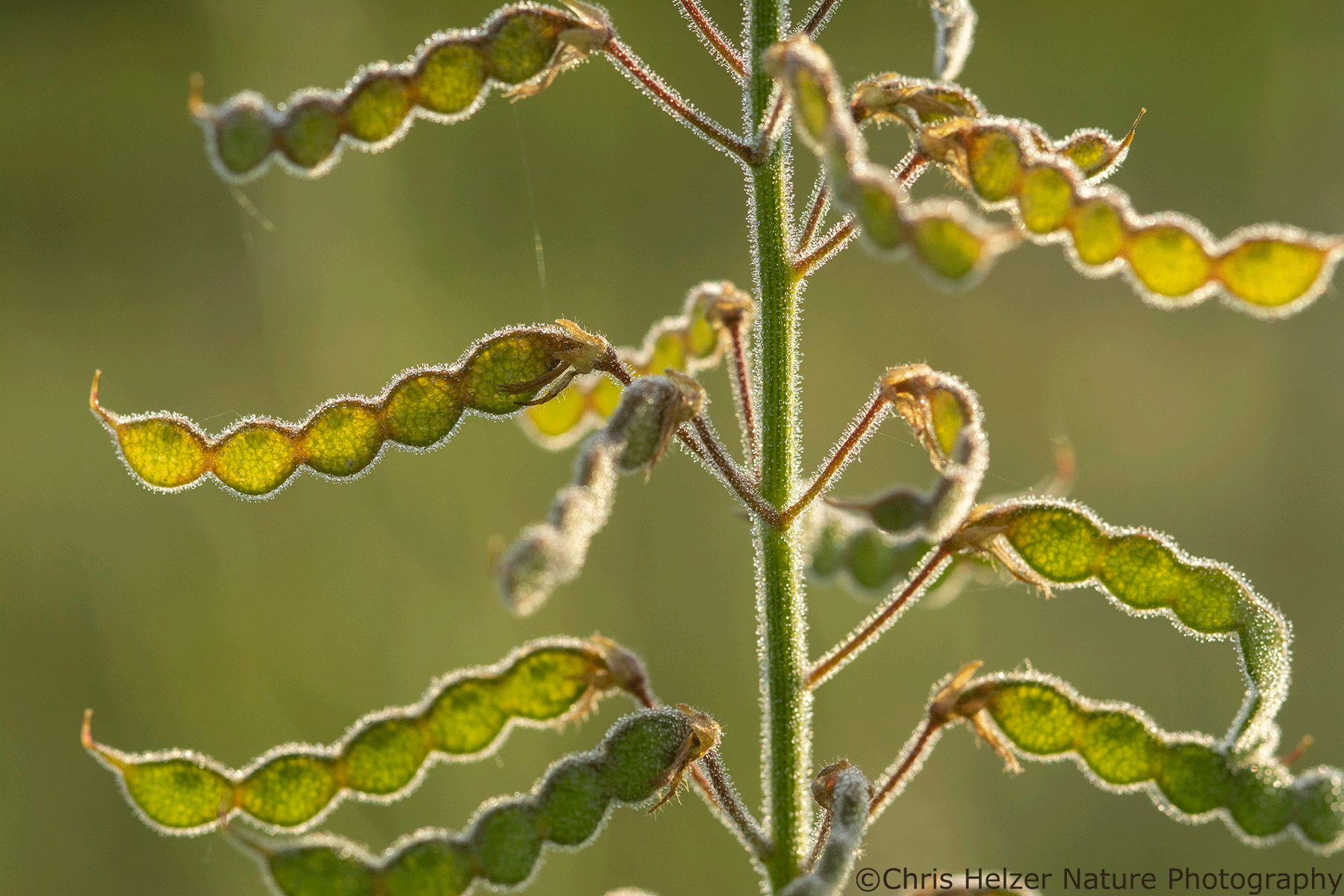
This is Illinois tick clover (Desmodium illinoense) but there are lots of species with very similar sticky seeds (or loment segments).

You’ll have to pull those whatever-they’re-called off later, of course, because any that make it to the laundry will still be attached when the shirt comes out of the dryer.  Except, obviously, for a few that will detach and re-attach in fun, surprising places on other pieces of clothing.  That’s ok, picking tick clover seeds off a shirt later tonight will give you something to do while you’re browsing through the internet for new pants.

Speaking of tonight, look at the time!  All this marveling at the wonders of nature has taken the whole afternoon and you’d probably better get on the road so you can get home in time to make supper.  You’ve got leftover pulled pork in the fridge.  That, some fresh carrots, and a bag of chips will make a pretty nice dinner.  Maybe you’ll even stop at the grocery store on the way home and grab a nice jar of barbed prickles to complete the meal.

What They Don’t Want You To Know About Prairies – Part 1

As someone who spends a lot of time encouraging people to visit prairies, I need to make a shameful confession.  I haven’t been completely honest with you.  This post is likely to get me in trouble with some of my fellow prairie enthusiasts because I’m about to reveal a secret that has been very tightly held within that community.  I apologize to my colleagues, but if we’re going to lure people into prairies, I feel strongly that we should be honest about the true risks involved. 

Prairies might look inviting, but there are some secret truths you should know before you enter.

Those who are leery of wandering off the safety of paved paths tend to be worried about things like spiders or snakes hiding in the tall grass.  Bah!  Most prairies don’t have either spider or snake species that present any threat at all to humans.  If you do visit a prairie where potentially dangerous spiders or snakes live, it’s good to be educated about them, but they aren’t just lurking around, waiting to attack hapless hikers.  They have better things to do with their lives.

However, there are animals in the prairie that maliciously harass and/or assault humans.  Species that seem to have a vendetta against us for some reason.  None of them are life-threatening, I guess, but they’re certainly annoying and I believe we’ve been covering up their wickedness for too long. 

It’s not fair to invite new people to explore prairies without talking about these species and how to repel their attacks.  Some of you are shouting at your phone or computer right now, saying, “NO CHRIS – DON’T DO IT!  Don’t tell them!!  It’s already hard enough to get people to visit prairies!”

Well, I’m going to do it.  I’m going to start by telling the truth about meadowlarks. If I’m subsequently allowed to keep this blog platform, I’ll try to share information on some of the other secretly dangerous species in future posts.

Meadowlarks are gorgeous birds with distinctive black Vs on their bold yellow breasts.  Their melodic songs are emblematic of prairies and rural landscapes and six states have chosen them as their official state bird.  They nest on the ground and can be found in many prairies year-round.  Insects make up the majority of their diet in the summer and they feed on seeds and fruits during the dormant season. 

Blah blah blah.

The real story about meadowlarks is that they are nasty little buggers that slink around in the grass and stab passing hikers in the ankle with their needle-sharp bills.  Do meadowlarks cause serious injury?  No, but not because they don’t want to.  Does it hurt to be stabbed by a meadowlark when you’re enjoying an otherwise peaceful jaunt in a prairie.  Yes, a little.

I was very fortunate to have gotten this photo of a meadowlark stalking its prey (me) without suffering injury. It goes without saying that I was wearing appropriate safety gear at the time.

Fortunately for all of us, meadowlarks aren’t very strong.  If they were, none of us would be safe.  Often, a meadowlark doesn’t get enough momentum on its attack run to inflict significant pain.  In fact, I can’t tell you how many times I’ve been stabbed by a meadowlark without knowing it!

However, don’t relax yet.  The initial pain of a meadowlark strike isn’t the real issue, it’s the itchiness that follows.  Scientists are yet to figure out why a stab from a meadowlark bill causes skin irritation, but I’ve come out of prairies with little red bumps on my ankles that itch for DAYS.  My personal hypothesis is that meadowlark bills are coated with goo from the insects they feed on and that the goo reacts with human skin and makes it itch.  I wouldn’t be surprised if meadowlarks select their prey based solely on which bugs make people itch the most! 

Some of you are reading this and thinking, “this can’t be true!”  I can feel your skepticism as I write these words.  Fine, I’ll prove it to you.  Answer this question – why are the backs of meadowlarks brown and streaky-colored and their breasts bright yellow?  I’ll tell you why.  It’s the perfect design for carrying out their spiteful assaults. 

Here’s how it works.  One meadowlark sits on a perch, displaying its showy yellow breast and singing a beautiful song.  (Scientists think only the males sing but since males and females are identical in appearance, I see no reason to believe that.)  When a nearby hiker stops to admire the singing meadowlark, its partner darts stealthily through the grass toward its unsuspecting victim with only its camouflaged back (barely) visible from above. 

Meadowlarks use their brightly colored breasts and melodic songs as a distraction while their partners sneak up behind unsuspecting victims.

It’s diabolical!  It’s also the only logical explanation for the way meadowlarks look.  They have clearly honed their appearance through thousands of years of evolution for this single dastardly purpose.

The good news is that once you know about meadowlarks you can protect yourself.  With a little advance planning, you can still enjoy a tranquil prairie walk despite these malevolent avian threats.  One easy strategy is to never stop moving when you hear a meadowlark singing, especially if you’re standing in grass more than about six inches tall.  Don’t give that meadowlark’s evil partner any cover through which it can sneak up on you!  If you’re in tall grass and hear a meadowlark singing, just keep walking.

In terms of protective gear, the best option, of course, is chainmail socks, but they can be frustratingly hard to find, even in big outdoor recreation stores.  I suspect, however, that as the truth about meadowlarks spreads, the chainmail sock retail market is going to explode.  (If you’re looking for somewhere to invest your money, I’m not saying, I’m just saying, you know?)

If you can’t find chainmail socks, any other kind of physical barrier you can wrap around your ankles is worth trying.  On days when I’ve misplaced or forgotten my own chainmail, I’ve rubber banded layers of leather gloves or thick cardboard to my lower legs.  I’ve also experimented with various styles of camouflaged pants and socks, hoping meadowlarks won’t be able to find their intended target.  So far, they seem too smart for that.

I’m holding out hope that an effective meadowlark repellant will eventually be developed.  I’ve heard rumors that a small group of volunteers at The Nature Conservancy’s Nachusa Grasslands in Illinois have concocted a liquid spray that works pretty well.  So far, however, I’ve not been able to find anyone who will share the recipe with me. 

Well, that’s the truth about meadowlarks.  If this is new information to you, I hope the revelation doesn’t diminish your enthusiasm for prairie exploration.  Don’t let the meadowlarks win!  There are lots of great reasons to wander around a prairie – it’d be a real shame to miss out just because some streaky-backed little bird is out there trying to stab you in the ankle.

Besides, everything we do comes with some risk.  We don’t let a few garden gnomes keep us from picking tomatoes or stay away from grocery stores just because a shelf of canned goods could fall on us at any time…  Many people even use those crazy revolving doors to enter or exit buildings, though I haven’t personally worked up the courage for that just yet.