2015-2016 Hubbard Fellowship – Apply Now!

We are now accepting applications to join our 2015-2016 class of Hubbard Fellows.  Please share this with anyone who might be interested.
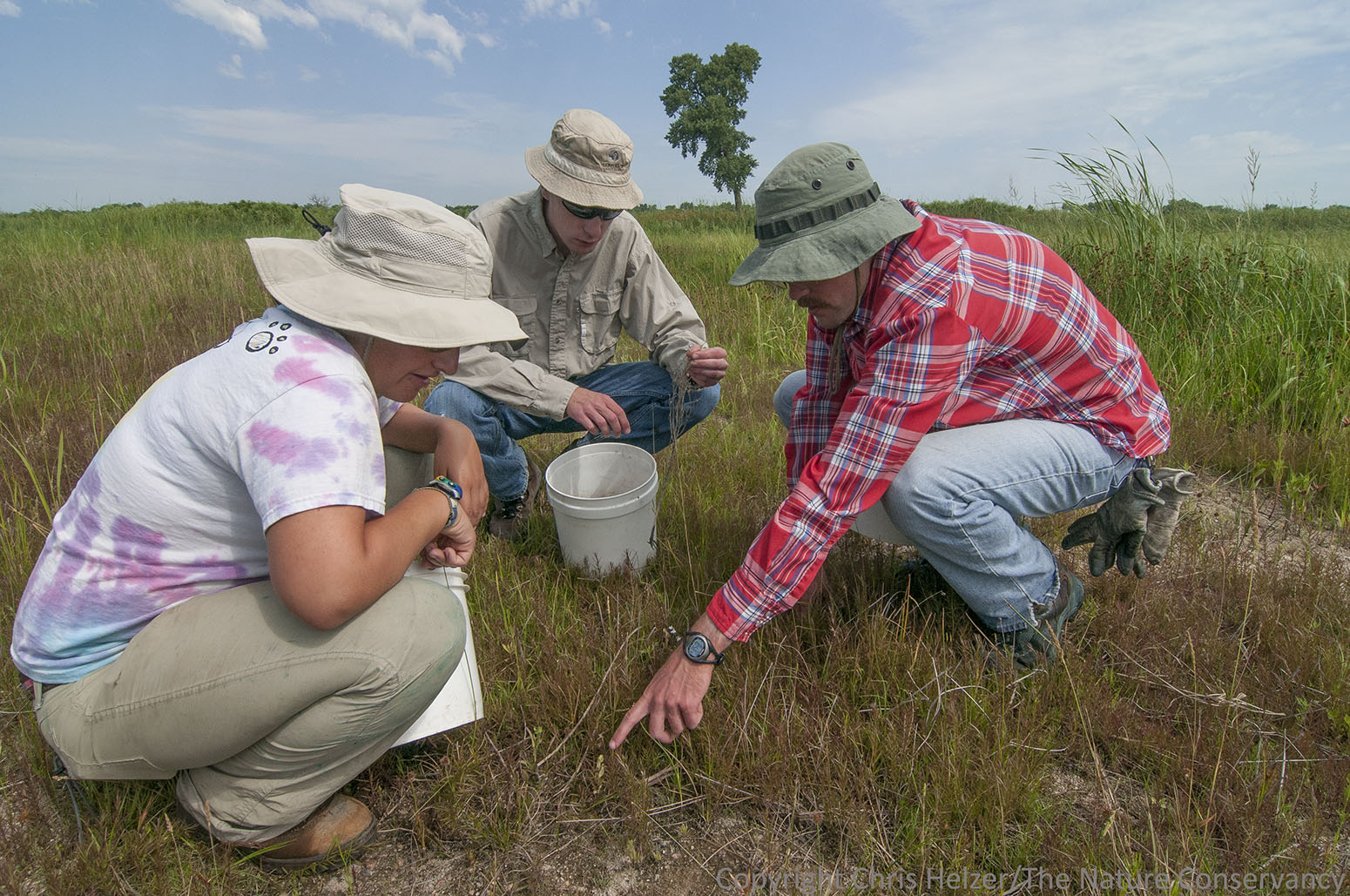
2014-2015 Fellows (and volunteer Sam Sommers) learn plant identification at The Nature Conservancy's Platte River Prairies.

2014-2015 Fellows (and volunteer Sam Sommers) learn plant identification at The Nature Conservancy’s Platte River Prairies.

The Claire M. Hubbard Fellowship Program bridges the gap between school and career by providing Fellows with a broad set of experiences that supplement their college education.  Fellows are employed for a full year by The Nature Conservancy.  During that year, they spend much of their time doing prairie restoration and management, including invasive species control, prescribed fire, livestock management, equipment maintenance and repair, seed harvest and planting, etc.  In addition, Fellows attend a wide variety of conferences and meetings and gain experience with grant writing, marketing, outreach, research and monitoring, budgeting, conservation planning, and much more.  Each Fellow also designs and carries out an independent project that fits their individual interests.

The Fellowship is based at the Platte River Prairies, west of Grand Island, Nebraska, but Fellows also spend considerable time at the Niobrara Valley Preserve and many other sites.  Click here to see this year’s brochure, which includes much more information and guidance for interested applicants.

The Fellowship is open to graduates (by May 2015) of undergraduate and graduate programs in natural resources, conservation biology, or related subjects.  We are looking for highly-qualified, motivated people with strong leadership and communication skills.  Applications are due January 9 and the Fellowship will begin in early June, 2015.

We are extremely grateful to Anne Hubbard and the Claire M Hubbard Foundation for funding this Fellowship Program. 

The Joy of Being a Mentor

I love giving presentations to school kids, but don’t have the time to do it very often.  However, when a former intern asked me to come talk to her class, it was hard to say no.  As a result, I spent a day last week in Utica, Nebraska talking to the high school biology classes of Centennial Public High School.  Their teacher, Kim (Bontrager) Miller was one of two high school interns I supervised back in 1999.

Our 1999 High School Interns, Jeremy Miller and Kim Bontrager.  Jeremy is now a local farmer and Kim is a high school biology teacher.

Our first two High School Interns in 1999 – Jeremy Miller and Kim Bontrager. Jeremy is now a local farmer and Kim is a high school biology teacher.

Between 1999 and 2006, eight different local high school students spent the summer helping us manage and restore our Platte River Prairies – some of them came back for multiple summers.  Kim was part of the first year of that internship program.  Her brother came along a few years later and worked with us for two summers.

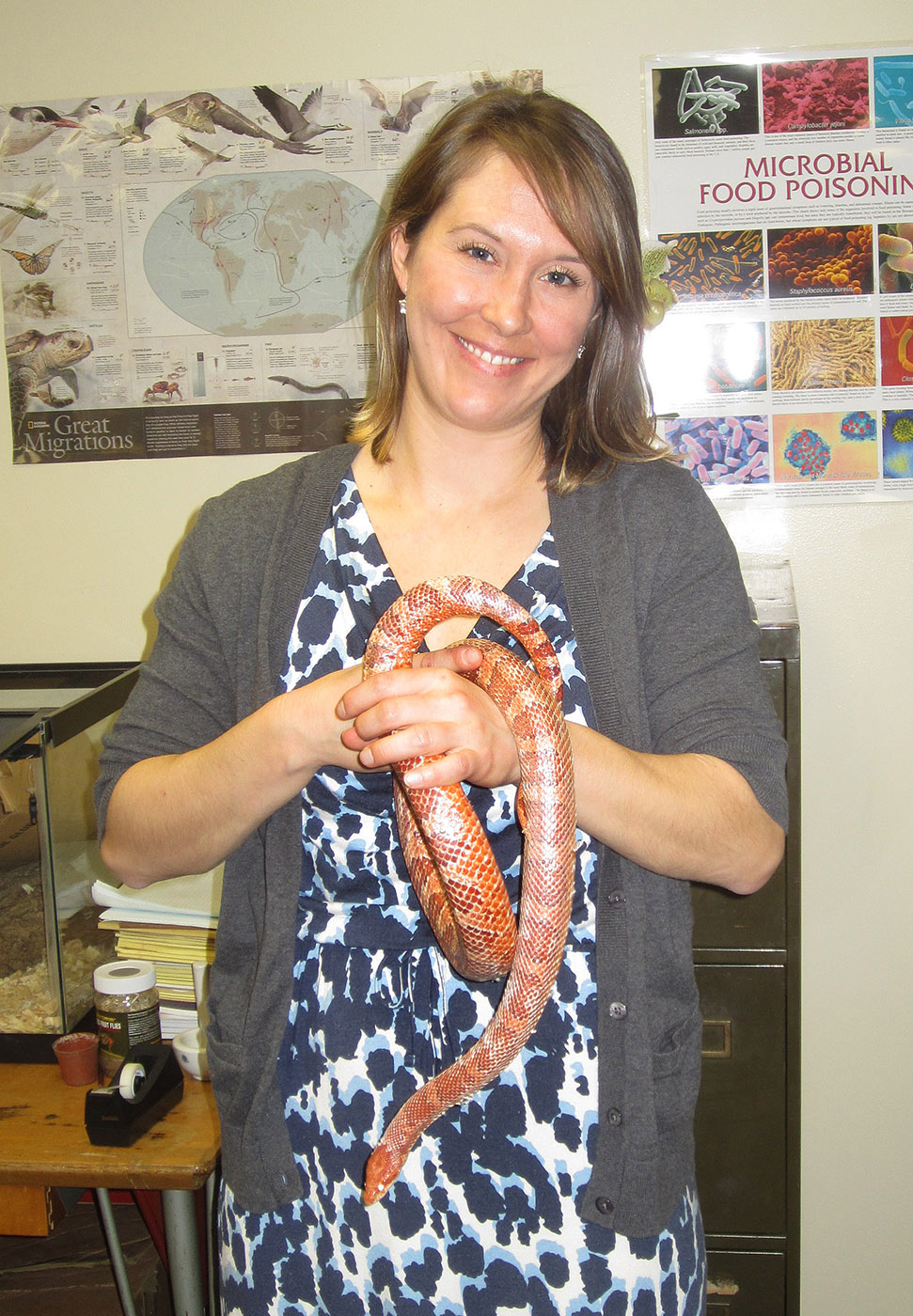
Kim (Bontrager) Miller stands in her Centennial High biology classroom with the class snake.

Kim (Bontrager) Miller stands in her Centennial High biology classroom last week…with the class snake.

It was fun to help Kim teach a new generation of kids about biology and the natural world.  It was also great to see the energy she brings to her classroom, and to watch her enthusiasm rub off on her students.  I’m smart enough not to take credit for the success Kim has found – she’s worked incredibly hard to get herself where she is today.  However, I am proud to have played a small role in the lives of Kim and nearly 70 other interns and seasonal technicians I’ve worked with over  the last 17 years.

Many of those former seasonal staff are now professionals in either conservation or education, but others are farmers, lawyers, and more.  Regardless of their career choice, I hope the time they spent with us helped foster an interest in nature and conservation.  More importantly, I hope they will pass that along to others – just as Kim is doing.

Most of us working in conservation have regular opportunities to interact with students, interns, seasonal technicians, or other young people trying to gain experience and build a career.  It can be tempting to view those people primarily as hired hands who can help us deal with a heavy workload.  However, it’s really important for us to go beyond simply training them to do a task and spend the extra time needed to truly mentor them.  Taking a few minutes out of our day to point out the tracks of an animal, identify a plant, or explain the results of a restoration strategy can mean the world to a young person.  It strengthens their understanding and appreciation of nature, but also helps build a conservation ethic they will keep for the rest of their lives, regardless of career path.

Mentoring is personally rewarding for both mentor and protégé.  More importantly, it’s an essential component of successful conservation.