
I often think one of the biggest issues we face in grassland restoration and management is that we’re a little too stuck in the past. This expresses itself in various ways, but I think it’s a nearly universal issue with everyone involved in prairie ecology and stewardship. To one degree or another, we’re all looking backward. Let me explain.
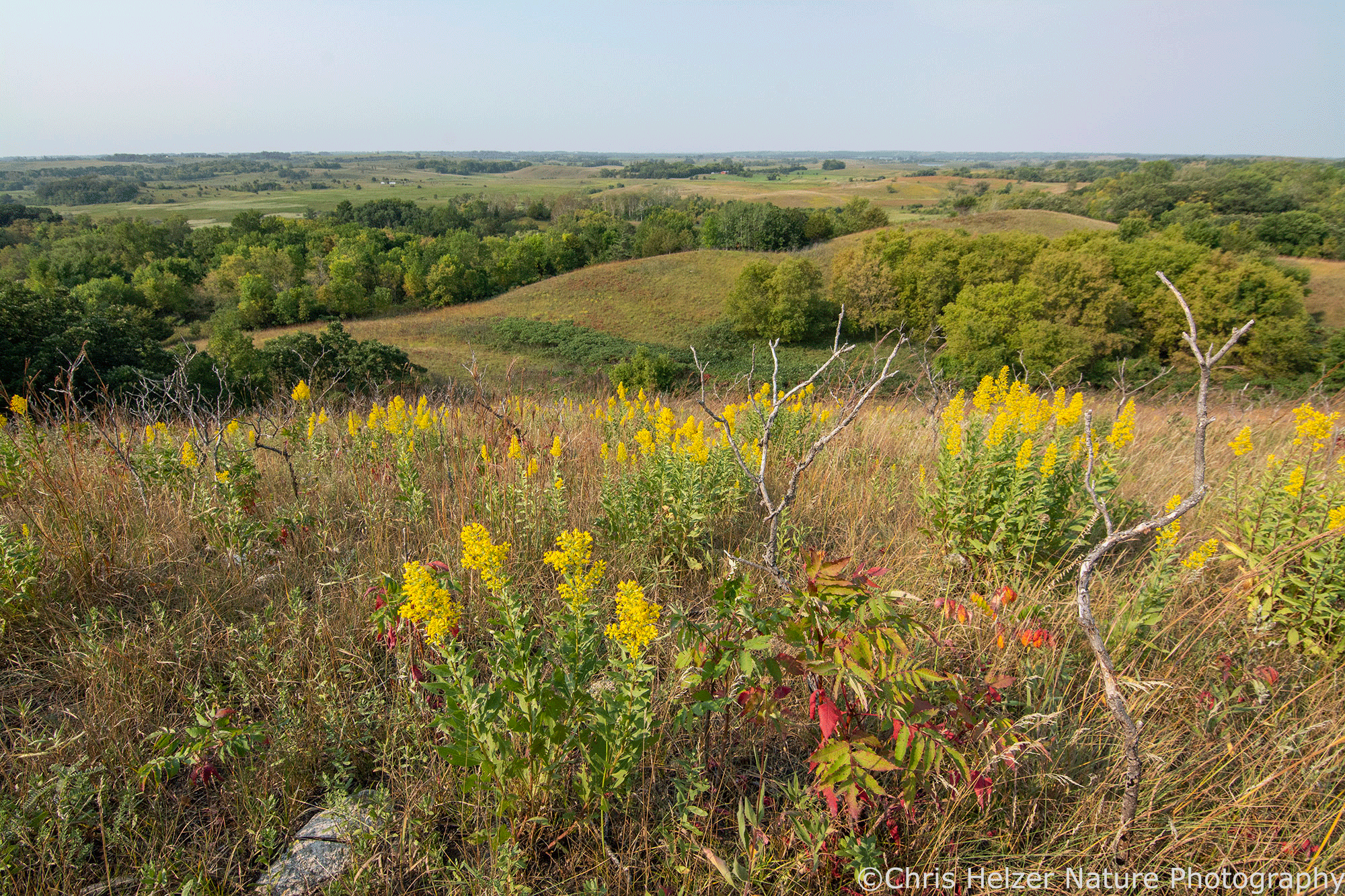
An obvious example of what I’m talking about appears in prairie restoration (reconstruction) when someone’s goal for a prairie planting project is to create a prairie that looks like it used to look a few hundred years ago. I hear this a lot less than I used to, which is good, given the numerous problems with that goal. However, even those of us who claim to be focused on more practical objectives can slip up sometimes. It just feels good to recreate something from the past, especially when the past must have been so great!
The same romanticism for the old days affects our management, too. Regardless of what our plan says (you’ve all got a clear, written management plan, right?), most of us can’t resist glancing around and wondering what a particular site must have looked like “back in the day”. It’s real easy to for the resulting mental pictures to start influencing the way we evaluate the condition of a prairie and the direction we try to push things through stewardship actions. We don’t really think we can get back to what it used to be, and yet…
I see the impact of those “history goggles” all the time, both in my own head and during conversations with other prairie people. One of the more frequent appearances comes during thinking or talking about plant community composition. “Oh,” someone will say, “that wildflower used to be much more common before European settlement.” Or, similarly, “Those grass species never used to be as prominent when these prairies were surveyed in the 1920’s”.
Don’t get me wrong – historic plant community composition can be helpful. It’s nice to know how things have changed because it helps us understand why, or at least helps us ask the right questions. Answers to those questions can guide us as we devise management strategies. Where we get into trouble is when we use past conditions as explicit targets for today’s stewardship.
Our prairies live in a different world than prairies of old. Habitat fragmentation, rising atmospheric CO2 rates and nitrogen deposition, climate change, and invasive species are just some of the major factors that have changed within last century or two. We should expect prairies to adapt to those drastic changes. After all, adaptation is one of their best features!
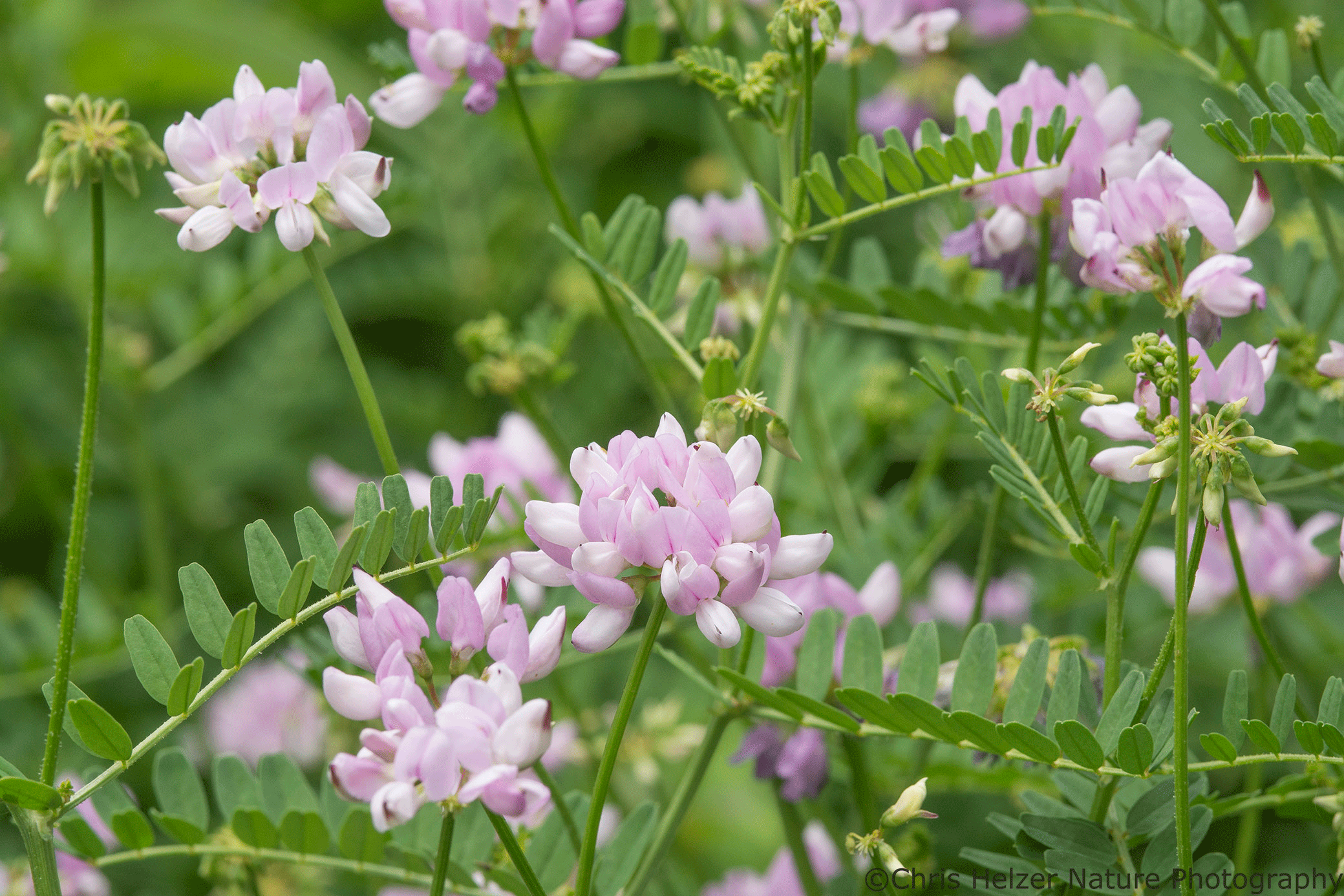
History goggles also come into play when we think about prairie management tools and tactics. How many discussions have you been in that center on the historic frequency and/or season of fire in prairies? As with plant composition, understanding when and how fires burned in the past can be helpful, but yesterday’s fire frequency shouldn’t automatically be today’s fire frequency. See above for some of the major differences between historic and present-day prairies.
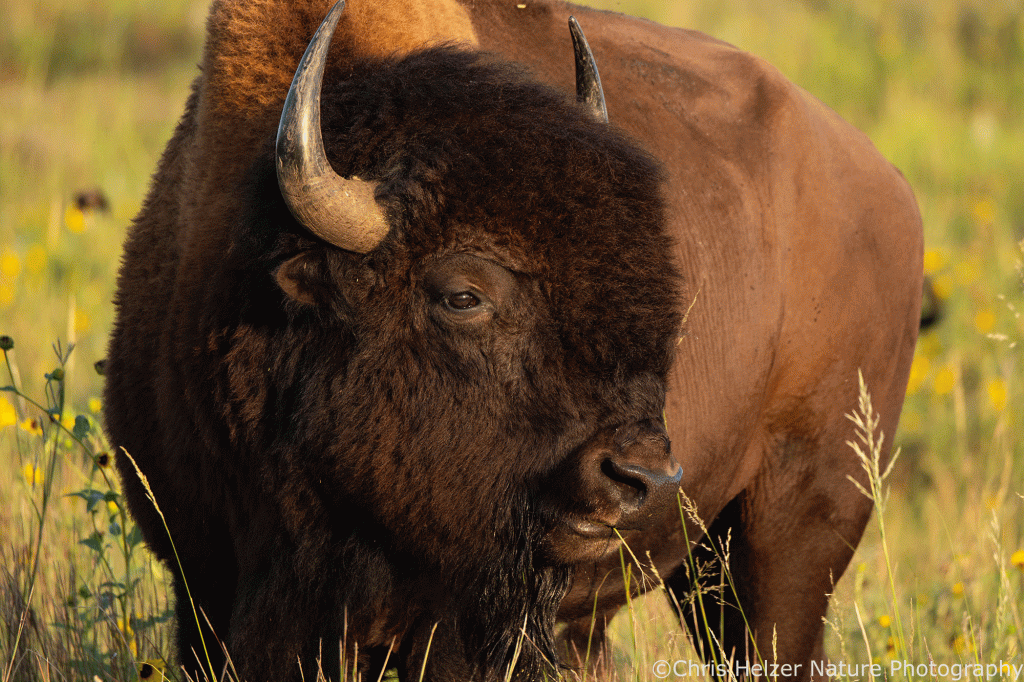
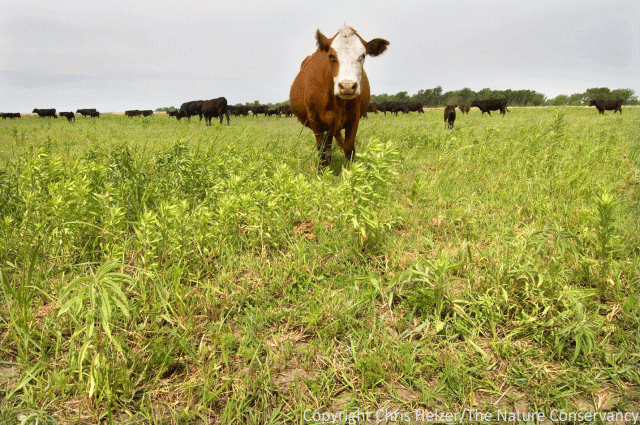
People who apply grazing to grasslands often wear very thick history goggles. If I had a nickel for every time someone’s tell me their particular grazing strategy mimics what bison used to do, I’d be swimming in nickels. I don’t want to swim in nickels. Even if your approach somehow perfectly mirrors what bison used to do (and it doesn’t), why would that be the best approach for today’s prairies, which aren’t what they used to be? That applies, by the way, to whatever grazing animal you’re working with – including bison.
There are lots of great reasons to put bison in prairies, cultural, ecological, and otherwise. Expecting them to eradicate smooth brome and reverse climate change, though, is going to lead to some big disappointment. That doesn’t mean bison (or cattle, for that matter) can’t play important roles in today’s prairies. In many grasslands, especially larger ones, they can manipulate habitat structure, combat the dominance of grasses, and create lots of wonderful messiness. They can’t (or won’t), however, turn back the clock.
We’ve got to cast off our history goggles and look forward if prairie conservation is going to succeed. Restoration and management strategies need to be built on creating future prairies, not past ones. That’s an uncomfortable, even scary, prospect though, isn’t it? We don’t have any reference points in the future, after all. It’s easier to look back (or guess) at what used to be and try to aim there.
I don’t have the answers to this dilemma. I do have ideas.
Prairie communities really are good at adaptation. Because of that, I think we should be looking for ways to facilitate and guide prairies as they adjust to new conditions. One way to do that is to help them maintain the resilience they need to adapt. We do know something about how to do that. (Remember, ecological resilience doesn’t mean natural communities don’t change. Instead, it’s a measure of their capacity to adapt.)
The ecological resilience of prairies relies heavily on two factors: habitat size/connectivity and biological diversity. The first helps the second persist and the second provides the redundancy of function that means there are species to fill crucial roles no matter what’s a prairie has thrown at it. Making prairies bigger and better connected comes through restoration (reconstruction) efforts that build new grassland habitat adjacent to and between existing habitats. We have lots of evidence that prairie species respond well to that kind of restoration.
There are lots of thoughts about how to manage for biological diversity in prairies, many of which seem to work well. There isn’t a single best way to do it, and the effectiveness of practices and approaches can vary by geography, soil type, prairie size, and many other factors. The key is to focus on the diversity of the plant community, as well as the more difficult to measure communities of animals, fungi, bacteria, and others.
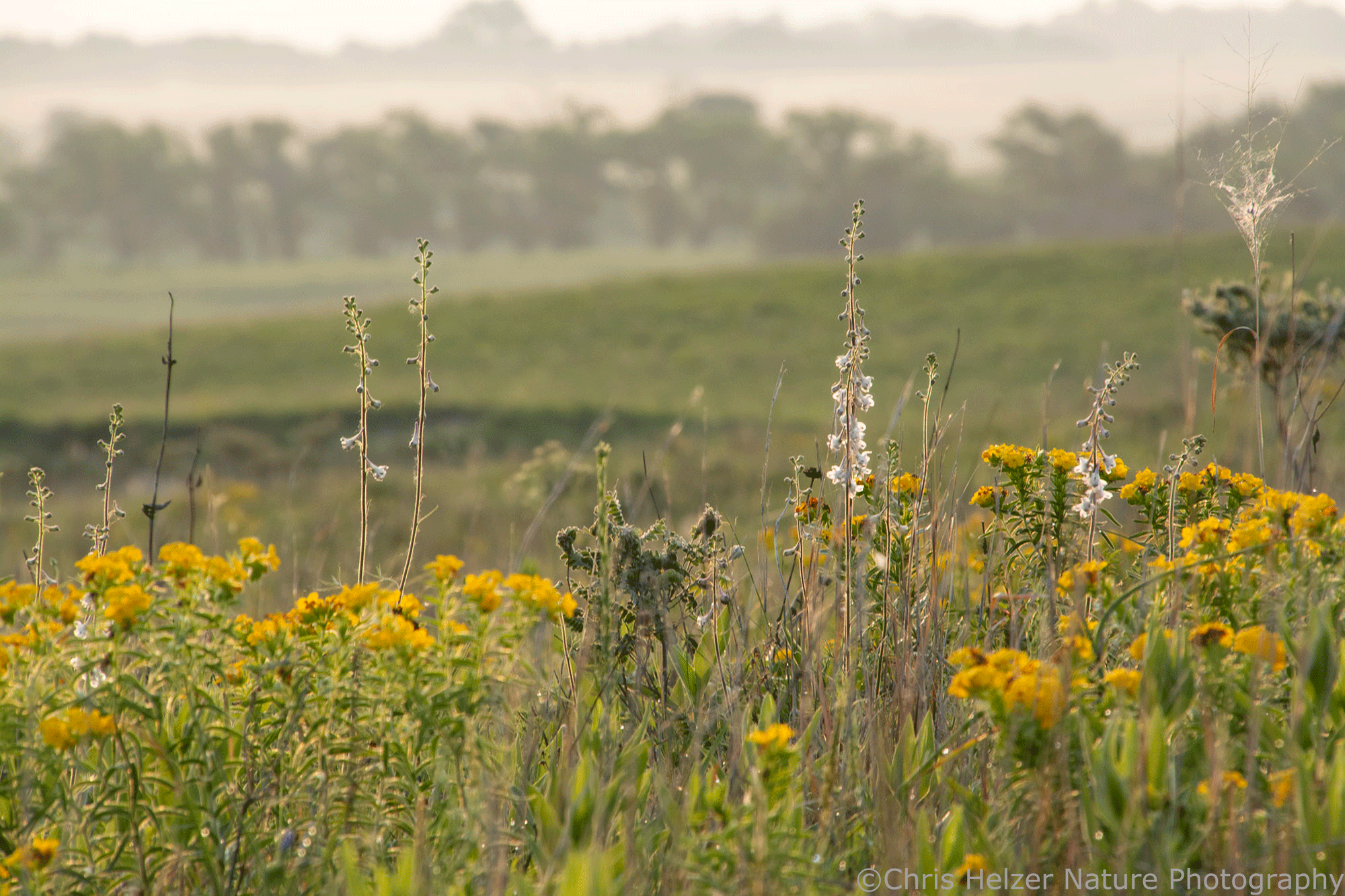
This is where I think it’s most important to push past our reliance on history. It’s tempting to judge plant species, for example, by whether we think they used to be part of the plant community at a particular site, or how abundant they might have been. We’re getting to the point where that may not be very relevant anymore. That includes non-native plants, by the way.
Now we’re getting into really uncomfortable territory for some folks but let me be clear that I’m not proposing we stop preventing the appearance or spread of all non-native plants in prairies. What I am proposing, however, is that the native or non-native status of plants might not be the best metric to apply. Many of us have already started down this path by looking at natives like Canada goldenrod, for example, as a species that can be problematic if it’s allowed to run rampant. Why do we care? Because in some places, it can become dominant enough that it suppresses the diversity of the plant community. That’s a bad thing for ecological resilience.
Non-native plants that have the same potential to suppress diversity need to be targets for management action. However, some non-native plants don’t suppress the diversity around them – they add to it. I think that’s ok. The immigration of new species into prairie communities is inevitable, so fighting it seems fruitless.
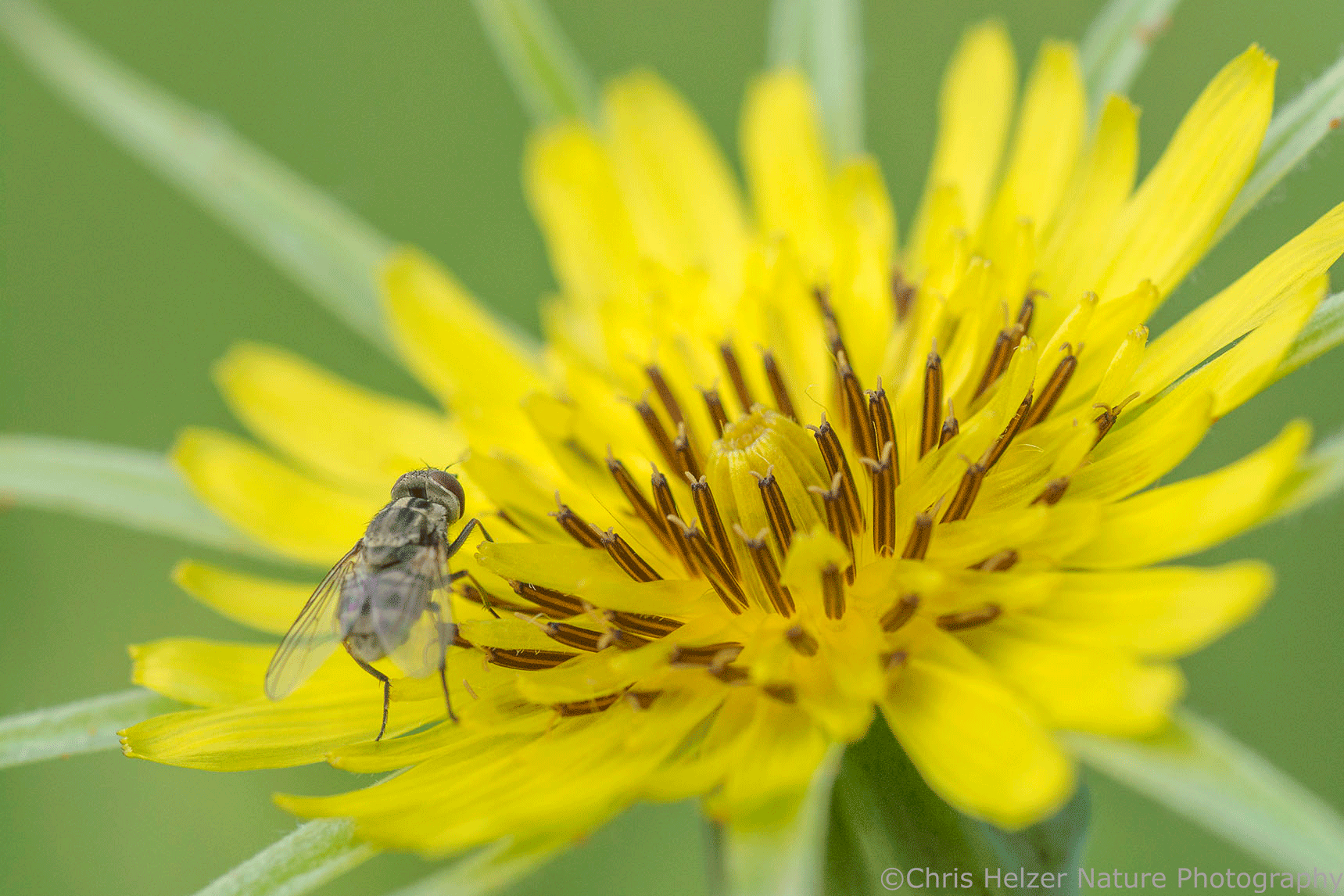
In many places, woody plants – native and non-native – are becoming more abundant in prairies. Their success is driven largely by rising CO2 levels, which prairie managers have no control over. That means that in some cases, we’re just going to have to figure out how to manage for biodiversity in shrubby prairies. We don’t know enough about how to do that yet. Instead of pouring all our limited resources into resistance, we’d be smart to start learning about how to manage the height and density of shrubs and see how plant and other communities respond.
I could go on, but I think the key point is that focusing on ecological resilience, and thus biological diversity, gives us a target to aim for as we look forward. We can evaluate the success of our management strategies by whether they lead to increased or decreased plant and animal diversity. If our prairies are maintaining their diversity, they should have a good chance at adapting to whatever is thrown at them.
It’s hard to turn away from history as our reference point for success. You know what else is hard? Failure. It’s frustrating to try and try to restrain prairies from moving away from what they used to be. Why are we subjecting ourselves to that frustration? Let’s see if we can learn how to support our favorite ecological communities as they flex their adaptation muscles and find ways to thrive in this new world.
 The Prairie Ecologist