Photo of the Week – May 30, 2014

I made another trip up to Griffith Prairie last week.  It looked pretty much as it had the week before – still lots of ragwort blooming –  but the photographs I returned with were very different.  This time, I came home with a bunch of photos of dumb invertebrates.

(I don’t mean that invertebrates as a group or concept are dumb, rather that the particular individuals I photographed seemed not to be very smart or savvy.  I’ll explain in a minute.)

Since I’d spent quite a bit of time photographing landscapes on my previous visit, I decided to put my macro lens on the camera and look for insects this time.  It was immediately clear that the long winter had dulled my insect photography skills…

First, I had to get my brain refocused on the idea of finding small creatures.  That part actually came back fairly easily.  Second, however, I had to work on my approach once I spotted those small creatures (come in low and slow).  I started by tracking some damselflies that were flitting just ahead of me as I walked.  I’d wait for one to land, then creep slowly toward it.  Unfortunately, just as I’d set my tripod down and lean forward to focus, the damselfly would fly about 2 feet further away and I’d have to repeat the whole process.  That highlighted the third aspect of insect photography I had to recapture… patience.
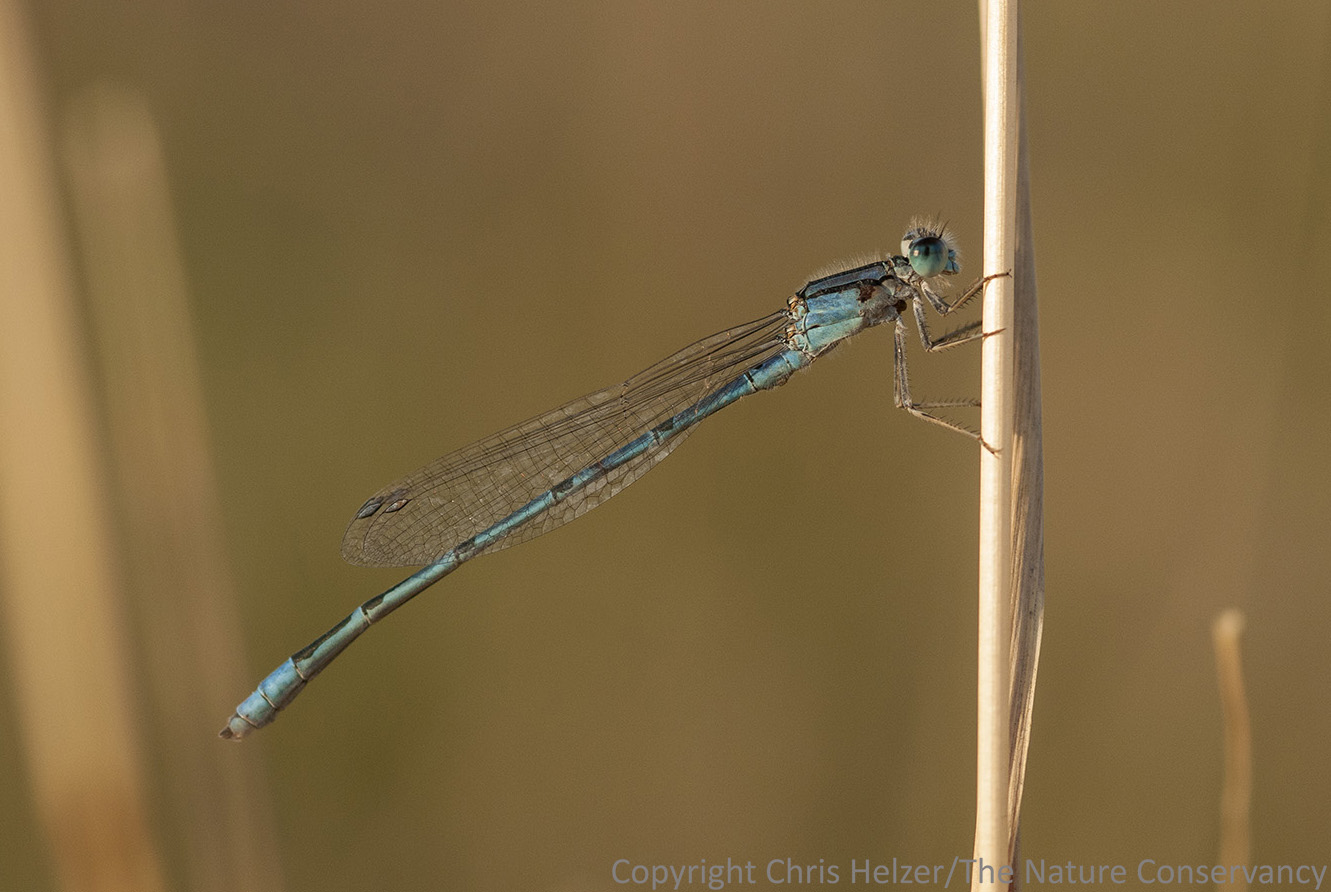
This was not the first damselfly I tried to photograph...just the one that finally let me get close enough to get a picture of it.

This was not the first damselfly I tried to photograph…just the one that finally let me get close enough to get a picture of it.

I did finally manage to get a photo of a damselfly.  I think it was a matter of following several different ones until I found one that wasn’t as skittery.  Of course, that’s probably a bad sign for the potential survival of that individual damselfly, since skittery is a good tactic to avoid predation.  I often wonder whether the insects I photograph are the ones that are not long for the world…

This returns us to the “dumb insect” topic.  Do you suppose smart insects look different from dumb ones?  I’ll probably never know because the only invertebrates I can photograph are the ones that are too dumb to run, jump, or fly away!

Here is a selection of some of the invertebrates that hung around on ragwort flowers long enough for me to photograph them last week.  I wish them the best, of course, but I’m not optimistic about their long-term survival…
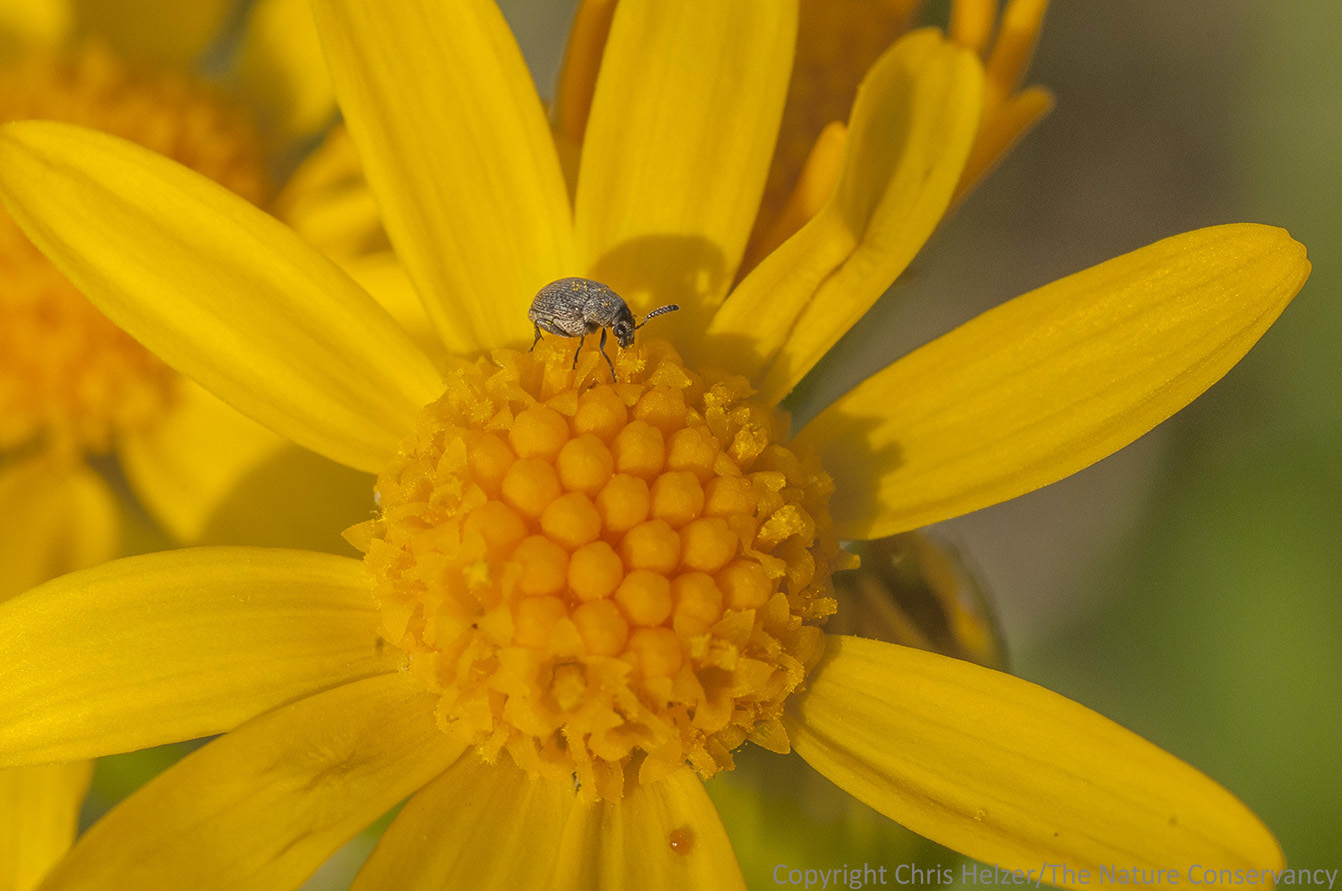
This tiny beetle was on several ragwort plants.  Most of the beetles turned away or jumped to safety when they saw me coming, but this one didn't.

This tiny beetle species was on several ragwort plants. All of the other similar-looking beetles turned away or jumped to safety when they saw me coming, but this one didn’t.  It appeared to be enjoying its pollen dinner too much to bother running away.  It’s probably inside a bird or spider by now.

.

Not a very smart little fly...

Not a very smart little fly…

.

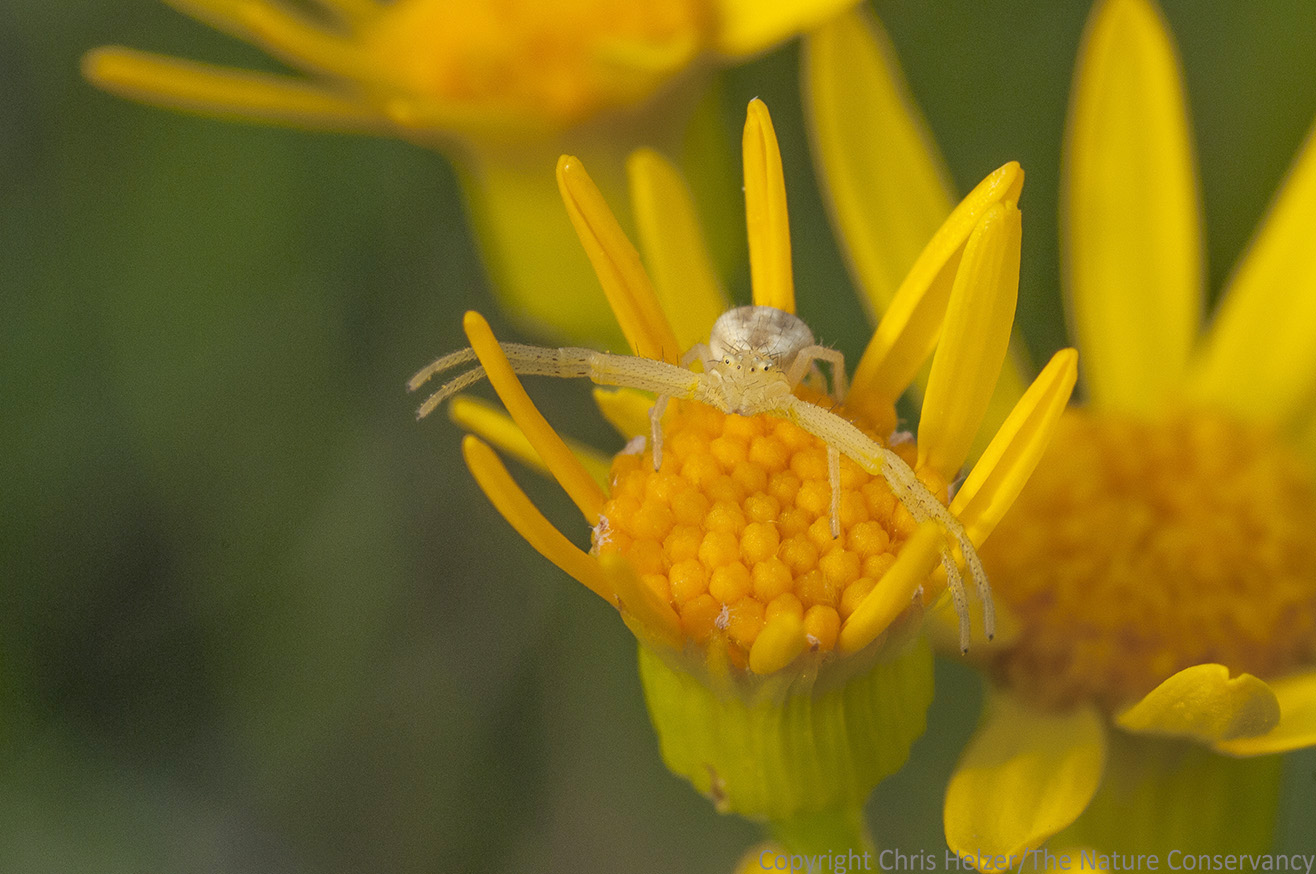
I must have seen two dozen crab spiders before I got this photo.  All the rest of them crawled beneath the petals when I approached, or dropped to the ground if I kept coming.  This one just sat there.

I must have seen two dozen crab spiders before I got this photo. All the rest of them crawled beneath the petals when I approached, or dropped to the ground if I kept coming. This one just sat there.

.

I got several photos of various individuals of this bug species (a true bug - Hemiptera).  Maybe the whole species is not so smart?

I was able to photograph several individuals of this bug species (a true bug – Hemiptera). Maybe the whole species is not so smart?

It was pretty neat to see the diversity of insects and other invertebrates using this one species of wildflower.  There were quite a few more than I’m showing here because most of them didn’t stick around long enough to be photographed (the smart ones).  I’m grateful to those that did.

…and I bet there are some grateful predators out there too.
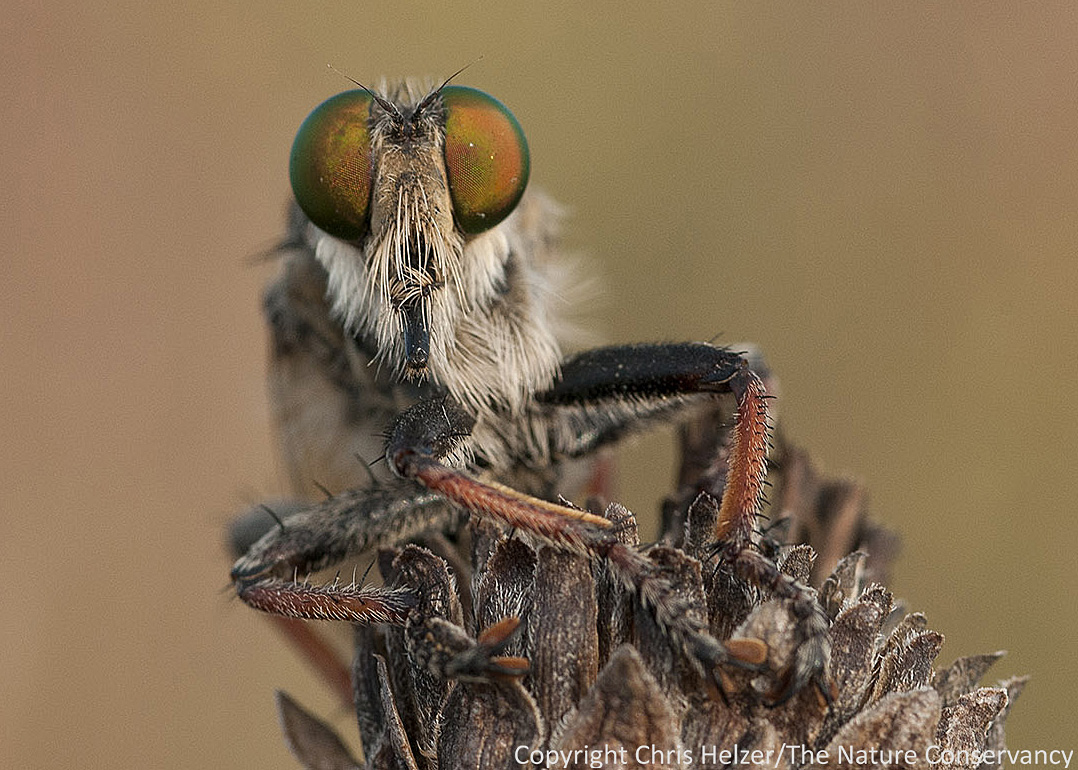
Photo of the Week – October 3, 2013

I found this robber fly perched in the prairie early Monday morning.  Although it was fairly breezy, the light was good enough to attempt a photo.  I’m glad I decided to give it a try.

Robber fly.  The Nature Conservancy's Platte River Prairies, Nebraska.

Robber fly. The Nature Conservancy’s Platte River Prairies, Nebraska.  You can always click photos to see a sharper version.

Ten years ago, I wouldn’t have even considered attempting this photo.  When I was shooting with slow speed slide film, I loved the saturated color of Fuji Velvia, but every time I clicked the shutter it cost me about 34 cents in film/processing.  That kind of cost made me pretty leery of trying to photograph something like a flower that was blowing around in the wind.  A shot that came back blurry because the subject was moving too fast cost me just as much as a nice sharp image, so I couldn’t afford to “miss” very many times.  I would often take 3-4 versions of the same shot to make sure I got the exposure and focus correct, but even that was costing me about a dollar per good image.

This week, I photographed the above robber fly for about 5 minutes.  Within that time, I took 162 images.  The vast majority of those were blurry because the wind was swinging the fly and its perch so much I couldn’t focus and shoot fast enough to keep up.  I ended up with only a few sharp images in three different compositions.  Ten years ago, taking 162 photos would have meant about four and a half rolls of slide film and would have cost me about $44.  This week, it just meant I had to sort through 162 images to find the good ones – something that took just a few minutes.

Digital photography can sometimes make me a little lazy because it’s tempting to let some of the fundamentals of exposure and composition slide and try to fix things later with digital processing and cropping (though I usually don’t do much of that, and there’s still no substitute for getting it right in the field).  On the other hand, digital photography allows me to take risks that would have been unthinkable (or at least really expensive) in the old days.  Blurry photos don’t cost a thing now, and can often be deleted in the field.  Just as important, I can make sure I’ve got the shot I want before I leave, instead of discovering it days later when my slides come back from being processed.  Overall, it’s a pretty good time to be a photographer.

Just for fun, here are some of the other images from the brief photo session with the robber fly.

This one ended up relatively sharp...

This one ended up relatively sharp…

.

...but I had 30 more that looked like this.

…but I had 30 more that looked like this.

.

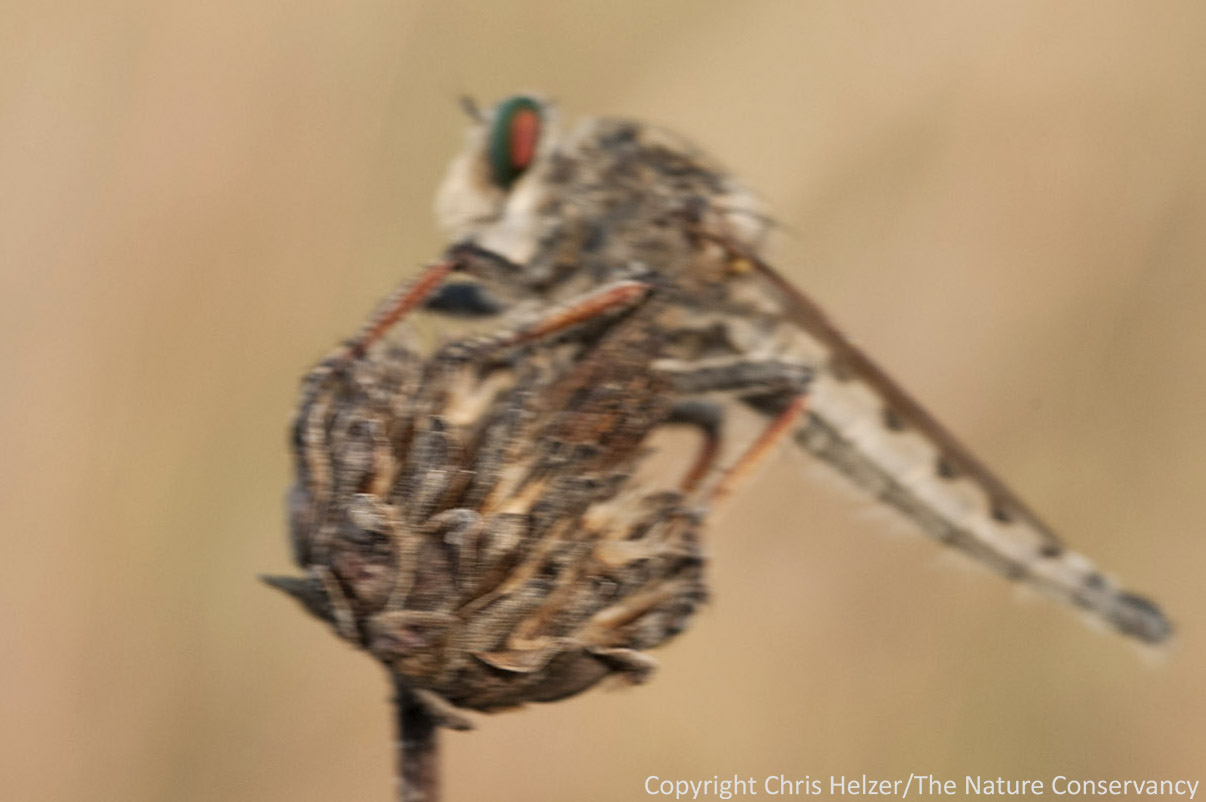
This one (like many others) was pretty fuzzy...

This one (like many others) was pretty fuzzy…

.

...but this one isn't too bad.

…but this one isn’t too bad.

.