Photo of the Week – October 1, 2015

This has been a week of big black spiders.  …In a good way.

First, my wife brought home a huge black wolf spider one of her biology students caught.  It stayed the weekend, and my stepson helped me photograph it on Sunday.  Later this week, I found the biggest jumping spider I’ve ever seen just outside the house at our Platte River Prairies field headquarters.  I had to photograph that too, of course…  Here are some of the photos of those spiders, and a little bit about how I got them.

Big wolf spider. Aurora, Nebraska.

A big wolf spider (Hogna aspersa).  Including its legs, it was about as long as a lip balm container.

Another look.

Another look.

To photograph the wolf spider, I utilized a long-standing technique of mine.  Some of you might remember a previous post I wrote about using a wheelbarrow as a wildlife photography studio.  I brought out the same wheelbarrow again for this spider, but had my stepson assist me by holding a diffuser (to soften the bright sunlight) and helping to keep the spider from getting away.  Having an assistant made the job much easier, though also much less humorous for any potential observers of the process.  (Though I’m still pretty sure my neighbors are keeping their eyes open for houses in better neighborhoods.  Between the pile of garter snakes beneath our backyard snake board and the giant hairy spider in our wheelbarrow, we’re not exactly everyone’s picture of the ideal neighbor!)

Atticus was a big help, both diffusing the light and keeping the spider contained.

Atticus was a big help, both diffusing the light and keeping the spider contained.

When I first saw the jumping spider, I was talking with our Hubbard Fellows and waiting for someone to meet us at the house.  It was perched on a Maximilian sunflower plant in the prairie garden.  I put it in a paper bag until I had time to look more carefully at it.  Later, I took the top of the sunflower plant the spider had been on, cut it off, stuck it into a pocket gopher mound, and carefully relocated the spider to it.  The Fellows then got to watch me squirm around on my hands and knees with my camera, trying to cajole the spider into posing for the camera.  We did promise the Fellows a wide range of experiences, I guess…
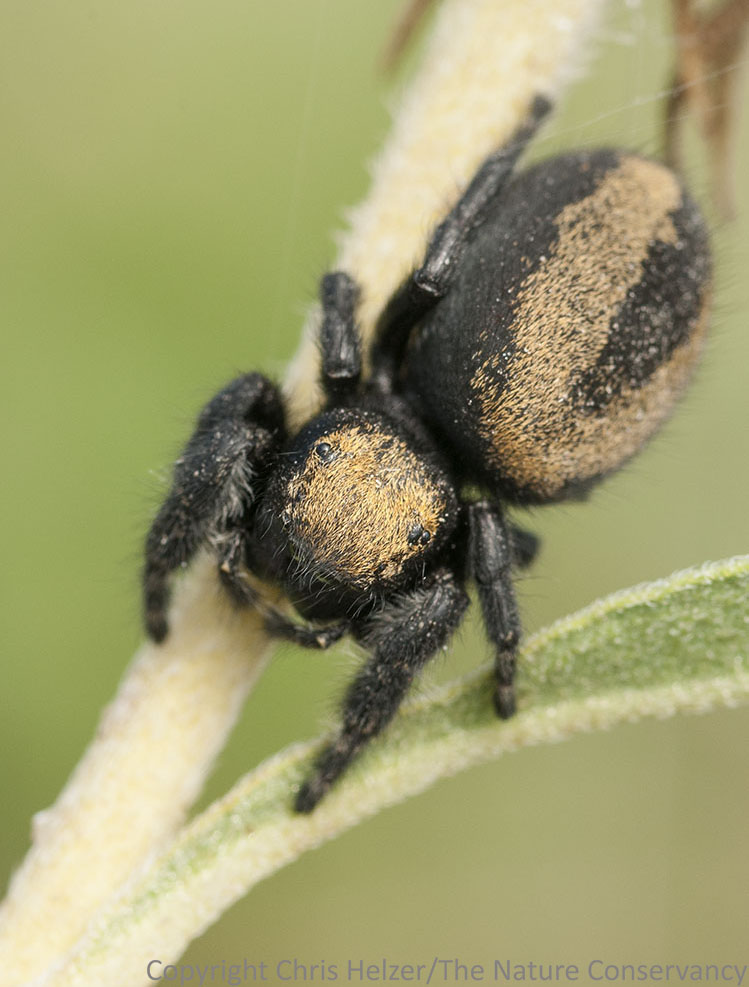
Big jumping spider (Phiddipus apacheanus on Maximilian sunflower. TNC Platte River Prairies, Nebraska.

Big jumping spider (Phiddipus apacheanus) on Maximilian sunflower. TNC Platte River Prairies, Nebraska.

Big jumping spider on Maximilian sunflower. TNC Platte River Prairies, Nebraska.

Isn’t she cute?  She was nearly 3/4 inches long – the longest jumping spider I’ve seen.

I’ve spent more than 20 years looking at spiders and other invertebrates in Nebraska prairies, and I pride myself on being a fairly keen observer.  It’s an inspiring thing to me that I’d never seen either of these spider species before this week.  I hope I never stop finding new prairie species to marvel at.

…especially species that fit into my wheelbarrow!

Many thanks (once again) to Bill Beachly of Hastings College for his help identifying these spiders – which, by the way, he called “lovely ladies”.
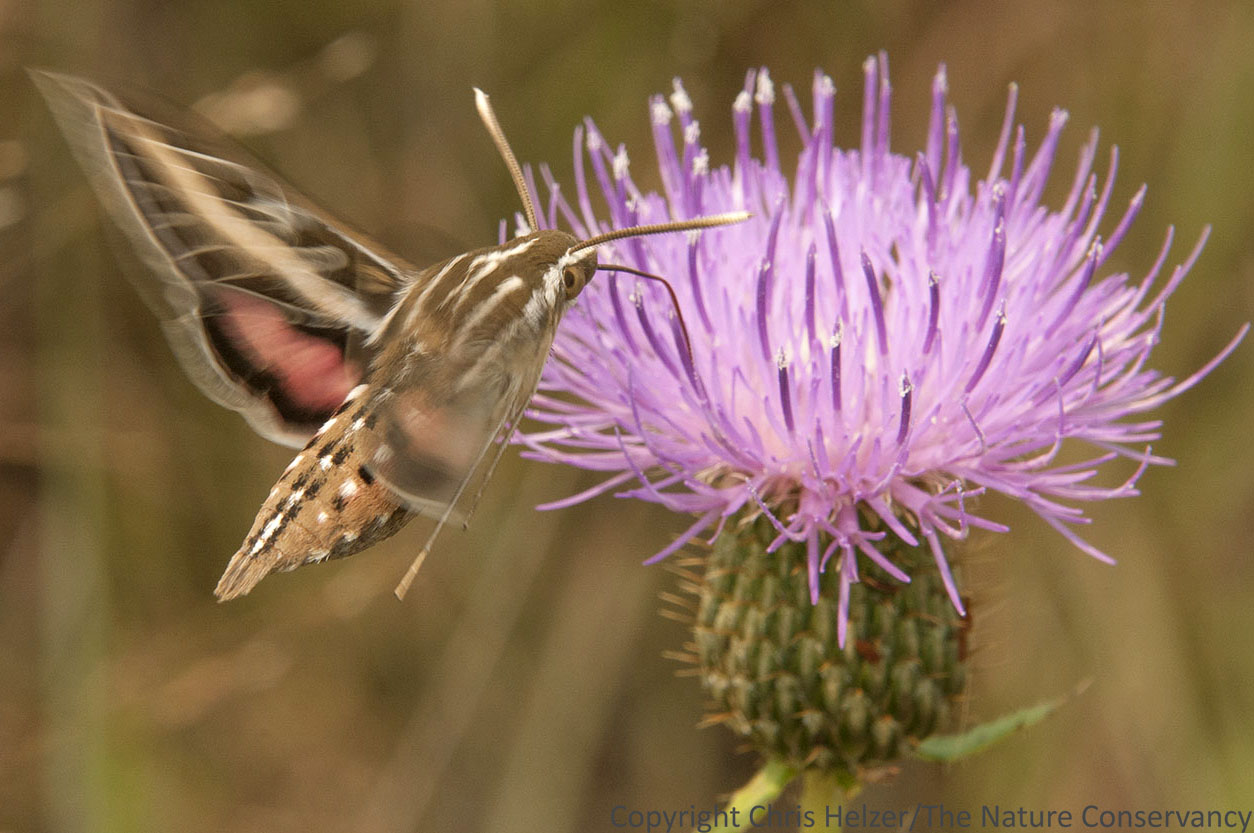
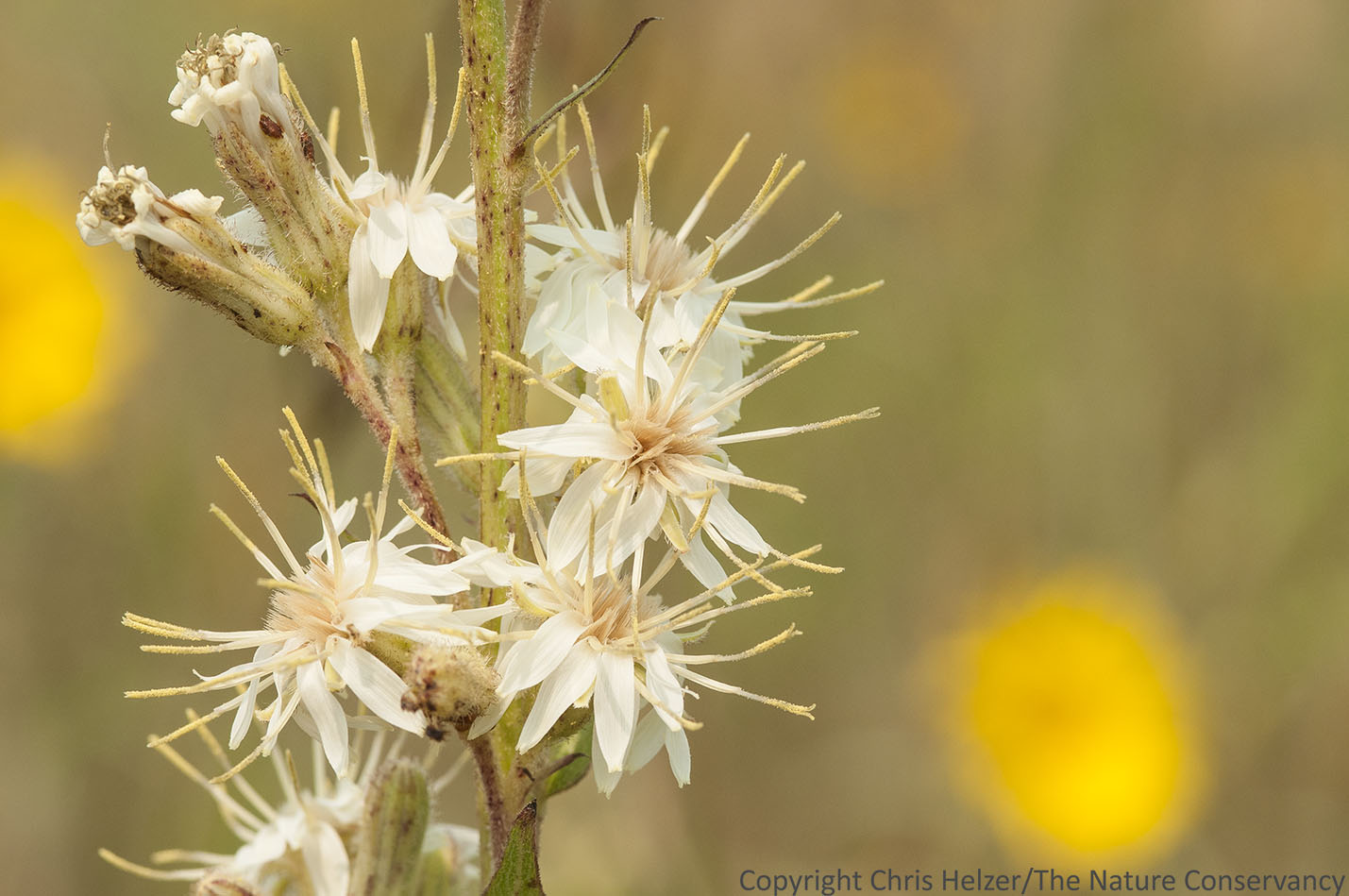
Photo of the Week – September 3, 2015

Recently, we’ve been seeing some very pretty sunrises and sunsets (and moon rises, for that matter) because of a thin veil of smoke in the sky from the western U.S. wildfires.  That diffused light makes pretty good opportunities for photos, and I’ve been trying to take advantage of those when I can.

Last Saturday, I drove to a nearby town to do some shopping, but took my camera along.  I ended up stopping briefly at a restored prairie on both the way there and back because the light was so nice – even at around noon – and the wind was barely blowing.  Here is a selection of photos from the day.

Sphinx moth. Deep Well Wildlife Management Area.

A sphinx moth feeds on nectar from a tall thistle (Cirsium altissimum). Thistles were abundant in this prairie, as were bumblebees, other bees, butterflies, moths, and many other insects feeding on pollen and nectar from them.  Deep Well Wildlife Management Area, near Phillips, Nebraska.

Rough white lettuce (Prenanthes aspera) Deep Well Wildlife Management Area.

Rough white lettuce (Prenanthes aspera).  This is not a common species in this area, so it was nice to see a healthy population growing in a cropfield-converted-to-prairie.  The site was restored by Prairie Plains Resource Institute and owned/managed by Nebraska Game and Parks Commission.

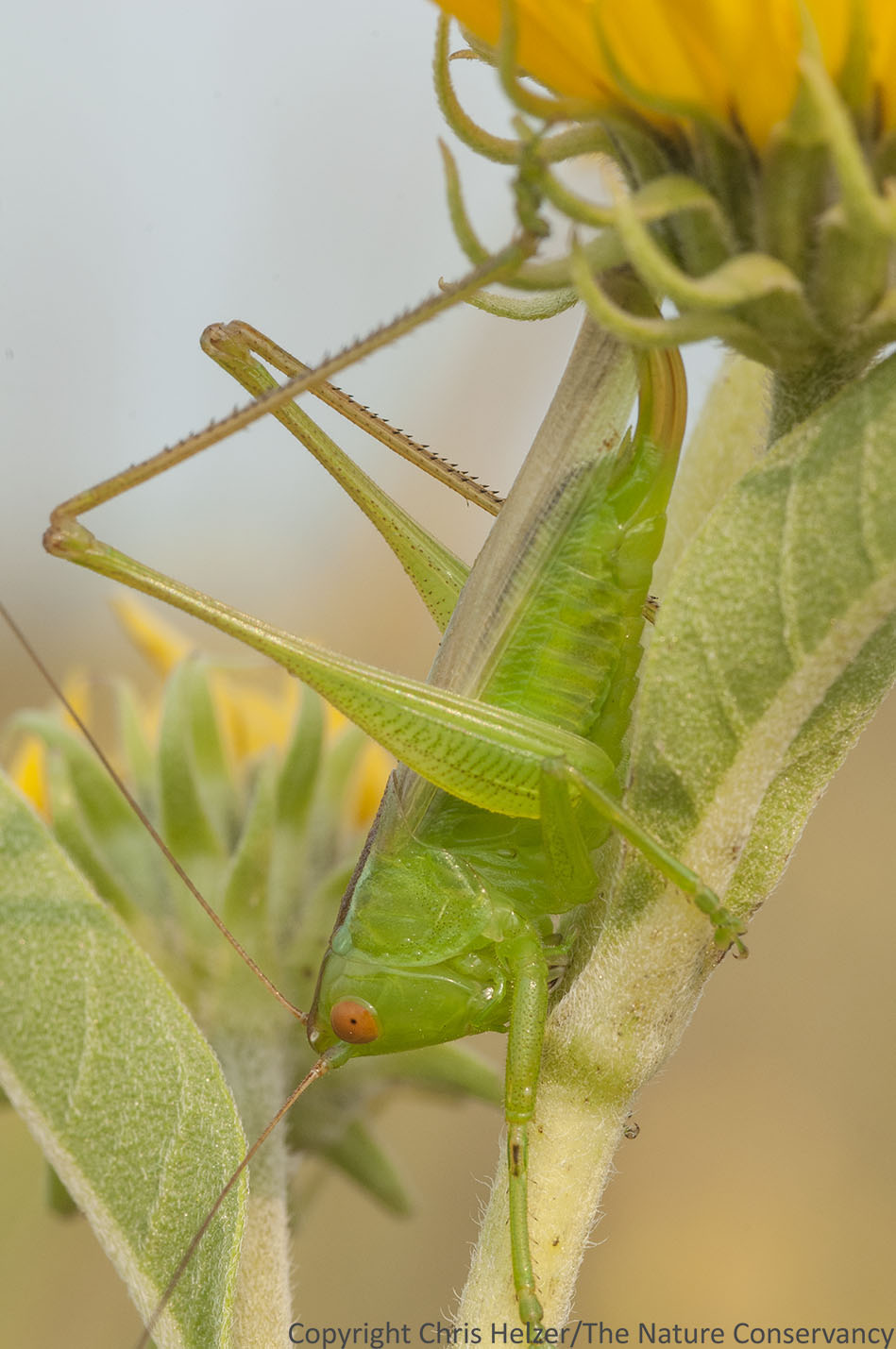
Katydid. Deep Well Wildlife Management Area.

This is a very attractive little katydid (a female because of the ovipositor – the egg-laying tube coming out the back).  However, I couldn’t ever manage to photograph an even more attractive katydid that was colored both bright green and purple.  Gorgeous, but skittish.

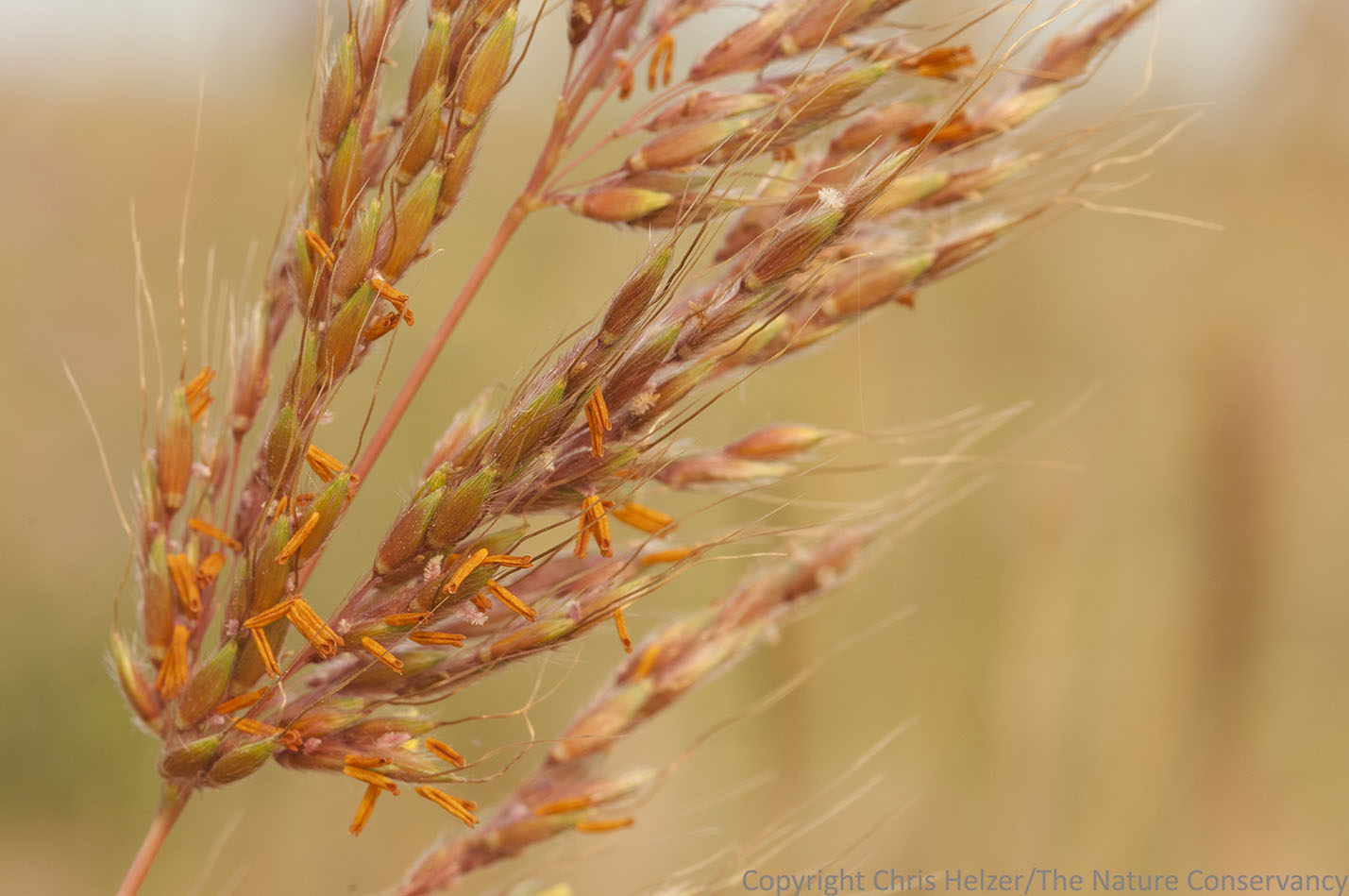
Indiangrass. Deep Well Wildlife Management Area.

Indiangrass (Sorghastrum nutans) was reaching the tail end of its blooming period.   These anthers have lost their bright yellow color and will probably fall soon.

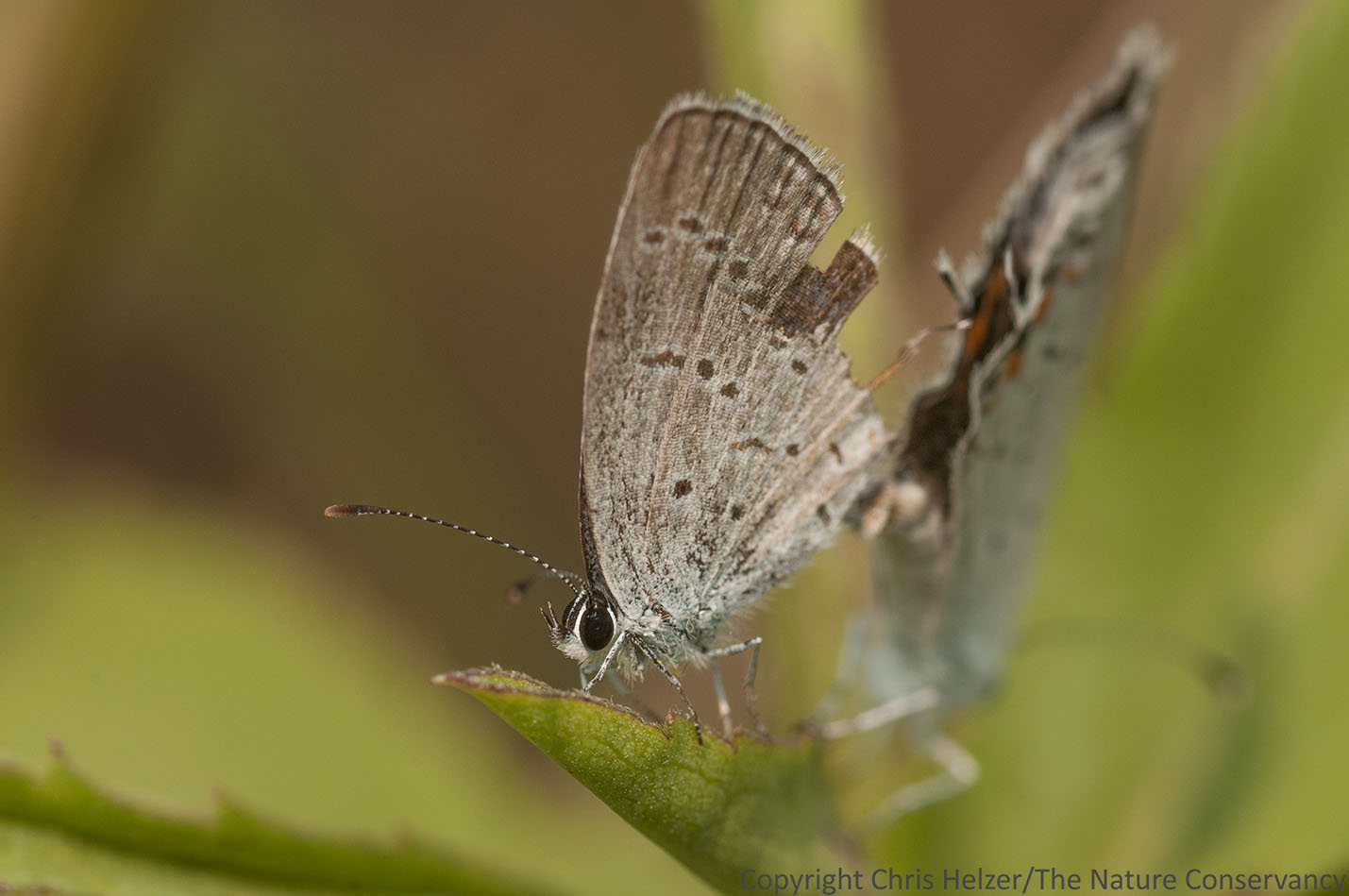
Butterflies. Deep Well Wildlife Management Area.

These eastern-tailed blue butterflies let me get close enough for a photo before flying off (still attached) to a more private location.

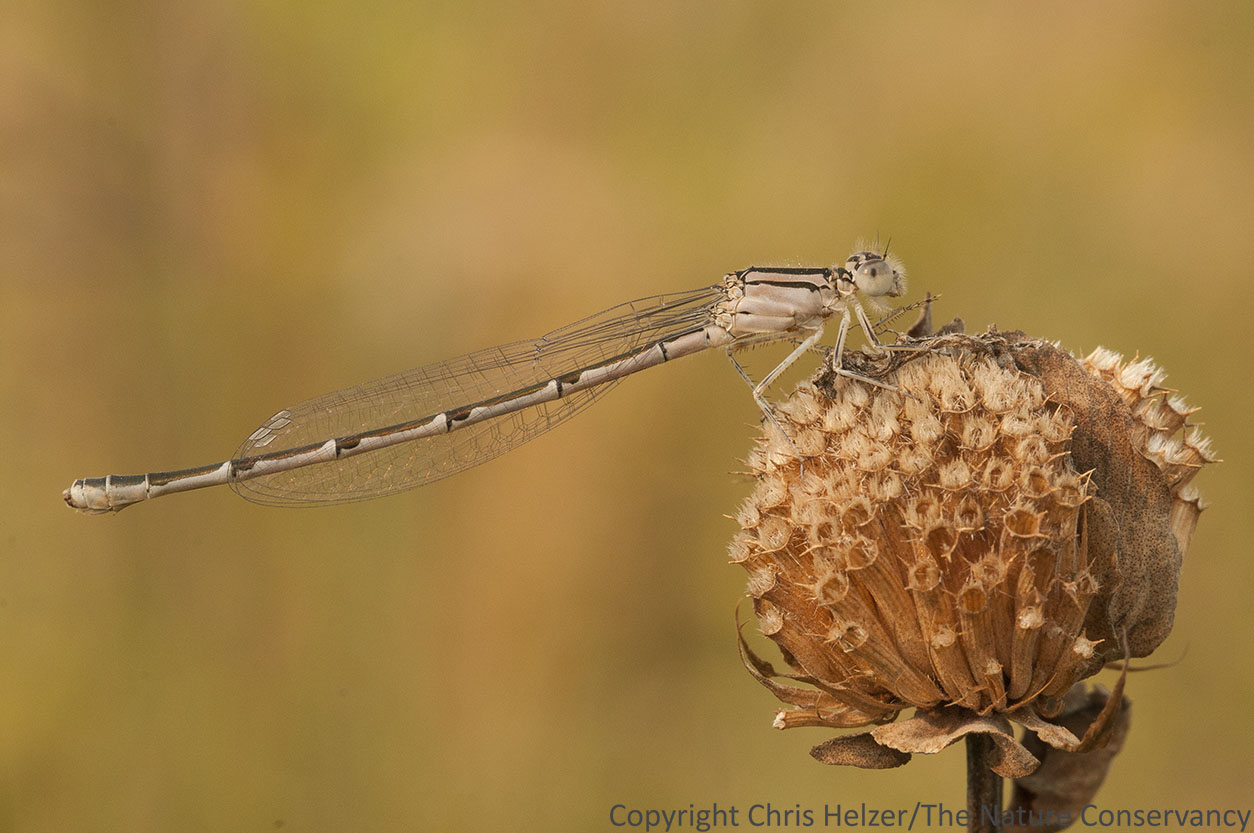
Damselfly on monarda. Deep Well Wildlife Management Area.

I had fun watching this damselfly but am still not sure what it was doing.  It was flying up to plants and bumping its “nose” against them repeatedly while moving up and down the stems.  I wonder if it was looking for insects to eat but I’ve never noticed this kind of behavior before.  It would bump plants for 15 or 20 seconds and then find a perch to sit on for a while before starting out again.

Rosinweed (Silphium integrifolium) Deep Well Wildlife Management Area.

Entire-leaf rosinweed (Silphium integrifolium) was done blooming and well into its senescence last weekend.  Summer must be nearly over…  That was quick.