
Are Prairies Less Natural Because They Need Us?

What if I told you tallgrass prairie is a human construct?

Would you think it’s less important?  Less natural?  Less real?
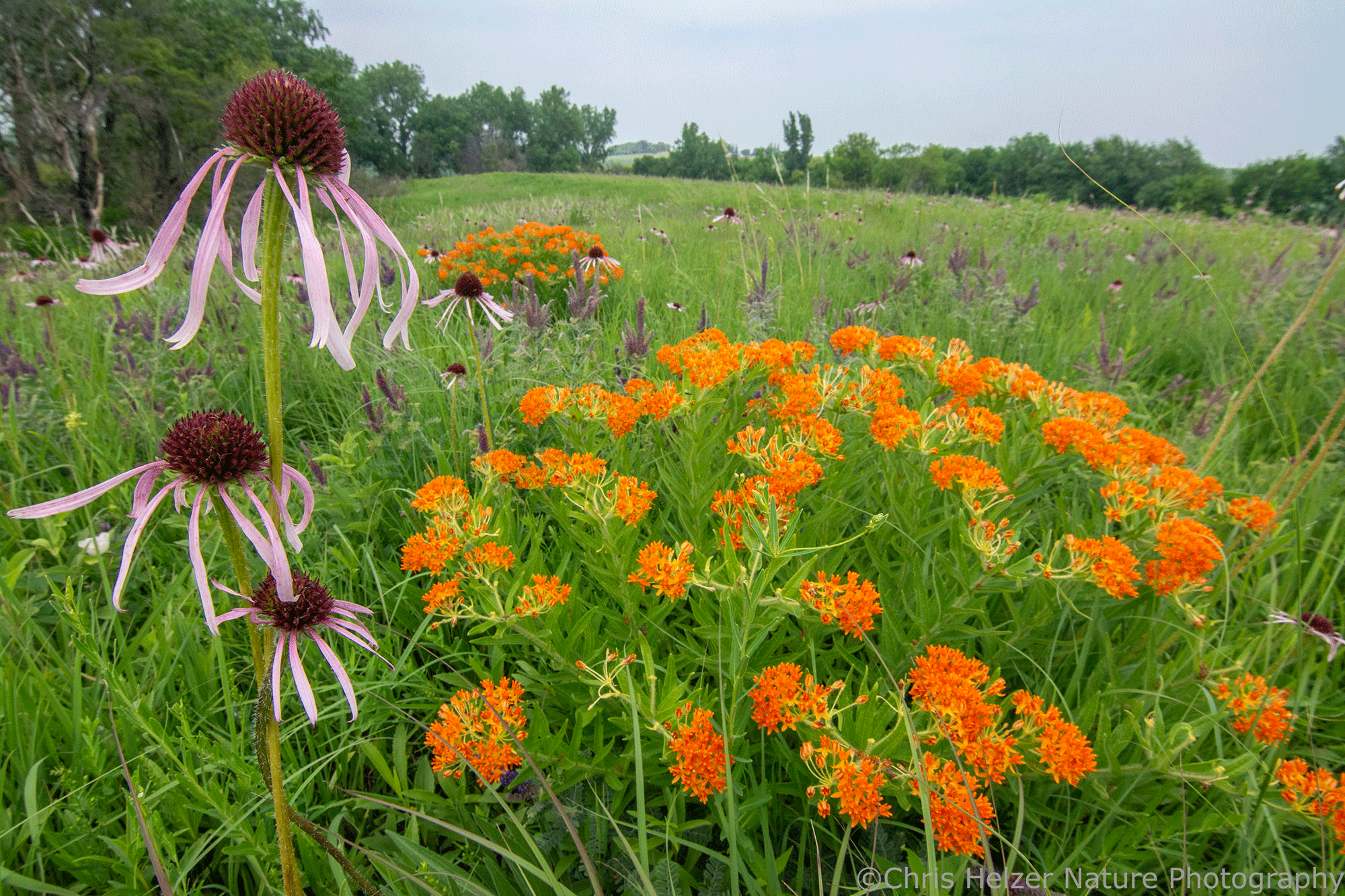
I don’t know if “human construct” is a totally fair description, but it’s certainly true that tallgrass prairie in the central United States exists because of people.  In many places, it formed because of people, and throughout its range, it relies on human stewardship for its continued persistence.

Let’s step back in time a little. 

While the actual timing of human arrival in North America is still being debated, there is consensus that people were here well before the ice sheets receded from the center of the continent (between 8,000 and 12,000 years ago).  Those humans played pivotal roles in the ecosystems they lived in. They hunted, cultivated and transported plants, and, perhaps most influentially, actively used fire in many different ways. 

As the continent warmed and bloomed after the ice age, human stewardship shaped plant and animal communities. In particular, people burned the landscape around them enough to create grasslands in what otherwise would surely have been wooded landscapes.  That was particularly important in the eastern portions of the tallgrass prairie.  Lightning fires were part of that story, too, but they were much less significant than the frequent, intentional use of fire by people.

In other words, if it hadn’t been for people and their stewardship of the land, tallgrass prairies would not have existed across much of what is now the Midwestern United States.  Throughout subsequent millennia, people have continued their stewardship, allowing prairies to persist in places where trees would otherwise have moved in.
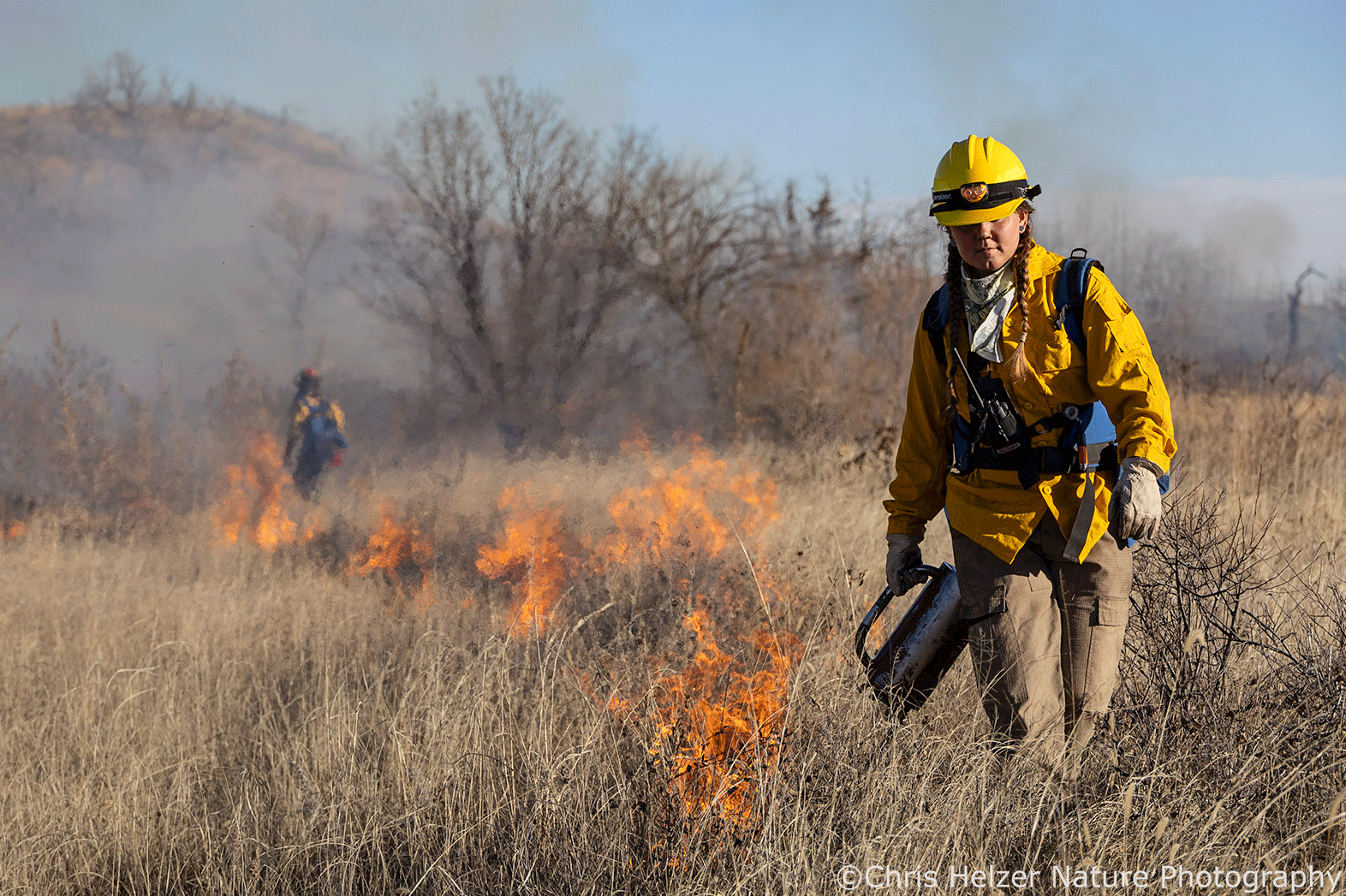
Chelsea Forehead ignites a prairie that will help keep woody plants from taking over this prairie landscape.

Today, the majority of tallgrass prairie has been lost, of course – mostly through conversion to row crops.  The prairie that remains still relies on continuous, thoughtful stewardship by people.  Without active management with prescribed fire, haying, grazing, and/or targeted invasive species suppression, tallgrass prairie transitions to something else – shrubland, woodland, or a low-diversity herbaceous community that no longer qualifies as “prairie”.

Does that reliance on people make tallgrass prairies unnatural?  Does it mean we should “let nature take its course” and allow tallgrass prairie to become what it’s supposed to become? 

You’re welcome to form your own opinion, of course, but I feel strongly that the answer to both questions is no.  Most ecosystems on earth are strongly tied to human stewardship and have been for tens of thousands of years.  It’s not that those ecosystems or the species that depend upon them would all be destroyed in the absence of people, but they’d change dramatically – and many species would suffer as a result. We humans have certainly not always done the best job at land management but that doesn’t mean we can or should abdicate our responsibility as stewards.

Speaking more locally, prairie is amazing, beautiful, and complex.  The incredible, diverse ecological communities that live in tallgrass prairie rely upon our continued attention and stewardship. Losing those would be an immense tragedy.
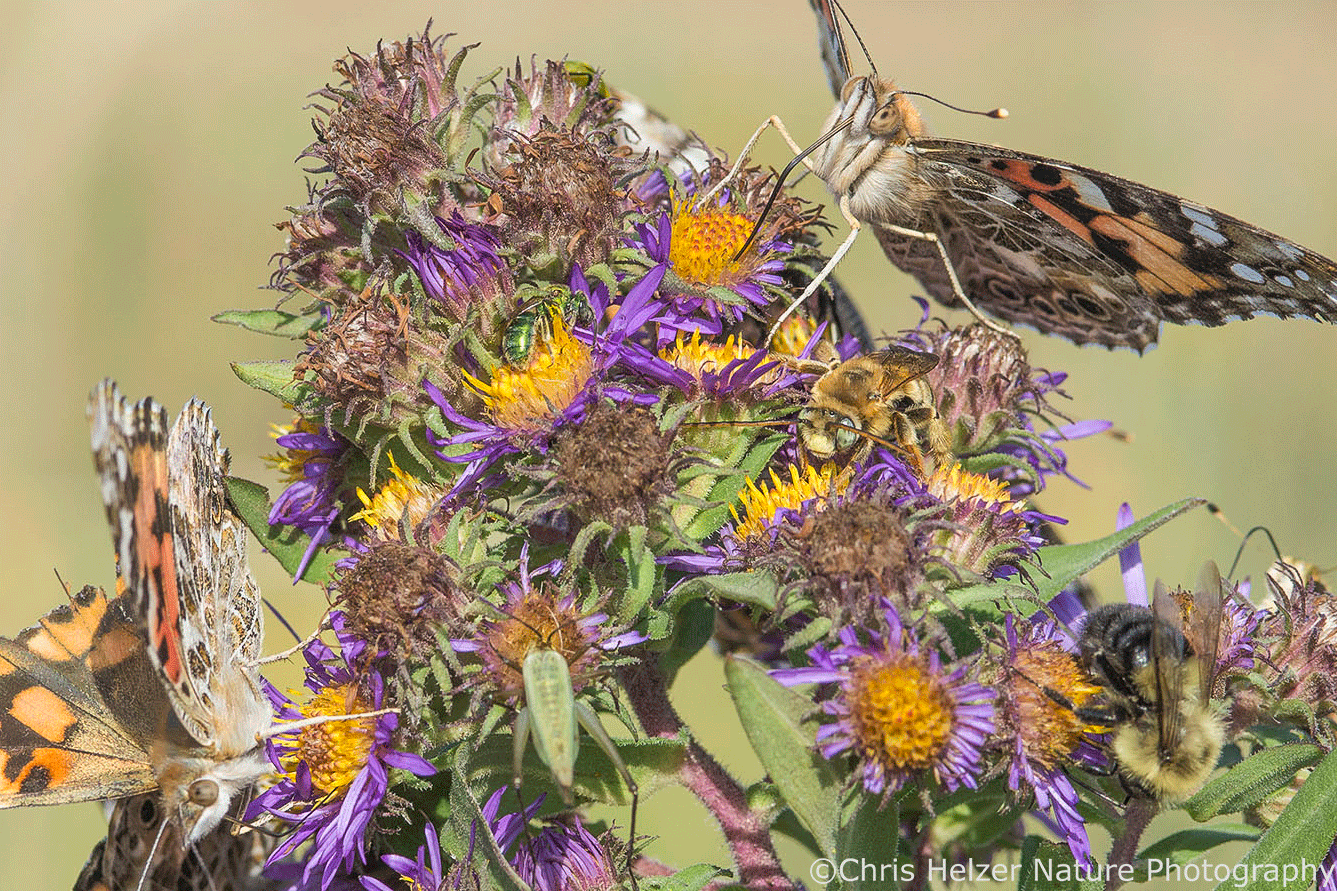
This photo captures the essence of prairie. The more you look, the more you see.

Tallgrass prairie isn’t less important, natural, or real because it relies upon humans.  Instead, our long-standing, interconnected, and interdependent relationship with the prairie should increase its relevance and value to us. 

Just as with any other worthwhile relationship, though, we can’t just ignore the prairie and hope for the best.  Only thoughtful, adaptable care will ensure we can keep this good thing going for a very long time.

Additional Reading. If you want to learn more about the long relationship between humans and nature (prairies and otherwise), here are a few recent journal articles you might enjoy. They’ll get you started and provide many other references you can dig into if you want to keep going:

Impacts of indigenous burning in the Great Plains

Presence of people after the North American ice sheets receded

The shaping of global ecosystems by people for more than 12,000 years
Hubbard Fellowship Blog – The Myth of the White Buffalo Calf Woman

This post is written by Kim Tri, one of our two Hubbard Fellows for this year.  Kim is an excellent artist, as well as an ecologist, writer, and land steward.  As you can see, her drawings of animals are exceptional.

A new year has come again, bringing with it the cold, dark, and snow, as well as a traditional time for reflection.  Most choose to use this as a time to vow to do new and better things with their lives, but I prefer to revisit the most valued parts of mine.  Usually, I show how much I value conservation through my field work, but this is the off season, when I’m learning to display my passion by sharing it with others.

It is in this spirit that I share this myth from the Lakota tradition, which I think can speak to us all.


The Myth of White Buffalo Calf Woman

(Synthesized from multiple versions)

white

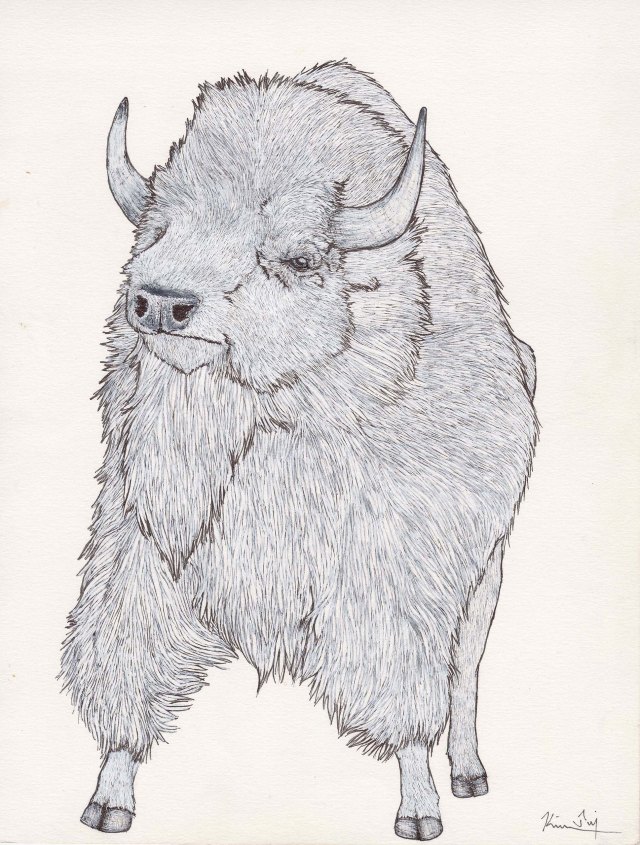
White buffalo, Pen drawing by Kim Tri

            It was a time of struggle, when there was no game to be found and the people feared starvation.  Every day, hunters went out onto the plain, only to return empty-handed.

            Two such hunters were out one day, and as they walked, they began to see an oddly shimmering pearly figure ahead of them.  This figure resolved into a most beautiful woman dressed all in pure white buckskin.  One of the two men noticed the way the woman shimmered and floated slightly about the ground.  It was by this that he recognized her as a holy being, and he bowed his head in respect.  His companion, however, had only eyes for the woman’s exceeding beauty.  His mind filled with thoughts of how he might possess this woman.  He stepped forward to grab her, and vanished in a cloud of smoke, leaving behind only ashes.


The first man fell to his knees at this display of power.  The woman in white bid him rise and said “It is good news that I bring.  Go back to your people and tell them to make ready for my coming.”

            The young man did as he was told, so that when the woman walked into camp the next day, a holy lodge had been prepared to receive her.  She carried with her a bundle.  Once inside of the lodge she pulled out of it a red stone pipe.

            Then the holy woman showed the people how to properly use and respect the pipe.  The red of the pipe connected the people to the blood and flesh of the buffalo and other animals that fed them, while the smoke that rose from it during prayer connected them to the Great Spirit and carried their prayers up to him.  The flame which glowed inside the pipe was to be passed from generation to generation, as were the seven sacred rituals which the holy woman gave to the people on this day.

            When she was done teaching them, the white-dressed woman departed, promising that she would return to the people from time to time.  As she walked away from the camp, she rolled on the ground and stood four separate times, rising changed in appearance each time.  The first time she stood, she was a black buffalo calf, the second time a yellow calf, and the third time a red calf.  When she stood the final time and walked away, she was a pure white buffalo calf, and it was in this form that the people would recognize her when she returned.


Though most of us may not follow the tradition of the sacred pipe, there are other parts of the myth that I think we could all due well to pay attention to in daily life.  Think of the first hunter, the one who didn’t return to camp.  Instead of having reverence for the white buffalo calf woman and the things she represented, he was consumed with desire.  In striving to use instead of honor her, he was burned by his own desire, as humans can be when they treat the land in the same fashion.

It is interesting to me, as well, that on a search for food to feed the bodies of his people, the hunter returned instead with something that would feed his people spiritually, and it was through this that they regained their connection to the game animals they needed to survive.  (In most accounts of this myth I’ve read, it isn’t expressly stated that the animals returned after the White Buffalo Calf Woman left, but I think it is implied.)  This is a theme I hear often from lifelong hunters; that they go out in search of meat but come back with so much more.

In Lakota tradition, the birth of a white bison calf is considered one of the most holy and prophetic events, even today.  When, in 1994, a white calf was born for the first time in decades, there was widespread rejoicing.  The family who owned the farm where the calf was born was not of native descent, but they embraced her symbolism and opened their doors free of charge to all who wanted to see the calf and pray to her.  Miracle, as the calf was named, was viewed as a figure around which all types of people could find a common hope.  Men such as Chief Arvol Looking Horse called on all to see what the calf meant to all people, that the return of the white buffalo was a reminder to join across the globe and renew the human commitment to the earth, the sky, and all the beings upon it.

In these days, when many of the bison in this country are crossed with cattle and their breeding is largely controlled by people, the birth of a white buffalo is not so rare as it used to be.  I don’t think it makes it any less powerful of a symbol, however.  In fact, I think that the more white bison we see, the better we are reminded of our commitment to the land, the sky, and all the beings on the earth.  In this, I think it is one of the most enduring myths, as it can serve to teach us about right living even this many generations removed from its origins.


P.S. I recognize that though the myth is about a white buffalo calf woman, I drew a big white bull bison.  What can I say?  I wanted to draw the most impressive white bison I could.