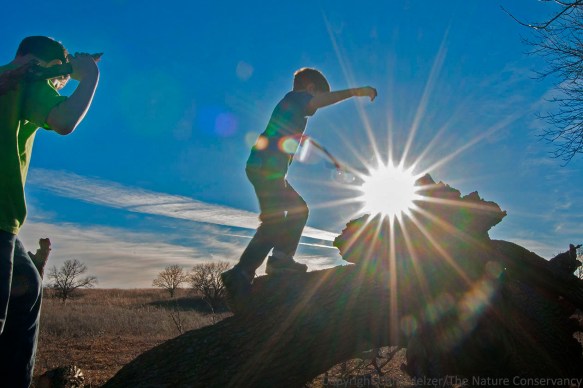
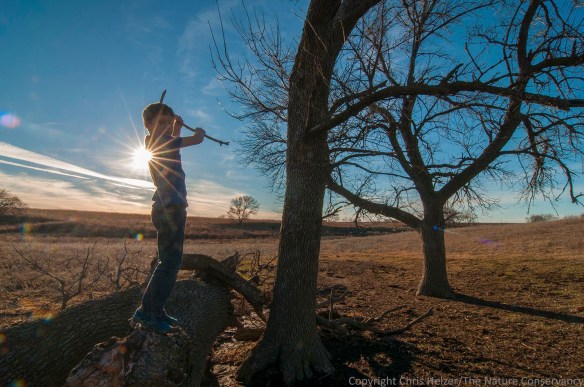
My daughter graduated from high school this spring. The graduation ceremony got me thinking about commencement speeches and how I might craft a conservation-oriented commencement speech in the extremely unlikely event that I’d ever be asked to give one. Here’s an example of what I might have said to my daughter’s class if they’d asked.
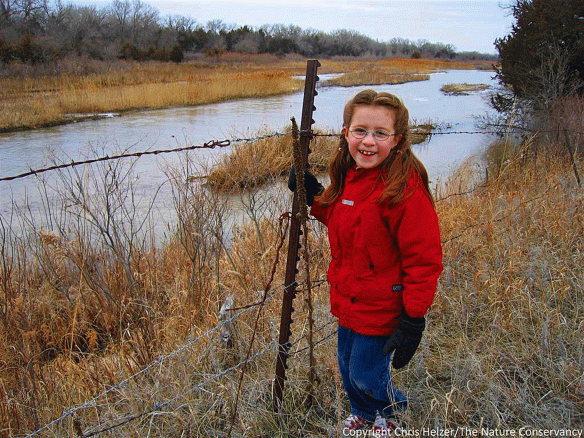
My daughter when she was much younger. She’s not planning a career in conservation, but I hope the time she’s had in nature will serve her well and that she’ll support conservation efforts no matter where life takes her. And yes, I’m very proud of her.
Congratulations on completing high school and earning your right to independence. Use your new power and freedom wisely.
One of my greatest hopes for you is that you can feel comfortable in the outdoors. That you can walk through natural areas without unreasonable fears of hidden snakes or spiders (or bears). I hope you don’t feel intimidated by wide swaths of open space or dark shadowy woods. The natural world does present some risk, and even bears in some places, but while it’s smart to take precautions against risks, being in nature should bring you relaxation and joy.
Gaining the confidence to feel at home in the outdoors comes through experience. Hopefully, you’ve already had enough experience in nature to feel relatively comfortable there. Whether you have or not, please make time to visit your backyard, local parks, national parks, and other areas where you can surround yourself with wildness. Use your time there to reenergize yourself, but also to remind yourself that you too are a part of the natural world. Explore. Pick up rocks to see what’s under them. Where appropriate, leave the trail and bushwhack up a hill or through a line of brush to see what’s on the other side. Sit and watch an ant hill until you start to see order in the chaos. With time, you’ll begin to recognize the many cycles that occur in your favorite natural places, including the migratory patterns of birds, butterflies, and dragonflies, and the regular progression of blooming plants through the seasons.
I hope that as you grow older you’ll also grow your appreciation of the value of nature. Those of us who spend significant time exploring the outdoors understand the emotional and spiritual benefits that come with periodic escapes from the horde of humanity and its demands on our time and energy. There are plenty of recreational activities that can pull you into the natural world, including hiking, hunting, fishing, photography, backpacking, boating, and birdwatching. Any of those can help you relax, reflect, and keep a healthy perspective on the world.
At the same time, it’s also important to recognize the more utilitarian values of the natural world. Clean drinking water comes from healthy ecosystems. So does our food supply. Critical processes like pollination, decomposition, and nutrient cycling rely on multitudes of species that, in turn, rely on intact food webs and biological diversity. The air we breathe and the climate that sustains us depend upon cascades of natural processes driven by millions of plant, animal, and microbe species.
For all those reasons, both personal and societal, I hope you’ll support conservation efforts. That doesn’t mean you have to chain yourself to a tree or shout slogans on the steps of the Capitol. You also don’t have to be a research biologist or land manager, although both can be very fulfilling jobs if you’ve got the interest. Instead, start by simply speaking well of nature and the outdoors to your peers. Help others see the beauty and importance of the natural world through your eyes. Help them see conservation for what it is; non-partisan, common sense, and good for everyone. Recycle. Compost. Vote. Contribute time and money to causes and organizations you feel good about. Grow native plants in your yard. There are countless small ways to contribute toward the conservation of nature, and all of them can make a real difference.
Most importantly, go take a hike. Kneel down and watch the bees come and go from a flower. Grab your old dirty shoes and splash around in a stream. Or wear your good shoes and splash around in a stream. You’re a high school graduate – who’s going to tell you no?