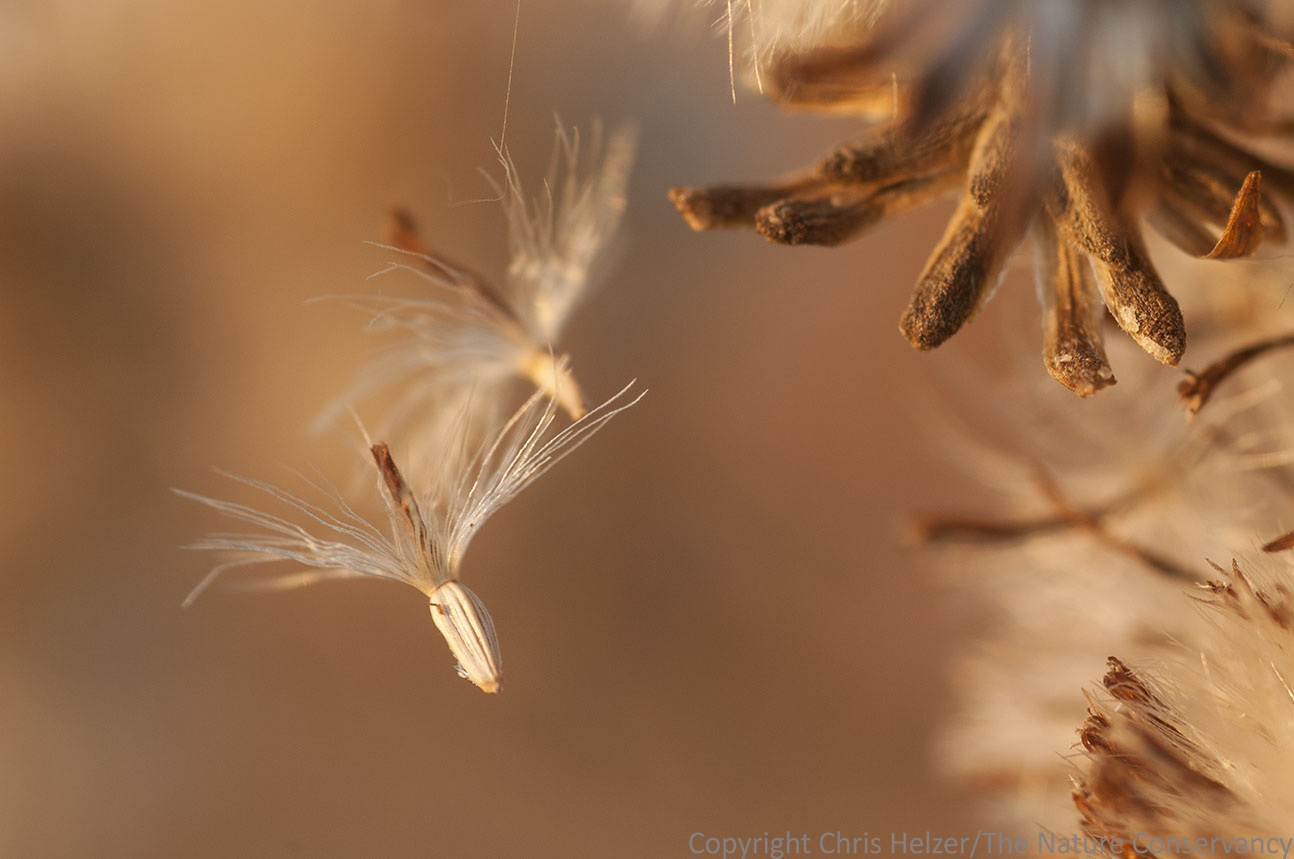
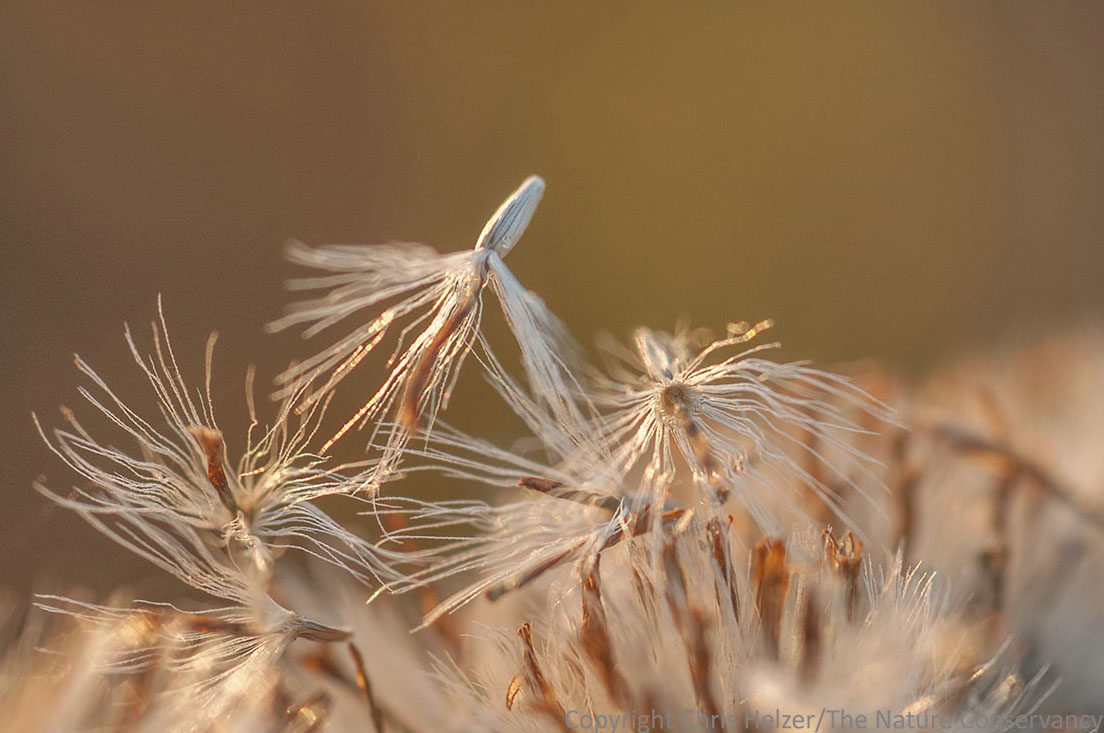
When I photograph small creatures, I often try to position myself so I can look right into their eyes. I like face-to-face images because they feel very personal. One of the most important catalysts of conservation is the personal connection people feel with nature and the species we share the planet with. It’s one thing to see a caterpillar from a distance, but when you look into its eyes… well, they’re just so darn cute! It’s a lot harder to step on something or plow up its habitat once you’ve met it face to face.
One of the most charismatic species I know is the snapping turtle. It’s not hard to photograph a snapper in way that evokes personality and character. Here’s a photo of a small snapping turtle we found earlier this year while exploring one of restored wetlands. We picked it up for just a minute to examine it more closely. Before I set it down, I took this portrait.
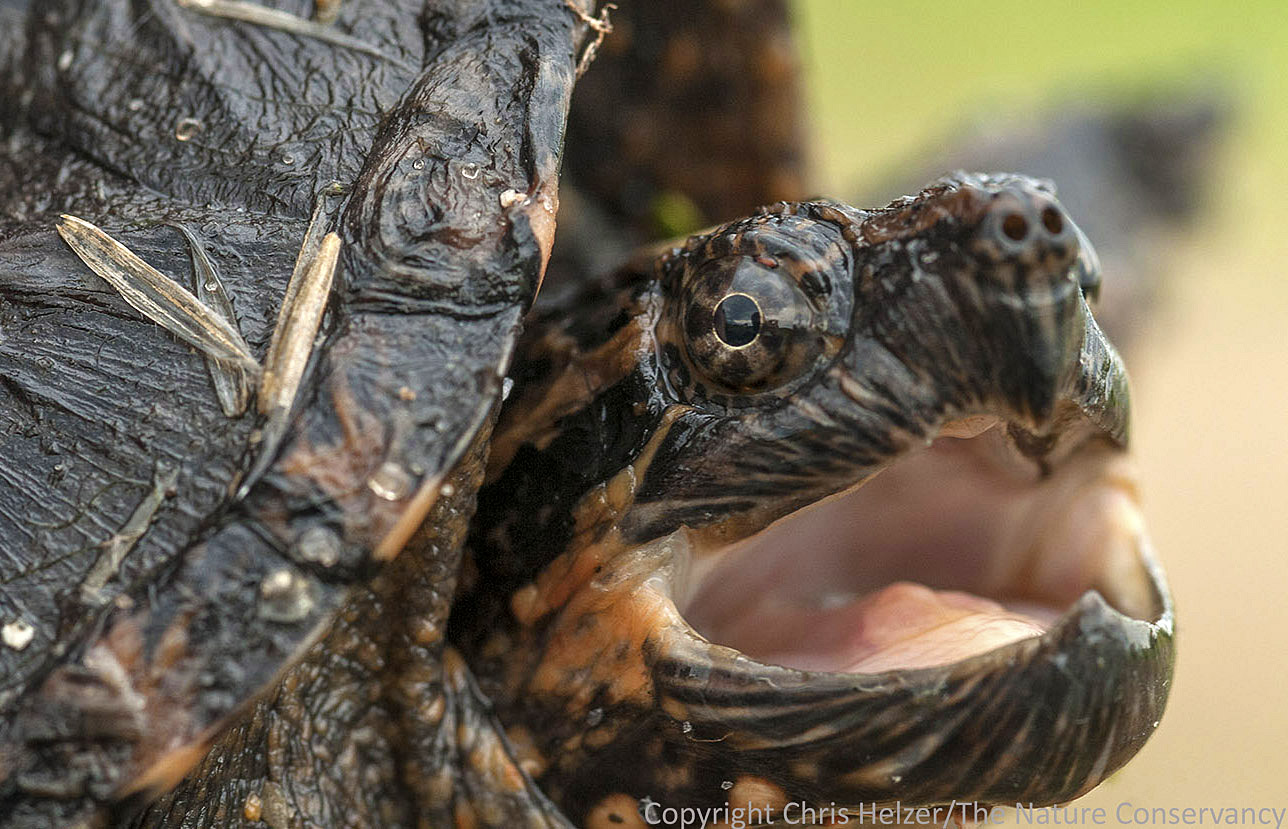
A small snapping turtle. The Nature Conservancy’s Platte River Prairies.
In case you missed it a few years ago, here is a link to a previous post about a snapping turtle that was causing consternation among the cattle at our family prairie. That one had some character as well…
On a somewhat related topic, I’m starting to put together my annual “Best Of” slide show of photos from 2014, just as I did in 2013 and 2012. If there are any photos from this year’s posts you want to lobby for, feel free to do so in the comments section of this post. Otherwise, I’ll just choose my personal favorites.