
For some reason, there are people who find it difficult to see the aesthetic beauty of places with limited topographic variability. First of all, that sounds like a “them” problem, doesn’t it? Who needs mountains, or even steep hills to feel good about their surroundings? Not me. Not you.
Then, of course, there are others who struggle to find joy in places without trees. I feel bad for people like that, but I also understand that we’re all in different places in our journey. Some of us are just starting out, and feel like trees are the epitome of nature. Some of us have passed far beyond that elementary understanding of the world and don’t have to worry about whether we can see the forest for the trees. We just ignore the forest altogether and spend our time out in the open where we can more interesting things.
I’m kidding, of course. We prairie people don’t ignore trees. We cut them down so they don’t block our view of the prairie.
Regardless, as a service to those who are still working toward a more heightened awareness of the world, I’ve created a simple guide to how to appreciate and photograph flat prairies. I hope you find it useful.

First, one of the best parts about landscapes without steep hills, mountains, or trees is that you can actually see the sky. The first tip, then, is photograph the sky! The sky is amazing. Or, at least, clouds are amazing. The sky itself is fine, but when there are clouds floating around, photograph them! Use the prairie as a foundation for spectacular cloud scenes.

If you’ve taken any classes on photo or drawing composition, you probably learned about leading lines – components of an image that draw the viewer’s eye to a focal point. You don’t need leading lines to make a good prairie photo. On the other hand, if life hands you a mowed trail, you’d be a fool not to use it.

Angling your camera upward toward the sky is a great way to get good photos in the prairie. The opposite, though, is also true. Standing tall and angling your camera downward can sometimes help you highlight the depth and variety of a prairie plant community. It helps to be tall, of course. Since I’m not tall, I use this technique less than some of my friends, mostly because carrying a step ladder around is an inconvenience.

If the sky isn’t providing anything interesting and you’re not tall enough to comfortably look downward into the prairie, another trick is to use plants to break up a monotonous sky. Often, this just entails stooping down a little so some tall wildflowers or grasses are poking up above the horizon. This technique can be a helpful way for people still stuck in the nature-needs-trees-to-be-beautiful world because if you find the right angle, wildflowers and grasses look sort of like trees sticking up into the air. But better.

Early in the season, or in prairies that are not only flat, but also full of short plants, you might have to drop right down to the ground to get photos of plants protruding above the horizon. That’s easy enough.
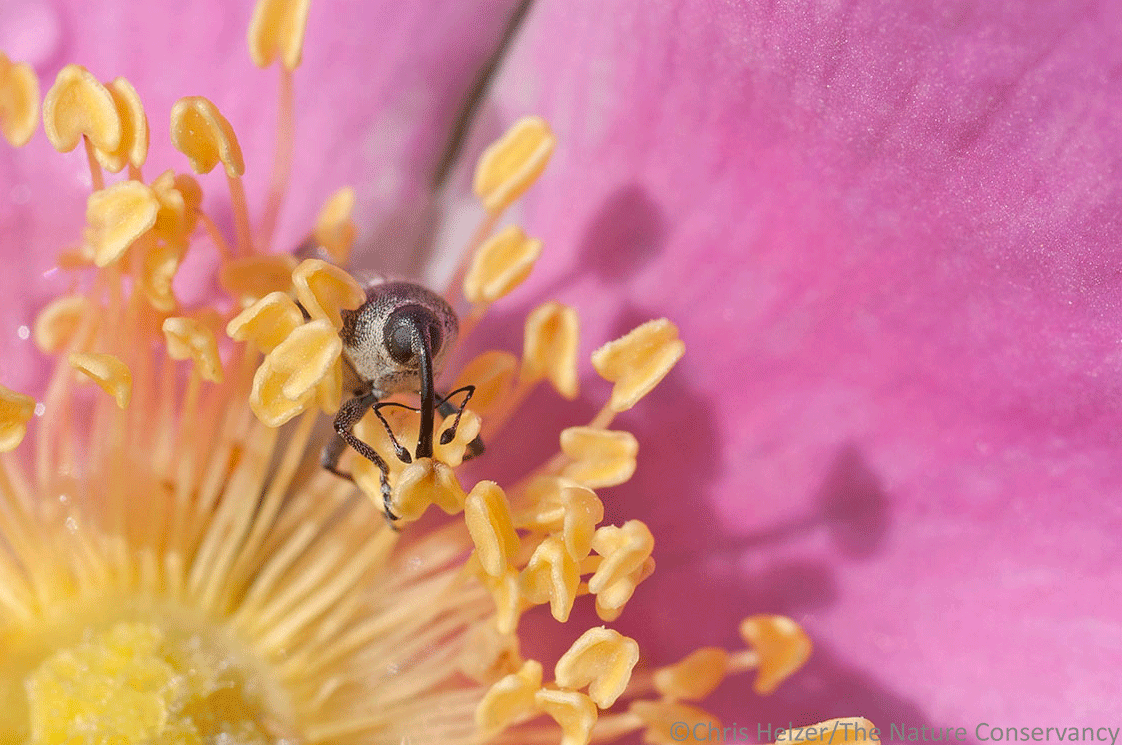
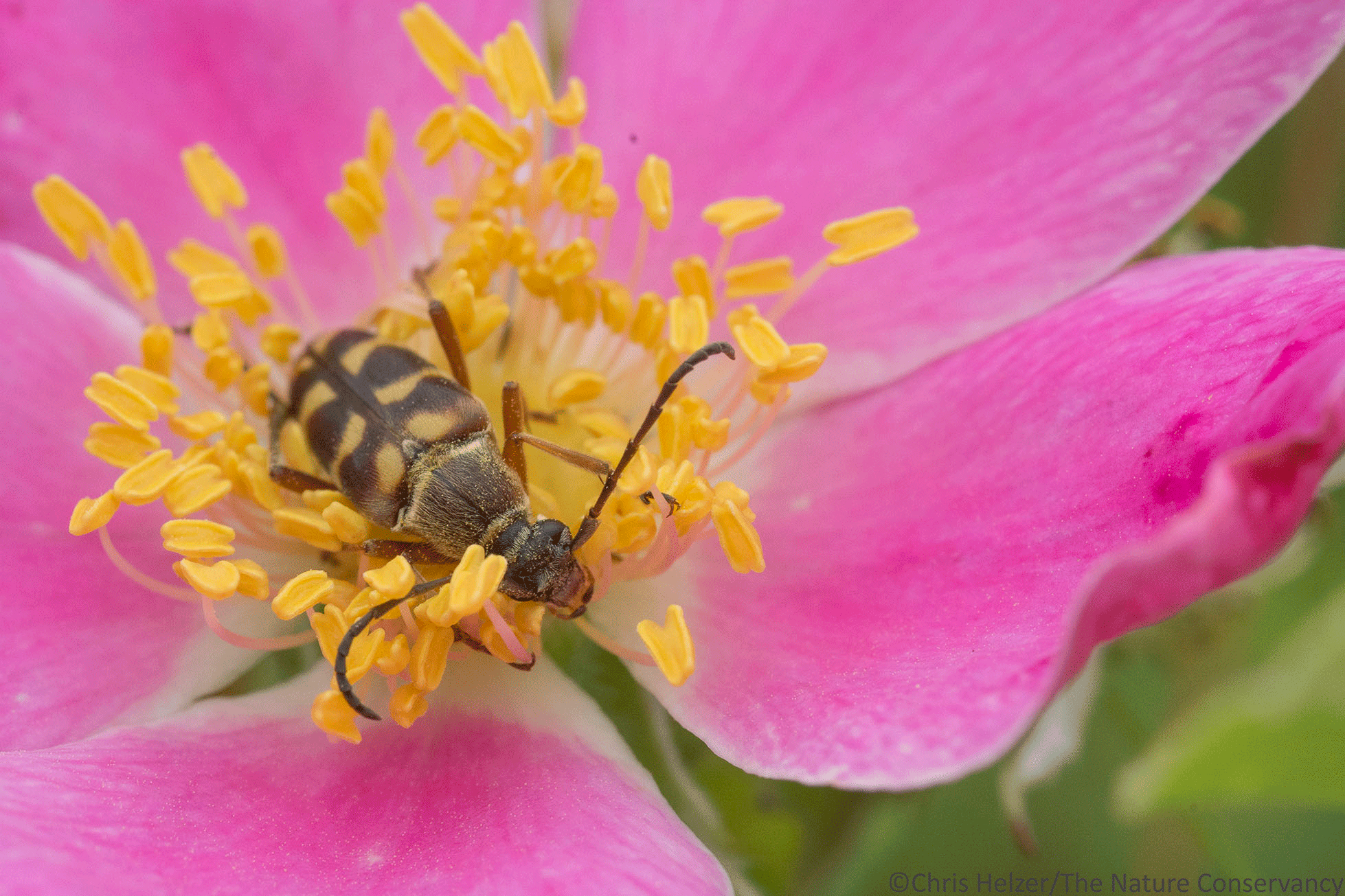
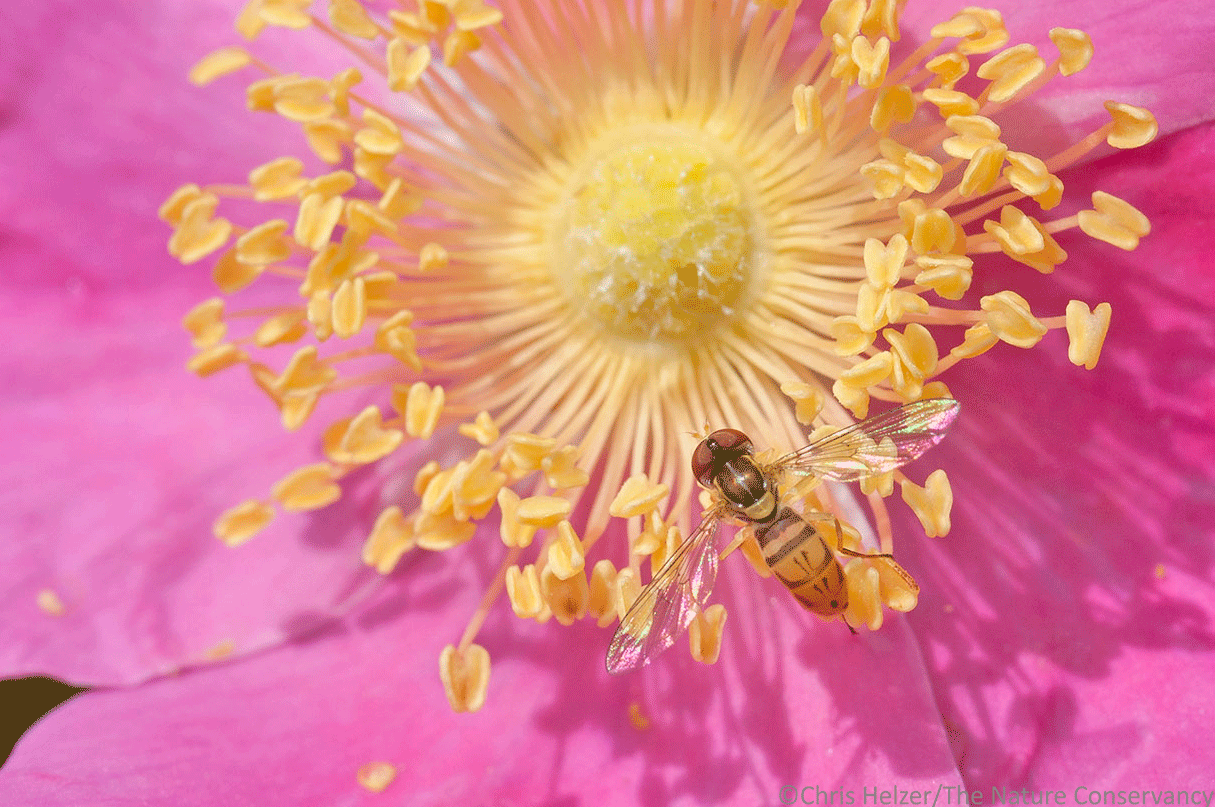
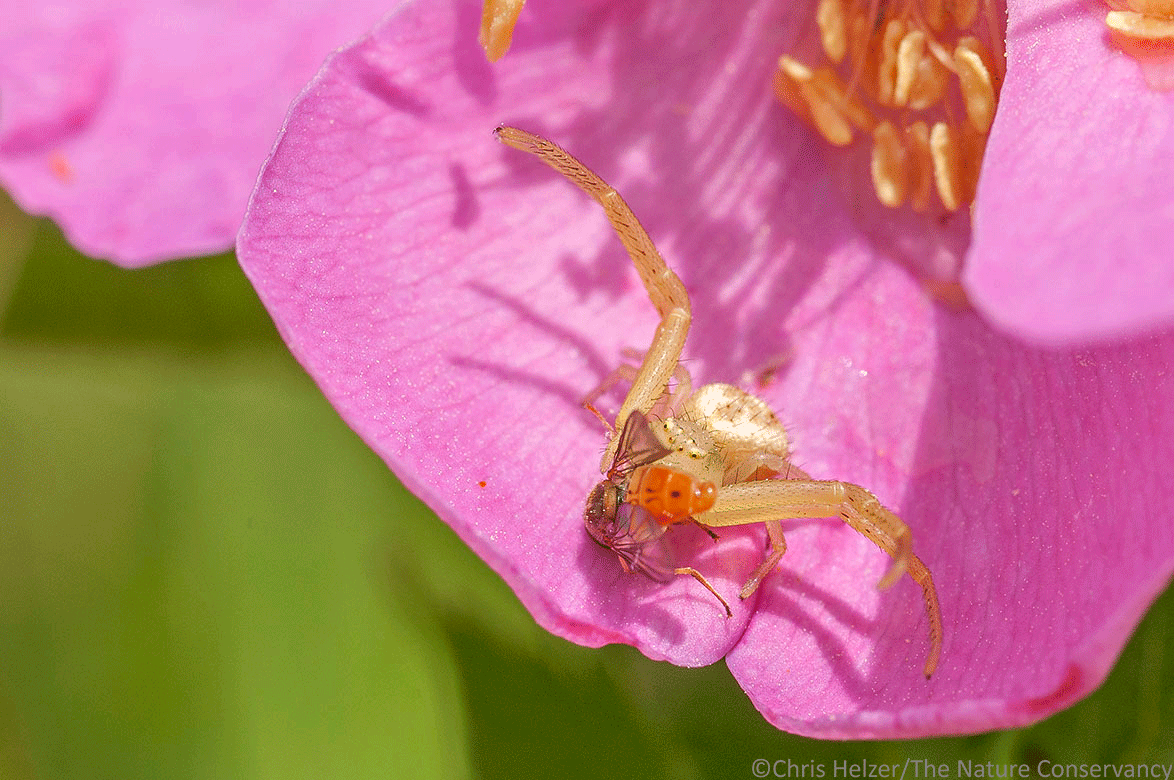
While you’re down there, you’ll probably see all kinds of fascinating creatures. They also make great photo subjects, so you might end up taking one landscape photo and then filling the remainder of your day with close-up photos of tiny invertebrates and flowers. What could be better than that?

One quick note: It’s perfectly fine to turn your camera vertically. It has a sealed case, which prevents photographic fluid from draining out if you tilt it.

If a sky is missing clouds, you may be able to use the sun instead. Importantly, of course, don’t look at the sun. But if you can manage it safely, the sun – especially very early in the morning or right before sunset – can provide a nice feature of interest for prairie photos.


Now that we’ve covered several techniques, try mixing some of them together! For example, you can both drop low to the ground so plants break up the horizon and also use the sun as a point of interest. Wow! So many options! Again, please don’t look at the sun.

If you find yourself camping in a prairie and are lucky enough to find a campsite that doesn’t have trees that block the view, you can always play with the ol’ glowing tent trick. Actually, this can work even if there are trees around, but it’s a lot better when you can see the sky behind the tent.

If you’ve never tried the ol’ glowing tent trick, it’s very easy. You set your camera on a tripod and use a long exposure – maybe 20-30 seconds. You’ll probably need that much time to capture what little light in the sky there is (lingering sunset glow, moonrise, stars, etc.). However, you’ll also need that time to click the shutter button (a remote trigger is helpful here) and then dash to the tent, unzip the door, slip in, rezip the door, and quickly shine a flashlight around the interior of the tent before the camera shutter closes. It often takes several attempts to get both the light and timing right, so it’s a terrific way to get a little exercise before bedtime.

A final tip, and maybe my favorite, is to use a bumblebee as your foreground. “Chris,” you might be wondering, “won’t the bumblebee just fly away if I get close to it?” Yes, almost always. But sometimes it won’t and it can help make a really great prairie photograph on flat terrain with no trees whatsoever.

I hope you’ve found this guide helpful. If you have friends who still struggle to find beauty and wonder in flat places without mountains or trees, send this to them. We can’t save everyone, but we can at least give them a fighting chance.

 The Prairie Ecologist