Photo of the Week – May 1, 2015

Last year, I moved into a nice old house (100 years old this year) with a big lot and plenty of potential.  The kids have been enjoying the yard, the loft above the garage, and some of the new furniture and accessories (including a bison skull named Lefty hanging on the living room wall).  One of the unexpected perks of the new house is some junk wood along our neighbor’s fence.  I found the wood late last fall as I was trimming shrubs.  It was buried beneath what appeared to be several year’s worth of leaves.  My first thought upon seeing it was that it might be a good place to find snakes, but it was late enough in the year that they weren’t around then.  I left the wood in place, figuring we’d check it out again in the spring.

Snakes!

Snakes!

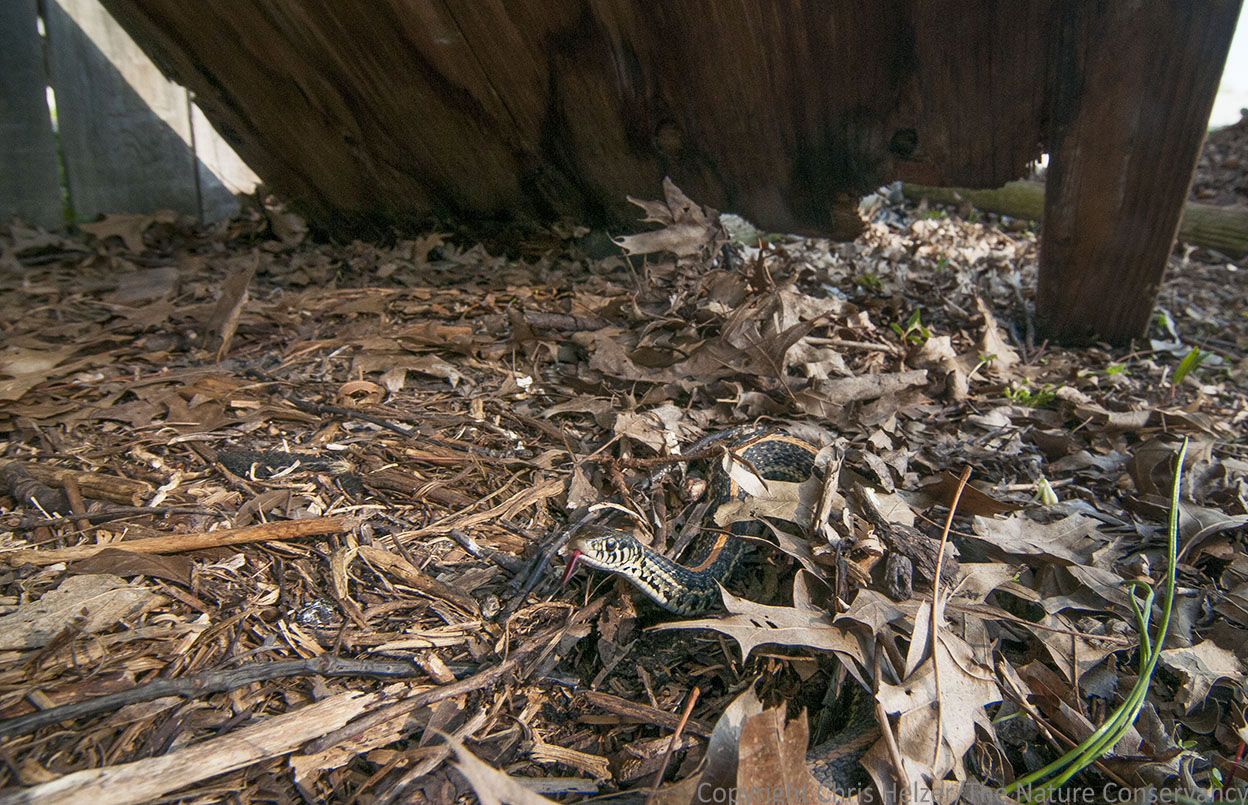
Now that spring has arrived, the wood has certainly met expectations.  The other day we found at least 10 snakes underneath it, and there might have been a few more (they kept moving…).  What would be a nightmare for many people has become almost a daily adventure for my son Daniel (“Dad!  Come look at the snakes now!”) and yesterday he took his older siblings out to join in the fun.
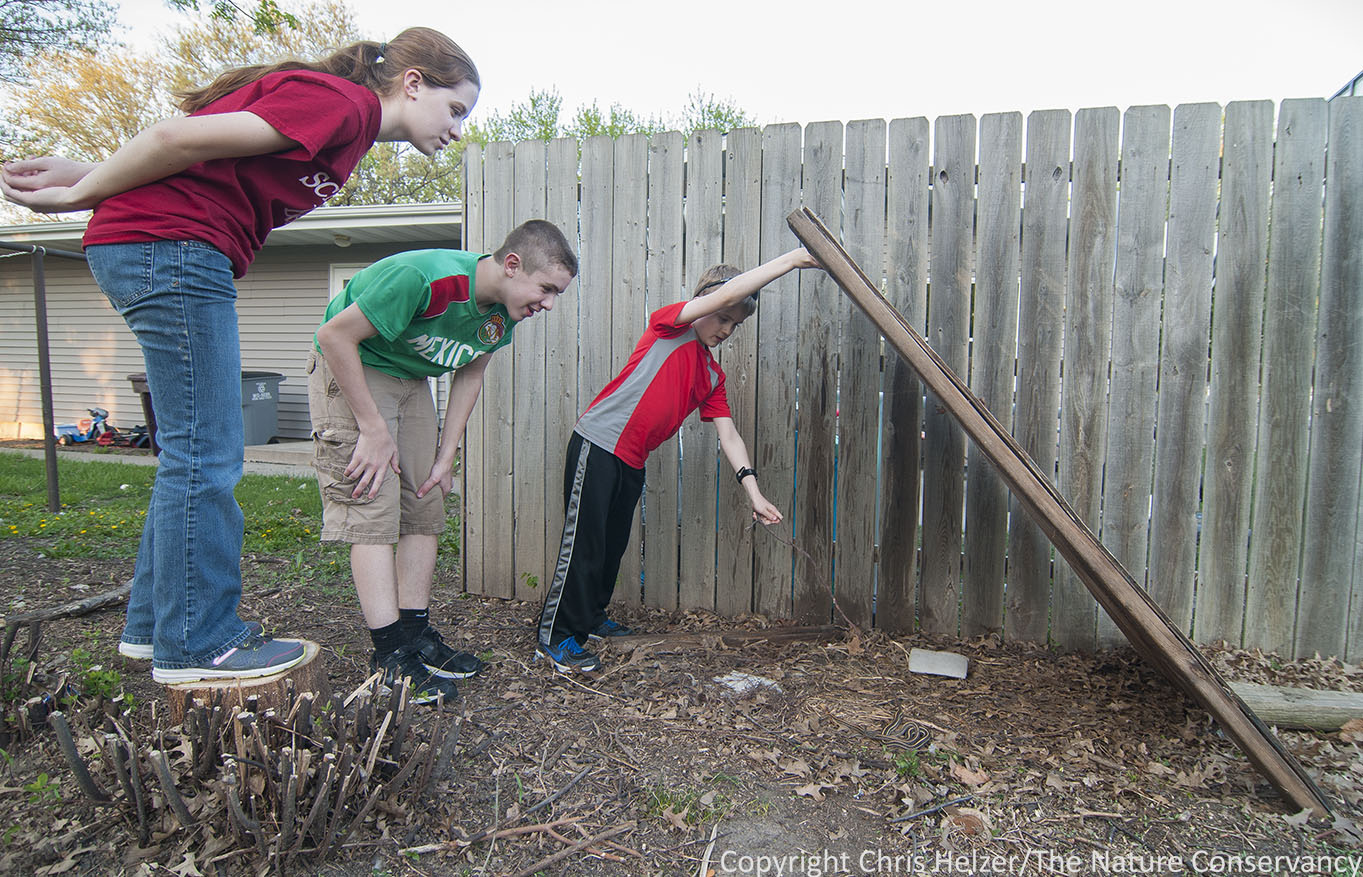
Counting snakes.
Counting snakes.

A big female plains garter waits patiently for us to put her wooden shelter back in place.

A big female plains garter waits patiently for us to put her wooden shelter back in place.

I’m not sure what the wood was used for (an old makeshift door of some kind?), or why it was left behind to rot beneath leaves, but I think it’ll stay where it is for a while longer.  We have a lot of work to do over the next few years to make the yard more friendly to pollinators, wildlife, and other creatures, but the old wood along the fence is a good start.

…I’m not sure I’ll tell the neighbors about it just yet.  That might be a conversation that should wait until I know them a little better.

Photo of the Week – March 12, 2015

We conducted our first prescribed burn of the Spring this week.  It was very small – about an acre or so – surrounded by gravel roads.  The first burn after a long winter is always a little rocky; everyone’s a little out of practice, the crew isn’t yet used to burning with each other, and equipment hasn’t been fully tested…  So it was nice to start small, though the low humidity and warm day made it plenty exciting, even within a small, safe unit.

After the smoke cleared and everyone headed out, I stuck around and poked around in the ashes a little.  I found a patch of prickly pear cactus scorched by the fire, and liked the patterns of color and texture, so I grabbed my camera.

Prickly pear cactus after a prairie fire.  Fire doesn't kill the plants, but does set them back for a while.

Prickly pear cactus after a prairie fire. Fire doesn’t seem to kill the plants, but does set them back for a while.  The Nature Conservancy’s Platte River Prairies, Nebraska.

I was mesmerized by the colors and patterns in the scorched cacti.

I was mesmerized by the colors and patterns in the scorched cacti.

I photographed scorched cacti for an embarrassingly long time.  Then, since my knees were already black with soot, I wandered around a little more and photographed a few other interesting post-burn scenes.  I’m a little eccentric that way.  Here are some of the other images from the day – enjoy your weekend!

Tall dropseed (Sporobolus compositus) on ashes.

Tall dropseed (Sporobolus compositus) on ashes.

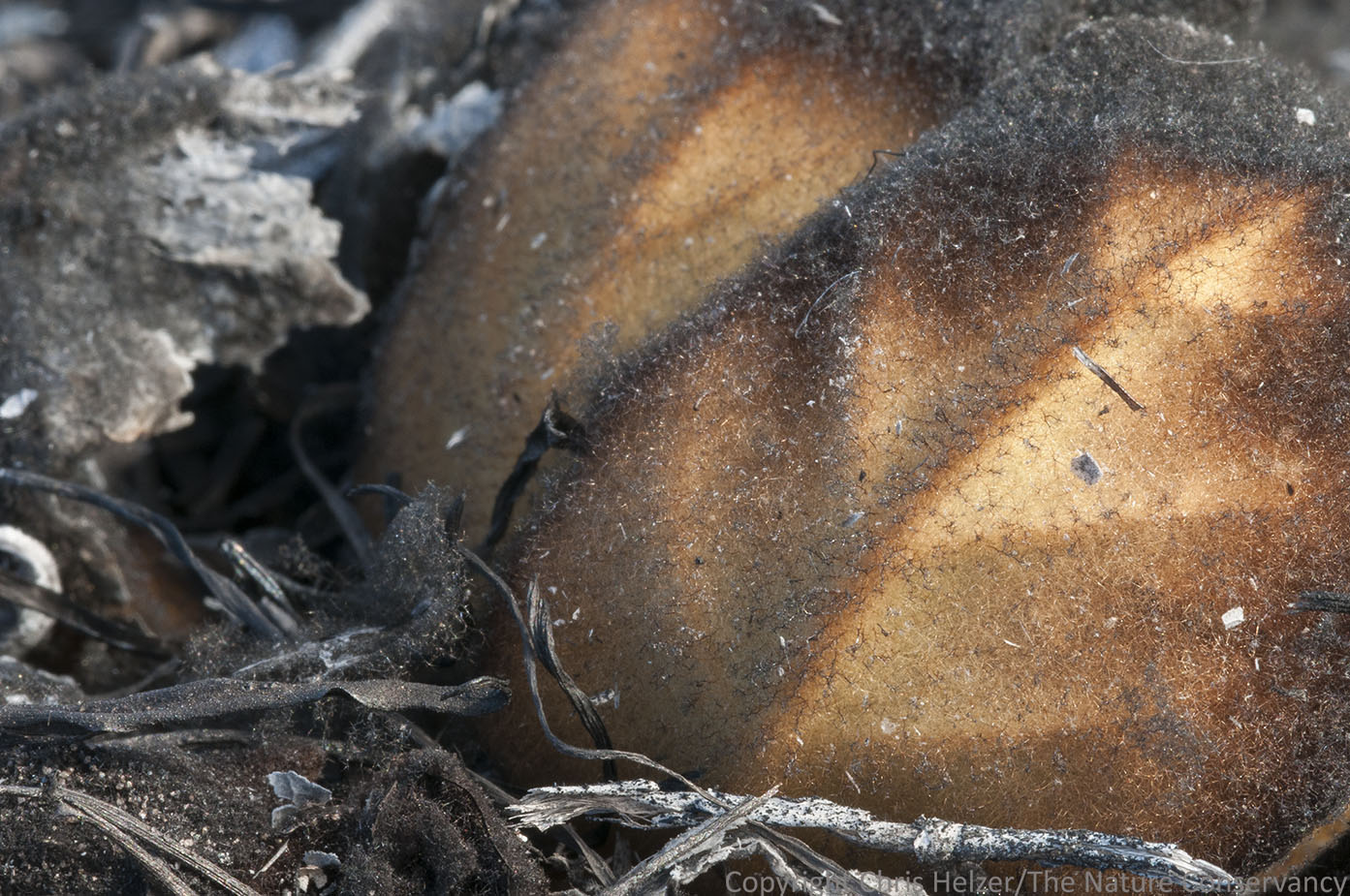
Common mullein leaves, fuzzy and partially blackened by fire.

Common mullein (Verbascum thapsus) leaves, fuzzy and partially blackened by fire.

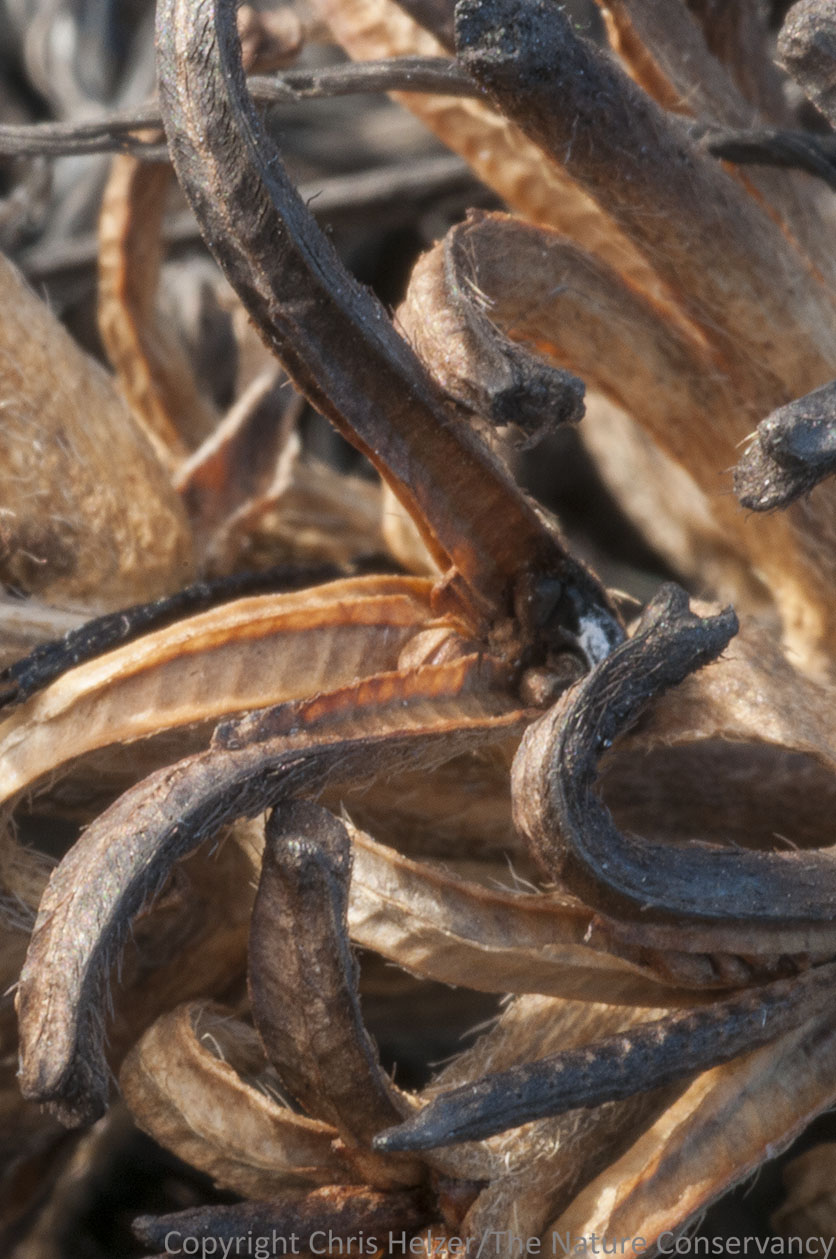
Partially burned seed pods of fourpoint evening primrose (Oenothera rhombipetala).

Partially burned seed pods of fourpoint evening primrose (Oenothera rhombipetala).

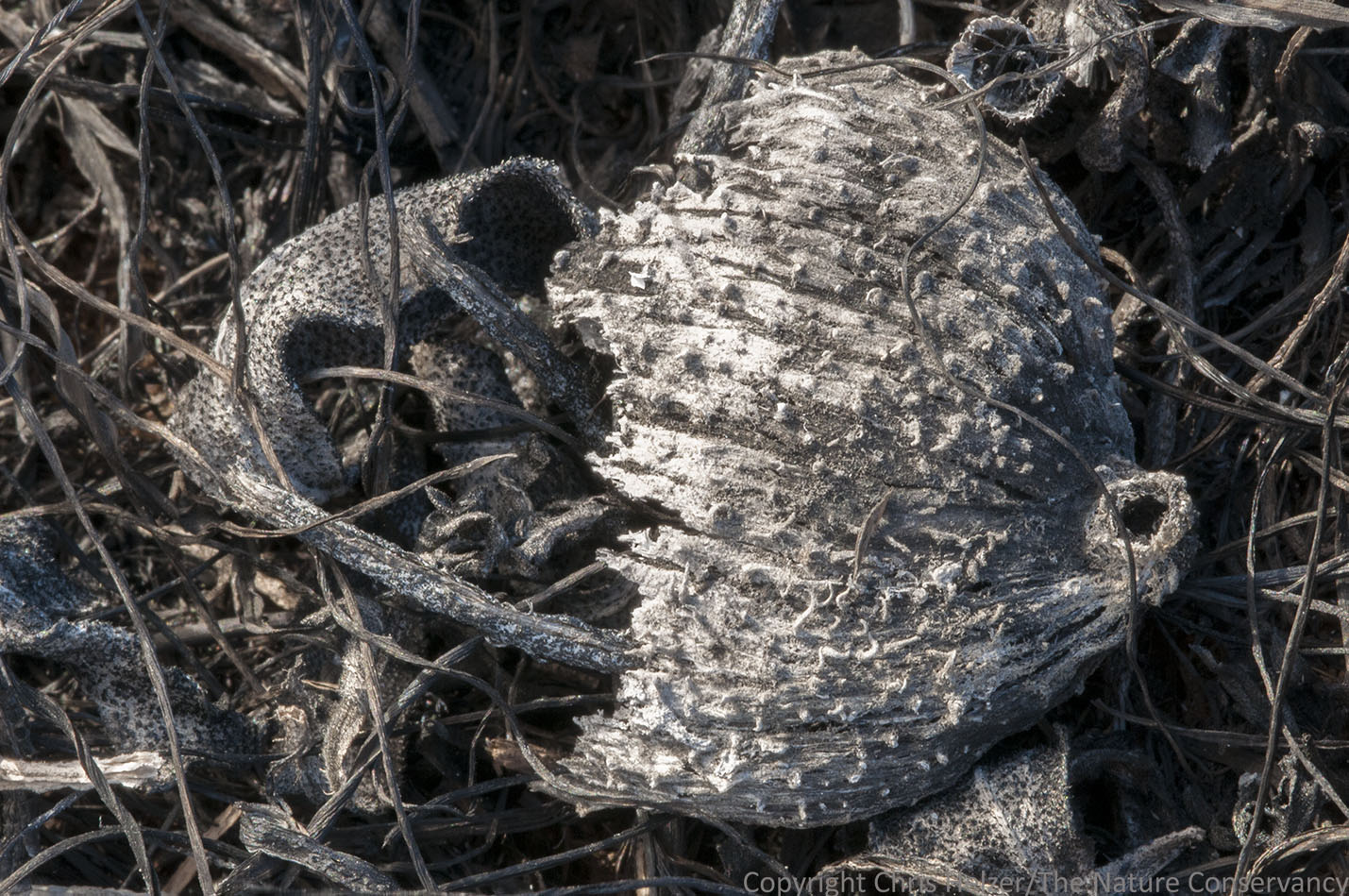
The remains of a milkweed pod (Asclepias syriaca).

The remains of a milkweed pod (Asclepias syriaca).