
Last week, I complained about the long brown winter we’ve had, and wondered when spring was coming. Well, it’s still brown – we missed out completely on the last snow, which had been forecast to give us up to four inches of photographic beauty.
On the upside, I went out to my favorite wetland yesterday, and while it was only 16 degrees F, it actually felt much warmer than that. A lack of wind helped, as did periodic sunshine, but the air just felt like it was warming. It’s an odd thing, isn’t it? The unemotional thermometer said 16 degrees, but I think my knowledge that the temperature was going to get above freezing later in the day (it did!) helped warm me up.
There were other signs of impending spring. Red-winged blackbird males have returned to begin setting up and defending their territories. (Females, the smarter ones, are apparently content to wait a few more weeks until it warms up and the boys have fought their silly little battles.) Sandhill cranes are starting to fill the sky as the annual migratory phenomenon begins again here on the Central Platte River. I’m still waiting for the first song sparrow to begin singing, and I’m guessing it’ll be a while until I see the first bees emerging, but things are looking up.
Here’s a photograph from my short hike yesterday. I’ll share more later this week.
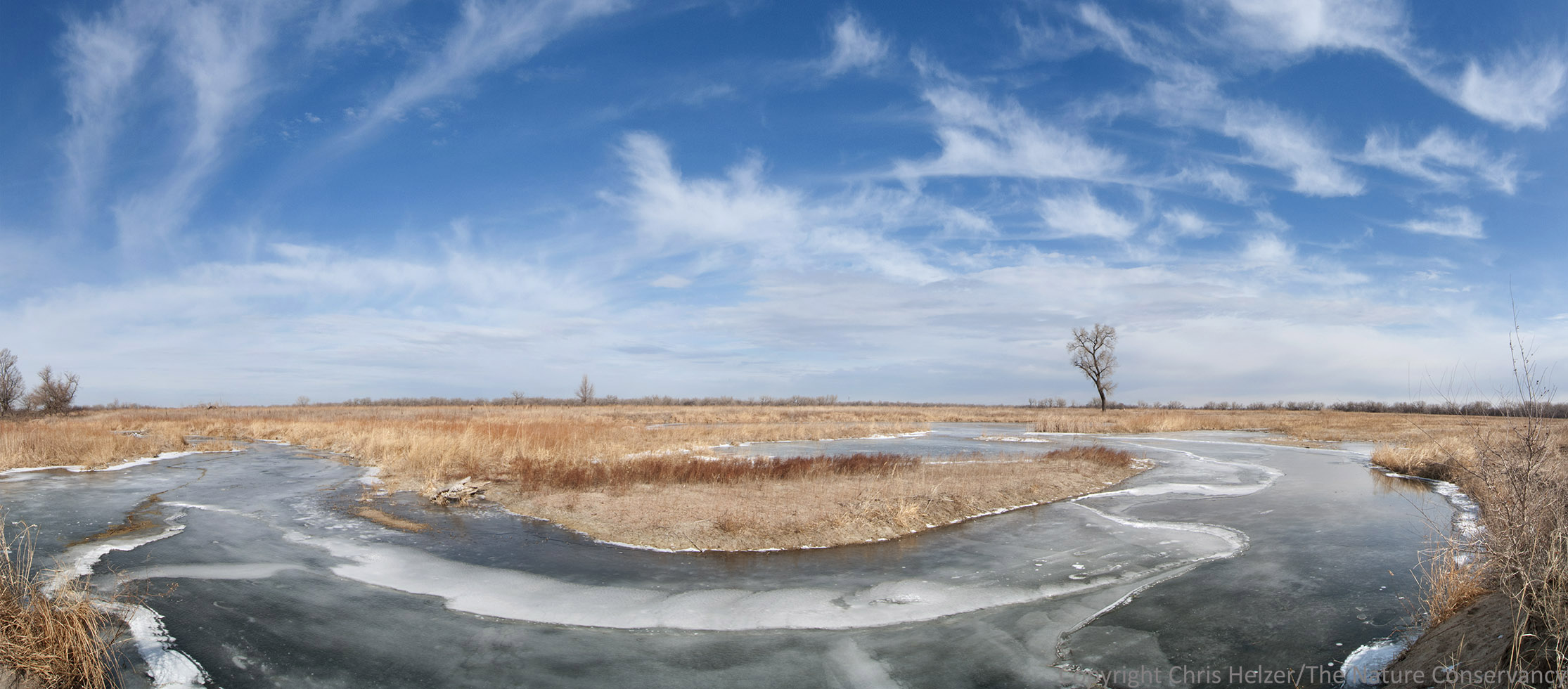
A panoramic photo made up of nine different images stitched together. The Nature Conservancy’s Derr Wetland Restoration, Nebraska. Click on the photo to see a larger version of it that better portrays the feel of the site.
.
 The Prairie Ecologist