
Photo of the Week – October 5, 2017

I had a few minutes after a meeting yesterday to walk through a restored wetland in our Platte River Prairies.  I didn’t really have any preconceived notion of what I was looking for – I just wanted to explore a site I hadn’t visited for a while.  There weren’t many flowers still blooming, but the golds and browns of autumn vegetation were still mixed with quite a bit of green.  Recent rains had raised the level of the stream flowing through the site, as well as the groundwater-linked wetlands adjacent to it.  I pulled my muck boots on over the decent jeans I’d worn for the meeting and wandered out into the wetland.  Here are a few of the photos I got from my brief walk.  I hope you enjoy them.

Water flows over a small beaver dam, split and rippled by multi-colored vegetation.
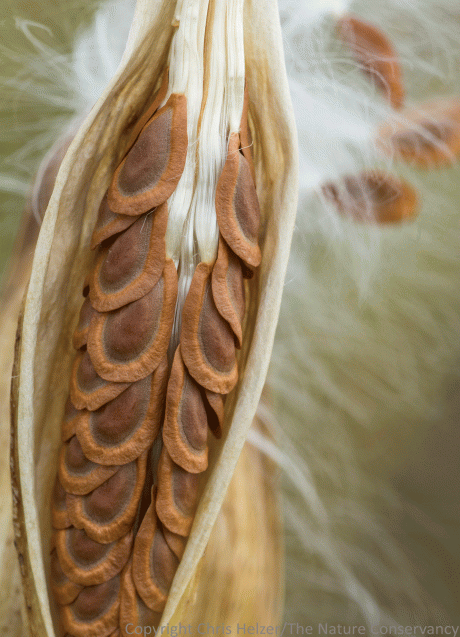
Swamp milkweed seeds lined up and waiting to make their jump.
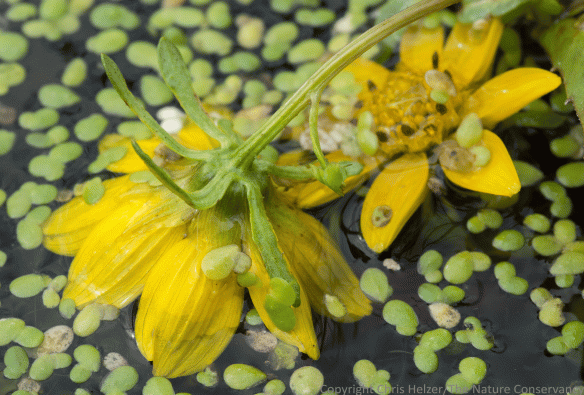
A beggarticks (Bidens sp) plant in water surrounded by floating duckweed.

Photo of the Week – September 15, 2017

I spent a couple long days collecting data at the Niobrara Valley Preserve this week. There wasn’t a lot of time (or light, honestly) for photography other than the first hour of sunlight on Thursday morning. The Sandhills prairie is nearing the end of flowering season and sliding quickly into its fall costume.  A few late-season flowers are in full bloom, but the most of the color in the prairie this time of year comes from leaves changing from green to various shades of brown and red.  Here are a few photos from yesterday morning.

Sunrise over the Sandhills and Niobrara River, with sunflower skeletons in the foreground.

The flurry of sunflower blooming was nearly over, but a few plants held on to their last blossoms, much to the delight of the bees, butterflies, grasshoppers, and other insects feeding on their pollen and nectar.

Wild rose (Rosa arkansana) had a great fruit year in the Sandhills, especially in recently-burned prairie. 

Aromatic aster (Aster oblongifolium) is one of the last flowers to bloom in the Sandhills season, and patches were scattered about the prairie.

Smooth sumac in the the middle of its transition to from green to red.  In this burned area, skeletons of previous growth are surrounded by the regrowth from the base of the plants.