Photo of the Week – August 13, 2015

Nebraska has 108 species of grasshoppers.  They come in a wide variety of sizes, shapes, and colors, and generally speaking, the further west you go in the state, the more species you can find.  While on a short trip to the Nebraska Sandhills last week, I was fortunate to see two of the most beautiful of Nebraska’s grasshopper species.

Lubber grasshopper. Valentine National Wildlife Refuge, Nebraska.

Plains lubber grasshopper (Brachystola magna). Valentine National Wildlife Refuge, Nebraska.

I saw several plains lubber grasshoppers (aka homesteaders) in the prairie.  These huge flightless grasshoppers are about the size of mice (more than two inches long, and very thick).  They feed primarily on wildflowers, including sunflowers and hoary vervain (Verbena stricta).  According to Grasshoppers of Nebraska, they are not crop pests but in years when their population soars, they can present a hazard to drivers because their bodies can make roads slick.  Think of that!
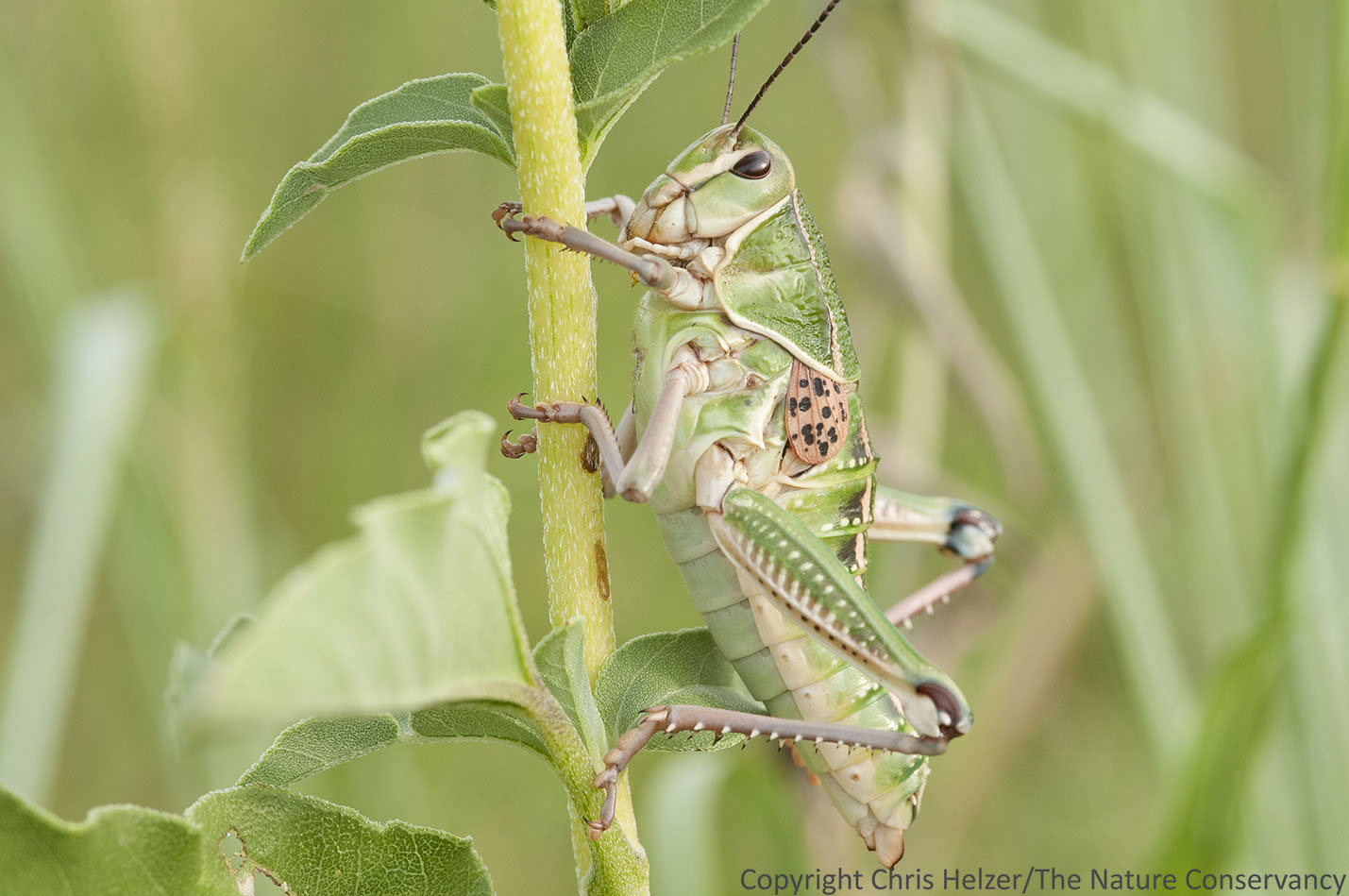
Lubber grasshopper. Cherry county ranch of Jim VanWinkle, Nebraska.

Here is a plains lubber on its favorite (according to some sources) food – an annual sunflower (Helianthus petiolaris).  Cherry County, Nebraska.

I also enjoyed the chance to see a painted grasshopper (Dactylotum bicolor), a species I first noticed last year on a trip to western Kansas.  This gorgeous creature might be the easiest grasshopper in Nebraska to identify – as far as I know, there isn’t anything else in the state that looks remotely like it.  Like the lubber, the painted grasshopper eats primarily wildflowers, particularly false boneset (Brickellia eupatorioides).  It likes habitat with lots of exposed soil, which is convenient for those of us trying to find and photograph them.

Painted grasshopper at the Valentine National Wildlife Refuge. Nebraska.

A painted grasshopper at the Valentine National Wildlife Refuge. Nebraska.  The colors and patterns on this species make it impossible to confuse with others.

Grasshoppers, and katydids, which look like grasshoppers but have much longer antennae, are a fascinating group of insects.  They have interesting and complex communication strategies and each species has its own set of dietary preferences – some are specialists on just a few plant species and others are generalists.  Only a very few are considered to be pest species, and most of those are simply native species that have adapted well to the abundant food humans provide in the form of monoculture row crops.

Perhaps most of all, the sheer abundance and biomass of grasshoppers make them ecologically important in grasslands.  If you collected all the grasshoppers from a prairie, their biomass would equal that of the bison or cattle in the same prairie.  As such, they are a major food source for many other species, including many birds, and major herbivores that influence plant communities in complex ways.

Grasshoppers are also very visually appealing if you take the time to look closely at them.  The plains lubber and painted grasshopper are particularly pretty, but every grasshopper species has its own beautiful combination of colors and patterns.  Go out and find your favorite today!
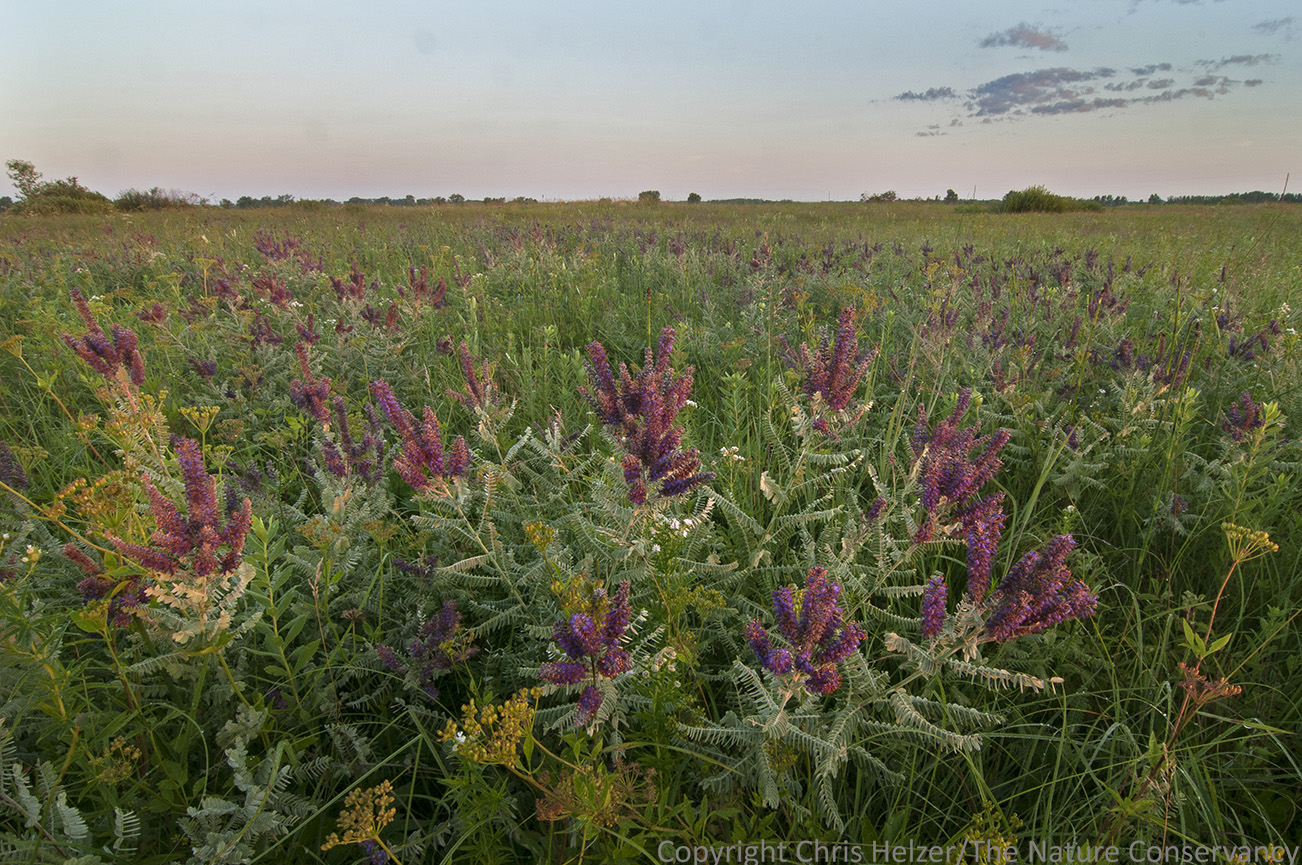
Photo of the Week – July 30, 2015

During our trip to the Grassland Restoration Network workshop in Minnesota last week, several of us got up early enough to catch sunrise at The Nature Conservancy’s Bluestem Prairie on two beautiful mornings.  I shared a few photos from those outings last week, but thought I’d post a few more today.  I’ve got lots more…it wasn’t hard to find subject matter to photograph!

Leadplant and wildflowers.  TNC Bluestem Prairie, Minnesota.

Leadplant (Amorpha canescens) and other wildflowers abound on The Nature Conservancy’s Bluestem Prairie near Glyndon, Minnesota.

Woundwort (Stachys palustris).

Marsh hedge nettle, aka woundwort (Stachys palustris).

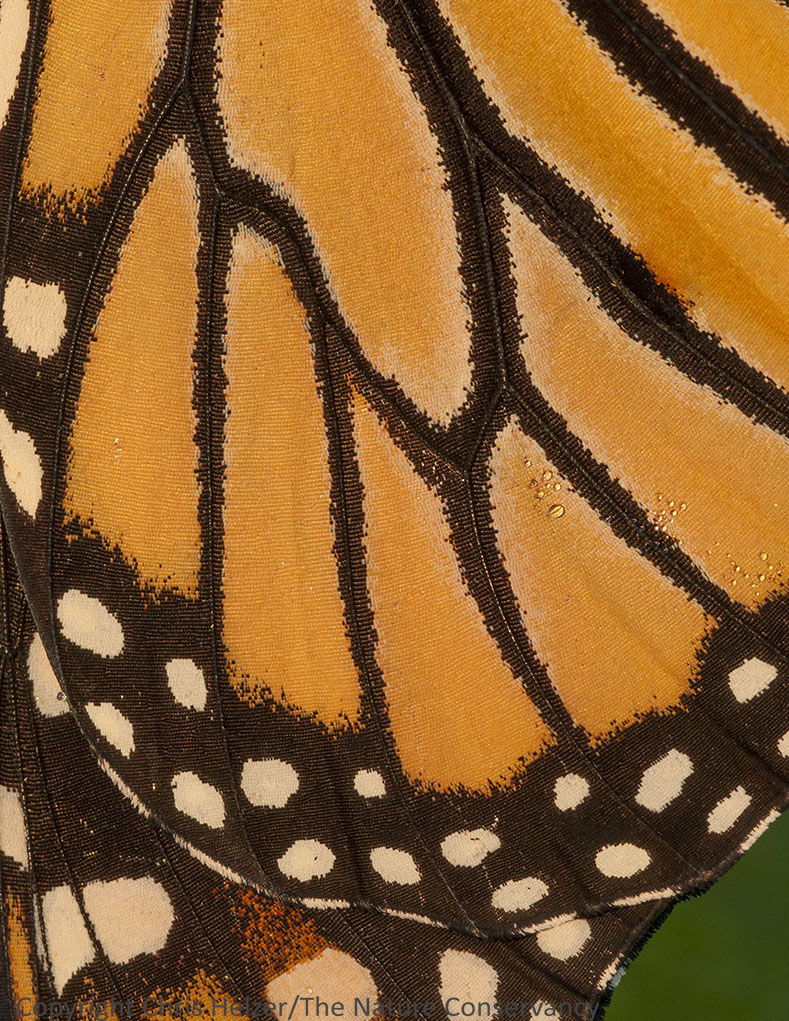
The cool dewy morning allowed me to get pretty close to this resting monarch butterfly...

The cool dewy morning allowed me to get pretty close to this roosting monarch butterfly…

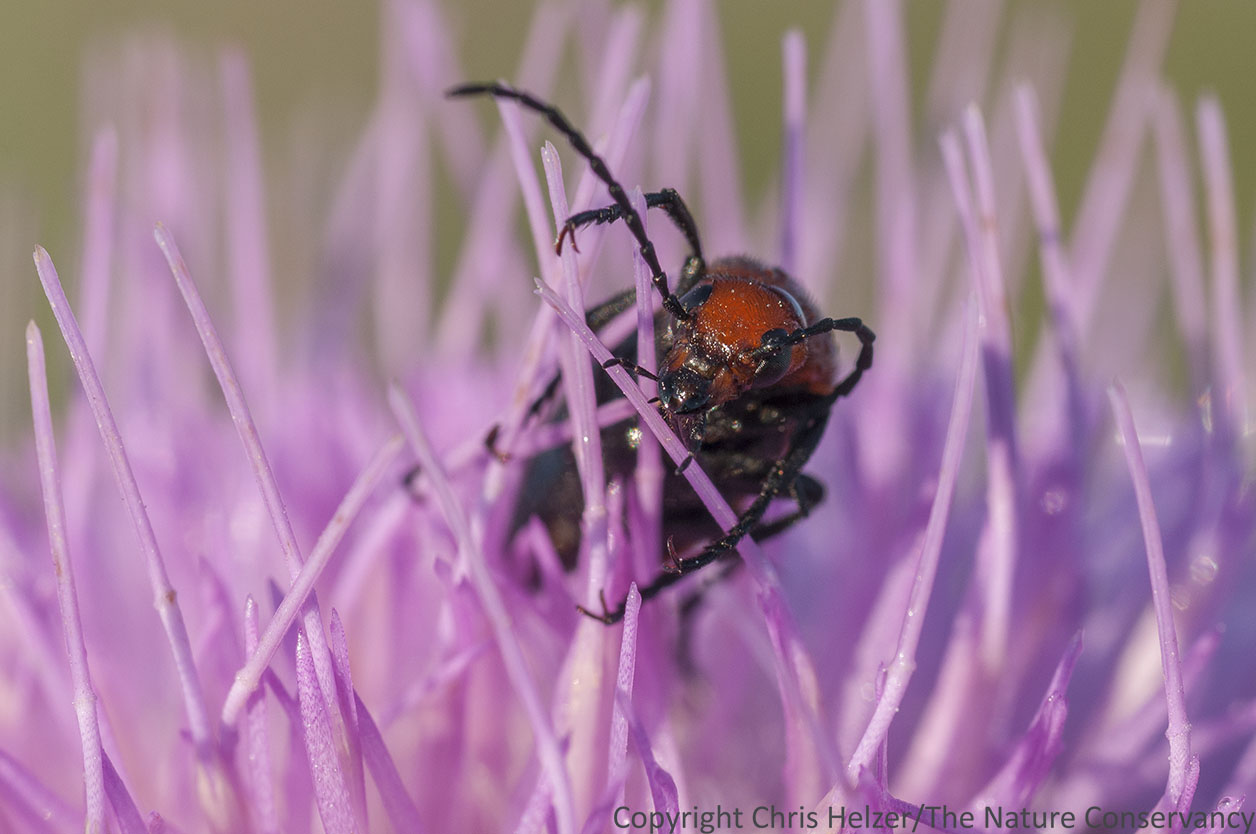
Beetle on Flodman's thistle.  TNC Bluestem Prairie, Minnesota.

This beetle was feeding its way across the top of this Flodman’s thistle (Cirsium flodmanii) – at least I think that’s what I think the thistle species was… it’s always dangerous to guess when I’m far from home.

Common milkweed.  The Nature Conservancy's Bluestem Prairie - Minnesota.

Common milkweed flower buds can be just as attractive as the open flowers…

Bee on milkweed.  TNC Bluestem Prairie, Minnesota.

This bee spent the night on a milkweed leaf and wasn’t quite warm and dry enough to fly off when I spotted it.  If you look carefully, you can see pollinia stuck on two (maybe three?) of its feet.  If you’re not familiar with the fascinating (and unlikely) story of how milkweed is pollinated, you can learn more here.

Purple coneflower (Echinacea angustifolia).  The Nature Conservancy's Bluestem Prairie - Minnesota.

Purple coneflower (Echinacea angustifolia).  This is a species we don’t find very often in the Platte River Prairies (though it’s fairly common nearby) so I always enjoy seeing and photographing it when I can.  As with other “composite” flowers, coneflowers are actually collections (composites) of two kinds of flowers – the ray flowers that look like petals and the disk flowers in the center.  Occasionally, as in this case, a genetic signal gets crossed and ray flower pops up where a disk flower should be.

If you find yourself traveling to or through northwestern Minnesota (just east of Fargo, ND), I encourage you to make the time to visit Bluestem Prairie Scientific and Natural Area.  You can find directions and more information on the site here.  The Nature Conservancy owns about 6,000 acres of prairie there, and their ownership is bolstered by several other tracts of conservation land right next door.  The prairie hosts nesting prairie chickens and beautiful tracts of northern tallgrass prairie.  It’s worth the trip to see it.