Konza Prairie Trip Part 3 – Questions About Frequent Prairie Burning

A few weeks ago, I wrote about our trip to the Konza Prairie Biological Station in eastern Kansas.  On that trip, we learned about research results showing that frequent spring fires (one or two year frequency) can prevent encroachment of tallgrass prairie by trees and shrubs.  Less frequent fire allows shrubs, especially dogwood and sumac, to invade.  Pretty simple – we should be burning tallgrass prairie at least every two years, right?

Hang on just a minute, Sparky.

As you might expect, there is more to the story.  It turns out that the frequent spring fire (with no grazing) regimes at Konza has other impacts.  One example is that frequent fire favors grasses over forbs and decreases plant diversity over time.  Prairies that are burned every year or ever two years develop a grass-dominated plant community in which many forb species are difficult to find.  So, frequent fire is bad for plant communities…  Right?
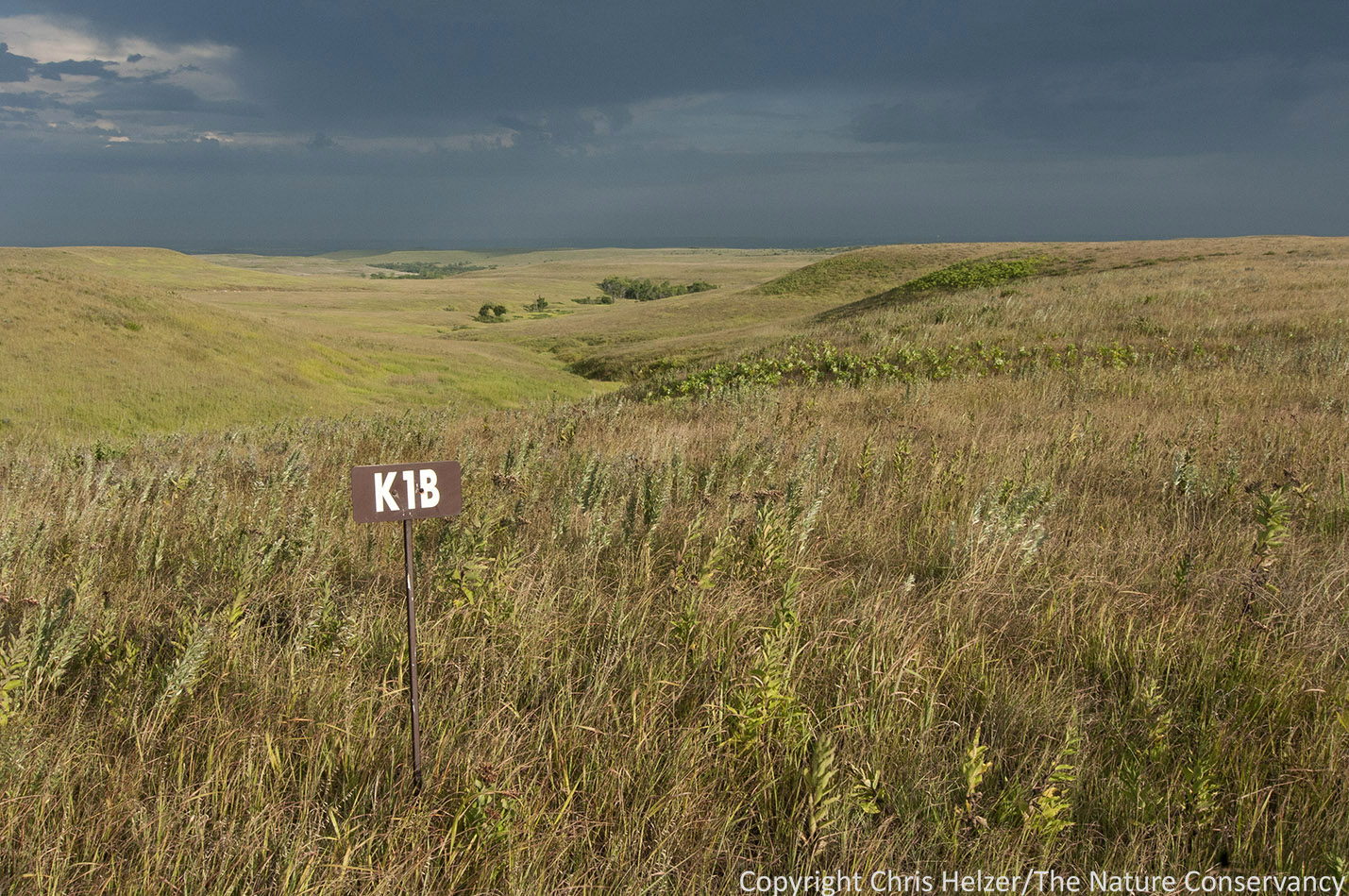
Annually-burned tallgrass prairie at Konza Prairie, in the Flint Hills of eastern Kansas.

Annually-burned tallgrass prairie at Konza Prairie, in the Flint Hills of eastern Kansas.  August 2014.

But in other tallgrass prairies, especially in more eastern prairies such as those in Illinois, researchers are seeing very different impacts of frequent fire.  A paper by Marlin Bowles and Michael Jones, for example, found that frequent fire “stabilizes” plant communities in the Chicago, Illinois area, and that plant diversity was positively correlated with fire frequency.  In fact, their results are almost the exact opposite of what was seen at Konza.  In the Illinois study, frequent fire decreased the dominance of warm-season grasses and increased the diversity of summer wildflowers.
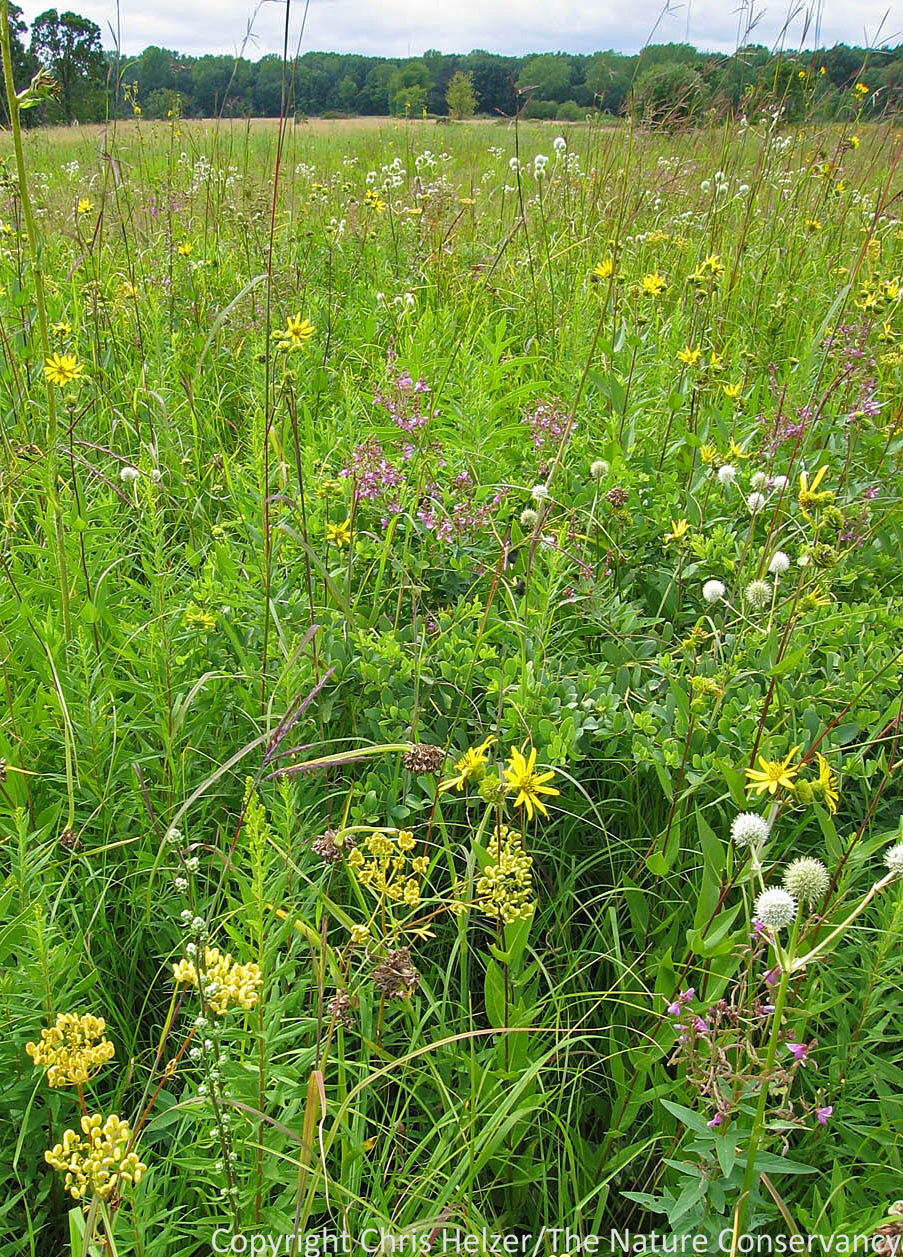
Frequently-burned prairie at the University of Wisconsin-Madison Arboretum.  Clearly, frequent fire is not incompatible with plant diversity...

Frequently-burned prairie at the University of Wisconsin-Madison Arboretum. Clearly, frequent fire is not incompatible with plant diversity…

What the heck is going on??

If we could answer that question, we’d be miles ahead of where we are now in terms of understanding prairie ecology.  I can come up with lots of potential reasons for the difference between frequent fire application in Illinois versus Kansas, but I can’t confirm or deny any of them – we simply don’t know.  As I think about why prairie plant communities might become more dominated by grasses over time, I wonder about factors such as small scale plant diversity, soil productivity, and the soil microbe community – all of which may correlated with each other.

Eastern remnant (unplowed) prairies tend to have a higher density of plant species (e.g., plant species per square meter) than western prairies. High species density could potentially help suppress grass dominance because of the variety of competition strategies each of those plant species employs to take and defend territory.  Those strategies include allelopathy (releasing chemicals that retard growth of nearby plants), rhizomes (underground stems that can connect even fairly distant stems of the same plant together), root density/depth, and many others.  It seems logical that communities with that kind of well-established complex competitive environment would present a major challenge for any species (grasses or otherwise) trying to become dominant.  Maintaining consistent growing conditions by burning or haying annually might facilitate stability within those plant communities because it essentially maintains a stalemate; no plant species is ever given a window of opportunity to gain advantage over its neighbors.  Or this could all be balderdash – I’m just throwing out ideas here.

Does the rich soil organic matter content of eastern tallgrass prairies help suppress grass dominance?  It’s probably the major reason for the higher plant species density in those prairies, so maybe.  On the other hand, research at Konza and elsewhere in more western prairies shows that adding nitrogen to prairies (increasing productivity) increases grass dominance and lowers plant diversity.  Hmm.

Soil microbial communities surely have a very important influence on plant diversity, but (as discussed in a previous post) we don’t know much about them yet.  I’m optimistic that our understanding of soil microbes will grow tremendously during the next few decades, but the complexity of that world might mean that it will take many more decades before we start to get a grasp on it.  In the meantime, we can use it as a convenient scapegoat.  If something you don’t like is happening to your prairie, it’s probably a soil microbe problem…

Those of you who read this blog frequently may be surprised that I haven’t mentioned insects or other animals yet.  Let’s talk about them now, shall we?

It’s very important to remember that even if frequent burning seems to maintain high plant diversity in (some) prairies, a prairie is much more than just plants.  The use of frequent fire tends to create fairly homogenous habitat conditions across a prairie.  Regrowth rates are similar across the whole burned area, so vegetation height and density is relatively uniform.  Dead material, including both litter and standing dead vegetation, is scarce.  Because habitat diversity is limited, so is the diversity of creatures that rely on that habitat.  In taxonomic groups ranging from grasshoppers and spiders to mice and birds, research shows that habitat diversity is positively correlated with species diversity.  Creating habitat heterogeneity – through grazing, patchy mowing, or other means can help facilitate a more diverse animal community.  Burning in a less regimented way can help too, especially if that means splitting a prairie into multiple management units and burning only a subset of those each year.
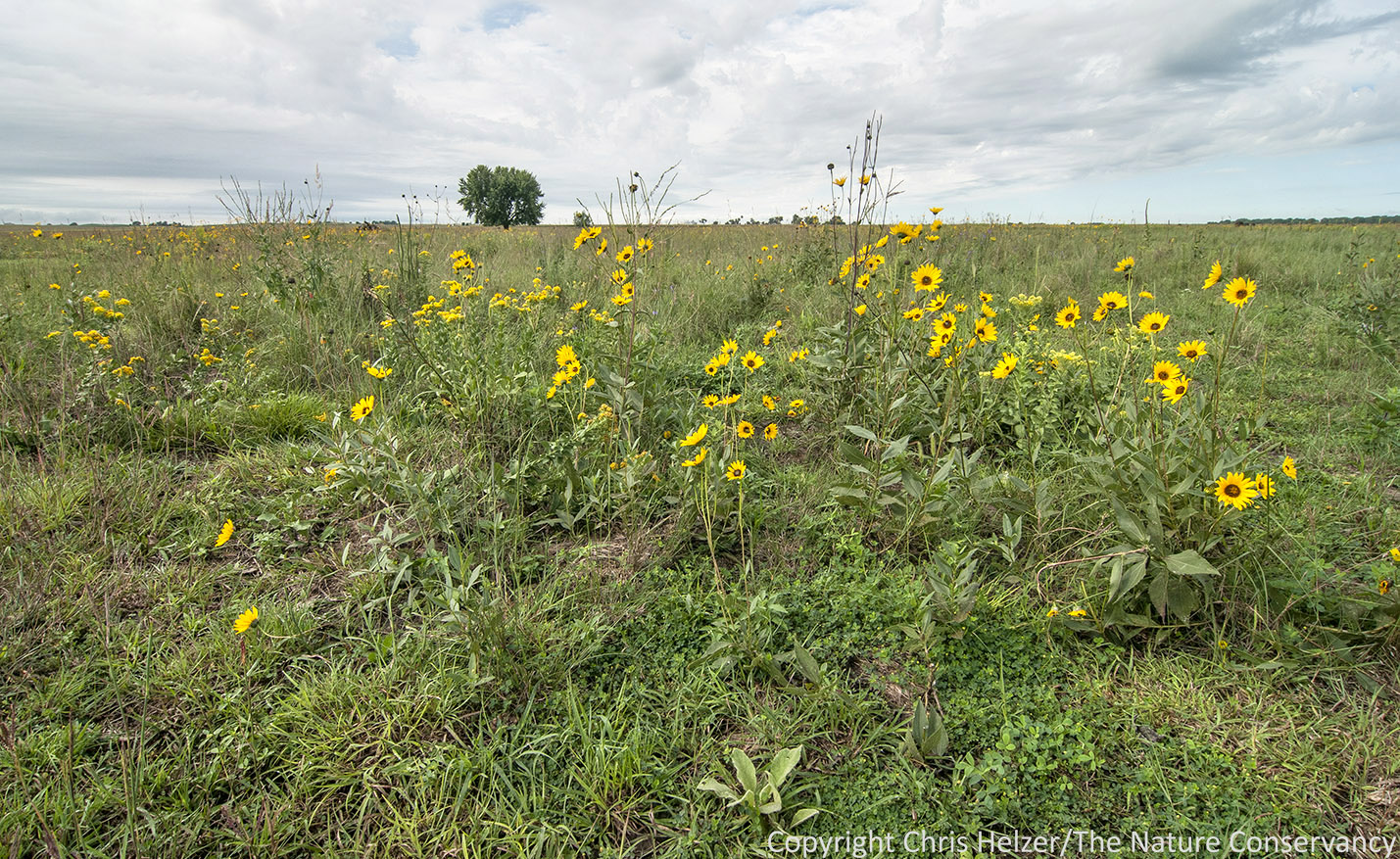
Habitat

Heterogeneous habitat structure, including tall, short, and mixed-height vegetation – like that shown here – can help maintain diverse invertebrate and wildlife communities.  Grazing is one great way to manipulate vegetation structure, but isn’t feasible at all sites.  Grazed prairie at The Nature Conservancy’s Platte River Prairies, Nebraska.

In small isolated prairies, it’s also critically important not to burn (or mow) the entire prairie at the same time.  With limited opportunities for species to recolonize from other prairies, a fire that kills all of the individuals of a particular species (e.g., an insect that overwinters in the stems of grasses or in the litter along the ground) can mean the end of that species’ existence in that prairie.  Maintaining a floristically diverse prairie without a full complement of invertebrates doesn’t seem like success to me.  On the other hand, I also appreciate the difficulties associated with managing small prairies.

To wrap this up, I think there are two really important points to make about fire frequency in prairie management.  First, there are some big questions about why frequent fire seems to maintain high plant diversity in some prairies but encourages grass dominance in others.  Figuring out the answers to those questions may be one of the more important keys to prairie conservation success.  Second, even if frequent fire maintains high plant diversity and repels invasion by shrubs and trees, it still might not be the best choice for a prairie management strategy.  There is much more to a prairie than its plants, and even if you don’t much care for invertebrates, birds, reptiles, or mammals (and how could you not?) those species – especially the invertebrates – are strongly tied to the long-term viability of the plant community, so it’s probably not good to ignore them.  To be clear, I’m not saying people who use frequent fire are evil destroyers of animals.  I’m just raising a flag of caution and pointing out some potential tradeoffs.
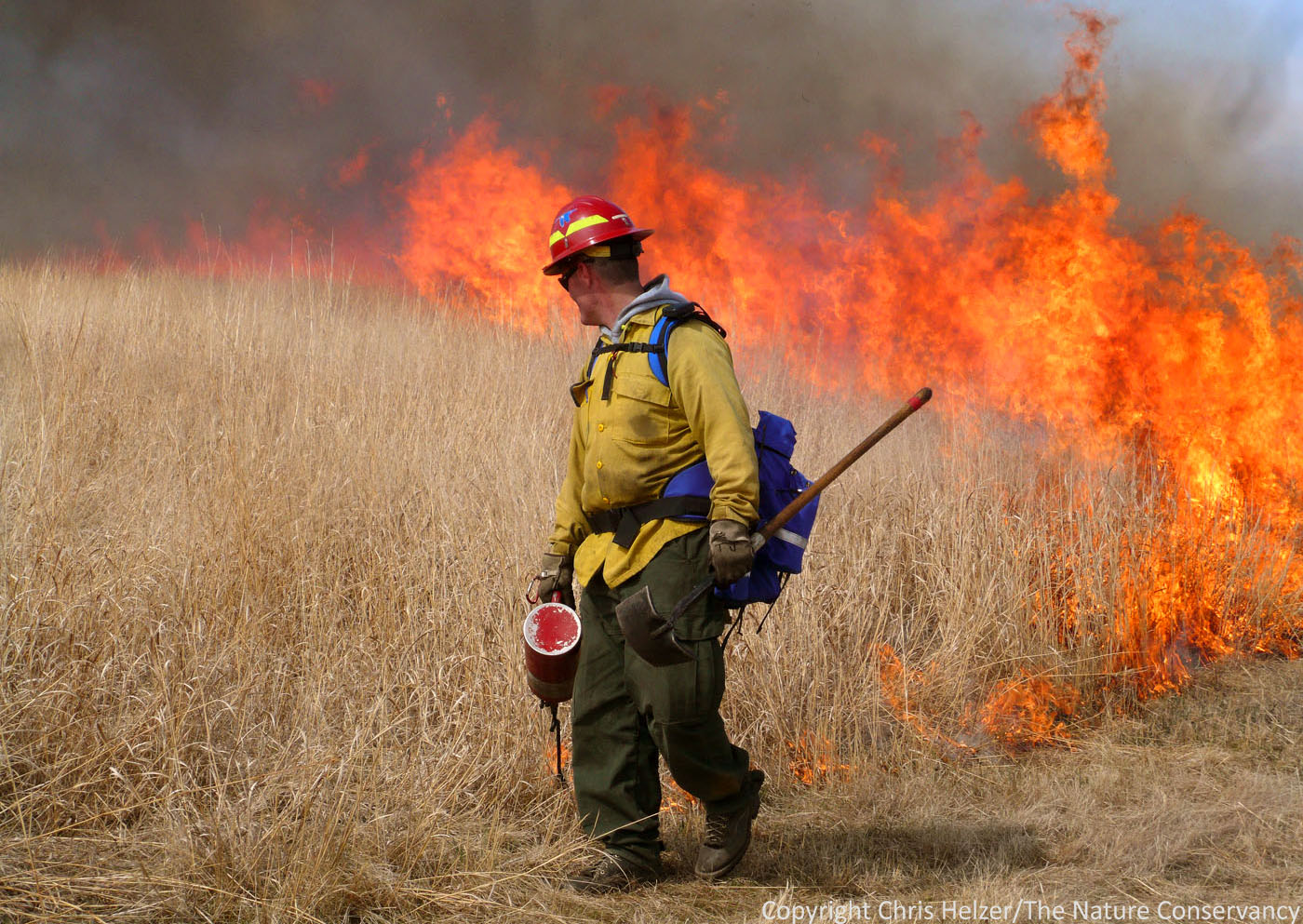
Prescribed burning is an important management tool, but its impacts on prairie communities can be complicated.

Prescribed burning is a valuable management tool, but its impacts on prairie communities can be complicated.  It’s important for prairie managers to recognize and account for both the negative and positive impacts of fire.

Those of us who work with prairies are used to the seemingly overwhelming complexity of grassland communities and the way those communities respond to management.  In fact, for many of us, it’s a big reason we love prairies as much as we do.  While we still have more questions than answers about effective prairie management, we have enough information to go forward with.  Most importantly, prairies are pretty tough, so excepting drastic measures such as broadcast spraying with 2,4-D (and maybe burning an entire tiny prairie), we have the latitude to try out lots of ideas and see what works.  We’ll learn as we go.

In the meantime, it’d be great if all you researchers out there would get cracking on the issue of disparate effects of frequent fire in eastern versus western prairies.  It should only take a few decades to figure it out…  Right?


Just When I Think I’ve Got Something Figured Out…

I pay close attention as I walk through prairies.  I watch for tracks to see what animals are around and I notice which flowers are blooming and which insects are feeding on them.  Often, I notice changes in prairie plant communities and try to attribute them to our management treatments, weather patterns, or other factors.  Observations such as these are an important part of how I learn more about prairies and adjust the way we manage and restore them.

Observations are a critical component of understanding natural systems and how management and restoration actions affect them.

Careful observation helps ecologists and land managers understand how natural systems work and how they are impacted by management actions.  However, observations are tricky because they provide an incomplete picture of what’s happening and are influenced by personal bias.

Unfortunately, observations are inherently biased.  When I start to notice a pattern through observation, I construct a theory to explain it.  That’s good science.  However, once I have a theory in mind, it influences the way I see things – and I tend to interpret my observations based on my theory.  That means it’s pretty easy to start telling myself a story that sounds good, but isn’t actually true.  Sometimes, I figure out that my story is wrong through repeated observations.  More often, however, what causes me to stop and reconsider is cold hard data.  Here’s a recent example of my data showing me that I need to reconsider a theory based on observations.

Canada wildrye (Elymus canadensis) is a native cool-season grass that establishes very quickly from seed in our prairie restoration (cropfield conversion) work.  It is often very abundant during the early years of a seeding before settling down into the plant community after a few years as other prairie plants become more dominant.  A common complaint from those working with Conservation Reserve Program (CRP) or similar prairie seeding projects is that wildrye tends to disappear a few years after planting, leading people to question the value of including the species in the seed mixture.  However, in our restored prairies, I’ve observed that while Canada wildrye declines in abundance after the initial establishment phase of a seeding, it seems to persist pretty well at a moderate abundance from then on.  I’ve attributed that to our grazing management, which is partially aimed at periodically decreasing the vigor of dominant grasses.  Weakening dominant grasses should help prevent less dominant species such as Canada wildrye from being pushed out of the community altogether.

Canada wildrye  is a native cool-season grass that is common in our restored prairies.

Canada wildrye is a native cool-season grass that is common in our restored prairies.

So, my theory (which I’ve shared with many people) has been that Canada wildrye is a grass species is tied to disturbance regimes.  If a prairie is managed with a mixture of intensive grazing periods and rest periods, wildrye can sustain a fairly steady population.  It was a good theory, and seemed to fit my observations.  Until last week, I was pretty happy with it.  Then I looked at some recent data.

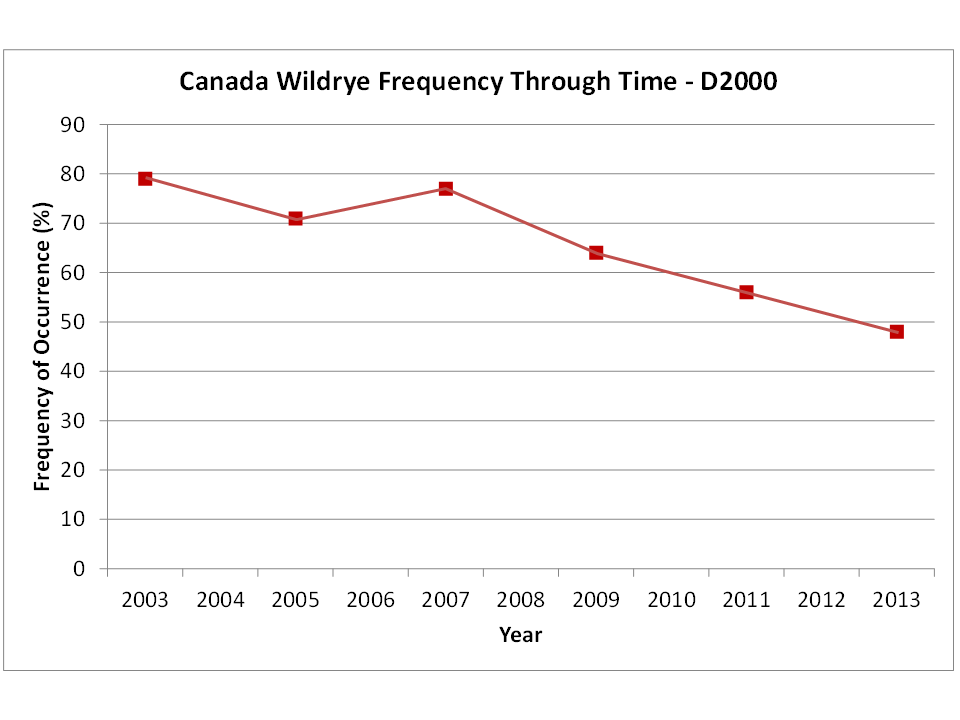
One

These data were collected from about a hundred 1 meter square plots across a prairie.  Each time I laid down the plot frame, I listed the plant species found within it.  By looking at the data from all of the plots, I can calculate a frequency of occurrence for a plant species (the % of all plots it was found in).   The data in this graph were collected from a restored prairie seeded in 2002.

.

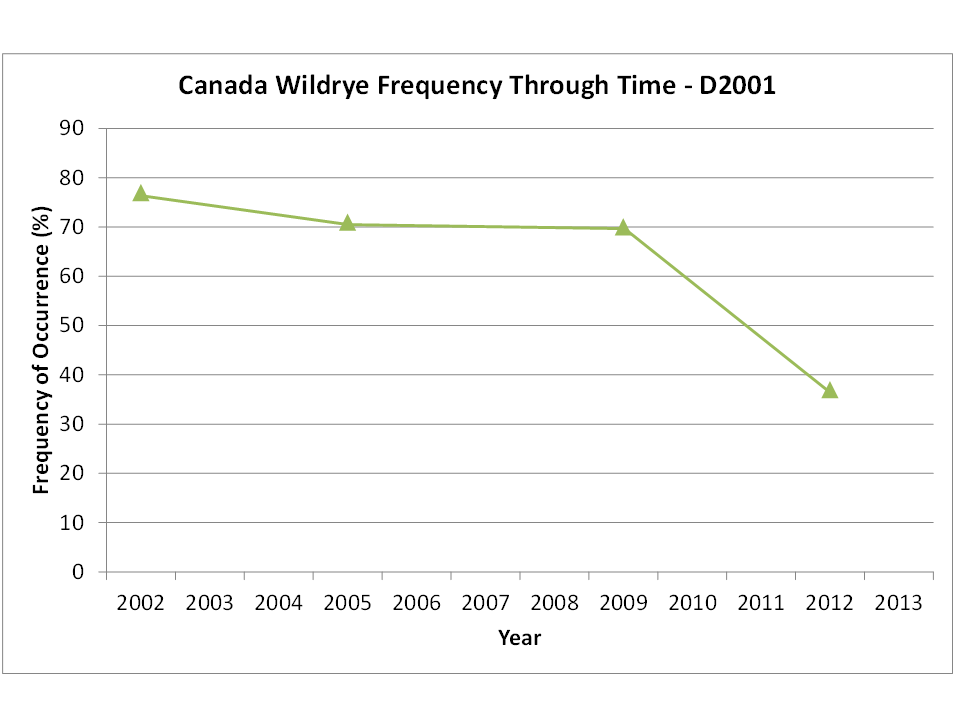
Two

These data were collected from a restored prairie that was seeded in 2000.

.

three

More data – this time from a restored prairie seeded in 2001.

From looking at the above three graphs, you might conclude that Canada wildrye populations stayed high for the first eight or nine years after planting a restored prairie and then started to taper off.  Another interpretation might be that our grazing was able to prop up those wildrye populations for a certain amount of time, but it is now starting to suffer the same fate my colleagues have complained about in CRP plantings.

Now, consider this next graph.

four

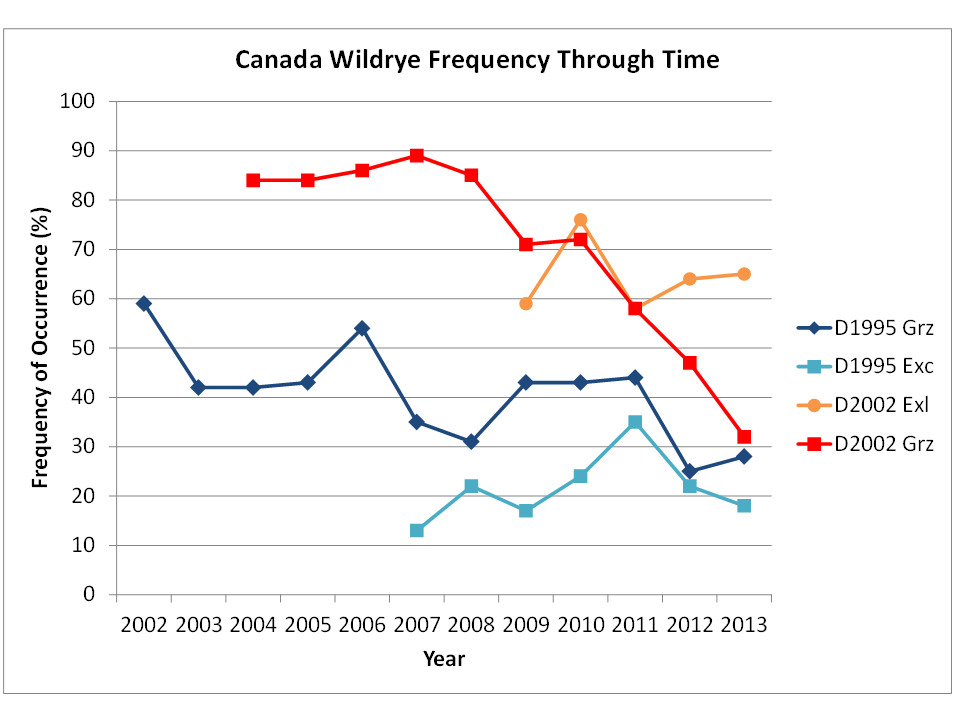
This graph shows data from the same 2002 planting as shown in the first graph (red lines in both graphs).  In this graph, however, the orange line is data from a large exclosure at the same site that has been burned but never grazed.  The two blue lines are from a different restored prairie seeded in 1995.  The dark blue has had fire and grazing management since 2002, while the light blue line is from a large exclosure at that site that has never had grazing within it.

By looking at the red and orange lines you might conclude that grazing management had a strong negative impact on Canada wildrye in the 2002 planting between 2011 and 2013.  The lines from the grazed portion of the site (red) and the exclosed portion (orange) are heading strongly in opposite directions.  However, the site was also grazed in 2008 and 2009, and there is less difference between grazed and exclosed in those years.  In addition, the blue lines on this graph show data from populations in a different nearby restored prairie (seeded in 1995) which don’t seem to be strongly affected by whether or not they are grazed.  There is less wildrye in the ungrazed exclosure of that 1995 planting but the changes in frequency seem pretty similar between the grazed and ungrazed areas.  Hmmm…

five

This graph shows data from two of the sites shown earlier (2000 and 2001 plantings) as well as another nearby restored prairie that was seeded in 1999.  Despite very similar management regimes, the 1999 restoration seems to be maintaining a high population of Canada wildrye.

This last graph just muddies the water even more.  While populations in the 2000 and 2001 restoration seem to be declining over time, wildrye frequency in the 1999 restoration has been holding steady for 15 years.  All of these sites are within a mile or two of each other, were planted with the same kinds of seed mixtures and have been managed with very similar mixtures of periodic fire, intensive grazing, and rest (modified patch-burn grazing).

It’s possible that soils play a role in the differences between sites, but all the prairies above are on similar alluvial (river deposited) soils.  None of them seem all that different from each other (I need some data on that!).  Weather could also be a factor, though most of the declines seemed to start around 2008 or 2009 – a few years after a long drought period – and have continued through both wet and dry years since.  I’m not sure what weather factors might have popped up since 2009 that would cause a decline in wildrye abundance (and only at some sites).

Surprise!  Reality is more complicated than a simple cause and effect relationship between a management regime and a plant species…

I take two major lessons from this.  First, I need to be more careful in my assumptions about how our management is impacting prairies.  That’s nothing new – I fall into that trap all the time, and frequently have to remind myself not to overgeneralize.  In this case, I had constructed a logical story explaining why Canada wildrye was abundant in our well-established (old) restored prairies but rare in ungrazed plantings such as CRP fields.  There are, of course, many possible explanations for that phenomenon (differences in soil types, plant diversity, seeding rates – particularly of warm-season grasses, fire management, etc.) but I grabbed one simple explanation without adequately considering all those other factors.

The second lesson is that it’s dangerous to rely solely on observations when trying to figure out natural systems.  This is not a new lesson either, and it’s why I try to collect as much data as I can.  Observations are really important, but are easily biased by what we think is – or should be – happening.  It’s natural to see what you expect to see.

Collecting some unbiased data, even just a little, is well worth the effort – especially if you target the data collection to your objectives.  It’s not useful to just collect data for the sake of data, but if you have a specific question (“are we maintaining diverse plant communities in our restored prairies?”) data can help answer it.  I consider plant community data collection to be a very important part of my job, but it doesn’t actually take that much time.  It takes about a day per year for each site I sample, including data collection, data entry, and analysis.  I strongly encourage every land manager to collect some kind of data from their sites.  It doesn’t have to be complicated or time consuming – just something that can help evaluate how management treatments are working.  Observations are great, but unbiased data is a good way to make sure you’re telling yourself (and others) the right story.

I’m not sure what to think about Canada wildrye now.  It’s a little disappointing to find out that my story was wrong – or at least incomplete.  On the other hand, the complexity of interactions that apparently drives Canada wildrye populations are why I love prairies and prairie management.  If it were simple, it’d be boring.

And no one likes a boring story.