
I’ve been enjoying the early flush of wildflowers this spring, and have been trying to photograph them when I get time. Because I already have quite a few close-up portraits of most of these species already, I’ve been trying to use a wide-angle lens to show the flowers in a broader context. It means lying prone on the ground with the camera resting either on the ground or on my hand to get both the flowers and the landscape/sky behind them into the same frame.
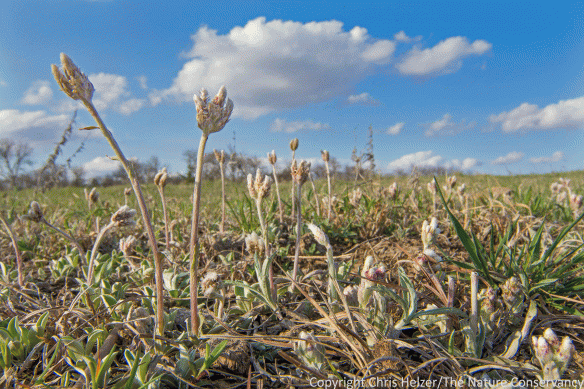
Pussytoes (Antennaria neglecta) at our family prairie near Stockham, Nebraska.
Pussytoes are an easy one to photograph because they are allelopathic and hinder the growth of neighboring plants. That short vegetation helps pussytoes plants compete with others, but also makes it easier me to photograph them without stray leaves and other plant parts getting in the way. For other species, I’ve been spending most of my time photographing the flowers growing in sites that were grazed hard last year. The grazing makes photography easier, but the access to light and weakened grass competition also stimulates more of the plants to flower than in ungrazed sites. I’ve been collecting data on flowering plant numbers over the last several days, and the data confirm my casual observations. There are many more flowers in prairie patches recovering from grazing than in patches that haven’t been grazed much in the last year or two.

Prairie violets (Viola pedatifida) in the area of our family prairie we grazed most intensively last year.

Carolina anemone (Anemone caroliniana) at Gjerloff Prairie, owned by Prairie Plains Resource Institute. They are having a great year in the part of the prairie that was burned and grazed in 2016.
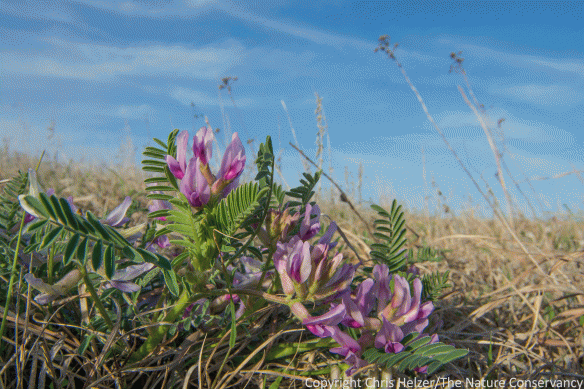
Ground plum (Astragalus crassicarpus) at the Helzer prairie.

More pussytoes at the Helzer prairie, with a little bit of dried manure for flavor.
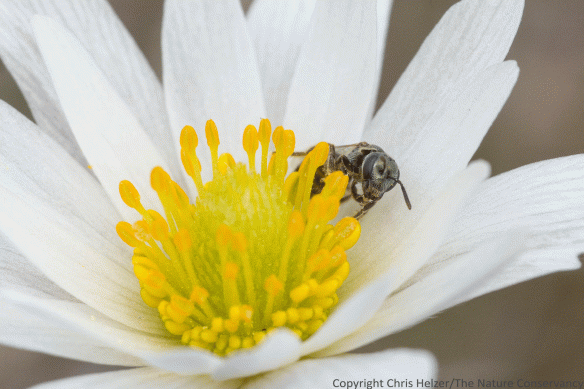
For pollinator insects, this early spring period can be very challenging because flowering plants are in pretty short supply. There aren’t many species blooming, and those that are tend to be spread sparsely across large areas. At least in the prairies around here, last year’s grazing is increasing numbers of available resources for pollinators, including both short-lived and long-lived plant species. That appears to be particularly valuable this year, given the number of butterfly and moth species taking advantage of strong south winds to make an early migration to Nebraska. I can’t remember a year when we’ve seen so many of those insects in April, including monarchs (which we’re now seeing frequently), sulphurs, red admirals and many little moths.
Now, here’s a question I hope someone out there can help answer: Pussytoes flowers are dioecius, meaning that some plants have male flowers and others have female flowers. My understanding is that pussytoes is pollinated both by wind and by insects. If the male flowers produce pollen but the females don’t, what attracts insects to move from male flowers to females and complete the pollination cycle? Do the female flowers produce nectar? I see mainly flies, and a few bees, landing on pussytoes. I don’t think those flies could be accessing nectar from deep inside the flower, and I don’t see any evidence of nectar near the top (or in any part) of the flower. Also, most of those flies and bees seem to be landing on male flowers, and I rarely see them on female blossoms. Can anyone help me understand why/how this pollination process works?



 The Prairie Ecologist