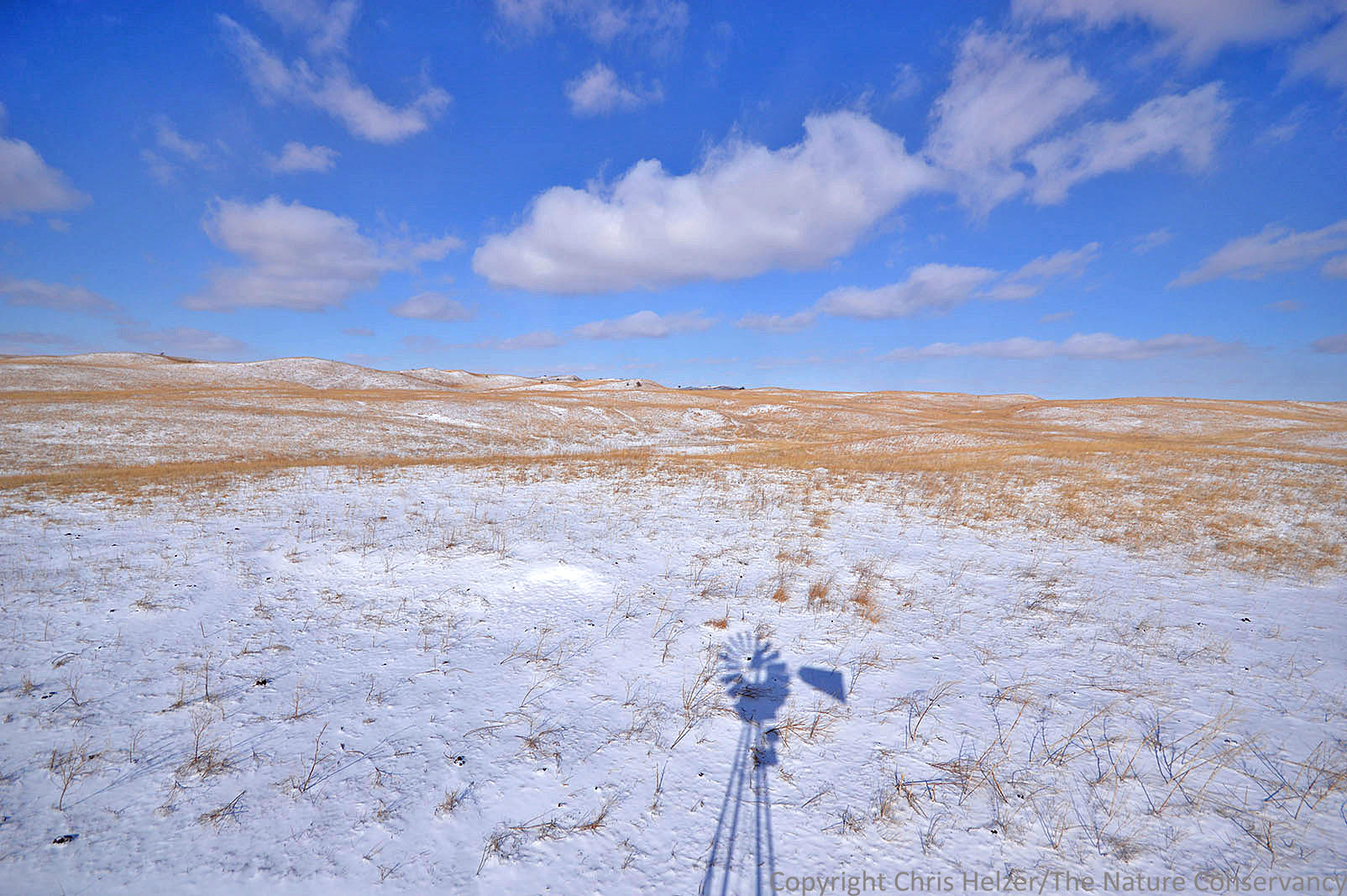
Photo of the Week – August 13, 2015

Nebraska has 108 species of grasshoppers.  They come in a wide variety of sizes, shapes, and colors, and generally speaking, the further west you go in the state, the more species you can find.  While on a short trip to the Nebraska Sandhills last week, I was fortunate to see two of the most beautiful of Nebraska’s grasshopper species.

Lubber grasshopper. Valentine National Wildlife Refuge, Nebraska.

Plains lubber grasshopper (Brachystola magna). Valentine National Wildlife Refuge, Nebraska.

I saw several plains lubber grasshoppers (aka homesteaders) in the prairie.  These huge flightless grasshoppers are about the size of mice (more than two inches long, and very thick).  They feed primarily on wildflowers, including sunflowers and hoary vervain (Verbena stricta).  According to Grasshoppers of Nebraska, they are not crop pests but in years when their population soars, they can present a hazard to drivers because their bodies can make roads slick.  Think of that!
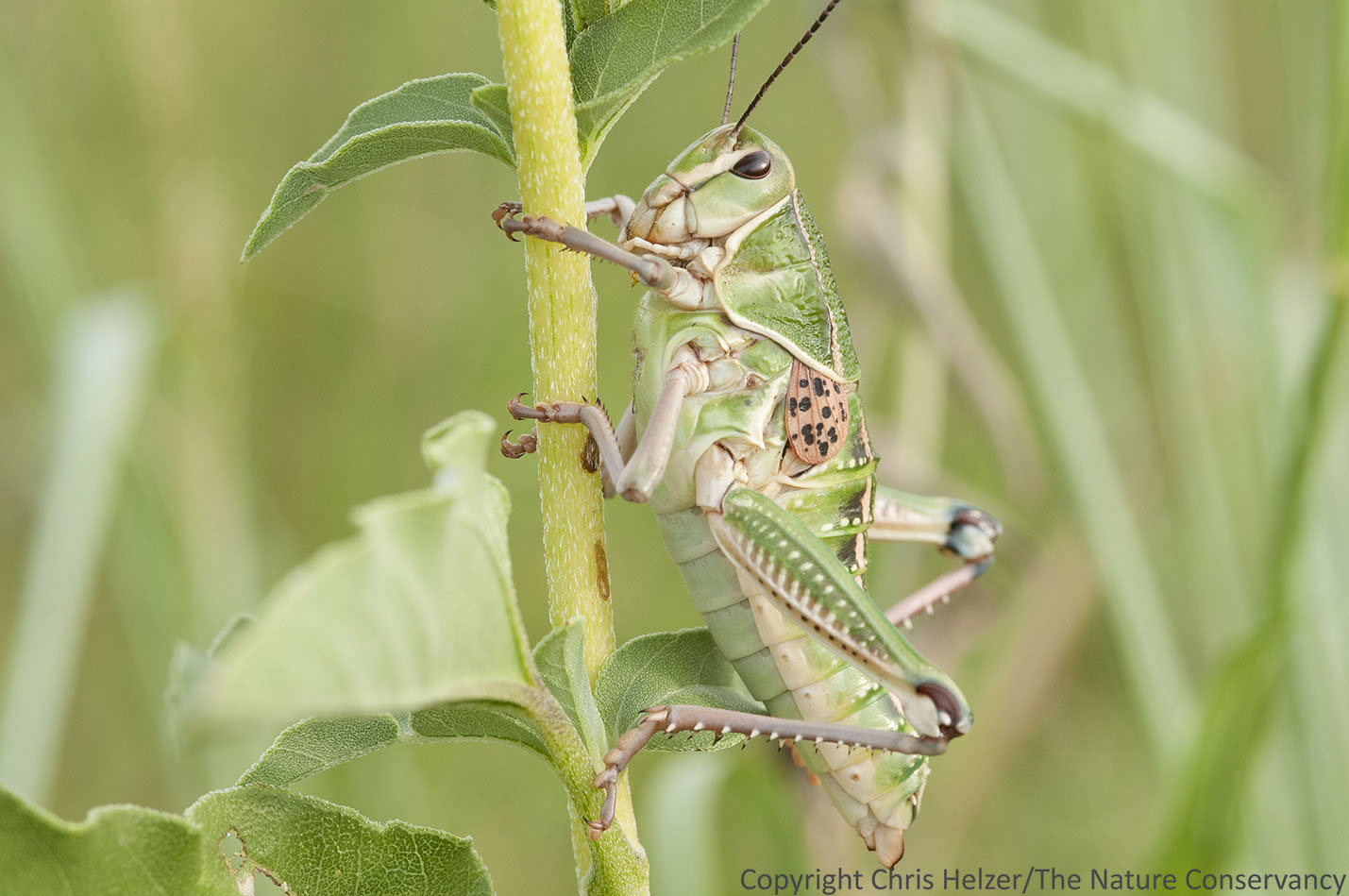
Lubber grasshopper. Cherry county ranch of Jim VanWinkle, Nebraska.

Here is a plains lubber on its favorite (according to some sources) food – an annual sunflower (Helianthus petiolaris).  Cherry County, Nebraska.

I also enjoyed the chance to see a painted grasshopper (Dactylotum bicolor), a species I first noticed last year on a trip to western Kansas.  This gorgeous creature might be the easiest grasshopper in Nebraska to identify – as far as I know, there isn’t anything else in the state that looks remotely like it.  Like the lubber, the painted grasshopper eats primarily wildflowers, particularly false boneset (Brickellia eupatorioides).  It likes habitat with lots of exposed soil, which is convenient for those of us trying to find and photograph them.

Painted grasshopper at the Valentine National Wildlife Refuge. Nebraska.

A painted grasshopper at the Valentine National Wildlife Refuge. Nebraska.  The colors and patterns on this species make it impossible to confuse with others.

Grasshoppers, and katydids, which look like grasshoppers but have much longer antennae, are a fascinating group of insects.  They have interesting and complex communication strategies and each species has its own set of dietary preferences – some are specialists on just a few plant species and others are generalists.  Only a very few are considered to be pest species, and most of those are simply native species that have adapted well to the abundant food humans provide in the form of monoculture row crops.

Perhaps most of all, the sheer abundance and biomass of grasshoppers make them ecologically important in grasslands.  If you collected all the grasshoppers from a prairie, their biomass would equal that of the bison or cattle in the same prairie.  As such, they are a major food source for many other species, including many birds, and major herbivores that influence plant communities in complex ways.

Grasshoppers are also very visually appealing if you take the time to look closely at them.  The plains lubber and painted grasshopper are particularly pretty, but every grasshopper species has its own beautiful combination of colors and patterns.  Go out and find your favorite today!
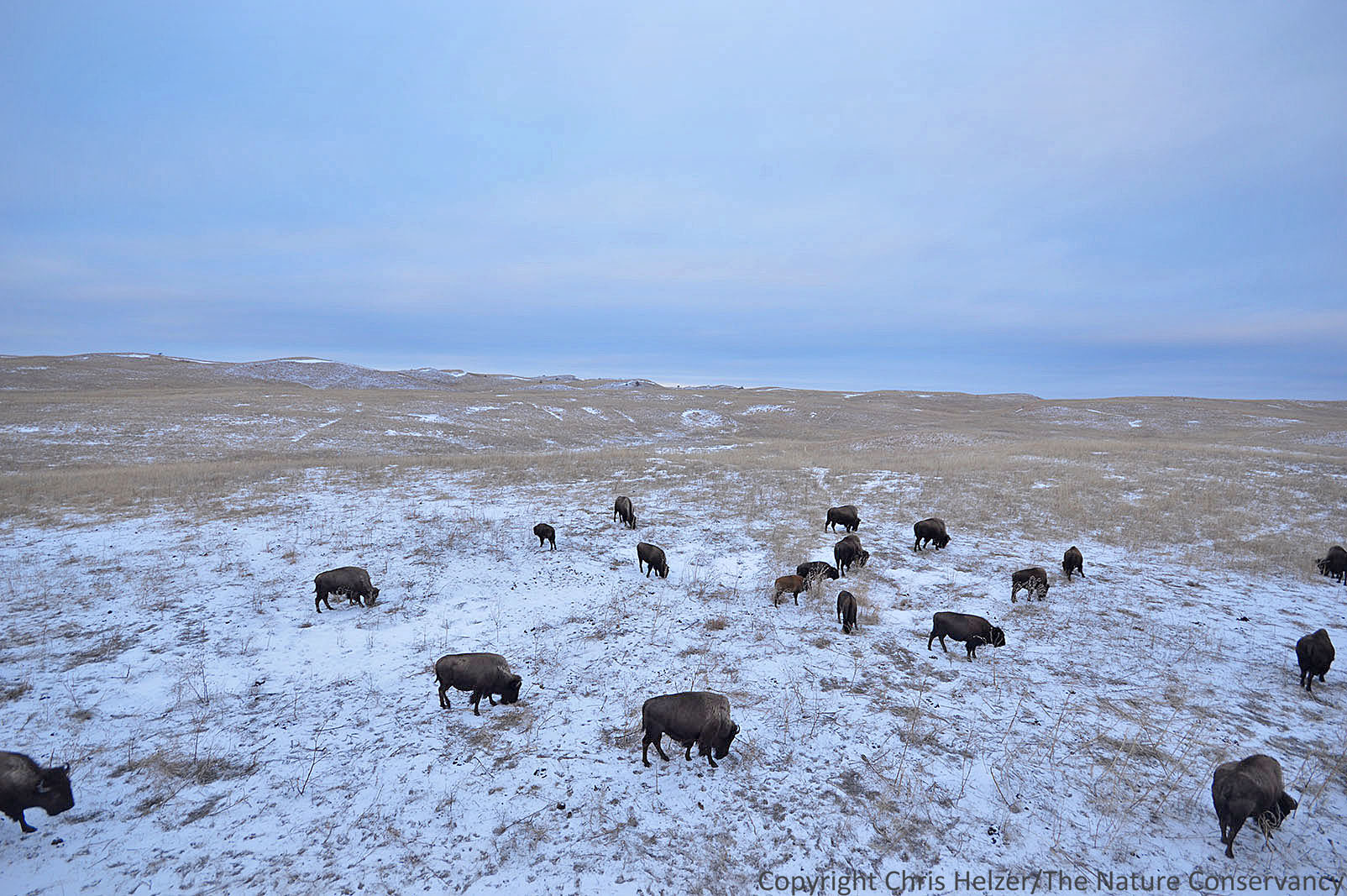
LANDSCAPE EXPERIENCES MAJOR SHIFTS IN APPEARANCE OVER SHORT TIME SPAN

As I was preparing to post this blog, I received the latest installment of Ian Lunt’s blog, which gives very good advice to science bloggers about how to capture and hold an audience’s attention.  Ironically, I’d just been worrying that my new post wasn’t as pithy as it could be, and had even asked my kids to read it and tell me what they thought.  I didn’t actually change the post after reading Ian’s advice, but I did change the “headline” to make it more snappy.  I hope Ian approves…  (The fact remains, however, that the following post is really just a series of pictures I thought were nice, so feel free to skip it and find something more productive to do.  The only good news is that there’s very little text to slog through…  So, with that sales pitch – here you go!)

I’ve been going through more timelapse images from the Niobrara Valley Preserve recently.  There are numerous story lines from the cameras there, all of which tell a tale of recovery and resilience following the big wildfire in 2012.  In a smaller way, however, looking through the images also demonstrates how much the appearance of a site changes from day to day.

In this post, I’m showing seven images taken by the same camera, from the same perspective, but on different days and at different times through the 2014 season.  The camera that took the photos is mounted high atop a windmill at the south end of a 10,000 acre bison pasture.  These seven images of sandhill prairie span an eight month period.

January 8, 2014.  6pm.

January 8, 2014. 6pm.

February 5, 2014.  3pm.

February 5, 2014. 3pm.

April 5, 2014.  7pm.

April 5, 2014. 7pm.

May 17, 2014.  7:30pm.

May 17, 2014. 7:30pm.

July 24, 2014.  9pm.

July 24, 2014. 9pm.


August 15, 2014.  9:30am.

August 15, 2014. 9:30am.

August 15, 2014.  8pm.

August 15, 2014. 8pm.

All of us who visit someplace regularly recognize that it never looks exactly the same twice, but we usually compare what we see today with what we remember from an earlier time.  Timelapse photos allow us to record those variations and compare them side by side.

Ok, sure, the presence or absence of bison helps distinguish some of these photos from others, but bison are also a part of (and a driver of) the changing landscape at the Niobrara Valley Preserve.  More to the point of this post, however, are the differences in the quality, direction, and intensity of light between photos; not to mention the varied appearances of the sky and the growth stage of the prairie vegetation.  The prairie can look starkly different even within the same day – as shown by the last two photos.

There are countless reasons a prairie changes in appearance from day to day, even from moment to moment.  More importantly, however, those changes should motivate us to get out and enjoy nature even more often.  After all, you never know what you’ll see!

As always, thanks to everyone at Moonshell Media for their help with this timelapse project.