Karen’s Wetland Videos

One of my favorite places within our Platte River Prairies is a restored wetland we usually call “the sandpit wetland” because it is a former sand and gravel mining pit.  We restored the site over about 10 years, a little at a time, and it now features a meandering stream and various side channel, backwater, and off-channel pockets.  You might remember the site from previous posts, including this one about sludge and this one (or this one) about timelapse imagery.
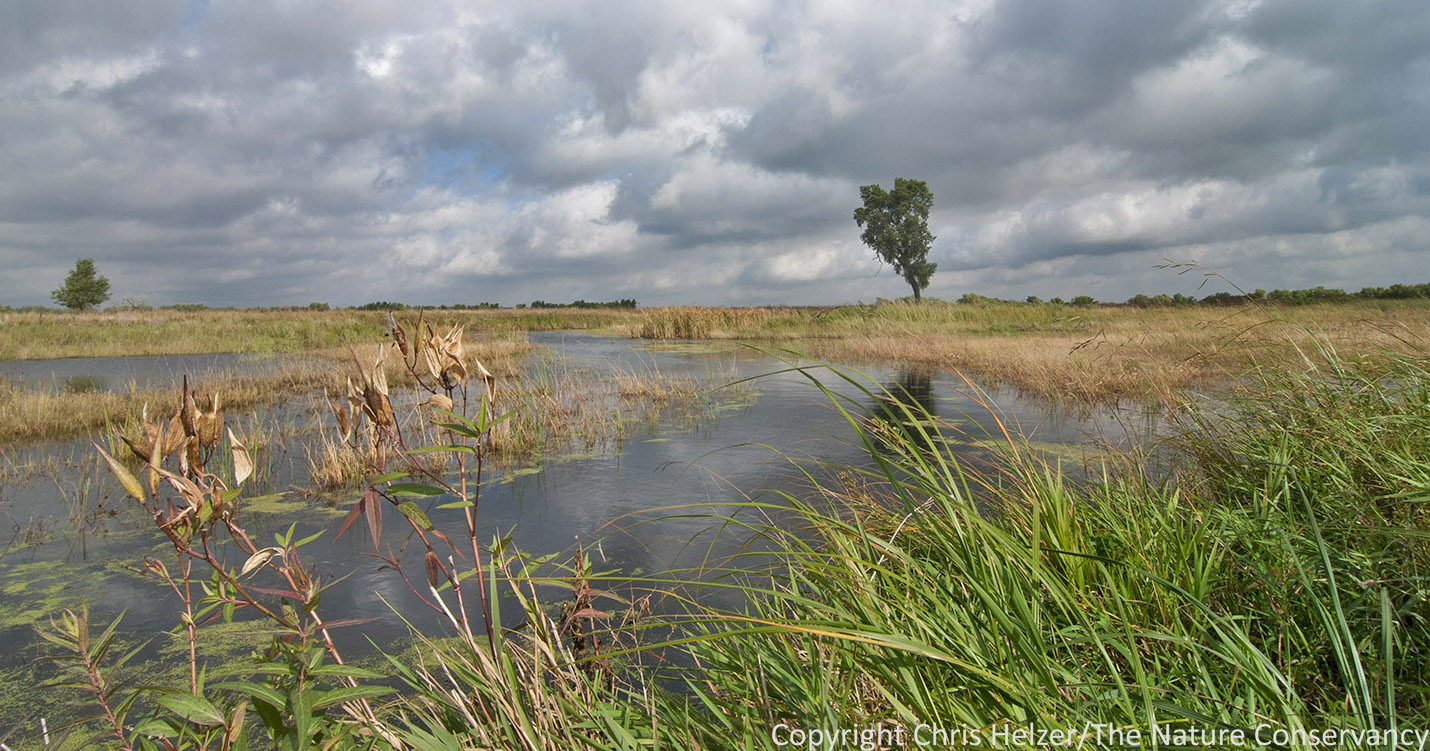
The Derr Sandpit wetland (2013 photo).  The Nature Conservancy's Platte River Prairies, Nebraska.

The Derr Sandpit wetland (2013 photo). The Nature Conservancy’s Platte River Prairies, Nebraska.

I always enjoy walking around the wetland – even if I’m fighting off invasive species – because there’s so much to see.  I have a pretty good feel for the plant community at the site because it’s easy to find the plants and watch their slow movements around the wetland over time.  There are more invertebrate species than I’ll ever be able to count, of course, let alone see, but I can usually find quite a few of them if I look.  However, it’s harder to see and keep track of the larger animals – the birds, reptiles, amphibians and mammals.  For some reason, they don’t usually show themselves when I’m there…  (Especially the otters…. don’t get me started.)

Our timelapse imagery over the last couple years has helped us keep track of some of the wildlife use at the site, but since those cameras only take photos at regular hourly intervals, catching animals in front of the camera is just a happy accident.  Now, however, one of our longest tenured volunteers, Karen Hamburger, has taken it upon herself to find out what’s really out there.  During the last year or so, she’s been setting a trail camera (actually more than one, since at least one was inundated in a flood) in various places around the wetland and capturing views of many wildlife species.

I finally had a chance to go through some of her favorite video clips the other day, and I made a short 3 minute video montage with some of them.  It includes several bird species, beavers, deer, raccoons, and even (sigh) otters.  We knew from tracks and other sign that most of these animals were around, but it’s one thing to see footprints and another to watch the critters themselves!  This video gives us a wonderful and unique perspective on what happens at our wetland when we noisy blundering people aren’t around.

I hope you enjoy it.


THANK YOU to Karen for all the work to capture these moments for us, along with all the other work she’s done over the years!

If the video doesn’t display correctly above, you can try clicking HERE instead.

Photo of the Week – October 3, 2014

I made my first ever visit to The Nature Conservancy’s Smoky Valley Ranch in western Kansas this week.  It won’t be my last.  Situated along the boundary between mixed-grass and shortgrass prairie, the Smoky Valley Ranch contains 16,800 acres of grassland – including a wide variety of prairie types – along with bison, lesser prairie chickens, prairie dogs, and even black-footed ferrets.  It’s quite a place…

A rock outcrop above an oxbow.  The Nature Conservancy's Smoky Valley Ranch - western Kansas.

Exposed rock above an oxbow. The Nature Conservancy’s Smoky Valley Ranch – western Kansas.

I was at the ranch as part of a small group invited to help the Conservancy’s Kansas staff think about their conservation strategies at the ranch, including fire and grazing management, restoration work, neighbor relations, and their research and monitoring approach.  The peer review team included Conservancy staff from Nebraska, Kansas, and Oklahoma, as well as several local landowners and partners from the local area.

Matt Bain of the Conservancy, discusses grazing strategies with other biologists and neighbors.

Matt Bain (left) of the Conservancy, discusses grazing strategies with other biologists and neighbors.

The thoughtful work being done by the staff at the ranch was really impressive.  They have been reconsidering their objectives and making some significant adjustments to their management approach.  Our job was to give them some feedback on the changes they’re already making and help them think about some additional possibilities.  It was two days of thought-provoking and stimulating conversation – mostly while standing in the middle of impressive grassland scenery.

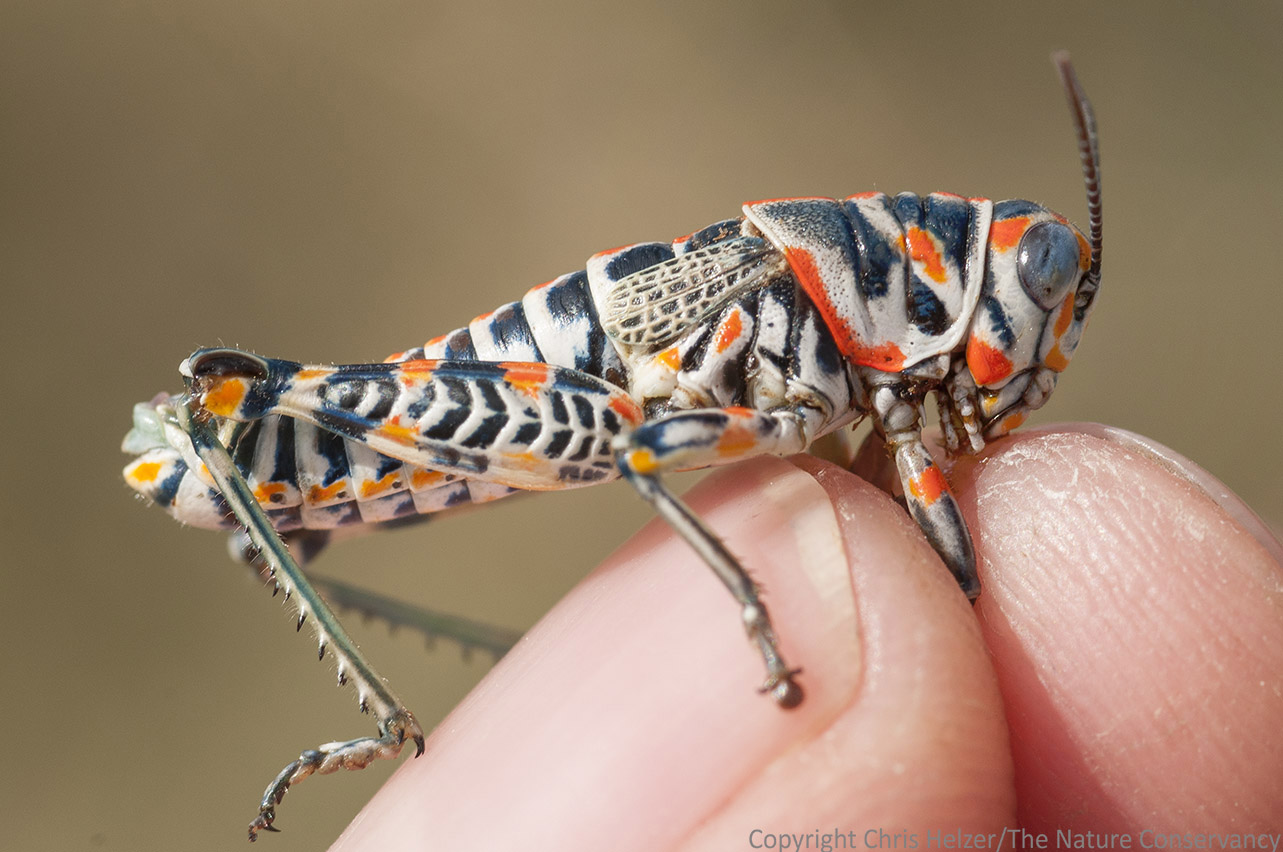
A very colorful grasshopper.

A very colorful grasshopper.  (Pictured Grasshopper – Dactylotum bicolor)

.

Sandsage prairie.

Sandsage prairie – one of several different prairie types found at the Smoky Valley Ranch.

.

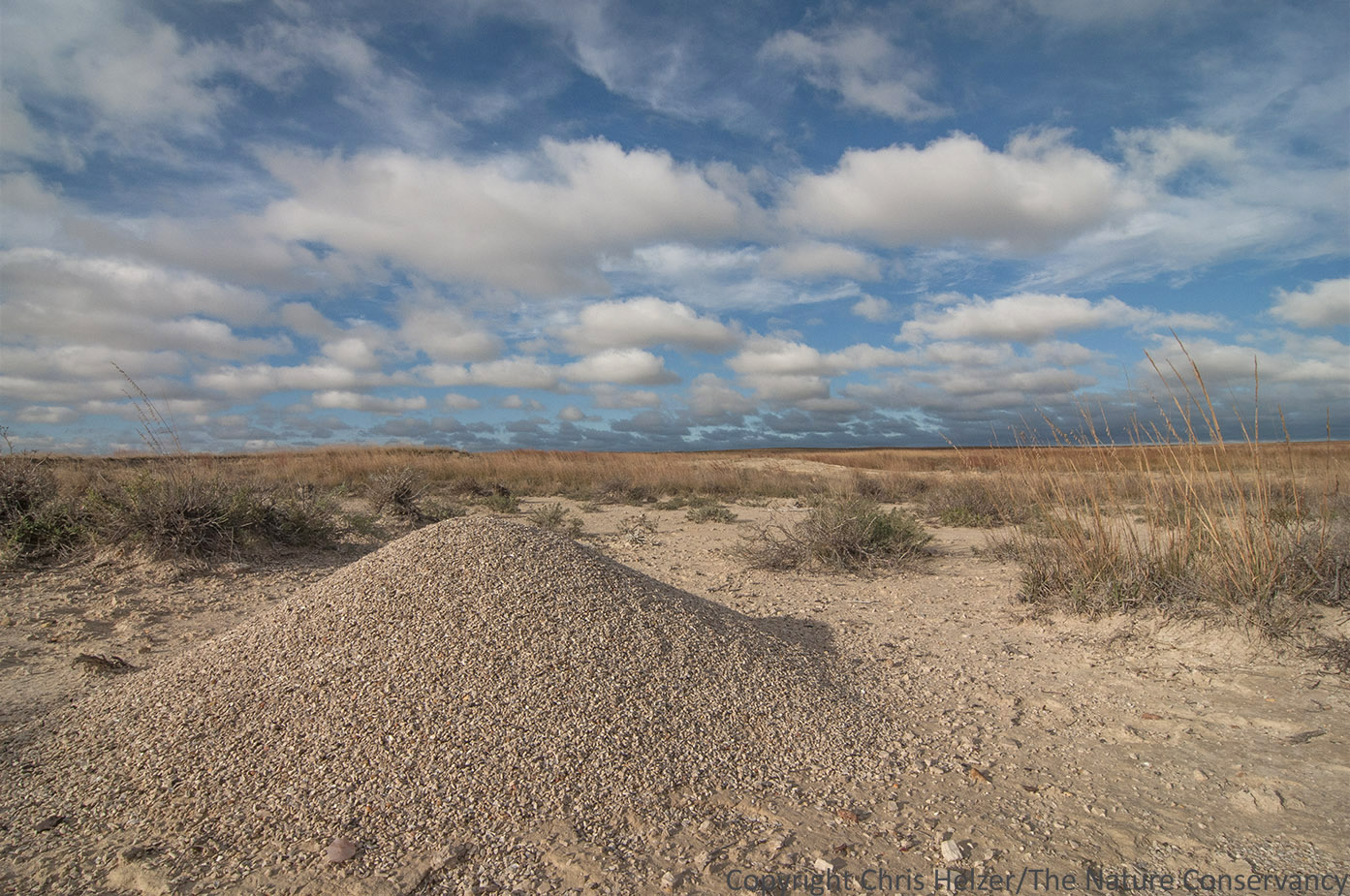
A giant ant hill.

A giant ant hill, made by harvester ants (Pogonomyrmex sp.)

I need to learn more about shortgrass prairie and the drier end of mixed-grass prairie.  Plant and animal communities respond very differently to management and restoration treatments with less annual rainfall and under more frequent/longer droughts.  However, I don’t feel like I have a good grasp of those differences.  Looks like I’ll have to start making some trips to western Kansas….

Oh darn.

Prickly pear cactus.

Prickly pear cactus.