Niobrara Valley Preserve Field Trip

Last weekend, I helped with an event up at our Niobrara Valley Preserve.  Neighbors and members of The Nature Conservancy were invited to visit the Preserve, enjoy some home-grown bison burgers, and tour some of the 56,000 acre property.  I got to take my two sons up with me, which made the trip even better.

Here are some photos from the weekend.

Richard Egelhoff led a tour of the east bison pasture (10,000 acres).  A little light rain didn't stop us from having a great bounce through the sandhills, and we found the first group of bison about 5 minutes in.

Richard Egelhoff led a tour of the east bison pasture (10,000 acres). A little light rain didn’t stop us from having a great bounce through the sandhills, and we found the first group of bison about 5 minutes in.

.

It was overcast and sprinkling off and on through much of the weekend, but the sun popped out just long enough on Saturday morning for me to capture the light hitting this shell-leaf penstemon.

It was overcast and sprinkling off and on through much of the weekend, but the sun popped out just long enough on Saturday morning for me to capture the light hitting this shell-leaf penstemon flower.

.

Rainwater gathered in the leaves of the shell-leaf penstemon - adding a little extra beauty to these gorgeous plants.

Rainwater gathered in the leaves of the shell-leaf penstemon – adding a little extra beauty to these gorgeous plants.

.

Jocelyn Olney, a graduate student at UNL came and talked to the group about her work tracking greater prairie chickens in the sandhills.  She brought a display bird to show how radio transmitters are attached.

Jocelyn Olney, a graduate student at UNL came and talked to the group about her work tracking greater prairie chickens in the sandhills. She brought a display bird to show how radio transmitters are attached.  It was pretty popular with the crowd.

.

Jocelyn also demonstrated how to find the tags, and my sons both got a chance to try it out.  Here, Jocelyn instructs John on the technique.

Jocelyn also demonstrated how to find the tags, and my sons both got a chance to try it out. Here, Jocelyn instructs John on the technique.

.
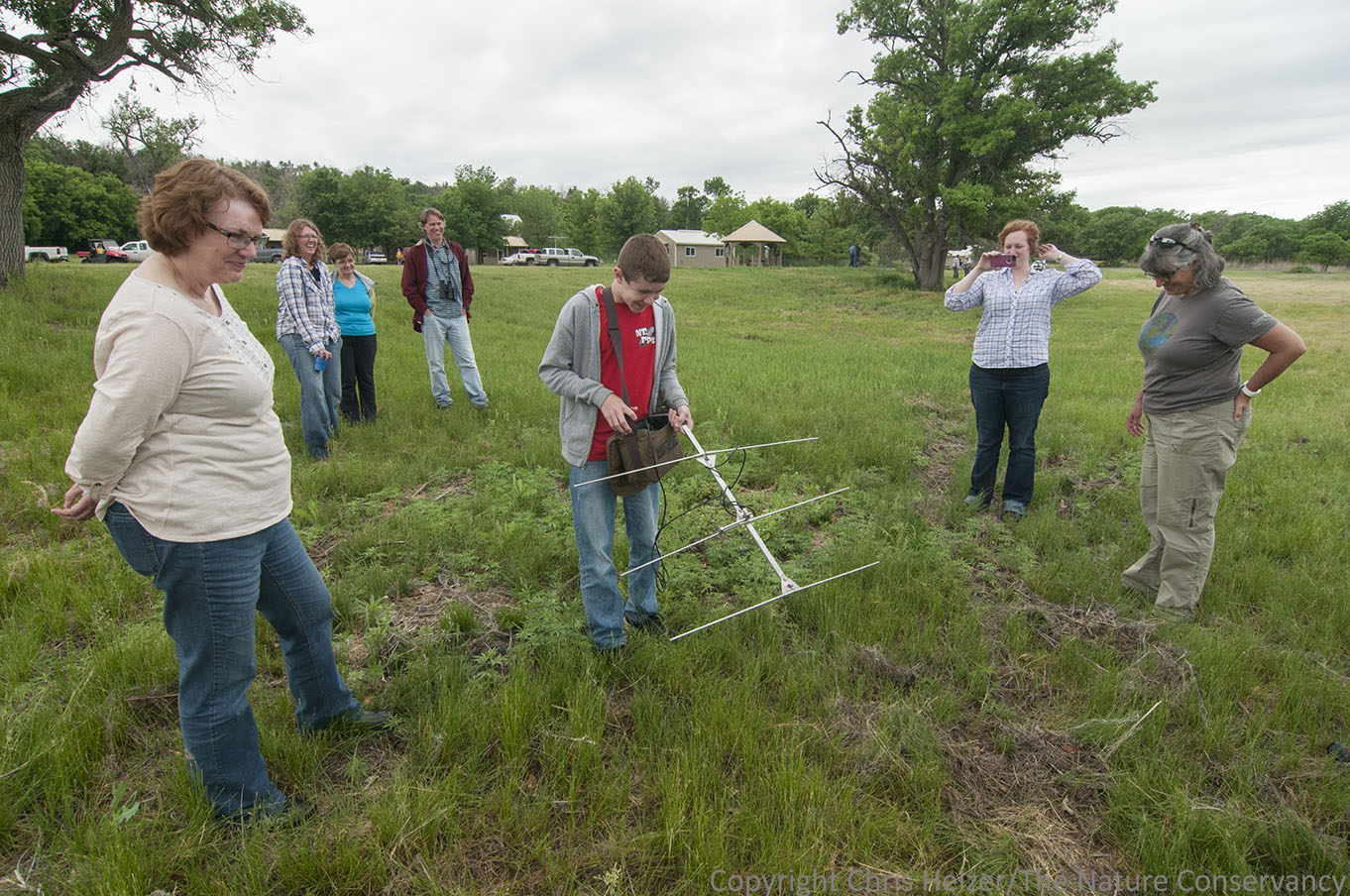
As he honed in on the transmitter hidden in the grass, John attracted a crowd of supporters.

As he honed in on the transmitter hidden in the grass, John attracted a crowd of supporters.

.

Got it!

Got it!

.

Richard got a chance to try it out too.  If you know Richard,  you can guess how entertaining that process was.

Richard got a chance to try it out too. If you know Richard, you can guess how entertaining that process was.

.
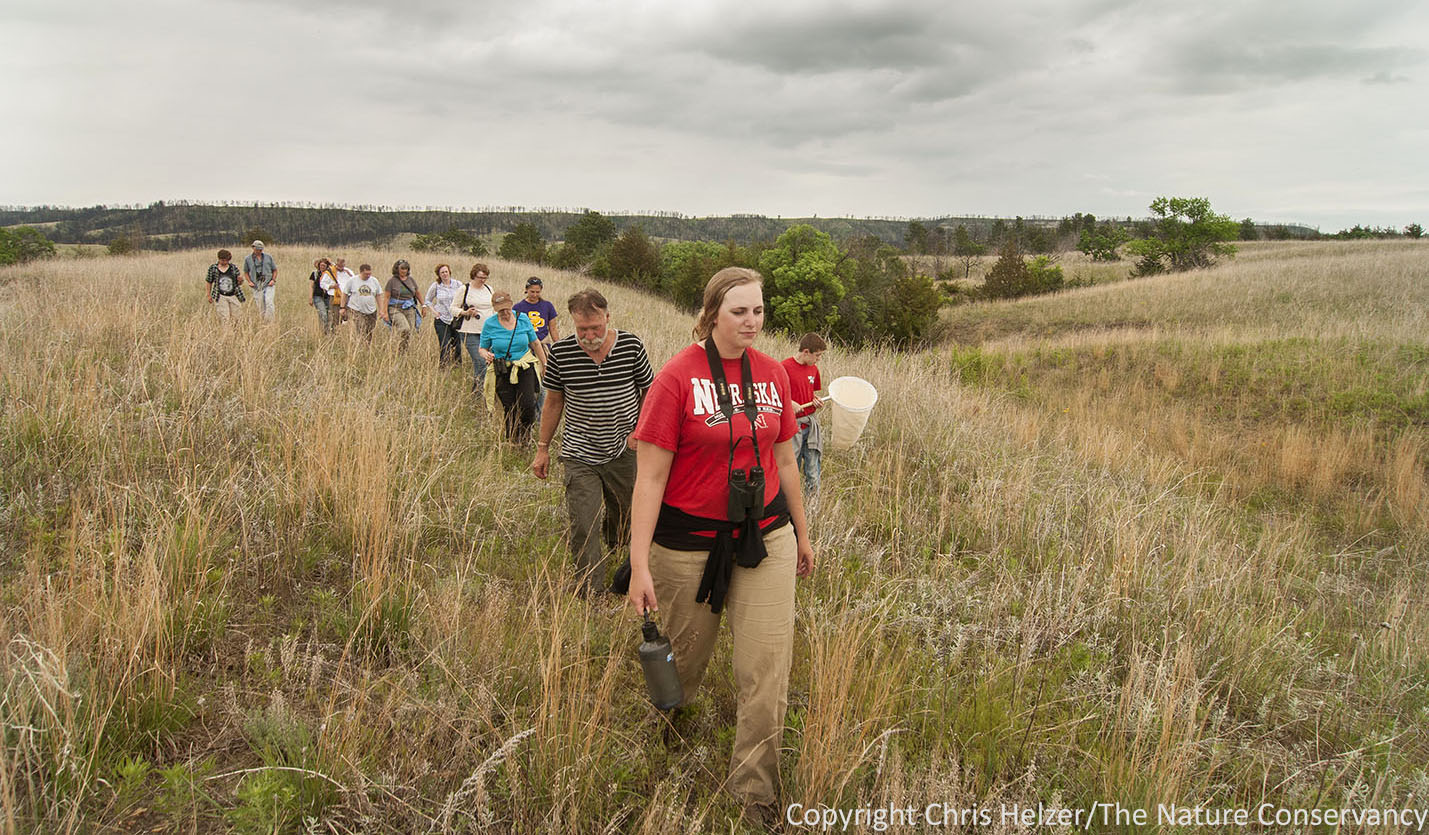
After lunch, I led a hike up in to the hills.  We found all kinds of things to look at, including kangaroo rat burrows, spittle bugs, wildflowers, grasshoppers and katydids, wolf spiders, scenic views, and much more.

After lunch, I led a hike up in to the hills. We found all kinds of things to look at, including kangaroo rat burrows, spittle bugs, wildflowers, grasshoppers and katydids, wolf spiders, scenic views, and much more.

.

After the event ended, my boys and stuck around for another day to explore.  We went over to the north side of the river to see how the woodland areas there were recovering from the 2012 drought and wildfires.  Most of the ponderosa pine are dead, but the majority of bur oaks are resprouting vigorously from their bases.

After the event ended, my boys and I stuck around for another day to explore. We went over to the north side of the river to see how the woodland areas there were recovering from the 2012 drought and wildfires. Most of the ponderosa pine are (still) dead, but the majority of bur oaks are resprouting vigorously from their bases.

.

The sun finally popped out Saturday night and the boys and I got to get pretty close to a group of bison.  Not quite close enough for unobstructed photos, however.  On the other hand, we had better looks at bison than the porcupine we chased through a sumac patch (we were in a vehicle).

The sun finally popped out Saturday night and the boys and I got to drive up pretty close to a group of bison, but not quite close enough for unobstructed photos. On the other hand, we had better looks at bison than the porcupine we chased through a sumac patch (we were in a vehicle).

.

Sunday morning started with a beautiful infusion of sunshine and scattered clouds.  Spiderwort, puccoon, and western wallflower decorated the sandhills nicely.

Sunday morning started with a beautiful infusion of sunshine and scattered clouds. Spiderwort, puccoon, and western wallflower decorated the sandhills nicely.  The color of wildflowers and vibrant green vegetation were beautiful reminders of the resilience and recovery of the prairie from the severe drought and wildfire in the summer of 2012.

.

Pocket gophers play a huge role in the ecology of the prairies at the Niobrara Valley Preserve.  Researchers have found that nearly 1/5 of the prairies are turned impacted by gopher mounds in some years.

Pocket gophers play a huge role in the ecology of the prairies at the Niobrara Valley Preserve. Researchers have found that nearly 1/5 of the prairies are turned impacted by gopher mounds in some years.

.

Hairy puccoon (Lithospermum carolinense) was resplendent in the morning light.

Hairy puccoon (Lithospermum carolinense) was resplendent in the morning light.

.

Crab spiders (of course) were waiting for unwary pollinators of the puccoon flowers.

Crab spiders (of course) were waiting for unwary pollinators of the puccoon flowers.

.

Just before we left, my sons and I appreciated the beauty of this goldsmith beetle that had been hanging around the visitor's center lights the night before.  I'd put it in a container to save for the boys to see when they got up, so we released it before we left and it graciously hung around for a few photos.

This goldsmith beetle had been hanging around the visitor’s center lights the night before, so I caught it and put it in a container so the boys could see it when they got up in the morning.  Just before we left the Preserve, we released it – and it graciously hung around for a few photos.

We left just before the rain started up again at the Preserve, and got home and into the house just in time to watch a nice soaking rain through the windows there.  Thanks to all the staff up at the Niobrara Valley Preserve and everyone else who organized the event.
2014 Woodland Burning at the Rulo Bluffs Preserve

I made a trip down to our Rulo Bluffs Preserve last week.  I wanted to get down and see the results of the prescribed fire we conducted earlier this spring.  We’re in a restoration mode at the site, trying to re-open the woodland and increase the amount of light hitting the ground.  The day we burned the site this spring, the relative humidity was very low, so the fire was a little hotter and burned a higher percentage of the unit than we’d seen  in previous burns.  Killing small trees and brush with a nice hot fire was good for our objective.  On the other hand, I worried a little that we might have cooked some of the bigger trees we wanted to keep.

Another panorama showing burned and unburned.  This time, the burned area is to the left and the unburned to the right.

A panorama (four photos merged together) along the edge of the burn unit. The area burned this spring is to the left and the unburned is to the right.

Overall, I was very pleased with what I saw last week.  The fire, combined with some recent “hack-and-squirt” herbicide treatments on smaller trees has done a great job of increasing the amount of light hitting the ground.  At the same time, the majority of larger trees were still alive and leafing out, maintaining a fairly complete canopy – but one that allows for mottled light to hit the ground throughout the day.  We hope to continue annual, or at least very frequent, fires for the next several years to set the woodland back on the trajectory we want.  Then we may back off on the fire frequency a little.  Eventual success will be measured by whether we see an increased abundance of wildflowers, sedges, and grasses on the woodland floor, and – more importantly – regeneration of oak trees, which is crucial for the survival of the woodland itself.

Here are some photos of this year’s spring fire, as well as what I found during my walk through the site last week.

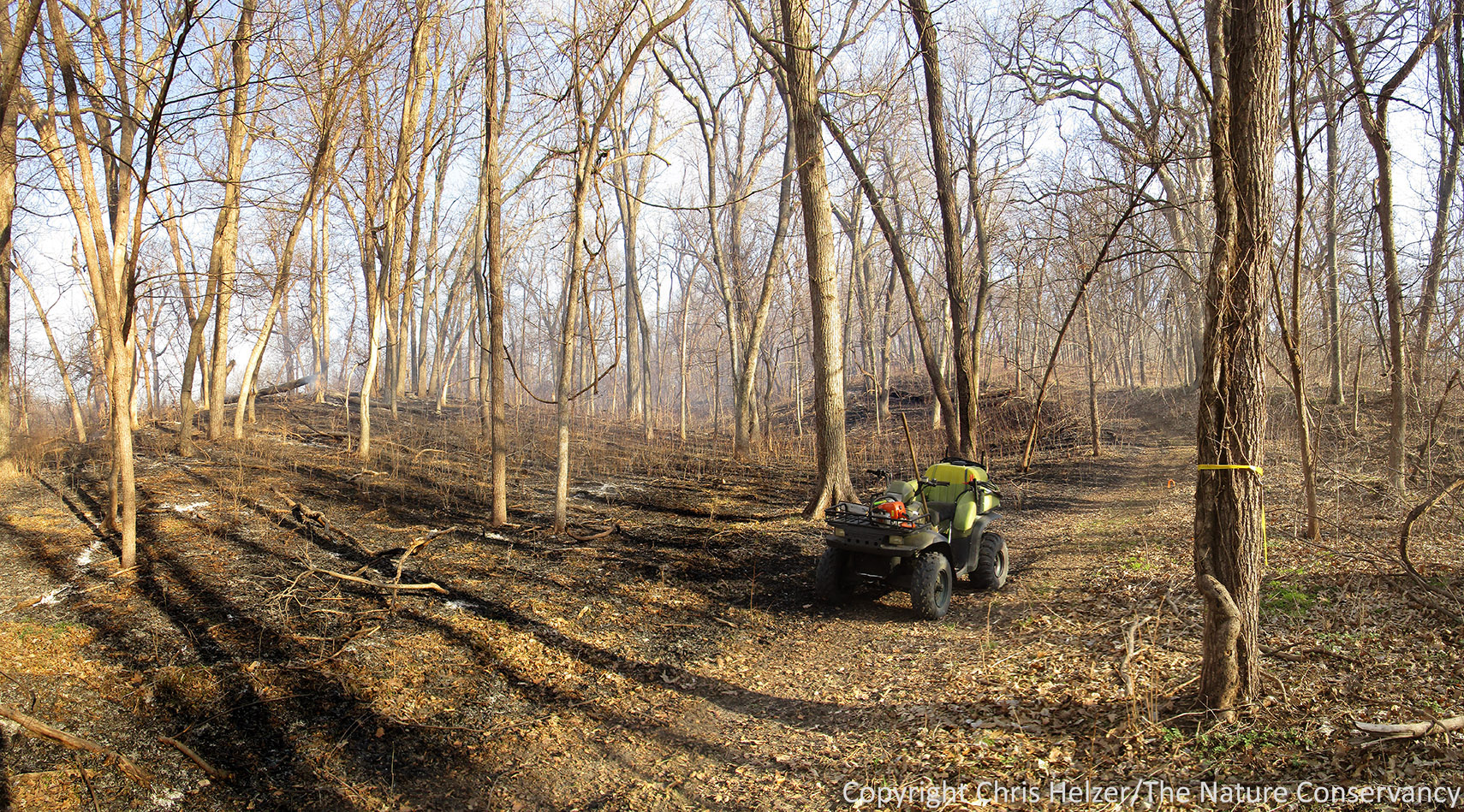
Firebreaks for the fire were mostly created by using a power leaf blower to clear out a narrow trail.  Nelson Winkel is shown here making a final pass around the breaks of the 100 acre burn unit.

Firebreaks for the fire were mostly created by using a power leaf blower to clear out a narrow trail. Nelson Winkel is shown here making a final pass around the breaks of the 100 acre burn unit.  Other members of the crew followed behind, raking out any other debris that needed to be cleared from the breaks.

.

Anne Stine lights down a slope during the fire.

Anne Stine lights down a slope during the fire.

.

The fire burned a little more intensively than most woodland burns we've done at the site, but nothing like a prairie fire - though it burned pretty hot up some of the steeper draws, where leaf litter had accumulated and slopes helped drive the fire.

The fire burned a little more intensively than most woodland burns we’ve done at the site, but nothing like a prairie fire – though it got pretty hot  as it went up some of the steeper draws where leaf litter had accumulated and slopes helped drive the fire.  Crew members patrolled the narrow breaks constantly during the burn, checking the fire, raking leaves and sticks in, and looking for dead trees burning along the edge of the unit that might need to be taken down.

.

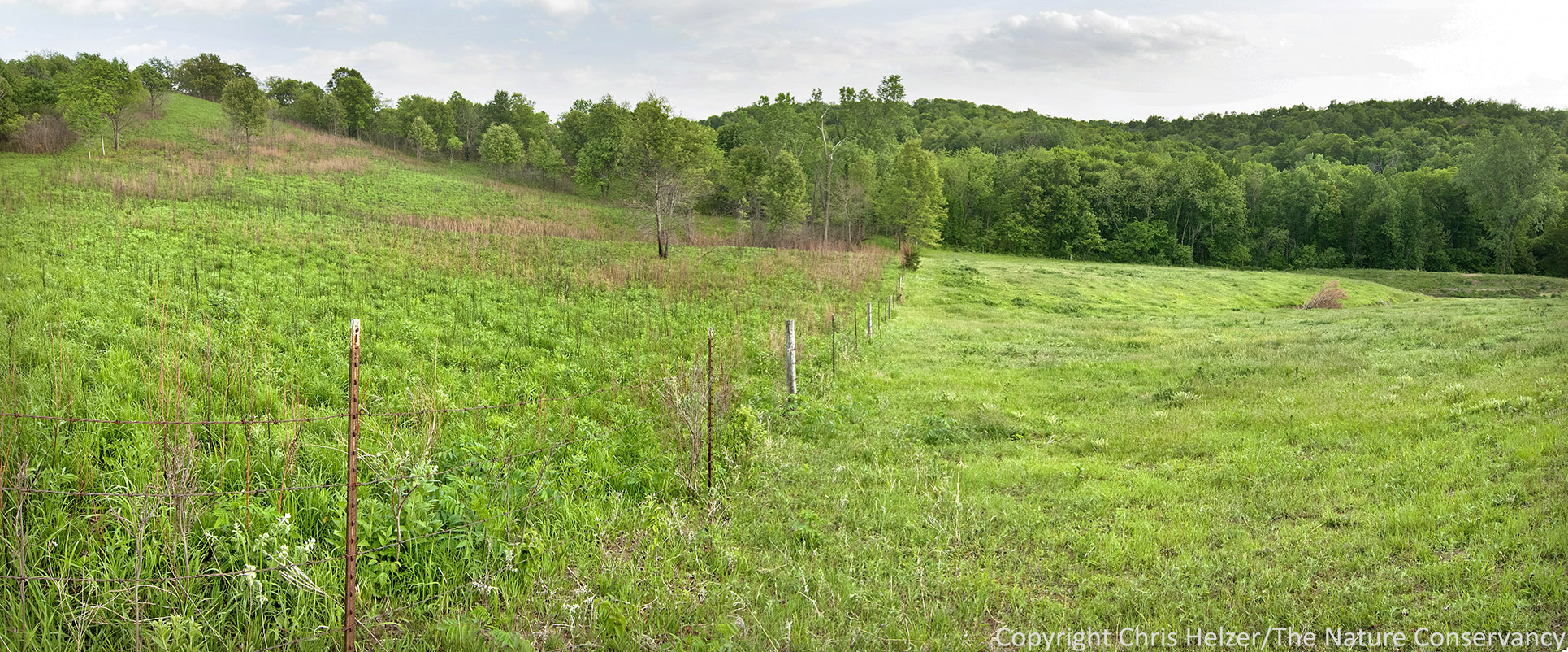
This multi-photo panorama shows the largest of the prairies at Rulo Bluffs, along with some of the woodland.  The photo(s) were taken from our neighbor's pasture.

This stitched multi-photo panorama shows the largest of the prairies at Rulo Bluffs, along with some of the woodland. The photo(s) were taken from our neighbor’s pasture during the fire.

.

This area

This area burned fairly completely but there were still small unburned patches here and there.

.

We were able to use ATVs to access some portions of the firebreaks, but others were too steep and/or narrow, and were accessible only on foot.

We were able to use ATVs to access some portions of the firebreaks, but others were too steep and/or narrow, and were accessible only on foot.

.

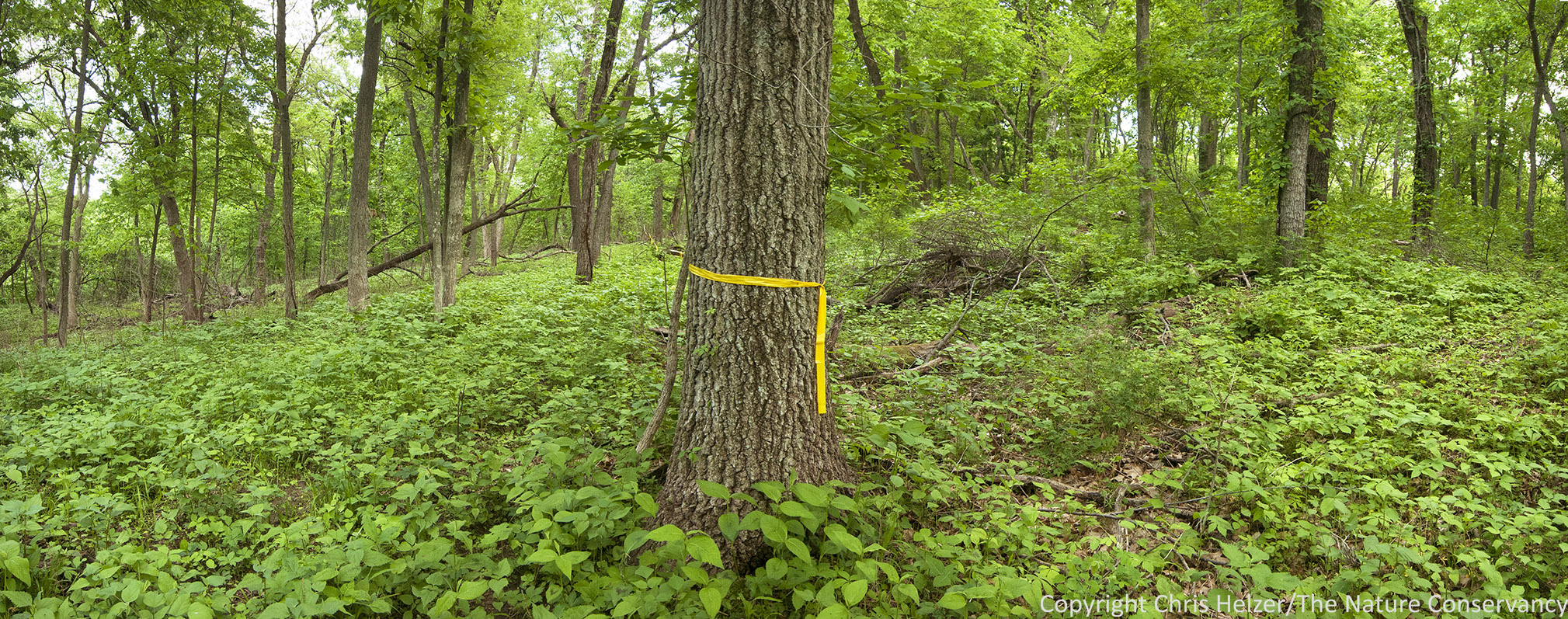
This panorama shows approximately the same area as Anne is shown lighting above.  The right half of the photo was burned, the left was not.  Note how much more open the burned area is.

This panorama shows approximately the same area as Anne was lighting in the earlier photo. The right half of this image was burned, the left was not. Note how much more open the burned area is.

.

Burned on the left, unburned on the right.

Burned on the left, unburned on the right.  Wood nettles seem to be having a banner year in both burned and unburned areas.  I’m not sure why that is.

.

More wood nettles (and other plants) - this time on a southeast-facing slope that burned pretty hot.  Note the dead (or at least top-killed) small diameter trees.

More wood nettles (and other plants) – this time on a southeast-facing slope that burned pretty hot. Note the dead (or at least top-killed) small diameter trees.

.

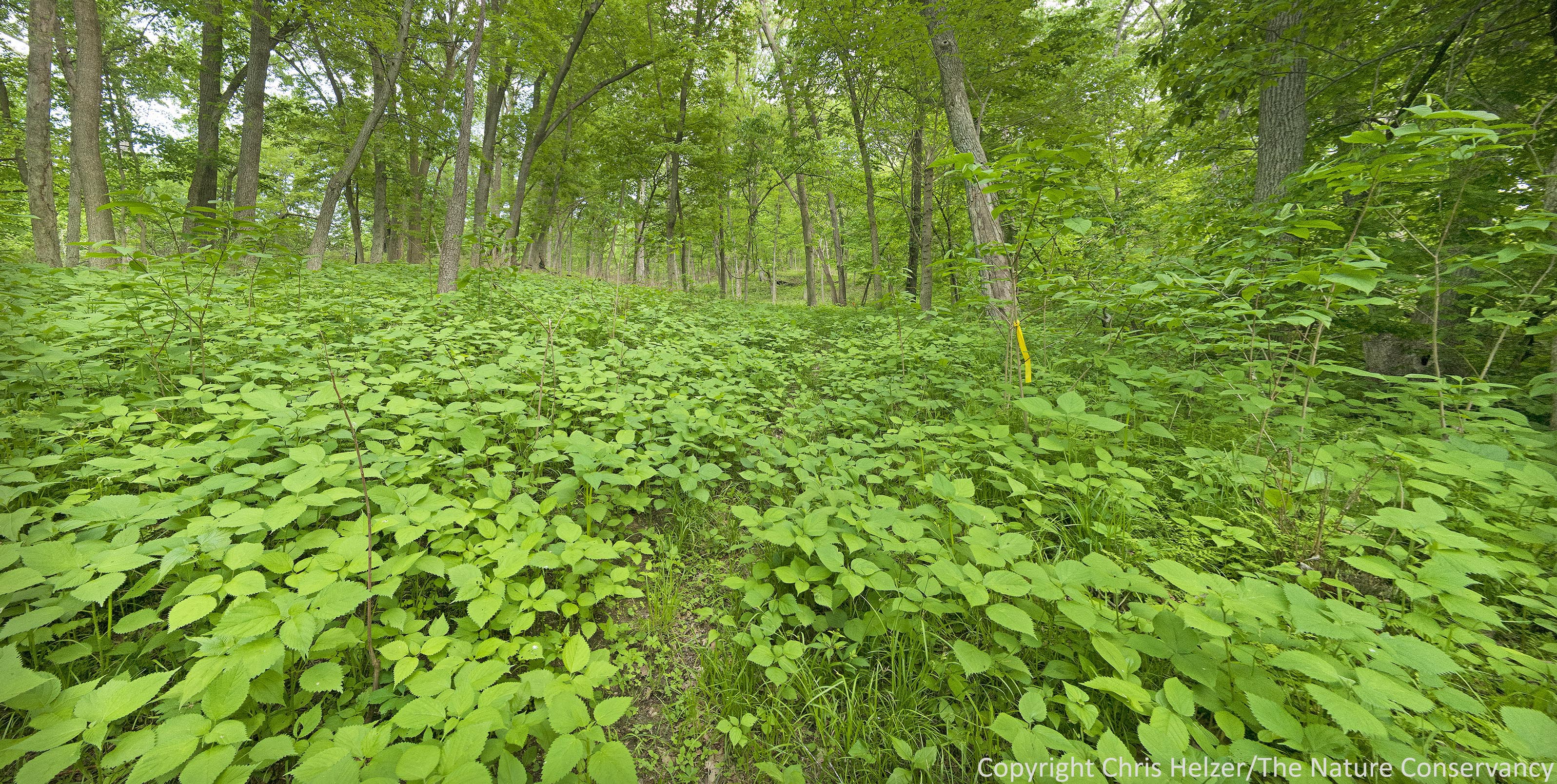
Wood nettles were most abundant on lower slopes.  Higher up, mayapples, sanicle, and other plants were more common.  Here, mayapples grow with little company.  That will change as the plant community adjusts to an environment with more light availability.

Wood nettles were most abundant on lower slopes. Higher up, mayapples, sanicle, and other plants were more common. Here, mayapples grow with little company. That will change as the plant community adjusts to an environment with more light availability.  The fire wiped out this year’s crop of garlic mustard.  Hopefully, maintaining a high fire frequency in coming years will help suppress that invader.

.

Here is a south-facing wooded slope that has a lot of bare ground.  Again, this will change over time.  Here, many of the small trees were dead prior to the fire (from the hack-and-squirt treatment.

Here is a south-facing wooded slope with a lot of bare ground. Again, this will change over time as light-loving plants colonize and spread. Here, many of the small trees were dead prior to the fire (from the hack-and-squirt treatment.

.

Columbine was blooming on north-facing slopes - mainly in places the fire skipped.

Columbine was blooming on north-facing slopes – mainly in places the fire skipped.

.

A close-up of columbine.

A close-up of columbine.

.

Yellow ladies slipper orchids seemed to weather the fire just fine.  Of four populations we marked with GPS last year, I found all four and three of them were blooming.  All had been in areas that burned.

Yellow ladies slipper orchids seemed to weather the fire just fine. I found all four of the plants we marked with GPS last year, and three of them were blooming. All  four were in areas that burned.

.

The prairie (left) and neighbor's pasture (right) shown in the earlier photo during the fire.  the prairie greened up very nicely, and the numerous dogwoods were knocked back (temporarily).

Here is the same prairie (left) and neighbor’s pasture (right) shown in an earlier photo (during the fire). The prairie looks vibrant, and numerous dogwoods were knocked back (at least temporarily).

.

Small prairie ridges were greening up very nicely.  Most of the bur and black oaks in those  areas appeared to escape the fire with little or no injury.

The  small prairie ridges scattered across the preserve are greening up very nicely.  Most of the bur and black oaks in those areas appeared to escape the fire with little or no injury.

.

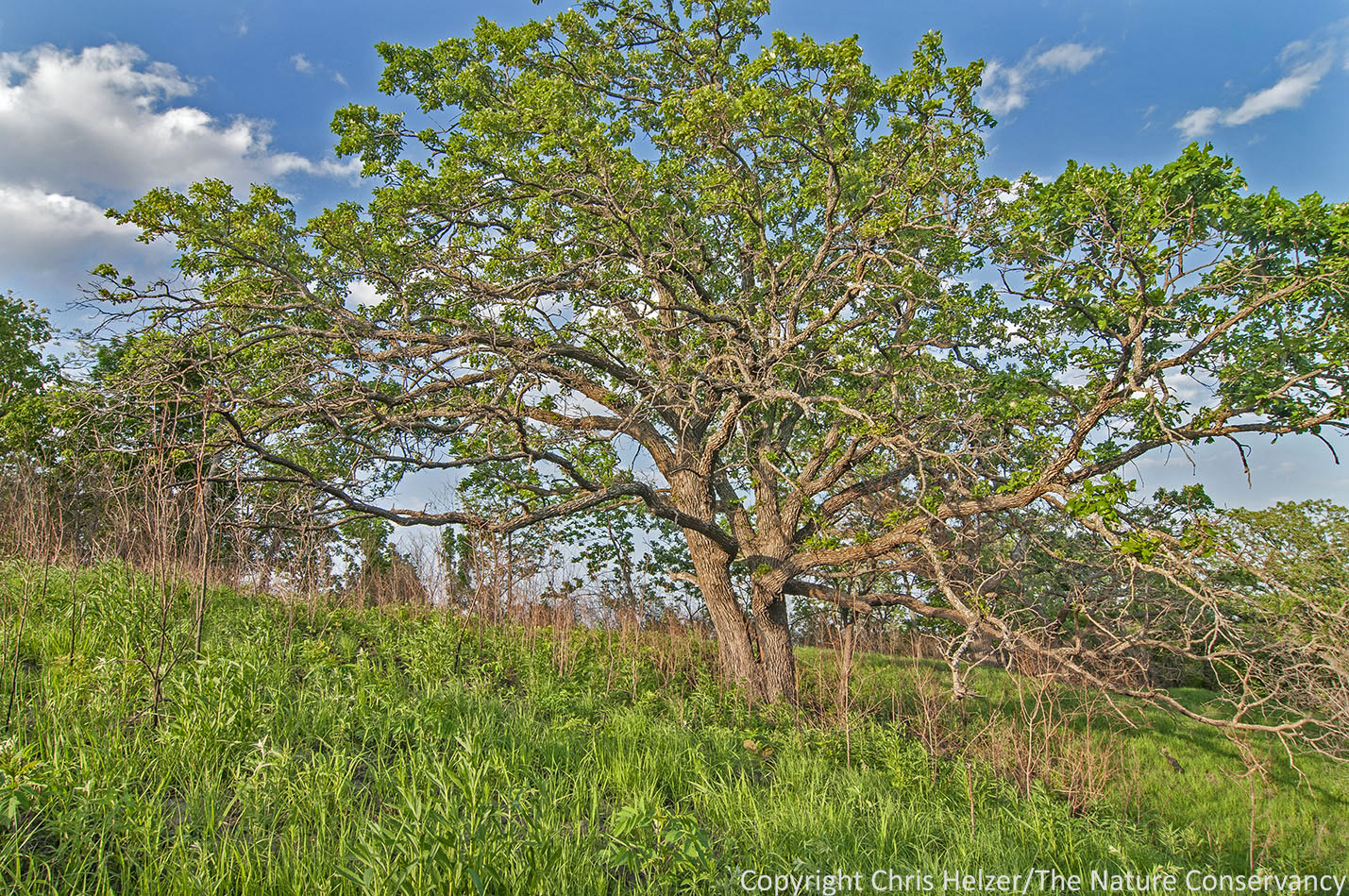
This beautiful spreading bur oak was clearly thriving - as was the prairie around it.

This beautiful spreading bur oak was clearly thriving – as were the prairie plants around it.  The top-killed shrubs will regrow, but frequent fires (and maybe some basal herbicide treatments) should keep them at bay.