The Magic (?) Stick

Ok, this is something I can’t explain – I’m hoping someone else can help.

The slideshow below consists of a series of images taken about an hour apart last June by one of the timelapse cameras at The Nature Conservancy’s Niobrara Valley Preserve.  Hover your mouse over the images and you can click the arrows to move between photos.  Watch the stick in the foreground…

This slideshow requires JavaScript.

What in the world?  The stick doesn’t do it most days, but on some days, the timelapse camera captures one end of the stick rising into the air.  Overnight, it returns to its previous position.

Here it is again, a couple weeks later:

This slideshow requires JavaScript.

Later in the season, the stick was dislodged so one end was no longer in the ground.  It still moved, but in more of a twisting motion.  I think the stick just to its left is moving slightly as well?

This slideshow requires JavaScript.

This is not a living entity.  It’s a stick; dead and disconnected, but still able to move.

My best guess at an explanation is that the stick is moving because of moisture.  Over time, the stick absorbs moisture and then dries out, and the shrinking and swelling of the wood could change its shape.  Because humidity tends to rise overnight and fall during the day, that could explain the pattern.  But, if daily humidity patterns are affecting the stick, why doesn’t it happen more often?  Also, in the October series above, the stick was lifting as it rained, so that seems counter to my hypothesis…?

Anyone else have an explanation?  I love a good mystery…

Photo of the Week – March 6, 2014

As I posted a couple days ago, I spent some time at my favorite wetland earlier this week.  It was a cold, but very pleasant morning.  The sun was moving in and out of thin clouds, creating attractive light and a nice sky for photograph backgrounds.

A beautiful early March day at The Nature Conservancy's Derr Wetland.

A beautiful early March day at The Nature Conservancy’s Derr Wetland.

.

frozen wetland

An ice ridge formed along the edge of a flowing channel prior to the most recent cold spell.  It apparently caught blowing snow during last weekend’s flurries.

.

Cattails

I assume the gap near the bases of these cattails was formed either by wind or by the relative warmth of the cattail stems, but I can’t explain the mounded ice.

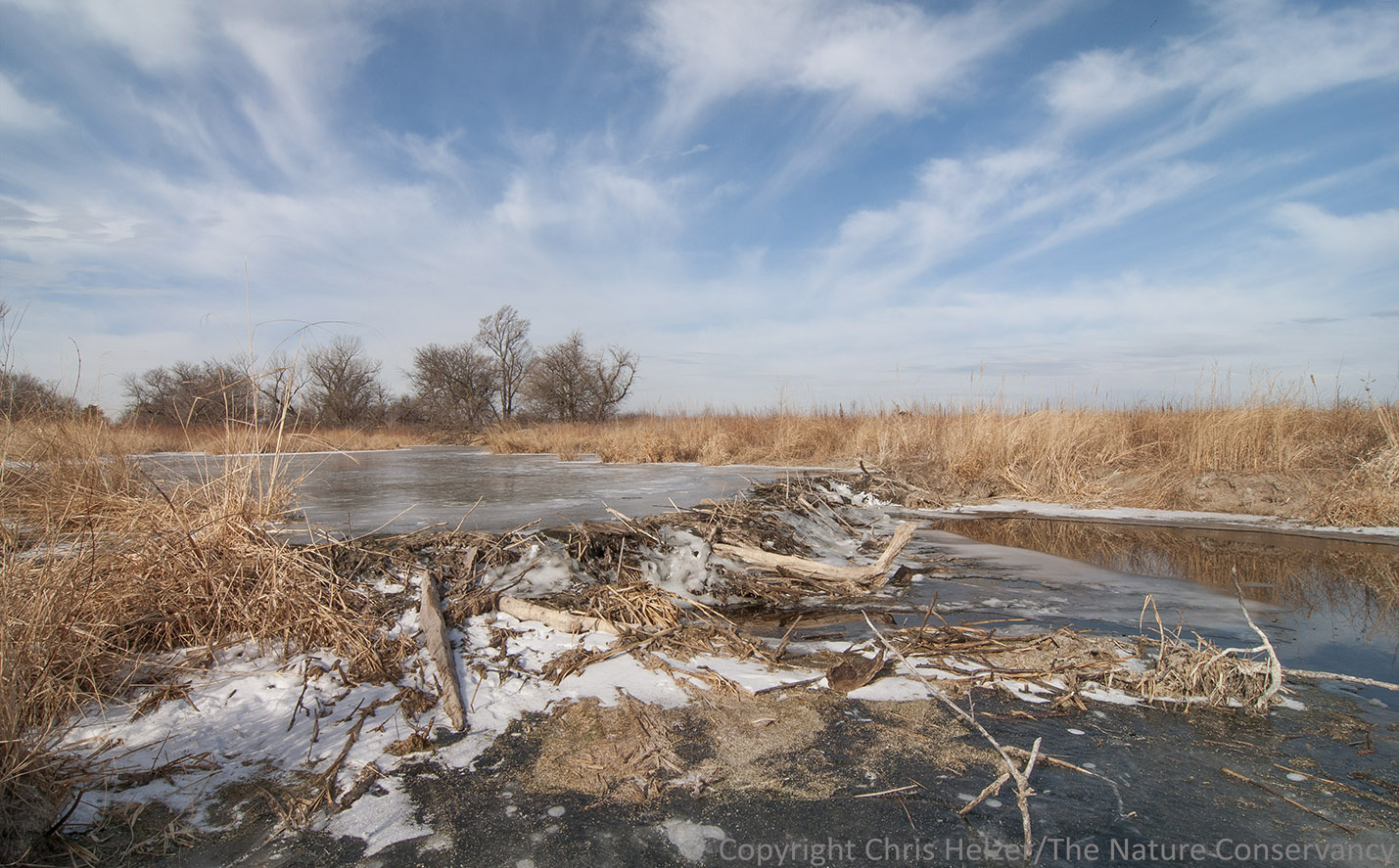
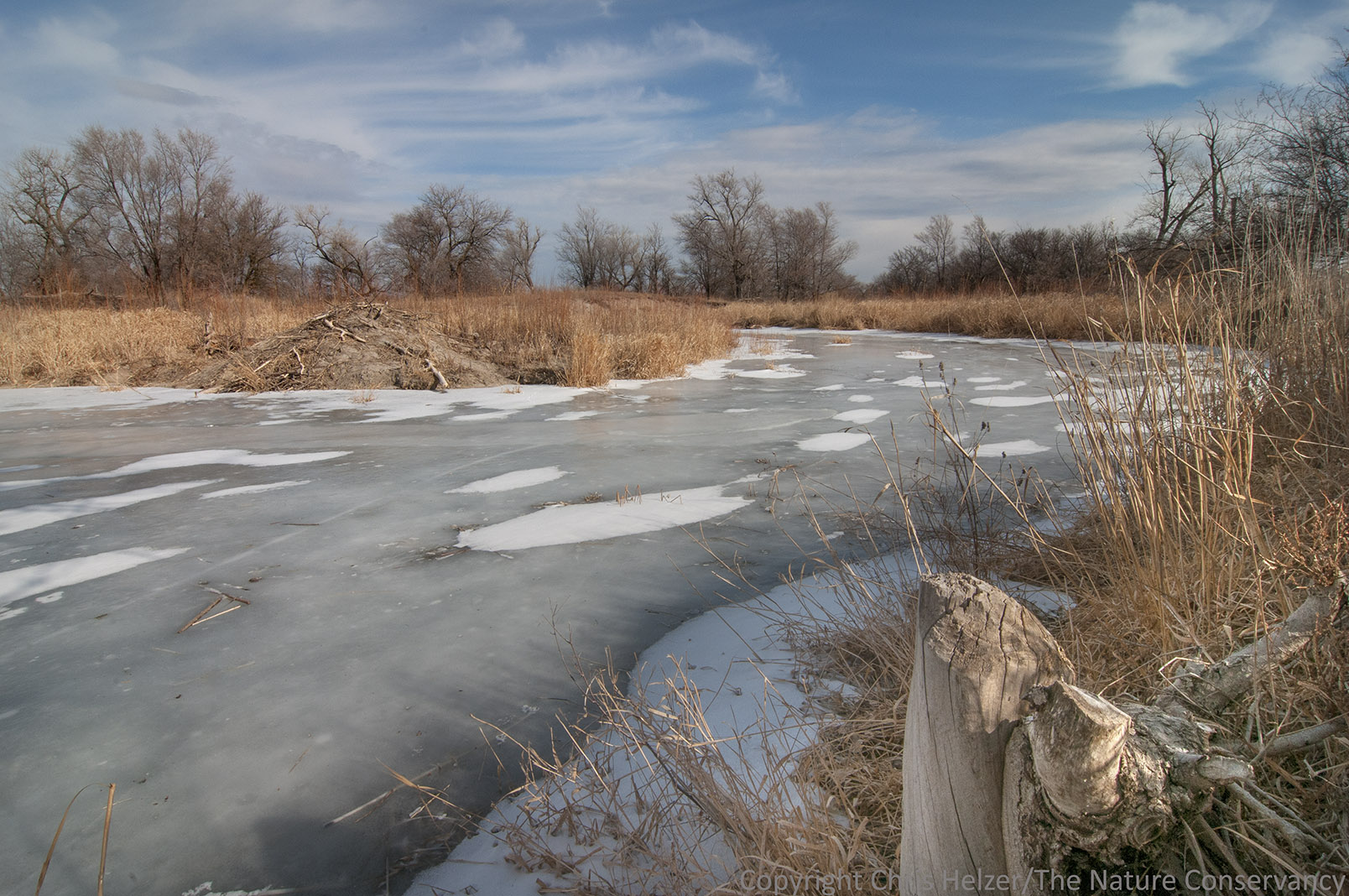
Beaver activity was obvious along the stream that runs into and through the wetland.  Numerous dams are being maintained, and I found lots of recent tracks and marks from the dragging of sticks in patches of snow or bare sand.  The beavers’ slowing of the streamflow probably enables the surface to  freeze more quickly – to the detriment of waterfowl looking for a place to roost and feed – but the concentrated flow through the dams maintains small areas of open water where wildlife can access it.

Water pours over a small beaver dam.

Water pours over a small beaver dam.

.

Another one

The only open water left after the most recent cold snap was just below some of the larger beaver dams, though the ice was very thin in other places, especially above some of the more active springs.

.

Water over the dam

Water flows through the spillway of a dam just upstream of the open wetland area.  There are at least seven separate dams being maintained by the inhabitants of a single beaver lodge.

.

The beaver lodge is several hundred yards upstream of the main wetland area.

The beaver lodge is several hundred yards upstream of the main wetland area.

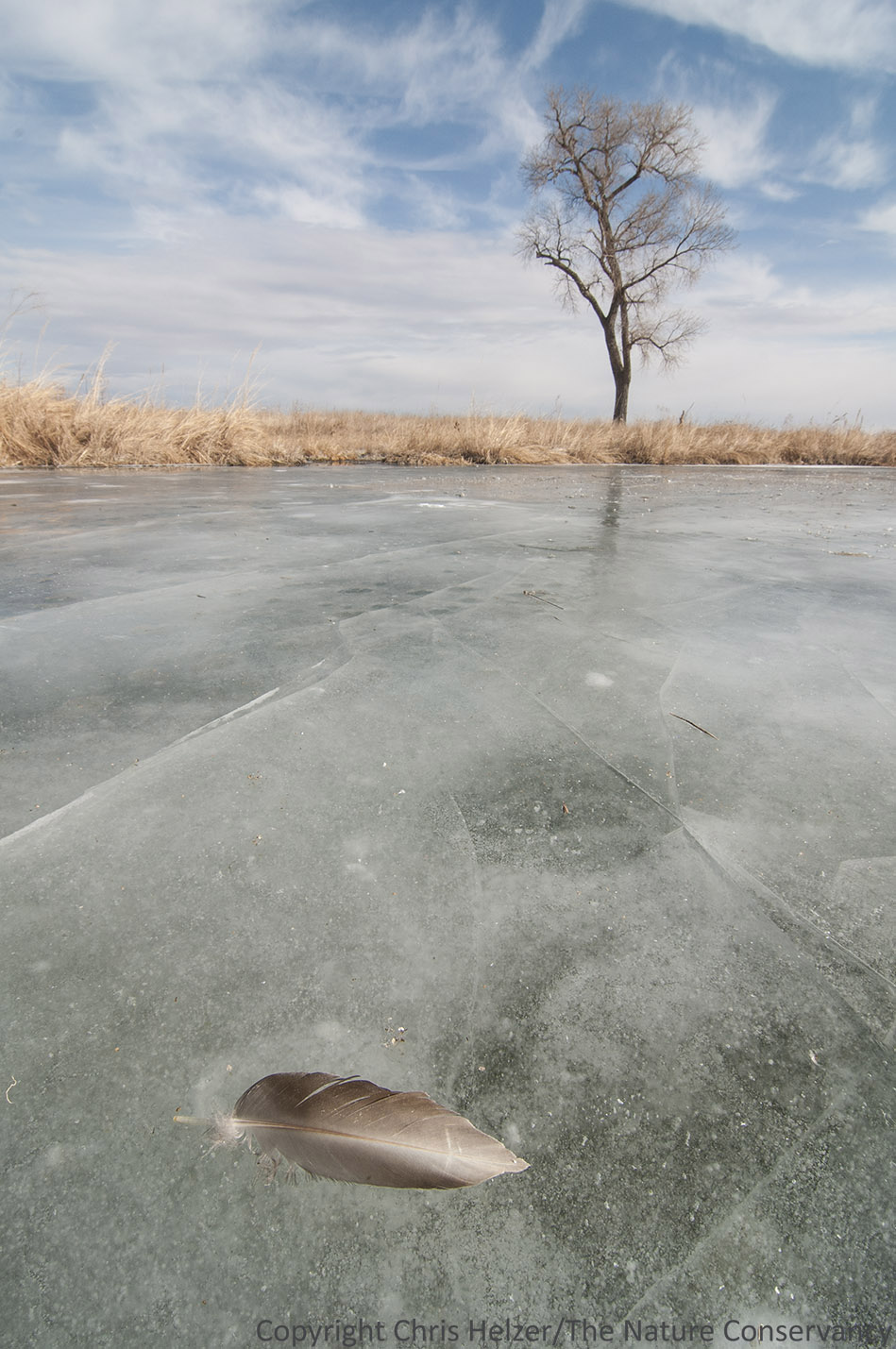
Beavers weren’t the only wildlife species active along the wetland.  Based on recent images I downloaded from our timelapse cameras on site, waterfowl have also been using the wetland in big numbers.  Canada geese, especially, have been abundant – especially before the surface froze last week.  Based on evidence found at the scene, they have continued to use the frozen wetland too…

goose feather

Goose feathers littered the frozen surface of the wetland

.

feather

Here and there, tiny fluffs of feather clung to plants of all kinds.

.

poop

Feathers were not the only thing geese left behind on the ice.  I can’t think of a better way to end this blog post then with a big pile of goose poop.  So there you go.

No beavers or geese were harmed during the making of this blog post.  However, more than 300 images were shot during a two hour period.