
Photo of the Week – October 19, 2012

And now for something completely different…

I feel like I’ve been in kind of a photography rut on this blog lately.  Lots of close-up photos, especially of seeds.  This week was extremely windy, and I didn’t get out and get any new photos, so instead I dug into the archives for this photo of the week.  It’s about as different as I can get from close-ups of seeds.
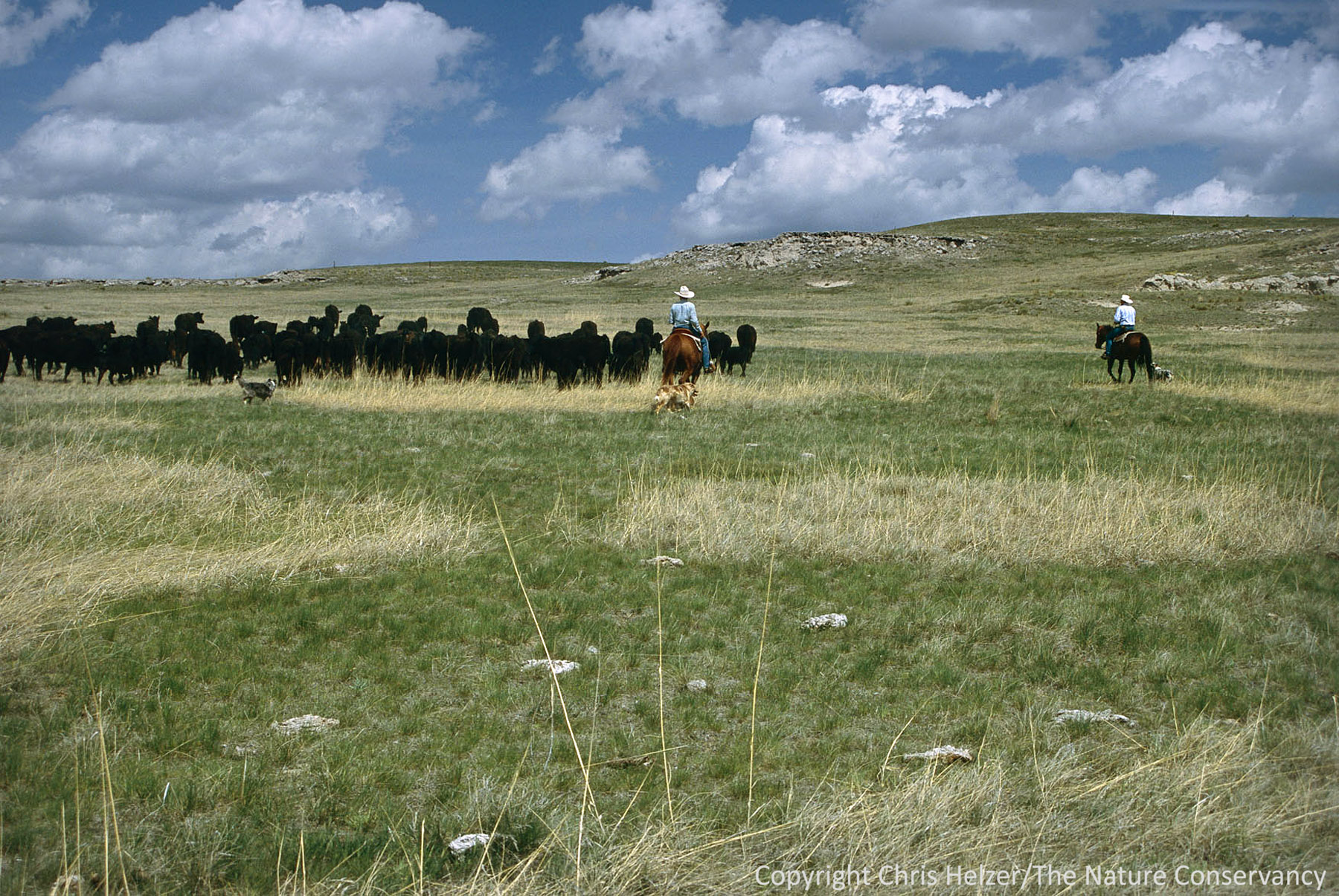
Cowboys moving cattle at TNC’s Cherry Ranch in the Nebraska Panhandle. May, 2001.

The photo was taken in May 2001 at The Nature Conservancy’s Cherry Ranch, near the northwest corner of Nebraska.  It’s a dry, rocky, and utterly beautiful landscape.  It’s dominated by threadleaf sedge (aka blackroot sedge – Carex filifolia) and a number of short grass species, but also has patches of big bluestem and tall grasses here and there.  Rocky outcroppings are a great place to see pretty little flowers clinging to rocks, along with the occasional nesting prairie falcon or golden eagle.  Prairie rattlesnakes are not uncommon, but easy to see (and hear) because of the short vegetation.  The mighty Niobrara River flows through the ranch, but is small enough that you can jump over it in some places.  It’s just a great place.

Enjoy your weekend!
An Update on a Wetland Project (Remember the Sludge?)

Several people have asked me to provide an update on the wetland restoration project I posted about last November.  At that time, we’d just completed our second (last?) phase of the dirtwork to convert sand pit lakes to a stream channel and shallow wetlands.  I wrote that we were trying to figure out what to do with a lot of sludge that had floated up from the bottom of the sand pit we’d filled in.  

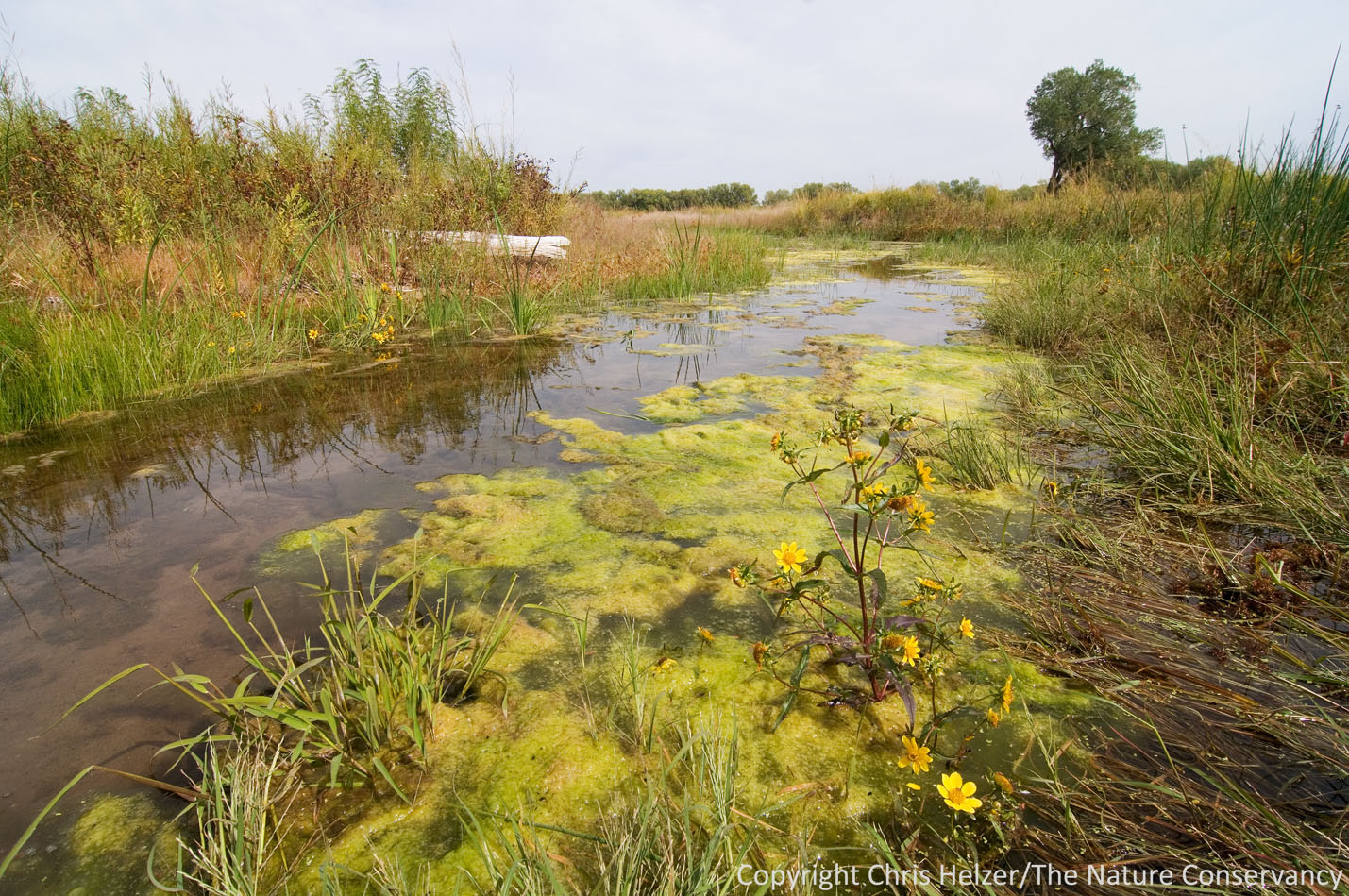
Beggarticks (Bidens sp.) flowers accent a wetland swale that was part of the first phase of the restoration project back in 2001. The 2011 restoration project surrounds that initial phase.  This photo was taken last week.

Well, let’s see…  Since November, the wetland has been very interesting to watch.  We’ve seeded the site a couple times.  Most of the non-sludge-covered area was seeded during the winter and then again in the summer, after many of the smaller wetland channels and pockets off of the main stream channel – that allowed us to get seed into areas previously under water.  We’re starting to see a few plants come in as a result of those seedings, although the dominant vegetation in the most recently-restored portions of the wetland is still mainly annual plants that colonized on their own. 

Continue reading