Last weekend, I took advantage of a beautiful evening and went for a hike at Griffith Prairie, a site north of town owned and managed by Prairie Plains Resource Institute. It was mostly cloudy, but I was banking on the clouds thinning before the sun went down. They did.

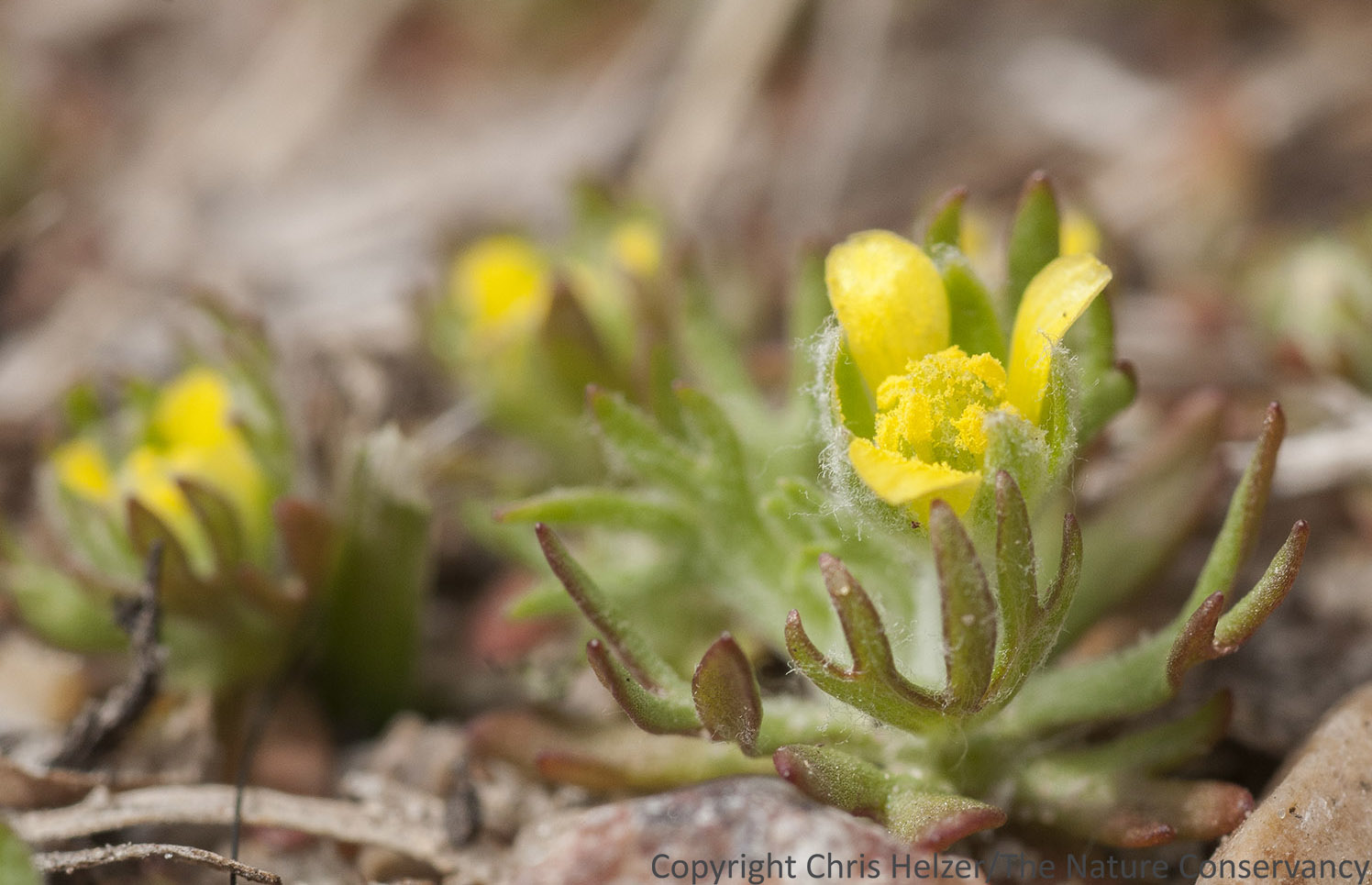
Prairie ragwort (Packera plattensis) at Griffith Prairie, near Marquette, Nebraska.
Griffith Prairie has been managed with patchy fire and relatively intensive grazing during the last couple of years, and experienced a severe drought in 2012. As a result, the perennial grasses are pretty weak, opening up lots of space for wildflowers – both short-lived and long-lived ones. Leadplant (Amorpha canescens), prairie clovers (Dalea sp.), prairie violets (Viola pedata) and other long-lived forbs are thriving, but are joined by a throng of more opportunistic species such as shell-leaf penstemon (Penstemon grandiflorus), false dandelion (Nothocalais cuspidata), windflower (Anemone caroliniana), and prairie ragwort (Packera plattensis). Short grass, steep hills, abundant wildflowers, and pretty clouds combined to make a great hike!

Some people consider ragwort to be “weedy” but it’s a beautiful plant and a good resource for bees and other insects. It tends to come and go, based on the degree of grass competition present.
Violets and false dandelions were mostly done blooming, and penstemon hadn’t started yet, but ragwort was flowering in big beautiful patches. I spent quite a bit of time trying to figure out how to compose a photo that represented what it really looked like. I couldn’t, but I hope you can imagine it anyway.

And more.
I took a break from photographing ragwort to explore a cut bank on one of the loess hills. There were cacti growing right on the steep bank, which made me wonder how deeply the roots penetrated into the bank, and whether they went horizontally as well as much as vertically.
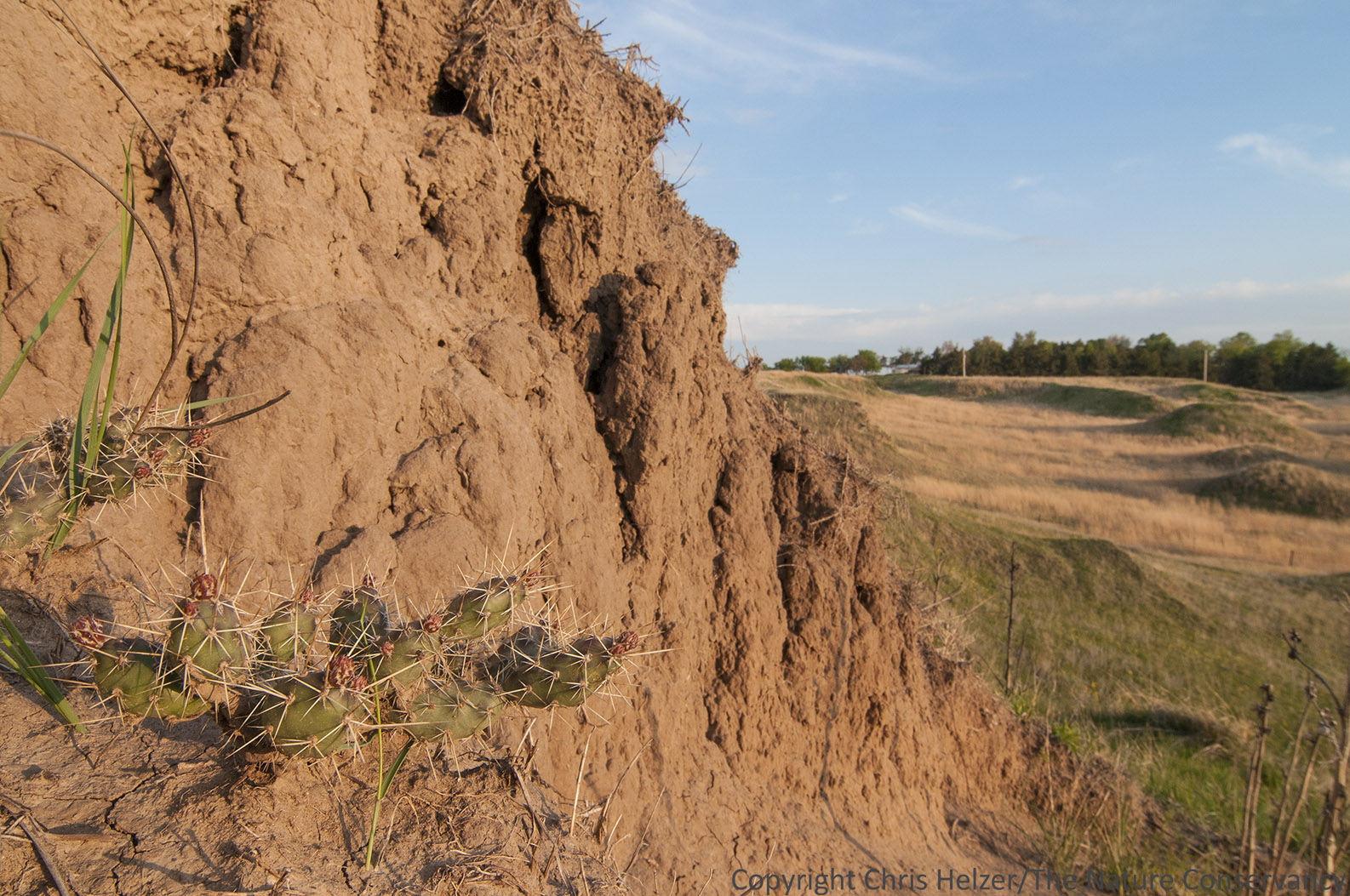
Cactus on a sloughed off portion of a loess hill
Hoary (showy) vetchling (Lathyrus polymorphus) was also blooming in patches along some of the steep hillsides. A beautiful perennial legume, vetchling forms colonies that make pretty amazing color displays early in the year. Again, I couldn’t figure out how to photograph those patches to show how they really look, but the plants sure are gorgeous, aren’t they?

Hoary vetchling
.
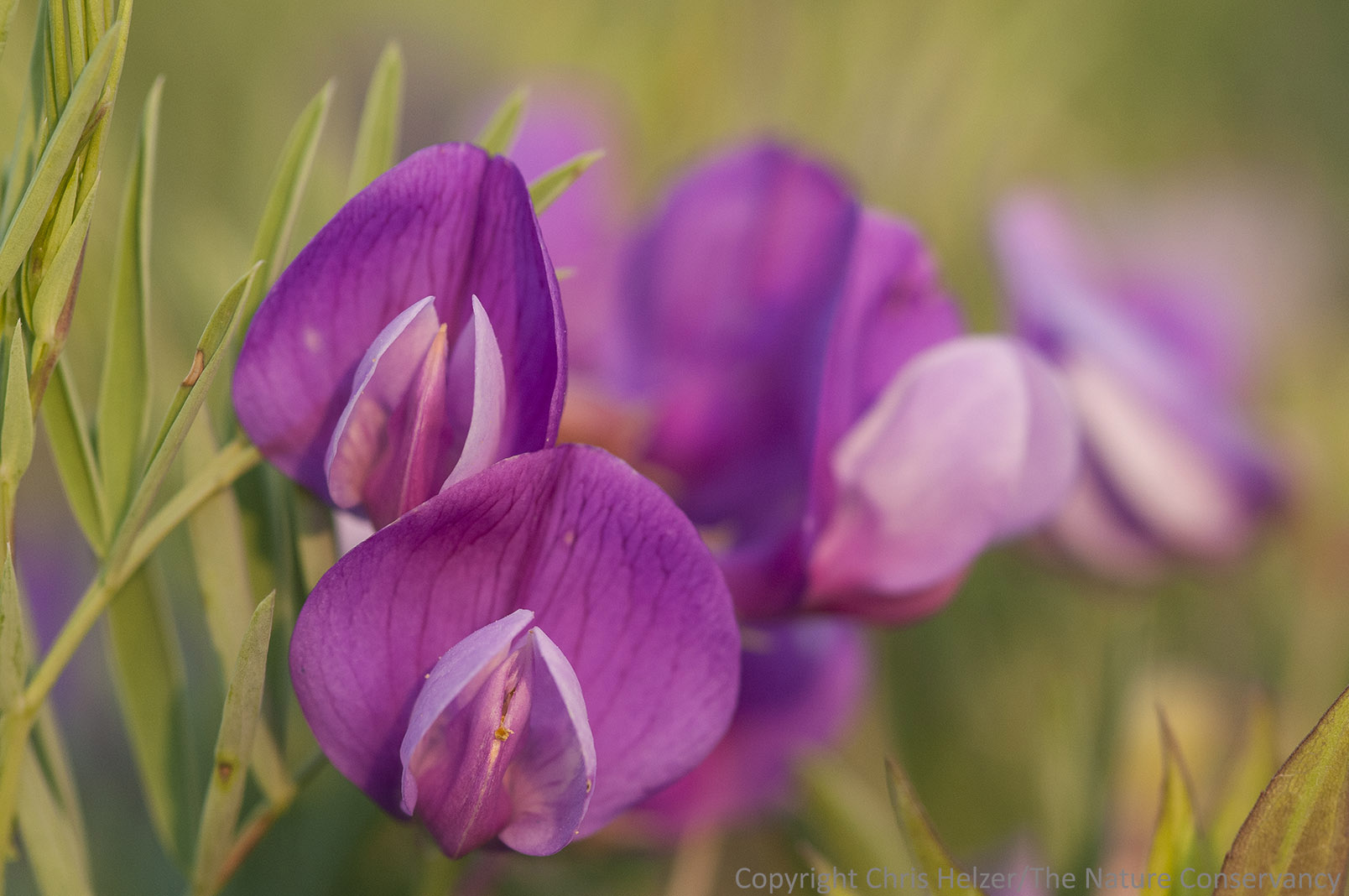
Hoary vetchling up close.
Thanks to Prairie Plains for making this prairie available for me and anyone else who wants to visit it. If you’ve not had the pleasure, click here to find directions.