In Celebration of Black-Eyed Susans

Before I begin this post, let me say thank you to all of you who voted on the photo choices offered up in last Friday’s post.  This time, there was no difficulty in determining the winners.  About 90% of the voters chose A over B and C over D, and about 75% chose E over F.  I appreciate both the votes and the very thoughtful explanations many of you included along with your choices.  Thank you.

The black-eyed Susan may be the quintessential wildflower species.  If you asked a young student to draw a picture of a wildflower, chances are the result would look something like a black-eyed Susan – a ring of petals around a dark circular center.  As a photographer, I certainly appreciate the flower’s aesthetic appeal, and find myself drawn to photograph it frequently.  This July was no different, and I ended up with quite a few black-eyed Susan photos, some of which are included below.
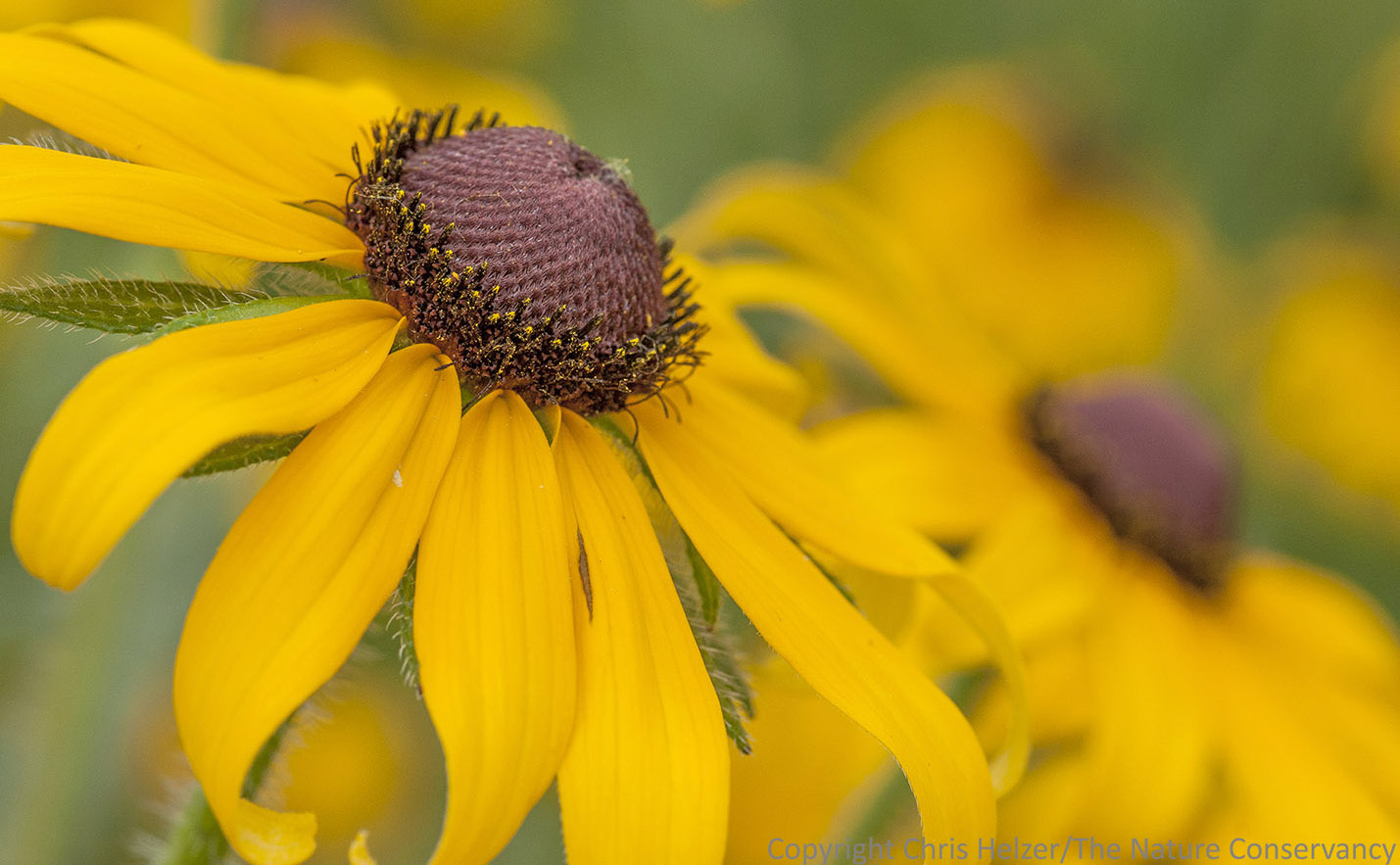
What is more wildflowery than the black-eyed Susan (Rudbeckia hirta)?

What is more wildflowery than the black-eyed Susan (Rudbeckia hirta)?  The Nature Conservancy’s Platte River Prairies, Nebraska.
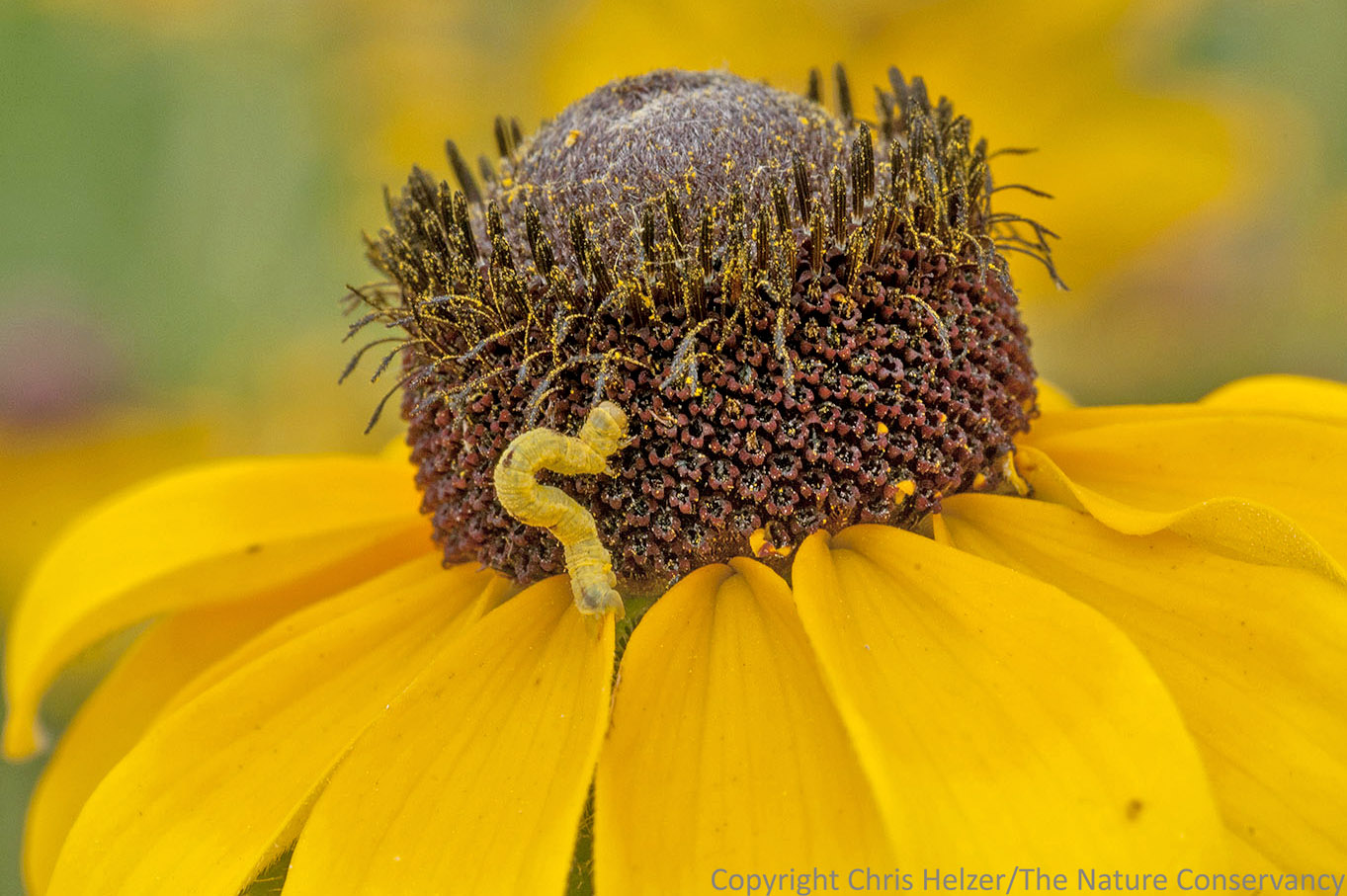
This inchworm is apparently attracted more by the forage value than the aesthetic value of this flower.
This inchworm is apparently attracted more by the forage value than the aesthetic value of this flower.

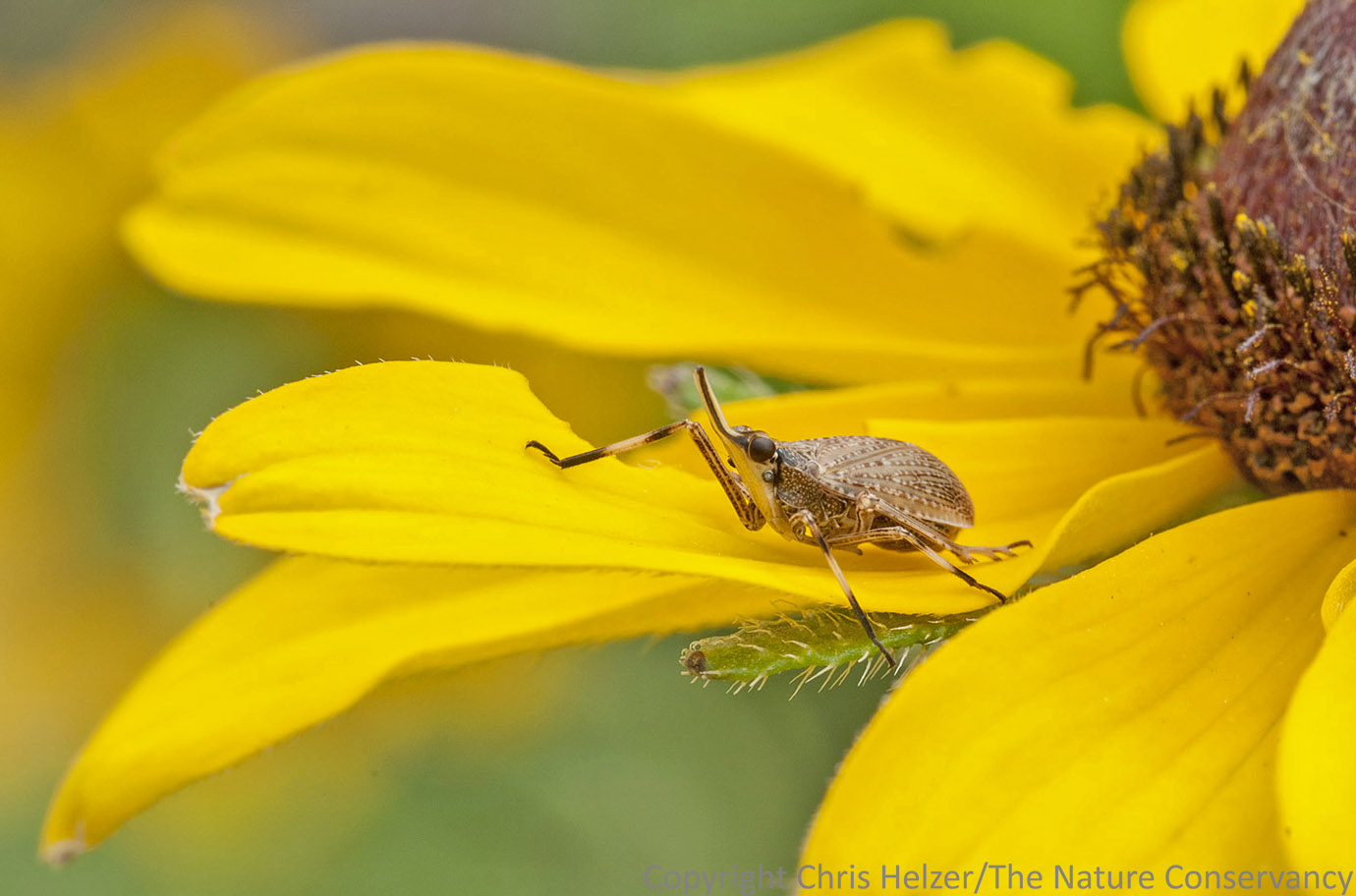
I don't think this plant hopper was feeding on black-eyed Susans - it flew in and landed while I was admiring the flower, so i photographed it.

I don’t think this plant hopper was feeding on black-eyed Susans – it flew in and landed while I was admiring the flower, so I photographed it.
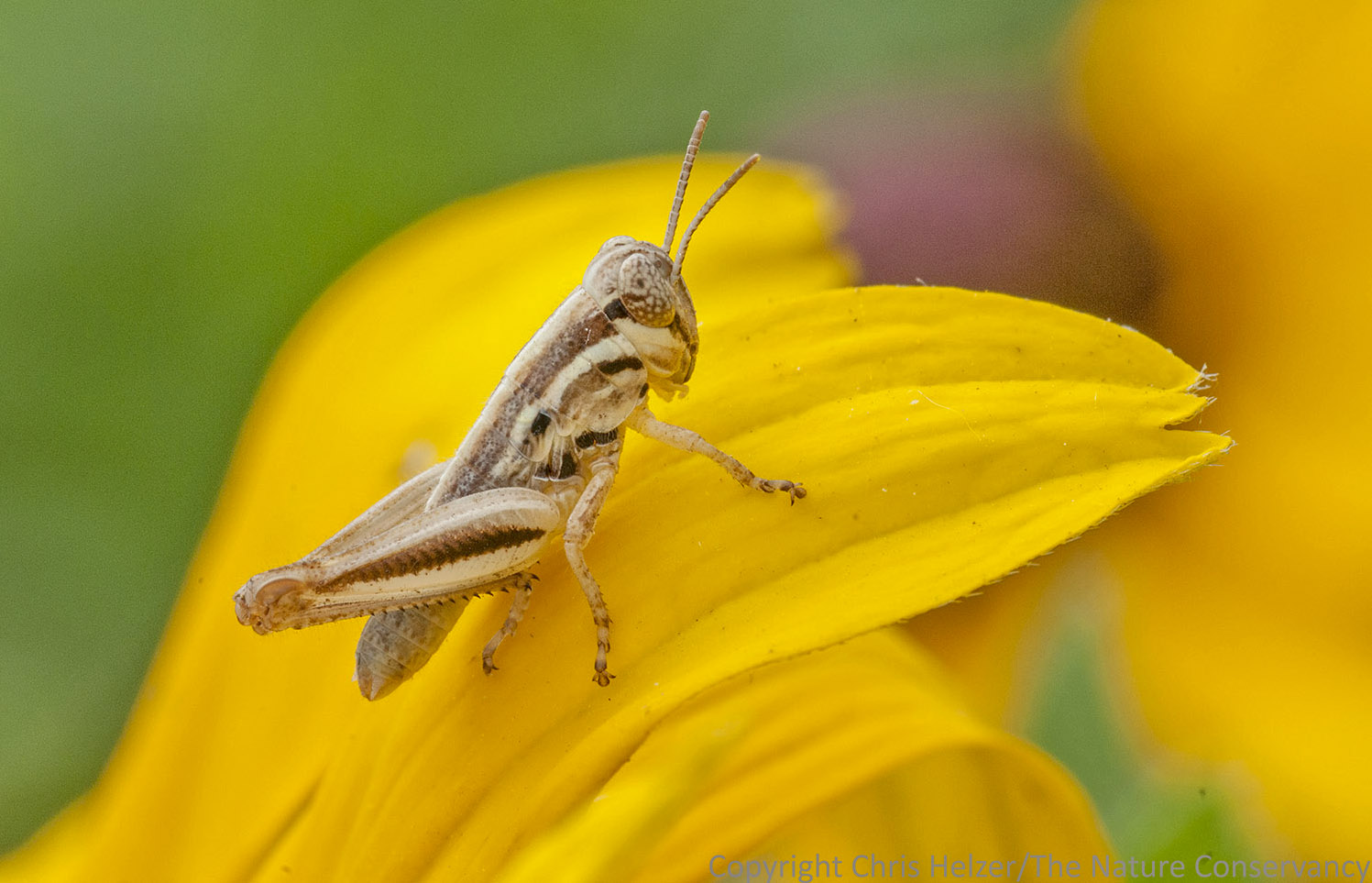
As with the plant hopper, I think this grasshopper nymph simply used the flower as a landing pad when I flushed it as I walked up.

I think this grasshopper nymph simply used the flower as a landing pad after I flushed it as I walked up; I don’t think it was feeding on it.
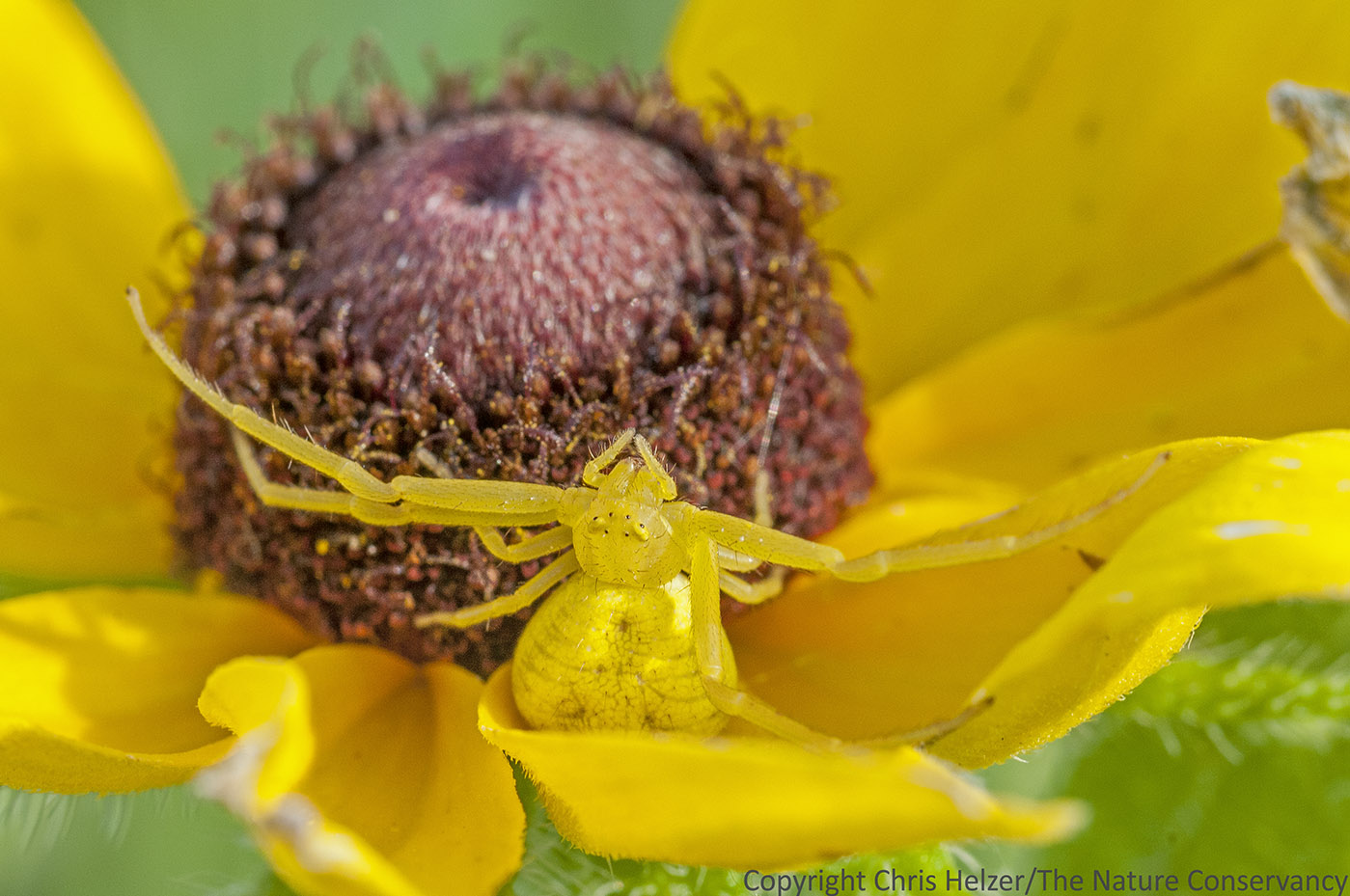
This crab spider would be glad to have a meal while on the flower, but it's hoping for more protein than the flower can provide.  Flower visitors beware!

This crab spider was definitely looking for a meal on this flower, but it was hoping for more protein than the flower can provide.  I believe this is one of the crab spider species that can change color (white to yellow and vice versa) to match flower color.  Watch out pollinators!

Even before they bloom, black-eyed Susans are attractive.  (They're also very attractive when they're done blooming - especially in the early fall when their brown dried petals are still hanging on.

Black-eyed Susans are attractive even before they bloom.  (They’re also very attractive when they’re done blooming – especially in the early fall when their brown dried petals are still hanging on.)

As with many of our showiest wildflowers, black-eyed Susans are most abundant a year or two after an event that weakens competition from dominant grasses.  Drought and grazing are both good candidates for that kind of event, and many of the black-eyed Susans we’re seeing this summer benefited from the 2012 drought and the grazing we used as a management tool that year.  As short-lived perennials, they can germinate and bloom quickly when provided with a little open space, light, and moisture.  They are also an easy flower to grow in my yard, and they generally produce enough seed and new plants that I don’t ever have to replant them.

Most of the black-eyed susan flowers in our prairies will be done blooming within the next couple of weeks, though some stragglers will probably continue on through the end of the month.  When they’re done, we’ll venture out to harvest seed from them (wearing gloves to protect the thinner-skinned sides of our fingers from the sharp hairs on the stems) and spread them in some of our degraded prairies where we’ve weakened grasses with this year’s grazing.  Many species we overseed in that manner take a few years to bloom, but black-eyed Susans usually don’t make us wait very long.  I look forward to seeing an abundance of them next year!
Longhorns on the Prairie

One of the great things about prairies – and nature in general – is that there is way more to discover than I’ll ever have time for.  Especially within the world of invertebrates, there is no shortage of species to learn about, and every one of them has a fascinating story.  During the last two weeks, I’ve started paying attention to longhorned flower beetles, a group of species I’d noticed before while looking for bees.  Not surprisingly, once I started really looking at them, I discovered that there are multiple species and that they are much more common than I’d realized.

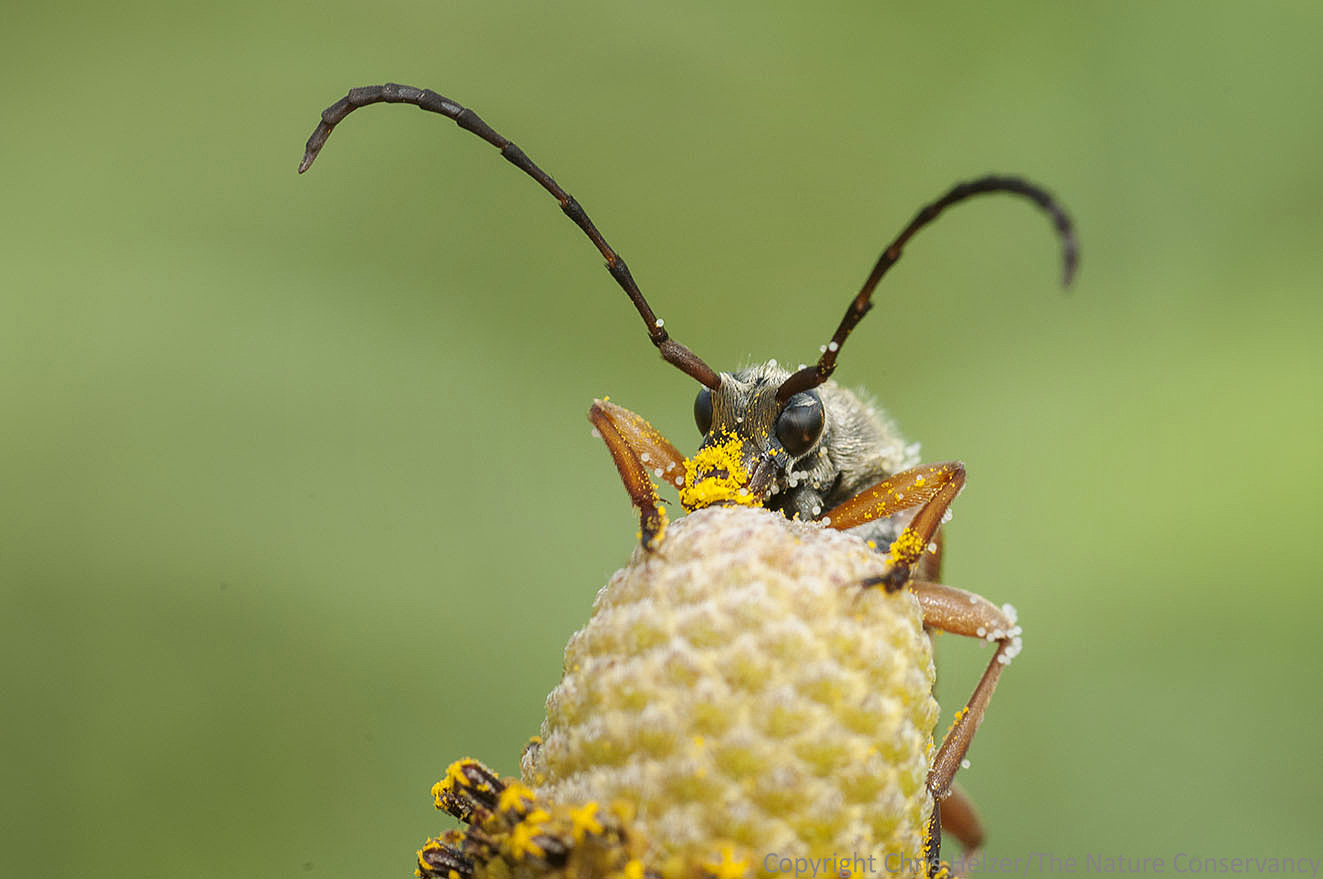
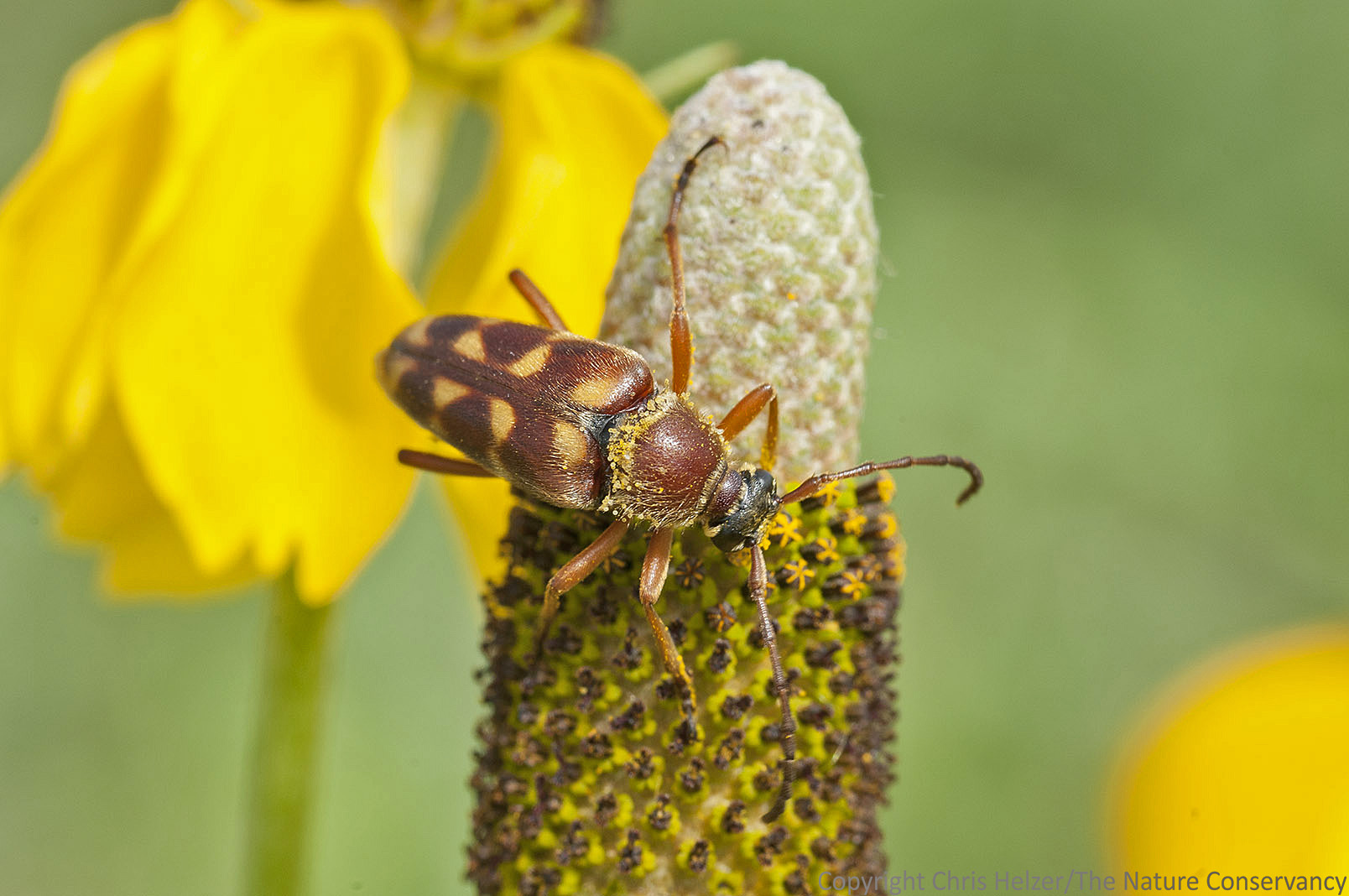
This longhorned beetle is likely Typocerus confluens, according to Ted MacRae.  There were a couple different (but similar) species around the day I took these photos.

This longhorned beetle is likely Typocerus confluens, according to Ted MacRae, but he said there are others that look enough like it he can’t tell for sure from a photograph.   The Nature Conservancy’s Platte River Prairies, Nebraska.

These beetles belong to the “flower longhorn” group of insects (family Cerambycidae, subfamily Lepturinae).  Adult flower longhorns are largely diurnal (active during the day) and feed upon a wide variety of wildflowers.  When I started looking for information on longhorns, I turned to Ted MacRae, an entomologist and author of the fantastic blog, “Beetles in the Bush“.

Ted helped me identify the species I’d been able to photograph around here, and gave me some good information on what longhorns are all about.  Ted, by the way, has documented at least 229 species and subspecies of longhorn beetles in Missouri.  That information made me feel better about being unable to identify my photographed beetles myself, but also strikingly ignorant about a very diverse group of insects I’d never really noticed before.  (Such is the way it usually goes with insects.)

Ted thought this was probably Typocerus octonotatus, a common Great Plains species of longhorned beetles.

Ted thought this was probably Typocerus octonotatus, a common Great Plains species of longhorned beetles.  You might think it looks just like the T. confluens in the earlier photo, but look more closely at the color pattern…  I know, right?!   Helzer Family Prairie, near Stockham, Nebraska.

Flower longhorn beetles are named for their habit of feeding on wildflowers as adults.  As larvae, on the other hand, most longhorn beetles are wood-borers.  That includes many (most?) members of the Typocerus genus – the genus of beetles I’ve been seeing.  However, Ted says the larvae of many Typocerus species in the Great Plains are actually subterranean root feeders on prairie grasses.  That, of course, seems a much more sensible strategy for insects in landscapes with only widely scattered woodland habitats.

Face on.

A longhorned beetle with a face full of pollen.

Now that I’ve started to pay attention to longhorned flower beetles, I’ll probably never ignore them again.  That’s both a blessing and a curse.  I love learning about new species, but it makes prairie hikes go more slowly because the more species I recognize, the more there is to see.  If this keeps up, it’ll take me all day to walk 100 yards!

Thanks to reading this post, your mind has also been infected with the visual image of longhorn flower beetles.  The next time you walk through a prairie, you’ll likely spot more than one.  (You might want to budget just a little more time for that prairie walk, by the way – sorry about that!)