
Photo of the Week – July 9, 2015

Upright yellow coneflower (Ratibida columnifera), aka Mexican hat, is blooming all over the Platte River Prairies right now.  As with most showy flowers, the coneflowers are crawling with insects of many kinds.  I spent a fun half hour (31 minutes, to be exact) last week, trying to photograph as many of those insects as I could before I had to pop into our field headquarters for a meeting.
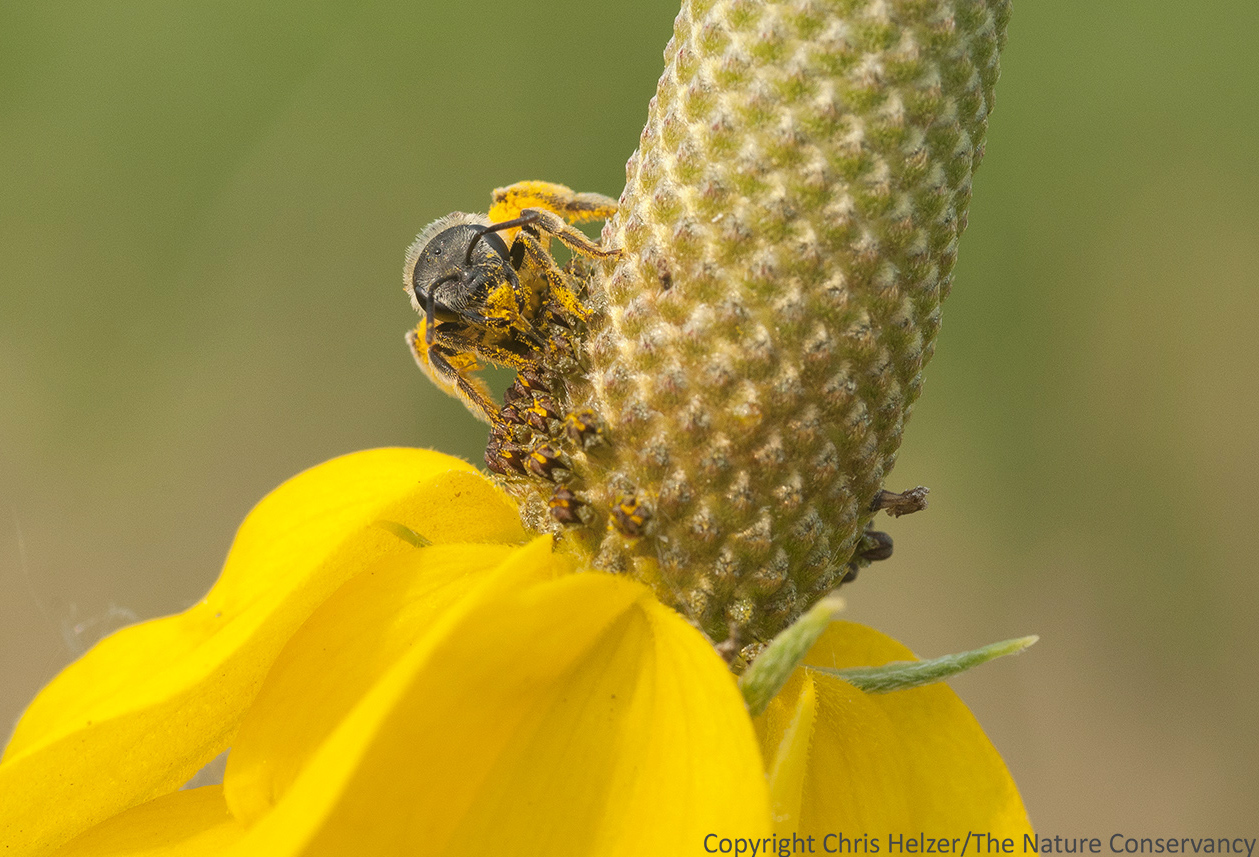
Bee on upright prairie coneflower.  The Nature Conservancy's Platte River Prairies, Nebraska.

Sweat bee (Halictus ligatus, I think) on upright prairie coneflower. The Nature Conservancy’s Platte River Prairies, Nebraska.

Bee and beetle on upright prairie coneflower.  The Nature Conservancy's Platte River Prairies, Nebraska.

The same sweat bee species on a different flower, this time joined by a small brown beetle.
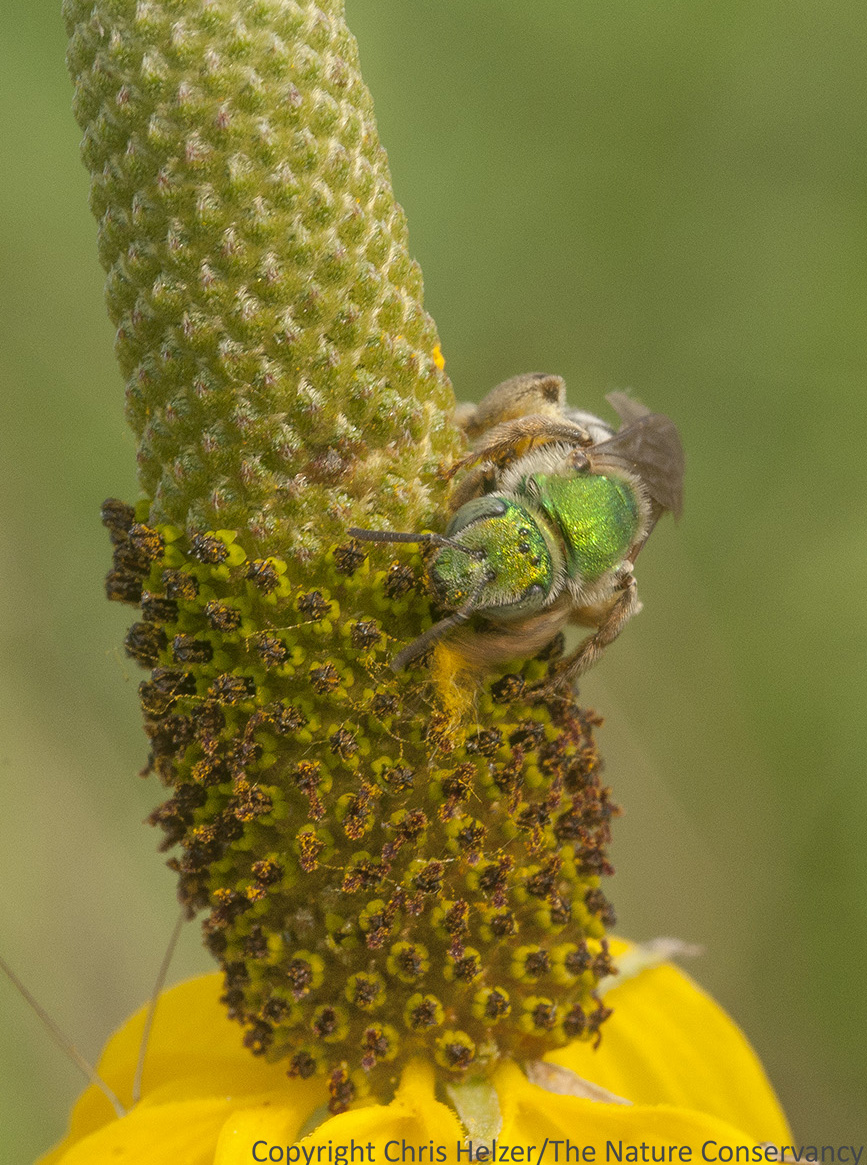
Bee on upright prairie coneflower.  The Nature Conservancy's Platte River Prairies, Nebraska.

A different bee with the antennae of another insect beneath it.

Hover fly (Syrphid) on upright prairie coneflower.  The Nature Conservancy's Platte River Prairies, Nebraska.

It took me a while to finally capture an image of one of these syrphid flies (hover flies).  They were a lot more skittish than the bees.
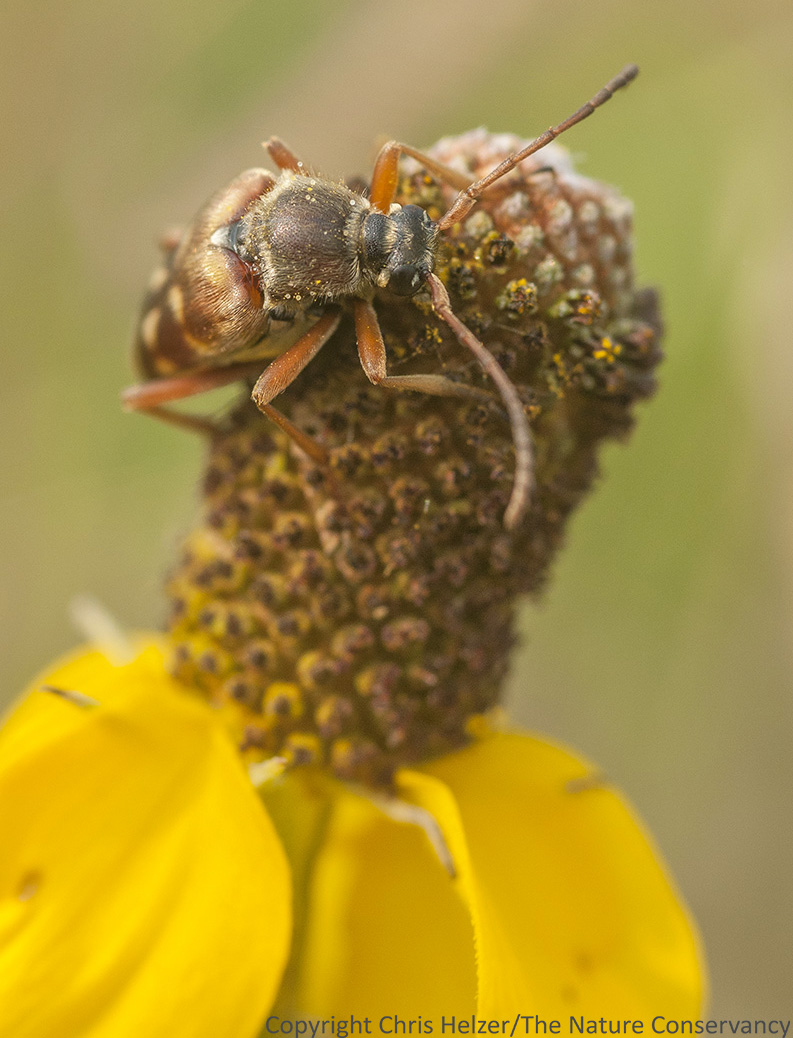
Long-horned beetle on upright prairie coneflower (Ratibida columnifera).  The Nature Conservancy's Platte River Prairies, Nebraska.

Long-horned beetle feeding on pollen.

I wrote about long-horned beetles last summer after photographing them on the same flower species.  I think this one is Typocerus confluens, but I’m just guessing based on photos from last year.  You might remember from last year that adult long-horned beetles feed on flowers, but larvae are wood borers or subterranean root feeders.
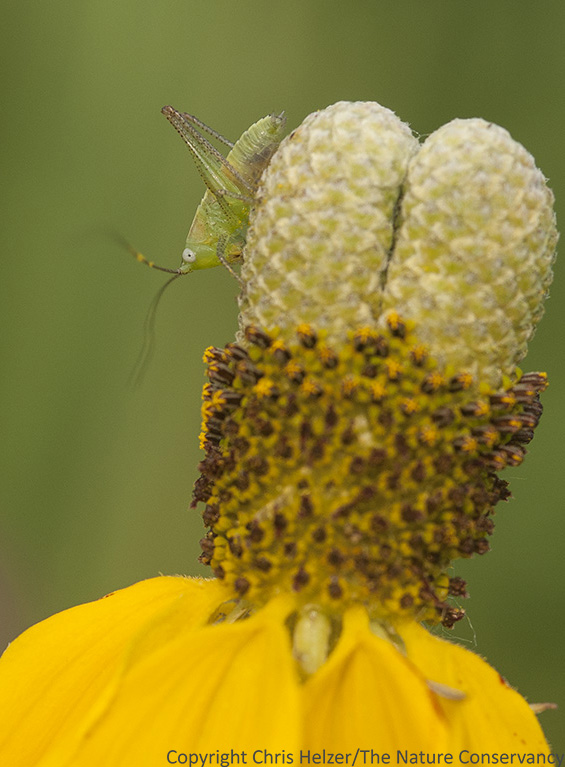
Katydid nymph on upright prairie coneflower.  The Nature Conservancy's Platte River Prairies, Nebraska.

A tiny katydid nymph.

Tree cricket nymph on upright prairie coneflower.  The Nature Conservancy's Platte River Prairies, Nebraska.

A tree cricket nymph.

As is always the case in prairies (and nature in general), the closer you look, the more you see.  The number of insect species feeding on this one flower (and, in some cases, pollinating it) is a great example of the complexity of life found in prairies.  Complexity leads to resilience because there are multiple species that can play fill similar roles.  If one species has a bad year, others will fill in for it.  That redundancy helps keep all systems functioning all the time.

Hurray for complexity!

Photo of the Week – June 25, 2015

It’s black-eyed susan season!

Black-eyed Susan flowers (Rudbeckia hirta).  The Nature Conservancy's Platte River Prairies, Nebraska.

Black-eyed susan flowers (Rudbeckia hirta). The Nature Conservancy’s Platte River Prairies, Nebraska.

How can I not photograph these flowers?  I have more than enough black-eyed susan flowers in my photo files, but they’re just so STRIKING!  After returning from our Texas vacation, I spent much of Monday scouting our Platte River Prairies to see what prairie seeds were ripe and where the optimal harvest locations were for each species.  For a while, the sun was poking in and out of thin clouds, so I pulled the camera out and looked for something to help me capture the light.  I really did try to find something besides black-eyed susan to photograph, but I just couldn’t do it.

ENPO150625_D002


ENPO150625_D007

I photographed them from the front, side, and back.  I photographed the flowers, stems, and leaves.  These are just a few of the shots from the 10-15 minutes I spent satisfying my need.  I may have a problem…