Before I begin this post, let me say thank you to all of you who voted on the photo choices offered up in last Friday’s post. This time, there was no difficulty in determining the winners. About 90% of the voters chose A over B and C over D, and about 75% chose E over F. I appreciate both the votes and the very thoughtful explanations many of you included along with your choices. Thank you.
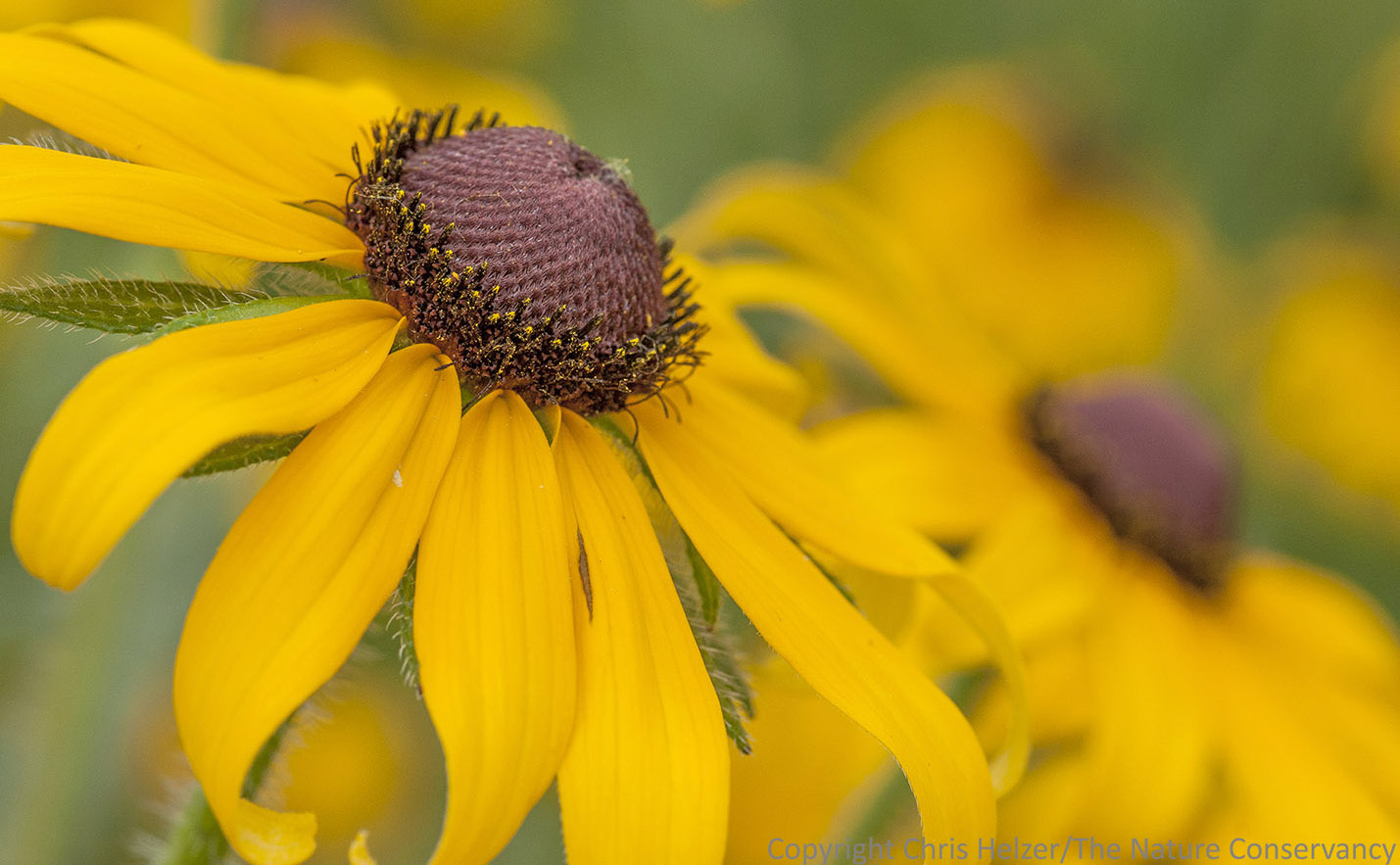
The black-eyed Susan may be the quintessential wildflower species. If you asked a young student to draw a picture of a wildflower, chances are the result would look something like a black-eyed Susan – a ring of petals around a dark circular center. As a photographer, I certainly appreciate the flower’s aesthetic appeal, and find myself drawn to photograph it frequently. This July was no different, and I ended up with quite a few black-eyed Susan photos, some of which are included below.
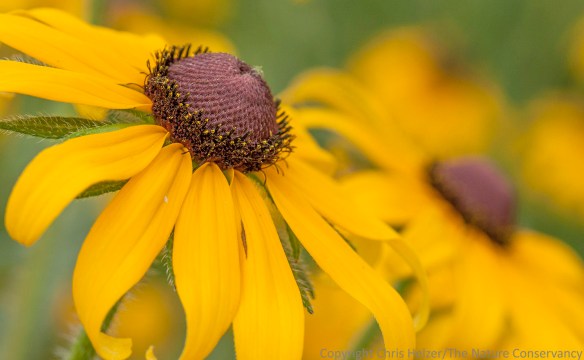
What is more wildflowery than the black-eyed Susan (Rudbeckia hirta)? The Nature Conservancy’s Platte River Prairies, Nebraska.

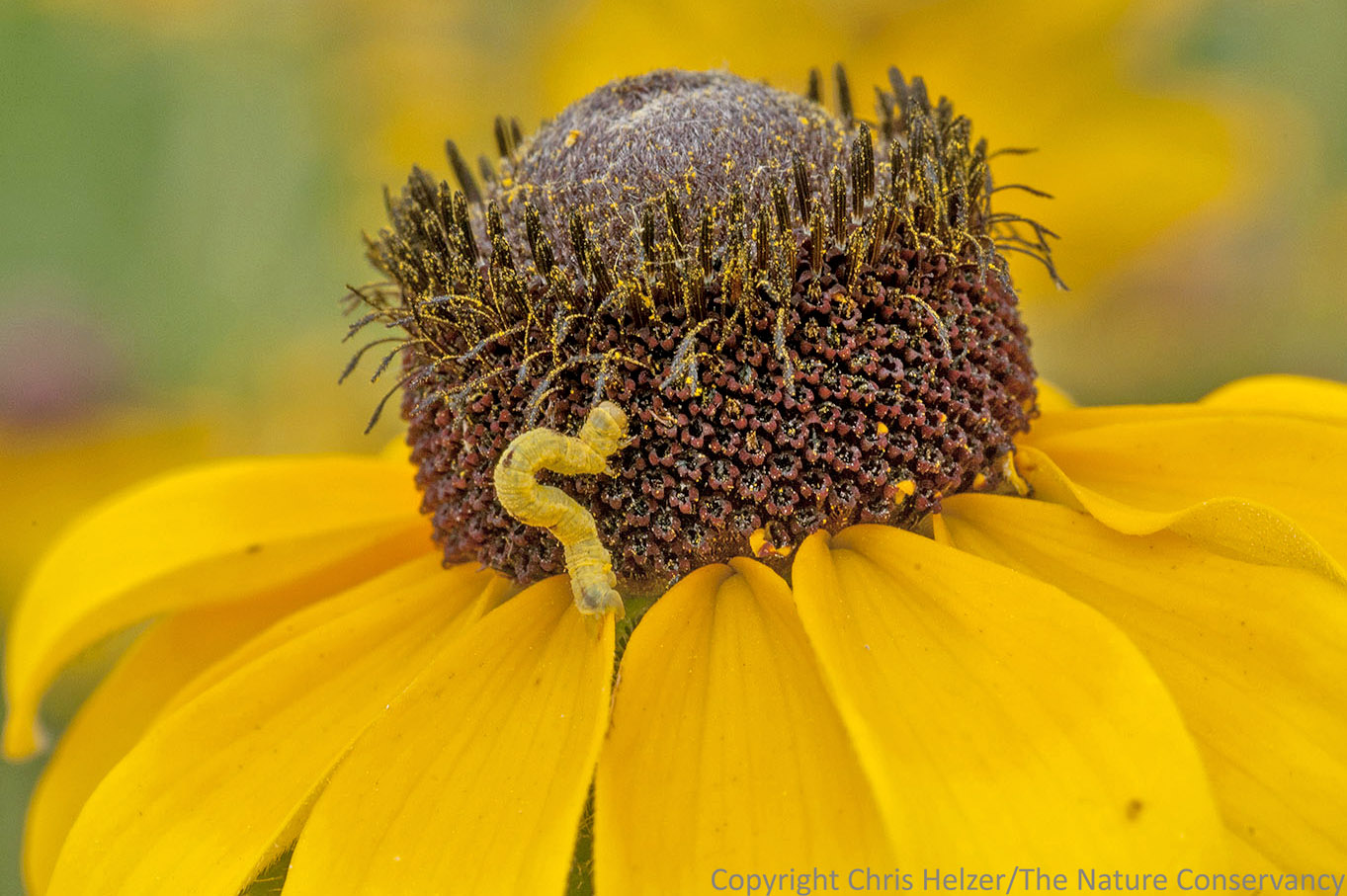
This inchworm is apparently attracted more by the forage value than the aesthetic value of this flower.

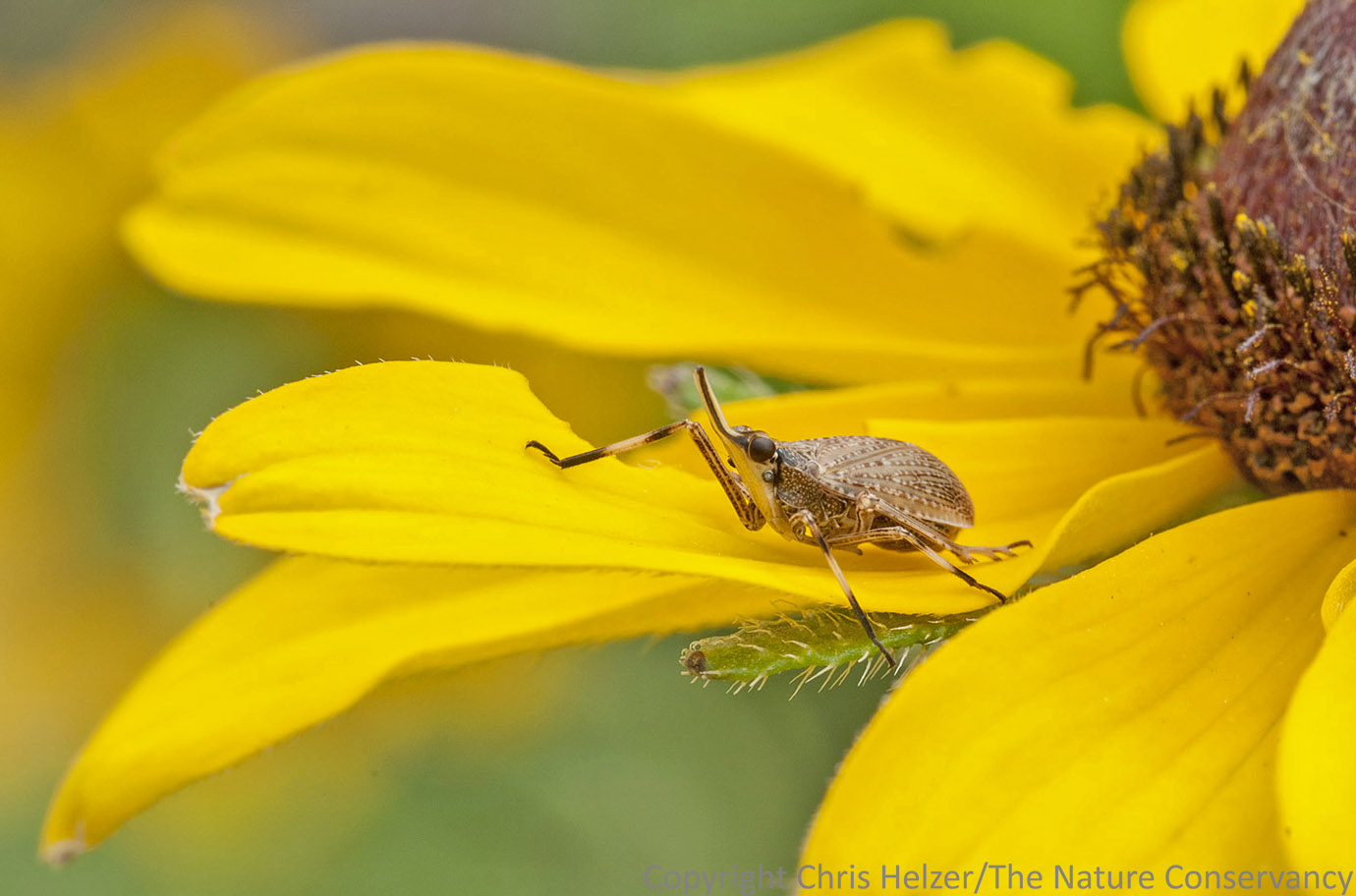
I don’t think this plant hopper was feeding on black-eyed Susans – it flew in and landed while I was admiring the flower, so I photographed it.

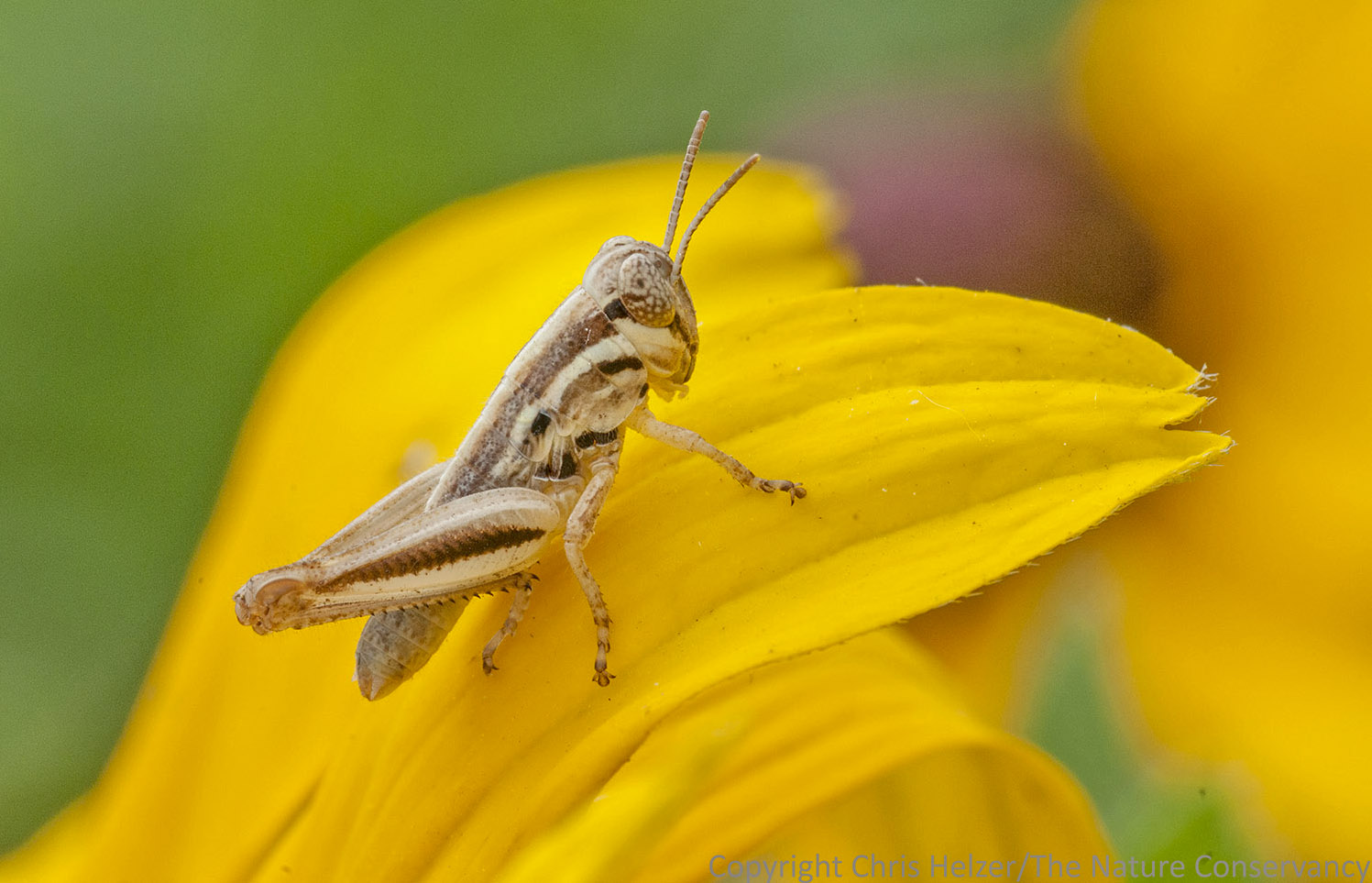
I think this grasshopper nymph simply used the flower as a landing pad after I flushed it as I walked up; I don’t think it was feeding on it.

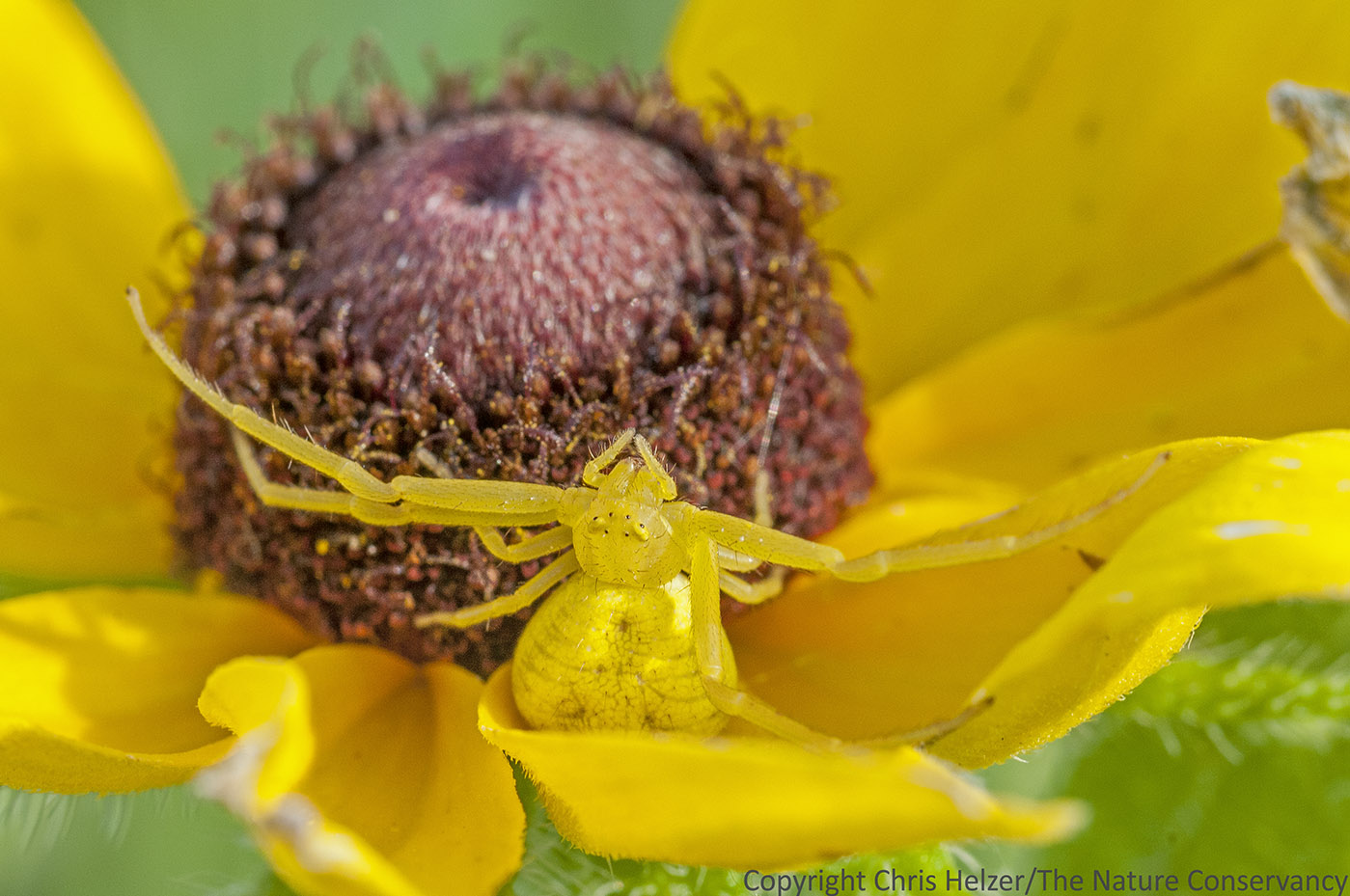
This crab spider was definitely looking for a meal on this flower, but it was hoping for more protein than the flower can provide. I believe this is one of the crab spider species that can change color (white to yellow and vice versa) to match flower color. Watch out pollinators!
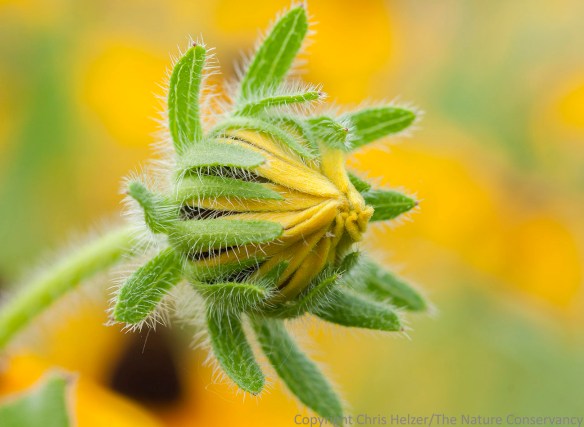
Black-eyed Susans are attractive even before they bloom. (They’re also very attractive when they’re done blooming – especially in the early fall when their brown dried petals are still hanging on.)
As with many of our showiest wildflowers, black-eyed Susans are most abundant a year or two after an event that weakens competition from dominant grasses. Drought and grazing are both good candidates for that kind of event, and many of the black-eyed Susans we’re seeing this summer benefited from the 2012 drought and the grazing we used as a management tool that year. As short-lived perennials, they can germinate and bloom quickly when provided with a little open space, light, and moisture. They are also an easy flower to grow in my yard, and they generally produce enough seed and new plants that I don’t ever have to replant them.
Most of the black-eyed susan flowers in our prairies will be done blooming within the next couple of weeks, though some stragglers will probably continue on through the end of the month. When they’re done, we’ll venture out to harvest seed from them (wearing gloves to protect the thinner-skinned sides of our fingers from the sharp hairs on the stems) and spread them in some of our degraded prairies where we’ve weakened grasses with this year’s grazing. Many species we overseed in that manner take a few years to bloom, but black-eyed Susans usually don’t make us wait very long. I look forward to seeing an abundance of them next year!




 The Prairie Ecologist