Photo of the Week – August 18, 2016

There is an unmistakable look to late summer prairies, and that look is YELLOW.  Sunflowers, goldenrods, and Silphiums (compass plant, cup plant, rosinweed) are all front and center this time of year.  The visual dominance of yellow flowers is obvious as I look back through some of my favorite prairie photos from this week.
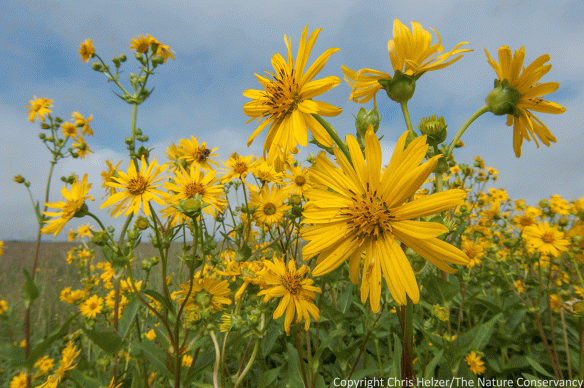
Cup plant in restored tallgrass prairie at Deep Well Wildlife Management Area west of Aurora, Nebraska.

Cup plant (Silphium perfoliatum) in restored tallgrass prairie at Deep Well Wildlife Management Area west of Aurora, Nebraska.
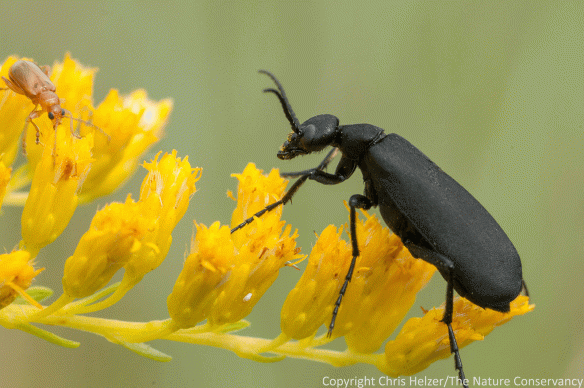
A black blister beetle and another small beetle feed on the same Missouri goldenrod flower head.
A black blister beetle and another small beetle feed on the same Missouri goldenrod flower head.

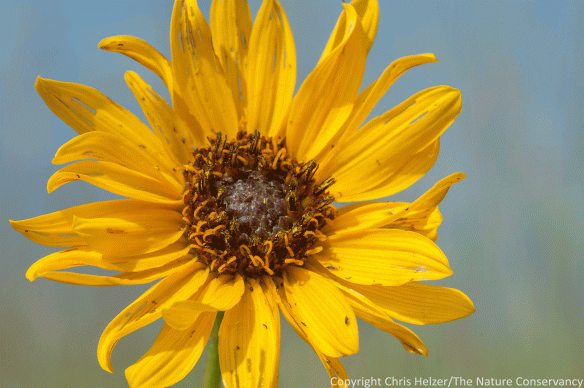
Stiff sunflower (Helianthus pauciflorus).
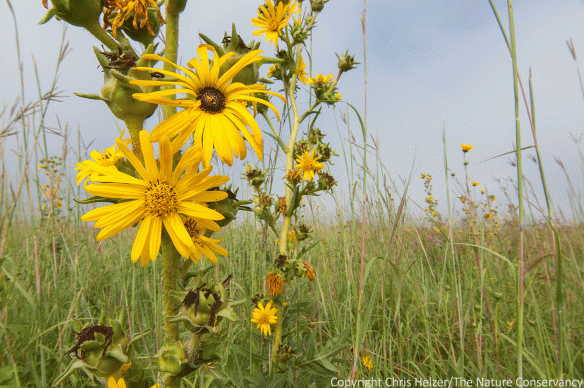
Stiff sunflower (Helianthus pauciflorus).

Compass plant.

Compass plant (Silphium laciniatum).
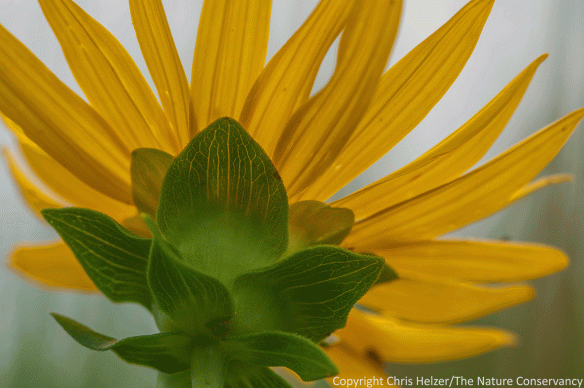
Rosinweed (Silphium integrifolium).
Rosinweed (Silphium integrifolium).

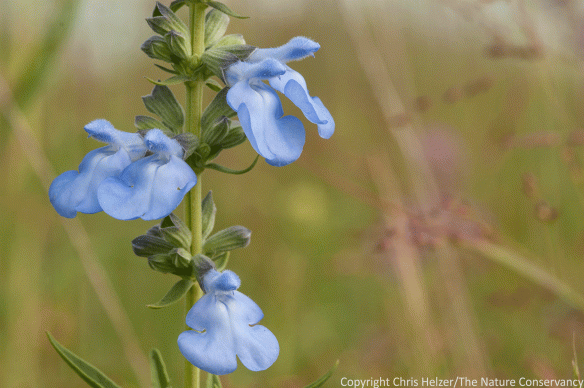
During yellow season, anything that's not yellow really stands out - especially when it's tall and BLUE. Pitcher sage (Salvia azurea).

During yellow season, anything that’s not yellow really stands out – especially when it’s tall and BLUE. Pitcher sage (Salvia azurea).

I wonder if anyone has gone through all the prairie flower species to see which color is most common (I’ll be someone has).  It has to be yellow, doesn’t it?  Purple, pink, and white are in the running, but I bet yellow wins pretty easily.

No complaints here.

Photo of the Week – May 19, 2016

Gjerloff Prairie, formerly known as Griffith Prairie, is a beautiful site on steep loess hills adjacent to the Platte River.  It’s owned and managed by Prairie Plains Resource Institute, and was burned earlier this spring.  I walked around the prairie for an hour or so this week to see how things were progressing since the fire.  From a distance it didn’t look like there was much to see – just a lot of short green grass.  Up close, however, there was a lot going on, and I didn’t have any trouble finding photography subjects..

The topography of Gjerloff Prairie is always interesting - if challenging to hike - but especially so after a fire.

The topography of Gjerloff Prairie is always interesting – if challenging to hike – but especially so after a fire.

Many plants, including this leadplant (Amorpha canescens), were growing strongly after the fire and a month of good rains.

Many plants, including abundant leadplant (Amorpha canescens), were growing strongly after the fire and a month of good rains.

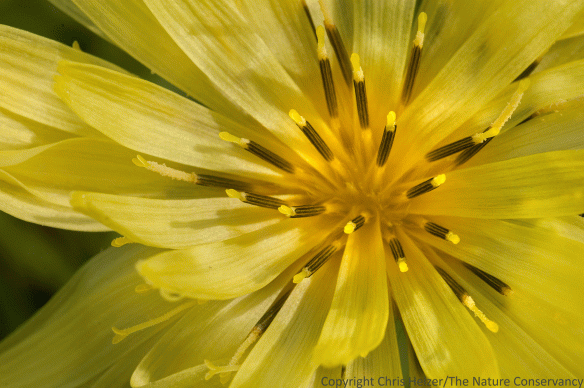
It was nice to visit the only population of tuberous false dandelion (Pyrrhopappus grandiflorus) in Nebraska. The southern Plains wildflower was discovered at Gjerloff prairie in 2004.

It was nice to revisit the only population of tuberous false dandelion (Pyrrhopappus grandiflorus) in Nebraska. Normally found only in Kansas and southward, this wildflower was discovered at Gjerloff prairie in 2004.

Smooth sumac (Rhus aromatica) can be overly abundant in some prairies in our area, but hangs out mainly on a few waslopes at Gjerloff prairie. It resprouts easily after fires, and looked vibrant and healthy this week.

Smooth sumac (Rhus glabra) can be overly abundant in some prairies in our area, but hangs out mainly on a few steep slopes at Gjerloff prairie. It resprouts easily after fires, and looked vibrant and healthy this week.

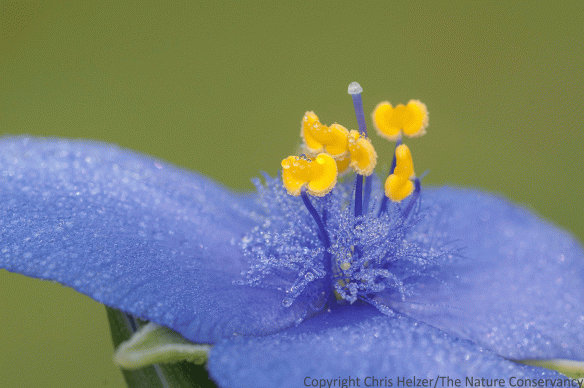
Spiderwort (Tradescantia occidentalis) was just starting to bloom on the warmer south-facing slopes of the prairie.

Spiderwort (Tradescantia occidentalis) was just starting to bloom on the warmer south-facing slopes of the prairie.

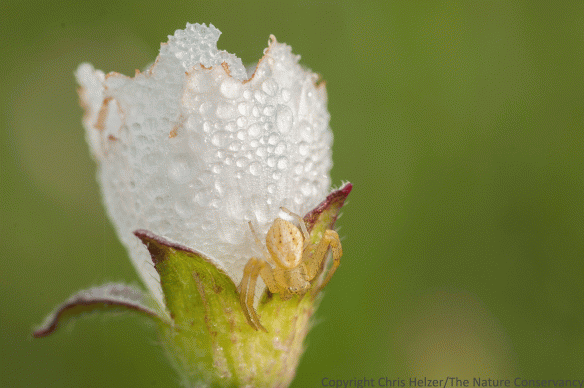
And, of course, I found a crab spider to photograph. Although they are particularly small this time of year, they are all over the place on flowers, and weren't difficult to find once I started looking.

And, of course, I found a crab spider to photograph (on pale poppy mallow – Callirhoe alcaeoides). Although they are particularly small this time of year, crab spiders are all over the place on flowers.