Photo of the Week – June 14, 2013

This was an interesting week for observations.  Here are some of the things I saw and learned.
A

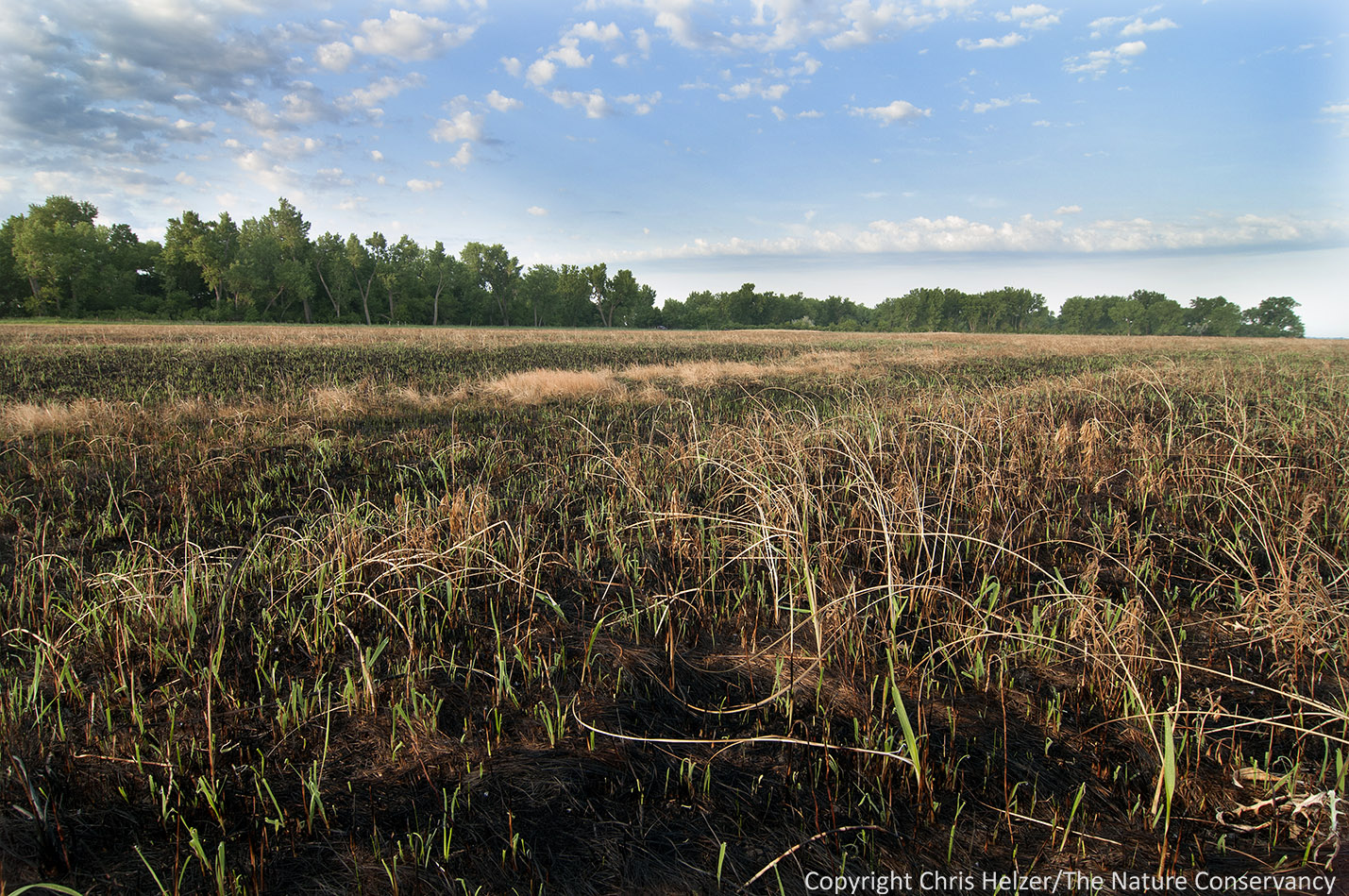
Our burn from last week is greening up nicely.  This photo was taken one week after the burn.  We’re supposed to get some rain today and through the weekend, so that should help keep the green-up going.  In a few more weeks, it’ll be difficult to tell the site had been burned.

.

B

Another photo of last week’s burn.  Most of the earliest regrowth was grass.  Wildflowers were just barely resprouting.  Cattle have access to this now, and we expect them to switch their focus from unburned portions of the prairie to this lush regrowth.

.
C

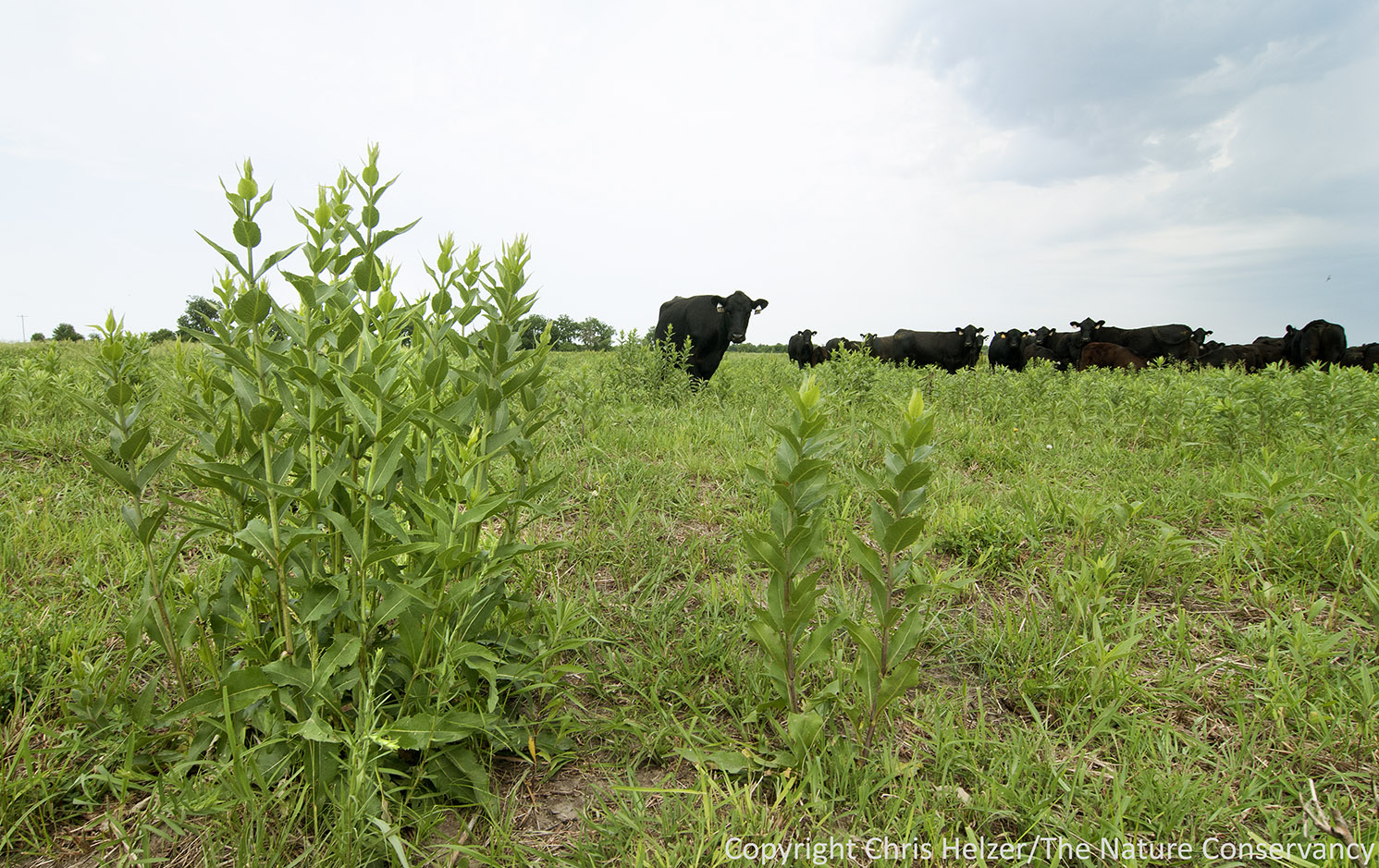
Some of you who have followed this blog for a long time may find this particularly interesting.  In general, patch-burn grazing with a light stocking rate leads to very selective grazing by cattle in our prairies – the cattle eat mostly grasses and avoid most wildflowers.  However, rosinweed (Silphium integrifolium) is one of the few wildflowers cattle often target even in unburned areas of our prairies.  One of the joys (truly) of using cattle grazing as a management tool is that I’m often surprised by what cattle do.  In this case, cattle seem to be ignoring rosinweed completely, which is very unusual.  I have some theories…

.
d

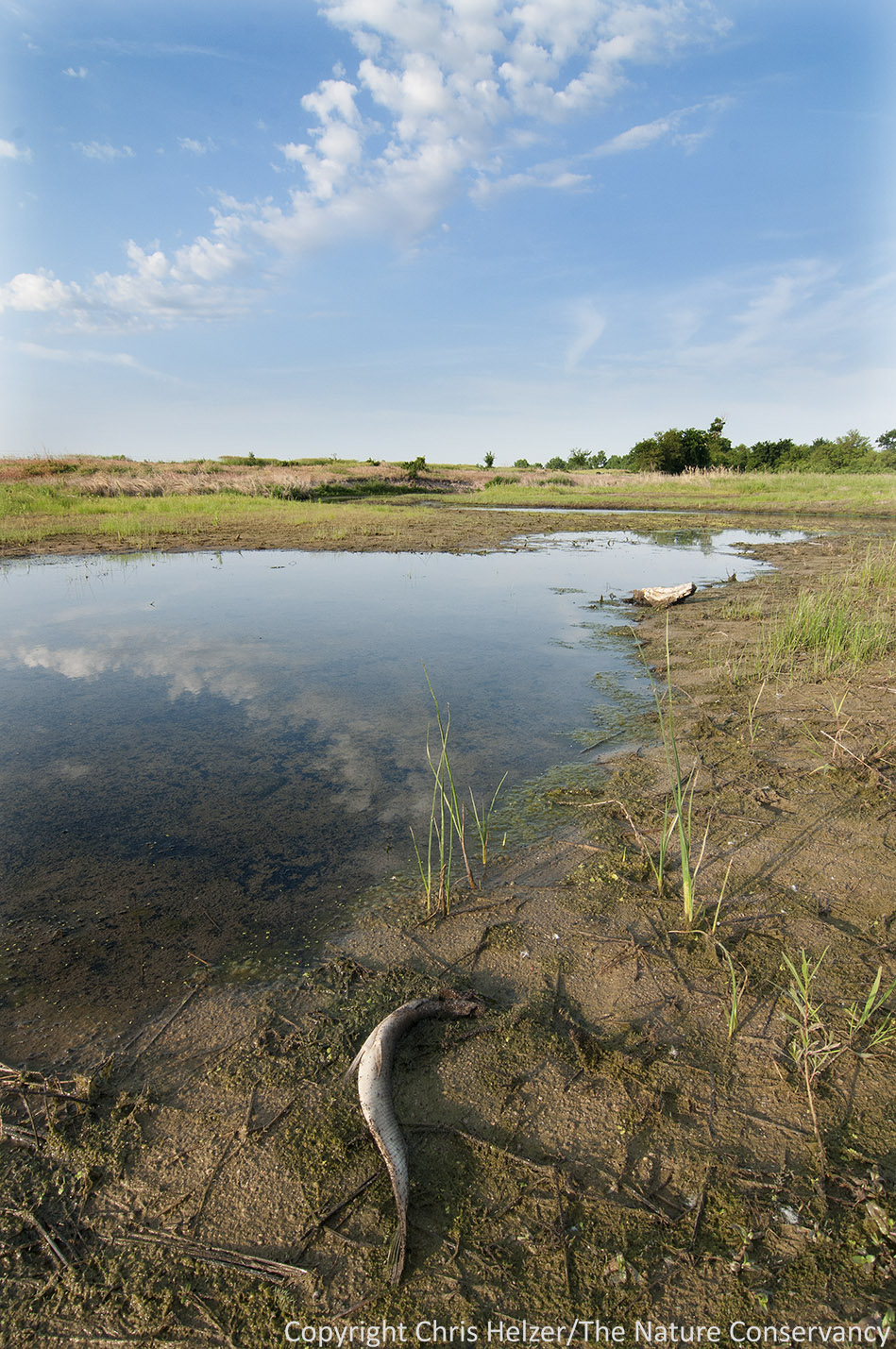
This headless and hollowed out carcass of a gar, lying along a restored wetland, was a great indication that river otters are still active along the creek where we did the restoration project.  We converted ponds into a stream with adjacent shallow wetlands, and I wondered whether we’d see a decrease in otter activity since the ponds were excellent feeding areas for the otters.  Based on some scat (poop) sightings recently and the presence of this gar, it looks like the otters are still around.

.
f

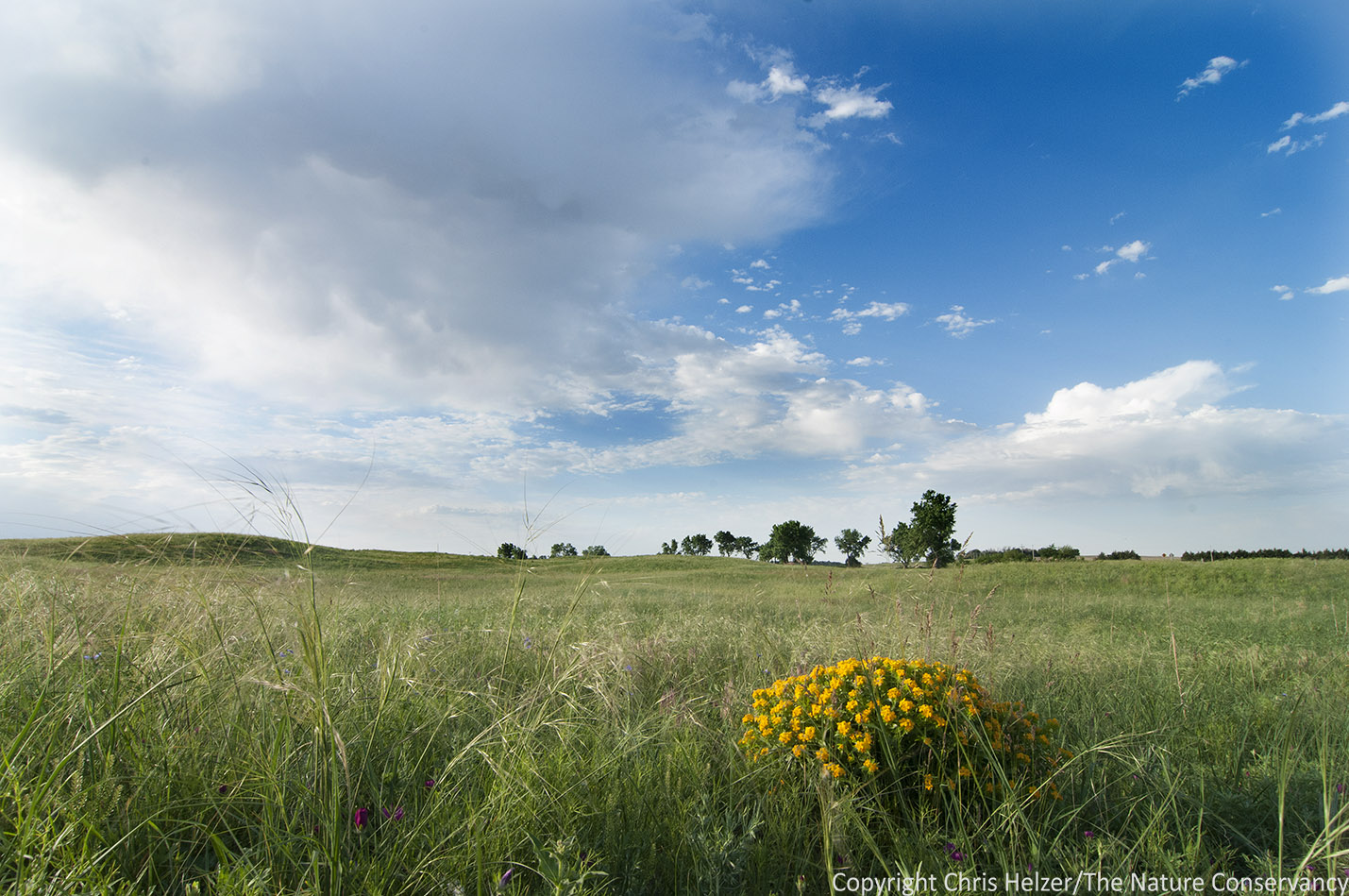
This is a photo of some remnant sand prairie, showing two species that are prominently blooming right now.  The grass in the foreground is needle-and-thread (Hesperostipa comata) and the yellow flowered plant is hairy puccoon (Lithospermum caroliniense).  Both species are present, but still in low numbers, in a restored prairie we seeded immediately to the south (see below).

.
h

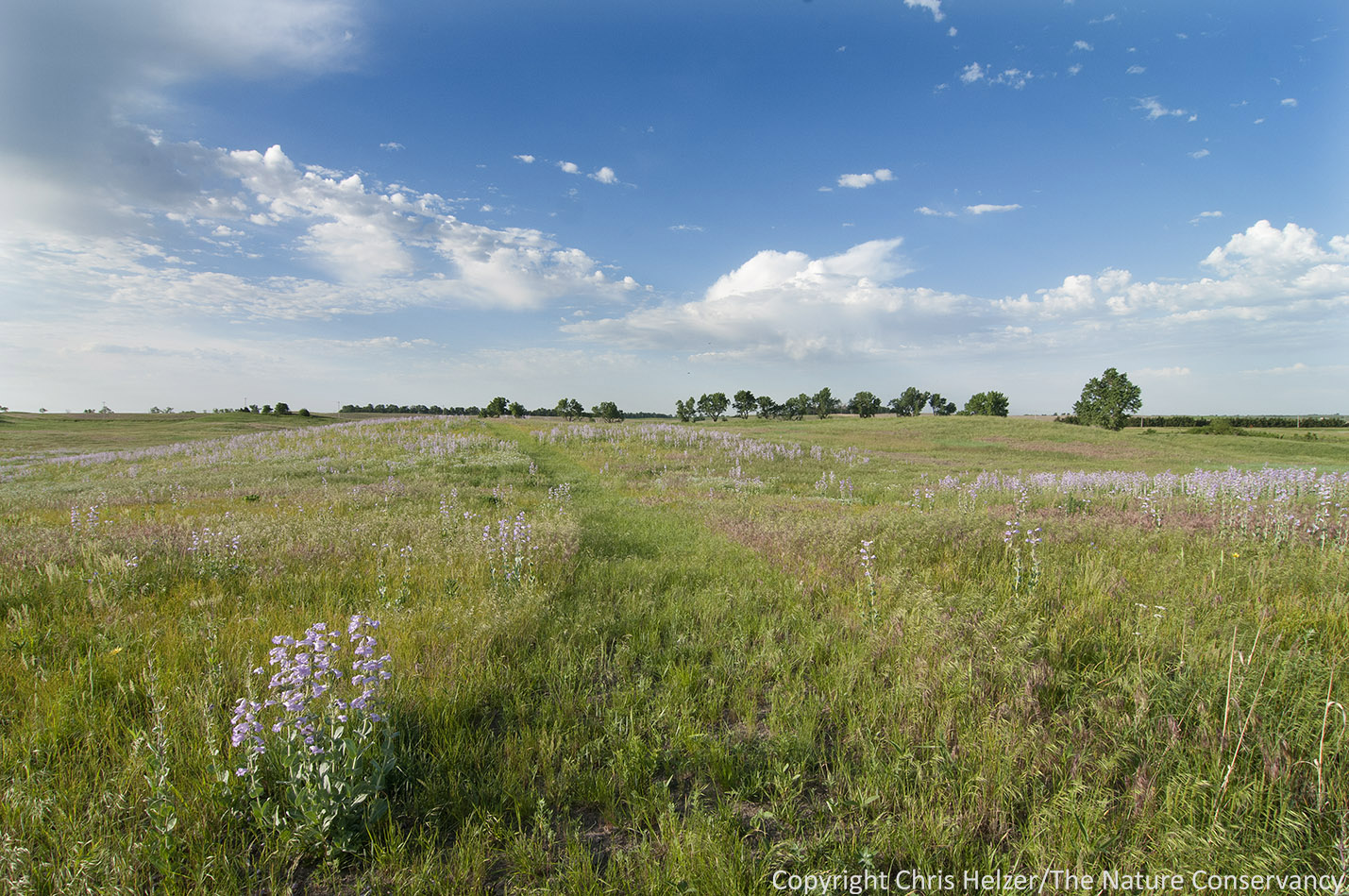
This is the photo of the restored sand prairie mentioned above.  You can see the same tree line on the horizon of both photos.  The re-seeded prairie has most of the same plant species, but often at different levels of abundance.  The shell-leaf penstemon (Penstemon grandiflorus) shown here is an obvious example of that.  As I’ve mentioned many times before, our restoration goal is not to recreate history or mimic an existing site.  Rather we want to use restored areas to enlarge and reconnect isolated remnant prairies to increase their health and long term viability.  Having somewhat different plant species compositions in adjacent sites has advantages – especially for species such as pollinators.  Right now, many bees nesting in the remnant prairie are likely spending foraging time in the restoration, where the penstemon is providing easy and abundant food.  (A PhD student is currently trying to document that.)

.
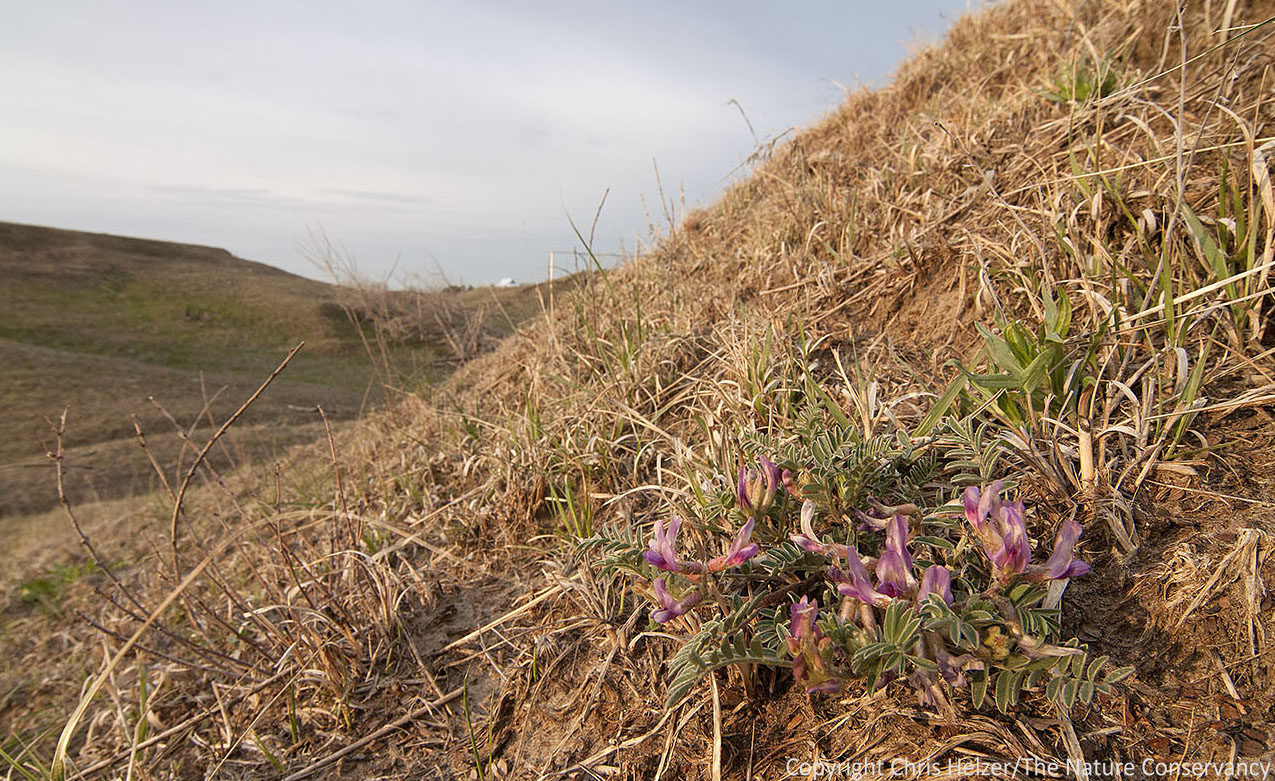
Keeping a Low Profile in the Spring

At times, prairies in east-central Nebraska can have such an abundance of large wildflowers, they resemble flower gardens.  Early spring is not one of those times.  There are plenty of prairie flowers blooming this spring, but you wouldn’t know it from a distance.  In fact, it often seems as if you have to nearly step on a spring wildflower before you see it.

These ground plum flowers, while very pretty, look like they're alone in a vast barren landscape.

These blooming ground plum plant, while very pretty, looks like its alone in a vast barren landscape.  In reality, there are lots of other flowers on the prairie – they’re just hard to see.  This photo was taken last week at Prairie Plains Resource Institute’s Griffith Prairie.

In the coming weeks, things will change.  Late spring and early summer flowers such as ragwort (Senecio plattensis), shell-leaf penstemon (Penstemon grandiflorus) and spiderworts (Tradescantia spp) will be displayed at the top of stems that rise a foot or two from the ground.   Clusters of those flowers can easily be seen from hundreds of yards away.  For now, however, wildflowers are keeping a low profile.

Of course, short stature and small flowers make perfect sense in the early spring.  Flowers that bloom at the beginning of the growing season don’t have much time between winter’s thaw and blooming time (especially this year!)  The small plants are in a race to bloom before neighbors – especially grasses – overtop them, making it difficult for both pollinators and light to find them.   For the most part, spring-flowering plants grow just long enough stems to get their flowers off the ground and make those flowers just big enough to attract pollinating insects.

Wind flower (Anemone caroliniana) blooms at heights of about 3 or 4 inches.  Because both the flowers and stems are small, even a big patch of wind flowers can be difficult to see from 15-20 feet away.  Photo taken at Prairie Plains Resource Insitute's Griffith Prairie.

Wind flower (Anemone caroliniana) blooms at heights of about 3 or 4 inches. Because both the flowers and stems are small, even a big patch of wind flowers can be difficult to see from 15-20 feet away.

While not universally true, many early flowering plants seem to thrive best when a prairie isn’t loaded with thatch and tall dead vegetation from previous seasons.  Prairies burned during the dormant season or were grazed or hayed the previous summer/fall seem to have the greatest abundance of spring flowers.  Of course, there is some observer bias involved in measuring that since spring flowers are much easier to see in short vegetation…

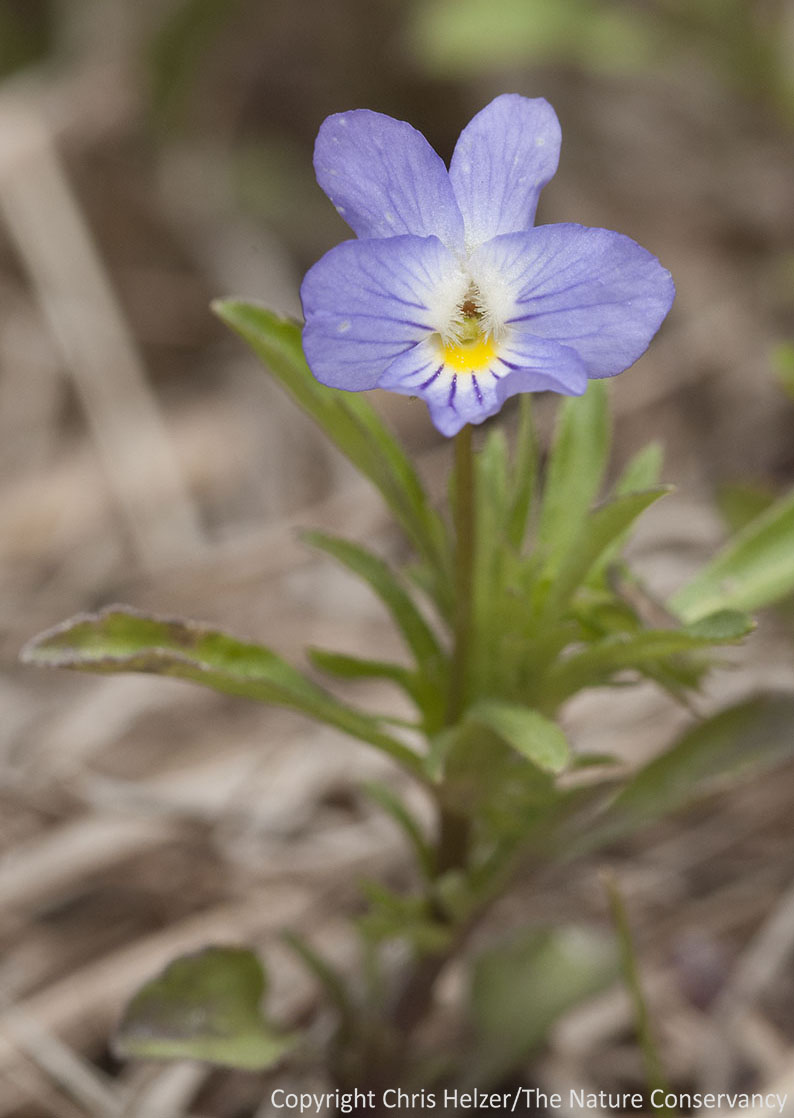
Wild pansy, aka Johnny Jump-up (Viola rafinesquii), is an annual violet that is spreading (in a good way) across some of our restored Platte River Prairies.  It is flourishing this spring in sites that were grazed during last year's drought.

Wild pansy, aka Johnny Jump-up (Viola rafinesquii), is an annual violet that is spreading (in a good way) across some of our restored Platte River Prairies. It is flourishing this spring in sites that were grazed during last year’s drought.

.

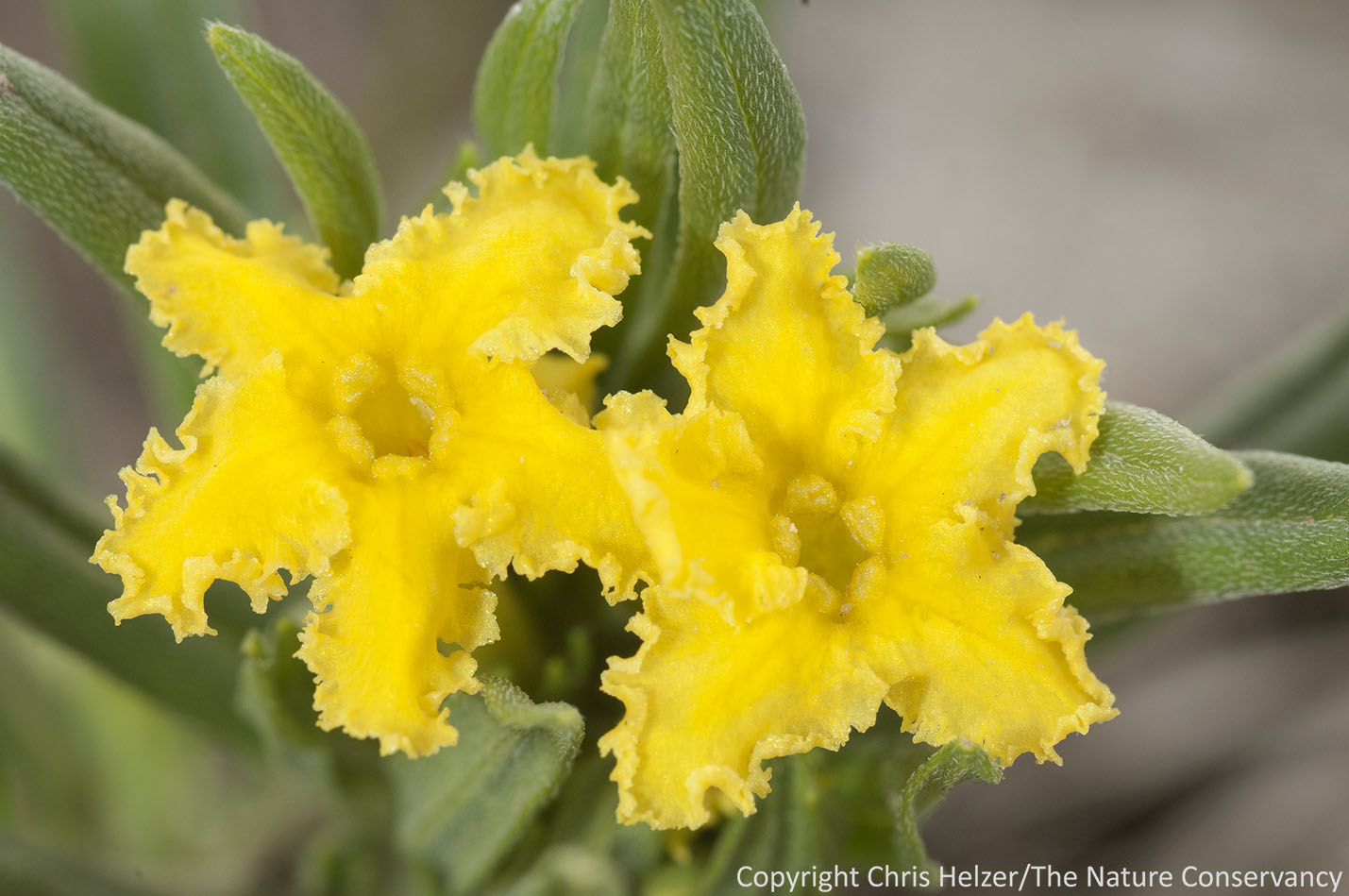
Many narrowleaf puccoon (Lithospermum incisum) plants are blooming at even shorter heights than usual this spring.  While never a tall plant, narrowleaf puccoon often reaches heights of 6-10 inches or so, but this year, many are blooming at 4-6 inches in height.

Many narrowleaf puccoon (Lithospermum incisum) plants are blooming at even shorter heights than usual this spring. While never a tall plant, narrowleaf puccoon often reaches heights of 6-10 inches or so, but this year, many are blooming at 4-6 inches in height.

This spring, I’ve been paying particular attention to prairies that we burned and grazed during drought of 2012.  Most were awfully short, brown, and barren-looking by late last summer and stayed that way through the winter.  It’s been nice to see them greening up this spring and supporting good numbers of wildflowers.  Interestingly, I’ve seen more wind flowers (Anemone caroliniana) this year than I can remember from previous springs.  The two sites in which I’ve seen big patches of wind flowers were both burned and grazed pretty hard last year, making the flowers easy to see, but probably also allowing the plants to grow with little competition for light or other resources.

While spring flowers are short in stature, they seem to be able to attract pollinators.  Of course, many of those pollinators are good at finding hidden plants by following their scent.  In addition, when the number of flowering species is limited, pollinators do what it takes to find whatever flowers are available!

What’s more interesting to me is that as I’ve been seeing and photographing wind flowers over the last week or so, I’ve seen a surprising number of tiny crab spiders on them.  I would guess that there’s a crab spider on one out of every 10-15 flowers, and they all appear (to me) to be of the same species.  I wish I knew how those crab spiders found the flowers.

A crab spider sits on a wind flower on an early morning at Griffith prairie, waiting for the flower to open and attract pollinators for it to catch.

A crab spider sits on a wind flower at Griffith prairie in the early morning, waiting for the flower to open and attract pollinators for it to catch.

.

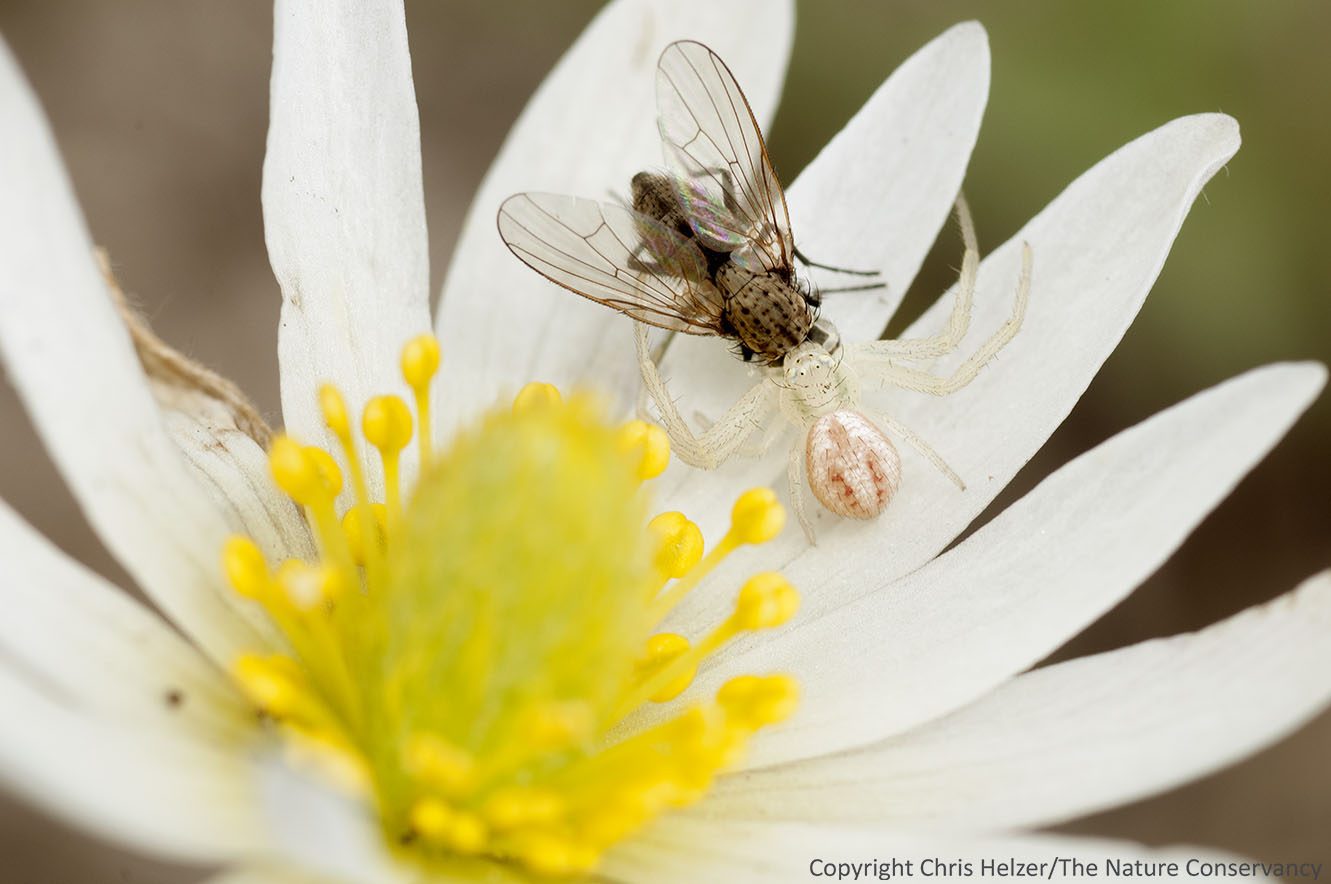
XX miles away from Griffith Prairie, this crab spider (of the same species?) was having a successful afternoon of hunting in our Platte River Prairies.

45 miles away from Griffith Prairie, this crab spider (of the same species?) was having a successful afternoon of hunting on a wind flower in our Platte River Prairies.

I’ve been seeing a lot of trailing silks in the air lately, so I know some spiders are on the move (by ballooning), and I assume young crab spiders disperse that way.  But if they do, landing on or near a flowering plant at this time of year seems awfully unlikely.  Are the crab spiders I’m seeing on wind flowers the lucky few that landed near a good hunting place?  Or are most crab spiders able to find a flower to hunt on, even in the spring when flowers are scattered around in low numbers?  If so, how?

Maybe one of you will be able to answer those questions for me.  For now, I’ll just add them to my long list of other questions – a list that will surely grow considerably during this coming field season.