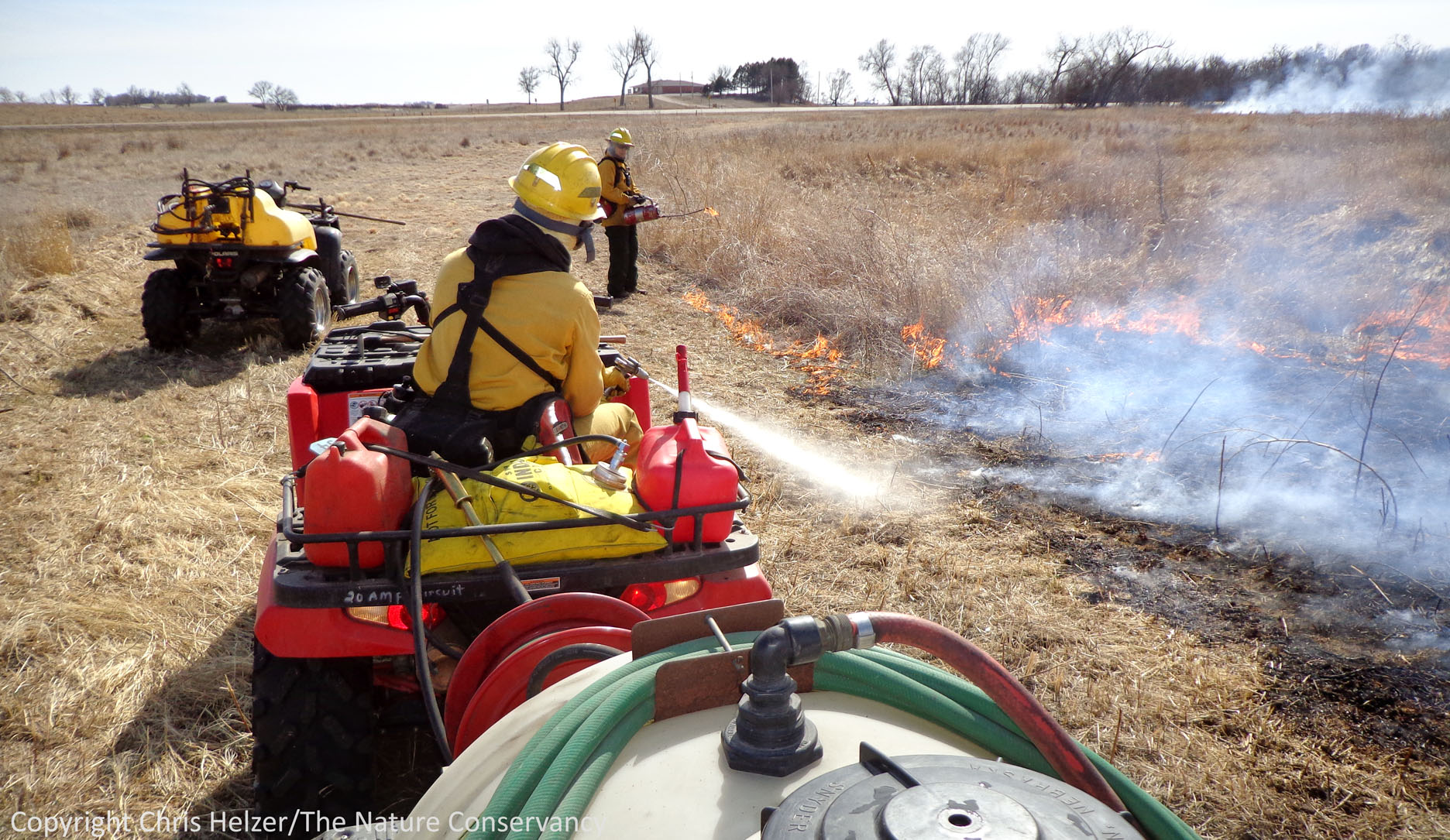
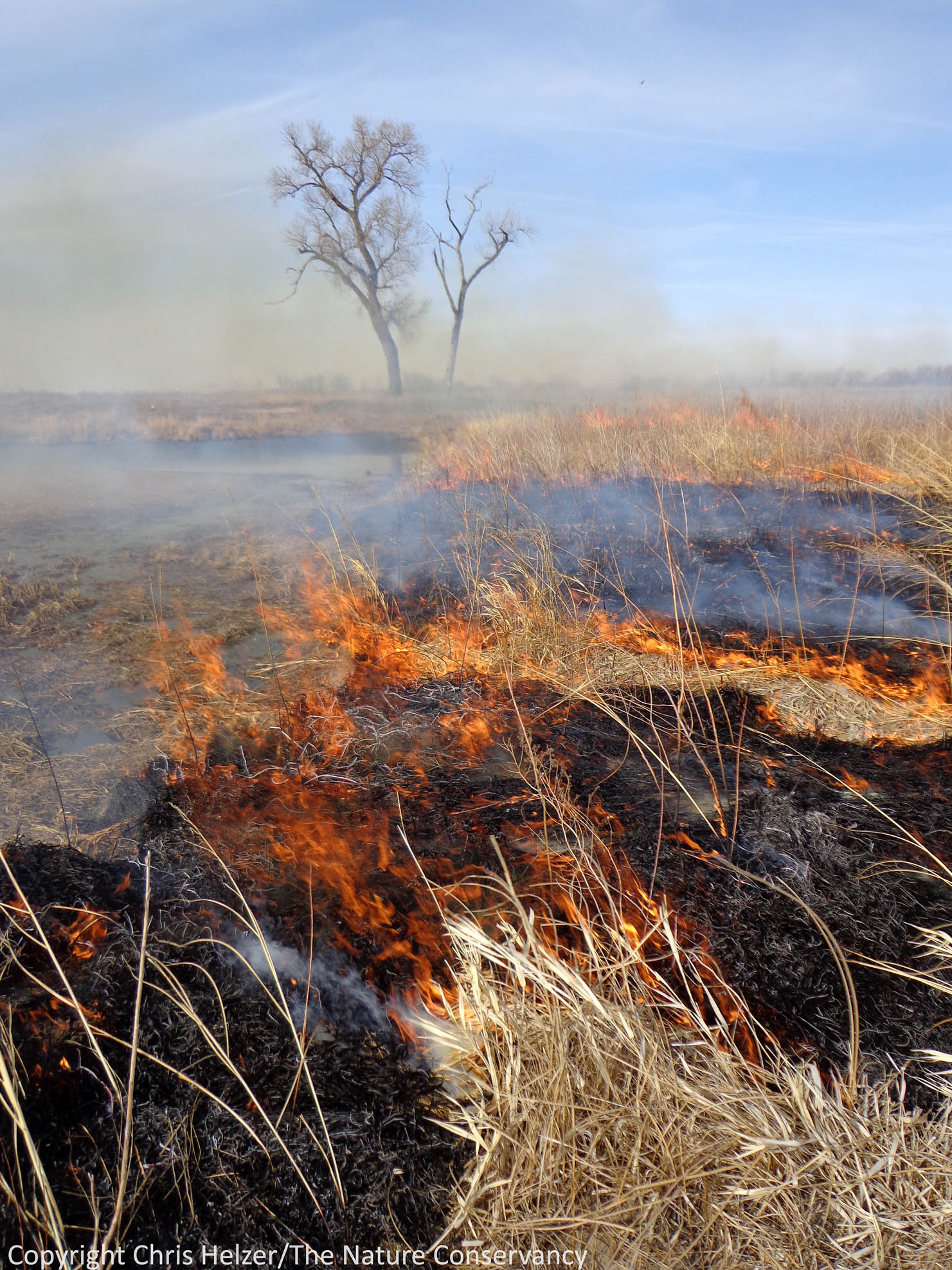
Continuing with the theme of the week (at least for me) here’s yet another prescribed burn photo. We ended up burning three days in a row this week, making the week both productive and exhausting! However, just getting three consecutive days of appropriate weather for burning is worth of celebration!
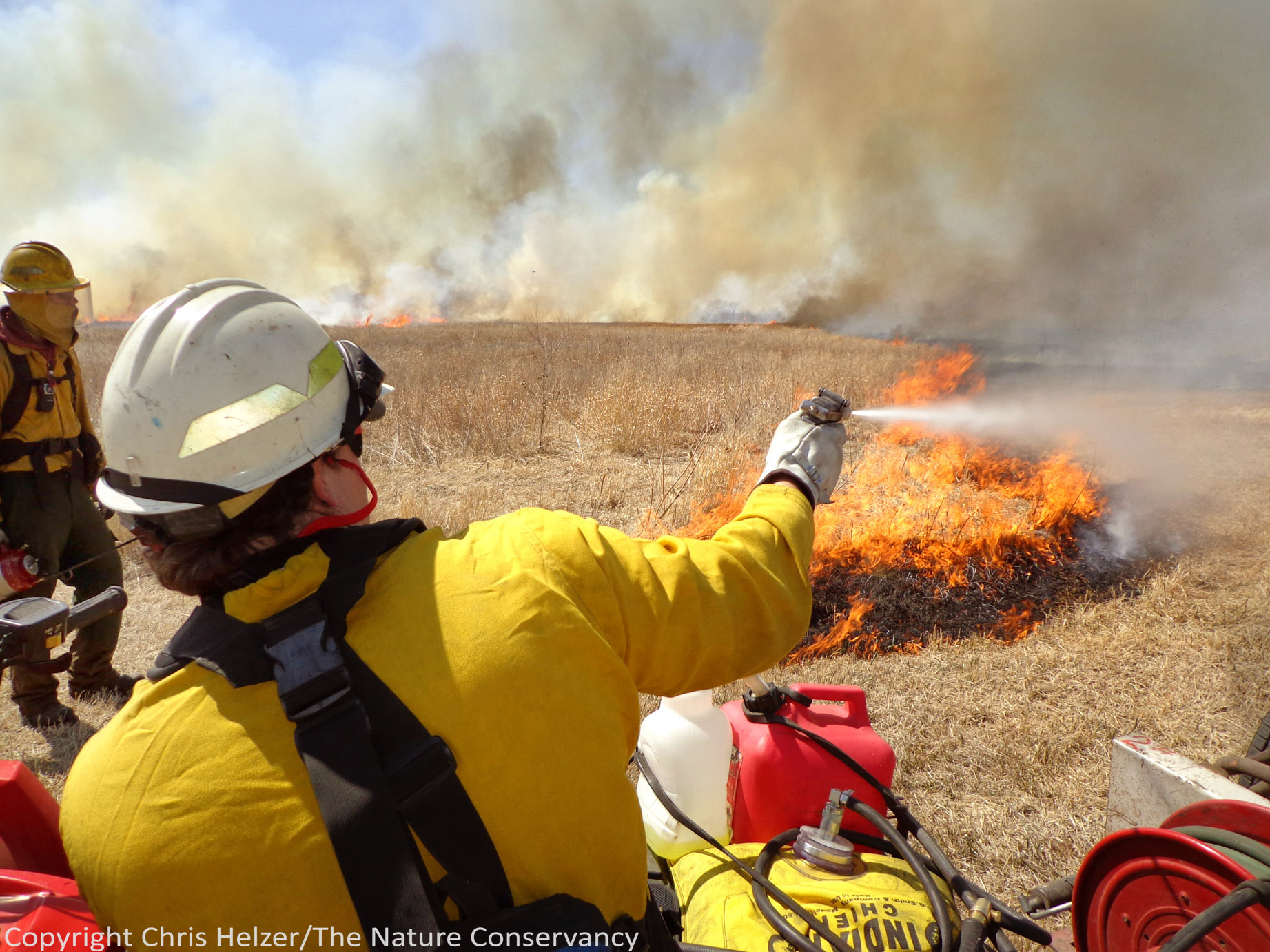
Crew members control a backing fire on one end of a prescribed burn while the flames and smoke of the head fire fill the sky in the background. The Nature Conservancy’s Platte River Prairies, Nebraska.
Today is also a good day to celebrate two milestones related to this blog. First, this is the 300th post I’ve written, since starting this blog in the fall of 2010. It’s hard to believe I’ve written that much in just a few short years!
As I’ve said before, writing this blog makes me a better ecologist. The process of synthesizing ideas into blog posts forces me to take the time to think much more carefully about subjects than I otherwise would. My job always keeps me hopping, and it’s tempting to just jump to the next urgent task without paying sufficient attention to what’s happening in our prairies or finding out what others are learning. This blog motivates me to pause and focus on the bigger picture.
It’s also gratifying to know that there are others interested in the same topics I am – and there are a LOT of you! The second milestone I wanted to mention is that the number of people who follow this blog via either email or Twitter recently exceeded 1000! More than a thousand people are sufficiently interested in prairies, photography, or both, that they’ve added this site to the bombardment of emails or tweets they sort through each week. That’s fantastic – and it doesn’t include many more of you who check in regularly to see what’s new but aren’t subscribers.
Thank you for following, reading, and commenting on this blog. It’s invigorating for me to put posts together, and equally invigorating to read and respond to the insightful comments you give back.
Now, I’d love to say more, but I’ve got to start thinking about what I’m going to write about for next week… Plus I’ve got this list of urgent tasks staring at me from my desk!
Have a great weekend.


 The Prairie Ecologist