Photo of the Week – September 26, 2013

If found this dragonfly encased in dew a couple weeks ago as I walked through a small prairie here in Aurora.  I’m sure someone reading this will be able to tell me what species it is – I don’t know my dragonflies very well.
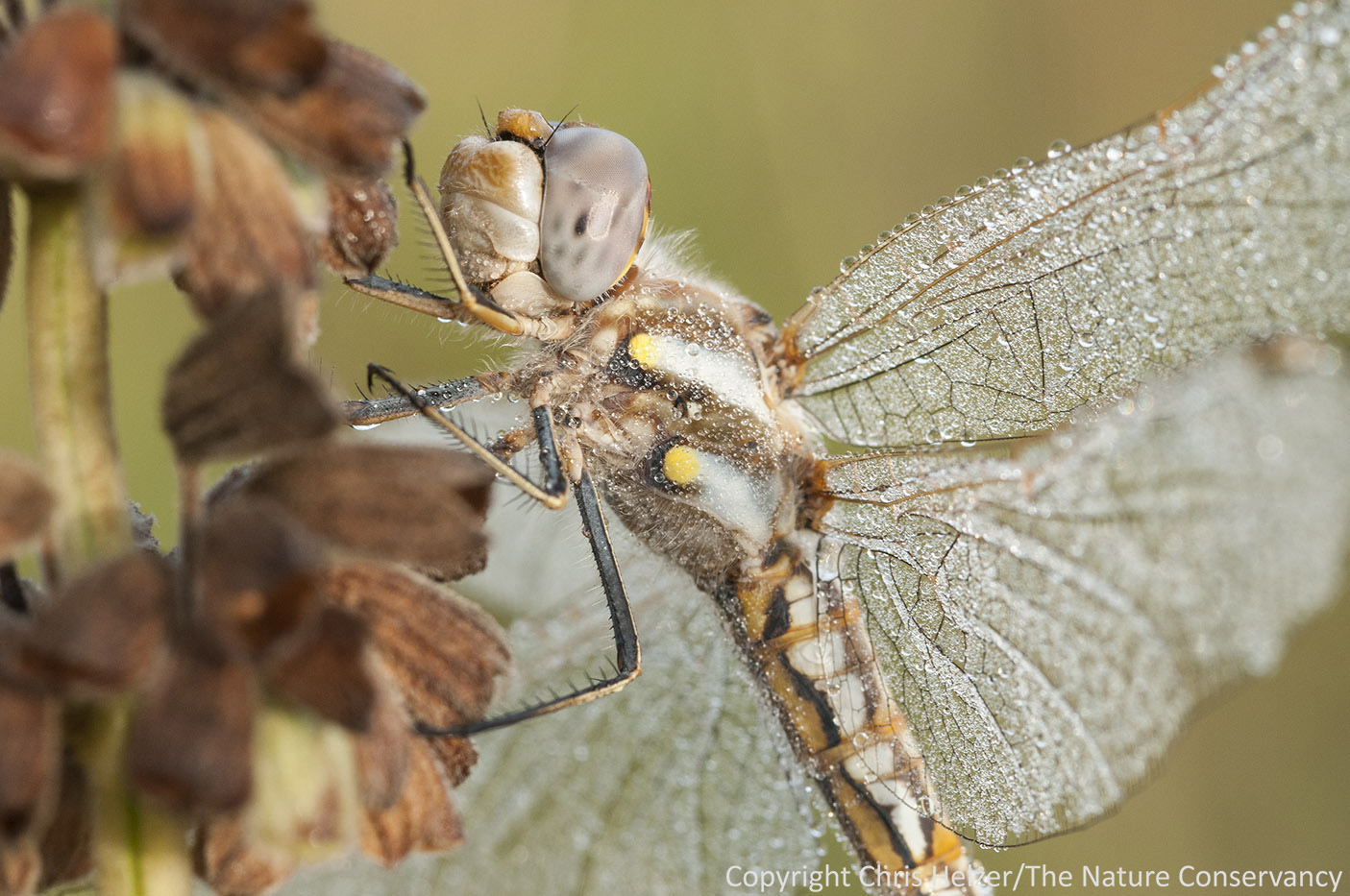
Dew-covered dragonfly on pitcher sage.  Lincoln Creek Prairie - Aurora, Nebraska.  September 13, 2013

Dew-covered dragonfly on pitcher sage. Lincoln Creek Prairie – Aurora, Nebraska. September 13, 2013

There were a couple of these in the prairie that morning, but we’ve also been seeing some bigger groups (flocks?  herds? swarms?) of other dragonfly species coming through Nebraska lately on their annual migrations.  Many more insect species migrate than you might expect, including (at least) moths, butterflies, and dragonflies.  I expect we’ll learn a tremendous amount about these phenomena during the next decade as efforts to study those migrations continue to ramp up.  Technology, including tiny radio transmitters, will help, as will volunteer citizen science efforts to gather sightings from across large areas.  It will be exciting to learn more about what seems an improbable but very interesting behavior from insects we don’t give nearly enough credit to.

You can learn more about insect migration from an earlier post I wrote on moths last year, as well as another post on intercontinental insect migrations.

Finally, if you are interested in nature photography or prairie ecology and are within driving distance of Lincoln, you might enjoy the lecture I’m giving tomorrow night for the Nebraska Statewide Arboretum.  More information on the event and ticket information is available here.

Hubbard Fellowship Blog – Lobelias and Pollinators

A guest post by Anne Stine, one of our Hubbard Fellows.  All photos are by Anne.

Derr Sandpit Wetland Restoration - The Nature Conservancy's Platte River Prairies, Nebraska.

Derr Sandpit Wetland Restoration – The Nature Conservancy’s Platte River Prairies, Nebraska.  September 12, 2013

I was scouting for native seeds in our sand pit restoration across from the crew quarters when I noticed a fascinating pollinator-plant interaction. This activity would’ve been best captured on video with a high quality zoom (which I did not have), but I was able to take pictures.  Bumble bees, and only bumble bees, were fighting their way into great blue lobelias along the edge of our restoration.  Meanwhile, their neighboring cardinal flowers were visited by butterflies exclusively.  Why, and how, were these two closely related flowers so specialized with their pollinator partnerships?

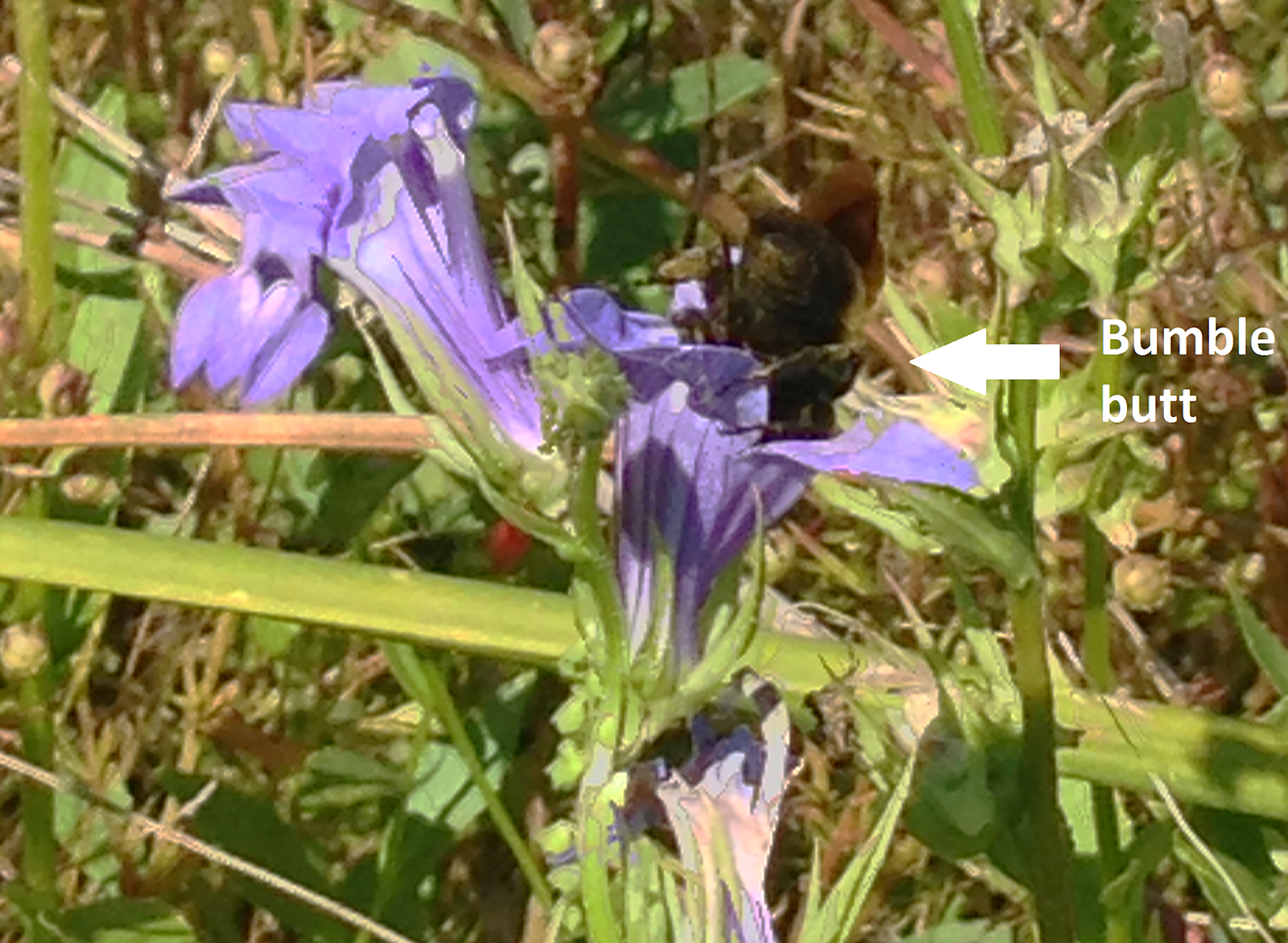
First, let’s consider the great blue lobelia (Lobelia siphilitica).  The architecture of this flower insures that only burly bumble bees can gain access to the pollen and nectar.  Some other insects “cheat” and chew holes in the flower to by-pass the petal-gate, but bumble bees are their primary visitors. Watching the bumble bees pry open the flowers was entertaining. First, they climb onto the flower’s extending ‘tongue’. Then, they push aside the two top petal ‘lips’ and dunk themselves head first into the flower.  Their front half is completely inside the blossom. Only their bottoms and back legs stick out.  They clamber up the stalk, climbing from flower to flower until they reach the top, and then they fly off to visit a neighboring plant.  Because great blue lobelia seems to grow in patches, this is an efficient operation for both bee and blossom.  The bees act drunk on nectar, and the flowers are practically guaranteed a thorough pollination.

Ghh

How bumblebees gain entry to lobelia flowers.

.

Success!

Success!

Conversely, cardinal flower (Lobelia cardinalis) is traditionally considered to be a ‘hummingbird-specialist’ plant.  We are just outside the range of the ruby throated hummingbird here on the Platte River Prairies.  Instead, butterflies with their long tongues seem to have taken over the majority of the nectaring and pollination duties.  Or perhaps cardinal flowers in this part of Nebraska predominately self-pollinate.  At any rate, bees weren’t the major customers on cardinal flowers.  Cardinal flowers were visited by butterflies.

How strange that these two wetland con-generics, great blue lobelia and cardinal flower, could grow in intermingled patches and still rely on totally distinct pollinator communities.  Nature is weird and wonderful.

This monarch had the choice between blue lobelia and cardinal flower.  She chose cardinal flower. So did all the other butterflies.

This monarch had the choice between blue lobelia and cardinal flower.  She chose cardinal flower. So did all the other butterflies.

This monarch had the choice between blue lobelia and cardinal flower. She chose cardinal flower. So did all the other butterflies.