
Quick announcement. We are hiring a land steward for the Niobrara Valley Preserve. This person will join our land management team and work with prescribed fire, cattle and bison grazing, invasive species suppression, and much more, across 56,000 acres of Sandhills prairie, woodlands, and one of the most scenic rivers in the Great Plains. It will be a lot of manual labor, but also a terrific opportunity to contribute to an innovative stewardship team looking for ways to manage for biological diversity and ecological resilience. Learn more and apply at nature.org/careers.
Well, we’ve almost made it through 2025. To say it has been an eventful year seems like a massive understatement. As I’m sure is true for many of you, I tried to manage stress and anxiety by spending time in nature – exploring with curiosity and wonder, and giving myself a break from the rest of the world for a little while. It helped.
Here are some of my favorite photographs from 2025, taken while I was out wandering (or lying on the ground) with my camera. I hope you all get some slower time in the next week or two to do things like scan through some nature photos – or whatever brings you joy and peace.
The above image is one of my favorites of the year because I like the photo, but also because it was taken on the very last day of my most recent year-long square meter photography project. The 2024-2025 iteration of that effort yielded photos of about 320 different species of plants, animals, and fungi. More importantly, it was an incredibly powerful and personal project for me – even more fun and engaging than my first attempt in 2018.
Below is a brief slideshow of some of my dragonfly and damselfly photos from this year.
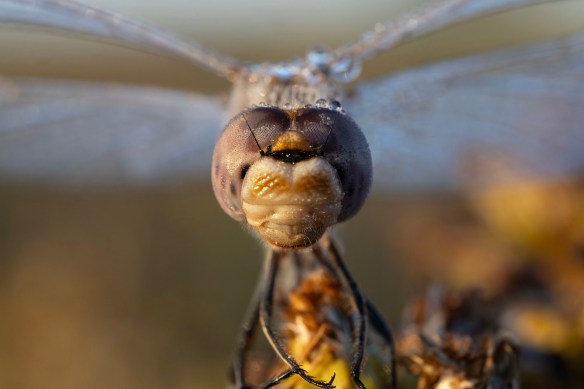
Variegated meadowhawk dragonfly on a dewy autumn morning during migration. Helzer Family Prairie near Stockham, Nebraska. 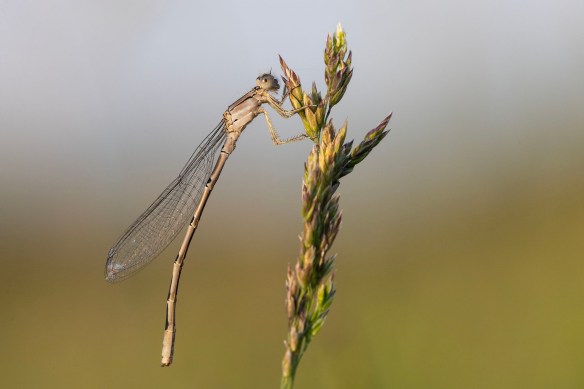
Damsel fly damselfly. 2025 Photography project – post grazing recovery. The Nature Conservancy’s Platte River Prairies, Nebraska 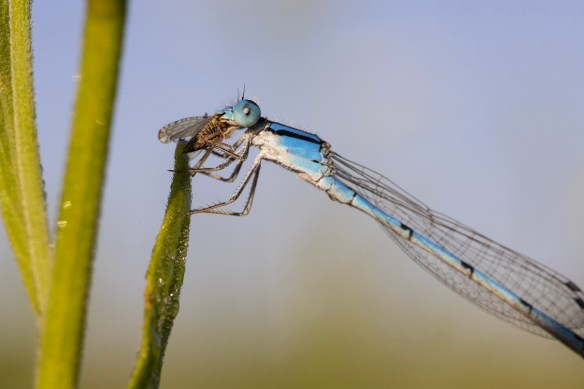
Damselfly with captured insect. 2025 Photography project – Post-grazing recovery. Helzer Family Prairie near Stockham, Nebraska 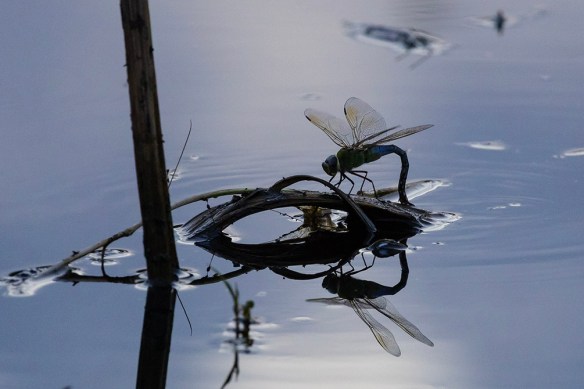
Green darner dragonfly laying eggs. Helzer Family Prairie near Stockham, Nebraska. 2025 Photography Project. 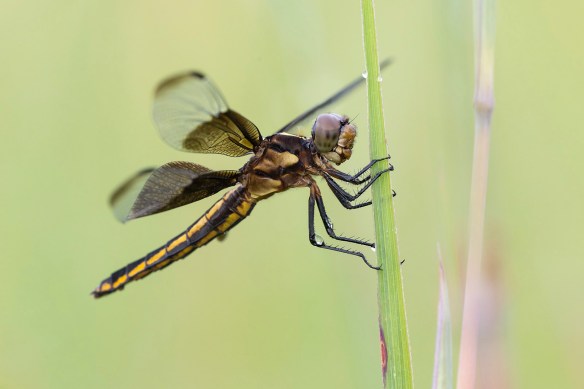
Widow skimmer dragonfly in the morning. The Nature Conservancy’s Platte River Prairies, Nebraska. Restored prairie – 1995 planting. 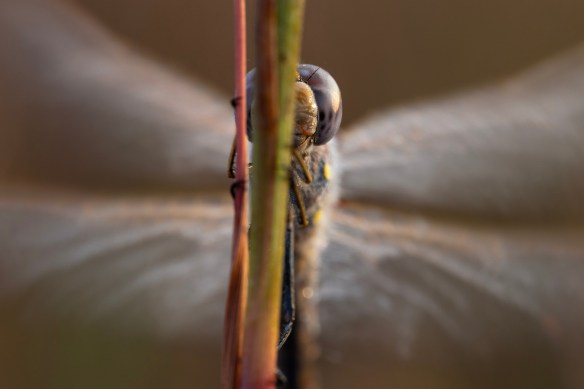
Variegated meadowhawk (migratory) on a dewy morning. East Dahms Prairie. 2025 Post Grazing Photography Project. The Nature Conservancy’s Platte River Prairies, Nebraska
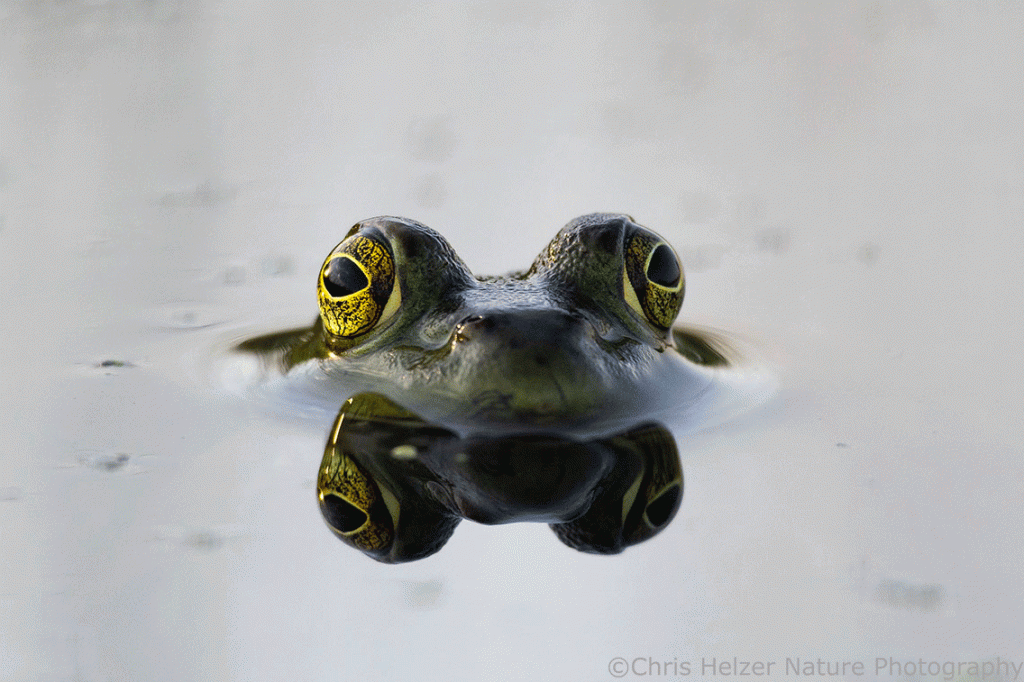
Bullfrogs aren’t great, ecologically, in our Platte River Prairies wetlands. They’re not considered native to the area and can have pretty serious negative impacts on populations of other frogs. Dang it, they’re sure attractive, though – especially when I manage to sneak up close enough to stare into one’s eyes without it ducking away underwater.
During the dormant season, I still go out quite a bit – especially when there’s any snow or frost to provide accents to the landscape. The slideshow below includes some of my favorite cold-weather photos.
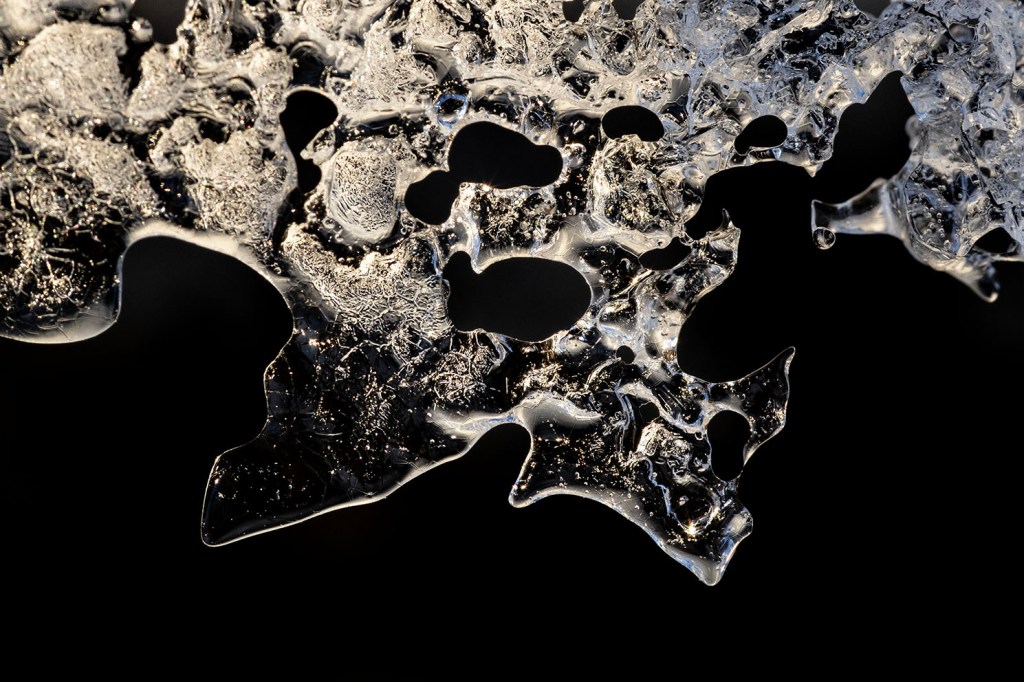
Melted and refrozen snow above a partially burned log in the prairie. Gjerloff Prairie – Prairie Plains Resource Institute 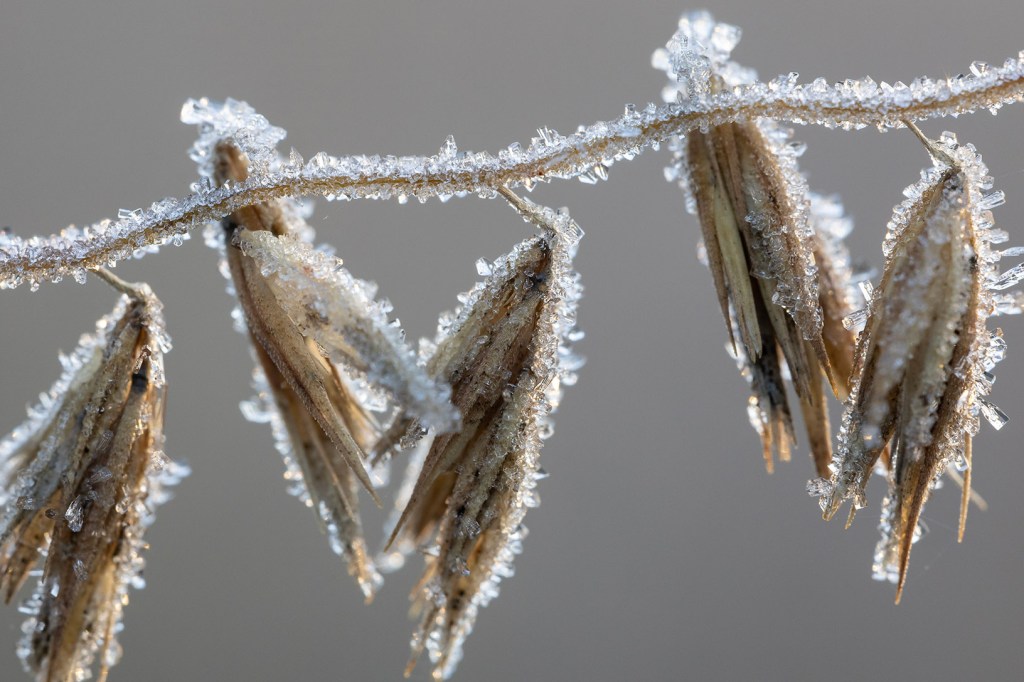
Sideoats grama (Bouteloua curtipendula). Helzer family prairie near Stockham, Nebraska 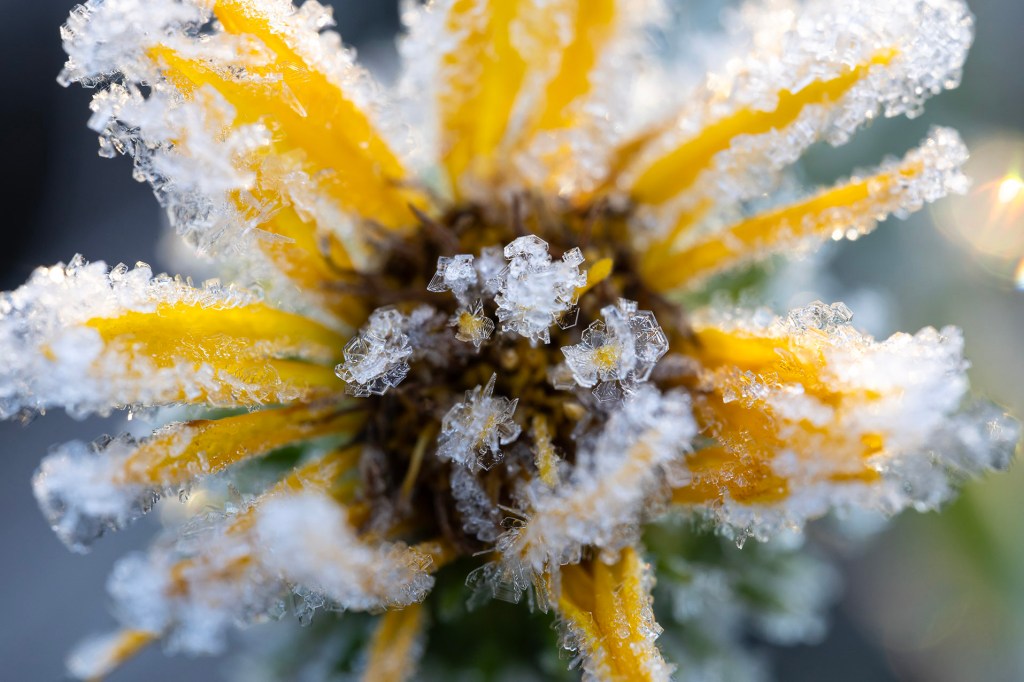
Curly cup gumweed (Grindelia squarrosa). Helzer family prairie near Stockham, Nebraska 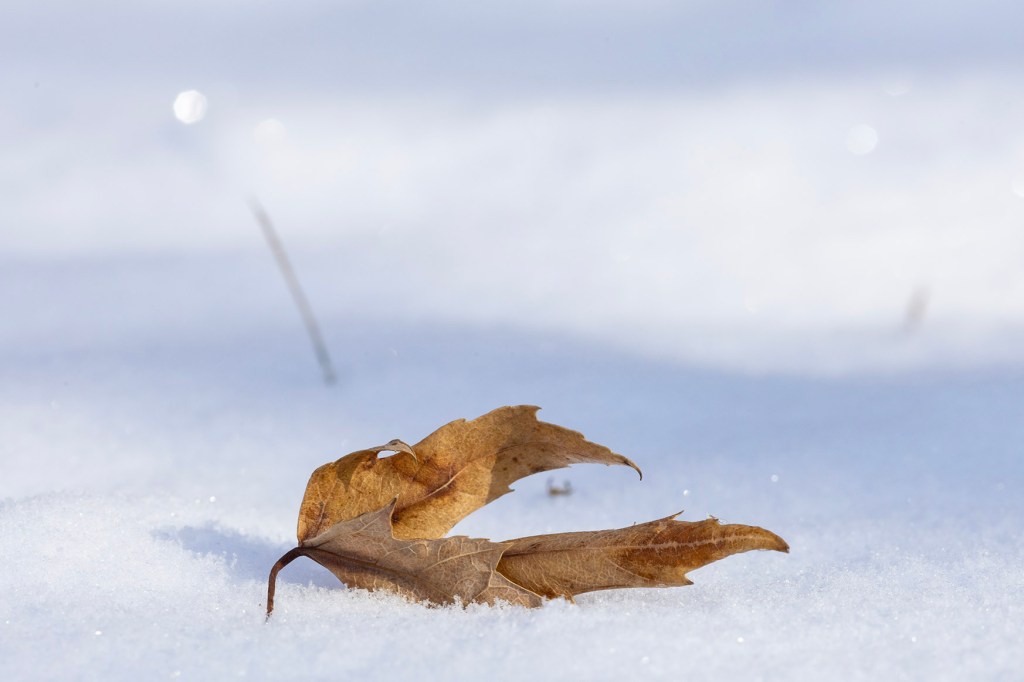
Maple leaf in snow. Lincoln Creek Prairie, Aurora, Nebraska 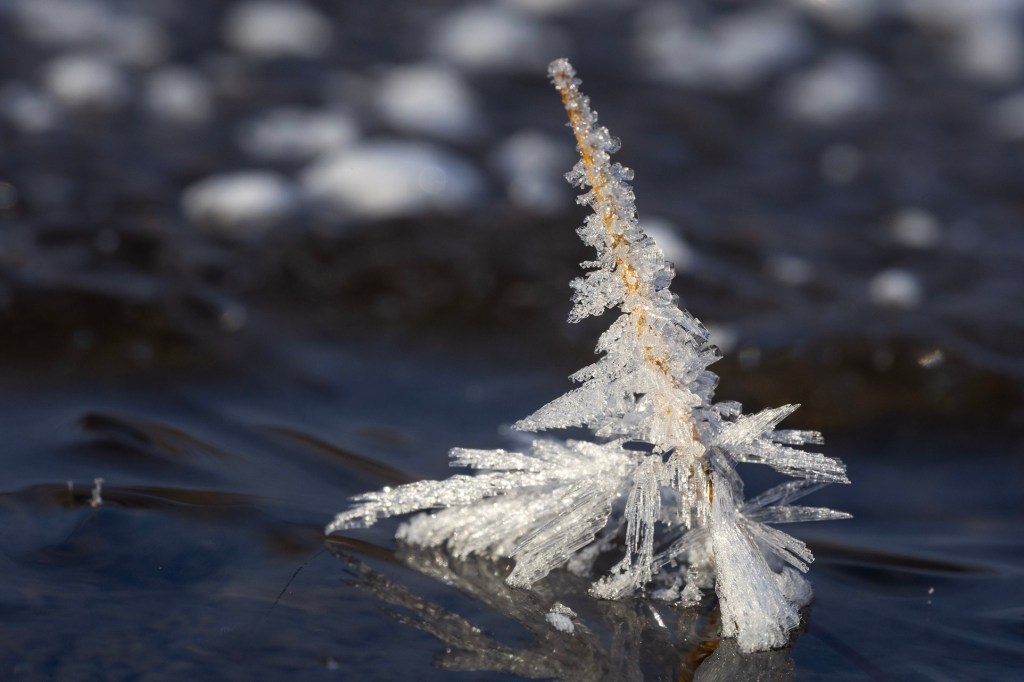
Frosty plants on a frozen wetland. The Nature Conservancy’s Platte River Prairies – Derr Sandpit Restoration. 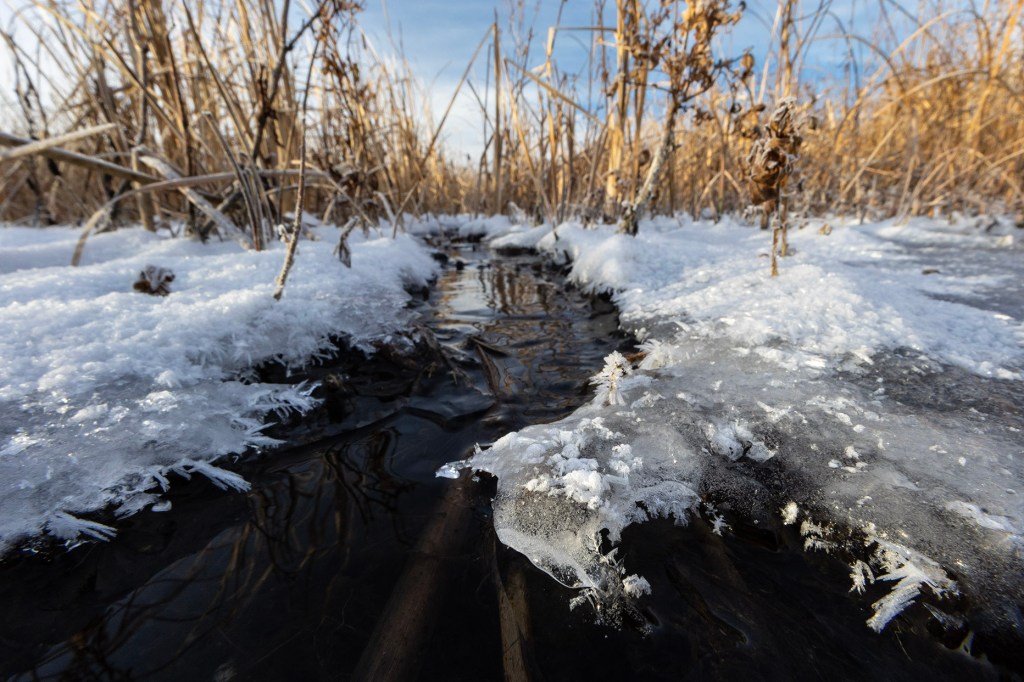
Ice and flowing water in a beaver pond wetland. The Nature Conservancy’s Platte River Prairies – Derr Sandpit Restoration. 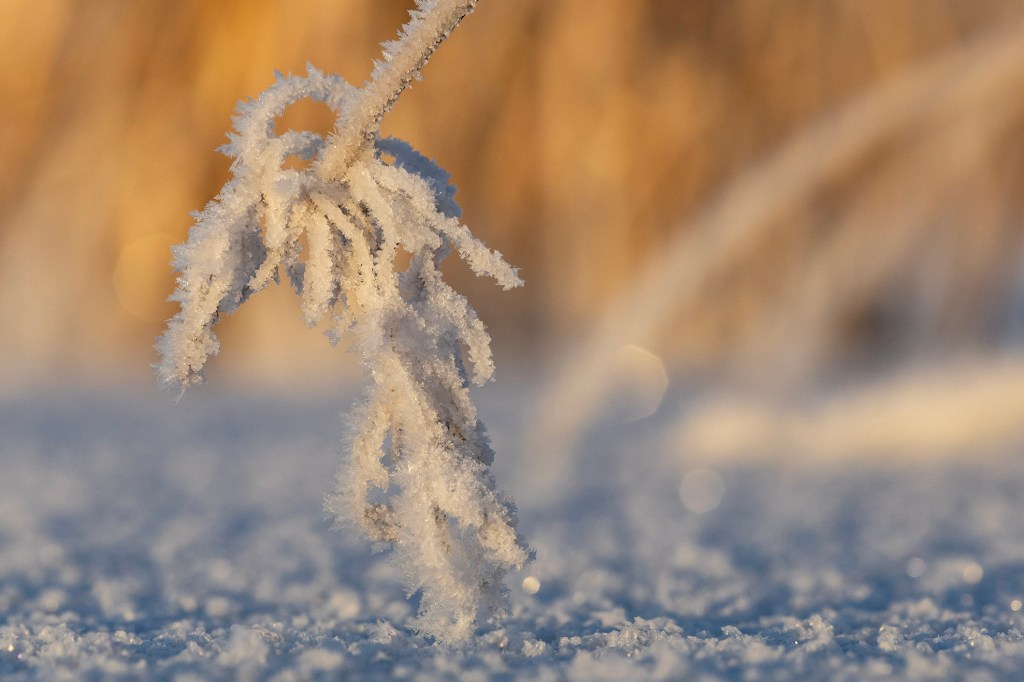
Ice and frost on a frozen wetland. Derr Sandpit wetland restoration. The Nature Conservancy’s Platte River Prairies, Nebraska 
Ice and frost on a frozen wetland. Derr Sandpit wetland restoration. The Nature Conservancy’s Platte River Prairies, Nebraska
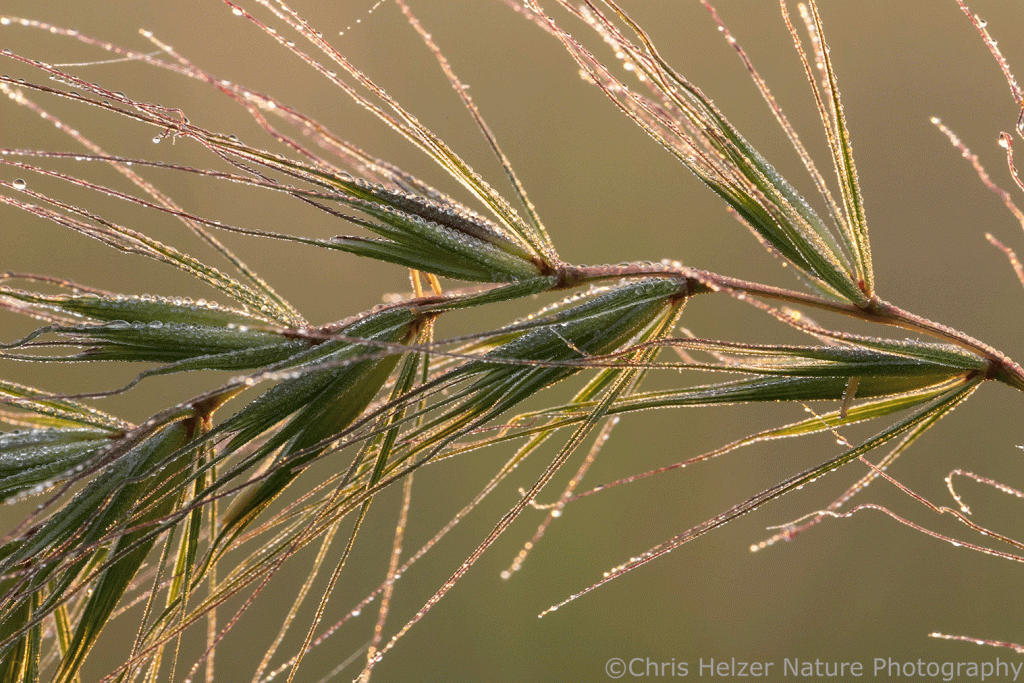
Early mornings in the summer prairie usually include a lot of dew drops. That means wet socks and pantlegs, but the photo opportunities more than make up for that.
I ended up with a lot of sunflower photos this year, including several different species. The slideshow below includes just a few of these. All but the first one were taken during the same short trip to the Niobrara Valley Preserve.
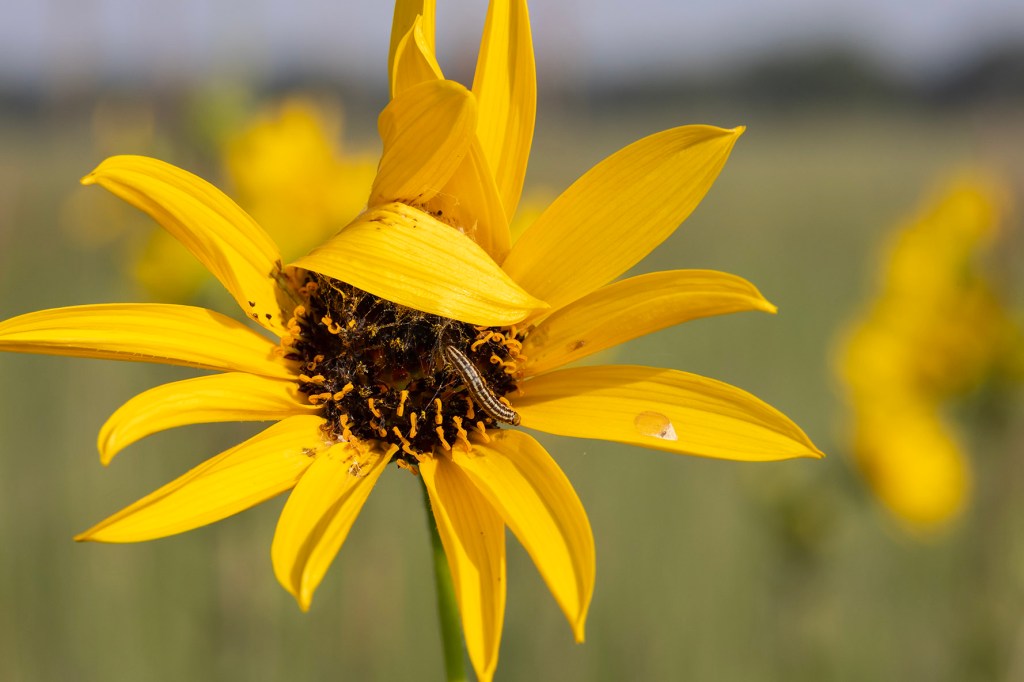
Caterpillar on stiff sunflower (Helianthus pauciflorus). Bruce Stephens Prairie, The Nature Conservancy’s Platte River Prairies. Nebraska 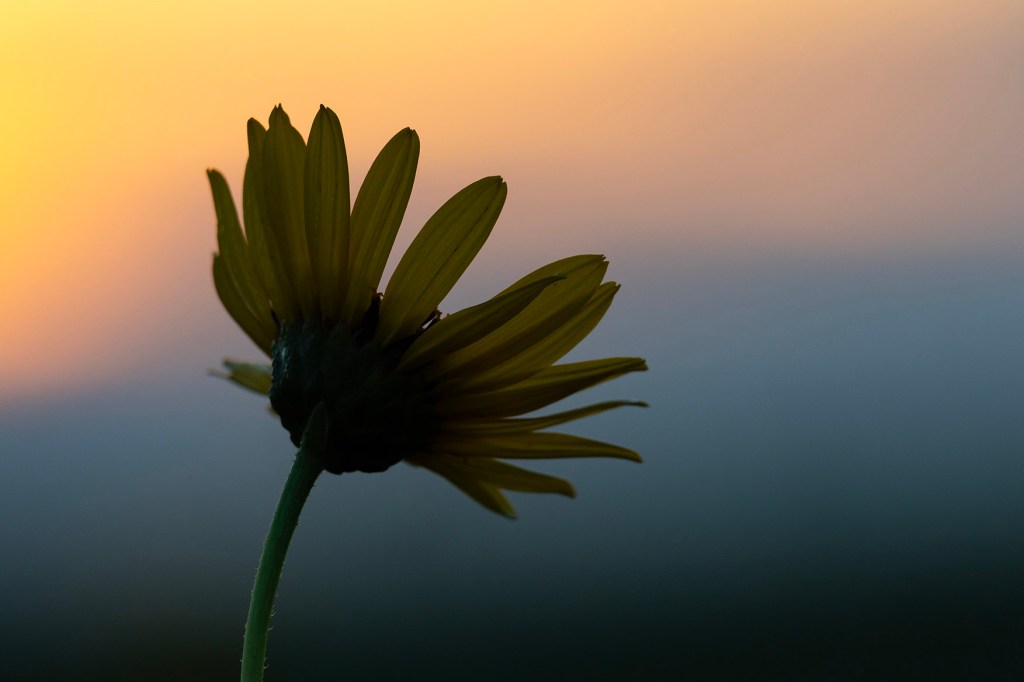
Stiff sunflower at sunrise. The Nature Conservancy’s Niobrara Valley Preserve. Nebraska. 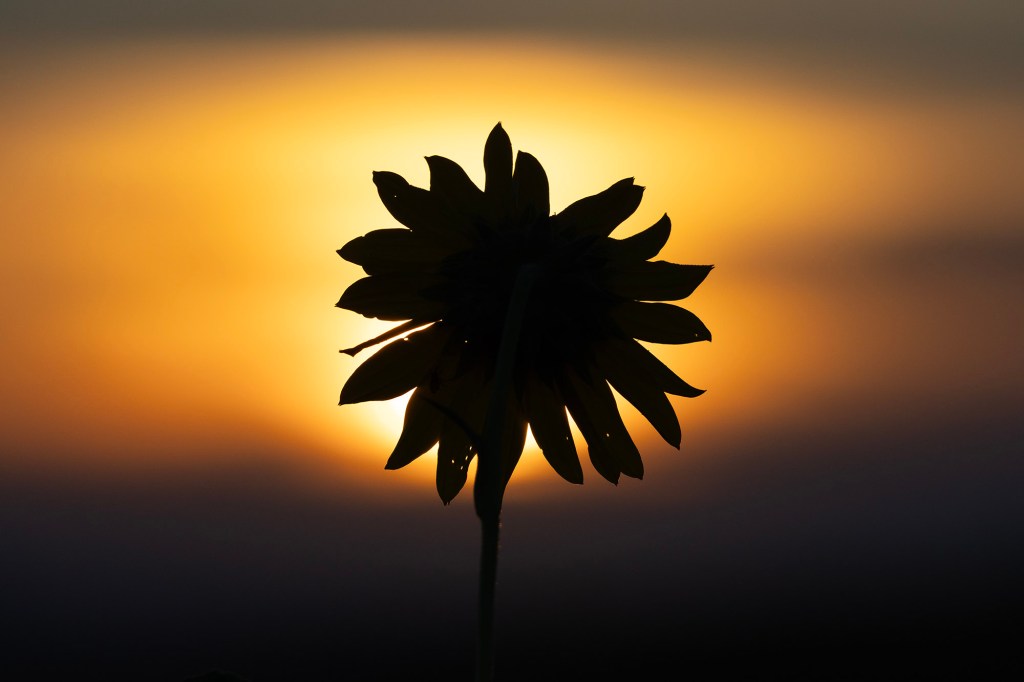
Stiff sunflower at sunrise. The Nature Conservancy’s Niobrara Valley Preserve. Nebraska. 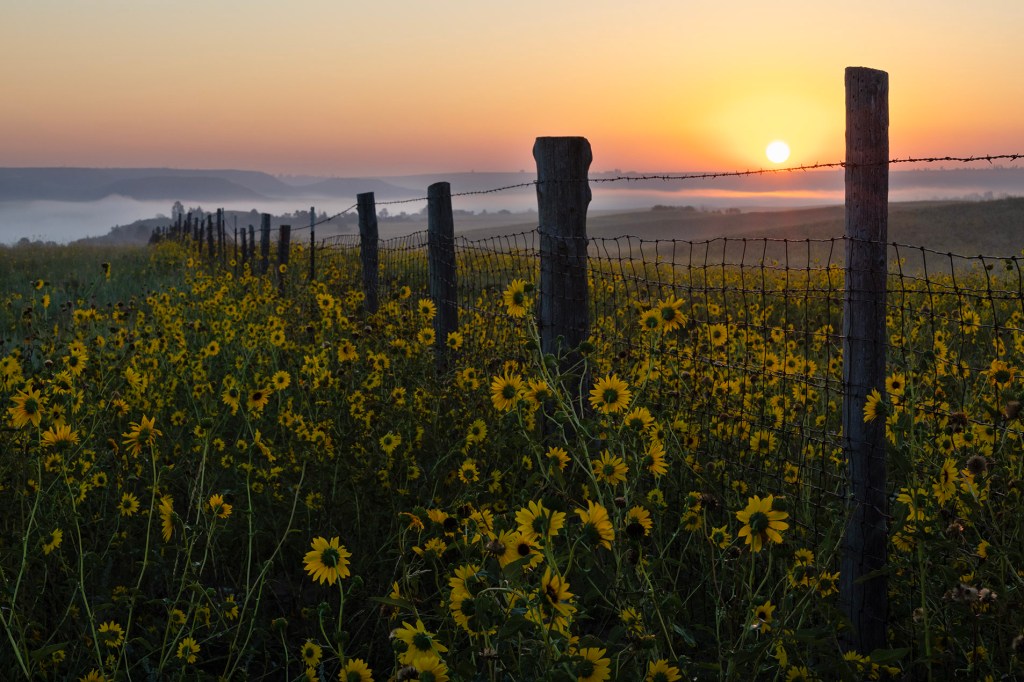
Sunrise, sunflowers, and bison fence. The Nature Conservancy’s Niobrara Valley Preserve, Nebraska 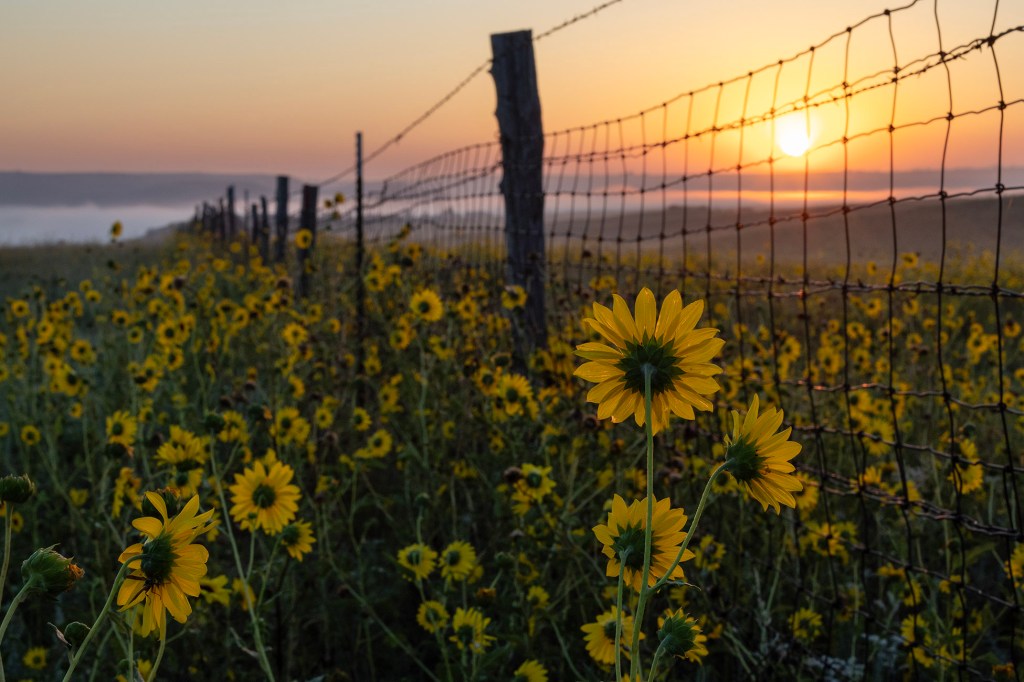
Sunrise, sunflowers, and bison fence. The Nature Conservancy’s Niobrara Valley Preserve, Nebraska 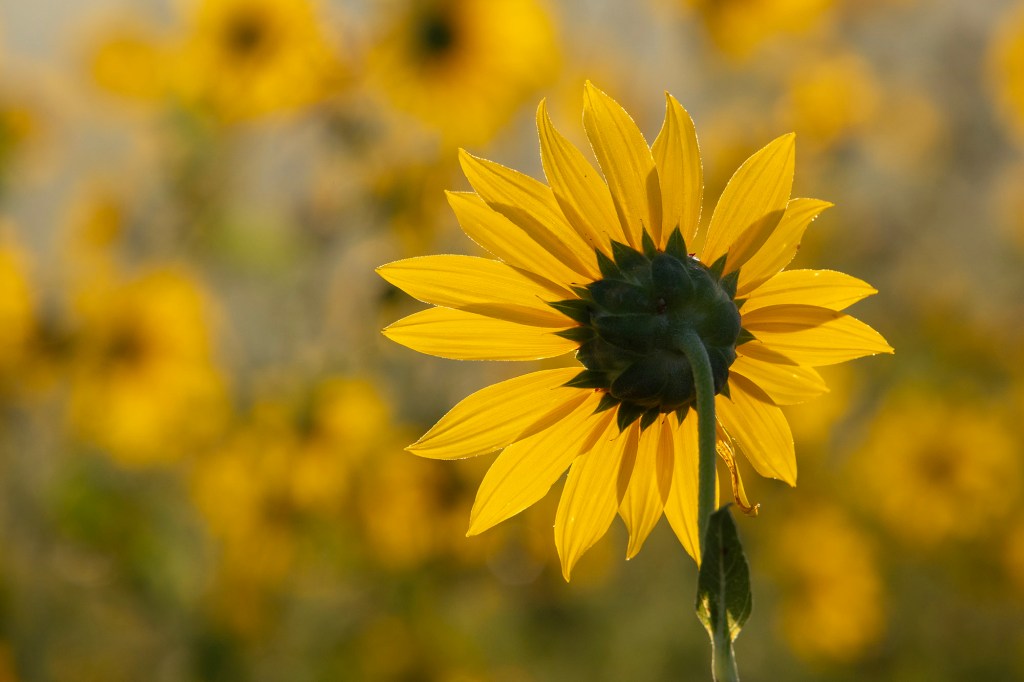
Plains sunflower (Helianthus petiolaris) The Nature Conservancy’s Niobrara Valley Preserve, Nebraska
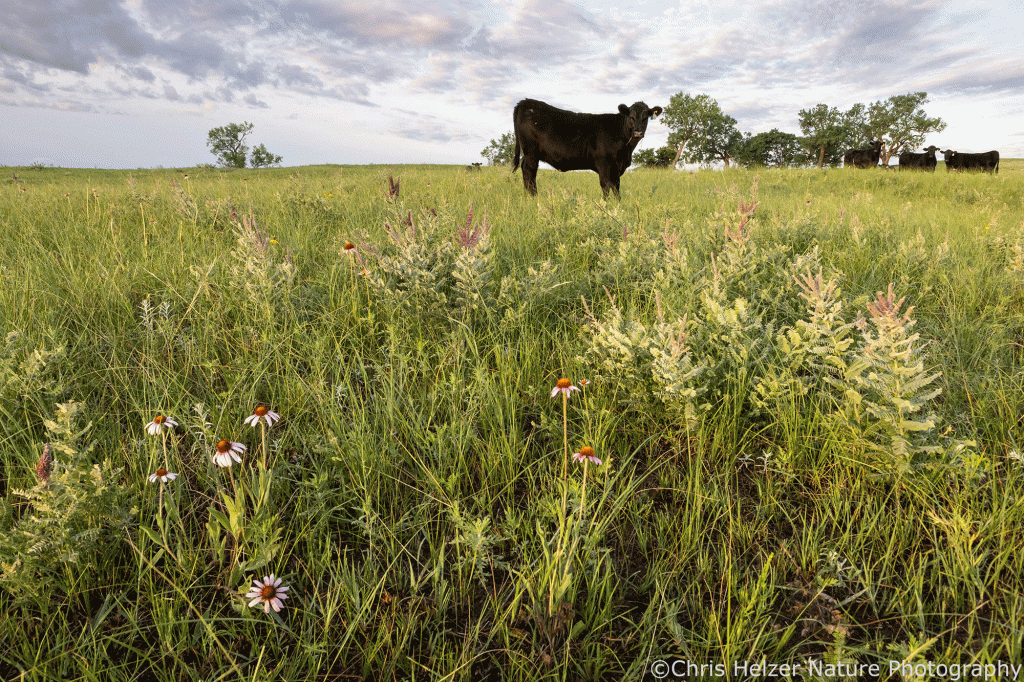
I meet a lot of skepticism whenever I post photos of, or talk about cattle grazing as a tool for prairie management. I get it. Many people have only seen poor examples of cattle grazing – chronically-overgrazed sites, for example, where both wildlife and plant diversity has been lost. If that’s your experience, it’s no wonder you’re skeptical.
That’s not because cattle are bad, though. That’s bad management. I like the photo below because it helps illustrate the idea that cattle (and/or bison) grazing can be used for good, as well. Many ranchers are doing a terrific job of managing their sites in ways that make them money while maintaining diverse, resilience prairie communities. I love working with cattle on our prairies, trying to keep them fat and happy while getting their help managing plant competition and shaping habitat structure. Bison are great, too, don’t get me wrong. But cattle can be used in a lot more places today than bison can, for a number of reasons, so I think it’s important to work with and learn about both.
At the end of May, I took a quick solo trip out to the Nebraska Panhandle for a couple days. I car camped and spent nearly all my waking hours wandering with my camera. I got some good photos, but also came back with renewed energy, ready to engage with work, family, and the rest of the world. The slideshow below has a few of my best shots from that trip.
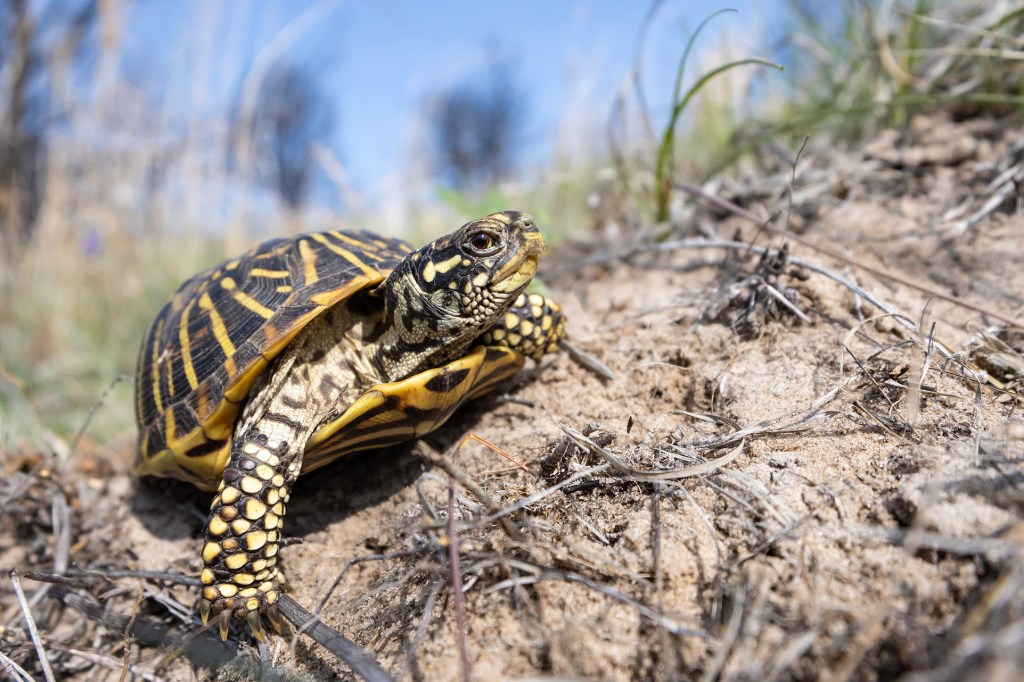
Ornate box turtle in the Nebraska Sandhills. Nebraska National Forest – Bessey Unit. Halsey, Nebraska 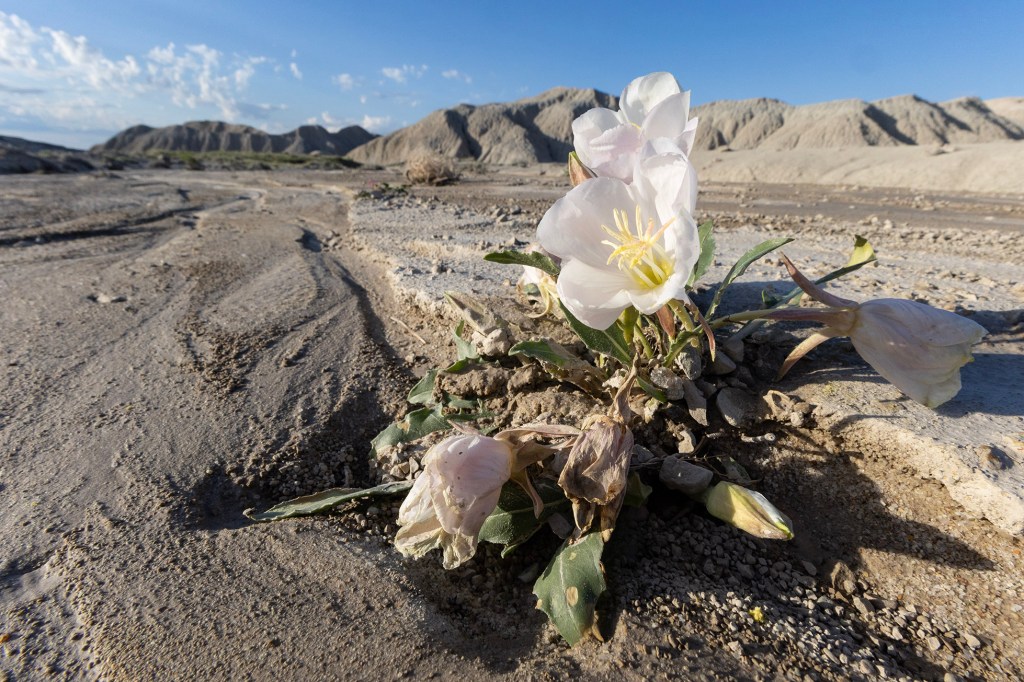
Gumbo lily (Oenothera caespitosa). Stream channel. Badlands. Oglala National Grassland near Toadstool Geologic Park. Crawford, Nebraska 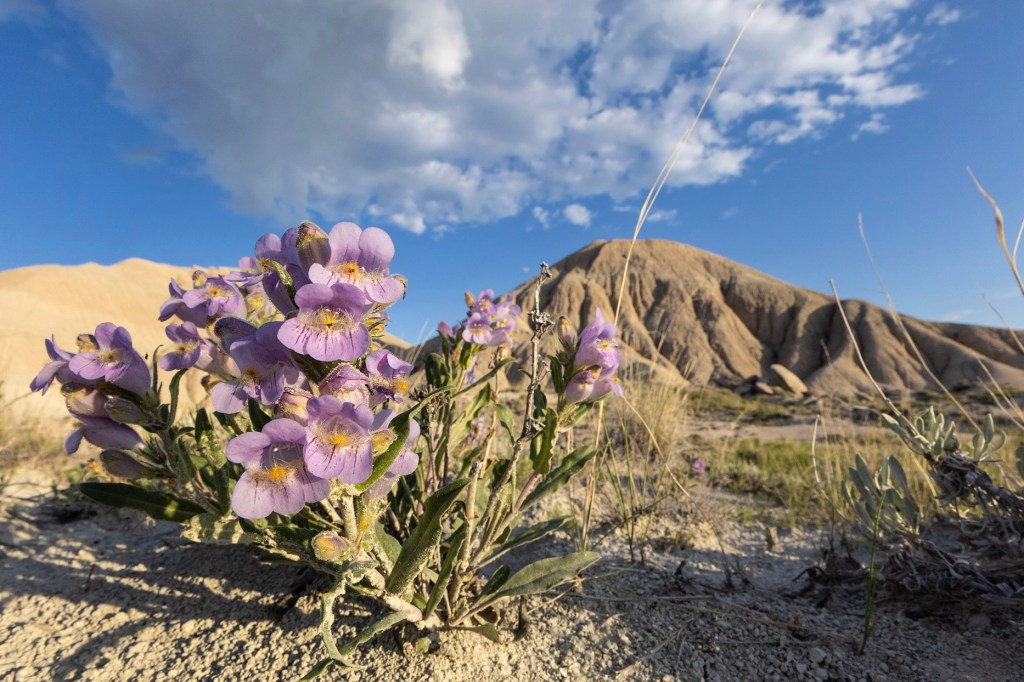
Fuzzy-tongue penstemon (Penstemon eriantherus). Badlands. Oglala National Grassland near Toadstool Geologic Park. Crawford, Nebraska 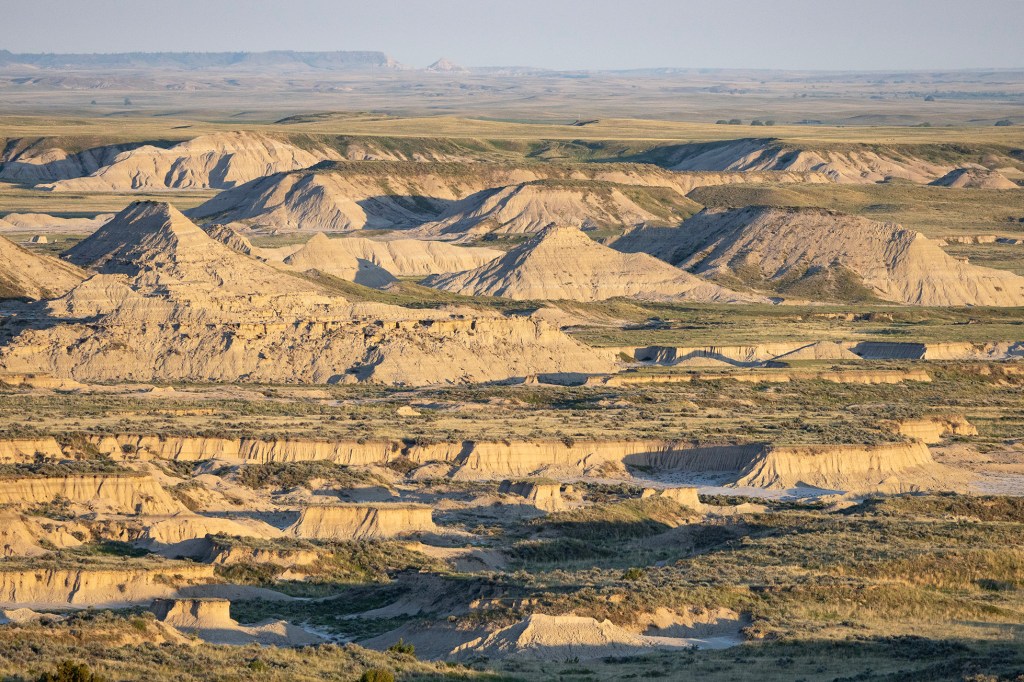
Badlands. Oglala National Grassland near Toadstool Geologic Park. Crawford, Nebraska 
Death camas (Zigadenus venenosus) and crab spider. Oglala National Grassland near Toadstool Geologic Park. Crawford, Nebraska 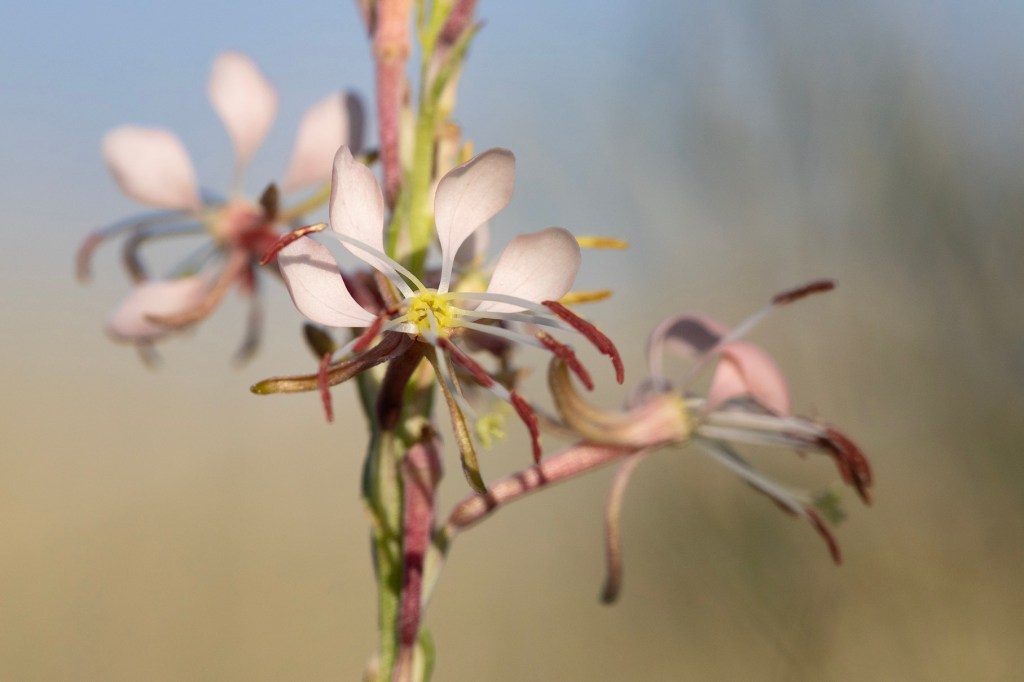
Scarlet gaura (Gaura coccinea). Oglala National Grassland near Toadstool Geologic Park. Crawford, Nebraska
Insects are always a favorite photo subject for me. This slideshow includes the ones I liked best from 2025.
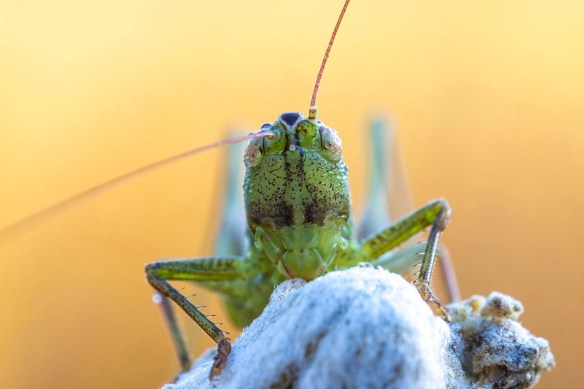
Katydid. Lincoln Creek Prairie, Aurora, Nebraska. 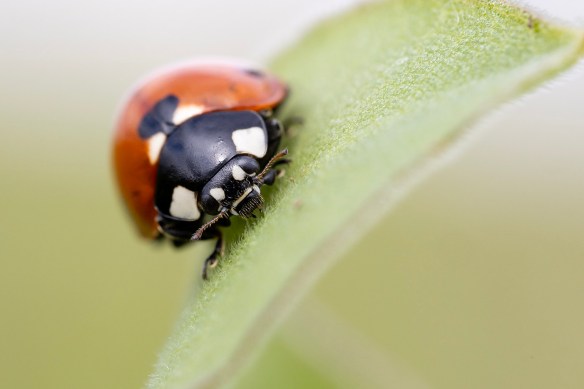
Seven-spotted lady beetle (ladybug). 2025 photography project – grazing recovery party. Helzer family prairie near Stockham, Nebraska 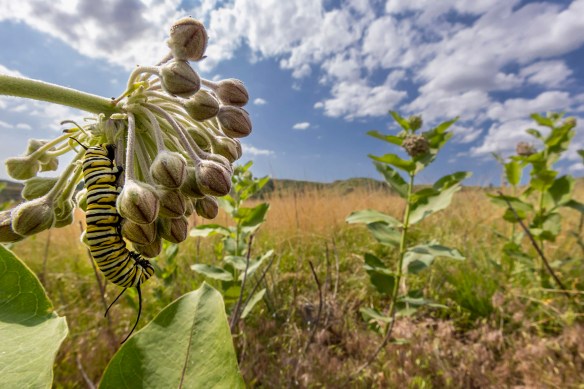
Monarch caterpillar on showy milkweed (probably a hybrid showy/common milkweed). The Nature Conservancy’s Niobrara Valley Preserve, Nebraska. 
Assassin bug on purple prairie clover. Helzer family prairie near Stockham, Nebraska. 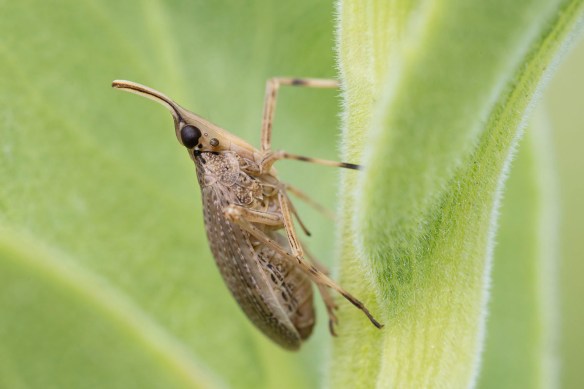
Planthopper. Helzer family prairie near Stockham, Nebraska. 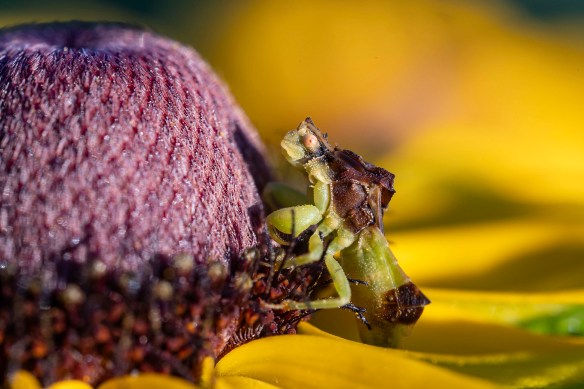
Ambush bug on black-eyed susan (Rudbeckia hirta). Lincoln Creek Prairie, Aurora, Nebraska 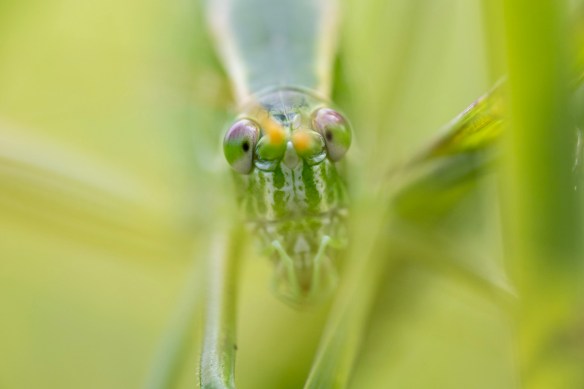
Bush katydid. 2025 Photography project. Helzer Family Prairie. 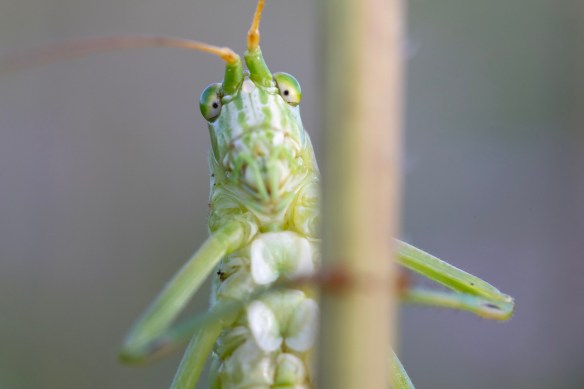
Bush katydid. Helzer Family Prairie near Stockham, Nebraska 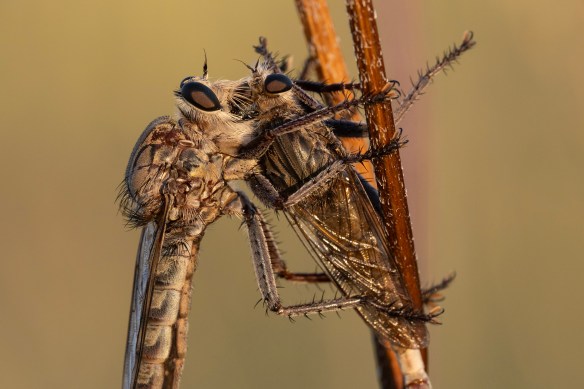
Robber fly with captured robber fly. The Nature Conservancy’s Niobrara Valley Preserve, Nebraska 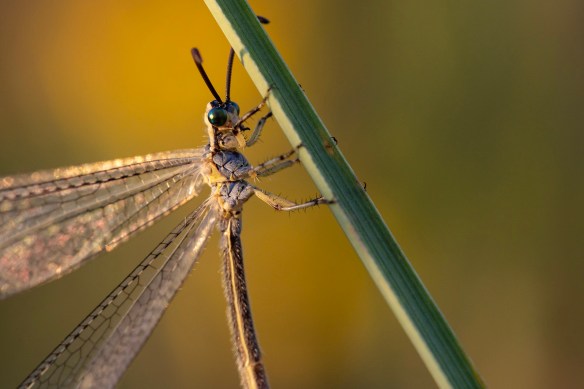
Adult antlion. The Nature Conservancy’s Niobrara Valley Preserve, Nebraska 
Big sand tiger beetle. Wilson Lake, Kansas
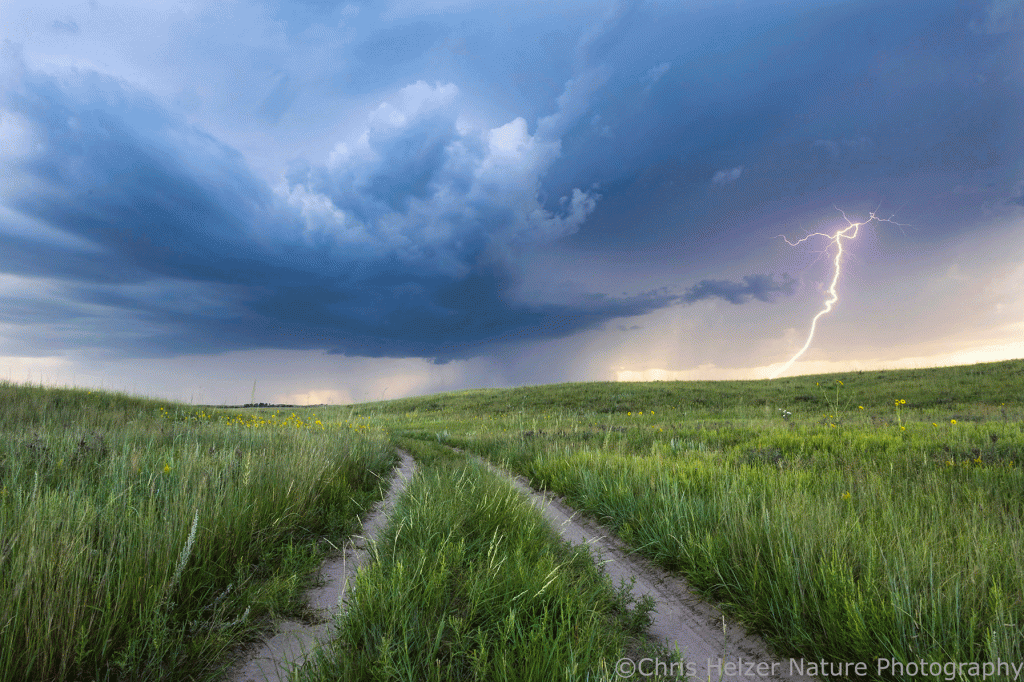
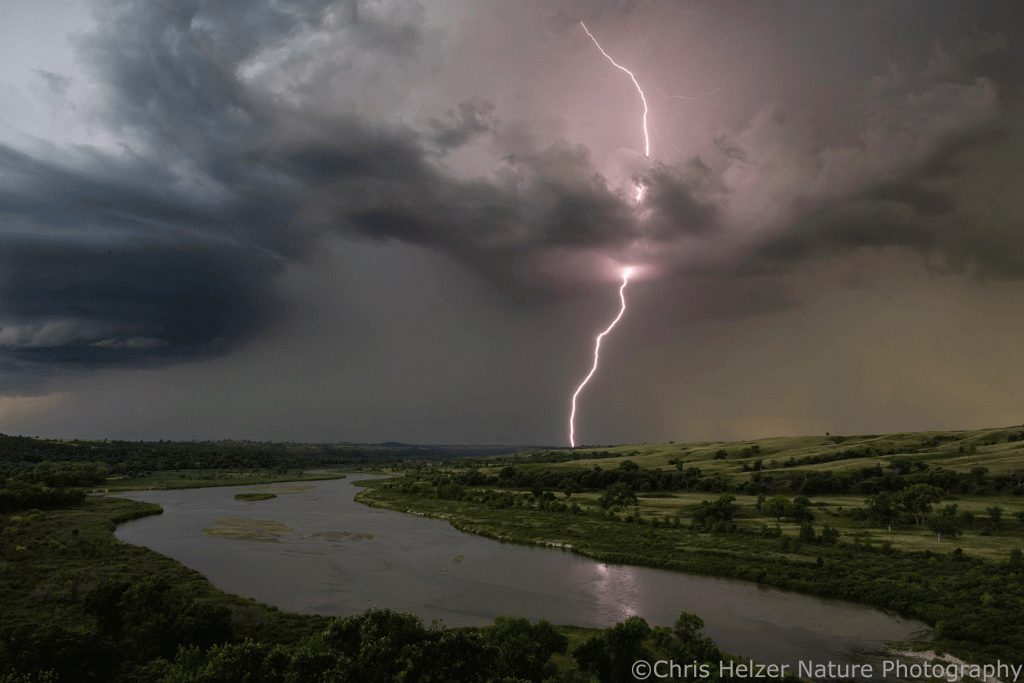
During one trip to the Niobrara Valley Preserve this summer, a lightning storm came from the west and then skirted around us to the north, flashing all the way. I spent quite a bit of time watching it from a few different vantage points, enjoying the show and capturing some fun lightning photos.
The slideshow below features pollinators I photographed in 2025.
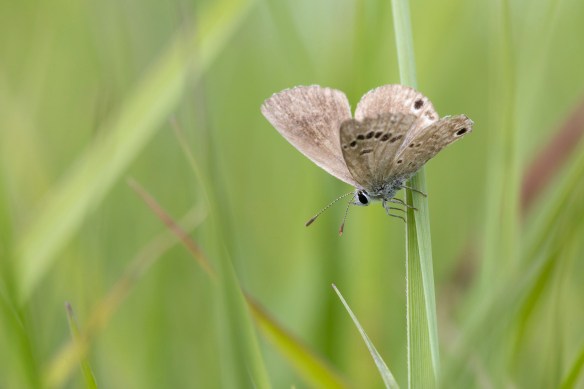
Reakirt’s blue butterfly (Echinargus isola). Helzer family prairie. 2025 photography project – grazing recovery party. 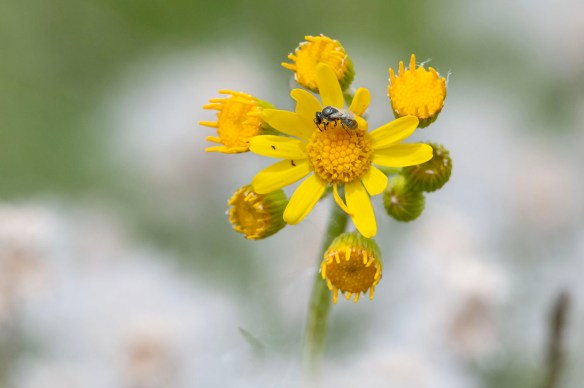
Prairie ragwort (Senecio plattensis) and sweat bee in a patch of pussytoes (Antennaria neglecta). Caveny Tract. The Nature Conservancy’s Platte River Prairies, Nebraska 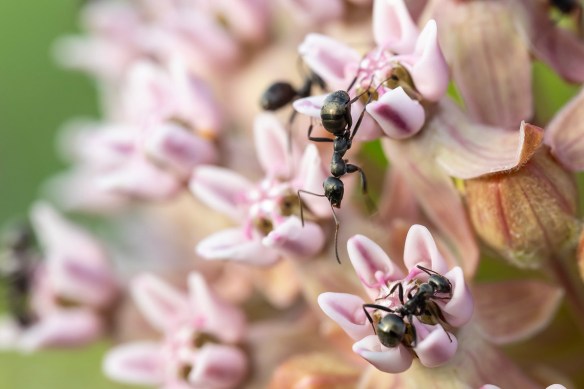
Ants (Formica subsericea) on common milkweed (Asclepias syriaca). Gjerloff Prairie (Prairie Plains Resource Institute) near Marquette, Nebraska 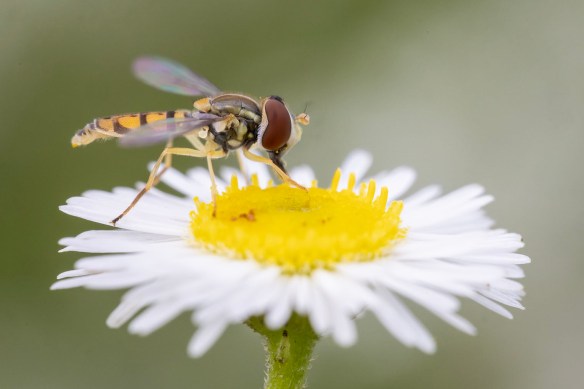
Hover fly (Syrphid) on daisy fleabane. Helzer family prairie near Stockham, Nebraska. 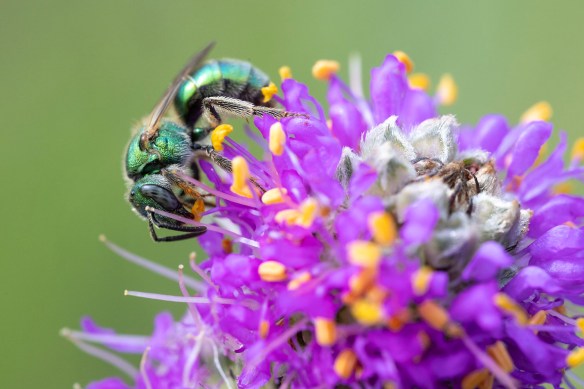
Sweat bee on purple prairie clover. 2025 Photography project. Helzer Family Prairie. 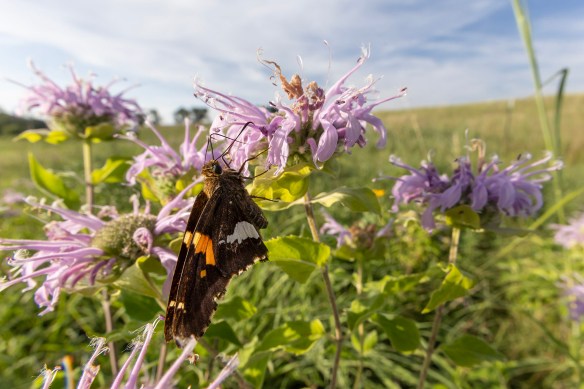
Silver-spotted skipper on wild bergamot (Monarda fistulosa). Helzer Family Prairie near Stockham, Nebraska 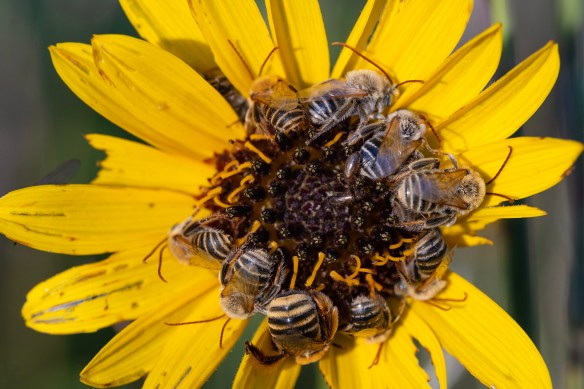
Longhorn bees in the morning, roosting on stiff sunflower. Helzer Family Prairie near Stockham, Nebraska 
Monarch butterfly on pitcher sage, aka blue sage (Salvia azurea). Restored grassland at Gjerloff Prairie (Prairie Plains Resource Institute).
Here is a slideshow of 2025 spider photos. There are eight photos, not 2025. 2025 is just the year they were taken in.
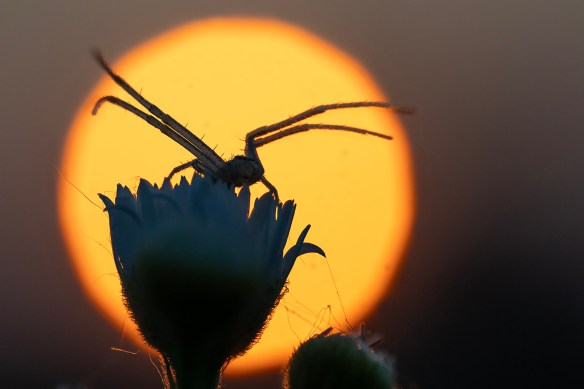
Crab spider on daisy fleabane at sunset. 2025 Photography project – post-grazing recovery. Helzer family prairie near Stockham, Nebraska 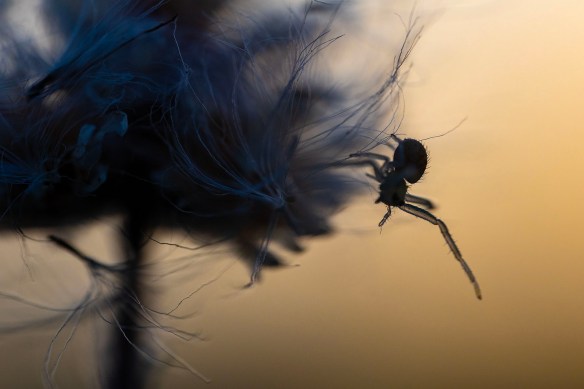
Pussytoes (Antennaria neglecta) seeds, crab spider, and sunrise color. 2025 Photography project – post grazing recovery. Helzer familiy prairie near Stockham, Nebraska 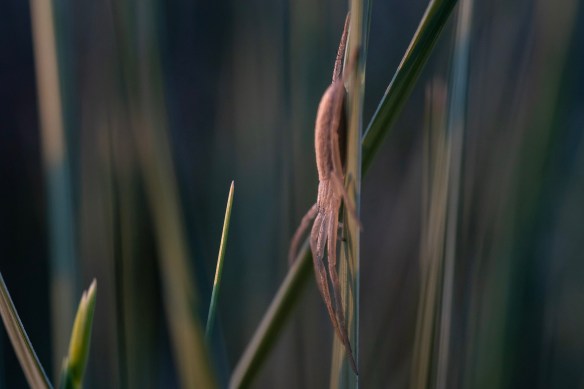
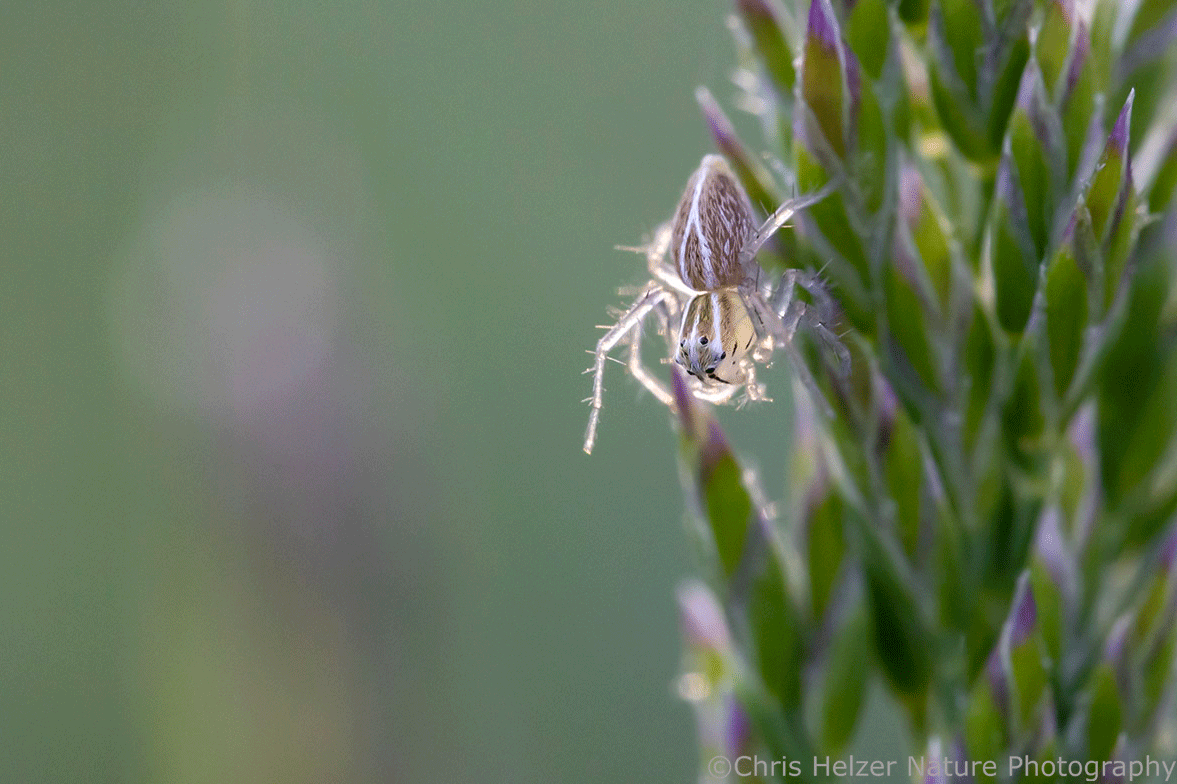
Spider hanging on grass. Ken and Kim Carter farm near Norton, Kansas 
Spider on a web (consuming the web). The Nature Conservancy’s Platte River Prairies, Nebraska 
Crab spider on sunflower petal. The Nature Conservancy’s Niobrara Valley Preserve. Nebraska. 
Long-jawed orb weaver and sunset. The Nature Conservancy’s Platte River Prairies, Nebraska 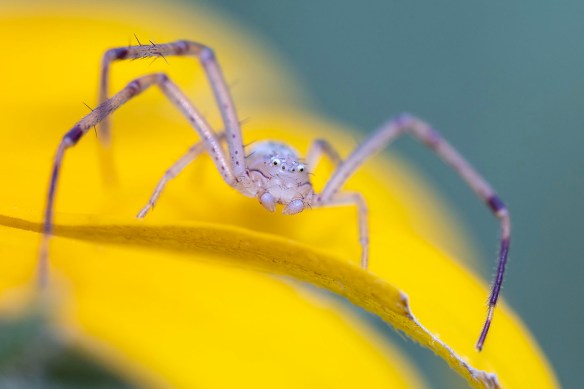
Male crab spider on black-eyed Susan. Helzer family prairie near Stockham, Nebraska. 
Crab spider with beetle. Helzer Family Prairie. 2025 Post-Grazing Photography Project.
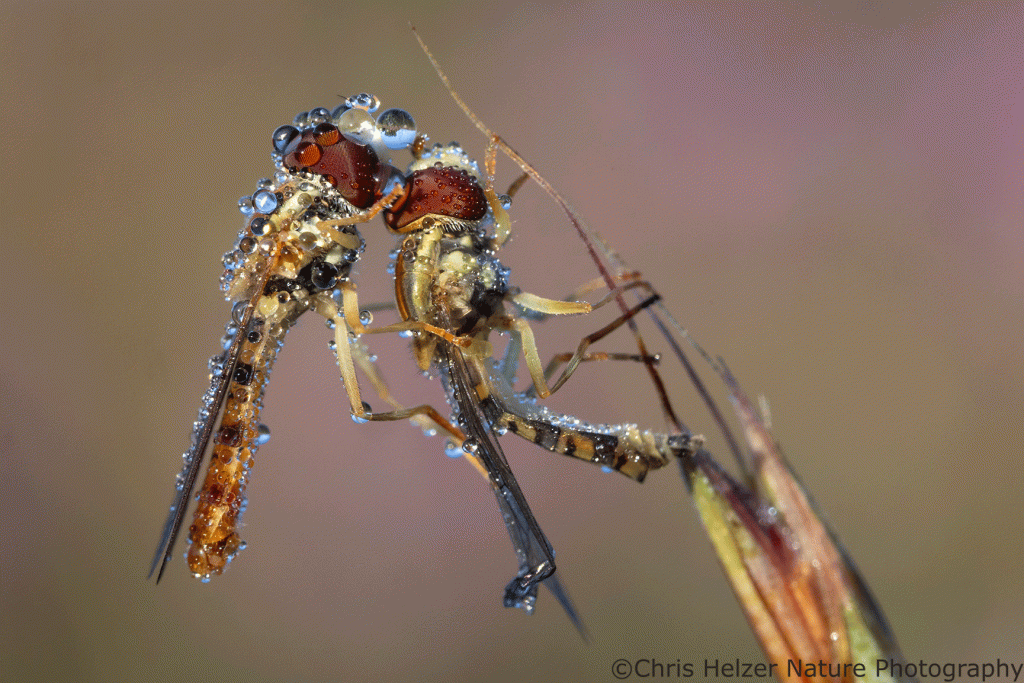
Speaking of dewy summer mornings, insect photography is a lot easier when my subjects are slowed and sparkly. The two hoverflies below posed very nicely for me.
I don’t take a lot of sunrise and sunset photos, at least relative to how often I’m out at that time of day. Instead, I’m usually taking advantage of that early and late-day light to photograph spiders, flowers, or something else. The slideshow below, though, includes some of the images I got by including the sun itself in the photo.
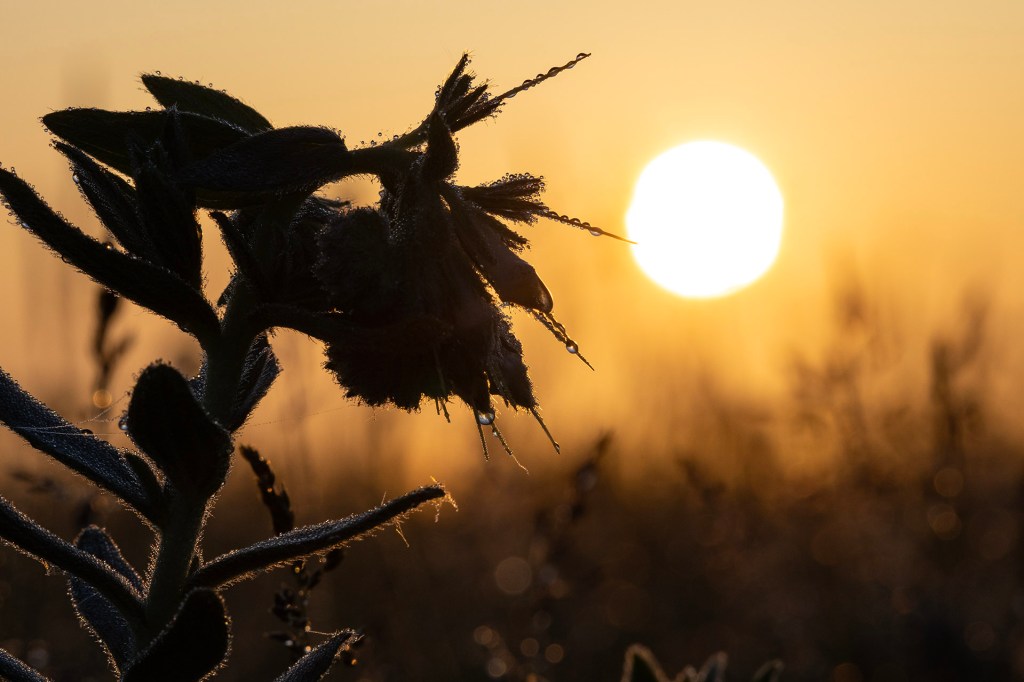
False gromwell aka marbleseed(Onosmodium molle) and sunrise. 2025 photography project – grazing recovery. The Nature Conservancy’s Platte River Prairies, Nebraska 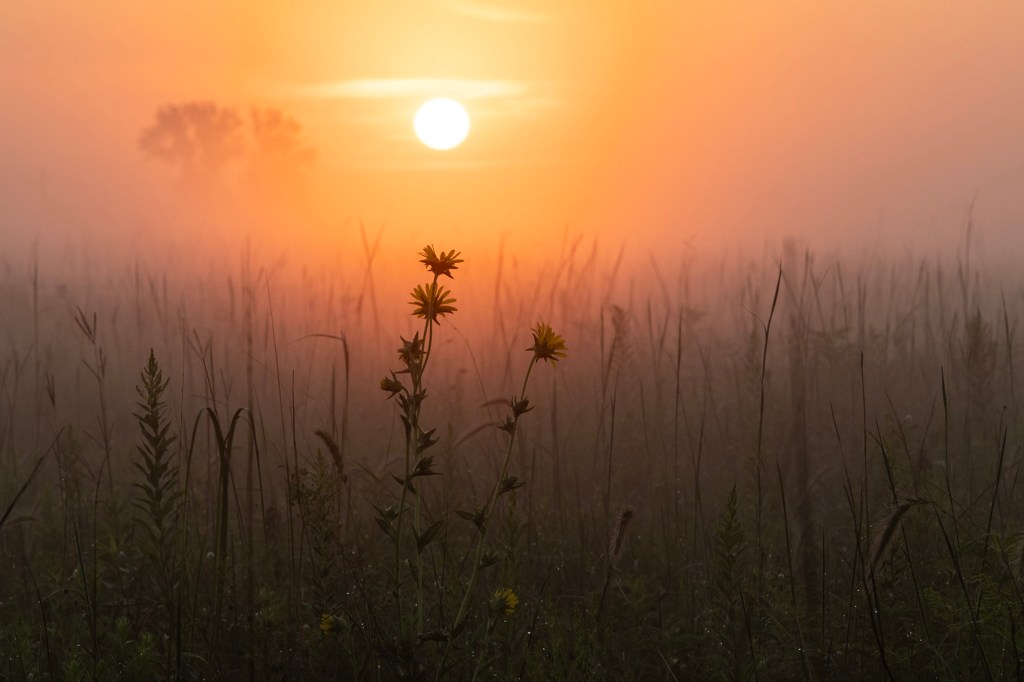
Restored prairie and compass plant at sunrise. Bruce Stephens Prairie, The Nature Conservancy’s Platte River Prairies. Nebraska 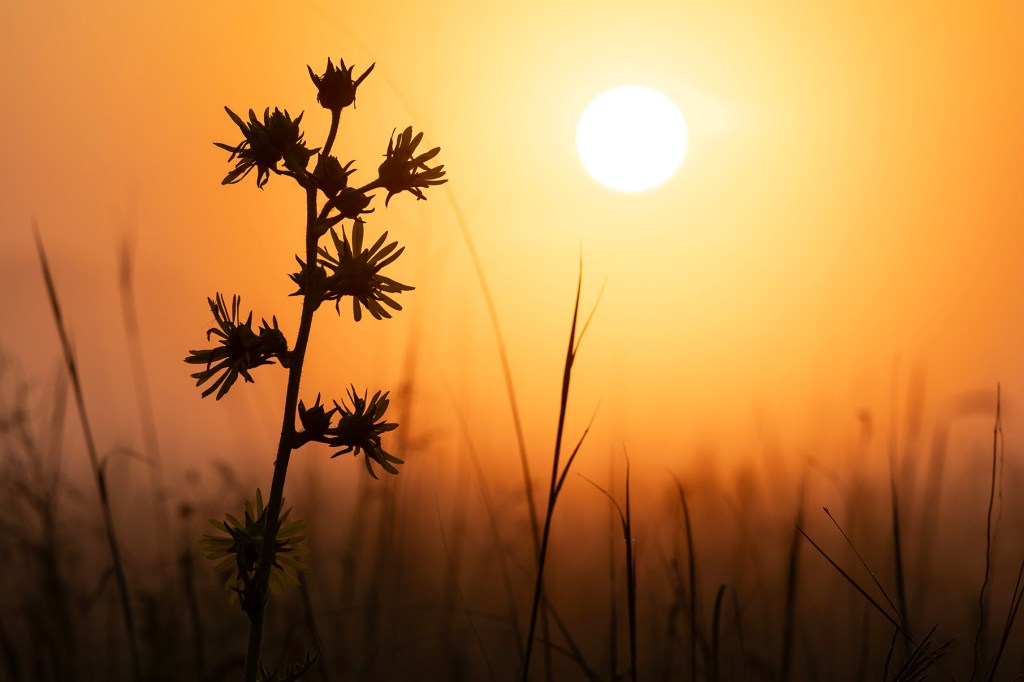
Restored prairie and compass plant at sunrise. Bruce Stephens Prairie, The Nature Conservancy’s Platte River Prairies. Nebraska 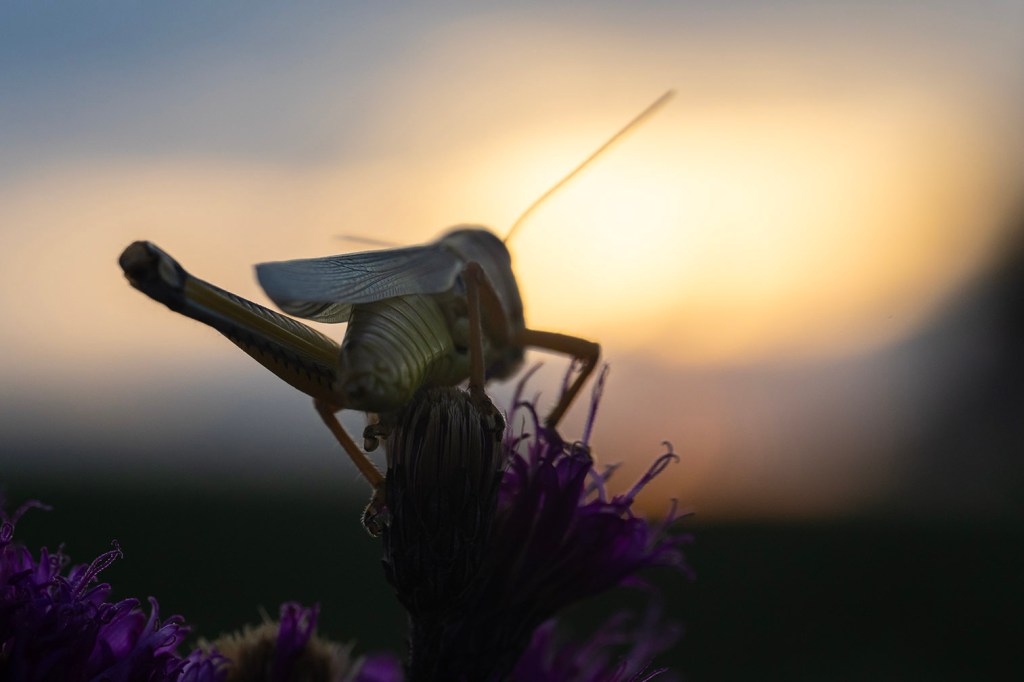
Grasshopper at sunset. Helzer Family Prairie near Stockham, Nebraska. 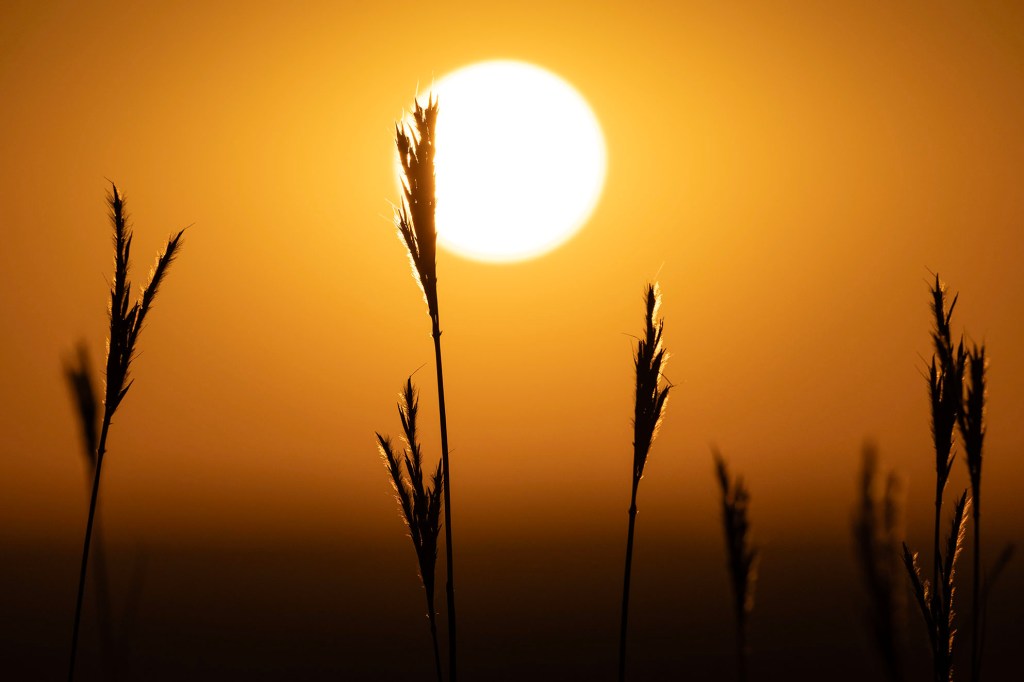
Sand bluestem (Andropogon hallii) and sunrise. Fort Niobrara National Wildlife Refuge scenic overlook. Valentine, Nebraska.
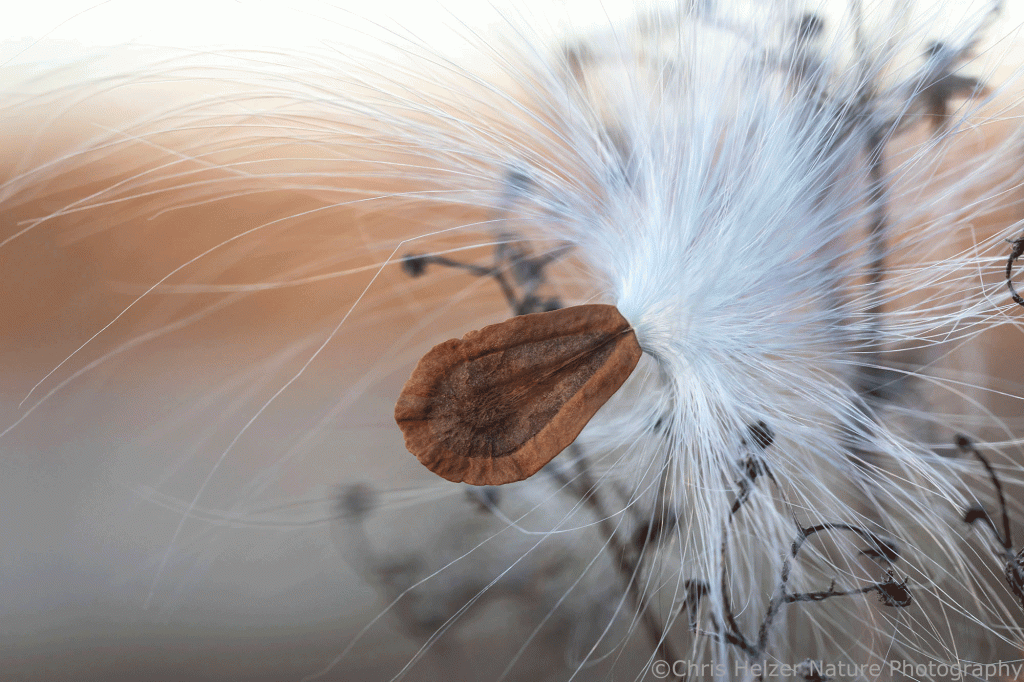
It’s hard for me to walk past a milkweed seed without stopping to admire and/or photograph it. This one was suspended near the Niobrara River this fall (the light color in the bottom half of the background is the river, with the red/brown of the far bank above it).
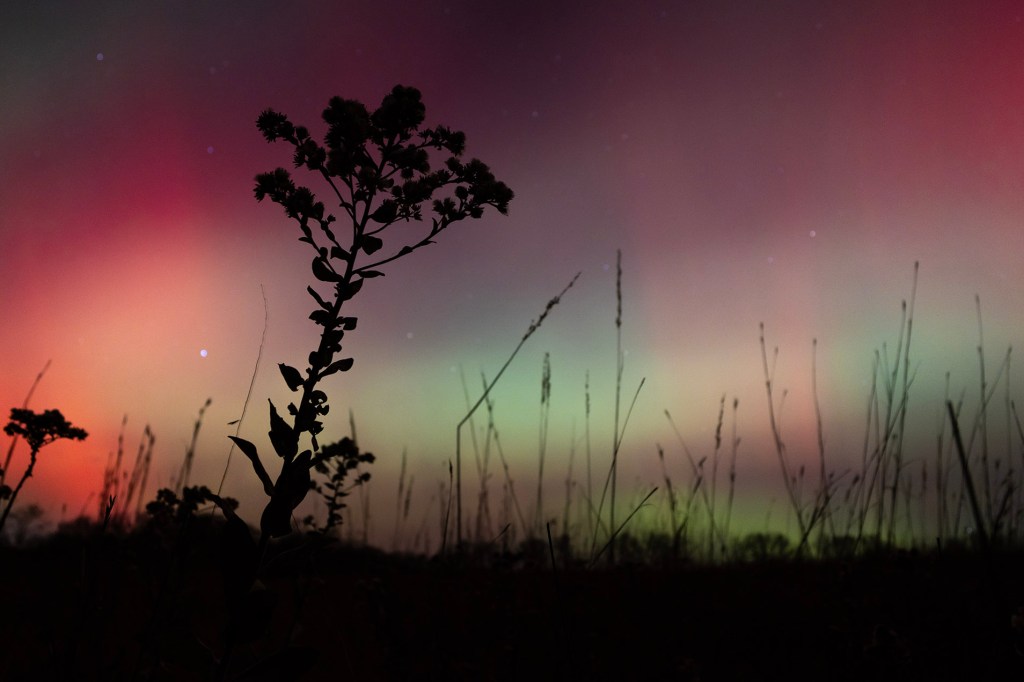
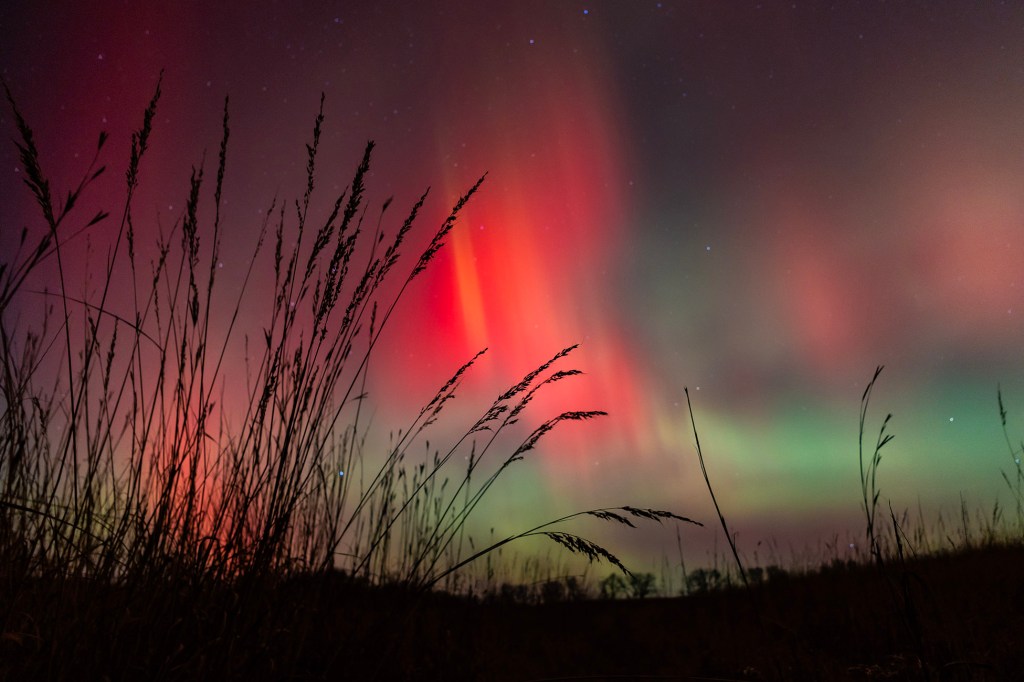
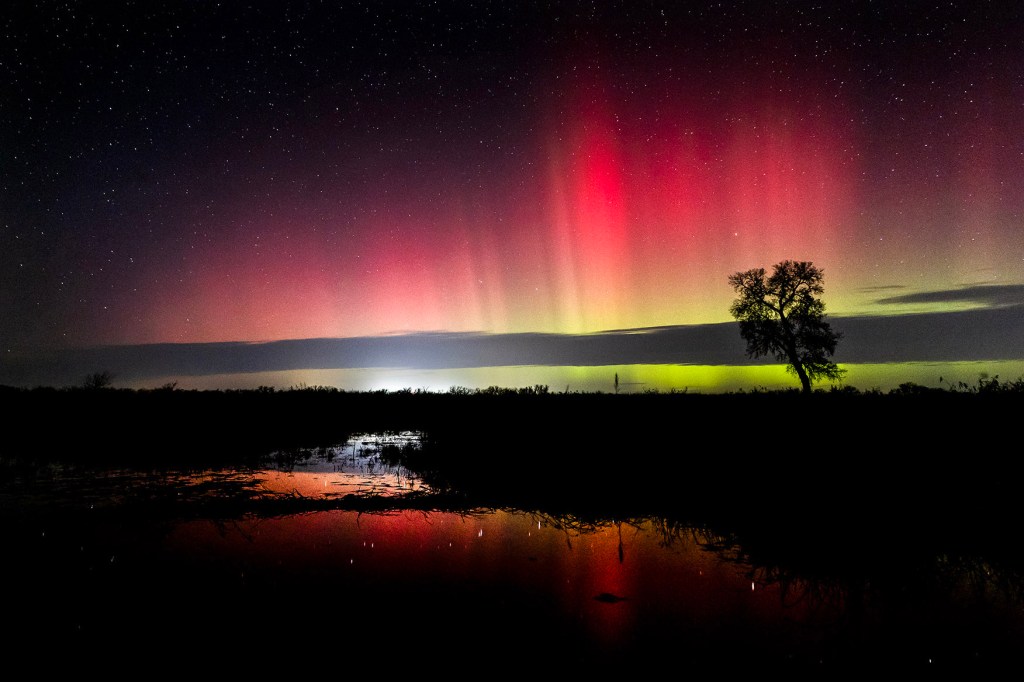
A lot of you probably got to see some great northern lights displays this summer. It sounds like it might be a while before those of us who don’t live in northern latitudes get a show like that again. I was lucky to get two nights when the color was great and wind was calm.
Toward the end of the year, I made several visits to Lincoln Creek Prairie, which is where my square meter photography plot was. I wasn’t visiting my plot, though. I walked right through the prairie and down to the steep, eroded banks of the creek itself to photograph floating leaves. There were many thousands of leaves, so it was a fun challenge to find compositions that were pleasing to my eye.
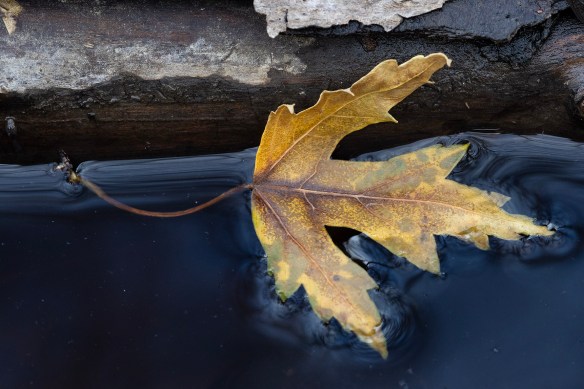
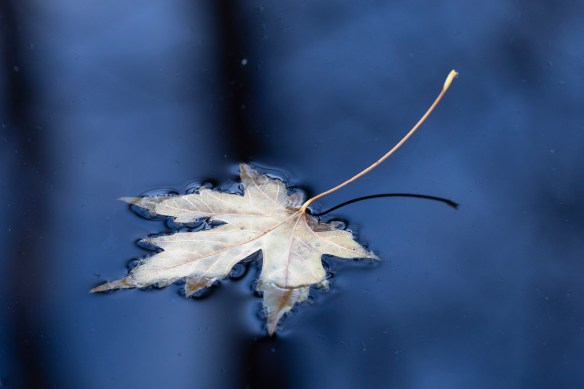
Silver maple leaf floating on water. Lincoln Creek Prairie, Aurora, Nebraska. 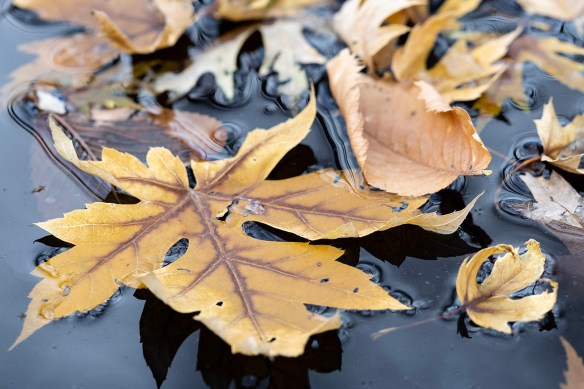
Silver maple leaves floating on water. Lincoln Creek Prairie, Aurora, Nebraska. 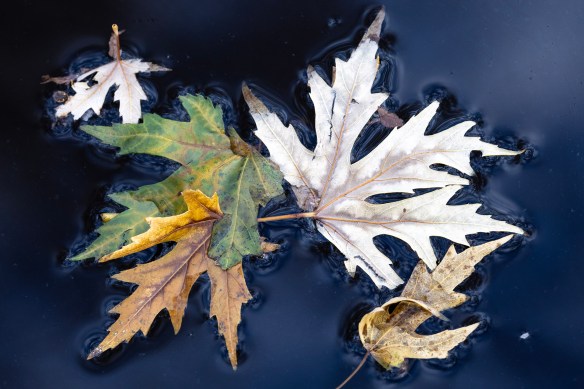
Silver maple leaves in Lincoln Creek, Aurora, Nebraska. 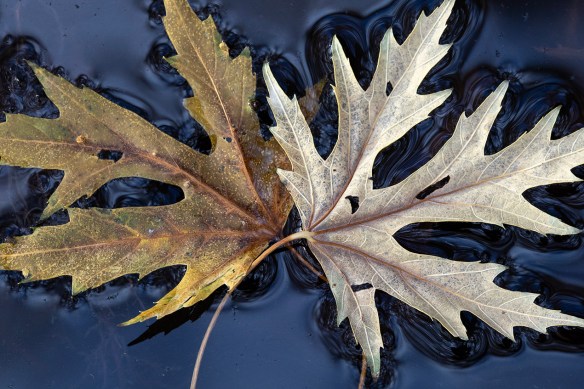
Silver maple leaves in Lincoln Creek, Aurora, Nebraska. 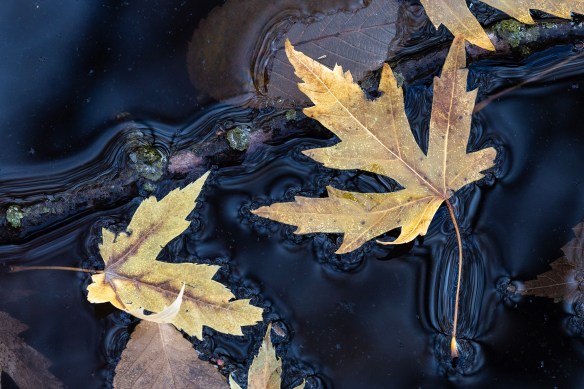
Silver maple leaves in Lincoln Creek, Aurora, Nebraska. 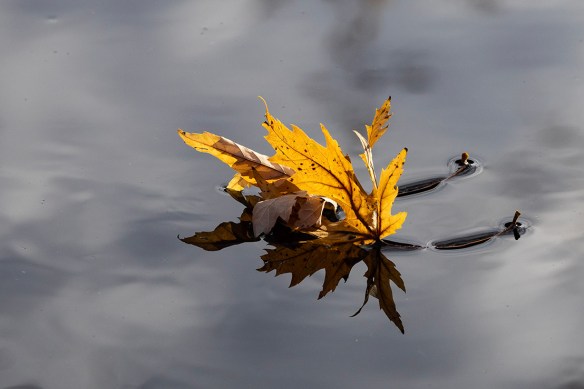
Silver maple leaf in Lincoln Creek, Aurora, Nebraska.
Thank you, as always, for any time you spend looking my photos or reading what I write about. I am constantly grateful for the audience of this blog. You’re consistently kind, even when you offer a different perspective or opinion from mine. That interaction – both through the comments and when I get a chance to meet you in person – is why I keep doing this. I love learning from all of you, and hearing that anything I write or photograph brings you joy or inspiration.
Happy Holidays and Happy New Year!
 The Prairie Ecologist
Spectacular! Makes me feel lucky to be part of life
I agree! Thank you Chris, it was wonderful to see these (again, some) and I can’t wait to see more of your “lucky to be part of life” pictures in the new year! Blessings on you!
do Meadowhawk Dragonflies migrate?
Yes, at least some, like the variegated meadowhawk.
Thanks for all your great writing and photos!
All the best in 2026
Greg
Love the slideshows! Th aurora ones are spectacular
Thank you for sharing your photography and enthusiasm for the prairies! Wishing you a wonderful holiday season! From Karen in Colorado – on the prairies!
You make spiders look beautiful…almost. (They still give me the heebee jeebies.
Merry Christmas, Chris.
Thank you for bringing the joy and beauty of the prairie to us all year! Happy Holidays to you! Looking forward to seeing your photos in 2026!
I do especially love the frosty sideoats grama, the aurora over the wetland and the lightning photos. Thanks for sharing (again). Happy 2026!
A great set of images to look at. Fine work showing the smaller plant’s and insects that live on the prairies!
Thanks, your posts are always a very needed breath of clean, fresh air and inspire new interest in my own native plant projects around my house.
I think I may have to take to calling my former front lawn now converted to mainly sideoats the “family prairie”.
Fabulous set of shots
After plowing through an almost overwhelming amount of bad news, requests, reminders, opinion, and general mayhem to which the internet treats us daily, and which makes me want to throw this laptop out the window, how wonderful and refreshing to view your photos from 2025 this evening. So much beauty on the prairie. My favorite photo, though, is the last, of the bejeweled hoverflies! Thank you for magnifying and sharing these small wonders. Christa