
Reminder: please join us this Saturday for the Platte River Prairies field day. RSVP by contacting Kate at kate.samuelson@tnc.org.
Kim and I both went up to the Niobrara Valley Preserve last week to help with that site’s annual butterfly count. Neil Dankert leads this count every year, as he has for most of the last 38 or so years. Check out his terrific website on Nebraska moths and butterflies here.
While I was at NVP, I found some time to do some photography. Looking back, it’s weird that I didn’t get a single photo of a butterfly, though I did photograph one moth.
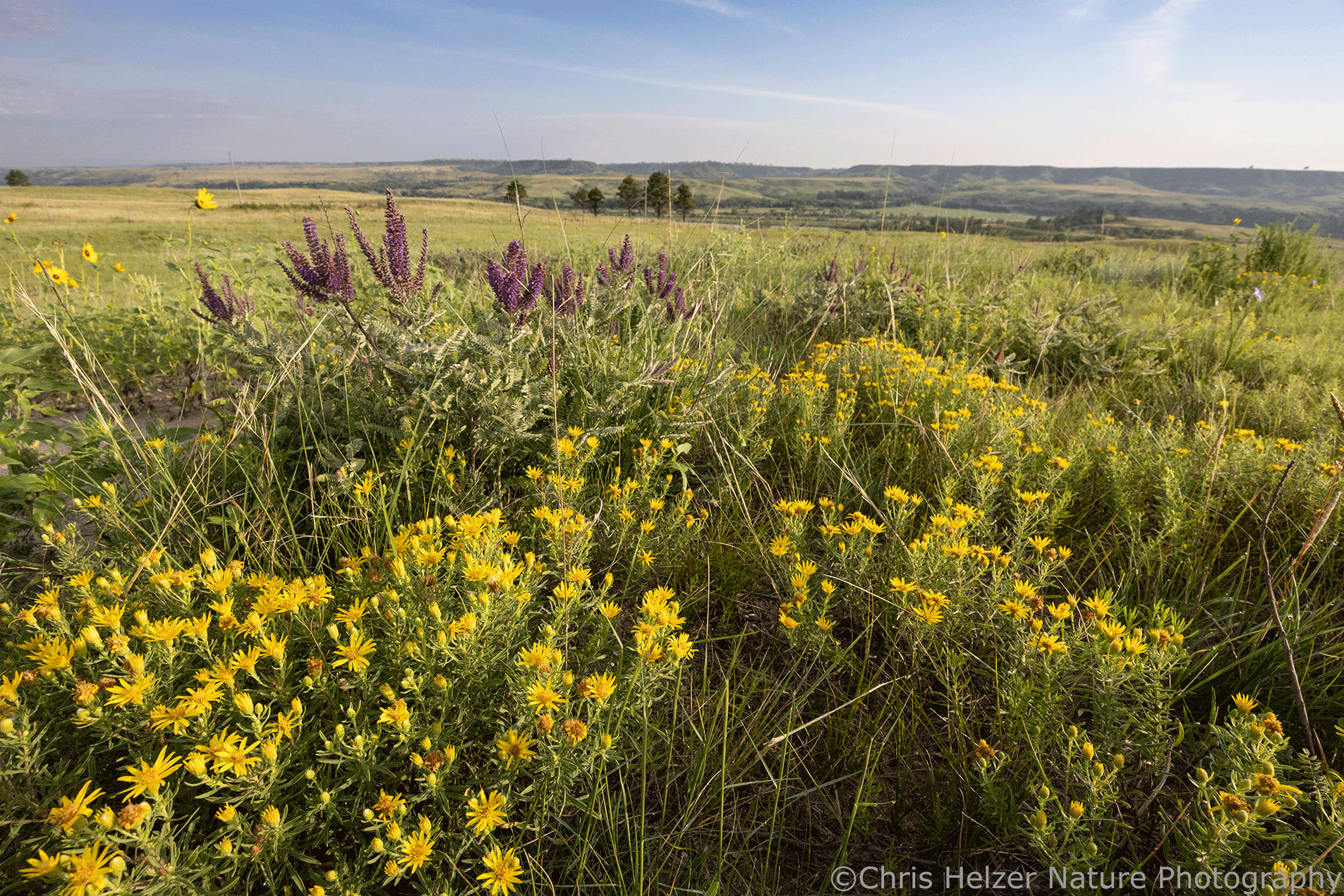
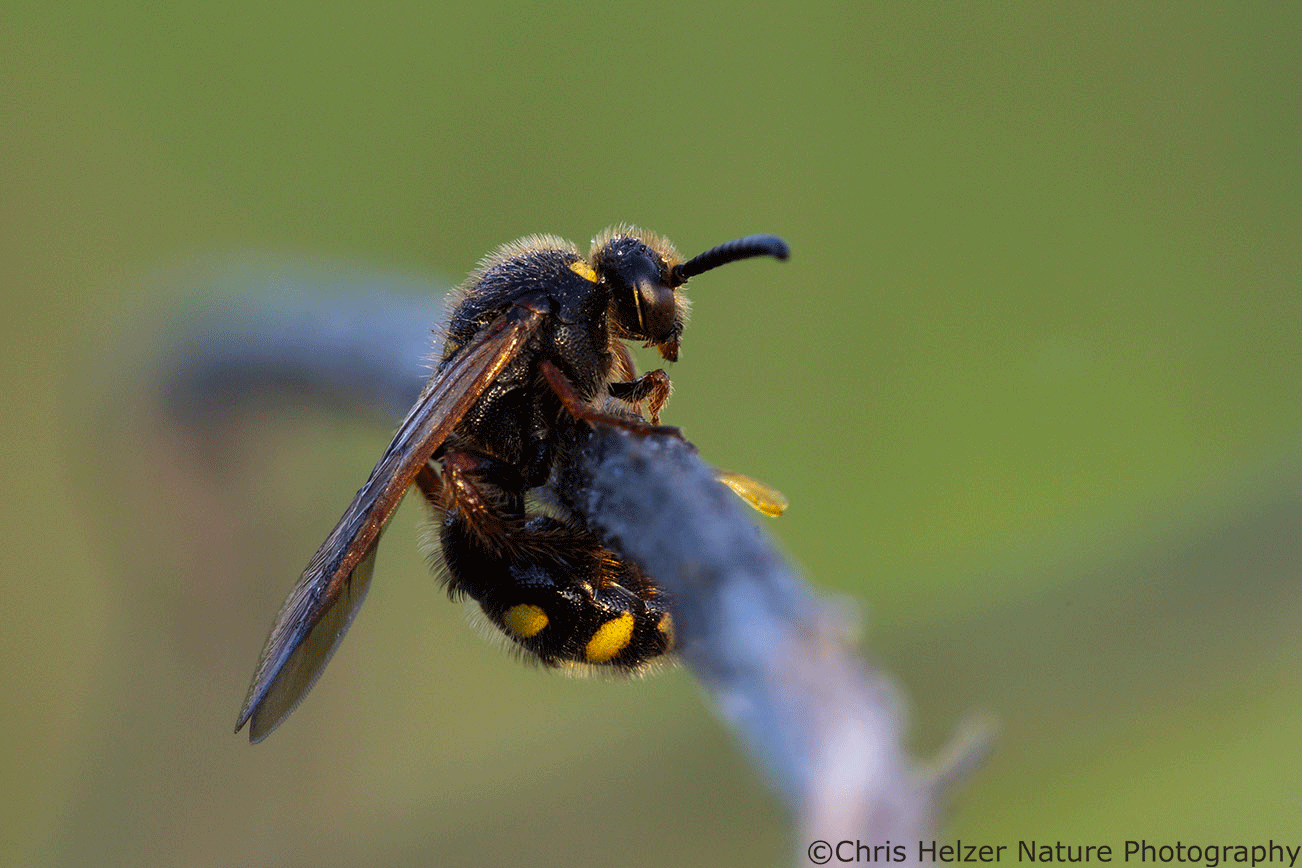
The butterfly count was on Friday but Kim and I stayed for an extra night so she could go for a run on Saturday morning and I could wander out with my camera. One of the first things I found on my sunrise walk was a couple clusters of male scoliid wasps. Female scoliid wasps feed on scarab beetle larvae, which live underground. Somehow, the wasps figure out where a larva is, dig down to it, and lay an egg on the hapless grub. The wasp larva then hatches out and eats the beetle larva before pupating and emerging from the ground as an adult wasp.
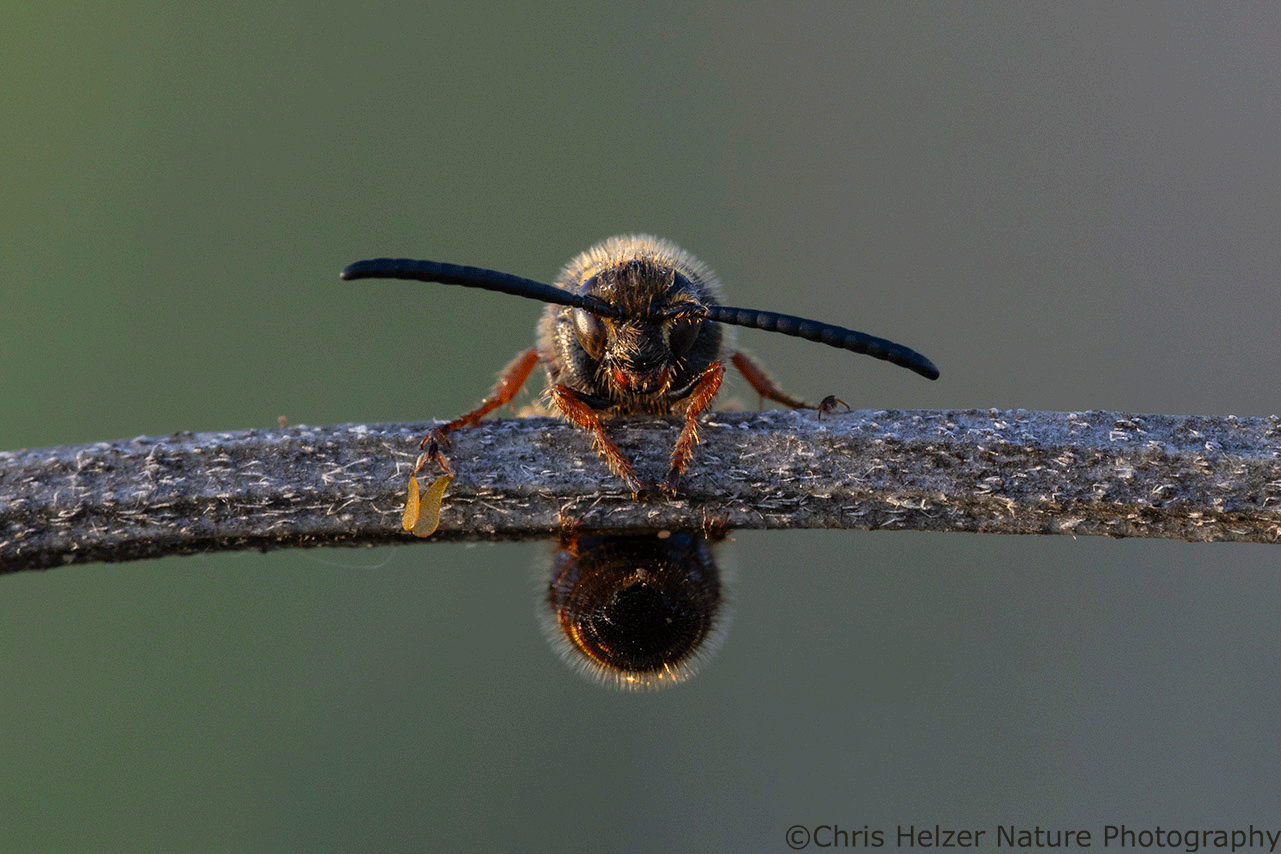
The males don’t do any of that. They spend their time feeding on nectar and looking for females to mate with. Often, they do this with a bunch of other males. At night, they often congregate together to roost, either for safety in numbers, warmth, or some other reason we dont understand. I think the wasps I found are Scolia nobilitata but I’m not promising that’s true.
If you look closely at the wasp photo above, you can see the gummy candy-like pollinia of a milkweed plant stuck to its foot. Both adult male and female wasps of most (all?) species feed on nectar rather than other invertebrates (they eat invertebrates as larvae but not as adults) and end up as important pollinators of many flowers, including those of milkweeds. If you don’t know the incredible story of how milkweed is pollinated, you can read about it here.

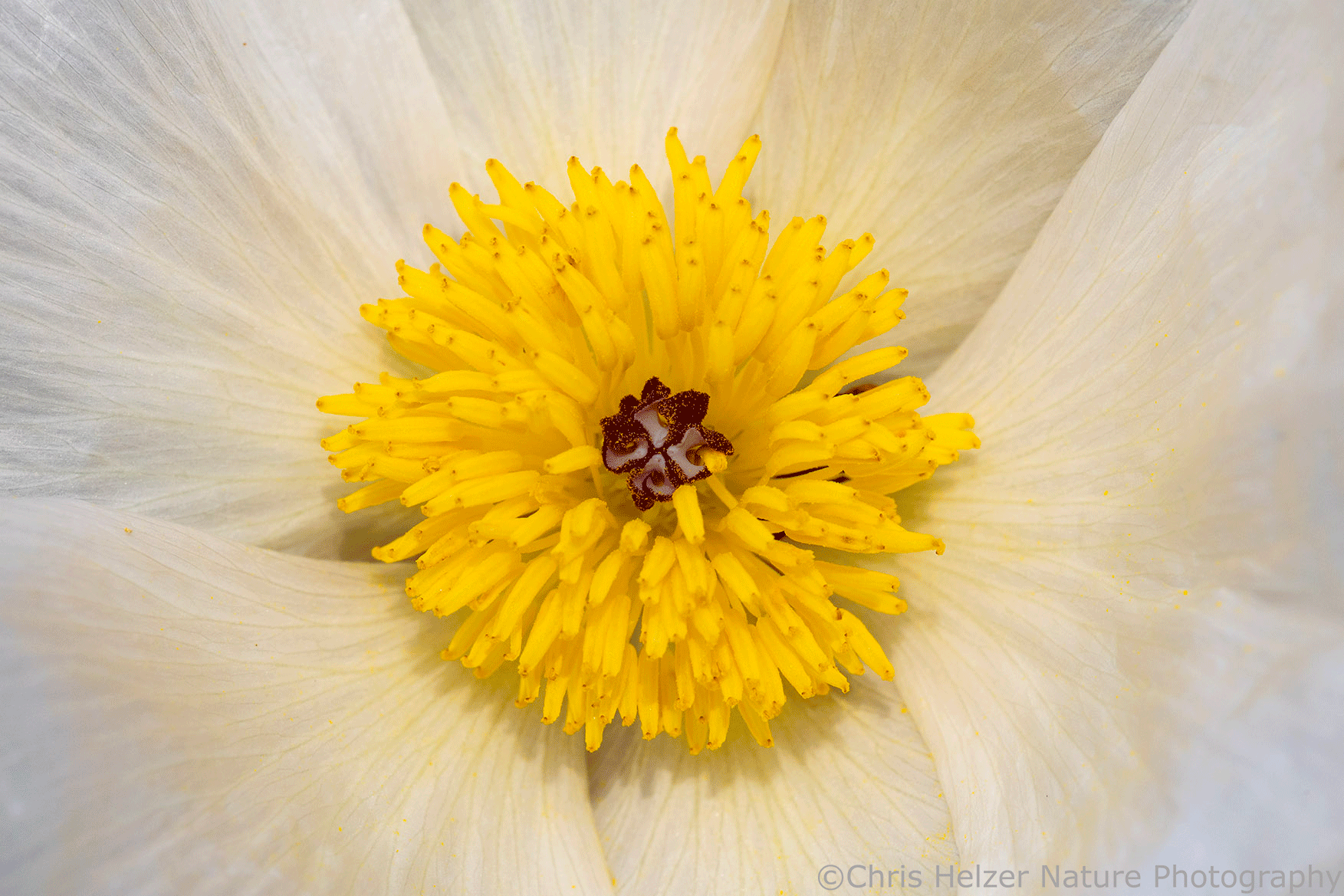
Prickly poppy (Argemone polyanthemos) was blooming during our trip, including a few plants right in front of the preserve office. On Friday, we had to wait for the vegetation to dry out before starting our butterfly count, so I took a few minutes to photograph the flowers and some pollinating visitors.
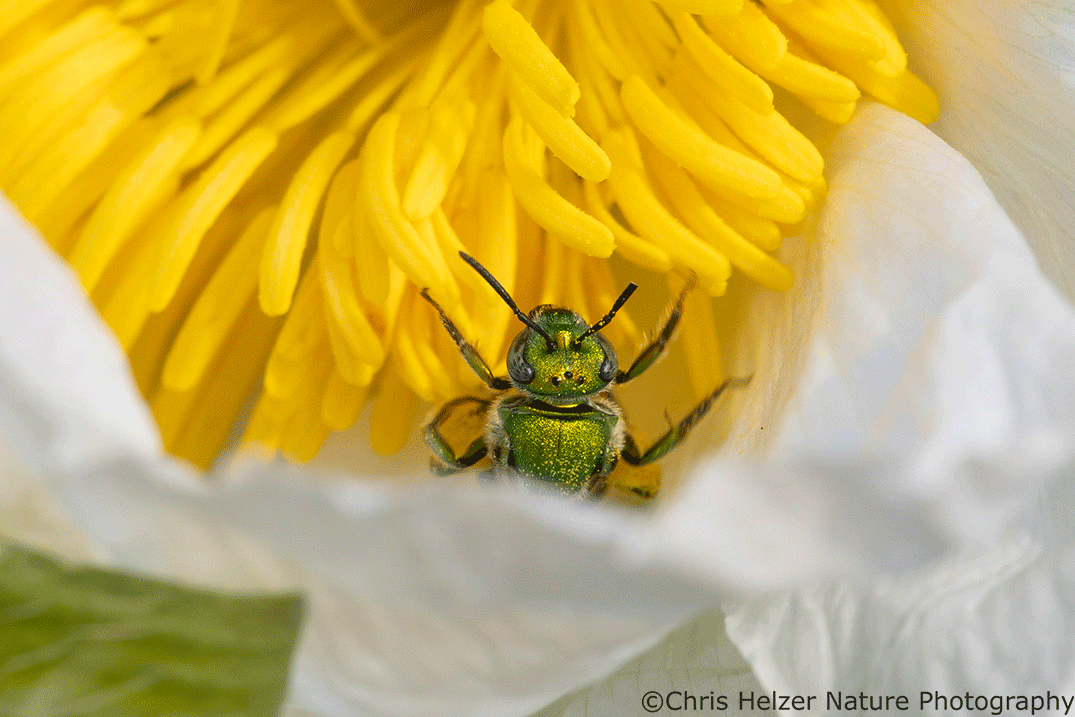
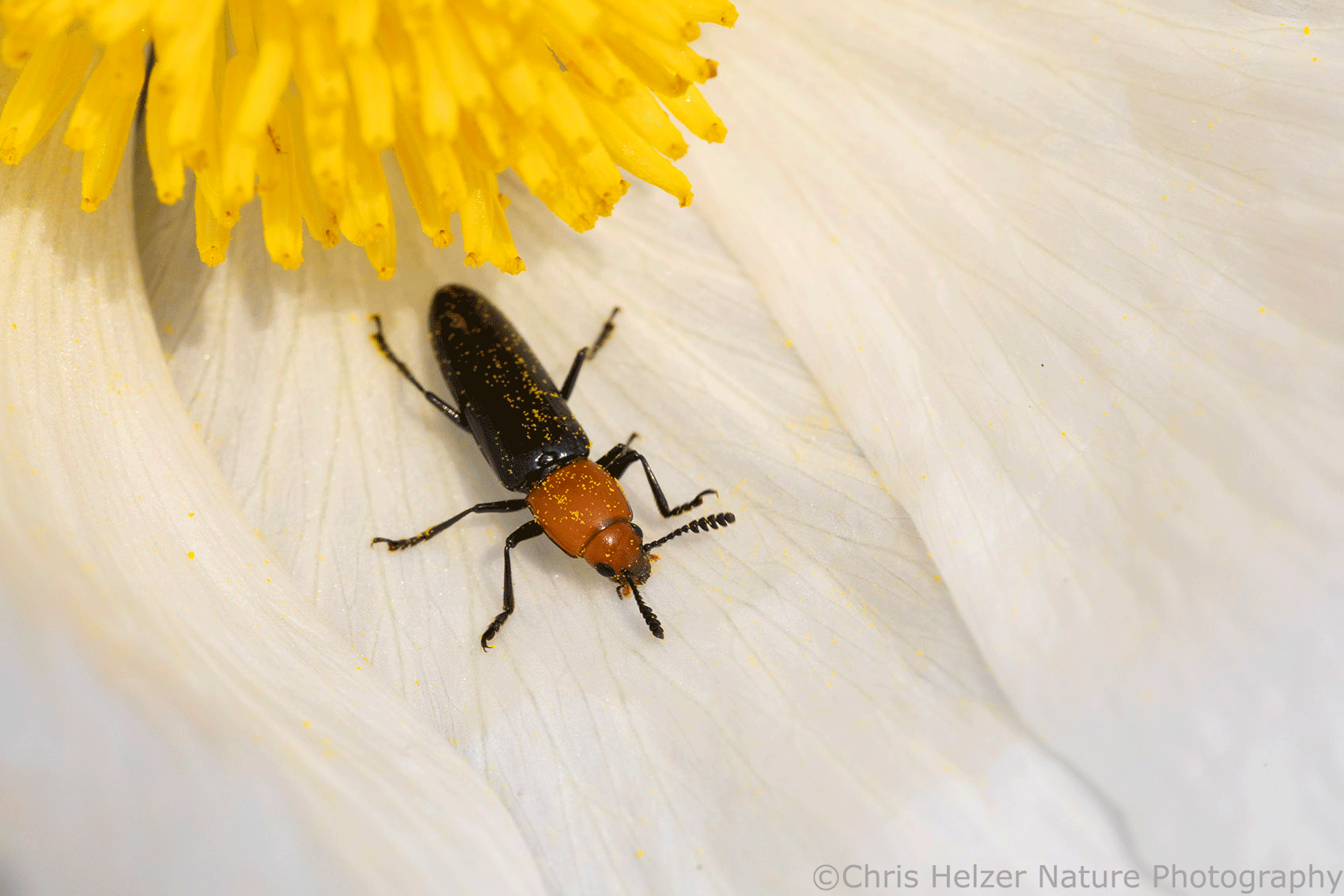
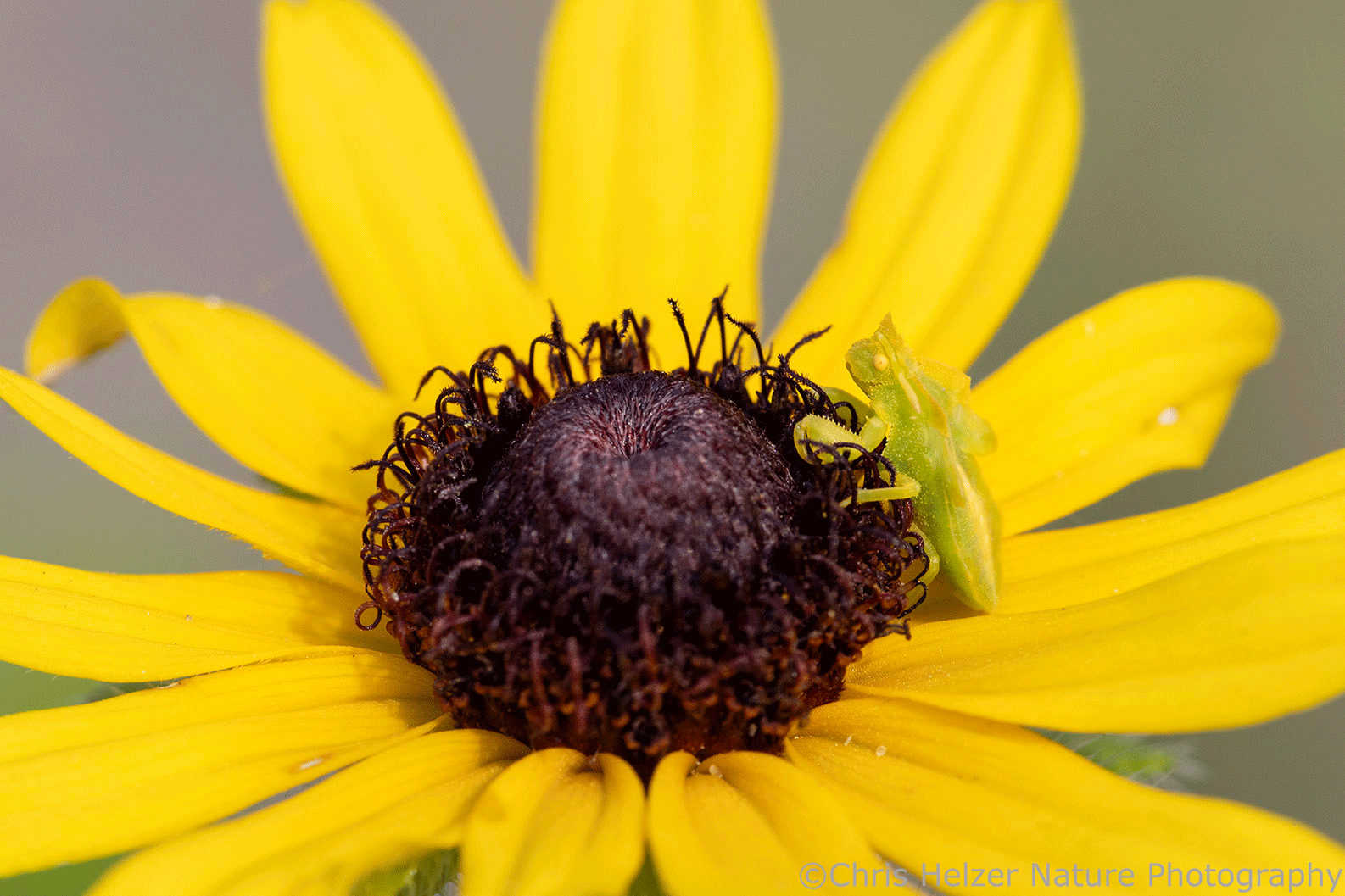
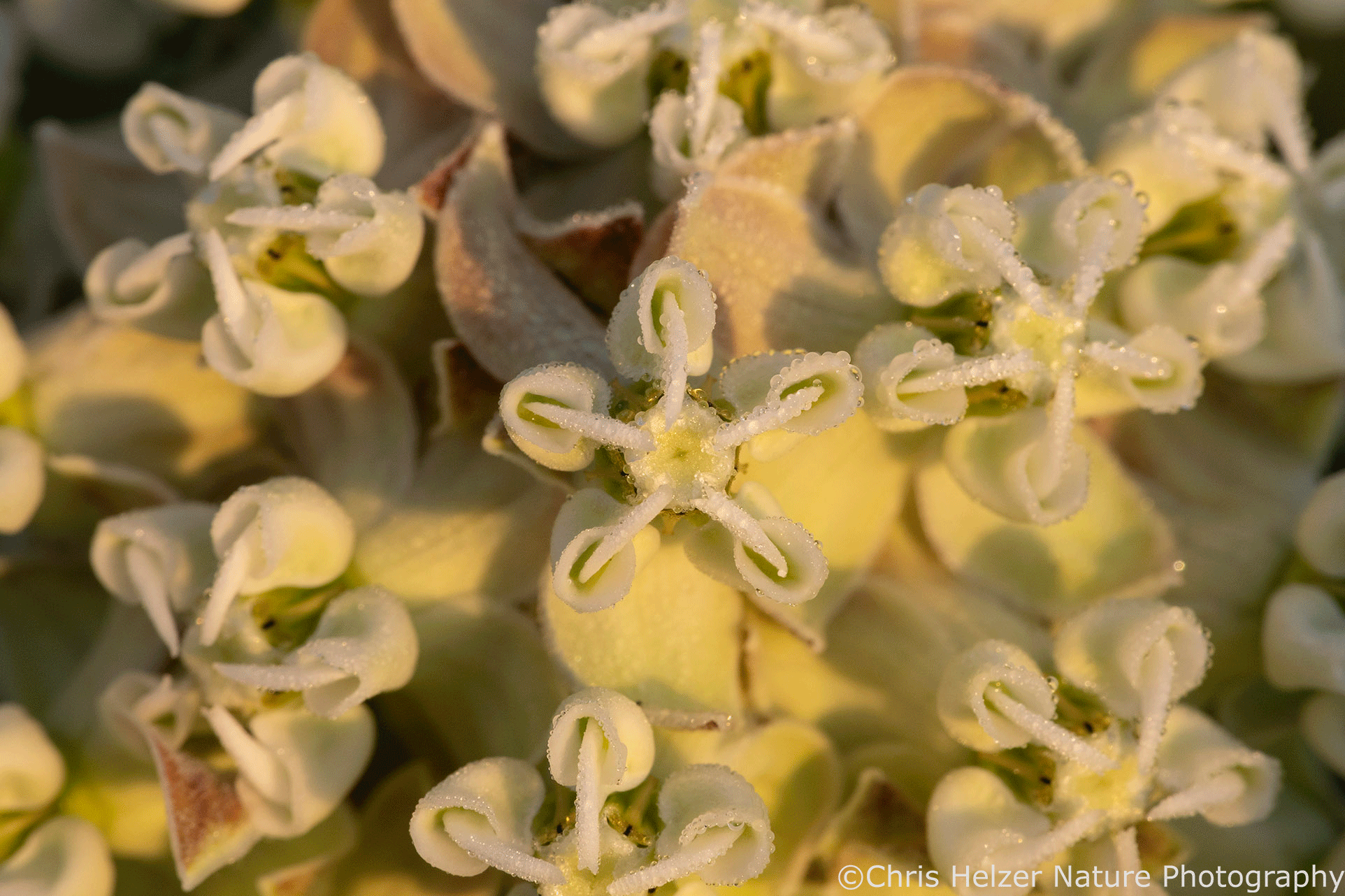
Lead plant was also in flower, and many different invertebrates were hanging out on the plants, including pollinators, herbivores, and predators.
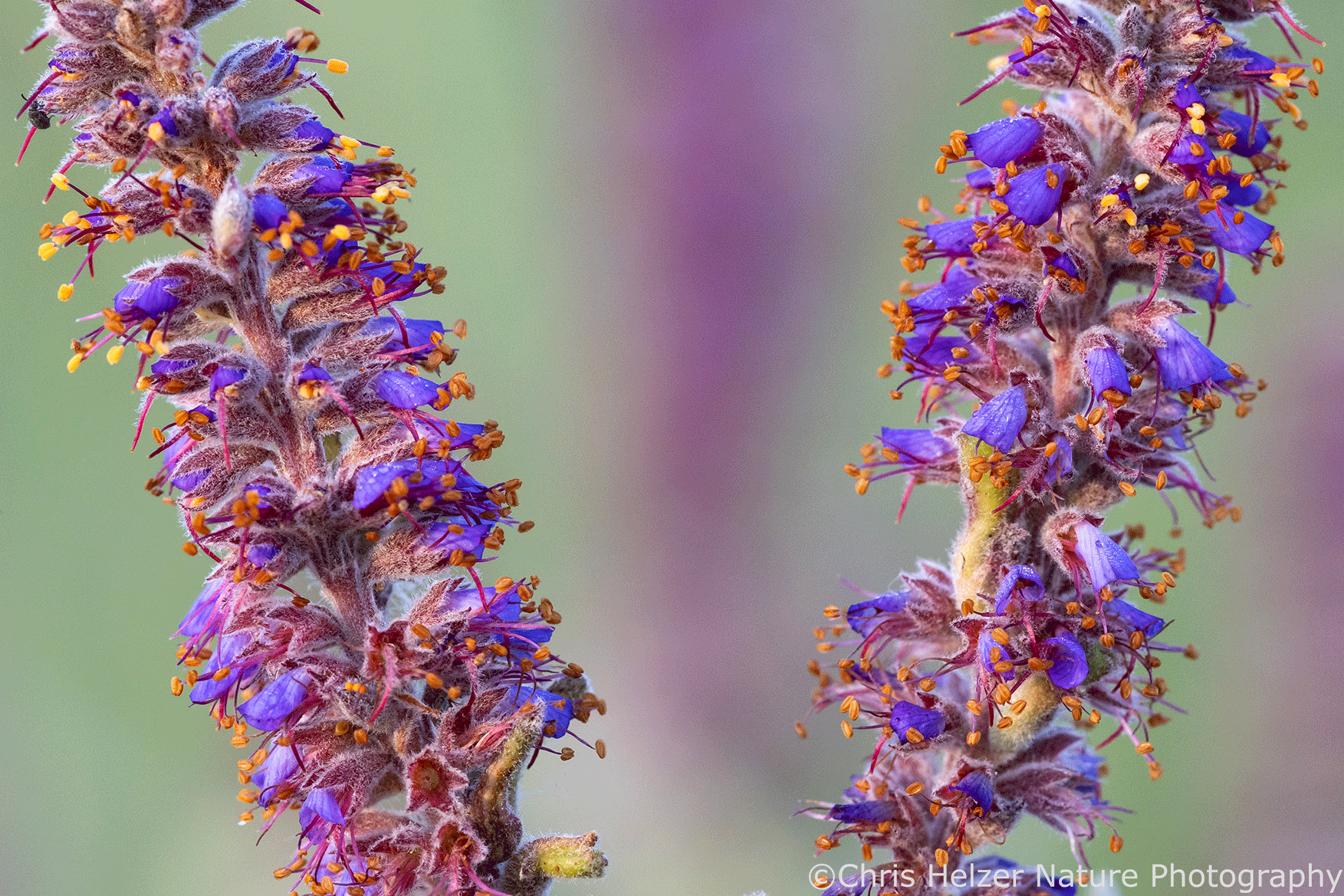

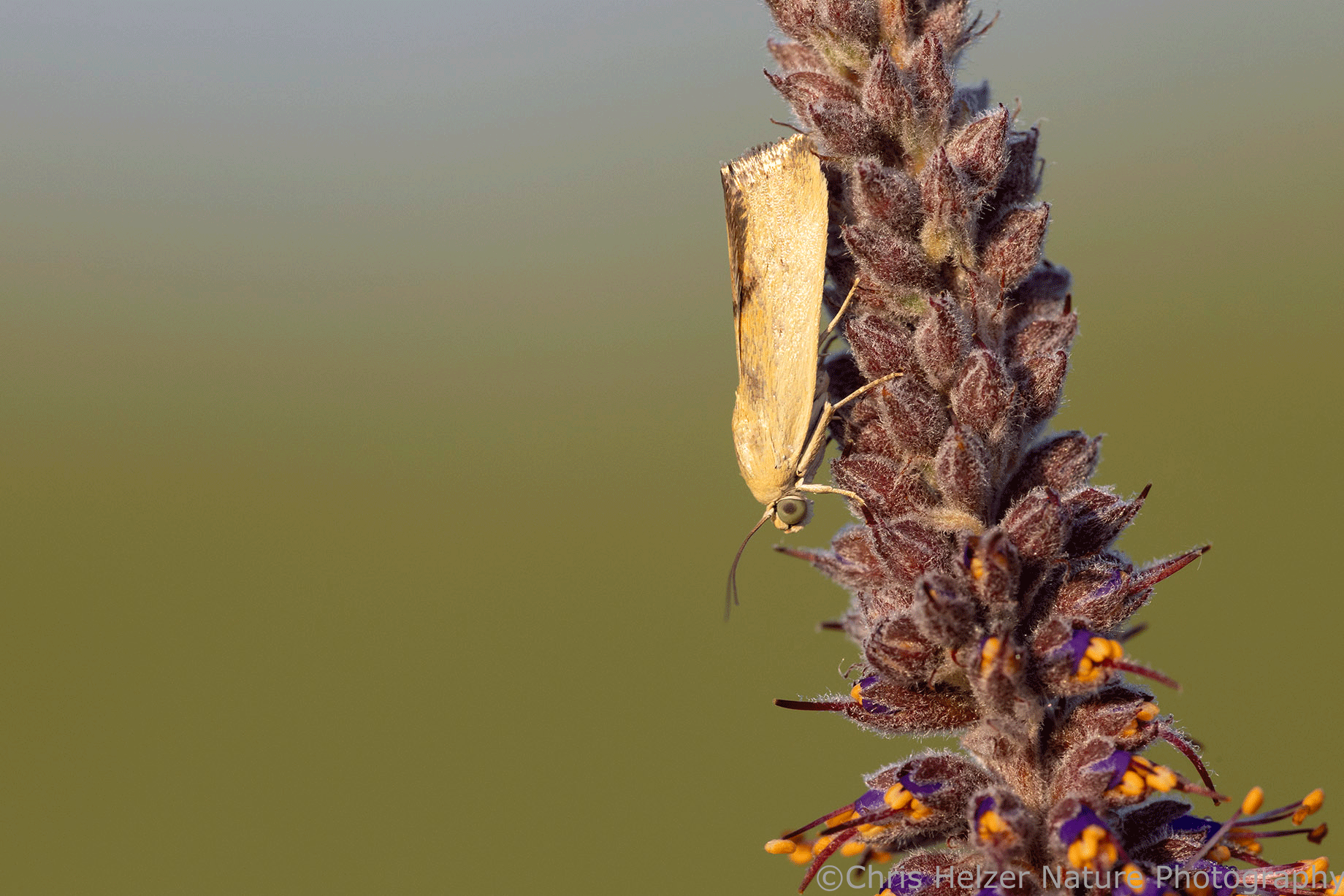
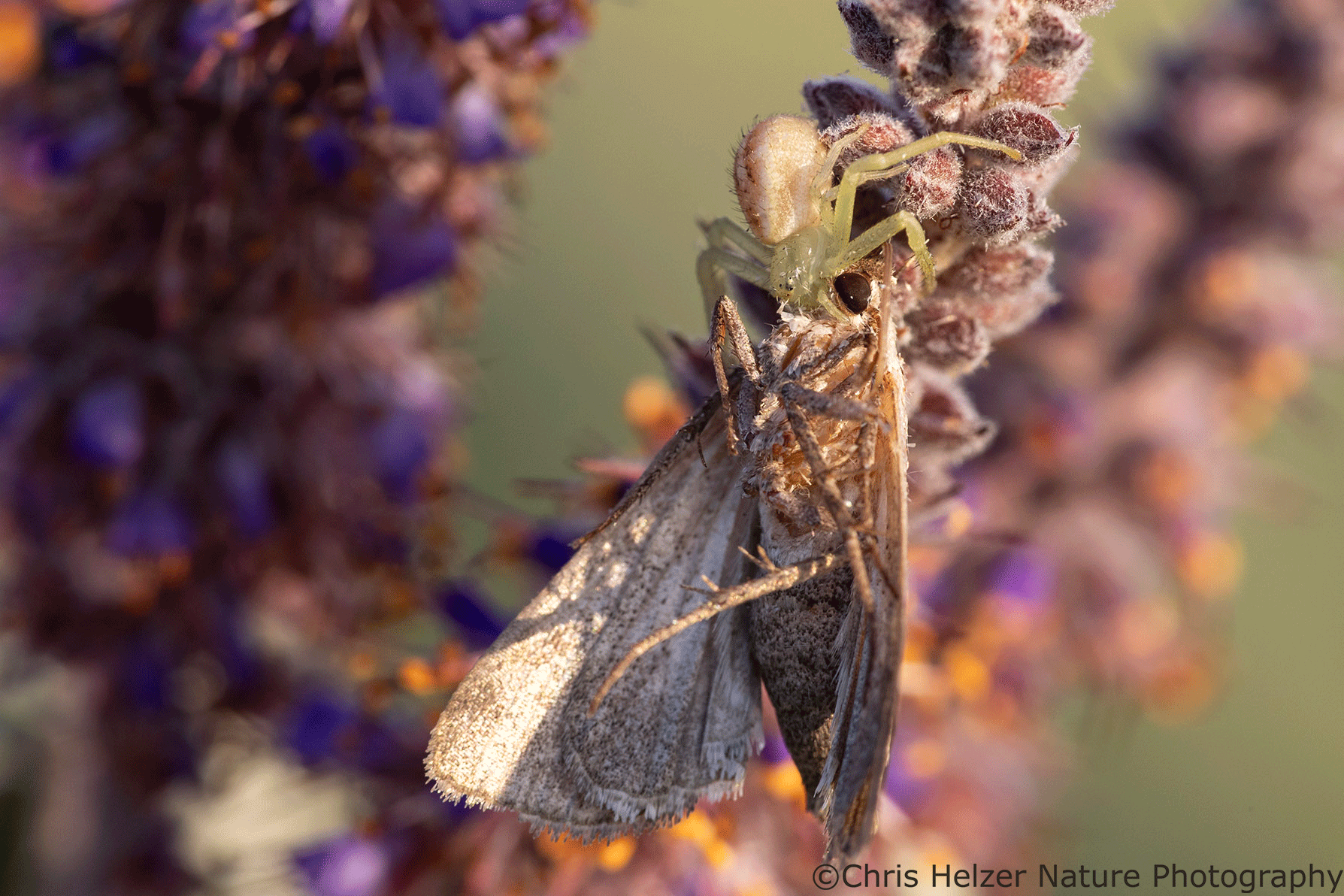
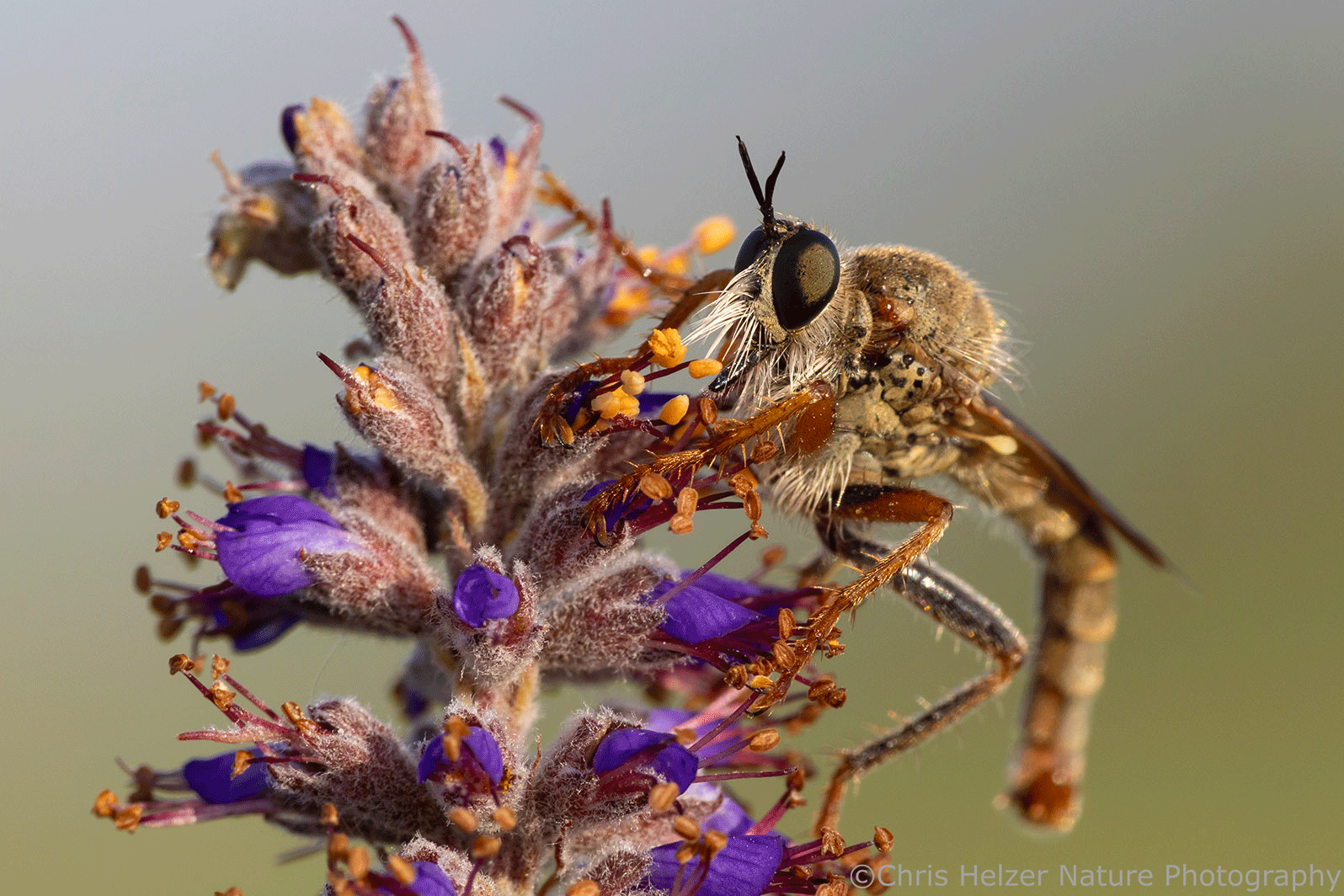
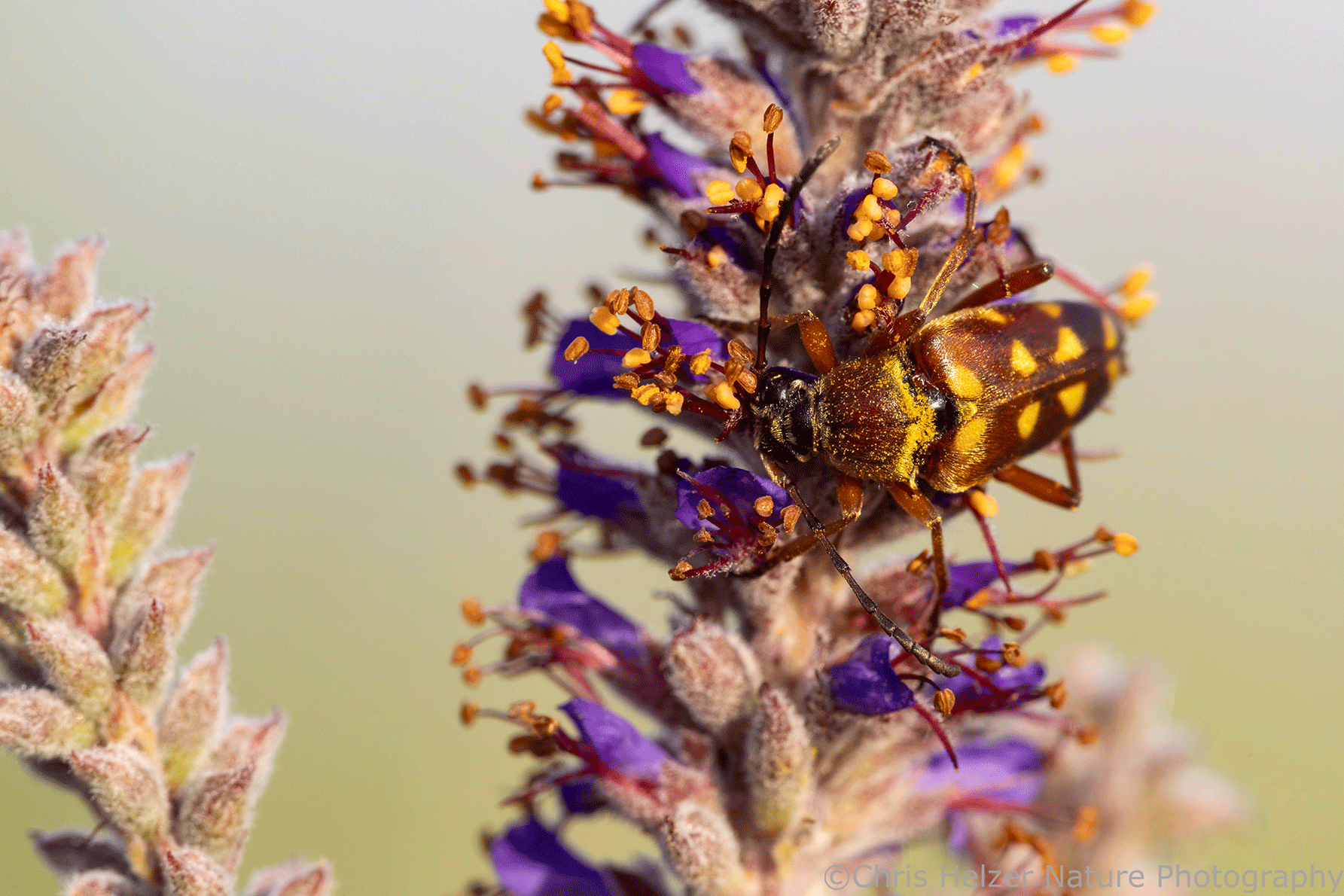
Flower longhorn beetles of several (I think?) species were abundant last weekend, feeding on the blossoms of multiple wildflowers. I’ve only included a few of the many photos I took of them.
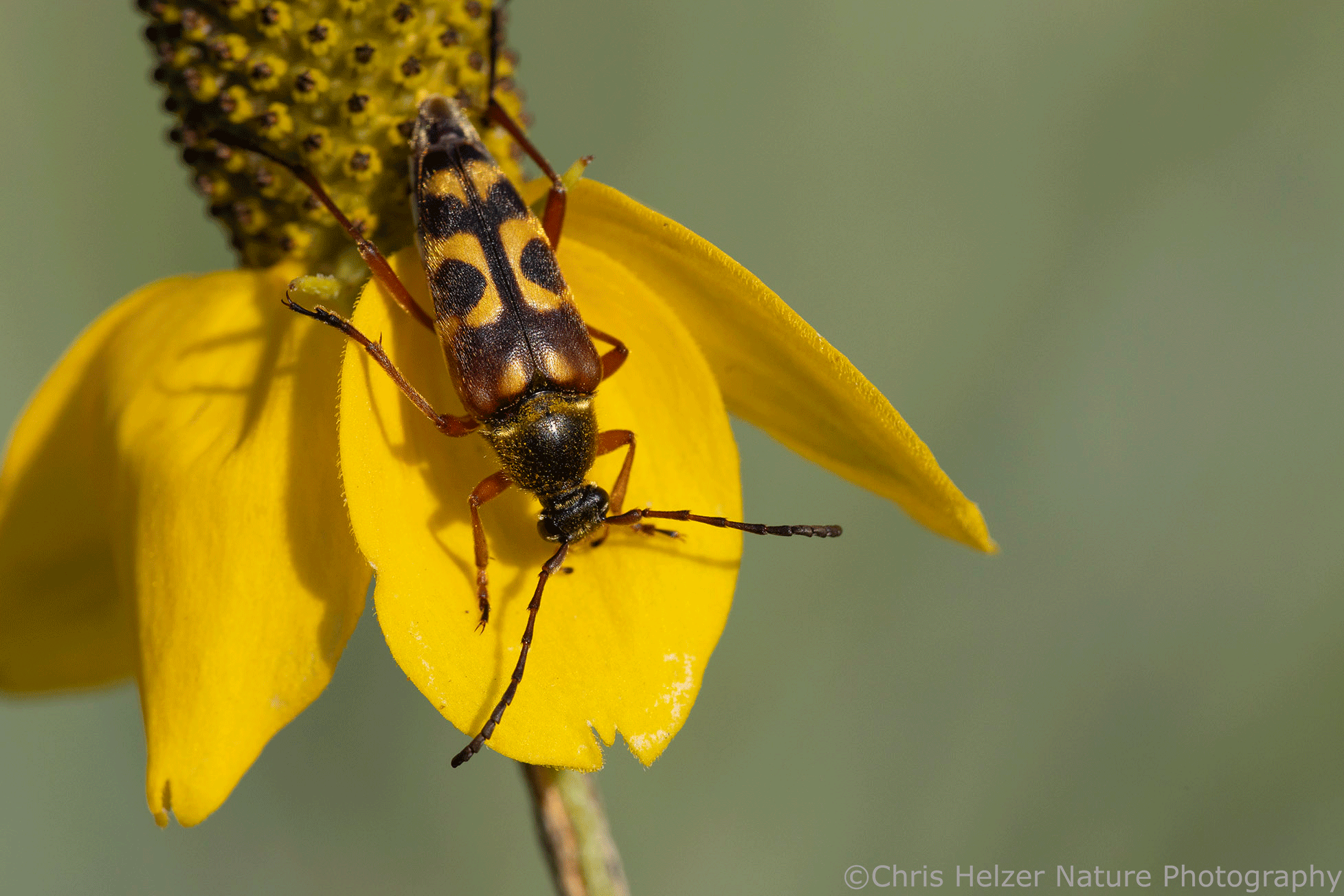
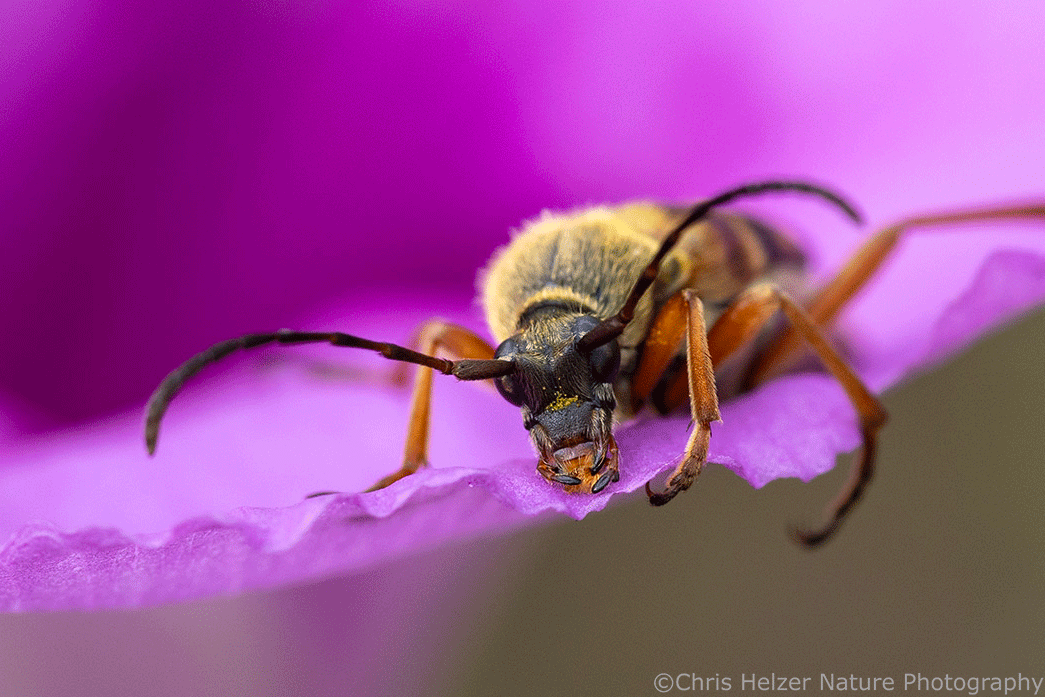
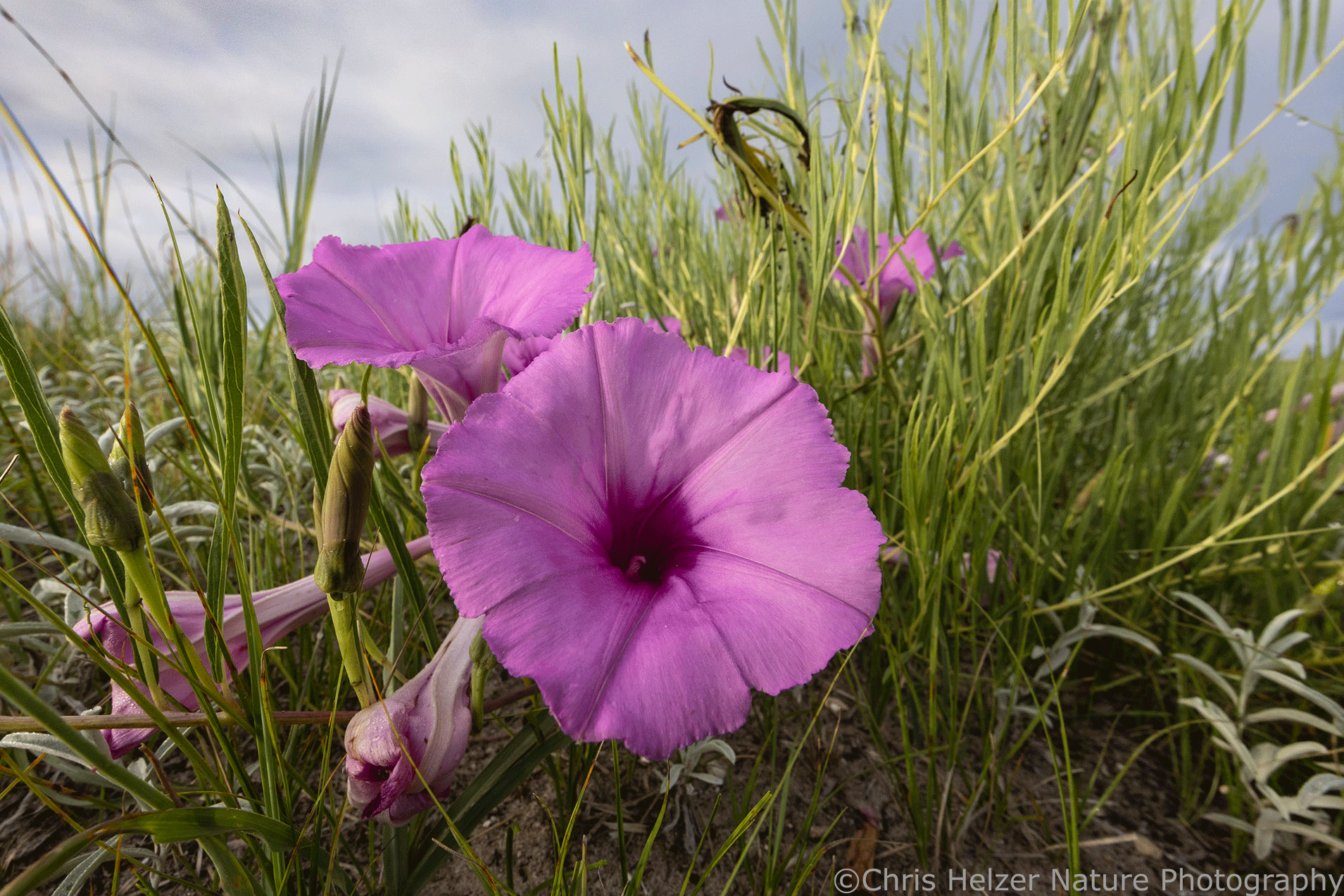
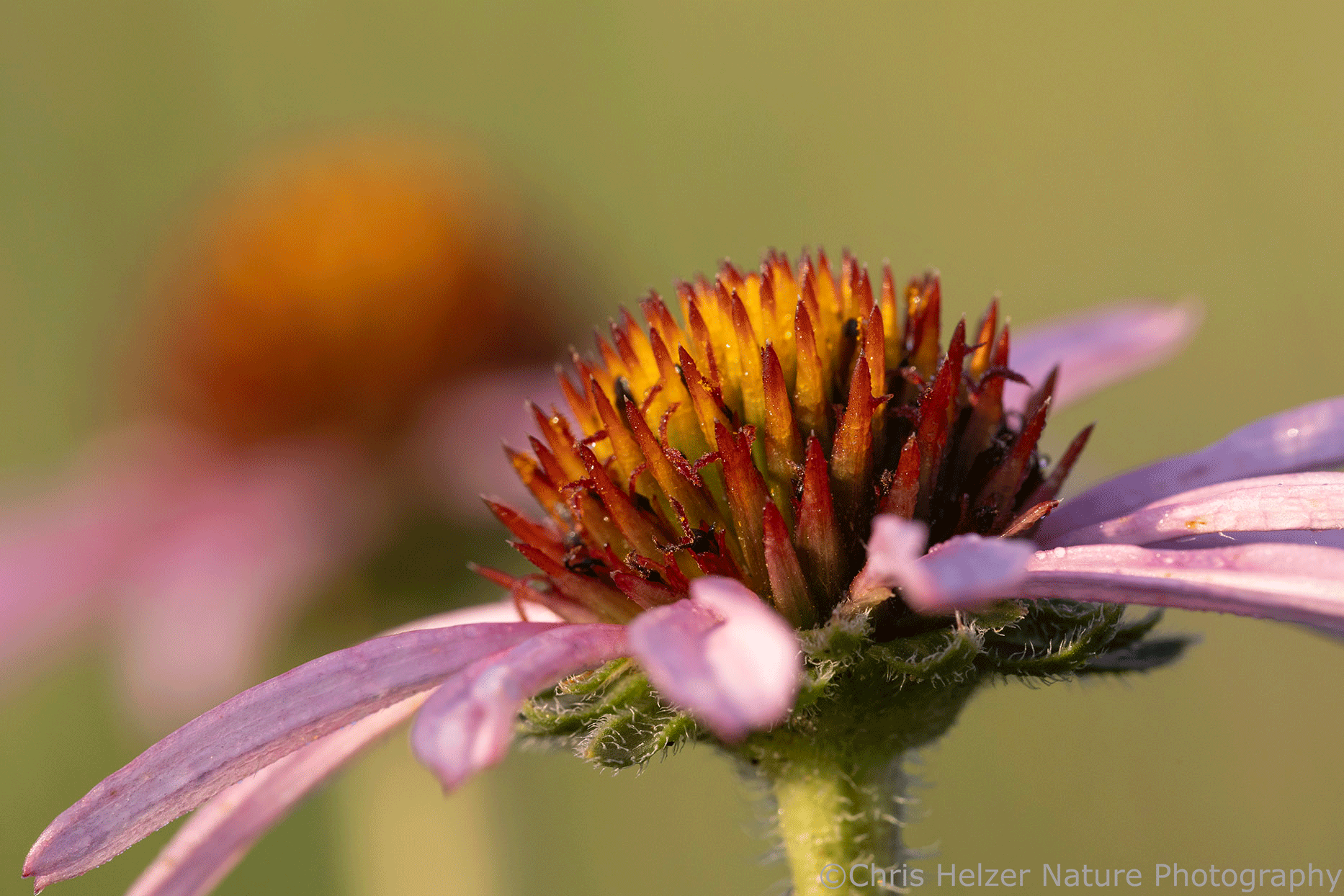
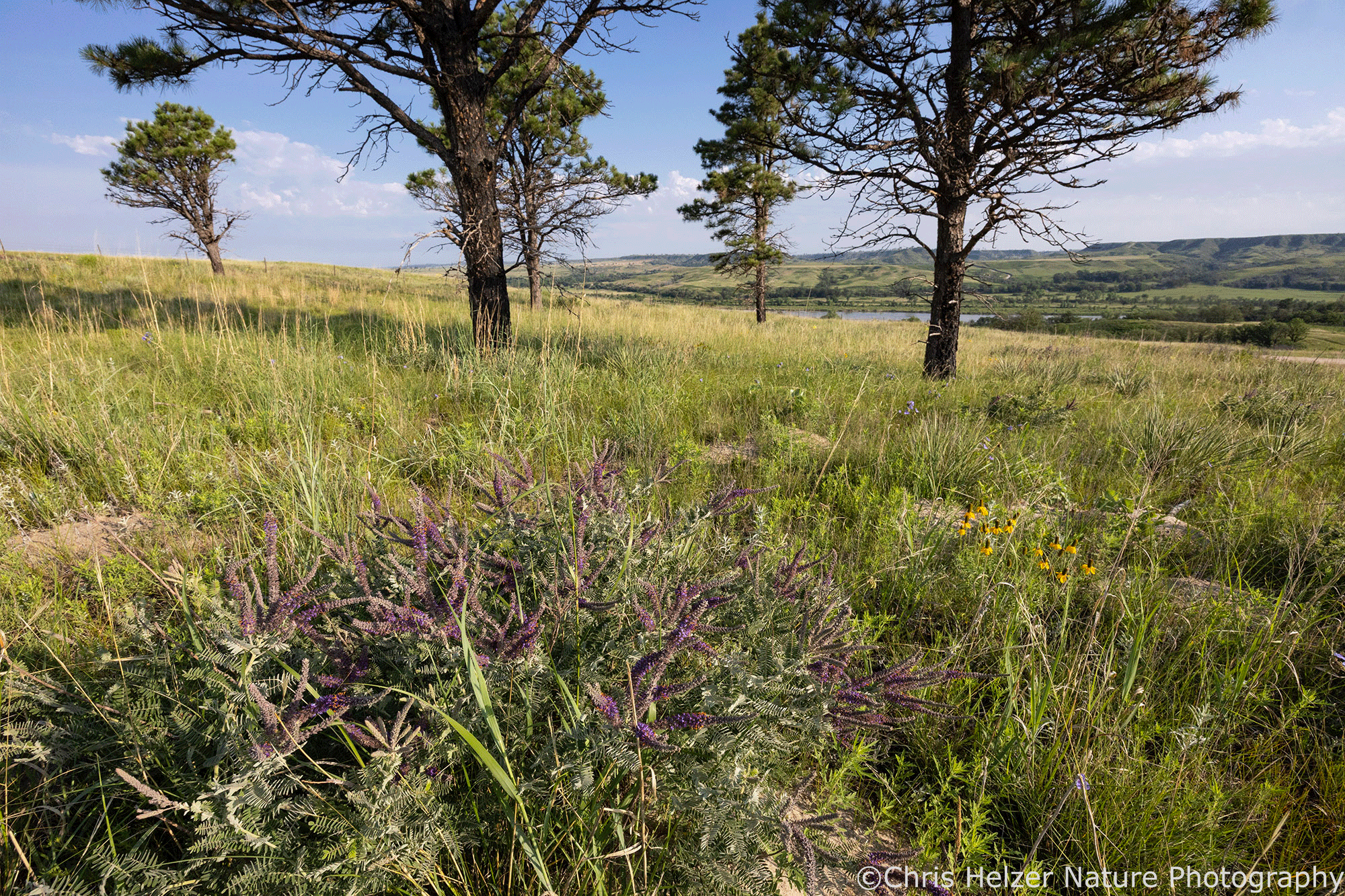
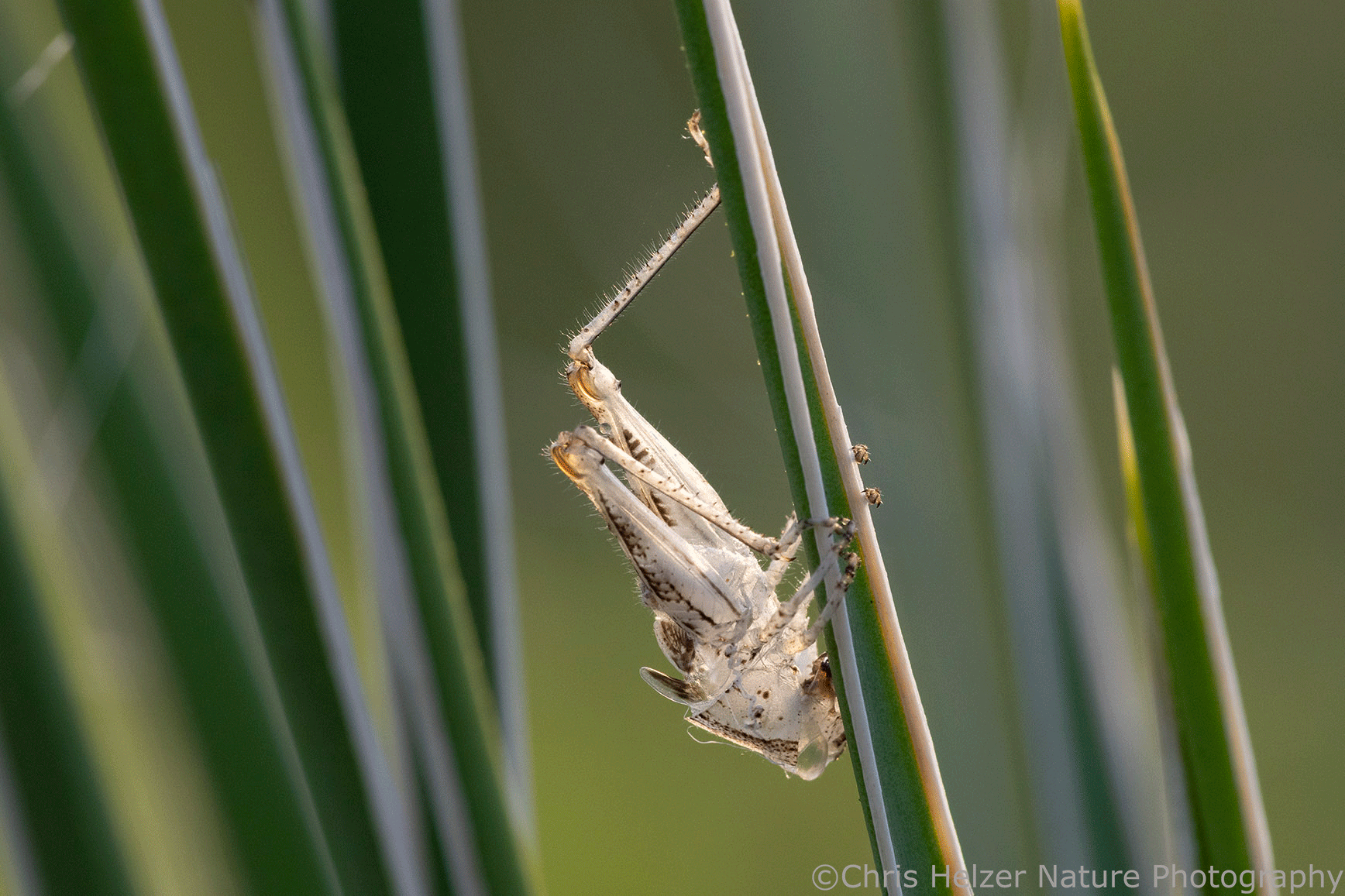
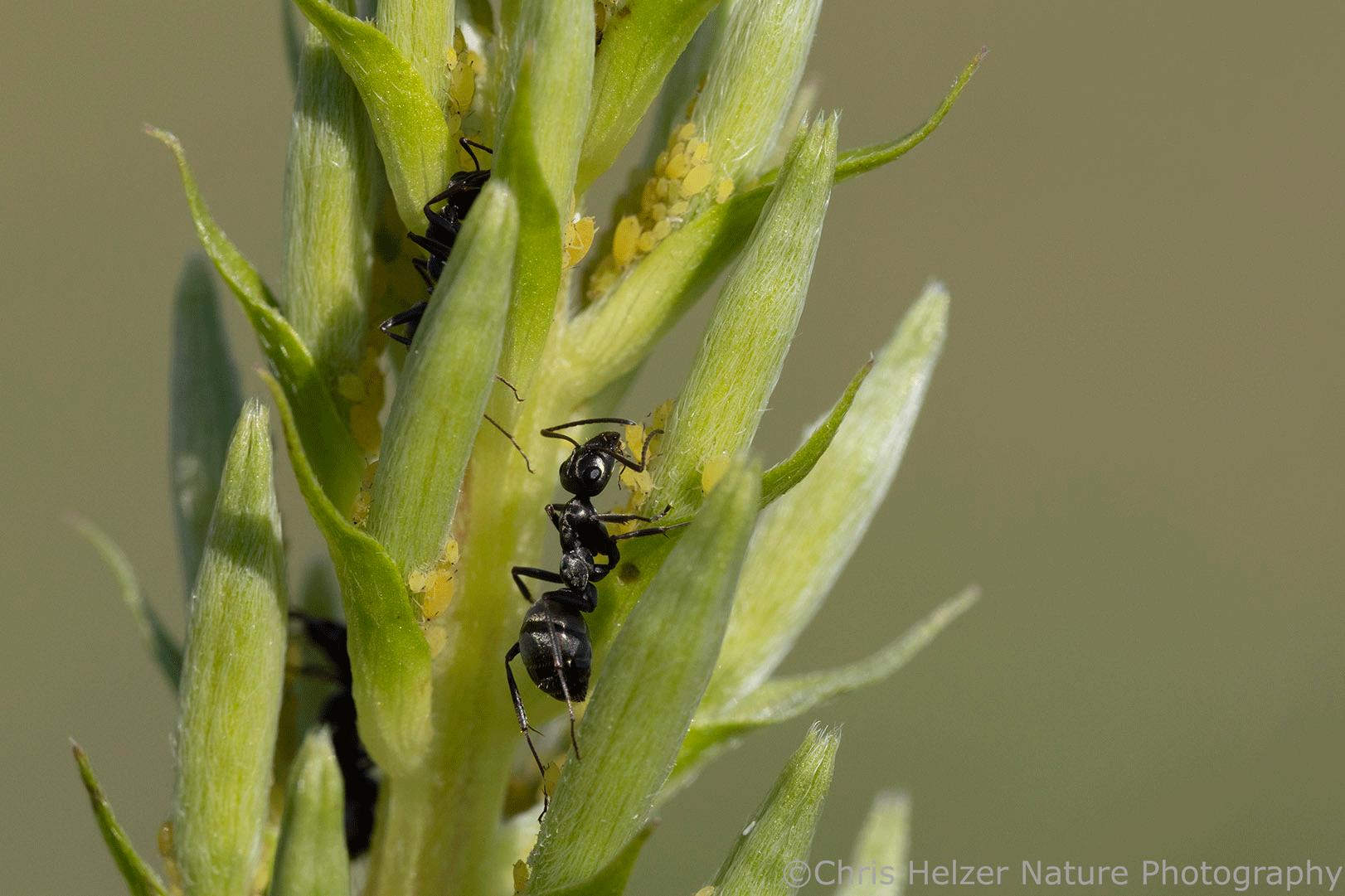
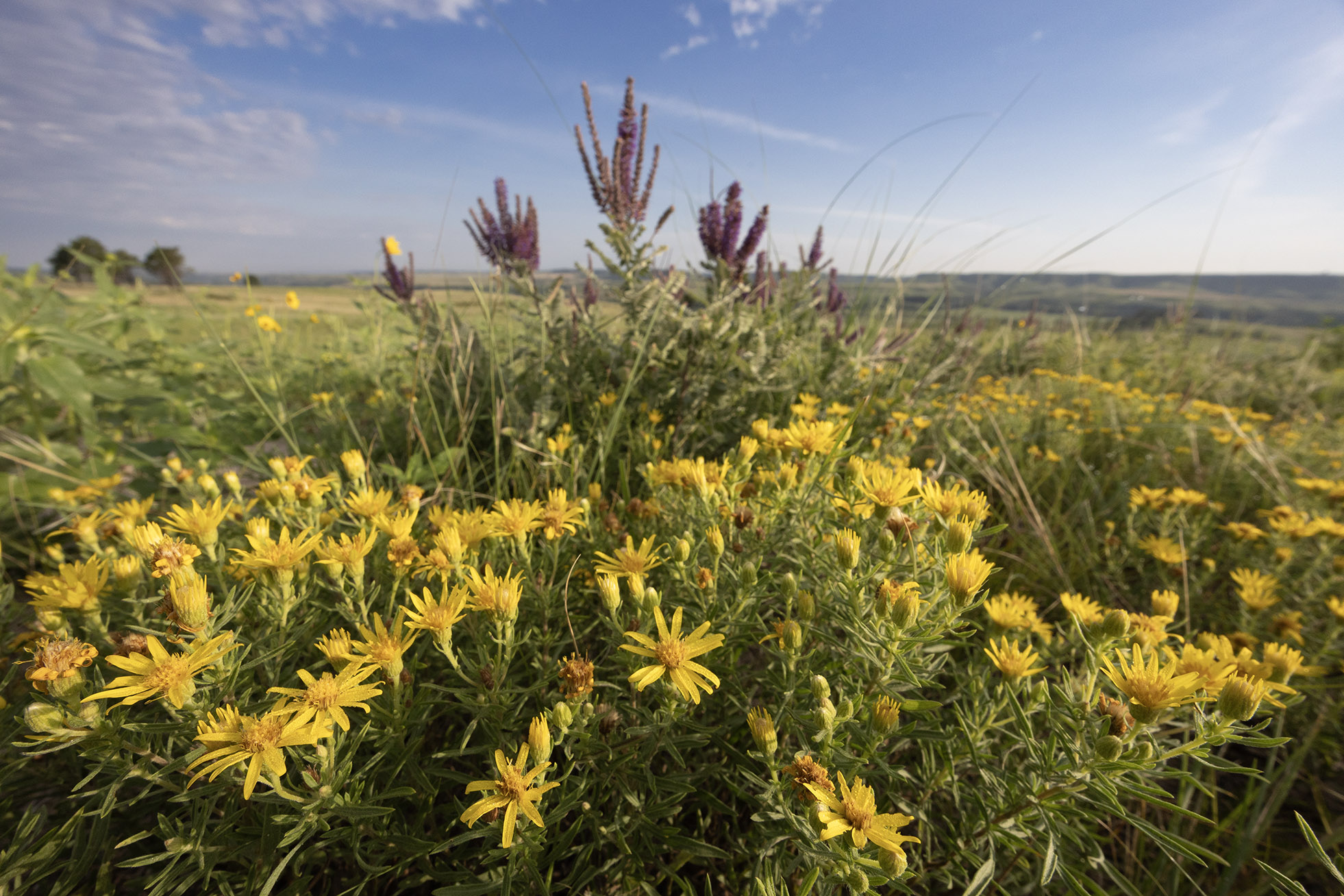
In case you’re wondering, it was a mediocre day for butterflies. It feels like butterfly abundance has been relatively low on the prairies I’m familiar with this year. I’m not sure if that’s related to weather (I assume so?) and if it is, I don’t know what weather factor(s) are most relevant. It was an extremely warm, dry winter and spring and has been a wet summer. Both resident and migrant butterfly numbers seem low this year. Is this the case elsewhere this year?
Still, six of us found 28 butterfly species, including a number of at-risk species. Some of those included two-spotted skipper, regal fritillary, monarch, eyed brown, long dash, northern broken dash, little glassywing, dun skipper and coral hairstreak. Some years, we see large numbers of butterflies like orange sulphurs, common wood nymphs, and/or great spangled fritillaries, but not this year. We also didn’t find an ottoe skipper, which we’d hoped to see because the most recent Nebraska sighting was at NVP several years ago. Maybe next year…


Also very low on butterfly sightings here in northern Texas (Fort Worth area). My friends and I were just discussing this as we tended our monarch waystation garden last week.
butterfly population has crashed in indiana. every year less and less. only saw1 on my 9 acres. neonic insecticide widespread on surrounding cropland.
Awesome post and pictures, Chris. I think you may have “outdone yourself”!
Best prairie wishes, James